
The First Dollar Decision: How Wealth Is Built From Nothing
Most wealthy people did not begin with wealth. They began with a decision.
Not a dramatic decision. Not a public announcement. Not a moment that looked impressive from the outside. In many cases, it was quiet, private, and almost invisible. A person looked at their life, their income, their habits, their debts, their opportunities, and decided that their financial future would not be left to accident.
That decision is where wealth begins.
Building wealth from zero is often misunderstood because people confuse the beginning of wealth with the appearance of wealth. They look at the investor with a large portfolio, the business owner with multiple income streams, the family with real estate, or the professional who seems financially secure, and they assume the story started there. It rarely did.
The story usually started with a first skill, a first paycheck, a first budget, a first debt payment, a first emergency fund, a first investment account, a first difficult choice not to spend money that could become capital.
Wealth is not built only by people who inherit money, earn extraordinary salaries, or catch rare opportunities at the perfect moment. Those things can help, but they are not the foundation. The foundation is a system: earn, save, protect, invest, repeat. That system works slowly at first, then powerfully over time.
When someone starts from zero, the early stage can feel discouraging because progress looks small. Saving $50 may not feel meaningful. Investing $100 may not feel life-changing. Paying off one debt may not feel like freedom. But wealth rarely announces itself in the beginning. It accumulates quietly through repeated actions.
The first dollar saved is not important because of its size. It is important because of what it represents. It proves that money can be directed instead of merely spent. It proves that the future can be funded. It proves that financial life can move from reaction to intention.
Wealth From Zero Is a System, Not a Miracle
Many people delay building wealth because they believe they need more money before they can begin. They say they will invest when they earn more, save when expenses calm down, learn about money when life becomes less busy, or start a business when conditions are perfect.
That delay is expensive.
Wealth building does not require perfect conditions. It requires a repeatable system that improves with time. The person earning a modest income but managing it wisely often builds more durable wealth than the person earning a high income while spending without discipline.
The basic system is simple: increase income, spend less than you earn, build cash reserves, eliminate high-interest debt, invest consistently, expand income sources, and think in decades rather than months.
Simple does not mean easy. The system demands patience, self-control, education, and the willingness to make choices that may not impress other people. But it is understandable. It can be learned. It can be practiced. It can be improved.
The mistake many people make is searching for a shortcut before mastering the foundation. They look for the perfect stock, the fastest side hustle, the hottest market trend, or the newest financial strategy while ignoring the larger truth: wealth depends less on one brilliant move than on hundreds of intelligent moves repeated over time.
A person who earns more, saves a meaningful percentage of income, avoids destructive debt, and invests for years is placing themselves on the wealth-building path. A person who earns more but spends everything remains financially fragile. A person who invests but carries expensive debt is fighting against themselves. A person who saves but never increases income may progress too slowly. Each part of the system supports the others.
Step One: Increase Your Income
Income is the engine of wealth. Without cash flow, every other financial goal becomes harder.
This does not mean income alone creates wealth. Plenty of high earners are broke. But income creates possibility. It gives you money to save, debt to repay, capital to invest, and room to make strategic decisions. When income is too low, even disciplined people can feel trapped because almost every dollar is already assigned to survival.
For someone starting from zero, raising income is often the most powerful early move. Cutting expenses matters, but there is a limit to how much you can cut. Income has more room to grow.
The first question is not, “How can I become rich overnight?” The better question is, “How can I become more valuable in the marketplace?”
Money tends to flow toward value. People are paid for solving problems, producing results, managing responsibility, reducing risk, creating convenience, building systems, selling products, leading teams, and making decisions that matter. The more valuable the problem you solve, the more income potential you usually have.
Build Skills That Increase Earning Power
A high-income skill is a skill that helps other people or businesses produce measurable value. Examples include sales, software development, digital marketing, financial analysis, design, copywriting, project management, data analysis, negotiation, operations, skilled trades, and business development.
Not every valuable skill requires a university degree. Some do. Some require licensing. Others can be learned through online education, apprenticeships, entry-level work, mentorship, and deliberate practice. The important point is that income growth usually follows skill growth.
A person who improves communication becomes more employable. A person who learns sales can help businesses generate revenue. A person who understands technology can solve modern business problems. A person who learns financial analysis can support better decisions. A person who becomes reliable, organized, and difficult to replace gains leverage.
Starting from zero does not mean starting without assets. Skills are assets. Reputation is an asset. Discipline is an asset. Curiosity is an asset. The ability to learn quickly is an asset. These may not appear on a balance sheet, but they shape future income.
Increase Career Value
For many people, the fastest path to higher income begins with their current career. Before chasing a new business idea, it may be useful to ask whether the job you already have can become more valuable.
Can you take on more responsibility? Can you learn a skill that makes you eligible for promotion? Can you document your results and negotiate better pay? Can you move to a company that pays more for the same ability? Can you enter a higher-paying field over the next 12 to 24 months?
Career growth is not always exciting, but it can be one of the most reliable wealth-building tools. A salary increase that is saved and invested instead of absorbed by lifestyle can change a person’s financial trajectory.
Imagine someone earning $35,000 who raises their income to $50,000 over several years. If they allow the entire increase to disappear into rent upgrades, car payments, subscriptions, restaurants, and status spending, the raise creates little wealth. But if they save and invest part of that increase, their income growth becomes capital.
The goal is not only to earn more. The goal is to convert higher income into ownership.
Start a Side Business or Freelance Skillfully
A side business can accelerate wealth because it creates income beyond a paycheck. It also teaches ownership thinking. When you sell a service, build a product, or solve a customer’s problem directly, you begin to understand how money moves in the real economy.
Side businesses do not need to begin as large companies. Many start with simple services: tutoring, design, writing, bookkeeping, consulting, photography, lawn care, cleaning, coding, editing, repair work, or managing social media for small businesses.
The best side business for a beginner is often not the trendiest one. It is the one that matches a real skill, a real demand, and a realistic schedule. A profitable service that earns an extra few hundred dollars per month can be more useful than an exciting idea that never earns anything.
Freelancing online can also help people turn skills into income. But freelancing should be approached like a business, not a lottery ticket. Clients pay for outcomes. The freelancer who communicates clearly, meets deadlines, improves their craft, and understands the client’s goals will usually outperform someone who only knows how to create a profile on a platform.
Step Two: Spend Less Than You Earn
Wealth is built in the gap.
The gap is the space between what you earn and what you spend. If you earn $3,000 per month and spend $3,000, your gap is zero. If you earn $3,000 and spend $2,500, your gap is $500. That $500 is not just savings. It is future freedom. It can become an emergency fund, debt payment, investment contribution, business capital, or down payment on an asset.
Without a gap, wealth cannot grow. Income enters and leaves. The person works, gets paid, spends, repeats, and remains financially dependent on the next paycheck.
Many people think budgeting is about restriction. In reality, budgeting is about direction. It tells money where to go before impulse, pressure, or habit claims it.
The rule is simple: earn more, spend wisely, save aggressively.
The Savings Rate Matters More Than Most People Realize
Your savings rate is the percentage of income you keep. Someone who earns $40,000 and saves 20 percent may build wealth faster than someone earning $90,000 and saving nothing.
A higher savings rate does two things at once. It increases the amount of money available for investing, and it lowers the cost of your lifestyle. That second part is often overlooked.
If you need every dollar you earn to maintain your lifestyle, financial independence is far away. If you can live well on a smaller percentage of your income, you become more flexible. You need less money to survive, less income to feel secure, and less investment income to support your future.
This does not mean living miserably. Extreme deprivation often fails because people cannot sustain it. The goal is not to hate your life in the name of saving. The goal is to spend intentionally so that your money reflects your real priorities.
Some expenses improve life. Others only imitate success. The difference matters.
Lifestyle Inflation: The Silent Wealth Killer
Lifestyle inflation happens when spending rises automatically with income. A raise becomes a nicer apartment. A bonus becomes a vacation. A promotion becomes a car payment. More income arrives, but net worth barely moves.
This is one reason earning more does not always lead to wealth. Wealth requires capturing part of the increase.
A powerful habit is to save a percentage of every raise before upgrading lifestyle. If income rises by $500 per month, decide immediately that a portion will go toward savings or investments. This prevents the new income from disappearing before it has a job.
The wealth builder asks, “How much of this increase can I convert into assets?”
The consumer asks, “What can I buy now that I earn more?”
That difference compounds.
Step Three: Build an Emergency Fund
Unexpected expenses are not really unexpected. The exact event may be unknown, but life’s interruptions are guaranteed. Cars need repairs. Phones break. Medical bills appear. Jobs change. Family emergencies happen. Homes need maintenance. Income can slow down.
An emergency fund protects your financial progress from being destroyed by normal life.
For someone starting from zero, the first goal may be one month of basic expenses. That alone can reduce stress. After that, many people work toward three to six months of necessary expenses, depending on income stability, family responsibilities, and personal risk.
An emergency fund is not an investment. It is protection. Its purpose is not to earn the highest return. Its purpose is to be available when needed.
Without emergency savings, people often rely on credit cards, payday loans, personal loans, or borrowing from friends and family when life goes wrong. This turns temporary problems into long-term financial setbacks.
Cash Creates Stability
Cash may not build wealth as aggressively as investments, but it creates stability. Stability allows you to keep investing when life gets difficult. It helps you avoid panic selling. It gives you time to make better decisions.
A person with no emergency fund is often forced to react. A person with cash reserves has options.
This is why emergency savings should usually come before aggressive investing. Investing is important, but investing while having no cash cushion can backfire. If an emergency appears, the person may need to sell investments at the wrong time or take on expensive debt.
Wealth is not only about return. It is also about resilience.
Step Four: Eliminate High-Interest Debt
Debt can be useful or destructive depending on its cost, purpose, and structure. A mortgage on an affordable home is different from a payday loan. A business loan used carefully to produce income is different from a credit card balance created by impulse spending.
High-interest consumer debt is one of the biggest obstacles to building wealth from zero.
Credit card debt, payday loans, and high-interest personal loans drain future income. They turn yesterday’s spending into tomorrow’s burden. The borrower does not only pay for the item purchased. They pay for the privilege of delaying payment, often at a very high cost.
Paying 25 percent interest while hoping to earn 8 or 10 percent in the market is usually a losing equation. The debt is a guaranteed cost. The investment return is uncertain. Removing expensive debt is often one of the best financial returns available because every dollar of interest avoided strengthens your future.
Debt Is a Claim on Future Income
Every debt payment represents money that cannot be saved, invested, or used freely. When a person carries too many payments, their paycheck is already partially owned before it arrives.
This is why debt can feel suffocating. It reduces flexibility. It makes it harder to change jobs, move, start a business, handle emergencies, or invest consistently.
Eliminating high-interest debt creates immediate breathing room. A paid-off credit card is not just a zero balance. It is the removal of a financial leak.
The Debt Snowball and Debt Avalanche
There are two common methods for debt repayment.
The debt snowball method focuses on paying off the smallest balances first while making minimum payments on the others. This can create motivation because debts disappear quickly.
The debt avalanche method focuses on paying off the highest-interest debts first. This usually saves the most money mathematically.
The best method is the one a person can follow consistently. Money is emotional as well as mathematical. Some people need quick wins. Others are motivated by interest savings. Both approaches can work when the person stops adding new debt and directs extra cash toward repayment.
The larger principle is clear: remove the financial leaks before trying to fill the bucket.
Step Five: Start Investing Early
You do not need millions to start investing. You need consistency, time, and a willingness to learn.
Many people delay investing because they believe the amount they can invest is too small. But small amounts matter because they build the habit. A person who invests $50 or $100 consistently is doing more than buying assets. They are becoming an investor.
That identity matters. Investors think differently. They ask what an asset can become over time. They understand that money can work after they have earned it. They begin to prefer ownership over consumption.
Time matters more than timing. Trying to find the perfect moment to invest often leads to years of waiting. Markets rise, fall, recover, and surprise people. The investor who contributes steadily over long periods reduces the pressure of making one perfect decision.
The Power of Compounding
Compounding happens when returns begin to earn returns of their own. At first, the effect seems small. Later, it can become powerful.
Imagine two people. One starts investing small amounts early. The other waits until they earn more and starts later with larger amounts. The second person may feel more prepared, but the first person has something valuable: time.
Time allows money to go through more compounding cycles. The earlier investor also gains experience. They learn how markets feel during downturns. They learn patience. They learn to keep contributing when headlines are uncomfortable. That education is valuable.
Compounding rewards patience, but it punishes delay.
Simple Investments Often Beat Complicated Strategies
Many beginners assume investing must be complicated. They imagine screens filled with charts, constant trading, secret strategies, and expert predictions. Some professionals do work that way, but most ordinary wealth builders do not need complexity to begin.
Broad index funds and exchange-traded funds can offer diversified exposure to many companies at once. Dividend investments can create cash flow, though dividends should be evaluated carefully rather than chased blindly. Long-term assets such as stocks, retirement accounts, and eventually real estate or business ownership can help money grow beyond wages.
The key is understanding what you own. Do not invest in something only because it is popular. Do not buy an asset because a stranger online sounds confident. Do not confuse excitement with strategy.
A strong beginner approach is often boring: invest consistently in diversified assets, keep costs low, avoid panic, reinvest returns, and allow time to work.
Boring is not a weakness. In wealth building, boring often survives.
Step Six: Build Multiple Income Streams
Wealthy people rarely depend forever on one income source. A single paycheck can be useful, but it is also fragile. If that paycheck stops, the entire financial structure may be threatened.
Multiple income streams create resilience. They also speed up wealth creation because surplus income can be invested.
Income streams can include salary, freelance work, business income, investment returns, rental income, royalties, digital products, dividends, interest, consulting, or equity ownership.
Not all income streams are equal. Some require constant labor. Others require capital. Some are active at first and become more passive later. Some are scalable. Some are risky. The goal is not to chase every possible income stream. The goal is to build intelligently.
Start With One Strong Income Stream
Before building five income streams, it often helps to build one strong one. A person who is struggling in their main career may not need distraction. They may need focus. Raising the primary income can create the capital needed to build other streams later.
Once the first income stream is stable, additional streams can be added carefully. A freelancer can invest profits. An employee can build a side business. A business owner can buy assets. An investor can reinvest dividends. A creator can build digital products. Each stream can support the next.
This is how wealth begins to multiply. Income creates savings. Savings create investments. Investments create returns. Returns buy more assets. Assets create more income.
Digital Products and Scalable Income
Digital products can be attractive because they may be sold repeatedly after the initial work is done. Examples include courses, templates, ebooks, software tools, paid newsletters, design assets, and educational resources.
But digital income is not automatic. It requires skill, audience trust, distribution, marketing, and product quality. Many people fail because they focus on the dream of passive income before creating something valuable.
The principle remains the same: solve a real problem. Money follows value.
Step Seven: Think Long Term
Wealth grows slowly before it grows fast.
This is one of the hardest truths for beginners. The early stage can feel unrewarding. You may save for months and still feel far from your goals. You may invest consistently and see the market decline. You may pay off debt and feel like the progress is invisible. You may improve your income but still have years of work ahead.
That is normal.
The early stage of wealth building is like planting roots. Much of the progress is beneath the surface. You are building habits, knowledge, discipline, earning power, financial margin, and emotional control. Those are not always visible, but they are essential.
Most people quit too early because they expect wealth to feel exciting. Real wealth building often feels repetitive. Pay yourself first. Avoid unnecessary debt. Invest again. Learn more. Increase income. Resist lifestyle inflation. Repeat.
The repetition is the point.
Patience Is a Financial Skill
Patience is not passive. It is an active skill. It means continuing the correct behavior even when results are not immediate.
Long-term thinkers understand that one month rarely changes a financial life, but 120 months can. One investment contribution may not matter much, but years of contributions can. One avoided purchase may not create freedom, but a lifestyle built on intentional spending can.
Patience also protects people from destructive shortcuts. The desire to get rich quickly often leads to speculation, scams, excessive risk, and emotional decisions. When someone cannot tolerate slow progress, they become vulnerable to anyone promising fast results.
Wealth rewards those who can delay gratification without losing ambition.
Common Wealth-Building Mistakes
Building wealth from zero is possible, but certain mistakes can delay progress for years. Most of these mistakes are not dramatic. They are small decisions repeated until they become expensive patterns.
Trying to Get Rich Quickly
The promise of fast wealth is everywhere. A new market trend. A secret strategy. A business model that supposedly requires little work. A person online claiming that ordinary financial principles are outdated.
Some people do make money quickly, but fast money is not the same as durable wealth. Wealth that lasts usually requires skill, structure, risk management, and discipline. A sudden gain can disappear if the person does not know how to manage it.
The better goal is not to get rich quickly. The better goal is to become the kind of person who can build, manage, and keep wealth.
Overspending to Impress Other People
Status spending is one of the most common traps. People buy things not because they truly value them, but because they want to be seen in a certain way.
The problem is that the appearance of wealth often competes with actual wealth. Money spent to look successful is money that cannot be invested to become financially secure.
This does not mean never enjoying life. It means knowing the difference between enjoyment and performance. A purchase that brings genuine value may be worthwhile. A purchase made to impress people who are not responsible for your future can become a quiet form of financial self-sabotage.
Ignoring Financial Education
Financial education is not optional for anyone who wants to build wealth. You do not need to become a professional economist, but you should understand basic principles: cash flow, interest, inflation, taxes, diversification, risk, compounding, debt, assets, liabilities, and opportunity cost.
When people do not understand money, they are more likely to be controlled by it. They accept bad loans. They misunderstand investment risk. They confuse income with wealth. They delay important decisions. They trust the wrong people.
Financial education turns confusion into judgment. It helps you ask better questions and recognize better opportunities.
Delaying Investing
Many people wait to invest because they want to feel ready. The problem is that readiness often comes from starting. A beginner who invests small amounts while learning can build confidence over time.
Delaying too long creates two costs. The first is lost compounding time. The second is lost experience. Markets teach patience in a way books cannot fully replicate.
Starting small is not embarrassing. Never starting is expensive.
Living Beyond Your Means
Living beyond your means is not always obvious. It can look normal from the outside. A person may have a decent income, a nice car, a full closet, vacations, and restaurant photos, while privately carrying debt and stress.
The issue is not how life looks. The issue is whether the financial structure is sustainable.
If expenses consistently exceed income, wealth moves backward. If every increase in income creates a larger lifestyle, wealth stands still. If spending is designed around impressing others, the future pays the price.
Living below your means creates power. It gives you the ability to save, invest, leave bad situations, handle emergencies, and make decisions from strength rather than desperation.
The Wealth Formula: Earn, Save, Invest, Repeat
The formula for building wealth from zero is simple: earn, save, invest, repeat.
Earn enough to create cash flow. Save enough to create capital. Invest enough to create ownership. Repeat long enough for compounding to matter.
Each part matters.
If you earn but do not save, money passes through you. If you save but do not invest, your money may struggle to grow faster than rising costs. If you invest but do not earn enough, progress may be slow. If you do all three but stop too soon, compounding never gets enough time.
The formula works because it turns labor into capital and capital into assets. At first, you work for money. Over time, your money begins working alongside you. Eventually, if the system is followed with enough discipline and time, assets can produce income with less direct labor.
That is the transition from survival to stability, from stability to growth, and from growth to freedom.
How to Start With the Money You Already Have
Building wealth does not require waiting for perfect circumstances. You can begin with the money you already have by giving each dollar a better assignment.
First, measure your current financial position. Know your income, expenses, debts, savings, and net worth. You cannot improve what you refuse to measure.
Second, create a small gap. Reduce one unnecessary expense. Increase one source of income. Sell unused items. Take one extra shift if appropriate. Offer one service. The first gap may be small, but it proves that progress is possible.
Third, protect the gap. Do not let every new dollar become spending. Direct it toward savings, debt repayment, or investing.
Fourth, build a starter emergency fund. Even a small cash cushion can prevent a setback from becoming debt.
Fifth, attack high-interest debt. Stop the financial leaks that drain future wealth.
Sixth, begin investing consistently once the foundation is stable. Start with an amount you can maintain, then increase it as income grows and debts fall.
Seventh, keep learning. Your financial decisions improve as your understanding improves.
This process is not glamorous. That is why it works. Glamour attracts attention. Systems build wealth.
The Identity Shift: From Consumer to Builder
Wealth from zero requires more than tactics. It requires an identity shift.
A consumer asks, “What can this money buy me today?”
A builder asks, “What can this money become tomorrow?”
A consumer sees income as permission to spend. A builder sees income as raw material. A consumer measures success by appearance. A builder measures success by ownership, options, and resilience.
This shift does not mean rejecting comfort or enjoyment. It means refusing to trade long-term freedom for short-term approval.
The builder still lives. The builder may travel, celebrate, buy quality items, and enjoy money. But those decisions fit inside a larger system. Pleasure does not destroy progress. Spending does not erase saving. Lifestyle does not outrun income.
That balance is the mark of financial maturity.
Final Thought: Consistency Beats Intensity
Building wealth from zero is possible because wealth is not created by one perfect move. It is created by consistent decisions that move in the same direction.
One decision to learn a valuable skill. One decision to negotiate income. One decision to avoid unnecessary debt. One decision to save before spending. One decision to invest while the amount still feels small. One decision to ignore status pressure. One decision to keep going when progress feels slow.
Over time, those decisions become a system. The system becomes a habit. The habit becomes a financial identity. The identity shapes a future.
The person who starts with nothing but discipline, skill, and consistency is not powerless. They are early.
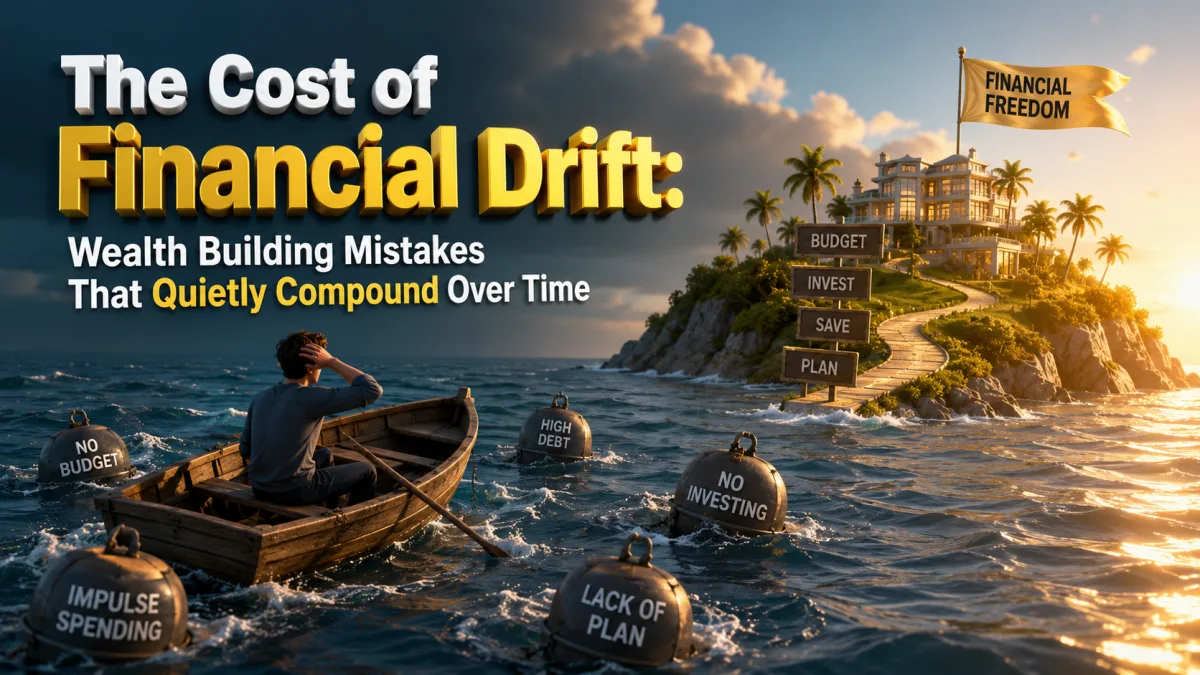
Wealth starts with one decision: to stop drifting and begin building.
Earn. Save. Invest. Repeat.
Start with the money you already have today.
 Article
 Article
 Article
 Article
 Article
 Article
 Article
 Article