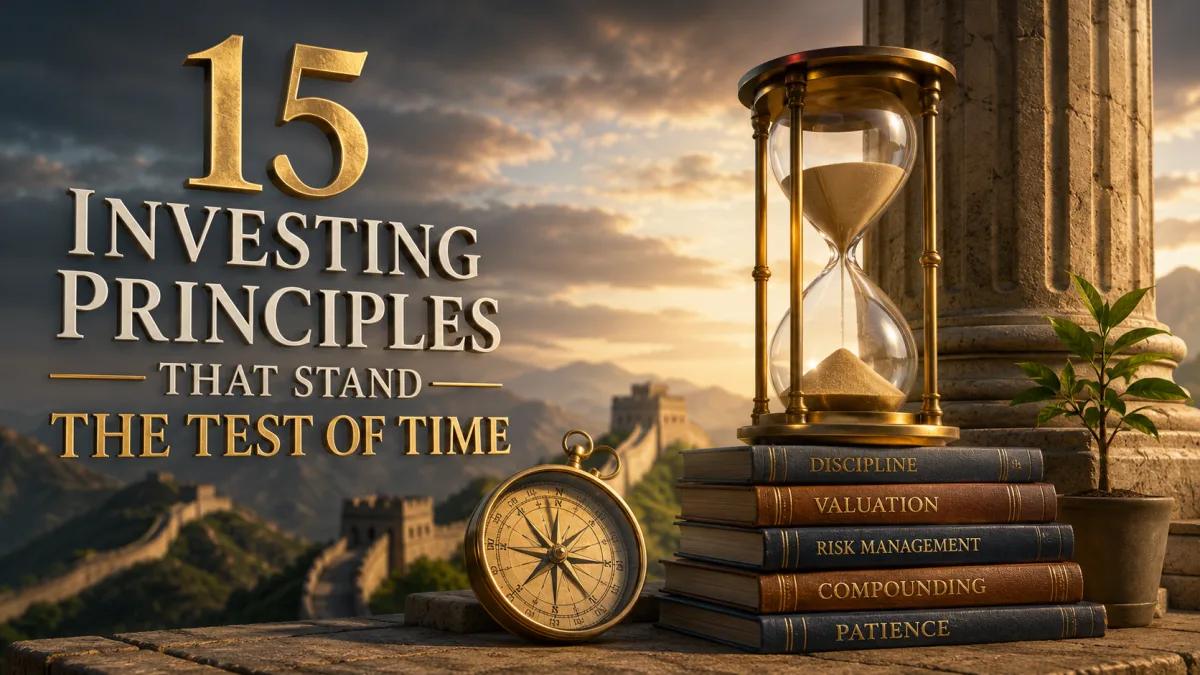
Investment Insights: 15 Timeless Lessons Every Investor Should Know
Most people do not lose money in the market because they failed to discover the perfect stock, missed a secret signal, or lacked access to sophisticated Wall Street tools. They lose money because they enter the market without principles. They buy without a plan, sell without a framework, chase returns without understanding risk, and confuse activity with progress.
Investing is one of the most powerful wealth-building tools available to ordinary people. It allows a teacher, nurse, engineer, small business owner, driver, designer, or office worker to become an owner of productive assets. Through the public markets, an individual can own small pieces of companies, bonds, real estate funds, infrastructure businesses, technology platforms, banks, manufacturers, and global enterprises that would otherwise be impossible to access.
Yet the simplicity of access can create a dangerous illusion. Because buying an investment has become easy, people assume investing itself is easy. A few taps on a phone can purchase shares in a business, a fund, or a speculative asset. But the difficult part has never been the transaction. The difficult part is judgment. The difficult part is patience. The difficult part is holding a strategy when fear, greed, headlines, and other people’s opinions are pulling you in different directions.
Successful investing is not built on constant prediction. It is built on timeless principles applied consistently over long periods of time. Markets change. Products change. Technology changes. But the core lessons of investing remain remarkably durable because they are rooted in human behavior, business economics, risk, and time.
The investor who understands these lessons does not need to react to every market forecast. They do not need to know which stock will dominate next month or where interest rates will be six months from now. They need a sound framework for making decisions, managing emotions, protecting capital, and allowing time to do its work.
These 15 investment insights are not tricks. They are not shortcuts. They are the kind of lessons that seem simple when stated plainly, but become powerful when practiced over decades. They can help a beginner start with confidence, help an experienced investor avoid costly mistakes, and help anyone build a healthier relationship with money, risk, and long-term wealth.
Lesson 1: Start Earlier Than You Think You Need To
Time is the most valuable asset an investor has. Not intelligence. Not income. Not even the size of the first investment. Time.
A person who begins investing at 25 has an advantage that a person starting at 40 cannot easily replicate, even with larger monthly contributions. This is because investing rewards duration. The longer capital remains invested, the more opportunities it has to grow, recover from setbacks, compound returns, and benefit from the expansion of businesses and economies.
Many people delay investing because they feel they do not have enough money. They tell themselves they will begin once they earn more, pay off every debt, understand the market better, or feel more financially stable. Some of those reasons are understandable. A person should not invest rent money, emergency cash, or funds needed for short-term obligations. But waiting for perfect conditions can become a quiet form of self-sabotage.
The early years matter because they create a long runway. Even modest contributions can become meaningful when given decades to grow. A small amount invested consistently in your twenties can have more impact than a much larger amount invested later, because the earlier money has more time to experience multiple cycles of compounding.
Consider two investors. One begins at 25 and invests steadily for ten years, then stops contributing but leaves the money invested. The other begins at 35 and invests the same amount every year for the next thirty years. Depending on returns, the early investor may still end up with more wealth despite contributing far less. The reason is not genius. It is time.
This is one of the most difficult lessons for younger people to appreciate because youth makes time feel abundant. A year feels easy to waste when there are so many years ahead. But investing turns time into an economic force. Each year not invested is not merely a year without savings. It is a year without potential growth on those savings, and without future growth on that growth.
Starting early also builds habits. The first contribution may not feel significant, but it changes identity. You move from being only a consumer of financial products to becoming an owner of assets. You begin watching money work in ways that wages alone cannot. You develop comfort with market fluctuations. You learn that investing is less mysterious than it appears from the outside.
The best time to start is usually earlier than feels convenient. Not recklessly, not without an emergency fund, and not with money you cannot afford to invest. But once basic financial stability is in place, delaying for years can be more costly than most people realize.
Lesson 2: Compounding Is the Closest Thing to Financial Magic
Compounding is often described as money making money. That description is accurate, but it does not fully capture the force of the idea. Compounding is what happens when returns begin producing their own returns. Over time, growth no longer comes only from your original contributions. It increasingly comes from the accumulated gains produced by earlier gains.
At first, compounding looks unimpressive. This is why many people underestimate it. A small portfolio may generate only a modest amount of growth in the early years. The results can feel slow, even boring. But compounding is not linear. It is not like stacking coins one at a time. It behaves more like a snowball rolling downhill: small at the start, then increasingly powerful as size and momentum build.
The first stage of compounding requires faith in a process that has not yet become visually dramatic. An investor may contribute for several years and feel as if progress is limited. The portfolio rises, falls, recovers, and inches forward. Then, after enough time, the base becomes large enough that annual returns can exceed yearly contributions. Eventually, investment growth may become the dominant driver of wealth.
This transition is one of the great turning points in personal finance. In the beginning, you work for money. You save from wages. You invest from active income. Later, if the process is sustained, your invested assets begin contributing meaningfully to your wealth without requiring additional labor from you. That is the heart of capital ownership.
Compounding also explains why interruptions are expensive. Every time an investor withdraws early, stops investing for long periods, or repeatedly sells assets to restart elsewhere, the compounding engine loses momentum. The damage is not limited to the amount withdrawn. The investor also loses the future growth that money might have produced.
This is why patience matters so much. Compounding does not reward the person who constantly interferes with the process. It rewards the person who gives quality assets enough time to work. The investor’s job is not to force compounding to happen. The job is to create the conditions under which compounding can operate: consistent contributions, reasonable returns, reinvested gains, low costs, and enough time.
There is also a psychological lesson here. Compounding teaches humility. It shows that wealth can be built through repeated ordinary actions rather than dramatic moves. A person does not need to predict every market cycle. They need to allow many small, disciplined choices to accumulate.
That is why compounding feels magical, even though it is mathematical. It transforms patience into money. It turns discipline into optionality. It allows ordinary income, when managed wisely, to become extraordinary financial strength over long periods.
Lesson 3: Investing Is a Marathon, Not a Sprint
Financial markets attract impatient people because price changes are visible every day. A stock can move in minutes. A market index can rise or fall before lunch. News channels, financial apps, and social media feeds create the impression that investing is a fast-moving contest in which every moment demands reaction.
But the wealth-building function of investing is slow. It unfolds over years and decades, not hours and weeks. The daily movement of prices can be intense, but the creation of durable wealth usually comes from owning productive assets through many cycles.
This distinction matters because many investors confuse price movement with progress. A rising price can feel like validation, even when the underlying asset is becoming overvalued. A falling price can feel like failure, even when the long-term fundamentals remain strong. The market gives constant feedback, but not all feedback is meaningful.
A marathon investor understands that volatility is not an exception. It is part of the journey. Markets decline. Recessions happen. Companies disappoint. Interest rates change. Political events create uncertainty. Currencies move. Industries rise and fall. Even strong portfolios experience uncomfortable periods.
The question is not whether discomfort will appear. It will. The question is whether your strategy was built with discomfort in mind.
Investors who expect a smooth ride are often the first to abandon their plans. They interpret normal volatility as proof that something is wrong. They sell after declines, wait for confidence to return, then buy again after prices have recovered. This cycle can quietly destroy long-term returns.
Long-term investors approach the market differently. They know that a bad quarter does not invalidate a 30-year plan. They understand that temporary declines may be the price paid for long-term growth. They measure success by progress toward financial goals, not by whether every month shows a gain.
This does not mean investors should ignore risk or hold poor investments forever. Patience is not the same as denial. A marathon mindset still requires review, rebalancing, and judgment. But it rejects the idea that every market decline is an emergency.
The historical record of investing shows that wealth often accrues to those who can stay invested when others cannot. The ability to remain calm during volatility is not just emotional maturity. It is a financial advantage.
Lesson 4: Diversification Reduces the Damage of Being Wrong
Every investor will be wrong. The only question is how much damage the mistake will cause.
Diversification is the practice of spreading investments across different assets, sectors, geographies, and risk categories so that no single failure can destroy the whole portfolio. It is not designed to maximize bragging rights. It is designed to improve survival.
Many people resist diversification during bull markets because concentration looks more exciting. If one technology stock, cryptocurrency, property market, or sector is rising quickly, a diversified portfolio may feel slow by comparison. The concentrated investor appears smarter for a while. Their returns may dominate conversations. They may even believe they have discovered a superior method.
Then conditions change.
A company misses earnings. A regulator intervenes. Interest rates rise. A commodity cycle turns. A currency weakens. A once-fashionable sector falls out of favor. The concentrated portfolio that looked brilliant on the way up can become fragile on the way down.
Diversification accepts a humbling truth: the future is uncertain. Even well-researched investments can disappoint. Even dominant companies can lose their edge. Even strong economies can face prolonged setbacks. Diversification does not require you to predict every outcome correctly. It allows you to be wrong about some things and still remain financially intact.
A well-diversified portfolio may include broad stock funds, bonds, real estate exposure, cash reserves, and assets across different regions and industries. The exact mix depends on age, goals, risk tolerance, income stability, and time horizon. A young investor saving for retirement may reasonably hold more growth assets. A retiree drawing income may need more stability. A business owner with volatile income may need larger cash reserves than a salaried employee.
Diversification also applies within asset classes. Owning one stock is very different from owning hundreds of stocks through a broad fund. Owning property in one neighborhood is very different from owning real estate exposure across multiple regions and property types. Owning bonds from one issuer is not the same as owning a diversified bond fund.
The purpose is not to avoid all losses. That is impossible. In broad market declines, diversified portfolios can still fall. But diversification reduces the probability that a single event, company, sector, or decision permanently damages your financial future.
It is less thrilling than betting everything on one winner. It is also much more compatible with long-term wealth.
Lesson 5: Emotions Are the Investor’s Biggest Enemy
The market is not only a financial system. It is an emotional arena.
Prices move because people and institutions constantly reassess value, risk, fear, opportunity, liquidity, and expectations. Behind every chart are human emotions: optimism, panic, envy, regret, confidence, impatience, and greed.
The greatest danger for many investors is not a recession or a market correction. It is their own reaction to those events.
Greed tends to appear when prices have already risen. People see others making money and begin to fear being left behind. They buy assets they do not understand because the recent returns look persuasive. They increase risk at the very moment caution may be most needed.
Fear tends to appear after prices have already fallen. The same investor who was excited to buy at high prices becomes desperate to sell at lower prices. The logic is emotional but powerful: selling feels like regaining control. In reality, it may lock in losses and remove the investor from the recovery that follows.
This buy-high, sell-low pattern is one of the most common ways investors harm themselves. It rarely feels foolish in the moment. Buying during euphoria feels safe because everyone agrees. Selling during panic feels prudent because danger feels obvious. The crowd makes emotional decisions feel rational.
The antidote is a written plan. A serious investor should know, before volatility arrives, what they own, why they own it, how long they intend to hold it, when they will rebalance, how much risk they can tolerate, and what circumstances would justify selling. Decisions made in calm conditions are usually better than decisions made under emotional pressure.
Another useful practice is reducing unnecessary exposure to market noise. Constant portfolio checking can turn normal volatility into emotional stress. A long-term investor does not need to monitor every price movement. In many cases, looking less often leads to better behavior.
Emotional control does not mean feeling nothing. Investors are human. Fear and excitement are natural. The goal is not to eliminate emotion, but to prevent emotion from becoming the decision-maker.
Markets will always test temperament. The investor who can remain disciplined when others are euphoric or terrified possesses an advantage that cannot be purchased.
Lesson 6: Market Timing Rarely Works
Market timing is seductive because it promises the best of both worlds: participate in gains, avoid losses, and move in and out at just the right moments. In theory, it sounds ideal. In practice, it is extremely difficult.
To time the market successfully, an investor must make multiple correct decisions. They must know when to sell, when to remain in cash, when to buy back in, and which assets to buy. Getting one decision right is not enough. Selling before a decline may feel brilliant, but if the investor waits too long to re-enter, they can miss the recovery.
The hardest part is that market recoveries often begin when conditions still feel terrible. Prices may start rising before the economic news improves. The best days can occur close to the worst days. Investors waiting for certainty may re-enter only after a large portion of the rebound has already happened.
Market timing also creates a psychological burden. Once you sell, every new piece of information becomes a trigger for doubt. If the market rises, you fear missing out. If it falls, you feel validated and may become even more reluctant to buy. Cash can feel safe at first, then uncomfortable as time passes. The investor becomes trapped in a cycle of prediction.
This does not mean valuation, risk, or economic conditions are irrelevant. Thoughtful investors can adjust allocations based on goals, time horizon, and market environment. But repeatedly jumping in and out of the market based on short-term forecasts is different from disciplined portfolio management.
For most people, a better approach is systematic investing. Contribute regularly. Maintain a target allocation. Rebalance periodically. Hold diversified assets. Keep enough cash for emergencies. Avoid making major decisions based on headlines.
This approach lacks drama, which is one reason it works. It removes the need to be perfectly right at perfectly timed moments. It allows the investor to benefit from long-term market growth without constantly guessing the next move.
The goal is not to outsmart every cycle. The goal is to build a process that can survive many cycles.
Lesson 7: Low Fees Matter More Than They Appear To
Investment fees often look harmless because they are expressed in small percentages. A one percent fee may not sound significant. Two percent may seem reasonable if attached to confident marketing or a polished advisory relationship. But over decades, fees can consume a large portion of an investor’s wealth.
The reason is compounding. Fees do not merely reduce returns in the year they are charged. They also reduce the amount of money left to compound in future years. A small annual cost can become a large lifetime cost because it quietly compounds against the investor.
Imagine two funds with similar holdings. One charges a very low expense ratio. The other charges a much higher fee. In a single year, the difference may appear minor. Over 30 years, the gap can become substantial. The investor in the expensive fund may end up with far less money even if the underlying investments performed similarly before fees.
Fees appear in several forms. Mutual funds and ETFs charge expense ratios. Advisors may charge a percentage of assets. Brokers may charge transaction costs. Some products include sales loads, surrender charges, administrative costs, or embedded expenses that are not obvious at first glance.
Not every fee is bad. Good advice can be valuable. Tax planning, behavioral coaching, estate coordination, retirement income planning, and comprehensive financial guidance may justify reasonable costs. But investors should understand exactly what they are paying and what value they receive in return.
A high fee requires a high hurdle. If an expensive fund or advisor cannot consistently deliver value above the cost, the investor is better served by lower-cost alternatives. This is especially true for broad market exposure, where low-cost index funds and ETFs have made diversified investing more accessible than ever.
Fees are one of the few investment variables an individual can control. You cannot control market returns. You cannot control inflation. You cannot control recessions. But you can often control how much of your return is lost to unnecessary costs.
Keeping fees low is not glamorous. It rarely becomes a dinner-table story. But it is one of the most reliable ways to improve long-term outcomes.
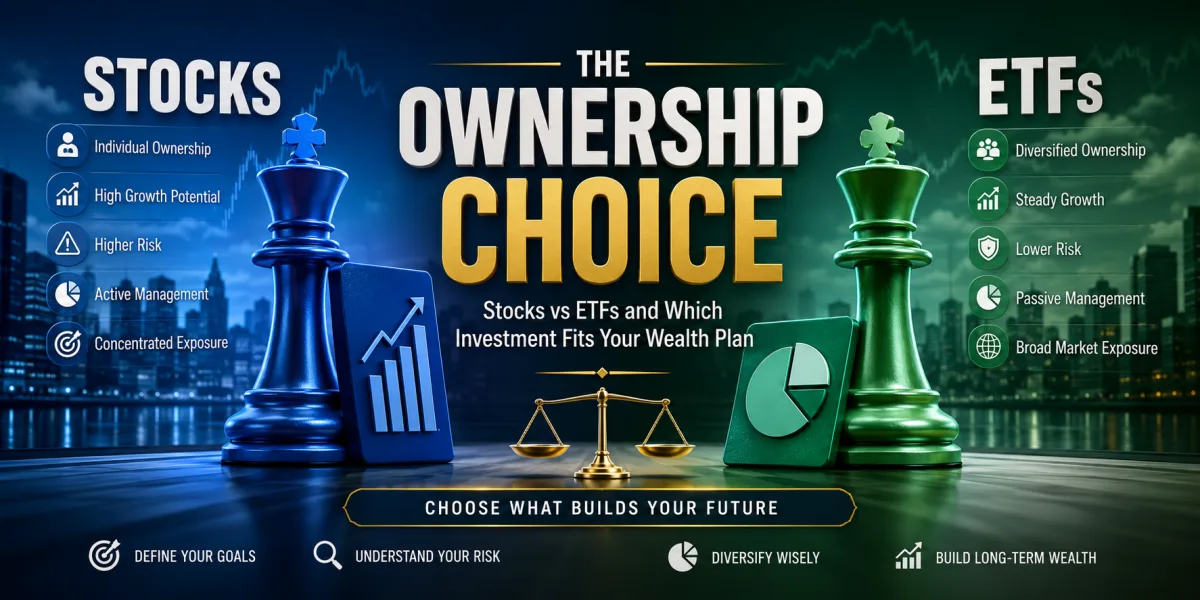
Lesson 8: ETFs Have Changed Investing for Everyday People
Exchange-traded funds have transformed investing by giving ordinary investors access to broad diversification at relatively low cost. Before products like ETFs became widely available, building a diversified portfolio often required more money, more expertise, and more effort. Investors had to select individual securities or rely on more expensive funds and intermediaries.
An ETF can hold hundreds or thousands of securities inside a single investment. With one purchase, an investor may gain exposure to a broad stock market index, a bond market, a sector, a region, a commodity strategy, or a particular investment theme. This has made portfolio construction simpler for millions of people.
For beginners, ETFs can reduce the pressure to pick winners. Instead of trying to identify which company will outperform, an investor can own a broad basket of companies. This approach acknowledges that predicting individual winners is difficult. It allows investors to participate in the growth of markets without depending on one company’s success.
ETFs also tend to be transparent. Investors can usually see what the fund owns, what index or strategy it follows, and what fee it charges. Many ETFs are tax-efficient compared with some traditional fund structures, though tax treatment depends on jurisdiction and individual circumstances.
But ETFs are tools, not guarantees. Some are simple, broad, and low cost. Others are narrow, leveraged, speculative, or designed for short-term trading rather than long-term investing. The existence of an ETF does not automatically make an idea prudent. Investors still need to understand what they own.
A broad market ETF can be an excellent foundation for a long-term portfolio. A highly concentrated thematic ETF may behave more like a speculative bet. A bond ETF may provide stability, but it can still decline when interest rates rise. A dividend ETF may generate income, but it may also concentrate exposure in certain sectors.
The key is alignment. Does the ETF serve your goals? Does it fit your risk tolerance? Is the fee reasonable? Do you understand the holdings? Does it complement the rest of your portfolio?
ETFs have democratized access, but they have not eliminated the need for judgment. Used wisely, they are among the most useful inventions in modern personal investing.
Lesson 9: Risk and Reward Are Connected
Every promise of unusually high return should invite one immediate question: what risk am I being asked to accept?
Risk and reward are connected because capital is competitive. If an investment could reliably deliver high returns with little risk, money would rush toward it until the opportunity disappeared. Sustainable high returns usually require some form of uncertainty, volatility, illiquidity, complexity, leverage, concentration, or business risk.
This does not mean higher risk always produces higher reward. That is a dangerous misunderstanding. Higher risk creates the possibility of higher return, but also the possibility of loss. Some risks are compensated. Others are simply foolish.
A young investor with a long time horizon may be able to accept more stock market volatility because they have decades to recover from downturns. A retiree depending on portfolio withdrawals may not be able to tolerate the same level of fluctuation. A person with stable income and low debt may have more flexibility than someone with uncertain employment and high monthly obligations.
Risk tolerance is not only mathematical. It is emotional and practical. Many investors believe they can tolerate losses until losses arrive. A portfolio that looks suitable on a spreadsheet may be impossible for a person to hold during a severe decline. The best portfolio is not the one with the highest theoretical return. It is the one the investor can stick with through real-world conditions.
Risk also changes depending on time horizon. Money needed next year should not be invested the same way as money intended for retirement in 30 years. Short-term goals require stability. Long-term goals can usually accept more volatility in pursuit of growth.
Understanding risk means looking beyond labels. “Safe” assets can lose purchasing power to inflation. “Growth” assets can become overpriced. “Income” assets can be vulnerable to rate changes or credit problems. “Alternative” investments can hide liquidity risk or complexity. “Guaranteed” products may contain trade-offs that are not obvious.
A serious investor does not chase return in isolation. They ask what could go wrong, how much they could lose, how quickly they might need the money, whether they understand the investment, and how it fits within the total portfolio.
Reward matters. But survival comes first.
Lesson 10: Cash Has a Purpose Too
Investors sometimes treat cash as a failure. Because cash may earn less than stocks or other growth assets over long periods, they assume every dollar not invested is wasted. This view misunderstands the role of liquidity.
Cash is not designed to maximize return. It is designed to provide stability, flexibility, and protection from forced selling.
An emergency fund is one of the most important parts of an investment plan. Without cash reserves, an unexpected expense can force an investor to sell assets at the worst possible time. A job loss, medical bill, car repair, home repair, family emergency, or business disruption can quickly turn a long-term investment account into a short-term survival fund.
Selling during a market downturn to cover an emergency can create permanent damage. The investor not only locks in losses but also reduces participation in the eventual recovery. A cash reserve prevents this by creating a buffer between life’s surprises and long-term assets.
The appropriate cash reserve depends on circumstances. A person with stable employment, low expenses, and strong family support may need less. A freelancer, business owner, single-income household, or person with dependents may need more. The common suggestion of three to six months of essential expenses is a starting point, not a universal law.
Cash also creates opportunity. During market declines, investors with available cash can rebalance, invest, or avoid panic. During personal transitions, cash buys time. It allows someone to change jobs, move cities, handle family obligations, or make thoughtful decisions without immediately liquidating investments.
Of course, holding too much cash can create its own risk. Over long periods, inflation can reduce purchasing power. A person who keeps all wealth in cash may feel safe but fail to build real wealth. The goal is balance. Cash should support the investment plan, not replace it.
Think of cash as the foundation beneath a building. The foundation is not the tallest or most admired part of the structure, but without it, everything above becomes vulnerable. Cash gives your investments the time and space they need to remain invested.
Lesson 11: Economic News Should Not Dictate Every Decision
Financial headlines are designed to capture attention. They are not designed to manage your portfolio.
Every day brings new information: inflation reports, employment data, central bank comments, corporate earnings, political developments, geopolitical tensions, housing numbers, oil prices, currency moves, analyst forecasts, and recession warnings. Some of this information matters. Much of it matters less than the emotional reaction it creates.
The problem is not being informed. The problem is allowing every piece of news to override a long-term plan.
Markets are forward-looking. By the time news feels obvious to the public, prices may already reflect much of it. A recession headline does not automatically mean stocks will fall from that point. A strong economic report does not guarantee future gains. A political event may dominate conversation for a week and have little effect on the long-term value of a diversified portfolio.
Short-term news can create the illusion of control. Investors feel that if they just read enough, watch enough, and react quickly enough, they can stay ahead. But constant reaction often leads to overtrading, anxiety, and poor timing.
A better approach is to separate signal from noise. Signal relates to your goals, asset allocation, risk tolerance, income needs, tax situation, debt obligations, and the fundamental quality of what you own. Noise is the daily stream of information that creates urgency without necessarily changing your long-term plan.
This does not mean ignoring reality. Major changes can matter. A permanent impairment in a business, a change in personal circumstances, a liquidity need, or a shift in long-term assumptions may require action. But the bar for action should be higher than discomfort.
Many successful investors deliberately reduce the frequency of portfolio checks. They review periodically, rebalance thoughtfully, and avoid making decisions during emotional news cycles. This is not neglect. It is discipline.
The market will always provide reasons to worry. If you require a calm world before investing, you may never invest. Wealth is often built by people who can act reasonably in an unreasonable news environment.
Lesson 12: Great Businesses Create Great Investments
Behind every stock is a business. This simple truth is easy to forget when prices flash on a screen. A share is not merely a ticker symbol. It is an ownership claim on a company’s future profits, assets, strategy, and competitive position.
Over long periods, investment returns are heavily influenced by business performance. Companies that can grow revenue, maintain margins, reinvest capital wisely, defend competitive advantages, and adapt to change may create substantial value for owners. Weak businesses, even when temporarily cheap, can destroy capital.
Quality matters. A great business often has several characteristics: a durable competitive advantage, capable management, strong balance sheet, recurring demand, pricing power, healthy cash flow, and a long runway for growth. These qualities do not guarantee success, but they improve the odds.
Competitive advantage is especially important. A company may have a powerful brand, network effects, cost advantages, intellectual property, regulatory licenses, customer loyalty, distribution strength, or scale benefits. These advantages help protect profits from competitors.
But investors must also consider price. A great business can be a poor investment if purchased at an extreme valuation. Paying too much reduces future returns because the market has already priced in high expectations. The ideal investment combines business quality with a reasonable price.
This is why disciplined investors study both fundamentals and valuation. They ask: How does the company make money? What protects its profits? How much debt does it carry? Can it survive downturns? Is management allocating capital intelligently? Are customers loyal? Is the industry growing or shrinking? What expectations are already reflected in the price?
For investors who do not want to analyze individual businesses, broad funds offer a practical alternative. By owning a diversified basket, they reduce dependence on identifying specific winners. But even fund investors benefit from understanding that markets ultimately represent ownership in real businesses.
Investing becomes clearer when viewed through the lens of ownership. You are not buying a symbol. You are buying a claim on future economic activity. The better that activity, and the more reasonable the price paid for it, the stronger the investment foundation.
Lesson 13: Consistency Beats Perfection
Many people never build wealth because they are waiting for perfect conditions. They want the perfect stock, the perfect entry point, the perfect market environment, the perfect salary, the perfect strategy, or the perfect certainty that no loss will occur.
Perfection is expensive because it often leads to inaction.
The investor who contributes regularly through good markets and bad may outperform the person who spends years searching for an ideal moment. This is because wealth is built through participation. You cannot benefit from compounding while waiting permanently on the sidelines.
Consistency reduces the emotional burden of investing. A regular contribution plan removes the need to decide every month whether the market is attractive. Sometimes you buy when prices are high. Sometimes you buy when prices are low. Over time, this can smooth entry points and turn volatility into a normal part of the process.
This does not require blind investing. Asset allocation should still be thoughtful. Emergency funds should still exist. Debt, taxes, goals, and risk tolerance still matter. But once a sound plan is established, consistency becomes more valuable than constant optimization.
Perfection also creates another problem: regret. If an investor waits for the perfect time and the market rises, they regret not buying. If they buy and the market falls, they regret not waiting. Regret can become paralyzing. A consistent process reduces the emotional weight of any single decision.
The same lesson applies to learning. You do not need to understand every financial concept before beginning. You can start with simple, diversified investments while continuing to learn. Waiting until you feel like an expert may delay progress for years.
Consistency is not exciting. It does not produce the thrill of a dramatic market call. But it creates a rhythm of wealth building. Save. Invest. Reinvest. Review. Rebalance. Repeat. Over time, this rhythm can become more powerful than brilliance applied inconsistently.
The market does not require perfection from long-term investors. It rewards discipline, patience, and repeated sensible action.
Lesson 14: Learning Never Stops
Investing is simple at the level of principle and complex at the level of practice. The basic ideas are accessible: spend less than you earn, invest the difference, diversify, keep costs low, manage risk, think long term. But applying those ideas across changing life circumstances and market environments requires ongoing learning.
Markets evolve. New industries emerge. Old business models decline. Regulations change. Tax rules change. Interest rate environments shift. Technology creates opportunities and destroys incumbents. Financial products multiply. Investor behavior remains familiar, but the setting keeps changing.
A lifelong learner does not chase every new trend. They build a foundation strong enough to evaluate new information intelligently. They understand the difference between education and noise.
Good financial education helps investors ask better questions. Instead of asking, “What will go up next?” they ask, “What role does this asset play in my portfolio?” Instead of asking, “How much can I make?” they ask, “What risk am I taking, and am I being compensated for it?” Instead of asking, “What is everyone buying?” they ask, “Does this fit my goals?”
Learning also protects against overconfidence. Investors who experience early success may mistake a favorable market environment for personal skill. They may increase risk, abandon diversification, or believe they have mastered the market. Continued learning reminds them that markets are humbling.
Education should include history. Financial history shows that bubbles, crashes, manias, frauds, recoveries, innovations, and cycles are recurring features of markets. The assets change, but the patterns of human behavior often rhyme. Studying past episodes helps investors recognize familiar dangers in new clothing.
Learning should also include personal reflection. Your financial life changes over time. A strategy suitable at 25 may not be suitable at 55. Marriage, children, business ownership, health issues, inheritance, retirement, relocation, and career changes can all affect investment decisions. A good investor updates the plan as life changes.
The goal is not to become obsessed with finance. The goal is to become financially literate enough to make sound decisions, avoid obvious traps, and know when professional advice is worth seeking.
Money rewards learning because mistakes can be expensive. Every concept understood, every risk avoided, and every discipline strengthened can pay dividends for decades.
Lesson 15: Wealth Building Requires Patience
Most real wealth is built slowly. This is difficult to accept in a culture that celebrates speed, visibility, and sudden success. Stories of overnight fortunes attract attention, but they often leave out the years of preparation, risk, luck, failure, or survivorship bias behind them.
The everyday path to wealth is usually less dramatic: earn income, control spending, avoid destructive debt, invest consistently, protect against catastrophe, increase skills, own assets, and allow time to work. From the outside, this process can look boring. From the inside, it can create freedom.
Patience matters because the largest rewards often arrive late. Compounding is back-loaded. Business growth takes time. Real estate equity builds over years. Dividends and reinvested returns accumulate gradually. Career income may rise through skill development and reputation. Financial security is rarely the result of one decision. It is the result of many decisions repeated.
Impatience leads investors toward speculation. They become attracted to assets promising quick wealth. They take excessive leverage. They abandon diversified strategies. They compare their steady progress to someone else’s highlight reel. They forget that a shortcut can become a trap.
Patience does not mean passivity. A patient investor is still active in the right ways. They save aggressively when possible. They review their plan. They learn. They manage risk. They rebalance. They look for opportunities. But they do not demand instant results from a long-term process.
Patience also helps during downturns. When markets fall, impatient investors ask, “How do I stop the pain now?” Patient investors ask, “Has my long-term thesis changed?” That difference can determine whether a person sells at the bottom or stays positioned for recovery.
Wealth building is not a test of who can move fastest. It is a test of who can remain disciplined longest.
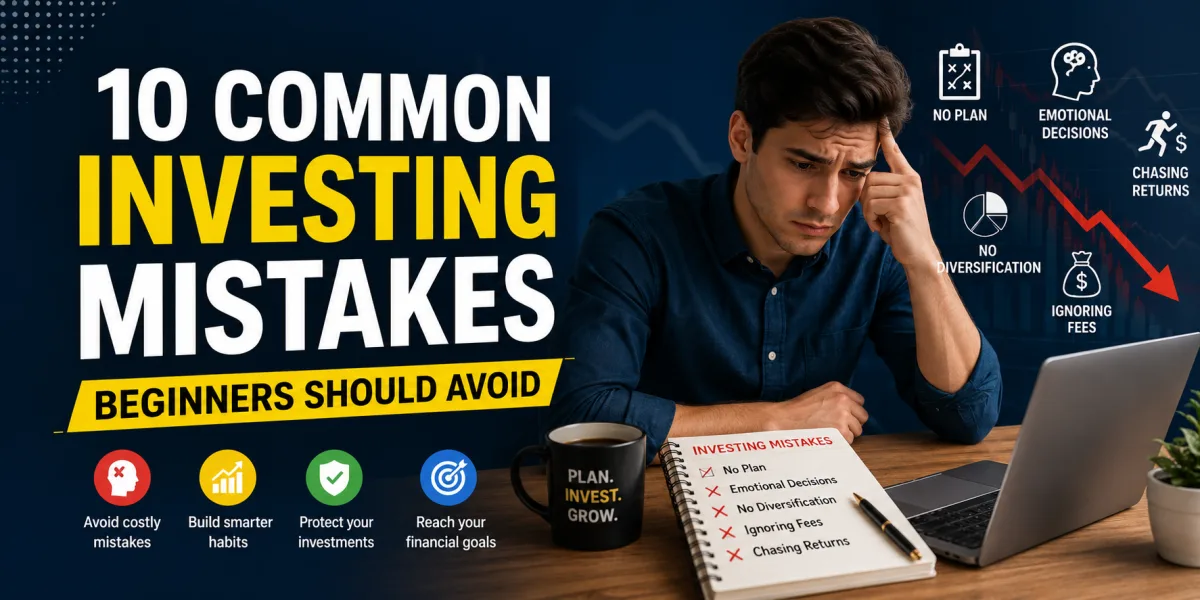
Common Investing Mistakes to Avoid
Even intelligent investors make avoidable mistakes. In fact, intelligence can sometimes make the mistakes worse, because smart people are often skilled at justifying emotional decisions with impressive explanations.
One common mistake is chasing performance. Investors look at what has recently done well and assume it will continue. They buy after the easy money has already been made. This often happens with hot sectors, popular funds, fashionable stocks, and speculative assets. Recent performance can provide information, but it is not a complete investment thesis.
Another mistake is panic selling. During downturns, investors may abandon quality assets because losses feel unbearable. Selling can provide emotional relief, but it may also turn temporary volatility into permanent loss. A better approach is to decide in advance how much volatility you can tolerate and build a portfolio that matches that reality.
A third mistake is ignoring diversification. Concentration can create wealth, especially for entrepreneurs and exceptional investors, but it can also destroy it. Most households should be careful about tying too much of their financial future to one company, sector, property, employer, or country.
Excessive risk-taking is another danger. High returns are appealing, but investors must understand what could go wrong. Leverage, illiquid assets, complex products, speculative securities, and concentrated bets can produce severe losses. If you cannot explain an investment clearly, you may not understand it well enough to own it.
Many investors also underestimate fees and taxes. Costs that seem small can compound into large differences. Tax-inefficient trading can reduce after-tax returns. The goal is not to avoid all taxes or all fees, but to manage them intelligently.
Another mistake is investing without a written plan. Without a plan, every decision becomes vulnerable to mood and market conditions. A written plan should outline goals, time horizons, contribution amounts, asset allocation, rebalancing rules, emergency reserves, and conditions that would justify changes.
Finally, many investors confuse entertainment with education. Financial media can be useful, but much of it is designed for attention. Predictions, debates, and dramatic headlines may create urgency without improving decisions. Serious investing is usually quieter than financial entertainment suggests.
How to Turn These Lessons Into an Investment Plan
Principles become valuable when they shape behavior. Knowing that compounding matters is useful. Building a system that allows compounding to happen is better.
The first step is defining your goals. Money intended for a home purchase in two years should not be invested like retirement money needed in thirty years. Each goal needs a time horizon, priority level, and risk profile.
The second step is building financial stability. Before investing aggressively, many people need an emergency fund, manageable debt, adequate insurance, and a basic spending plan. Investing works best when life’s predictable surprises do not constantly force withdrawals.
The third step is choosing an asset allocation. This is the mix of stocks, bonds, cash, real estate, and other assets that matches your goals and risk tolerance. Asset allocation is one of the most important decisions an investor makes because it determines much of the portfolio’s behavior.
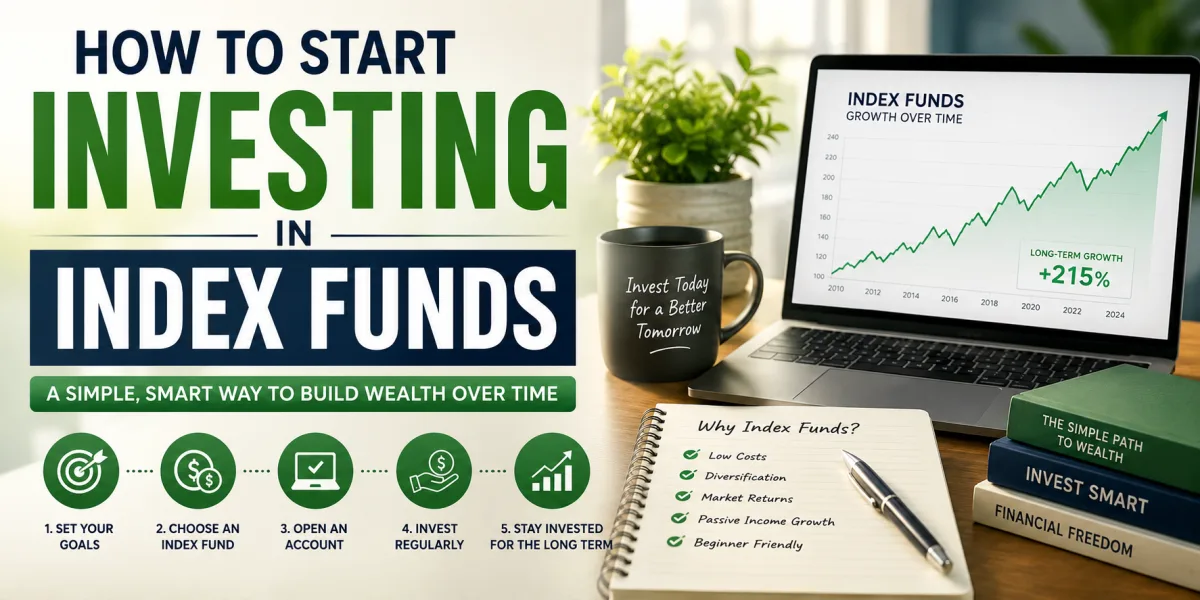
The fourth step is selecting investment vehicles. For many people, low-cost diversified ETFs or index funds can provide a strong foundation. Others may include individual stocks, bonds, real estate, retirement accounts, or professionally managed strategies. The key is understanding why each holding belongs.
The fifth step is automating contributions when possible. Automation turns investing from a monthly debate into a habit. It helps remove emotion and ensures that wealth building happens before money is absorbed by lifestyle spending.
The sixth step is reviewing periodically. A portfolio does not need constant attention, but it does need maintenance. Rebalancing can bring risk back in line with the plan. Life changes may require adjustments. Fees, taxes, and performance should be reviewed thoughtfully.
The final step is protecting behavior. The best investment plan is useless if abandoned during stress. This is why the plan should be realistic. Do not build a portfolio for the person you wish you were during a crash. Build one for the person you are likely to be when markets are frightening.
The Deeper Lesson: Investing Is Ownership
At its core, investing is about ownership. This is the idea many people miss.
Consumers spend money and receive immediate use. Owners buy assets that may produce income, appreciate in value, or create future opportunities. A healthy financial life includes consumption, but wealth is built when ownership becomes a priority.
When you invest in stocks, you own claims on businesses. When you invest in bonds, you lend capital in exchange for interest. When you invest in real estate, directly or indirectly, you own or finance productive property. When you build a business, you create an asset that may generate cash flow beyond your labor.
This shift from consumption to ownership changes how you see money. A dollar is no longer only something to spend. It is potential capital. It can buy convenience today, or it can buy future income, flexibility, and freedom. The goal is not to reject enjoyment, but to understand opportunity cost.
Every investor must learn to balance present life and future security. Extreme deprivation is not sustainable for most people. But constant consumption prevents capital formation. Wealth emerges when enough money is consistently directed toward assets instead of disappearing into lifestyle inflation.
Ownership also creates psychological independence. A person with assets has options. They may tolerate a bad job for less time, handle emergencies with less panic, support family with more confidence, retire with more dignity, or pursue opportunities that require patience. Money is not only about luxury. It is about control over time and choices.
This is why investing education matters. It teaches people how to participate in the productive economy rather than only consume from it. It turns wages into capital, capital into assets, and assets into future freedom.
Your Action Step
Investment knowledge is only useful if it changes behavior. Choose one lesson from this article and act on it.
If you have not started investing, learn the basics of a diversified portfolio and consider making your first responsible contribution. If you already invest, review your fees. If your portfolio is concentrated, examine your diversification. If you have no emergency fund, build one before taking more risk. If you react emotionally to market news, write an investment plan before the next downturn tests you.
Do not try to transform your entire financial life in one afternoon. Wealth is built one decision at a time. The important thing is to move from passive intention to deliberate action.
The market will continue to rise and fall. Headlines will continue to create anxiety. New products will continue to promise easier paths. Other people will continue to boast about gains and hide losses. None of that changes the foundation.
Start early. Respect compounding. Think long term. Diversify. Control emotions. Avoid market timing. Keep fees low. Use simple tools wisely. Understand risk. Hold enough cash. Ignore unnecessary noise. Focus on quality. Stay consistent. Keep learning. Be patient.
These lessons are timeless because they are built on realities that do not disappear: time rewards discipline, risk requires respect, behavior shapes outcomes, and ownership remains one of the strongest paths to long-term wealth.
The investor who understands this does not need to chase every opportunity. They need to build a strategy that can endure. In investing, endurance is often the quiet advantage that makes everything else possible.
 Article
 Article
 Article
 Article
 Article
 Article
 Article
 Article