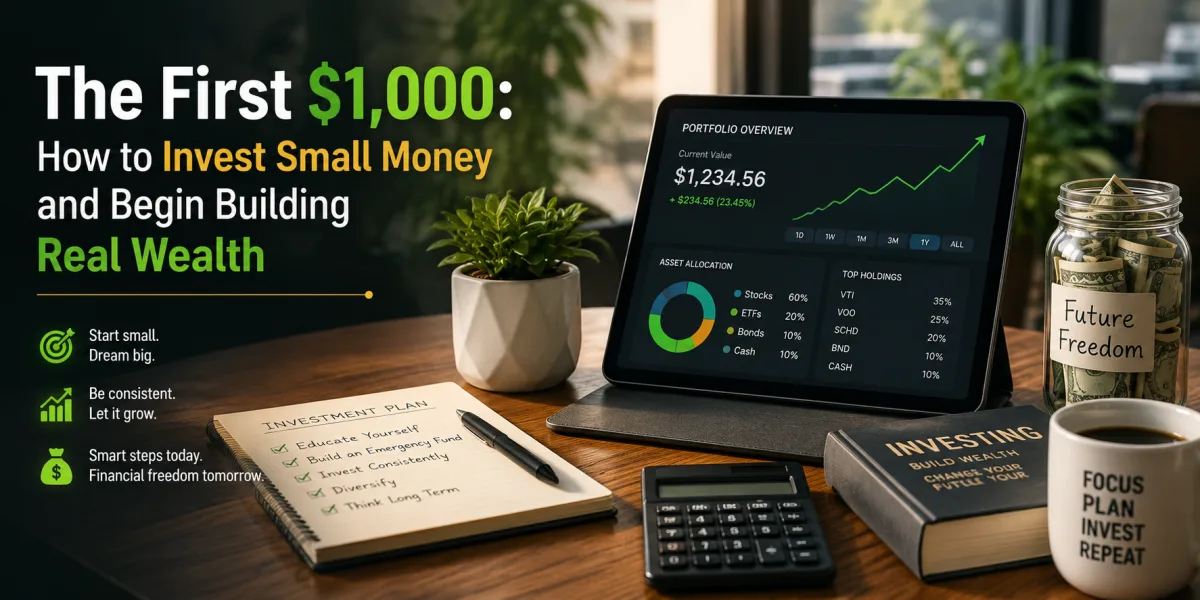
The First $1,000: How to Invest Small Money and Begin Building Real Wealth
One thousand dollars will not make anyone rich overnight. It will not buy financial independence, replace a salary, or produce enough passive income to change a household’s life immediately. But that is not the right way to judge it.
The first $1,000 matters because it can mark the moment a person stops only earning and spending, and begins owning. It is the point where money becomes more than a tool for bills, emergencies, and consumption. It becomes seed capital. It becomes proof that wealth building is not reserved for people who already have large sums. It starts with a decision to place money where it can grow.
That decision is more important than the amount.
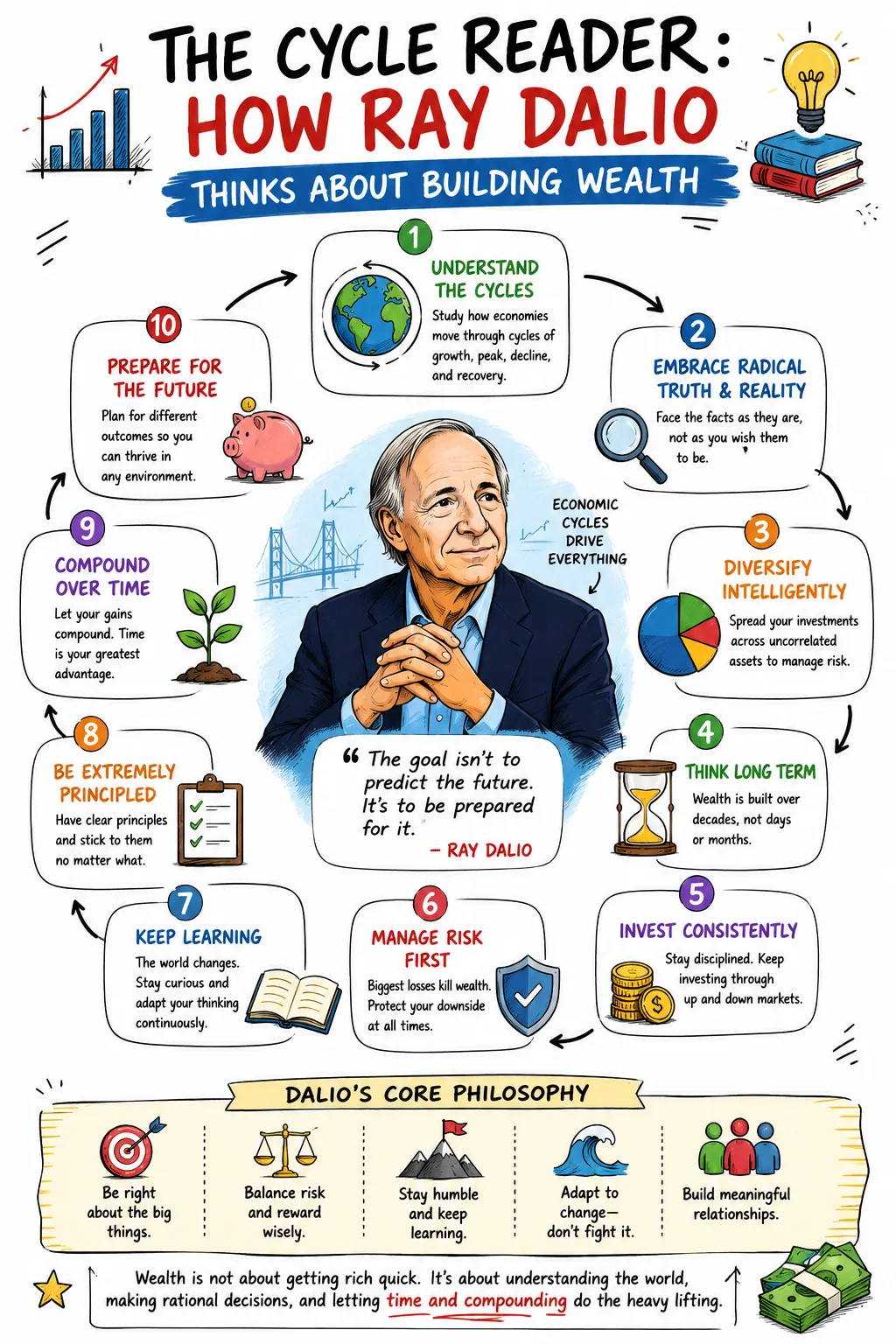
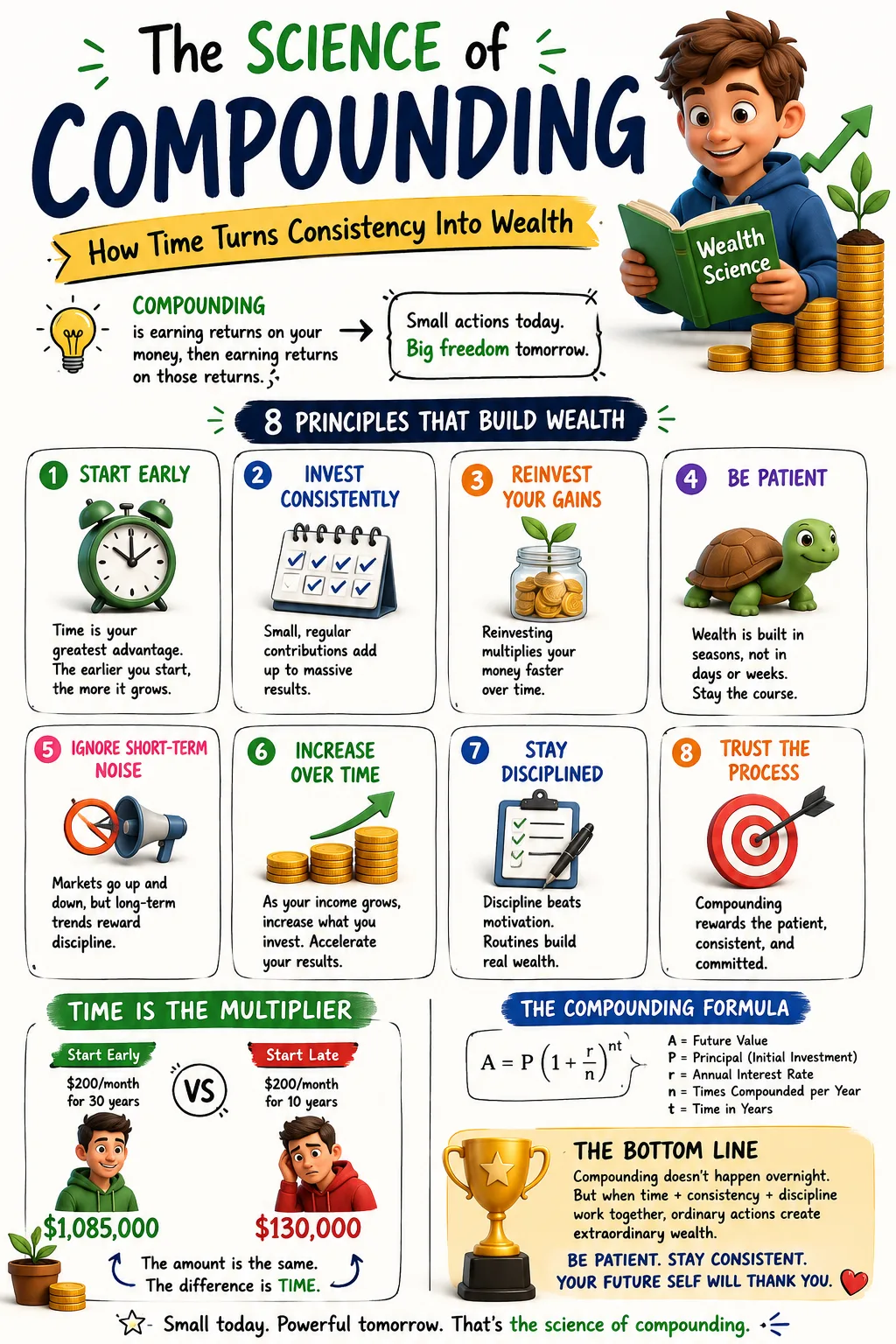
Many people delay investing because they believe they need more money first. They imagine investing as something that begins at $10,000, $50,000, or $100,000. That belief quietly keeps them on the sidelines while time passes. Wealth is not built only by large checks. It is built by repeated ownership, disciplined contributions, and allowing time to do what time does best: compound.
The U.S. Securities and Exchange Commission’s Investor.gov compound interest calculator is built around this principle: an initial investment, future contributions, time, and expected return interact to determine how money can grow. The calculator is simple, but the lesson is profound. The first deposit matters less than the system that follows it.
Investing $1,000 well does not mean chasing the hottest stock, buying whatever is trending online, or trying to turn a small amount into a fortune through speculation. It means using that money to build a foundation: financial stability, ownership of productive assets, retirement progress, useful skills, or reduced financial drag.
The best investment for $1,000 depends on your situation. Someone with no emergency savings may need a cash reserve before buying stocks. Someone with high-interest credit card debt may get the best return by paying it down. Someone with an employer retirement match may need to capture that match first. Someone with stable finances may invest in diversified index funds. Someone with limited earning power may use part of the money to increase income through a credential, tool, or skill.
The question is not, “What investment will make me rich quickly?” The better question is, “Where can this $1,000 create the strongest next step in my financial life?”
Before Investing: Make Sure the Foundation Is Stable
Investing is powerful, but it is not a substitute for financial stability. A person who invests $1,000 while having no cash reserve, overdue bills, and high-interest debt may feel productive while remaining fragile. The first step is to decide whether the money should be invested in markets, kept in cash, used to eliminate debt, or spent on increasing income.
Start with emergency savings. If you have no cash reserve at all, placing the entire $1,000 into stocks may be premature. The market can fall at the same time your car breaks down, your hours are reduced, or a medical bill arrives. If you must sell investments during a downturn to handle an emergency, you may lock in losses and weaken the very plan you were trying to build.
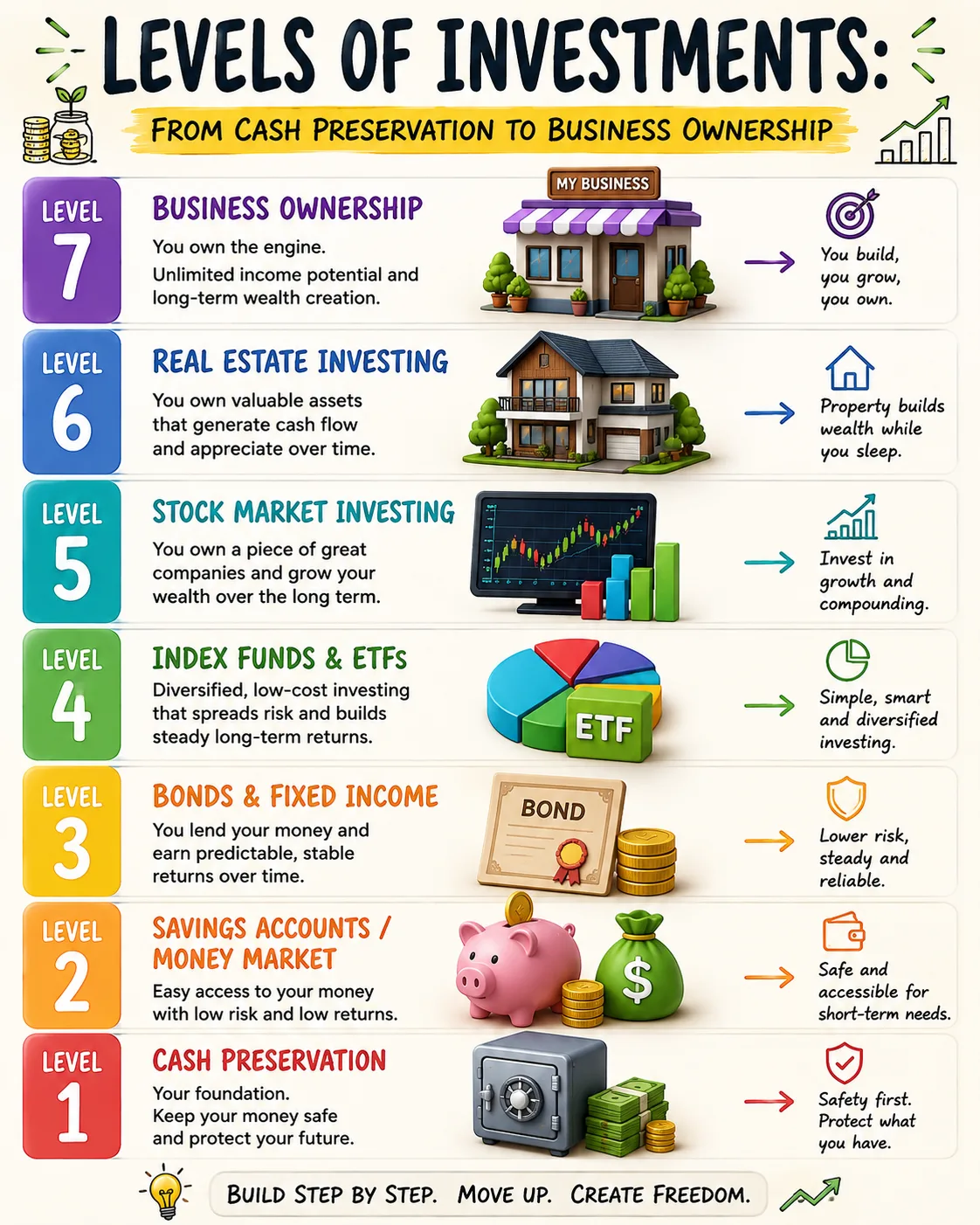
A starter emergency fund of $500 to $1,000 can prevent small disruptions from becoming expensive debt. This money should be kept safe and liquid, not exposed to market risk. A high-yield savings account or insured deposit account can be appropriate. The FDIC states that deposit insurance covers $250,000 per depositor, per FDIC-insured bank, for each account ownership category. That protection is one reason emergency cash belongs in an insured banking product rather than in speculative assets.
Next, look at high-interest debt. If you owe money on a credit card at a high interest rate, paying it down may be one of the strongest uses of $1,000. The reason is simple. Avoiding a high interest charge is economically similar to earning a guaranteed return equal to that rate. If a credit card charges 24 percent interest, reducing the balance can produce a risk-free benefit that most investments cannot promise.
Then consider whether you have access to an employer retirement match. If your employer matches retirement contributions, failing to contribute enough to capture the match can mean leaving compensation behind. A dollar-for-dollar match on the first portion of contributions is difficult to beat because it produces an immediate return before investment growth begins.
Only after these foundations are considered should market investing become the main focus. This sequence may feel slower, but it is stronger. Wealth grows best when it is not constantly interrupted by emergencies, interest charges, and avoidable instability.
The Best Use of $1,000 Depends on Your Financial Stage
There is no universal best investment because not everyone is standing in the same place. A good decision for one person can be a poor decision for another.
If you have no emergency fund, the best use may be cash savings. That may not sound like investing, but it is an investment in resilience. It prevents small crises from turning into debt. It buys time, options, and calm.
If you have high-interest debt, the best use may be repayment. Paying down a credit card balance can immediately improve cash flow, reduce interest, and lower financial stress. It may also improve credit utilization over time.
If your employer offers a retirement match and you are not capturing it, the best use may be increasing contributions through your workplace plan. Even if the $1,000 itself stays in your checking account to support cash flow while payroll contributions rise, the effect can be powerful.
If your emergency fund is in place and toxic debt is under control, the best use may be a Roth IRA, traditional IRA, taxable brokerage account, or employer retirement plan. For 2026, the IRS states that the total annual contribution limit for traditional and Roth IRAs is $7,500, or $8,600 for people age 50 or older, subject to taxable compensation and eligibility rules.
If your income is low or unstable, the best use may be skill-building. A certification, licensing exam, professional tool, course, portfolio website, trade equipment, or business setup cost can sometimes produce a higher lifetime return than a small investment account. This is especially true when $1,000 helps increase earning power.
This is the first principle of small-money investing: put the money where it removes the biggest constraint. Sometimes the constraint is lack of assets. Sometimes it is lack of cash. Sometimes it is debt. Sometimes it is income.
Option One: Build a Starter Emergency Fund
For someone starting from zero, the most responsible first investment may be a safe cash reserve. This is not exciting, but it is foundational. A person with $1,000 saved is in a different financial position from a person with no savings. They may still have problems, but the first layer of panic is reduced.
Emergency cash should be held in a place that is safe, accessible, and separate from daily spending. A high-yield savings account can be useful because it may earn interest while preserving liquidity. The goal is not maximum return. The goal is protection.
This is where many beginners misunderstand risk. They think the risk is missing out on stock market gains. But if they have no emergency fund, the bigger risk may be forced borrowing. A $700 surprise expense placed on a credit card can cost far more than the potential investment gain missed by keeping $1,000 in savings for a few months.
Cash is not a wealth-building asset over long periods because inflation can erode purchasing power. But cash is a wealth-protection asset. It protects the investment plan from being raided. It protects the household from using debt for every surprise. It protects the mind from constant financial alarm.
Once the starter emergency fund is built, future dollars can be directed more aggressively toward debt repayment and investing. The cash reserve is not the end of the strategy. It is the floor beneath it.
Option Two: Pay Down High-Interest Debt
Paying off high-interest debt is not always described as investing, but it often behaves like one of the best investments available. Suppose a borrower has a credit card balance with a high APR. Every dollar paid toward that balance reduces future interest. That reduction is certain. Unlike stocks, there is no market volatility attached to the benefit.
This matters because beginners often compare debt repayment with investing using unrealistic expectations. They may think, “The market could return 8 percent, so I should invest instead of paying debt.” But if the debt costs 20 percent or more, the comparison is not close. The guaranteed savings from repayment may be more valuable than the uncertain return from investing.
Debt repayment also improves cash flow. A lower balance can mean less interest, faster payoff, and eventually fewer monthly obligations. That creates room for future investing. Paying down debt is not anti-investing. It can be the step that makes investing sustainable.
There are exceptions. Low-interest debt, such as certain mortgages or student loans, may not need to be attacked before investing. The interest rate, tax treatment, loan terms, and personal risk tolerance all matter. But high-interest consumer debt is different. It is a leak in the wealth-building bucket. Before filling the bucket, patch the leak.
Option Three: Capture an Employer Match
If your employer offers a 401(k), 403(b), or similar retirement plan with a match, this may be one of the strongest places to direct your first investment dollars. An employer match is part of your compensation. Not taking it is like declining a portion of your pay.
For example, suppose an employer matches 100 percent of contributions up to 4 percent of salary. If you earn $50,000 and contribute $2,000, the employer may contribute another $2,000, depending on plan rules. That is an immediate doubling of the contribution before investment returns. Few opportunities offer that kind of starting advantage.
For 2026, the IRS announced that the employee contribution limit for 401(k), 403(b), most 457 plans, and the federal Thrift Savings Plan increased to $24,500. This does not mean beginners need to contribute that much immediately. It means these accounts can become powerful long-term vehicles as income rises.
If you have $1,000 available, one strategy is to use it as a cash-flow buffer while increasing payroll contributions enough to capture the match. Since workplace plan contributions usually come from paychecks, the $1,000 may not be deposited directly into the plan. Instead, it helps cover expenses while more of your paycheck goes into the retirement account.
The key is not the mechanics. The key is capturing the match as soon as financially possible. A match turns your money into more money on day one.
Option Four: Open and Fund an IRA
An individual retirement account can be a strong home for a first $1,000 investment. IRAs are widely available through brokerage firms, and many allow investors to buy low-cost index funds or exchange-traded funds with small amounts.
The two main types are traditional IRAs and Roth IRAs. A traditional IRA may offer a tax deduction depending on income, workplace retirement coverage, and IRS rules. Investments then grow tax-deferred, and withdrawals in retirement are generally taxed as income. A Roth IRA is funded with after-tax dollars, but qualified withdrawals in retirement can be tax-free.
For many beginners, a Roth IRA can be attractive if they are in a lower tax bracket today and expect to be in a higher one later. It also offers flexibility because Roth IRA contributions, not earnings, can generally be withdrawn without tax or penalty. That does not mean a Roth IRA should be treated like a savings account. Retirement money should remain invested for retirement whenever possible. But the flexibility can be useful.
A traditional IRA may be more attractive for someone who wants a current tax deduction and expects to be in a lower tax bracket later. The decision depends on income, tax situation, retirement plan access, and long-term expectations.
The account is only the wrapper. The investments inside matter. A $1,000 IRA invested in a diversified index fund is different from a $1,000 IRA used to speculate on a single volatile stock. The account provides tax structure. The portfolio provides exposure.
Option Five: Buy a Broad Index Fund
For a beginner who has emergency savings, manageable debt, and no immediate need for the money, a broad low-cost index fund is often one of the cleanest ways to begin investing.
An index fund owns a basket of securities designed to track a market index. A total U.S. stock market index fund may own shares of thousands of companies. An S&P 500 index fund owns large U.S. companies represented in that index. A total international stock fund provides exposure outside the United States. A total bond market fund owns a diversified mix of bonds.
The advantage is diversification. Instead of betting $1,000 on one company, the investor owns small pieces of many companies. Investor.gov defines diversification as spreading investments among different asset categories and securities to reduce risk. Diversification does not eliminate the risk of loss, but it can reduce the impact of any single investment performing poorly.
Broad index funds also tend to have low costs. Costs matter because every dollar paid in fees is a dollar that does not compound for the investor. A fund with a very low expense ratio allows more of the investment return to remain in the account.
The downside is that index funds still fluctuate. A stock index fund can fall sharply during market downturns. A beginner must understand that volatility is not a malfunction; it is part of equity ownership. The reward for accepting long-term volatility is the possibility of long-term growth.
A $1,000 index fund investment should be viewed as a seed, not a finished garden. Its true power emerges when followed by monthly contributions.
Option Six: Use a Target-Date Fund
A target-date fund is a diversified fund designed around a projected retirement year. A 2065 target-date fund, for example, is built for someone expecting to retire around 2065. The fund typically holds a mix of stocks and bonds and gradually becomes more conservative as the target date approaches.
Target-date funds can be useful for beginners because they simplify asset allocation. Instead of choosing several funds and deciding how to rebalance them, the investor chooses one fund aligned with a time horizon. This can reduce decision paralysis.
The quality and cost of target-date funds vary. Some are low-cost and broadly diversified. Others are more expensive. Beginners should check the expense ratio and understand the fund’s stock-bond mix. A target-date fund is simple, but it should not be blindly chosen.
For someone investing the first $1,000 inside an IRA or workplace retirement plan, a low-cost target-date fund can be a practical default. It is not perfect for every investor, but it is often better than leaving money uninvested because the choices feel overwhelming.
Option Seven: Invest in Skills That Increase Income
Not every investment belongs in a brokerage account. For some people, the best use of $1,000 is to increase earning power.
This could mean a professional certification, licensing fee, exam preparation course, trade tool, software subscription, portfolio website, business registration, industry conference, language course, sales training, bookkeeping system, or equipment that allows paid work. The return on skill investment can be substantial if it leads to higher wages, more clients, a promotion, or a new business opportunity.
Consider someone earning $42,000 per year who spends $800 on a certification that helps them move into a $50,000 role. That $8,000 annual income increase can matter far more than the first-year return on a $1,000 index fund. The key is that the skill investment must be practical. It should connect to a real income path, not vague self-improvement.
Before spending the money, ask: Will this skill help me earn more within the next 6 to 24 months? Is there clear demand for it? Do people actually get paid for this? Can I verify the outcome through job postings, client demand, salary data, or conversations with people in the field?
Skill investing works best when it is tied to execution. A course alone does not create wealth. A course followed by applications, client outreach, portfolio building, negotiation, or business development can.
Option Eight: Start a Small Business or Side Income Stream
One thousand dollars can also serve as startup capital for a small side business. This does not mean launching a complicated company. It may mean funding basic tools, a website, marketing materials, supplies, insurance, software, or equipment for a service business.
Service businesses are often better suited to small capital than product businesses because they rely more on skill and effort than inventory. Examples include tutoring, cleaning, lawn care, pet services, bookkeeping, freelance writing, design, photography, mobile detailing, repair work, consulting, coaching, meal preparation, or event support.
The goal is to turn $1,000 into a repeatable income engine. If a tool allows you to earn $200 per weekend, the return can be extraordinary. But business investing carries execution risk. Money can be wasted on logos, websites, ads, inventory, or courses before anyone validates demand.
The disciplined approach is to sell first and polish later. Identify a service people already pay for. Find the first customer. Use the $1,000 only for what is necessary to deliver professionally. Reinvest profits. Avoid debt. Keep records. Separate business money from personal money.
Small business income can accelerate wealth because it expands the savings rate. A household that earns an extra $500 per month and invests it can change its financial trajectory.
What Not to Do With $1,000
There are many productive ways to invest $1,000. There are also many ways to lose it quickly.
Do not put all of it into a single stock because someone online says it is about to soar. Concentrated investing can produce big gains, but it can also produce permanent losses. Beginners often underestimate how difficult it is to evaluate a business, its valuation, its competition, its balance sheet, and the expectations already priced into the stock.
Do not use leverage. Borrowed money magnifies losses. A beginner trying to grow $1,000 with margin, options, or leveraged products may discover that risk moves faster than learning.
Do not chase crypto or speculative assets with money you cannot afford to lose. Some investors allocate small portions of a portfolio to speculative assets, but speculation should not be confused with a foundation.
Do not buy financial products you do not understand. Complexity is not proof of sophistication. If the fees, risks, liquidity, tax treatment, and downside are unclear, pause.
Do not spend the money on motivation disguised as education. A useful course teaches a skill with market value. A motivational product sells excitement without a practical path.
Do not wait forever for the perfect moment. Markets rise and fall. Headlines change. Interest rates move. The beginner’s greatest asset is not perfect timing. It is time itself.
The Power of Adding More
The first $1,000 is important, but the habit that follows is what builds wealth. A single deposit can grow, but repeated deposits transform the outcome.
Suppose an investor starts with $1,000 and adds $100 per month. Over years and decades, the contributions become the real engine. Investment returns then compound on both the original deposit and the ongoing contributions. The result is not created by one brilliant decision. It is created by a system.
This is where many beginners become discouraged unnecessarily. They look at the first month’s investment return and see only small changes. A 2 percent gain on $1,000 is $20. That feels minor. But the early stage is not about impressive dollar gains. It is about building the machine.
The machine has four parts: regular contributions, diversified ownership, low costs, and patience. Once those parts are in place, the investor can increase the contribution amount as income rises, debt falls, or spending becomes more intentional.
A person who can invest $100 per month today may be able to invest $250 later. Then $500. Then $1,000. The first $1,000 teaches the system. Future income gives the system power.
How to Choose the Right Account
The account you choose determines tax treatment, access, and rules. The investment you choose determines what you own. Beginners should understand the difference.
A high-yield savings account is appropriate for emergency money or short-term goals. It is safe and liquid, but not designed for long-term wealth growth.
A workplace retirement account is useful when an employer match is available or when the investor wants automatic payroll contributions and tax advantages. The investment menu may be limited, but the convenience and match can be powerful.
A Roth IRA can be useful for long-term retirement savings, especially for people who qualify and expect future tax rates to be higher. It offers tax-free qualified withdrawals and flexible access to contributions, though retirement money should generally remain invested.
A traditional IRA can be useful for tax-deferred growth and possible current deductions, depending on eligibility.
A taxable brokerage account is useful for flexibility. There are no retirement contribution limits or age-based access rules, though taxes may apply to dividends, interest, and realized gains.
A health savings account can be powerful for eligible people with high-deductible health plans because it offers tax advantages for qualified medical expenses. It should be considered when healthcare planning is part of the strategy.
The best account depends on purpose. Money needed within a year does not belong in a stock fund inside a brokerage account. Retirement money does not belong idle in checking. Business startup money should not be locked in a retirement account. Match the account to the job.
A Simple $1,000 Investment Plan for Different People
For someone with no savings, put the $1,000 in a high-yield savings account as a starter emergency fund. Then begin monthly investing after the cash buffer is stable.
For someone with credit card debt, use the $1,000 to reduce the balance, then redirect the freed-up interest and payments toward savings and investing.
For someone with an employer match, use the $1,000 as a buffer while increasing payroll contributions enough to capture the full match.
For someone with stable cash and no high-interest debt, open a Roth IRA or taxable brokerage account and invest in a low-cost diversified index fund or target-date fund.
For someone with unstable income, split the money between emergency savings and income-building. For example, $700 to cash reserves and $300 to a practical skill or tool that can increase earnings.
For someone already investing, add the $1,000 to the existing asset allocation rather than creating a new random position. The money should strengthen the plan, not clutter it.
The Psychology of the First Investment
The first investment is emotional because it changes identity. A person goes from observer to participant. They may feel excitement, fear, impatience, or regret when the account value moves. This is normal.
Beginners often check the account too frequently. Daily market movement feels meaningful, but for a long-term investor it is mostly noise. Watching a $1,000 account move up or down by $15 can create exaggerated emotion. The investor begins to think they should act when nothing important has changed.
The solution is to define the purpose before investing. If the money is for retirement decades away, daily price changes do not matter much. If the money is needed in six months, it should not be in volatile investments at all. Time horizon determines risk capacity.
A first investment should teach patience. The market will rise. It will fall. Headlines will predict disaster. People will brag about quick gains. Others will panic. The disciplined investor stays focused on ownership, contributions, diversification, and time.
Why Boring Often Wins
Many beginners want investing to feel exciting. But excitement is not the same as effectiveness. A boring portfolio of diversified low-cost funds can be more powerful than a scattered collection of trendy investments.
Boring works because it reduces mistakes. It lowers fees. It avoids constant trading. It prevents one bad company pick from destroying the portfolio. It lets the investor focus on saving more rather than guessing more.
This does not mean every investor must use the exact same portfolio. But the first $1,000 should usually not be treated like casino money. It should establish discipline. Once a strong foundation exists, an investor may choose to allocate a small portion to individual stocks or higher-risk ideas. But the core should be built first.
Wealth is often less dramatic than people expect. It is built through paychecks redirected into ownership, year after year. It is built through not interrupting compounding. It is built through avoiding the large mistakes that force people to start over.
How $1,000 Becomes Wealth
One thousand dollars becomes wealth when it is connected to a repeatable behavior. The money itself is only the beginning. The deeper value is the system it creates.
First, it creates awareness. You begin tracking where money goes and what it can become.
Second, it creates ownership. Instead of only consuming goods and services, you begin owning assets, reducing liabilities, or increasing earning power.
Third, it creates momentum. A funded account is easier to add to than an imaginary plan. The first transfer breaks inertia.
Fourth, it creates learning. You begin understanding markets, accounts, taxes, risk, and behavior through experience rather than theory.
Fifth, it creates confidence. Once you invest $1,000, investing $2,000 feels less mysterious. Then $5,000. Then $10,000. The scale changes, but the principles remain.
A Practical First-Year Plan
In the first month, decide whether the $1,000 belongs in emergency savings, debt repayment, an employer retirement plan, an IRA, a brokerage account, or skill-building. Do not choose based on excitement. Choose based on your biggest financial constraint.
In the second month, automate the next contribution. Even $25 or $50 matters because it turns a one-time action into a system.
In the third month, review spending and find one recurring expense to redirect toward investing. The easiest wealth is often hidden in money already being spent on low-value habits.
By month six, increase the automatic contribution if possible. If income rises, save part of the raise before lifestyle absorbs it.
By month twelve, review the account. Do not judge success only by market return. Ask better questions. Did you contribute consistently? Did you avoid high-interest debt? Did you keep emergency cash intact? Did you learn more? Did your net worth improve? Did your behavior change?
If the answer is yes, the first $1,000 has done its job.
The Real Lesson of Investing $1,000
The first $1,000 will not determine your financial future by itself. But the habits attached to it might.
If the money is used to build a cash reserve, it can protect you from debt. If it is used to pay down high-interest balances, it can stop wealth from leaking away. If it captures an employer match, it can turn compensation into ownership. If it funds an IRA or index fund, it can begin decades of compounding. If it builds a valuable skill, it can raise the income that funds every future investment.
The best choice is the one that makes the next good choice easier.
That is how wealth is built. Not through one perfect investment, but through a sequence of decisions that increase stability, ownership, income, and patience. One thousand dollars is enough to begin that sequence. It is enough to prove that investing is not an abstract activity for other people. It is a habit you can start now.
Small money, placed wisely and followed by consistent action, becomes serious money over time. The first $1,000 is not the finish line. It is the first brick in the structure.
 Article
 Article
 Article
 Article
 Article
 Article
 Article
 Article