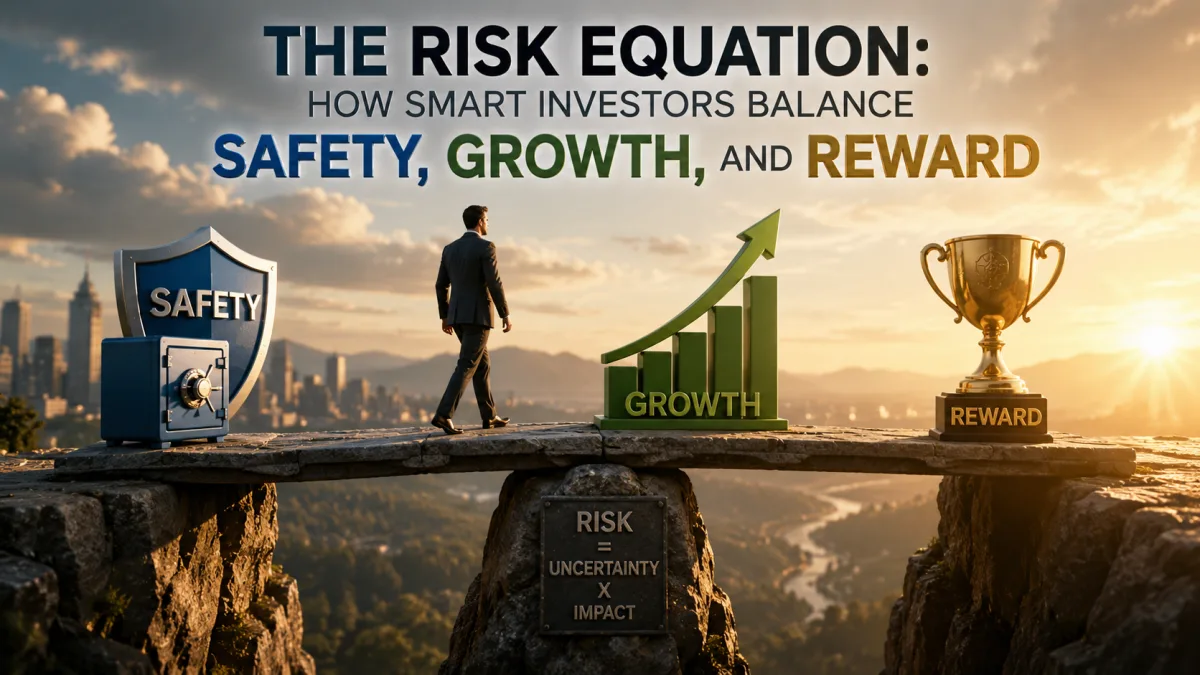
The Risk Equation: How Smart Investors Balance Safety, Growth, and Reward
Every investment involves risk.
That sentence is simple, but it is one of the most important truths in personal finance. The moment money is invested, it enters a world of uncertainty. Prices can fall. Returns can disappoint. Companies can fail. Interest rates can change. Inflation can erode purchasing power. Investors can make emotional decisions at exactly the wrong time.
But risk is not automatically bad.
Risk is the price investors accept in pursuit of reward. The real question is not whether an investment has risk. It does. The better question is whether the potential reward is worth the risk being taken.
This distinction changes how people invest.
A beginner often thinks risk means danger. A more experienced investor understands that risk is more nuanced. Some risks are reckless. Some risks are necessary. Some risks can be reduced. Some risks can be transferred. Some risks can be managed through time, diversification, education, and discipline.
The goal is not to eliminate risk. That is impossible. The goal is to understand risk well enough to take the right risks for the right reasons.
What Investment Risk Really Means
Investment risk is the possibility that an investment will produce a different result than expected.
That result could mean losing money. It could mean earning less than expected. It could mean failing to keep up with inflation. It could mean needing cash but being unable to sell an asset quickly. It could mean making poor decisions because fear or greed takes control.
Most people define risk too narrowly. They think risk only means watching an account balance fall. That is one type of risk, but it is not the only one.
Money sitting safely in cash may avoid market declines, but it faces inflation risk. A rental property may produce income, but it carries maintenance, vacancy, tenant, and liquidity risks. A fast-growing company may offer high return potential, but its stock price may be volatile. A government bond may feel stable, but it can lose purchasing power if inflation is high.
Every financial choice contains trade-offs.
Even doing nothing is a decision with consequences.
Why Reward Exists
Investment reward is the return an investor earns for putting capital at risk.
That reward can come in several forms. Stocks may rise in value through capital appreciation. Dividend-paying companies may distribute part of their profits to shareholders. Bonds may pay interest. Real estate may generate rental income and appreciate over time. Private businesses may produce profits for their owners.
Reward exists because capital is useful.
When investors provide capital to businesses, governments, property markets, or financial systems, that capital can be used to build, expand, lend, operate, or produce. Investors expect compensation because they are giving up immediate use of their money and accepting uncertainty.
This is the foundation of investing. Money today is committed in exchange for the possibility of more money tomorrow.
The larger the uncertainty, the greater the reward investors usually demand. This is why higher-return investments often come with more volatility, less certainty, or longer time horizons.
A savings account offers stability, but usually limited growth. A stock portfolio offers higher long-term growth potential, but its value can rise and fall dramatically. A startup investment may offer enormous upside, but it can also fail completely.
Reward is never free. It is tied to risk.
The Risk-Reward Trade-Off
The risk-reward trade-off is the relationship between the amount of uncertainty an investor accepts and the return they hope to earn.
Lower-risk investments usually provide lower expected returns. Higher-risk investments may provide higher expected returns, but they also bring a greater possibility of loss or disappointment.
This does not mean every risky investment is smart. A common mistake is assuming that high risk automatically means high reward. It does not. Some risks are compensated. Others are unnecessary.
A diversified stock index fund carries market risk, but investors may be compensated over time through participation in broad business growth. A poorly researched speculative investment may carry high risk without a reasonable expectation of reward. The difference matters.
Smart investors do not simply ask, “How much can I make?”
They ask, “What can go wrong, how likely is it, how severe would it be, and am I being properly compensated for accepting that risk?”
This question separates investing from gambling.
Market Risk
Market risk is the risk that investment prices will decline because of broad economic conditions, investor sentiment, interest rates, corporate earnings, political events, financial crises, or unexpected shocks.
Stock investors experience market risk regularly. A healthy business can see its share price fall because the entire market is declining. Even diversified portfolios can lose value during bear markets.
Market risk cannot be eliminated if someone wants market returns. It can only be managed.
One way to manage it is through time horizon. Money needed next month should not be exposed to major market volatility. Money intended for retirement decades from now can usually tolerate more short-term movement.
Another way is diversification. Owning many companies, sectors, regions, and asset classes can reduce dependence on any single investment.
The most important protection, however, is emotional discipline. Market declines are normal. Panic selling can turn temporary volatility into permanent loss. Investors who understand market risk before it arrives are less likely to abandon their plan when prices fall.
Inflation Risk
Inflation risk is the risk that money loses purchasing power over time.
This risk is easy to ignore because it happens quietly. A savings balance may look the same on paper, but if the cost of food, housing, transportation, education, and healthcare rises, that money buys less than it did before.
This is why cash is both useful and limited.
Cash is essential for emergencies, short-term goals, and flexibility. It protects people from having to sell investments during bad market conditions. But cash is not designed to build long-term wealth by itself.
Over long periods, investors need assets that have the potential to grow faster than inflation. Stocks, real estate, businesses, and certain income-producing assets may help preserve and increase purchasing power.
People often fear investing because they fear losing money. But avoiding investing completely can create a different kind of loss: the slow erosion of financial strength.
Inflation risk teaches an uncomfortable lesson. Safety in the short term can become risk in the long term.
Business Risk
Business risk is the risk that a company performs poorly or fails.
A company may lose customers, face stronger competition, suffer poor management decisions, carry too much debt, misjudge consumer demand, or become obsolete because of technology. Even famous companies can decline.
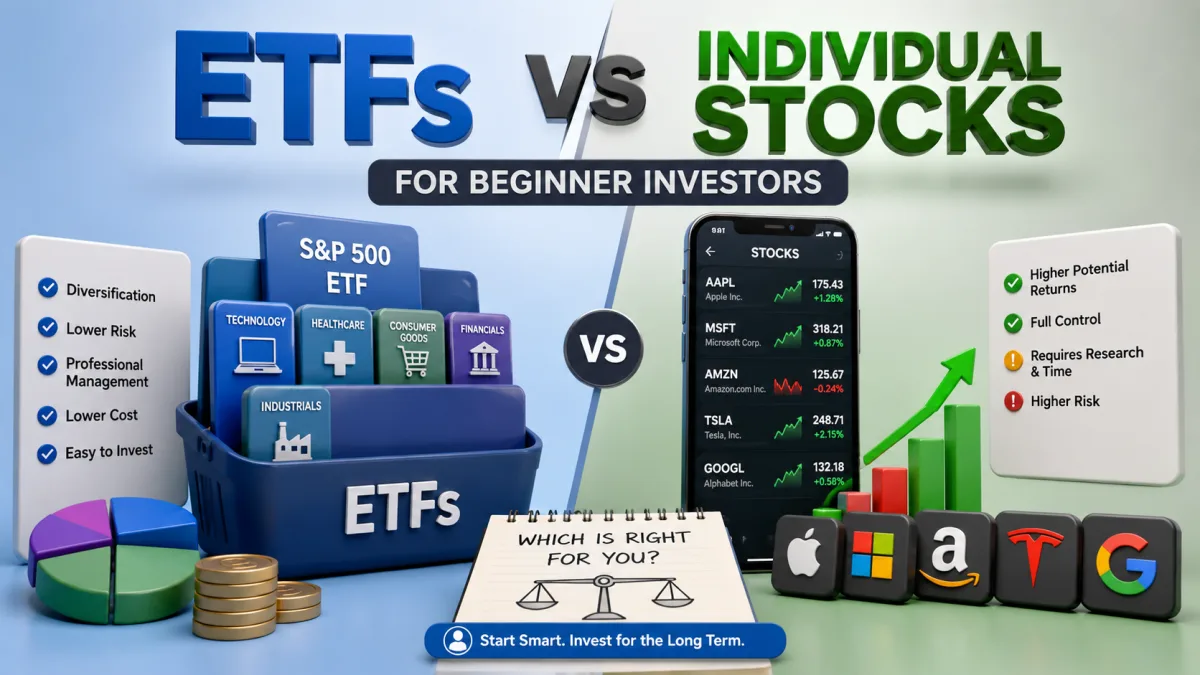
Investors who buy individual stocks face business risk directly. If they own one company and that company fails, the damage can be severe. This is why diversification is so important.
Owning a broad index fund reduces dependence on any single company. Some businesses inside the fund may struggle, but others may grow. The investor is not betting their entire financial future on one management team or one business model.
This does not mean diversified investors avoid all business risk. Broad markets are made of businesses, and businesses operate in the real world. But diversification helps spread that risk across many companies.
The lesson is not that individual stocks are always bad. The lesson is that concentration increases the importance of being right.
Liquidity Risk
Liquidity risk is the risk that an investor cannot sell an asset quickly at a fair price.
Some investments are highly liquid. Publicly traded stocks, ETFs, and mutual funds can usually be sold relatively quickly during market hours. Other investments are less liquid. Real estate, private businesses, collectibles, private funds, and certain loans may take time to sell.
Illiquid investments can still be valuable. Real estate, for example, has helped many people build wealth. But liquidity matters because life does not always wait for the perfect selling conditions.
An investor may need cash for an emergency, job loss, medical bill, business problem, or family responsibility. If most of their wealth is tied up in assets that cannot be sold easily, they may face stress even if they are wealthy on paper.
This is why a good financial plan includes both growth assets and liquid reserves.
Liquidity gives investors breathing room. It helps them avoid forced selling. It protects long-term investments from short-term emergencies.
Emotional Risk
Emotional risk is one of the most underestimated risks in investing.
It is the risk that investors will make poor decisions because of fear, greed, impatience, overconfidence, or comparison.
Fear can cause investors to sell during downturns. Greed can cause them to chase speculative assets after prices have already risen. Impatience can cause them to abandon a sound strategy because progress feels slow. Overconfidence can lead to concentration, leverage, or ignoring downside risk.
Emotional risk is dangerous because it often feels rational in the moment.
During a market crash, selling may feel like protection. During a boom, buying aggressively may feel like opportunity. But emotions are often strongest at the worst times for decision-making.
Successful investors build systems to protect themselves from themselves. They automate contributions. They diversify. They write investment plans before crises arrive. They avoid checking accounts constantly. They understand their risk tolerance before the market tests it.
The investor’s behavior can matter as much as the investment itself.
Low-Risk Investments
Lower-risk investments are designed to provide stability, liquidity, or predictable income.
Examples include savings accounts, money market funds, certificates of deposit, Treasury bills, and high-quality government bonds. These assets may be useful for emergency funds, short-term goals, and capital preservation.
The advantage is stability. The investor is less likely to experience dramatic short-term losses compared with stocks or speculative assets.
The disadvantage is limited growth.
Lower-risk investments may not generate enough return to build wealth over long periods, especially after inflation and taxes. They can protect money, but they may not multiply it meaningfully.
This is why lower-risk assets are best understood as part of a financial system. They provide safety and flexibility. They are not always the main engine of long-term wealth.
High-Risk Investments
Higher-risk investments offer the possibility of higher returns, but they also create more uncertainty.
Examples may include stocks, growth companies, private businesses, startups, real estate development projects, commodities, and digital assets. These investments can rise significantly, but they can also fall sharply or fail.
Higher risk is not automatically a problem. Many wealth-building assets involve risk. Stocks are risky in the short term, but they have historically been one of the most important tools for long-term wealth creation. Entrepreneurship is risky, but business ownership can create enormous value.
The problem is taking high risk without understanding it.
Investors should be especially careful with assets they do not understand, investments promising unusually high returns, concentrated bets, borrowed money, and anything driven mainly by hype.
A smart investor does not avoid all risk. A smart investor avoids blind risk.
Risk Tolerance Matters
Risk tolerance is the amount of volatility, uncertainty, and potential loss an investor can handle without abandoning their plan.
It has both financial and emotional sides.
Financially, a young investor with stable income, low debt, and decades before retirement may be able to tolerate more volatility. An investor close to retirement, supporting dependents, or relying on portfolio income may need a more conservative approach.
Emotionally, two people with the same financial situation may react very differently to losses. One may see a market decline as normal. Another may lose sleep and sell at the worst possible time.
Neither person should copy the other blindly.
Risk tolerance depends on age, income stability, emergency savings, debt levels, financial goals, investment timeline, family responsibilities, and emotional discipline.
A portfolio only works if the investor can hold it through real conditions.
Risk Capacity Is Different From Risk Tolerance
Risk tolerance is how much risk someone feels comfortable taking. Risk capacity is how much risk their financial life can actually support.
This distinction matters.
A person may feel comfortable taking major risks, but if they have no emergency fund, unstable income, high-interest debt, and short-term obligations, their risk capacity may be low. Another person may dislike volatility emotionally, but because they have stable income, strong savings, and a long time horizon, their financial capacity for risk may be higher than they feel.
Good planning considers both.
An investor should not take more risk than their life can absorb. They also should not allow excessive fear to prevent them from taking reasonable risks required for long-term growth.
The best portfolio is found where financial capacity and emotional tolerance meet.
Why Diversification Is Essential
Diversification spreads risk across multiple investments.
Instead of relying on one company, one asset, one industry, or one country, a diversified portfolio owns a mix of assets. That mix may include domestic stocks, international stocks, bonds, cash, real estate, or other investments depending on the investor’s goals.
Diversification does not guarantee profit. It does not prevent losses. During major crises, many assets can decline at the same time.
But diversification can reduce the damage caused by being wrong about one specific investment.
If one company fails inside a broad portfolio, the investor may still survive. If an investor’s entire net worth is tied to that one company, the outcome can be devastating.
Diversification is not about maximizing excitement. It is about improving resilience.
Strong portfolios are built to survive, not merely to impress.
Asset Allocation: The Architecture of Risk
Asset allocation is how an investor divides money among different types of assets.
A simple portfolio might include stocks for growth, bonds for stability, and cash for emergencies. A more complex portfolio may include real estate, international assets, or private investments.
Asset allocation is one of the most important decisions an investor makes because it determines the broad risk profile of the portfolio.
A portfolio with 90% stocks will behave differently from one with 50% stocks. It may offer more long-term growth potential, but it may also experience deeper short-term declines. A portfolio with more bonds and cash may be steadier, but it may grow more slowly.
There is no perfect allocation for everyone.
The right allocation depends on the purpose of the money. Retirement money for a 25-year-old can usually take more risk than tuition money needed next year. A financial independence portfolio may need both growth and future income. Emergency money should not be invested like long-term capital.
Asset allocation turns risk into a design decision.
Time Horizon Changes Everything
Time horizon is the length of time before the investor needs the money.
It is one of the most important factors in deciding how much risk to take.
Short-term money needs stability. If money is needed within months or a few years, a major market decline could be damaging. That money may belong in safer, more liquid assets.
Long-term money can usually accept more volatility because it has time to recover from downturns. A retirement investor with decades ahead can often benefit from growth assets, even though those assets may fall sharply in the short term.
Time does not eliminate risk, but it changes the nature of risk.
For short-term investors, volatility is a major danger. For long-term investors, inflation and insufficient growth may be bigger dangers.
This is why the same investment can be reasonable for one person and unsuitable for another.
The Biggest Risk Is Often Doing Nothing
Many people avoid investing because they fear losing money.
That fear is understandable. Nobody wants to see their savings decline. But avoiding investing completely creates another risk: never building enough wealth to reach important goals.
Money that remains idle may feel safe, but inflation slowly weakens it. A person who only saves cash may struggle to keep up with rising living costs. Retirement may become harder. Financial independence may remain out of reach.
The biggest risk for many people is not a temporary market decline. It is failing to own assets at all.
Wealth usually requires participation. It requires owning productive assets, accepting some uncertainty, and giving compounding time to work.
Doing nothing can feel safe because there is no obvious account fluctuation. But the hidden cost may be enormous.
Short-Term Risk vs Long-Term Risk
Short-term risk and long-term risk are not the same.
Short-term risk often means price volatility. A stock portfolio may fall 10%, 20%, or more during difficult markets. This is uncomfortable and can be dangerous if the investor needs to sell.
Long-term risk is different. It includes the risk of not growing wealth enough, not beating inflation, not funding retirement, not creating financial flexibility, or not owning enough assets to reduce dependence on labor income.
Many investors focus only on short-term risk because it is visible. Account balances update daily. Market headlines are constant. Losses appear immediately.
Long-term risk is quieter. It shows up years later when someone realizes they saved but did not invest, worked hard but did not build assets, or avoided volatility but also avoided growth.
Smart investors manage both types of risk.
Volatility Is Not Always the Enemy
Volatility is the movement of investment prices over time.
Many people treat volatility as if it is the same as danger. It can be dangerous if the investor has a short time horizon, uses leverage, or panics. But volatility can also be the price of long-term return.
Stock prices fluctuate because investors constantly update expectations about profits, interest rates, economic growth, and future uncertainty. Those price movements can be uncomfortable, but they are part of owning growth assets.
For long-term investors who are still accumulating assets, volatility can even create opportunity. Regular contributions buy more shares when prices fall and fewer shares when prices rise.
The key is having enough liquidity, diversification, and patience to survive the volatility.
Volatility becomes dangerous when the investor is forced to sell or chooses to sell emotionally.
Understanding Permanent Loss
Permanent loss is different from temporary volatility.
A diversified portfolio may decline during a bear market and later recover. That is volatility. Permanent loss occurs when capital is destroyed and does not recover.
Permanent loss can happen when investors buy failing businesses, overpay for speculative assets, concentrate too heavily, use excessive debt, fall for fraud, or sell quality assets in panic after major declines.
The goal of risk management is not to avoid every temporary decline. The goal is to avoid financial damage that prevents recovery.
This is why due diligence matters. It is why diversification matters. It is why avoiding leverage matters. It is why understanding an investment before buying matters.
Investors can live with volatility if their financial structure is strong. Permanent loss is much harder to repair.
Why Understanding Matters Before Investing
Never invest in something you do not understand.
This principle sounds basic, but it is often ignored when markets are rising. People buy assets because friends are making money, influencers are excited, prices are moving, or they fear missing out.
That is not investing. That is speculation without control.
Understanding does not mean predicting the future perfectly. It means knowing what you own, how it can make money, what could go wrong, what fees are involved, how liquid it is, how it fits your goals, and why you expect to be rewarded.
If an investor cannot explain the investment in plain language, they probably should not own it.
Complexity can hide risk. Simplicity creates accountability.
How Smart Investors Evaluate Risk
Smart investors evaluate risk before chasing return.
They ask what could go wrong. They ask whether they can afford the loss. They ask whether the investment fits their time horizon. They ask how much of their portfolio should be exposed to that risk. They ask what role the investment plays in the overall plan.
They also consider opportunity cost. Money invested in one asset cannot be used elsewhere. A risky investment must be compared not only with cash, but with other reasonable alternatives.
For example, an investor considering a speculative stock should compare it with a diversified index fund, debt repayment, emergency savings, retirement contributions, or education that may increase earning power.
Risk analysis is not about fear. It is about clarity.
Risk and Income Stability
Income stability affects investment risk.
A person with a secure job, predictable income, low debt, and strong emergency savings can usually take more investment risk than someone with unstable income and no cash buffer.
Entrepreneurs, freelancers, commission-based workers, and people in cyclical industries may need more liquidity because their income already carries risk. If both income and investments fall at the same time, financial pressure can increase quickly.
This is why personal context matters.
The same portfolio can be reasonable for one household and too aggressive for another. Investing cannot be separated from the rest of financial life.
Risk and Debt
Debt changes the risk equation.
High-interest debt can be especially dangerous because it compounds against the borrower. If someone carries expensive debt while investing aggressively, they may be taking risk on one side while guaranteed costs drain them on the other.
Paying down high-interest debt can sometimes be one of the best risk-adjusted financial moves available. It reduces obligations, improves cash flow, and creates a more stable foundation for investing.
Lower-interest debt may require a more balanced decision. A mortgage, student loan, or business loan may not automatically prevent investing, but it should be considered in the broader plan.
Leverage can amplify returns, but it also amplifies losses. Investors should be cautious about borrowing to invest unless they fully understand the risks.
Risk and Life Stage
Investment risk changes across life stages.
A young investor may have decades of earning power ahead. They may be able to tolerate market volatility because their portfolio has time to recover and future income can support continued contributions.
A mid-career investor may be balancing retirement savings, housing, children, education costs, aging parents, and career changes. Their portfolio may still need growth, but planning becomes more complex.
A retiree faces a different risk: withdrawing money from a portfolio while markets fluctuate. This introduces sequence-of-returns risk, which occurs when poor returns early in retirement can have a lasting impact on how long money lasts.
Risk is not static. A portfolio that made sense at 25 may need adjustment at 55. Good investors adapt without abandoning core principles.
Risk Management Does Not Mean Avoiding Growth
Some people hear “risk management” and think it means becoming conservative with everything.
That is not accurate.
Risk management means taking risk intentionally. It means avoiding risks that are unnecessary, excessive, misunderstood, or poorly compensated. It also means accepting risks that are necessary to pursue long-term goals.
A person who needs long-term growth may take more risk in a diversified stock portfolio. That is not reckless if it fits their time horizon and financial situation. A person who puts all their money into one speculative asset because of hype is taking a very different kind of risk.
The first risk is planned. The second is impulsive.
Smart investors are not afraid of risk. They are selective about it.
Building a Risk-Aware Portfolio
A risk-aware portfolio begins with goals.
What is the money for? When will it be needed? How much volatility can the investor handle? What would happen if the portfolio fell sharply? Is there an emergency fund? Are debts under control? Is income stable?
Once those questions are answered, the investor can build an allocation that fits.
For long-term growth, this may include diversified stock funds. For stability, it may include bonds or cash. For inflation protection, it may include assets with growth potential. For income, it may include dividends, interest, or rental-producing assets.
No portfolio is perfect. Every portfolio is a set of trade-offs.
The goal is not perfection. The goal is alignment.
The Role of Patience
Patience reduces many investing risks.
It gives quality assets time to recover from downturns. It allows compounding to work. It prevents investors from constantly reacting to short-term noise. It turns volatility from a daily threat into part of a long journey.
But patience must be paired with quality.
Holding a poor investment for a long time does not make it good. Patience is powerful when applied to diversified, productive, reasonably chosen assets. It is dangerous when used to justify denial.
Smart patience is active. It involves reviewing the plan, rebalancing when needed, learning continuously, and staying disciplined without becoming blind.
The Final Lesson
Risk cannot be eliminated.
It can only be understood, priced, managed, and aligned with a larger financial plan.
The investor who avoids all risk may protect money in the short term but lose purchasing power and opportunity over time. The investor who chases reward without understanding risk may suffer losses that could have been avoided. The wealth builder learns to stand between those extremes.
They respect volatility without being ruled by it. They seek growth without worshiping speculation. They diversify without expecting diversification to remove every loss. They keep cash for stability and invest for long-term progress. They understand that the greatest risk is not always losing money temporarily. Sometimes the greater risk is never building wealth at all.
Wealthy investors understand risk before chasing returns.
That mindset protects capital. It strengthens discipline. It creates the foundation for long-term wealth.
Never invest in something you do not understand.
 Article
 Article
 Article
 Article
 Article
 Article
 Article
 Article