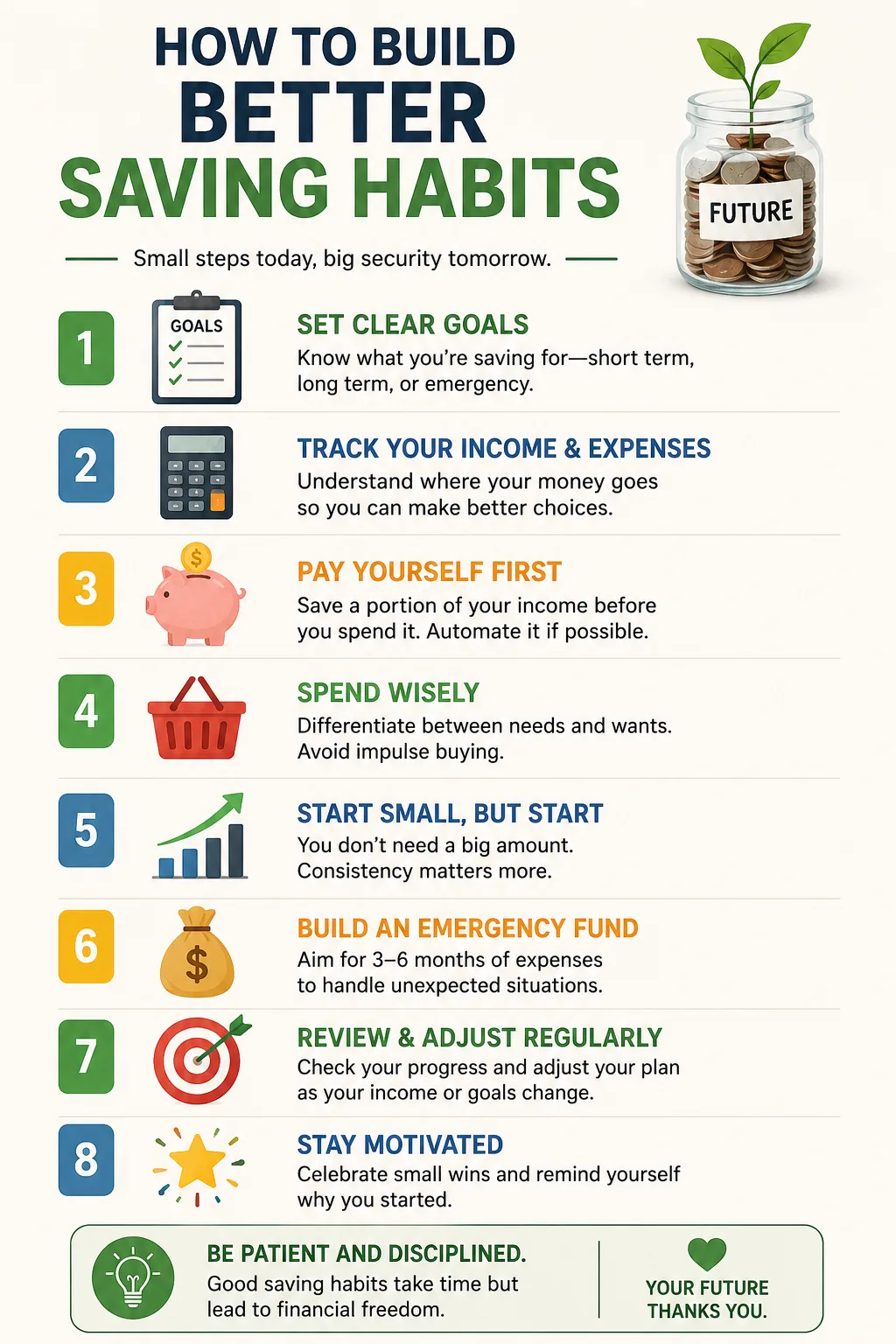
The Wealth Leak: Ten Everyday Money Habits That Keep People Broke
You can earn well and still stay broke.
That truth frustrates people because it seems unfair. A person works hard, gets paid, handles responsibilities, and still reaches the end of the month wondering where the money went. The paycheck arrived. The money moved. The balance disappeared. Nothing dramatic happened, yet nothing meaningful remained.
This is the quiet crisis of personal finance. Many people do not have one huge financial mistake ruining their lives. They have a series of small habits quietly draining their future.
A little unplanned spending. A little avoidance. A little lifestyle pressure. A little debt. A little procrastination. A little desire to look successful. A little fear of talking about money. A little refusal to track the numbers. Each habit may look harmless in isolation. Together, they create a financial leak.
That leak is why income alone does not guarantee progress.
More money helps, but more money without better habits often produces a more expensive version of the same problem. The person earns more and upgrades the apartment, the car, the phone, the wardrobe, the restaurants, the subscriptions, and the social life. The income rises, but the surplus does not. The pressure remains.
Wealth is not built only by earning. It is built by directing what you earn.
The difference between staying broke and becoming financially stronger is often found in ordinary decisions repeated over time. Do you know where your money goes? Do you plan before spending? Do you save first or last? Do you act quickly when a budget breaks? Do you buy assets or appearances? Do you learn about money or avoid the subject? Do you take responsibility for what you can control?
These questions matter because habits determine the path of income. Income can become consumption. Income can become debt payments. Income can become savings. Income can become investments. Income can become freedom. The money itself does not decide. Your habits decide.
The goal is not to shame anyone. Shame makes people hide from money. The goal is to make the invisible visible. Once you can see the habits that keep money from staying in your life, you can begin replacing them with habits that build stability, confidence, and wealth.
1. Never Talking About Money
Money silence is one of the most common reasons people remain financially stuck.
Many families treat money as a forbidden topic. Children hear arguments about bills but not calm explanations about budgeting. They see stress but not planning. They are told money does not grow on trees, but they are rarely taught how money actually grows. By the time they become adults, they have bills, bank accounts, debt offers, spending temptations, and financial responsibilities, but very little language for managing them.
So they stay quiet.
They do not ask how to save. They do not ask how investing works. They do not ask what a fair salary looks like. They do not ask how someone paid off debt. They do not ask why insurance matters. They do not ask how taxes affect take-home income. They do not ask how people build emergency funds, buy homes, start businesses, or prepare for retirement.
Silence feels safe, but it keeps people uninformed.
The people who talk about money constructively often learn faster. They hear practical stories. They learn from mistakes without paying the full price themselves. They discover tools, methods, accounts, books, habits, and opportunities. They become less intimidated by financial language because they hear it used in ordinary conversation.
This does not mean telling everyone your private financial details. Wisdom matters. Some people use money conversations to judge, gossip, compete, manipulate, or pressure others. Those are not useful conversations. The goal is not exposure. The goal is education.
Healthy money conversations are honest, practical, and grounded. They might happen with a trusted friend, mentor, spouse, parent, colleague, coach, advisor, or community of people trying to improve their financial lives. The conversation may be as simple as asking, “How do you plan your monthly spending?” or “What helped you become more disciplined with saving?”
Money becomes less frightening when it becomes discussable.
How to Break It
Begin by finding one safe place to talk about money. Choose someone who is responsible, honest, and not interested in showing off. Ask specific questions instead of vague ones.
Ask how they track expenses. Ask what financial mistake taught them the most. Ask how they decide what to save. Ask what they wish they had learned earlier. Ask how they avoid unnecessary debt. Ask what book, habit, or tool helped them.
You can also learn through financial education, podcasts, books, articles, workshops, and reputable advisors. The point is to stop treating money like a mystery you must solve alone.
Silence protects confusion. Conversation opens the door to clarity.
2. Spending Without a Plan
The problem is not spending. Spending is part of life.
You need to pay for housing, food, transport, utilities, healthcare, education, family responsibilities, clothing, communication, and rest. Money is also meant to support joy, generosity, experiences, and comfort. A good financial life is not one where you never spend. It is one where spending has direction.
Unplanned spending is different.
Unplanned spending happens when money leaves without a decision made in advance. You buy because you feel stressed. You buy because something is on sale. You buy because friends are going out. You buy because delivery is convenient. You buy because payday creates a temporary feeling of abundance. You buy because the money is sitting in the account and no one told it where to go.
At the end of the month, you may not have bought anything large. That is what makes the habit so frustrating. The money disappears through small exits.
A budget, at its best, is not punishment. It is leadership. It tells your money what matters before impulse, pressure, advertising, and convenience make the decision for you.
Without a plan, the loudest need wins. The most urgent bill wins. The most attractive purchase wins. The most emotional moment wins. Your future usually loses because the future does not shout. It waits quietly while the present spends first.
Planned spending gives the future a voice.
A person who plans can still enjoy life. They can still eat out, travel, give gifts, buy clothes, and have fun. The difference is that enjoyment fits inside a structure. The essentials are covered. Savings are protected. Debt reduction is funded. Investing is not forgotten. Spending becomes a choice instead of a leak.
How to Break It
Before money arrives, decide what it must do.
Start with three questions. How much income is expected? What obligations must be handled? What progress must this money create?
Then divide the money into categories. Housing, food, transport, utilities, debt, savings, investing, family support, giving, personal spending, and irregular expenses. The categories can be simple. The important part is that every major expense has a place.
If the plan does not work perfectly in the first month, adjust it. A budget is not a moral test. It is a tool. The more you use it, the more accurate it becomes.
Money without a plan disappears. Money with a plan starts building a future.
3. Acting Like a Victim of Your Financial Life
Some people experience money as something that simply happens to them.
Payday happens. Bills happen. Debt happens. Emergencies happen. Overspending happens. Bad months happen. The person feels like a passenger, not a driver.
This mindset is understandable when life is genuinely hard. People face real pressures: rising prices, low wages, family obligations, job instability, medical costs, unfair systems, and unexpected setbacks. Personal finance advice can sound insulting when it ignores those realities.
But there is a difference between acknowledging hardship and surrendering control.
A victim mindset says, “Nothing I do matters.” That belief is dangerous because it removes responsibility from the areas where responsibility still exists. If nothing matters, there is no reason to track spending. No reason to negotiate. No reason to save a small amount. No reason to learn. No reason to apply for better work. No reason to reduce waste. No reason to plan.
The person becomes stuck not only because conditions are difficult, but because they stop acting where action is still possible.
Ownership does not mean blaming yourself for every problem. It means identifying your area of control and working inside it. You may not control inflation, but you can control whether you know your numbers. You may not control the entire job market, but you can build skills, look for opportunities, and improve your earning power over time. You may not control every emergency, but you can begin building a buffer. You may not control past mistakes, but you can stop repeating them.
Financial maturity begins when you stop asking only, “Why is this happening?” and begin asking, “What can I do next?”
How to Break It
Write down your biggest money frustrations. Then divide them into two groups: what you cannot control and what you can influence.
Do not waste all your energy on the first group. Acknowledge it, but act on the second.
If you cannot control prices, you can still compare costs, reduce waste, plan meals, or increase income. If you cannot erase debt instantly, you can list every balance and choose a repayment strategy. If you cannot become wealthy this year, you can build the habits that make wealth possible later.
Responsibility is not self-blame. It is power reclaimed.
4. Procrastinating When Things Go Wrong
Many people do not fail financially because they never make a plan. They fail because they abandon the plan the moment it breaks.
The month begins with discipline. The budget is written. Spending is controlled. Savings are planned. Then something goes wrong. A bill is higher than expected. A relative needs help. Transport costs rise. A repair appears. A weekend gets expensive. One spending category goes over the limit.
At that moment, many people give up and say, “I will start again next month.”
That sentence is expensive.
It turns a manageable problem into a wasted month. If the budget breaks on the tenth day and you wait until the next month to recover, you have given away twenty days of decision-making. This habit repeats itself for years. People are always waiting for Monday, next month, next year, the next paycheck, or a fresh start.
Wealth builders recover faster.
They are not perfect. They overspend sometimes. They misjudge costs. They face surprises. But they do not use mistakes as permission to drift. They repair the plan quickly and keep moving.
This is a powerful principle: the speed of correction matters more than the absence of mistakes.
A budget is not supposed to predict life perfectly. It is supposed to help you adjust when life changes. If the original plan no longer fits, make a new plan for the money that remains.
How to Break It
When your plan breaks, fix it that same day.
Look at how much money remains. List what still needs to be paid. Decide which categories must be reduced. Protect the most important obligations first. If savings must be smaller that month, make it smaller instead of abandoning it entirely.
Build the habit of mid-month repair. A small recovery today is better than a perfect restart that never arrives.
Do not wait for a fresh month to become responsible. Responsibility begins the moment you notice the problem.
5. Not Knowing Where Your Money Goes
If you cannot name where your money went, you cannot confidently change where it goes next.
Many people know their income but not their spending. They know the rent, the loan payment, and maybe the utility bill. But they do not know the real cost of food, transport, entertainment, subscriptions, family support, bank fees, small purchases, or convenience spending.
This creates financial fog.
In the fog, everything feels uncertain. You feel broke, but you cannot identify the leak. You want to save, but you do not know which category to adjust. You want to cut back, but every expense feels necessary because you have not studied the pattern.
Tracking spending turns fog into facts.
The first month of tracking can be uncomfortable. It may reveal that food spending is much higher than expected. It may show that subscriptions are draining money quietly. It may expose how often emotional spending follows stress. It may show that transport choices, small fees, or social pressure are costing more than you realized.
That discomfort is useful. It gives you something to work with.
Awareness changes behavior because it interrupts automatic spending. Once you know a habit costs a specific amount each month, the choice becomes clearer. You may still decide the expense is worth it. That is fine. The goal is not to eliminate every pleasure. The goal is to stop being surprised by your own financial life.
How to Break It
Track every expense for thirty days.
You can use a spreadsheet, notebook, budgeting app, banking app, or simple notes on your phone. The tool matters less than the honesty. Record everything, including small purchases.
At the end of the month, review the totals by category. Ask what surprised you. Ask which expenses were necessary, which were valuable, which were emotional, and which can be reduced.
Do not start with judgment. Start with observation.
You cannot redirect money you cannot see.
6. Paying Yourself Last
Most people save what is left after spending.
The problem is that spending expands until very little is left.
Bills get paid first. Debt gets paid first. Wants get paid first. Other people get paid first. Stores, restaurants, lenders, landlords, service providers, and entertainment platforms all receive their share. Your future waits at the end of the line, hoping something remains.
Usually, nothing remains.
Paying yourself first changes the order. When income arrives, a portion is moved immediately toward your financial future before discretionary spending begins. That money may go to an emergency fund, investment account, retirement account, debt payoff fund, business capital account, or specific savings goal.
The key is that your future receives money before lifestyle has a chance to consume everything.
This habit works because it does not depend entirely on willpower. Willpower is unreliable when money sits in the same account used for daily spending. If the money is visible and available, the mind finds reasons to use it. A separate transfer creates distance. Automation creates consistency.
Paying yourself first may feel difficult at the beginning, especially if income is tight. Start small if necessary. The first goal is to establish the order. Once the habit exists, the amount can grow.
A person who saves a small amount consistently is building more than a balance. They are building identity. They are becoming someone who does not allow every paycheck to pass through their hands without leaving something behind.
How to Break It
Choose an amount or percentage to move as soon as income arrives.
If your income is steady, set an automatic transfer. If your income is irregular, use a percentage of every payment. Keep the money in a separate account so it does not mix with daily spending.
Start with an amount you can sustain. If you try to save too much and keep pulling it back, reduce the amount and build consistency first.
The order matters. Pay your future before the world takes the rest.
7. Living Above Your Means
Living above your means is not only spending more than you earn. It is also spending so close to what you earn that there is no room to build.
A person can avoid new debt and still remain broke if every dollar is already committed. The budget may technically balance, but there is no margin. No savings. No investing. No emergency cushion. No room for opportunity. No ability to absorb a setback without borrowing.
This is financial fragility.
The danger grows when income rises but spending rises at the same speed. This is lifestyle inflation. A better salary leads to a better apartment, better car, better clothes, better phone, better restaurants, and more expensive habits. Some upgrades may be reasonable. The problem is automatic upgrading without building assets first.
Living below your means is not about living poorly. It is about creating a surplus.
The surplus is the gap between what comes in and what goes out. That gap funds emergency savings, debt freedom, investing, business building, education, and future choices. Without the gap, wealth has no place to begin.
Many people resist this idea because they associate living below their means with deprivation. But the goal is not to cut every pleasure. The goal is to choose which pleasures are worth delaying financial progress and which are not.
A strong financial life does not require hating spending. It requires prioritizing freedom over constant consumption.
How to Break It
Calculate your real monthly income and your real monthly spending. Do not guess. Use actual numbers.
If spending is higher than income, the situation needs immediate attention. Reduce costs, renegotiate obligations where possible, increase income, or do all three. If spending is slightly below income but leaves almost nothing, the goal is to widen the gap.
Use income increases wisely. When you receive a raise, bonus, tax refund, side hustle profit, or gift, send part of it toward savings, debt reduction, or investing before upgrading your lifestyle.
The money that builds wealth is the money that remains after consumption. Protect that gap.
8. Chasing Get-Rich-Quick Schemes
People who feel behind are often drawn to fast-money promises.
The pitch changes, but the emotional hook is the same. This is your chance. This is the opportunity others do not understand. This investment can multiply quickly. This platform is making ordinary people rich. This secret strategy beats the system. Act now before it is too late.
The promise is not just money. It is escape.
Escape from slow progress. Escape from debt. Escape from low income. Escape from discipline. Escape from the embarrassment of feeling behind. That is why quick-money schemes are so powerful. They sell relief.
But real wealth usually comes from slower forces: skill, ownership, saving, investing, business building, patience, and compounding. These forces are not glamorous. They do not produce instant transformation. But they are far more reliable than chasing whatever is being promoted loudly this month.
Chasing schemes keeps people broke in two ways.
First, it can cause direct losses. Money goes into opportunities that are poorly understood, overpriced, fraudulent, speculative, or unsuitable. Second, it distracts from the boring habits that actually build wealth. The person keeps searching for the shortcut and never builds the foundation.
Not every opportunity with high returns is automatically fake. But high returns come with high risk, hard work, special knowledge, or uncertainty. Anyone promising large rewards with little risk deserves skepticism.
If you do not understand how money is made, you are not investing. You are hoping.
How to Break It
Before putting money into any opportunity, ask clear questions.
What exactly am I buying? How does it produce returns? What are the risks? Who benefits if I join? Is there pressure to act quickly? Can I lose all the money? Do I understand this well enough to explain it to someone else? Are the promised returns realistic?
Give yourself a waiting period before acting on any exciting financial opportunity. Hype fades under time and research.
Build wealth through a few solid behaviors repeated for years: saving, investing broadly, paying down expensive debt, increasing income, and buying assets you understand.
Fast money often disappears quickly. Durable wealth requires patience.
9. Buying to Look Wealthy
Looking wealthy and being wealthy are not the same thing.
Looking wealthy is visible. It is the car, the watch, the phone, the shoes, the bag, the restaurant, the vacation, the apartment, the photos, the brands, the lifestyle. These things can signal success even when the person’s finances are weak.
Being wealthy is often invisible. It is the emergency fund no one sees. The debt that no longer exists. The investments growing quietly. The insurance that protects the family. The business equity. The retirement account. The ability to handle a crisis without borrowing. The freedom to make choices without panic.
Status spending keeps people broke because it trades future strength for present appearance.
The pressure is real. People want to be respected. They want to feel successful. They want to belong. In some social circles, consumption becomes a competition. Everyone upgrades because everyone else is upgrading. People spend money they cannot afford to create an image they cannot sustain.
The problem is that every dollar spent to impress is a dollar that cannot build.
This does not mean all nice things are wrong. Quality can be worthwhile. Beauty matters. Comfort matters. Enjoyment matters. The issue is motive and order. Are you buying from strength or insecurity? Are you buying after building assets or instead of building assets? Are you choosing value or chasing applause?
Wealth gives options. Status gives temporary attention.
How to Break It
Before a major purchase, ask what job the purchase is doing.
Does it improve your life in a meaningful way? Does it solve a real problem? Is it aligned with your values? Can you afford it without debt or stress? Or is it mainly about being seen a certain way?
Create a waiting period for expensive nonessential purchases. Give yourself time to separate desire from pressure.
Shift more money toward assets before symbols. Build the emergency fund. Pay down debt. Invest. Improve your earning power. Buy freedom first.
The goal is not to look rich for a moment. The goal is to become financially strong for life.
10. Complaining Without Acting
Complaining about money can feel productive because it releases frustration.
The economy is difficult. Prices are high. Taxes are heavy. Wages may feel too low. Employers may be unfair. Family responsibilities may be demanding. Rent may be unreasonable. Debt may feel exhausting. These complaints may be valid.
But a valid complaint still needs an action attached to it.
Complaining becomes a broke habit when it replaces problem-solving. A person says they never have money, but they do not track spending. They say they need to earn more, but they do not apply for better opportunities or build new skills. They say debt is stressful, but they do not list the balances or create a repayment plan. They say investing is confusing, but they do not learn the basics. They say life is expensive, but they do not change one recurring cost.
The complaint may be true, but the behavior stays the same.
Financial progress requires converting frustration into movement. Anger can become focus. Stress can become planning. Dissatisfaction can become discipline. The point is not to pretend life is easy. The point is to refuse to let difficulty become an excuse for inaction.
Everyone has constraints. Some constraints are heavier than others. But within almost every situation, there is some next action that improves the position slightly.
How to Break It
Attach one action to every money complaint.
If the complaint is “I am always broke,” the action is tracking spending for thirty days. If the complaint is “I do not earn enough,” the action is identifying one skill, job, client, or side income opportunity. If the complaint is “Debt is killing me,” the action is listing every debt with its balance, rate, and minimum payment. If the complaint is “I cannot save,” the action is automating a small transfer on payday.
Small action is more valuable than repeated frustration.
Complaints describe pain. Habits change outcomes.
The Pattern Behind All Ten Habits
These ten habits may look different, but they share a common pattern: money is not being led.
When you avoid money conversations, your money education is left to chance. When you spend without a plan, your money follows impulse. When you act like a victim, your money lacks ownership. When you procrastinate, your money mistakes spread. When you do not track spending, your money disappears into fog. When you pay yourself last, your future receives leftovers. When you live above your means, your income has no room to build. When you chase schemes, your money follows hype. When you buy to look wealthy, your money serves image. When you complain without acting, your money problems remain unchanged.
The solution is leadership.
You must lead your money before someone else’s priorities consume it. Lenders have a plan for your money. Advertisers have a plan for your money. Retailers have a plan for your money. Subscription services have a plan for your money. Social pressure has a plan for your money. Convenience has a plan for your money.
If you do not create your own plan, your paycheck will still be assigned. It will simply be assigned by everyone else.
Why Better Habits Matter More Than Motivation
Motivation is useful, but it is unreliable.
People feel motivated after reading an article, watching a video, receiving a painful bill, or getting tired of being broke. For a few days, they are determined. They plan to save, cut back, track spending, pay debt, and stop impulse buying.
Then life gets busy. Stress returns. Friends invite them out. A sale appears. A family need comes up. The old environment pulls them back into old behavior.
This is why systems matter.
A system does not depend on feeling inspired. Automatic savings is a system. A weekly money review is a system. A spending tracker is a system. A debt repayment schedule is a system. A waiting period before purchases is a system. A separate account for bills is a system. A rule for raises is a system.
Systems make good behavior easier to repeat.
If you rely only on motivation, you must win the same battle every day. If you build systems, some decisions are made before temptation arrives.
How to Start Breaking the Cycle
Do not try to fix every habit at once.
Trying to change everything usually creates overwhelm. Overwhelm leads to avoidance. Avoidance returns you to the same cycle.
Choose the habit causing the most damage right now.
If you do not know where your money goes, start with tracking. If you spend without direction, start with a paycheck plan. If you save nothing, start by paying yourself first with a small automatic transfer. If you keep giving up mid-month, start with same-day recovery. If lifestyle pressure is draining you, start with a waiting period before big purchases. If you keep chasing quick money, start with a rule that you never invest in anything you cannot explain.
One changed habit creates evidence. Evidence builds confidence. Confidence makes the next habit easier to change.
Financial transformation often begins smaller than people expect. One account separated. One expense canceled. One debt listed. One budget repaired. One conversation started. One purchase delayed. One automatic transfer made. One hour spent learning.
Small changes repeated consistently become a new financial identity.
The Wealth Habits That Replace Broke Habits
Every broke habit needs a replacement.
Silence should be replaced with healthy financial conversation. Unplanned spending should be replaced with intentional budgeting. Victim thinking should be replaced with ownership. Procrastination should be replaced with immediate correction. Financial fog should be replaced with tracking. Paying yourself last should be replaced with automatic saving. Living above your means should be replaced with a protected surplus. Chasing schemes should be replaced with patient wealth building. Status buying should be replaced with asset buying. Complaining should be replaced with action.
These replacements are not complicated. They are not glamorous. But they work because they change the direction of money.
Wealth is often built through behaviors that look ordinary from the outside. A transfer to savings. A debt payment. A refusal to upgrade too soon. A monthly investment. A written plan. A calm decision not to panic. A conversation that teaches you something. A habit of reviewing numbers before they become problems.
The outside world may not applaud these choices. That is fine. Wealth is not built for applause. It is built for options.
The Real Shift
None of these habits are only about how much you make. They are about what your money does after you make it.
A bigger paycheck can help, but a bigger paycheck attached to the same habits may only create a bigger leak. The first step is not waiting for perfect income. The first step is becoming more intentional with the income already passing through your life.
Pick one habit from this list. The one that made you uncomfortable is probably a good place to start. Work on it this month. Not perfectly. Practically. Track the spending. Make the plan. Save first. Repair the budget. Ask the question. Delay the purchase. Ignore the scheme. Take the action.
Then move to the next habit.
Financial change is built layer by layer. The habits you practice today become the stability you feel tomorrow. The money you keep becomes the capital you can invest. The capital you invest becomes the foundation for future freedom.
You do not have to remain stuck in the broke cycle. But you do have to interrupt it.
Wealth begins when your money stops leaking into habits that do not serve you and starts flowing toward choices that build your future.
Ready to change your money habits for good? Subscribe for weekly Wealth Insights that turn small shifts into lasting wealth.

