
The Family Safety Net: Why Life Insurance Belongs in a Serious Financial Plan
Most people do not avoid life insurance because they have carefully studied it and rejected it. They avoid it because it feels distant, uncomfortable, complicated, or easy to postpone. Death is not a subject most families want to budget for. Disability is not something a healthy person expects. A serious illness feels like something that happens to other people. So life insurance is pushed into the background while more visible financial goals take priority: school fees, rent, mortgage payments, business capital, car loans, investments, weddings, holidays, and daily household expenses.
Yet personal finance is not only about growing money. It is also about protecting the people, plans, and obligations that depend on that money. A family can spend twenty years building stability and lose it in one event if the person responsible for the income dies without adequate protection. A business can survive competition but collapse after the death of a key founder. A mortgage can be manageable when two incomes are present but become a burden when one disappears. Children’s education plans can be carefully arranged and still fail if the parent funding them is no longer there.
Life insurance exists because human life has financial consequences. This does not mean a person’s worth can be reduced to money. It means that people create obligations, income streams, commitments, and future plans. When a life ends prematurely, those financial structures can collapse unless there is a substitute source of funds. Life insurance is one of the few financial tools designed specifically for that moment.
In Kenya, life insurance remains underused relative to the size of the financial risks many households carry. Insurance adoption has historically been low, and many people still associate insurance with motor cover, medical cover, or products sold aggressively by agents. Life insurance often suffers from mistrust, misunderstanding, and the belief that it is only necessary for the wealthy. In reality, the households that most need protection are often those that have not yet built enough assets to self-insure.
A wealthy family with rental income, large investment portfolios, paid-off property, and business dividends may be able to absorb the death of one income earner without immediate financial distress. A younger family with children, loans, rent, school fees, and one main salary may not. For that household, life insurance is not a luxury. It is a financial bridge between tragedy and survival.
Life Insurance Is Not About Death. It Is About Continuity.
The easiest way to misunderstand life insurance is to think of it as a payment for death. That framing makes the product feel morbid and emotionally difficult. A better way to understand it is continuity. Life insurance is a contract that helps a family continue financially when the income, labor, leadership, or financial support of an insured person is lost.
For a parent, continuity may mean school fees continue to be paid. For a spouse, it may mean the mortgage does not go into default. For a business partner, it may mean the company has enough liquidity to buy out a deceased partner’s shares or hire replacement leadership. For an estate, it may mean beneficiaries receive cash without being forced to sell land, shares, livestock, or a family home under pressure.
This is why life insurance should sit beside savings, investments, retirement planning, emergency funds, and estate planning. Each plays a different role. Savings help with short-term needs. Investments grow wealth over time. Retirement accounts support life after work. Emergency funds handle temporary disruptions. Estate plans organize ownership and transfer. Life insurance protects against the financial shock of premature death or, depending on the policy and riders, serious illness or disability.
When a family does not have life insurance, it is often relying on informal insurance. Relatives contribute through WhatsApp groups. Friends organize fundraisers. Employers may offer some final benefits. Chamas may step in. Community support is valuable, but it is not a financial plan. It is uncertain, emotionally stressful, and often insufficient for long-term needs. Contributions may help with funeral costs but rarely replace ten years of income, clear a mortgage, fund university education, and preserve a family’s standard of living.
Life insurance formalizes the protection. Instead of leaving dependents to hope people will raise enough money after a tragedy, the policyholder makes a deliberate arrangement in advance. Premiums are paid when life is normal so that a benefit can be paid when life is disrupted.
The Core Purpose: Replacing Income
The most important reason to buy life insurance is income replacement. If people depend on your income, they are financially exposed if that income stops. This is true whether you are formally employed, self-employed, running a business, practicing a profession, farming, consulting, or supporting family members through irregular income.
Consider a 35-year-old parent earning KES 250,000 per month. That income may pay rent or a mortgage, school fees, food, transport, domestic support, medical costs, parents’ upkeep, church or community contributions, and savings. If that parent dies, the family does not only lose the current month’s salary. It loses the next year’s salary, the next decade’s salary, and possibly the financial engine behind the children’s future.
To understand the scale of the exposure, multiply annual income by the number of years dependents may need support. A person earning KES 250,000 per month earns KES 3 million per year before tax. Over ten years, that is KES 30 million of gross income. Over twenty years, it is KES 60 million. Few families have liquid assets large enough to replace that kind of income immediately.
This is where life insurance becomes powerful. A properly sized policy can create instant capital. The insured person may not have saved KES 20 million or KES 50 million yet, but life cover can provide that amount to beneficiaries if death occurs during the covered period or under the terms of a permanent policy.
Income replacement is especially important when one person earns significantly more than the other, when one spouse is financially dependent, when children are young, when elderly parents rely on support, or when family assets are illiquid. A family may own land, but land cannot pay school fees next Monday unless sold or borrowed against. A family may own a business, but the business may lose value quickly if the founder dies. Life insurance provides liquidity when liquidity matters most.
The Hidden Economic Value of a Parent or Spouse
Life insurance is not only for the person who earns a salary. A stay-at-home parent, caregiving spouse, or family member who manages the household also has economic value. Their work may not appear on a payslip, but replacing it can be expensive.
If a parent manages children’s routines, meals, school logistics, household administration, elderly care, and emotional stability, their death creates both grief and new costs. The surviving spouse may need childcare, transport help, domestic support, tutoring, or reduced working hours. In some cases, the surviving spouse may be unable to maintain the same level of income because household responsibilities increase sharply.
Many families underestimate this risk because they equate financial contribution with income. But financial value is broader than income. It includes labor that would cost money to replace. A household that depends on unpaid caregiving may need life insurance on both spouses, even if only one earns the main income.
This is one of the most overlooked parts of financial planning. A family insures the visible breadwinner but ignores the person who holds the household together. When that person dies, the financial pressure can be severe. Life insurance allows the surviving family to buy time, support, and stability.
Life Insurance and Debt Protection
Debt changes the life insurance conversation. A person without dependents but with debts that could burden others may still need cover. A person with dependents and large debts almost certainly needs to evaluate cover carefully.
Mortgages are the most obvious example. If a family home is financed by a long-term loan, the death of the borrower can create a serious risk. The surviving spouse or children may want to remain in the home, but the lender still expects payments. A life insurance policy can be structured to clear the outstanding mortgage or provide enough cash to service it while the family reorganizes.
Business loans create another layer of risk. Many entrepreneurs sign personal guarantees, borrow against family assets, or rely on business cash flow that depends heavily on their leadership. If the founder dies, the debt does not disappear. Suppliers, banks, landlords, employees, and tax obligations may still remain. Life insurance can protect the estate and the family from being forced to settle business obligations with personal assets.
Education loans, Sacco loans, chama obligations, asset finance, and personal loans can also create pressure. Some loans have built-in credit life insurance, but the coverage may be limited, conditional, or tied only to the outstanding balance. It is worth understanding exactly what is covered, what is excluded, and whether the family would still need additional funds.
The goal is not to buy life insurance merely because you have debt. The goal is to ask a sharper question: if I died, who would be responsible for this obligation, and what assets or income would they use to settle it? If the answer is unclear, insurance deserves serious consideration.
Life Insurance as Estate Planning Liquidity
Estate planning is often associated with wealthy families, lawyers, trusts, and large property portfolios. But every adult who owns assets, has dependents, or wants to control how wealth passes should think about estate planning. Life insurance can play an important role because estates often suffer from a shortage of cash.
A family may inherit land, shares in a business, rental property, livestock, or a home. These assets may be valuable but not liquid. When death occurs, the estate may face funeral expenses, legal costs, taxes, debts, family maintenance needs, or urgent school fees. If there is not enough cash, beneficiaries may be forced to sell assets quickly and cheaply.
Life insurance can prevent this. A policy payout can provide liquid inheritance. It can allow beneficiaries to keep long-term assets instead of selling them under pressure. It can equalize inheritance among children when some assets are difficult to divide. It can fund a trust for minors. It can help a surviving spouse maintain dignity and independence while the estate process unfolds.
Liquidity is one of the least glamorous but most important concepts in wealth preservation. Many families are asset-rich and cash-poor. They own property but struggle with immediate expenses. They inherit value but cannot access it quickly. Life insurance can convert a small annual premium into a large pool of cash available at precisely the moment an estate needs liquidity.
Life Insurance Is Protection First, Not an Investment Shortcut
One of the biggest mistakes people make is evaluating life insurance as if every policy must beat the stock market, a money market fund, real estate, or a business investment. This leads to confusion. Life insurance is primarily a risk management tool. Some policies include savings, cash value, bonuses, or maturity benefits, but the central purpose is protection.
Investments and insurance solve different problems. Investments answer the question: how can my money grow over time? Insurance answers the question: what happens if a low-probability but financially devastating event occurs before my investments are large enough?
A young parent may plan to build wealth through business, property, pensions, and unit trusts. That is sensible. But if death occurs five years into a thirty-year wealth-building journey, the investment plan may not have had enough time to mature. Life insurance fills the gap between today’s assets and tomorrow’s intended wealth.
This is why comparing every insurance premium to an investment return can be misleading. If you pay premiums for term life insurance and never die during the term, the policy may expire without a payout. Some people see this as wasted money. But the same logic would make medical insurance wasteful if you do not get hospitalized, or motor insurance wasteful if you do not crash. Insurance is valuable because it transfers risk. The best outcome is often that you never need to claim.
That said, policy design matters. Some life insurance products combine protection and savings in ways that may or may not suit the buyer. A person should understand the cost of insurance, the savings component, charges, surrender terms, bonuses, exclusions, and expected returns before committing. Protection should not be confused with investment performance.
The Main Types of Life Insurance
Most life insurance conversations in Kenya revolve around three broad categories: term life insurance, whole life insurance, and endowment policies. Each has a different purpose, cost structure, and suitability. There is no universally best policy. The right choice depends on the household’s needs, budget, age, health, dependents, debts, estate goals, and investment discipline.
Term Life Insurance
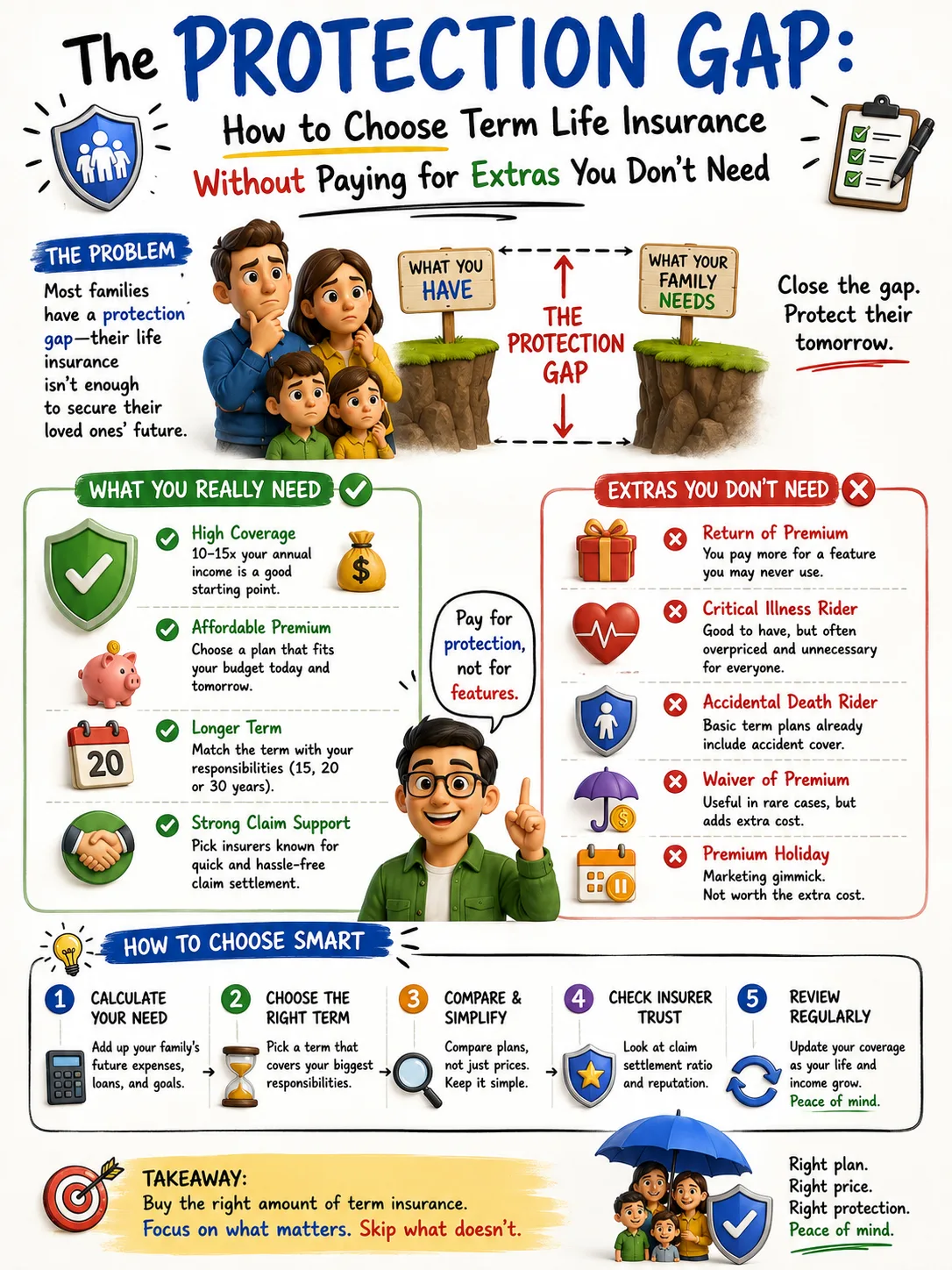
Term life insurance provides cover for a specific period, such as 10, 15, 20, or 30 years. If the insured person dies during the term, beneficiaries receive the death benefit. If the insured person survives the term, the cover usually ends without a payout unless the policy has specific return features.
Term insurance is often the most affordable way to buy a large amount of protection. This makes it useful for people with temporary but significant financial responsibilities. A young parent may need high cover until children become financially independent. A homeowner may need cover while the mortgage is outstanding. A business owner may need cover during the period when debt, expansion risk, or partner dependence is highest.
The strength of term insurance is efficiency. It focuses on pure protection. Because it does not usually build cash value, the premium can be lower than permanent insurance for the same death benefit. This allows households to buy adequate cover without straining monthly cash flow.
The weakness is that cover ends. If the insured person still needs insurance after the term, new cover may be more expensive because they are older, and health conditions may have changed. Term insurance works best when the need for cover is expected to reduce over time as debts fall, children grow, savings rise, and investments mature.
Whole Life Insurance
Whole life insurance is designed to provide lifelong cover, as long as premiums are paid according to the policy terms. Depending on the insurer and product structure, it may include cash value, bonuses, riders, or other permanent insurance features. Because the cover can last for life, premiums are usually higher than term insurance for the same initial death benefit.
Whole life insurance can be useful for estate planning, permanent dependents, wealth transfer, funeral liquidity, business succession, or families that want cover beyond a fixed term. It can also appeal to people who value certainty and want a policy that does not expire after 20 or 30 years.
But whole life insurance is not automatically superior to term insurance. The higher premium matters. A household that buys a permanent policy but later cannot maintain premiums may lose value or reduce cover. A family that needs KES 30 million of protection but can only afford KES 5 million of whole life cover may be underinsured despite owning a permanent policy.
The key question is not whether whole life is good or bad. The question is whether the policy matches the financial need. Permanent insurance may be appropriate when the need is permanent. Term insurance may be better when the need is temporary and the budget is limited. Some households may use both: term cover for large temporary needs and permanent cover for estate liquidity.
Endowment Policies
An endowment policy combines life insurance with a savings component. It pays out either on death during the policy term or at maturity if the insured person survives. These policies are often marketed as disciplined savings plans for education, future lump sums, or long-term goals.
The appeal is psychological and practical. Many people struggle to save consistently. An endowment policy creates a contractual discipline. Premiums are paid regularly, and the policy promises a maturity benefit subject to terms, bonuses, and performance. For some people, this structure can help them accumulate money they might otherwise spend.
The limitation is that endowment policies may offer less pure protection than term insurance and lower investment flexibility than dedicated investment products. Charges, surrender penalties, and bonus assumptions must be understood. A person buying an endowment policy should ask: how much of my premium pays for life cover, how much goes toward savings, what return is guaranteed, what return is projected, what happens if I stop paying, and how does this compare with buying term cover and investing separately?
Endowment policies are not necessarily bad. They can suit people who value forced savings and bundled protection. But they should not be purchased blindly because the maturity benefit sounds attractive. The buyer should understand the trade-off between protection, savings, flexibility, and return.
Why Premiums Are Lower When You Are Younger
Life insurance pricing is based on risk. Insurers consider age, health, occupation, lifestyle, medical history, family history, cover amount, policy term, and sometimes financial underwriting. The younger and healthier you are, the lower the probability of death during the near term. This usually means lower premiums.
This creates a planning advantage. Buying cover early can lock in protection before age and health make it expensive or unavailable. Many people wait until marriage, children, illness, or debt forces the conversation. By then, premiums may be higher. A medical condition such as diabetes, hypertension, heart disease, cancer history, kidney disease, or a risky occupation may increase the cost or lead to exclusions.
The irony is that people often feel least interested in insurance when they are most insurable. A healthy 30-year-old may see no urgency. A 50-year-old with health complications may suddenly understand the need but face higher pricing. Life insurance rewards early planning because early planning reduces uncertainty for both the insured person and the insurer.
This does not mean every young adult needs a large policy. A single person with no dependents, no debt, and enough savings for final expenses may not need much life cover. But a young adult who already supports parents, siblings, children, a spouse, a business, or loans should not assume age alone means low responsibility.
How Much Life Insurance Do You Need?
Many people choose life insurance cover by asking what premium they can afford. That is practical, but it starts in the wrong place. The better first question is: what financial gap would my death create?
A simple needs analysis looks at income replacement, debts, education costs, final expenses, estate liquidity, and existing assets. The goal is to estimate how much money dependents would need, then subtract the resources already available.
Start with income replacement. If your family needs KES 200,000 per month to maintain a reasonable lifestyle, that is KES 2.4 million per year. If they need support for ten years, the gross need may be KES 24 million before investment returns, inflation, and changes in lifestyle. If children are young, the required support period may be longer.
Next, add debts. If the mortgage balance is KES 8 million, a car loan is KES 1 million, and business obligations could expose the family to another KES 3 million, those amounts matter. The family may not need to clear every debt immediately, but the policy should provide options.
Then add education goals. If two children will need school fees through secondary school and university, estimate the cost realistically. Education inflation can be high, especially for private schooling and international university plans. A rough estimate is better than ignoring the cost altogether.
Then consider final expenses and transition costs. Funeral costs, legal fees, relocation, counseling, domestic support, or temporary income support can be significant. Families often underestimate the cost of reorganizing life after a death.
Finally, subtract existing resources. These may include savings, pension benefits, employer death benefits, investments, rental income, business interests, Sacco deposits, and other insurance policies. Be conservative. Not all assets are liquid. Not all employer benefits are large. Not all businesses continue smoothly after the owner dies.
The result is not a perfect number, but it is a more intelligent starting point than guessing. If the ideal cover is KES 30 million but the premium is too high, the family can prioritize. It may buy KES 20 million now, increase later, combine term and permanent cover, or reduce risk by paying down debt and building assets.
The Danger of Being Underinsured
Owning life insurance does not automatically mean being protected. A person can have a policy and still be dangerously underinsured. This happens when the cover amount is too small relative to the family’s obligations.
A KES 1 million policy may sound meaningful until compared with a mortgage, school fees, rent, and ten years of lost income. It may help with funeral expenses and immediate bills, but it may not preserve the family’s lifestyle. Many people buy policies based on what is easy to approve or what an agent recommends, not what their dependents would actually need.
Underinsurance creates false comfort. The policyholder feels responsible because they have “something.” The beneficiaries later discover that the “something” is not enough. This is why life insurance should be reviewed after major life events: marriage, childbirth, home purchase, business expansion, divorce, death of a spouse, new loans, income growth, or relocation.
As income rises, obligations often rise too. A person earning KES 80,000 per month may need one level of cover. Ten years later, with a spouse, three children, a mortgage, parents to support, and a business loan, the original policy may be inadequate. Insurance planning is not a one-time decision. It is a periodic review.
The Danger of Being Overinsured
Underinsurance is common, but overinsurance is also possible. A person can buy more cover than necessary, choose an expensive policy that strains cash flow, or commit to premiums that compete with essential goals such as emergency savings, debt repayment, medical cover, or retirement investing.
Insurance should protect the financial plan, not suffocate it. A household that spends too much on premiums may become vulnerable in other ways. If premiums are unaffordable, the policy may lapse, leaving the family with no cover after years of sacrifice. This is especially risky with long-term policies that require consistent payments.
The best policy is not the one with the largest advertised benefit. It is the one that provides adequate protection, fits the household budget, and can be maintained through realistic life conditions. A sustainable policy is better than an impressive policy that collapses after two years.
Riders: Useful Additions or Expensive Extras?
Life insurance riders are optional benefits added to a policy. Common riders include critical illness cover, accidental death benefit, accidental disability cover, waiver of premium, and sometimes hospital cash or funeral benefits. Riders can make a policy more comprehensive, but they should be chosen deliberately.
Critical illness cover pays a benefit if the insured person is diagnosed with specified serious illnesses, subject to policy definitions. This can be valuable because illness often creates both medical expenses and income disruption. Even with medical insurance, a serious illness may require travel, specialized treatment, home care, lost work time, lifestyle adjustments, and family support.
Disability riders can also be important. Death is not the only event that can destroy earning capacity. A person may survive an accident or illness but be unable to work in the same way. For a surgeon, driver, pilot, farmer, contractor, or business owner, disability can be financially devastating. Disability protection deserves more attention than it often receives.
Accidental death riders increase the payout if death results from an accident. They can be inexpensive, but buyers should understand that they do not replace core life cover because they apply only under specific circumstances. A family needs protection whether death results from illness, accident, or another covered cause.
A waiver of premium rider can allow the policy to continue if the insured person becomes disabled and cannot pay premiums. This can be valuable because the need for insurance may be greatest when income is impaired.
The main rule with riders is clarity. Do not buy a rider because its name sounds reassuring. Read the covered conditions, exclusions, waiting periods, claim requirements, and payout limits. A rider with narrow definitions may be less useful than it appears.
Disclosure: The Foundation of a Valid Claim
Life insurance depends on good faith. When applying, the insurer asks questions about health, occupation, lifestyle, medical history, family history, income, and sometimes hobbies or travel. These questions are not a formality. They determine whether the insurer accepts the risk and at what price.
Incomplete or inaccurate disclosure can create serious problems at claim stage. If a person hides a medical condition, misstates smoking habits, fails to disclose dangerous work, or omits important medical history, beneficiaries may face delays, disputes, reduced benefits, or denial of claim depending on policy terms and applicable law.
This is one of the most painful insurance outcomes: a family expects protection, but the claim is contested because the application was not accurate. Sometimes the mistake is intentional. Sometimes the buyer did not understand the question. Sometimes an intermediary minimizes details to speed up approval. The policyholder should take responsibility for accuracy.
The safest approach is simple: disclose fully, keep copies of application documents, answer medical questions carefully, and correct errors before the policy is issued. If in doubt, disclose. A slightly higher premium is better than a future claim dispute.
Choosing an Insurer: Price Is Not the Only Factor
When comparing life insurance, many buyers focus on the monthly premium. Cost matters, but it is not the only issue. A cheap policy from a weak, slow, or unreliable insurer may not provide the peace of mind the family expects.
Important factors include financial strength, claim settlement reputation, product clarity, customer service, regulatory standing, premium flexibility, policy loan or surrender terms where applicable, and the quality of advice provided. In Kenya, consumers should pay attention to information from the Insurance Regulatory Authority and other credible market sources when evaluating insurers.
A good insurer should explain policy terms clearly. It should provide written illustrations where projections are used. It should distinguish guaranteed benefits from non-guaranteed bonuses. It should state exclusions, waiting periods, claim procedures, and premium obligations. It should not rely on vague promises or pressure tactics.
The buyer should also evaluate the intermediary. A good agent, broker, or financial adviser asks questions before recommending a product. They try to understand dependents, income, debts, existing cover, goals, and budget. A poor salesperson leads with commission-driven product preference and avoids difficult questions about affordability or alternatives.
Whole Life Versus Term: The Real Decision
The debate between term and whole life insurance is often presented as if one side must defeat the other. That is not helpful. The real decision is about matching the tool to the job.
Term life insurance is usually best for large temporary needs. If you need high cover while children are young, while a mortgage is outstanding, or while business debt is high, term insurance may provide the most protection per shilling of premium. It is efficient, straightforward, and often suitable for families still building wealth.
Whole life insurance is usually best for permanent needs. If you want lifelong estate liquidity, provision for a dependent who may never be financially independent, permanent funeral funding, wealth transfer, or business succession planning, whole life may be appropriate. It can also suit people who prefer permanent certainty and can afford the premium comfortably.
The mistake is using permanent insurance where affordable term cover would solve the main problem better, or using term insurance where the need will clearly last for life. A young family may need KES 30 million of cover for twenty years but only KES 5 million of permanent estate liquidity. In that case, a blend may work: term insurance for income replacement and whole life insurance for permanent needs.
The right answer is rarely ideological. It is mathematical and personal. What risk are you covering? For how long? How much cover is required? What premium can you maintain? What assets are you building outside insurance? What happens if you stop paying? These questions matter more than product labels.
Life Insurance for Employees
Employees often assume their employer benefits are enough. Some employers provide group life cover, pension death benefits, medical insurance, or funeral support. These benefits are valuable, but they may not be sufficient.
Group life cover is usually tied to employment. If you leave the job, lose the job, retire, or move to self-employment, the cover may end. The benefit may also be based on a multiple of salary, such as one, two, or three times annual pay. That may sound generous, but it may not replace long-term income for a young family.
Employer benefits should be included in the needs analysis, but they should not be the only plan. A personal life insurance policy gives more control. It stays with you as long as you maintain it, regardless of employer changes. This is especially important in a labor market where careers are less linear and many professionals move between employment, consulting, business, and contract work.
Life Insurance for Entrepreneurs and Business Owners
Entrepreneurs often need life insurance even more than employees because their personal and business finances are frequently intertwined. A founder may be the main salesperson, strategist, guarantor, technical expert, relationship manager, and source of confidence for lenders and suppliers. If that founder dies, the business may lose revenue and credibility at the same time.
Life insurance can support business continuity in several ways. Key person insurance provides funds to help the business survive the loss of a critical individual. Buy-sell insurance can fund the purchase of a deceased partner’s shares, preventing conflict between surviving partners and the deceased partner’s family. Loan protection can help settle debts personally guaranteed by the founder. Estate liquidity can prevent the forced sale of business interests.
Business owners should be especially careful with beneficiary designations and ownership structures. A policy intended to protect the business may need different ownership from a policy intended to protect the family. Legal and tax advice may be necessary for larger businesses, partnerships, trusts, and succession plans.
Life Insurance for Single People
Single people are often told they do not need life insurance. Sometimes that is true. If a person has no dependents, no debts that would burden others, sufficient savings, and no estate liquidity concerns, large life cover may not be necessary.
But single does not always mean financially independent from others. Many unmarried adults support parents, siblings, nieces, nephews, or extended family. Some have children. Some carry loans with guarantors. Some own businesses with partners. Some expect to marry or have children later and may want to secure cover while young and healthy.
The question is not marital status. The question is financial dependence. Who relies on your income, labor, guarantees, or future plans? If someone would suffer financially from your death, life insurance may be relevant.
Life Insurance for Parents
Parents have one of the clearest needs for life insurance because children cannot replace lost parental income. A child’s needs continue regardless of whether a parent is alive: food, housing, school fees, medical care, clothing, transport, mentorship, and eventually higher education or vocational training.
The younger the children, the greater the potential need. A child aged two may require support for more than fifteen years. A child aged seventeen may need a shorter support period but perhaps higher immediate education costs. Parents should update cover as children grow and as education plans become clearer.
Parents should also think carefully about beneficiaries. If children are minors, naming them directly may create legal and practical complications. A trust, guardian arrangement, or properly structured estate plan may be needed. The goal is not only to create money but to ensure the money is managed responsibly for the children’s benefit.
Life Insurance and Generational Wealth
Generational wealth is often discussed as if it only comes from large investments, land, businesses, or inheritance. But wealth preservation is just as important as wealth creation. A family that builds assets but fails to protect them may lose progress after one crisis.
Life insurance can support generational wealth by preventing asset liquidation, funding estate costs, equalizing inheritances, and giving heirs time to make thoughtful decisions. It can also create a financial base where none existed before. A first-generation wealth builder may not yet have accumulated enough assets to leave behind, but a life policy can create an immediate estate for dependents.
This does not mean life insurance is a substitute for investing. It is not. A person should still build assets, reduce debt, save consistently, invest for retirement, and improve earning power. But life insurance protects the wealth-building journey against interruption. It ensures that one person’s death does not erase the family’s financial progress.
The Psychology of Avoidance
Many people know they need life insurance but still delay. The reasons are human. Death is uncomfortable. Insurance language is complex. Premiums feel like another bill. Trust in insurers may be low. Some people fear being sold the wrong product. Others believe faith, family, or optimism makes planning unnecessary.
A mature financial plan makes room for emotion but does not surrender to it. Avoiding life insurance does not make death less likely. It only makes the financial consequences less organized. Love is not measured by whether one buys a policy, but responsibility often requires preparing for events one hopes never happen.
There is also a cultural dimension. In many communities, family networks are expected to step in during hardship. That support is noble, but it is under pressure. Modern life is expensive. Relatives have their own school fees, rent, medical bills, debts, and uncertain incomes. Depending entirely on extended family support can transfer one household’s crisis to another household that is already stretched.
Life insurance does not replace community. It reduces the burden placed on community. It allows relatives and friends to offer emotional support without being forced to become the financial plan.
Common Mistakes When Buying Life Insurance
The first mistake is buying too little cover. A small policy may be better than nothing, but it should not be mistaken for full protection. Cover should be connected to actual obligations.
The second mistake is buying the wrong type of policy. A person who needs affordable high cover may buy an expensive savings-based policy with insufficient death benefit. Another person who needs lifelong estate liquidity may buy term cover that expires before the need ends. Product choice must follow need.
The third mistake is focusing only on investment returns. This can lead people to reject useful protection because it does not behave like an investment. Insurance should be judged first by whether it transfers the intended risk.
The fourth mistake is failing to disclose accurately. A policy is only as strong as the information behind it. Misrepresentation can damage the claim process.
The fifth mistake is ignoring inflation. A cover amount that seems large today may be less powerful in twenty years. Families should review cover periodically, especially after income growth and major obligations.
The sixth mistake is naming beneficiaries casually. Beneficiary choices should reflect family realities, legal considerations, and the policyholder’s wishes. They should be updated after marriage, divorce, childbirth, death, or major relationship changes.
The seventh mistake is allowing a policy to lapse without understanding consequences. If premiums become difficult, speak to the insurer or adviser before stopping. There may be options to reduce cover, change payment frequency, use policy value, or restructure.
How to Evaluate a Life Insurance Illustration
Insurance illustrations can be confusing because they often include several numbers: sum assured, projected bonuses, maturity values, surrender values, rider benefits, premium terms, and total premiums paid. Buyers should learn to separate guaranteed benefits from projections.
The sum assured is the core amount payable under specified conditions. Bonuses may depend on insurer performance and policy terms. Maturity values may apply only if the policy is kept for the full period. Surrender values may be low in early years. Rider benefits may apply only after certain definitions are met.
When reviewing an illustration, ask direct questions. What is guaranteed? What is not guaranteed? What happens if I die in year three? What happens if I stop paying in year five? What happens if I miss premiums? What exclusions apply? How are bonuses calculated? Can premiums increase? Are riders level or renewable? What documents will beneficiaries need to claim?
A good adviser should welcome these questions. If the explanation becomes vague, rushed, or overly optimistic, slow down. A life insurance policy can last decades. It deserves careful reading.
The Role of Life Insurance in a Complete Financial Plan
Life insurance should not be purchased in isolation. It should fit into a complete financial plan. That plan includes income, expenses, debt, emergency savings, medical cover, investments, retirement planning, estate planning, and risk management.
Start with emergency savings. A family with no emergency fund may struggle to maintain premiums after a temporary income disruption. Build some liquidity even while buying cover. Next, manage expensive debt. High-interest consumer debt can weaken the household faster than many people realize. Then protect major risks: medical costs, disability, death, business interruption, and property risks where relevant.
Investments should continue alongside insurance. Life insurance protects against premature death; investments build long-term independence. A person should not overfund insurance while neglecting retirement or productive assets. The balance matters.
Estate planning should also be addressed. A life policy with unclear beneficiaries, no will, family disputes, or poor documentation can create unnecessary complications. Insurance is more effective when combined with proper records, updated beneficiaries, a valid will, and trusted people who know where documents are kept.
A Practical Framework for Deciding
Before buying life insurance, answer seven questions.
First, who depends on me financially? Include spouse, children, parents, siblings, business partners, employees, and anyone else whose life would be materially affected.
Second, how much income would they lose if I died? Estimate annual support and the number of years it may be needed.
Third, what debts or obligations would remain? Include mortgages, business loans, personal guarantees, education commitments, and family obligations.
Fourth, what assets already exist? Count liquid savings, investments, pension benefits, employer cover, rental income, and other policies, but be realistic about accessibility.
Fifth, how long will the need last? Temporary needs may suit term insurance. Permanent needs may require whole life or another permanent solution.
Sixth, what premium can I maintain comfortably? The policy must survive real life, not just the first month of enthusiasm.
Seventh, what policy terms could prevent a claim? Understand exclusions, waiting periods, disclosure requirements, and claim procedures.
These questions turn life insurance from a sales conversation into a planning conversation. The buyer becomes less vulnerable to pressure and more capable of choosing intelligently.
Why Life Insurance Matters More Than Many People Think
Life insurance is easy to dismiss because its benefit is invisible until tragedy. A paid premium does not make daily life more exciting. It does not create the visible pride of buying land, opening a business, or watching an investment balance grow. But some of the most important financial decisions are quiet. They protect the future before the future is threatened.
A serious financial plan must deal with reality as it is, not as we wish it to be. People die before retirement. Healthy people get sick. Accidents happen. Businesses lose founders. Children lose parents. Spouses lose partners. Families that prepare are still heartbroken, but they are not forced to combine grief with financial collapse.
That is the central argument for life insurance. It does not prevent loss. It prevents a loss from becoming a financial disaster. It gives families choices at a moment when choices are precious. It buys time, dignity, continuity, and liquidity.
For some people, the right solution will be term insurance. For others, it will be whole life insurance. For some, an endowment policy may serve a specific savings and protection purpose. For many households, the best answer will be a combination of insurance, disciplined investing, debt reduction, emergency savings, and estate planning.
The worst answer is avoidance. Avoidance leaves the family exposed. Avoidance assumes tomorrow will provide time to solve what today ignored. Avoidance turns a manageable premium into a future crisis.
Life insurance is not a sign of fear. It is a sign that you understand responsibility. It says that the people who depend on you should not have to depend on chance. It says that wealth is not only what you accumulate, but what you protect. It says that love, when translated into financial planning, includes preparation for the day you may not be there to provide directly.
That is why life insurance belongs in a serious financial plan. Not because everyone needs the same policy. Not because insurance is a magic investment. Not because every product is suitable. But because every household with dependents, debts, estate concerns, or unfinished financial obligations should ask one sober question: if my income stopped permanently, would the people I care about still have a financial path forward?
If the answer is no, life insurance is not something to postpone indefinitely. It is part of the foundation.
 Article
 Article
 Article
 Article
 Article
 Article
 Article
 Article