
The Protection Equation: How to Choose the Right Life Insurance Policy
Life insurance is one of the few financial products people buy hoping their family never needs to use it. That emotional contradiction makes the decision difficult. No one wants to imagine a spouse, child, parent, or business partner rebuilding life after a death. Yet that is exactly the question life insurance asks: if your income, care, labor, debt payments, or financial support disappeared suddenly, who would be left exposed?
The right policy is not the one with the most impressive brochure. It is not automatically the cheapest policy, the largest policy, or the policy recommended most confidently by an agent. The right life insurance policy is the one that matches a real financial risk: the risk that someone depends on you and would suffer financially if you were gone.
That is why life insurance should begin with people, not products. Before comparing term life, whole life, universal life, variable life, riders, cash value, premiums, and underwriting classes, the first question is simple: who relies on your life continuing?
If the answer is no one, you may need little or no life insurance. If the answer is a spouse, children, aging parents, a disabled family member, a business partner, a co-signed borrower, or anyone who depends on your unpaid labor, life insurance may be essential. The policy’s job is to replace financial support, preserve household stability, cover obligations, and buy time for grieving people who should not be forced to make desperate financial decisions immediately after loss.
The National Association of Insurance Commissioners explains that life insurance broadly falls into two categories: term insurance, which provides protection for a specific period, and cash value insurance, which can remain in force as long as needed and may include savings or investment features. Whole life, universal life, and variable life are examples of cash value policies.
Those categories matter because they serve different purposes. Term life insurance is usually designed for temporary protection: raising children, paying a mortgage, replacing income during working years, or covering a defined period of dependency. Permanent life insurance is designed for longer-lasting needs: estate liquidity, lifelong dependent care, business succession, tax-sensitive planning, or permanent coverage for people who need insurance beyond a set term.
Most households do not need the most complex policy. They need the clearest match between risk and coverage.
What Life Insurance Is Really For
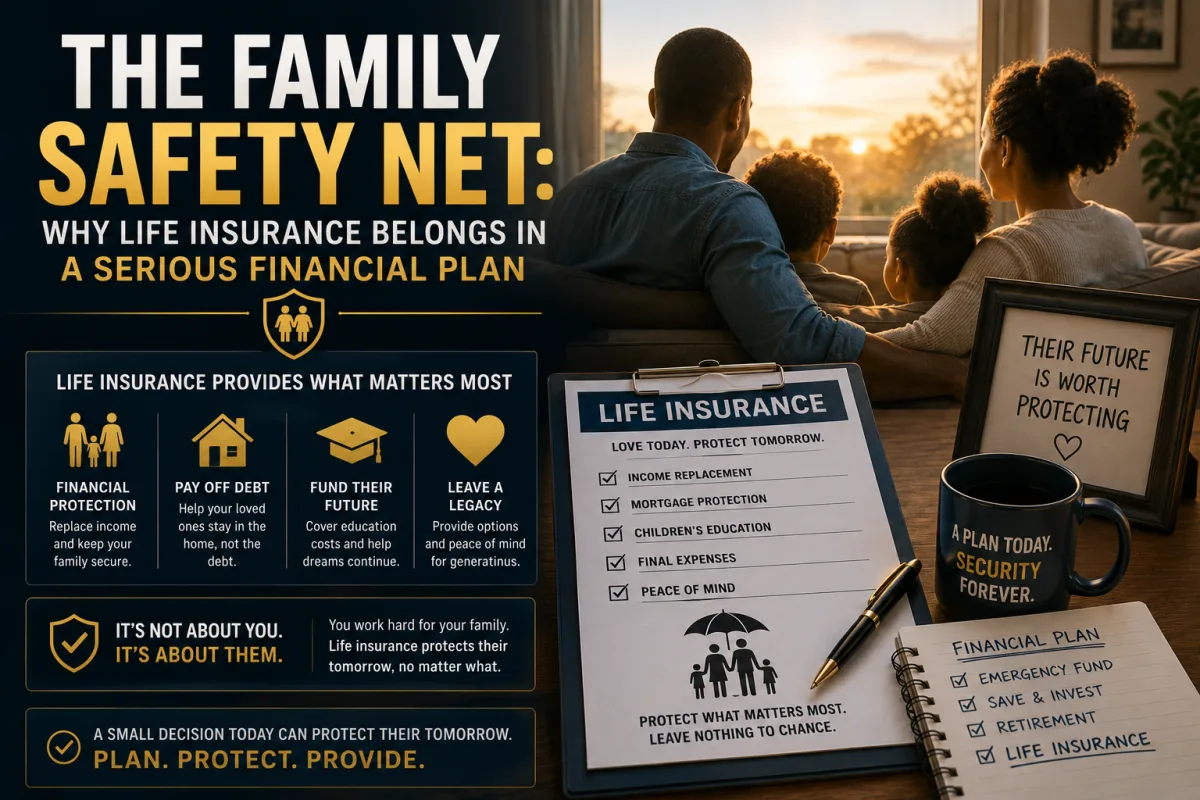
Life insurance is a contract. The policyowner pays premiums. The insurance company promises to pay a death benefit to named beneficiaries if the insured person dies while the policy is in force. The death benefit can help survivors pay bills, replace income, retire debt, fund education, cover funeral costs, maintain housing, pay taxes, or preserve a business.
At its best, life insurance converts an uncertain catastrophic risk into a known premium. A family cannot know whether a parent will die unexpectedly at 38, 52, or 71. A policy allows the family to transfer part of that financial risk to an insurer.
Life insurance is not mainly about the person who dies. It is about the people who keep living.
A useful policy answers practical questions. How would the mortgage be paid? How would childcare be covered? Could the surviving spouse take time off work? Could children remain in the same school? Would debts need to be paid immediately? Would a stay-at-home parent’s unpaid labor need to be replaced with paid childcare, transportation, tutoring, cleaning, or elder care? Would a family business survive? Would aging parents lose support?
These questions are uncomfortable, but they reveal the purpose of coverage. Life insurance should not be purchased from fear alone. It should be purchased because there is a measurable financial gap that death would create.
Who Needs Life Insurance?
Life insurance is most important when other people depend on your income or labor. A parent with young children is an obvious example, but dependency can take many forms.
A married couple may need coverage if one spouse relies on the other’s income to afford housing and living expenses. A stay-at-home parent may need coverage because their unpaid work would be expensive to replace. A single parent often has a high need because there may be no second household income to absorb the loss. A person supporting aging parents may need coverage to continue that support after death. A business owner may need coverage to fund buy-sell agreements, protect partners, or provide liquidity. A borrower with a co-signed loan may need coverage to avoid leaving debt behind for someone else.
People without dependents may still need limited coverage for final expenses, debt obligations, or business reasons. But they should be careful not to overbuy. A young single person with no dependents, no co-signed debt, and strong savings may have little need for a large life insurance policy.
Life insurance need also changes over time. A new parent may need substantial coverage. Twenty-five years later, after children are independent, the mortgage is paid, retirement accounts are funded, and the surviving spouse would be financially secure, the need may be much lower. Good planning recognizes that insurance needs are not static.
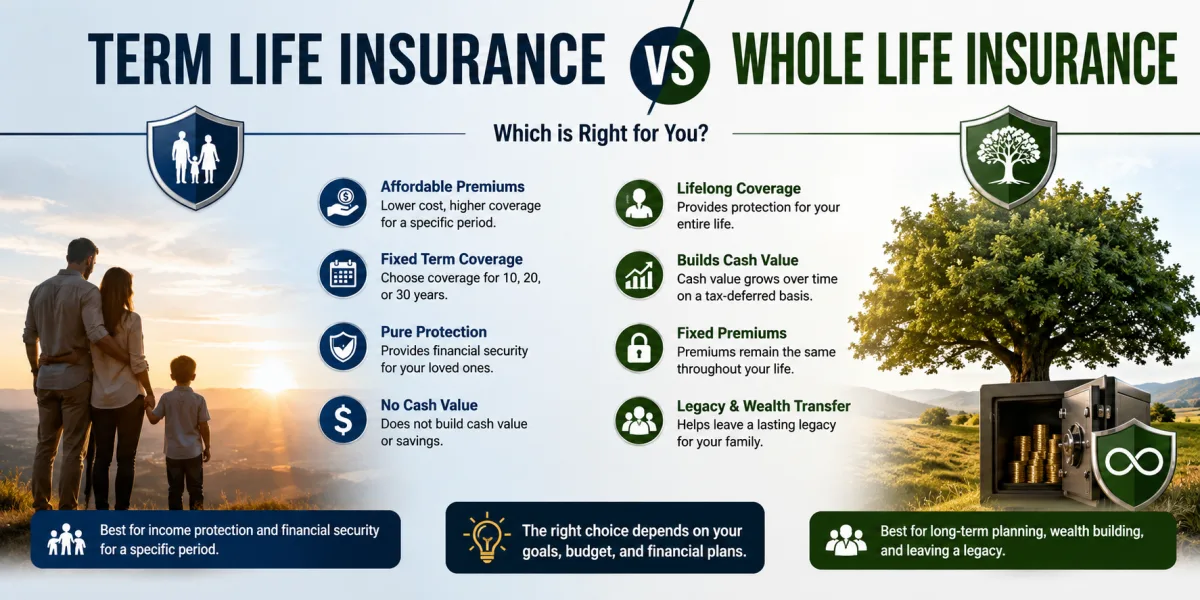
Term Life Insurance: The Simple Protection Tool
Term life insurance provides coverage for a set period, such as 10, 15, 20, 25, or 30 years. If the insured person dies during the term, the beneficiaries receive the death benefit. If the term ends while the insured person is still alive, the coverage usually expires unless it is renewed, converted, or extended according to the policy’s terms.
Term insurance is often the most practical choice for families because it provides large amounts of coverage at a relatively low initial cost compared with permanent insurance. That makes it well suited for temporary but important obligations: raising children, covering a mortgage, replacing income during working years, or protecting a spouse until retirement assets are sufficient.
For example, a 35-year-old parent with two young children may need coverage for the next 25 years. By then, the children may be financially independent, the mortgage may be lower or paid off, and retirement savings may be larger. A 25- or 30-year term policy can match that dependency window.
The strength of term life is efficiency. The weakness is expiration. If you still need coverage after the term ends, new coverage may be more expensive or difficult to obtain because you are older and your health may have changed. Some term policies include a conversion privilege, allowing the policyowner to convert to permanent coverage without proving insurability, subject to the policy’s rules and deadlines. Convertible term policies can be valuable for people who want affordable coverage now but may later need lifelong protection.
Term life is often best when the need is temporary, the budget matters, and the goal is maximum protection per premium dollar.
Whole Life Insurance: Permanent Coverage with Guarantees
Whole life insurance is a form of permanent life insurance. It is designed to last for the insured person’s lifetime if premiums are paid according to the policy. It typically includes a guaranteed death benefit, guaranteed cash value growth, and level premiums. Some whole life policies from mutual insurers may pay dividends, though dividends are not guaranteed.
The appeal of whole life is predictability. Premiums are generally fixed. Coverage does not expire after a term. Cash value grows according to the policy’s guarantees. For people with permanent insurance needs, this can be useful.
The trade-off is cost. Whole life premiums are much higher than term premiums for the same initial death benefit. A household that needs $1 million of protection during child-raising years may find term life affordable while whole life for the same amount may strain the budget. Underinsuring the family because permanent coverage is expensive can be a serious mistake.
Whole life can make sense for estate planning, lifelong dependent care, certain business needs, high-net-worth planning, or people who specifically value permanent guarantees and can afford the premiums without sacrificing retirement savings, emergency funds, or debt repayment.
It is less suitable when the buyer mainly needs income replacement for a temporary period and has a limited budget. In that situation, term insurance often provides better protection.
Universal Life Insurance: Flexible Permanent Coverage
Universal life insurance is another form of permanent coverage. It generally offers more flexibility than whole life. Policyowners may have flexibility in premium payments and death benefit structures, as long as the policy has enough value to cover charges and remain in force.
The flexibility is attractive, but it also creates risk. Universal life policies depend on policy charges, credited interest, funding levels, and assumptions. If the policy is underfunded, if costs rise, or if credited interest is lower than expected, the policy may require higher premiums to stay in force. A universal life policy should be monitored, not placed in a drawer and forgotten.
There are different versions of universal life. Guaranteed universal life focuses on maintaining a death benefit with limited cash value. Indexed universal life credits interest based partly on the performance of a market index, subject to caps, floors, participation rates, spreads, and policy charges. Variable universal life allows investment in subaccounts and carries market risk.
Universal life may be suitable for sophisticated planning, permanent needs, business use, or flexible premium goals. It is not ideal for buyers who do not want to review policy performance or who do not understand how changing assumptions affect the policy.
Variable Life Insurance: Insurance with Investment Risk
Variable life insurance combines permanent life insurance with investment subaccounts. The cash value and, in some structures, the death benefit may fluctuate based on investment performance. This creates upside potential and downside risk.
Variable policies can be complex. They may involve investment risk, mortality and expense charges, administrative fees, fund expenses, surrender charges, and tax considerations. They require careful review and are generally more suitable for people who understand investments and have a clear reason to combine insurance with market exposure.
For most families simply trying to protect income, variable life is usually not the first place to start. The basic need should be solved first: enough death benefit, affordable premium, reliable coverage period, and appropriate beneficiaries. Investment complexity should not distract from protection.
Term Versus Permanent: The Core Decision
The central life insurance decision is usually term versus permanent. The answer depends on whether the insurance need is temporary or lifelong.
Choose term life when the need has an end date. Children will grow up. A mortgage will be paid down. A spouse may return to work. Retirement assets may accumulate. Debt may disappear. In these cases, term insurance can provide high coverage during the years when the financial risk is greatest.
Consider permanent life when the need does not clearly end. This may include providing for a disabled dependent, funding estate liquidity, covering final expenses regardless of age, equalizing inheritances, supporting a family business transition, or preserving coverage when future insurability is uncertain.
The mistake is buying permanent insurance for a temporary need simply because it sounds more complete. The opposite mistake is buying term insurance for a permanent need and discovering later that coverage expires when it is still needed.
A blended strategy can also work. A family might buy a large term policy for income replacement and a smaller permanent policy for lifelong needs. The goal is not ideological purity. The goal is fit.
How Much Life Insurance Do You Need?
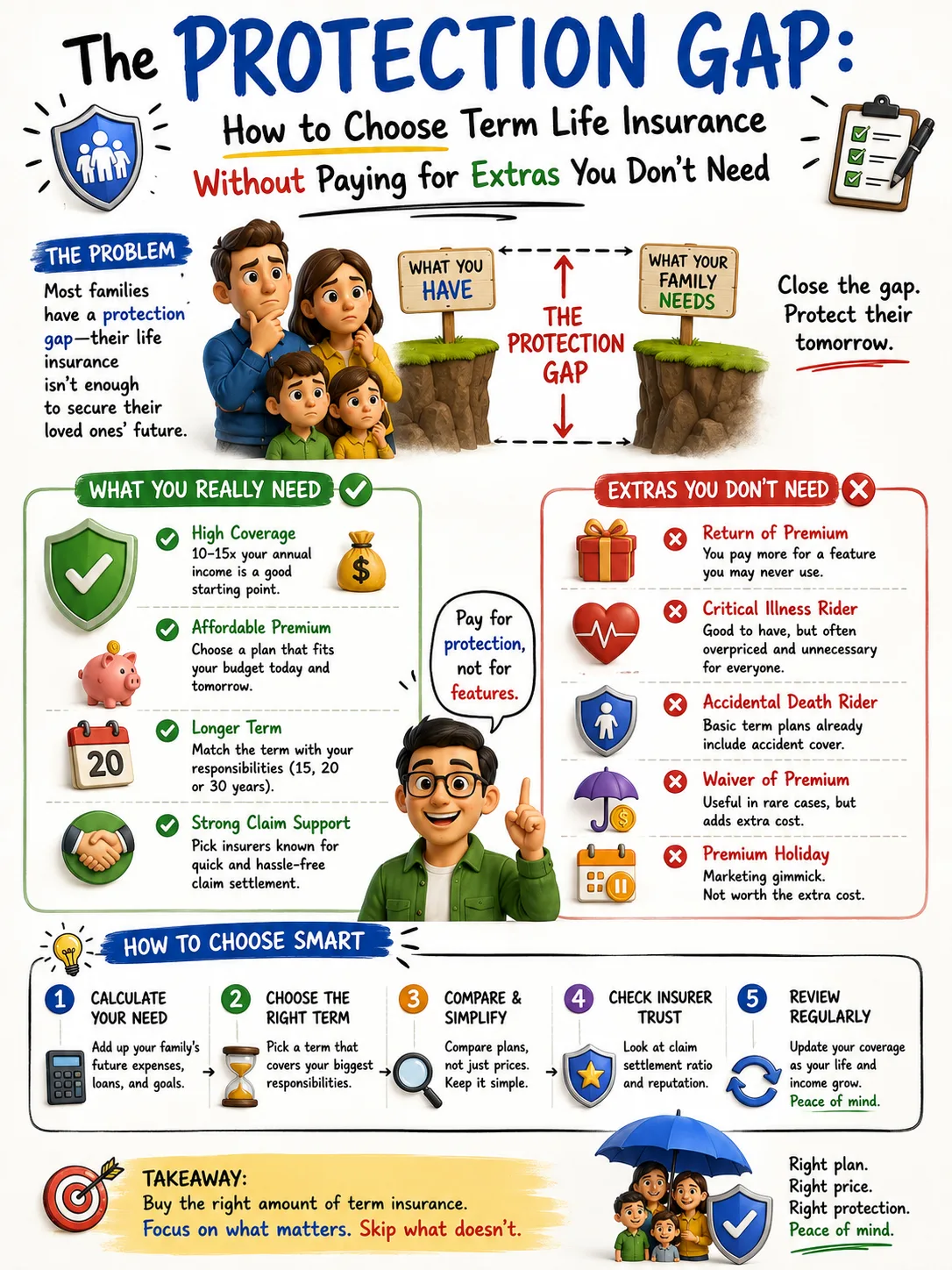
Coverage amount should be based on obligations, not guesswork. A common rule of thumb is 10 to 15 times annual income, but rules of thumb are crude. They can overinsure some households and underinsure others.
A more careful method is the needs-based calculation. Start with income replacement. How many years of income would your survivors need, and how much annual support would be required? Then add debts: mortgage, student loans, car loans, credit cards, business debt, or co-signed obligations. Add education goals if you want to fund college or training. Add final expenses. Add childcare or household labor replacement. Add support for aging parents or dependents with special needs.
Then subtract existing resources. These may include savings, investment accounts, retirement accounts available to beneficiaries, existing life insurance, survivor benefits, Social Security survivor benefits, and the surviving spouse’s income. The gap is the amount life insurance should help fill.
For example, suppose a family would need $60,000 per year for 15 years if one parent died. That is $900,000 of income need before considering inflation and investment returns. Add a $250,000 mortgage, $50,000 for education, and $20,000 for final expenses. The total need is $1.22 million. If the family already has $220,000 in savings and existing coverage, the gap may be around $1 million.
This kind of calculation is not perfect, but it is better than guessing. It ties the policy to actual family needs.
How Long Should Coverage Last?
The length of coverage should match the period of dependency. If your youngest child is three and you want coverage until that child is financially independent, a 20- or 25-year term may make sense. If your mortgage has 28 years remaining and the surviving spouse could not carry it alone, a 30-year term may be appropriate. If you are ten years from retirement and need to protect a spouse until retirement savings are sufficient, a 10- or 15-year term may fit.
Longer terms cost more because the insurer is covering older ages. But buying too short a term can be risky. If coverage expires while the need remains, replacing it later may be expensive or impossible.
Laddering policies can help. Instead of buying one large 30-year policy, a family might buy several policies with different terms. For example, $500,000 for 30 years, $500,000 for 20 years, and $500,000 for 10 years. Coverage gradually declines as obligations decline. This can reduce cost while matching risk over time.
Laddering requires planning, but it reflects reality: many families need the most coverage when children are young and debts are high, then less coverage later.
The Role of Employer Life Insurance
Many employers provide basic group life insurance, often equal to one year’s salary. Employees may also be able to buy supplemental coverage through payroll deductions. Employer coverage is useful, but it may not be enough.
The first limitation is amount. One or two times salary rarely replaces decades of income for a young family. The second limitation is portability. Coverage may end or become more expensive when you leave the employer. The third limitation is underwriting. Supplemental group coverage may be convenient, but individual coverage can sometimes be cheaper or more stable for healthy applicants.
Employer coverage should be counted as part of the insurance picture, but families should be careful about relying on it entirely. Job changes, layoffs, career breaks, entrepreneurship, disability, and retirement can all affect access.
A strong plan often uses employer coverage as a supplement and individual coverage as the foundation.
Riders: Useful Additions or Expensive Distractions?
Life insurance riders add features to a policy. The NAIC notes that riders give policyowners the choice to add coverage that is not in the base policy, but adding a rider also increases the premium.
Some riders can be useful. A waiver of premium rider may waive premiums if the insured becomes disabled, depending on terms. An accelerated death benefit rider may allow access to part of the death benefit if the insured is diagnosed with a terminal illness. A conversion rider or privilege in a term policy may allow conversion to permanent coverage. A child rider may provide small amounts of coverage for children. A guaranteed insurability rider may allow future coverage increases without new medical underwriting.
Other riders may be less valuable depending on cost and need. Accidental death riders pay only under specific circumstances. Return-of-premium riders refund premiums if the insured outlives the term, but they typically cost more than standard term coverage. Long-term care or chronic illness riders may be useful, but they should be compared carefully with standalone long-term care options and the policy’s limitations.
The rider test is simple. Does the rider solve a real problem at a reasonable price? If not, it may be clutter.
Underwriting: Why Health and Timing Matter
Life insurance pricing depends heavily on age, health, lifestyle, family medical history, tobacco use, occupation, hobbies, driving record, and the amount of coverage requested. Younger and healthier applicants generally pay lower premiums.
This is why timing matters. Waiting can make coverage more expensive. A new diagnosis, medication, weight change, dangerous hobby, or health event can affect eligibility. People often delay buying life insurance because the topic feels unpleasant. But the best time to buy is often before the need becomes urgent and while health is still favorable.
Underwriting may involve health questions, medical records, prescription history, a paramedical exam, blood and urine tests, or accelerated underwriting using data. No-exam policies can be convenient, but they may cost more or offer lower coverage limits. Convenience is useful, but the policy still needs to be competitively priced and strong enough for the need.
Applicants should answer questions honestly. Misrepresentations can create problems later, especially during the contestability period, when insurers may investigate claims and application accuracy.
Choosing Beneficiaries Carefully
A life insurance policy is only as effective as its beneficiary design. The beneficiary is the person, trust, charity, or entity that receives the death benefit.
Beneficiary designations should be specific and updated after major life events: marriage, divorce, birth, adoption, death, remarriage, business changes, or estate plan updates. Naming a minor child directly can create complications because minors generally cannot receive insurance proceeds outright. A trust or properly structured custodial arrangement may be needed.
It is also wise to name contingent beneficiaries. If the primary beneficiary dies before or at the same time as the insured, the contingent beneficiary provides a backup.
Beneficiary designations generally override instructions in a will, so they must be coordinated with estate planning documents. A forgotten beneficiary form can send money to the wrong person.
Tax Treatment of Life Insurance
One reason life insurance is powerful is its tax treatment. The IRS states that life insurance proceeds received as a beneficiary due to the death of the insured person generally are not includable in gross income and do not have to be reported. However, interest received is taxable and should be reported as interest income.
This general rule makes the death benefit especially useful for family protection because beneficiaries may receive liquidity without ordinary income tax. But tax details can become more complex when policies are owned by businesses, trusts, estates, or transferred for value. Estate taxes, policy loans, withdrawals, surrender gains, and ownership structure can all matter.
Most straightforward family term policies are simple from a tax perspective, but high-net-worth households, business owners, and permanent policy buyers should seek tax and legal guidance before structuring ownership.
How to Compare Life Insurance Quotes
Comparing life insurance is not only about premium. The cheapest policy may be fine if the insurer is strong and the terms are clear, but price alone is not enough.
Compare the death benefit, term length, premium guarantee period, conversion options, renewal rules, riders, exclusions, financial strength ratings, complaint history, underwriting requirements, and policy details. For permanent policies, compare guaranteed values, non-guaranteed illustrations, surrender charges, policy expenses, loan provisions, dividend assumptions, index crediting rules, caps, floors, participation rates, and lapse risks.
When reviewing permanent life illustrations, separate guaranteed from non-guaranteed values. Non-guaranteed projections can look attractive, but they depend on assumptions. Ask what happens if dividends are lower, interest credits decline, charges rise, or premiums are reduced.
Use an independent broker or compare multiple insurers when possible. Different companies price risks differently. One insurer may be more competitive for a particular age, health condition, build, or lifestyle than another.
When Life Insurance Is Being Oversold
Life insurance is sometimes sold as an investment, retirement plan, tax shelter, college fund, or wealth-building miracle. Some permanent policies can play a role in advanced planning, but ordinary families should be cautious when protection is blurred with aggressive promises.
Warning signs include pressure to buy quickly, recommendations before a needs analysis, emphasis on cash value while underinsuring the death benefit, claims of market-like returns without clear discussion of costs, dismissal of term insurance as “throwing money away,” or failure to explain surrender charges and policy risks.
Term insurance is not throwing money away when it protects a family during vulnerable years. Homeowners insurance is not considered wasted because the house did not burn down. Insurance is valuable when it transfers risk you cannot afford to keep.
Permanent insurance is not bad by default. But it should be purchased for the right reasons, by people who understand the cost, funding commitment, and alternatives.
Life Insurance for Stay-at-Home Parents
Stay-at-home parents often need life insurance even if they do not earn a formal paycheck. Their labor has economic value. Childcare, transportation, meal preparation, household management, tutoring, scheduling, elder care, and emotional stability all have replacement costs.
If a stay-at-home parent dies, the surviving parent may need to reduce work hours, hire childcare, pay for household help, take unpaid leave, or move closer to family. Life insurance can provide the money to make those adjustments without immediate financial pressure.
The coverage amount should reflect the cost of replacing household labor and buying time. It may not need to equal the coverage on the primary income earner, but it should not be ignored.
Life Insurance for Single Parents
Single parents often have one of the clearest life insurance needs. If no other parent or household income can step in, the policy may need to provide for housing, childcare, education, guardianship support, and long-term living expenses.
A single parent should also coordinate life insurance with estate planning. Naming a guardian in a will, creating a trust for children, and naming the correct beneficiary structure can be as important as buying the policy. A large death benefit paid without a plan can create legal and administrative complications.
For single parents, affordability matters. A large term policy may provide the strongest protection per dollar.
Life Insurance for Business Owners
Business owners may need life insurance for several reasons. A policy can fund a buy-sell agreement, allowing surviving partners to buy out the deceased owner’s share. It can protect the business from the loss of a key person. It can provide liquidity for heirs who inherit business interests. It can help repay business debts or protect a lender.
Business life insurance should be coordinated with legal agreements. A policy without a proper buy-sell agreement may not solve the ownership problem. The policyowner, insured person, beneficiary, and agreement terms must align.
Business owners should work with qualified legal, tax, and insurance professionals because mistakes in ownership or beneficiary design can create tax and control problems.
Life Insurance for Estate Planning
High-net-worth households may use life insurance to provide estate liquidity, equalize inheritances, pay taxes, support charitable goals, or transfer wealth. In some cases, policies may be owned by irrevocable life insurance trusts to keep proceeds outside the taxable estate, subject to legal requirements.
This is advanced planning. It can be powerful, but it is not the same as basic family income protection. Estate planning policies require careful coordination among attorneys, tax advisors, trustees, and insurance professionals.
The central question remains the same: what financial problem is the policy solving? If the answer is vague, the policy may be unnecessary or poorly designed.
Policy Ownership Matters
The policyowner controls the policy. The insured is the person whose life is covered. The beneficiary receives the death benefit. These roles can be the same person or different people, depending on the structure.
Ownership affects control, tax treatment, estate inclusion, beneficiary changes, loans, surrender rights, and premium responsibility. In simple family term insurance, the insured often owns the policy and names a spouse or trust as beneficiary. In business and estate planning, ownership may be more complex.
Do not treat ownership as a minor detail. A policy with the wrong owner can create unintended tax, legal, or family consequences.
Reviewing Existing Policies
People often buy life insurance once and forget it. That is risky. Life changes. Policies should be reviewed after major events and at least every few years.
Review coverage after marriage, divorce, childbirth, adoption, home purchase, business formation, major debt changes, income changes, health changes, inheritance, retirement, or the death of a beneficiary. Check whether the coverage amount still fits, whether the term length remains adequate, whether beneficiaries are current, and whether permanent policies are performing as expected.
For permanent policies, request an in-force illustration. This shows how the policy is projected to perform based on current values and assumptions. It can reveal whether premiums are sufficient or whether the policy may lapse later.
What to Do If You Cannot Afford the Ideal Coverage
Some coverage is usually better than no coverage. If the ideal amount is unaffordable, start with what you can sustain. A $500,000 term policy may not solve every problem, but it may protect the family far more than having nothing.
You can also ladder coverage, choose a shorter term for part of the need, improve health and reapply later, use employer coverage as a supplement, or increase coverage as income rises.
Do not buy a policy that strains the budget so much that it lapses. The best policy is one you can keep. A lapsed policy provides no protection when it is needed.
Lost Policies and Family Communication
A life insurance policy helps only if beneficiaries know it exists and can claim it. Keep policy documents organized. Tell beneficiaries or trusted family members where to find them. Maintain updated contact information with the insurer.
The NAIC offers a Life Insurance Policy Locator to help consumers search for lost life insurance policies and benefits by submitting information about the deceased person.
Still, families should not rely on a locator as the primary plan. A simple insurance inventory can prevent confusion. List insurer names, policy numbers, death benefits, beneficiaries, agent contacts, and storage locations. Keep the list secure but accessible to the right people.
A Practical Decision Framework
Start by identifying who depends on you. If no one would face financial hardship from your death, your need may be limited. If dependents exist, calculate the financial gap your death would create.
Next, determine whether the need is temporary or permanent. Temporary needs usually point toward term insurance. Permanent needs may justify permanent coverage.
Then calculate the coverage amount using income replacement, debts, education goals, childcare, final expenses, and existing assets. Avoid guessing.
Choose a term length that matches the dependency period. Consider laddering if obligations decline over time.
Compare multiple insurers. Review premiums, conversion privileges, riders, financial strength, and policy details. Do not buy from pressure.
Name beneficiaries carefully. Coordinate with estate documents. Review after major life events.
Finally, revisit the policy as life changes. Insurance is not a one-time purchase. It is part of a living financial plan.
The Right Policy Is the One That Protects the Plan
Life insurance is not meant to make death less painful. It is meant to make death less financially destructive for the people left behind.
The right policy protects income, time, housing, education, caregiving, business continuity, and dignity. It gives survivors choices at a moment when choices may feel scarce. It can keep a family from selling a home too quickly, draining retirement accounts, taking on debt, or making irreversible decisions while grieving.
For most families, the right answer begins with affordable term coverage that matches the years of greatest dependency. For some households, permanent insurance has a legitimate role. For others, little coverage is needed. The best decision comes from matching the product to the risk rather than allowing the product to define the need.
Life insurance should be boring, clear, and purposeful. If a policy is too confusing to explain, too expensive to maintain, or disconnected from a real obligation, pause before buying. Protection is valuable. Complexity is not automatically valuable.
The goal is not to own life insurance forever. The goal is to protect the people and plans that depend on you until they no longer need that protection—or to provide permanent support where the need truly lasts a lifetime.
 Article
 Article
 Article
 Article
 Article
 Article
 Article
 Article