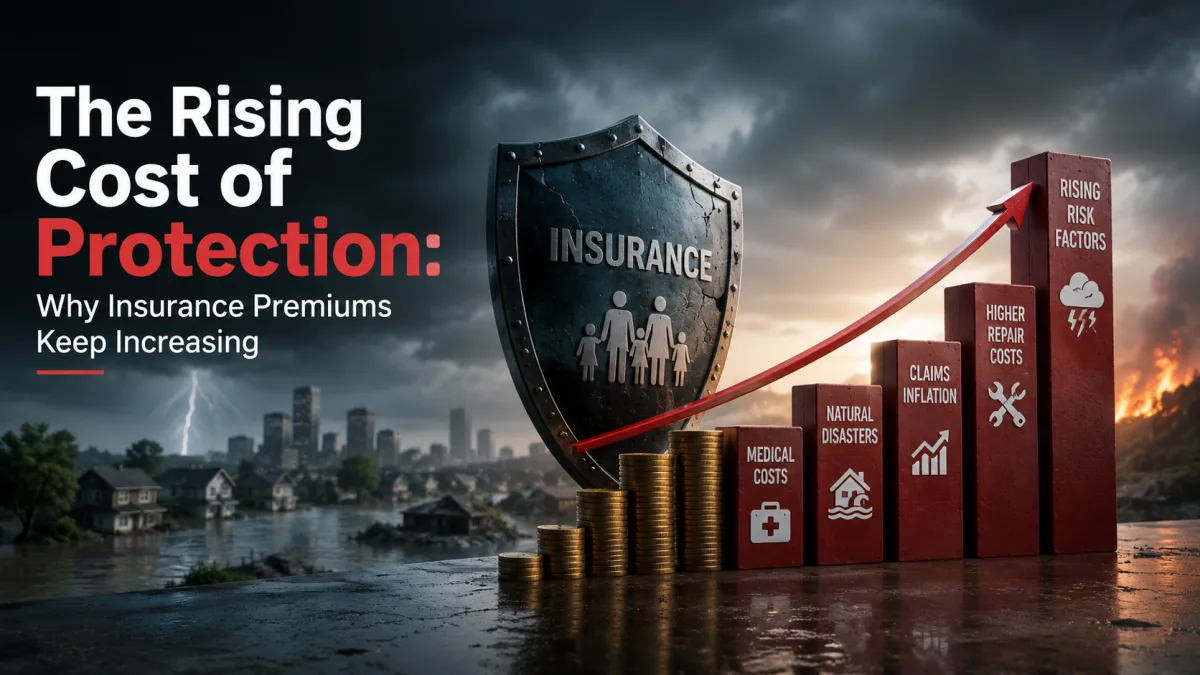
Insurance bills are rising around the world.
Homeowners are opening renewal notices and discovering premiums that are 20%, 30%, or even 50% higher than last year. Drivers with spotless records are seeing auto insurance costs surge despite never filing a claim. Businesses are facing unexpected increases that strain already tight budgets.
The question dominating insurance-related searches today is simple:
Why did my insurance premium just skyrocket?
The answer has very little to do with your individual behavior.
In many cases, insurance companies are raising prices across entire regions, industries, and customer groups because of larger economic and environmental forces that are reshaping the insurance market worldwide.
From severe weather disasters to inflation-driven repair costs, insurers are facing unprecedented financial pressure. As a result, consumers are paying more for coverage even when they have never filed a claim.
Understanding what is happening can help you make smarter decisions, reduce your costs, and avoid overpaying for protection.
The Insurance Industry's New Reality
Insurance operates on a simple business model.
Insurance companies collect premiums from policyholders and use those funds to pay claims. When claims become more expensive or more frequent, premiums eventually rise.
For many years, insurance markets enjoyed relatively stable conditions. Competition between insurers kept prices low, coverage was widely available, and customers benefited from affordable rates.
That environment has changed.
Today, many insurance markets are experiencing what industry experts call a hard market.
A hard market occurs when insurers face rising losses, shrinking profitability, stricter underwriting requirements, and increased pressure to charge more for risk.
During a hard market, insurance companies often:
- Raise premiums
- Tighten eligibility requirements
- Reduce discounts
- Increase deductibles
- Restrict coverage options
- Become more selective about customers
Even customers with perfect records can experience substantial premium increases during these periods because insurers are adjusting pricing across large portions of their portfolios.
The Climate Factor Driving Premium Increases
One of the biggest drivers of insurance inflation is severe weather.
Natural disasters are becoming more frequent and more expensive.
Floods, hurricanes, wildfires, storms, hail damage, heat waves, and other catastrophic events are generating billions of dollars in insurance claims each year.
Insurance companies must pay these claims.
When claim payouts rise dramatically, insurers recover those costs through higher premiums.
A major weather event does not only affect people living in disaster zones.
Insurance operates by spreading risk across millions of policyholders.
As losses grow, insurers often raise rates broadly to maintain financial stability.
This means a homeowner living hundreds of miles away from a disaster area may still experience higher premiums because the insurer's overall claim costs have increased.
Climate-related risks are becoming one of the most significant challenges facing the global insurance industry.
Inflation Is Making Every Claim More Expensive
Many people underestimate the impact inflation has on insurance.
When prices increase throughout the economy, insurance claims become more expensive.
Consider a simple auto accident.
Several years ago, repairing a damaged bumper may have cost a few hundred dollars.
Today, modern vehicles contain:
- Sensors
- Cameras
- Radar systems
- Computerized safety technology
- Advanced driver assistance systems
Even minor accidents can result in repair bills worth thousands of dollars.
Labor costs have also risen.
Auto technicians, construction workers, contractors, electricians, and plumbers all command higher wages than they did a few years ago.
Material costs have surged as well.
Roofing materials, lumber, concrete, glass, electronics, vehicle parts, and replacement equipment now cost substantially more.
Every insurance claim therefore costs more to settle.
Higher claim costs eventually translate into higher premiums.
Why Your Premium Increased Even Though You Never Filed a Claim
This is perhaps the most frustrating aspect of modern insurance pricing.
Many consumers assume insurance rates only rise after filing a claim.
That is not always true.
Insurance companies evaluate risk using far more than your claims history.
Factors that influence pricing may include:
- Geographic location
- Weather exposure
- Local crime rates
- Repair costs
- Construction expenses
- Vehicle theft trends
- Medical costs
- Legal settlements
- Inflation trends
- Reinsurance expenses
Even if you have never submitted a claim, your premium may rise because the insurer believes the overall risk associated with your location or policy type has increased.
Think of it this way.
Insurance companies price future risk, not past behavior alone.
If future risks become more expensive, premiums rise accordingly.
The Hidden Role of Reinsurance
Most consumers have never heard of reinsurance.
Yet it has a major impact on insurance costs.
Reinsurance is insurance purchased by insurance companies.
Insurers buy protection from larger financial institutions to help cover massive losses from catastrophes.
When hurricanes, floods, or wildfires generate billions in claims, reinsurance helps absorb some of the financial damage.
The problem is that reinsurance has become more expensive.
As global catastrophe losses increase, reinsurers raise their own prices.
Insurance companies then pass those higher costs to policyholders through increased premiums.
This hidden layer of the insurance system plays a major role in today's hard market.
The Biggest Premium Killers
Certain factors can dramatically increase insurance costs.
Understanding these premium killers can help you identify opportunities to reduce your rates.
1. Multiple Claims
Frequent claims are one of the strongest predictors of future premium increases.
Insurers often view repeated claims as evidence of elevated risk.
Even small claims can affect future pricing.
2. Poor Credit History
In many markets, insurers use credit-based insurance scores when determining rates.
Lower scores often correlate with higher premiums.
Improving your credit profile may help reduce costs over time.
3. Low Deductibles
A lower deductible means the insurer pays more when a claim occurs.
As a result, policies with very low deductibles typically carry higher premiums.
4. High-Risk Locations
Properties exposed to flooding, storms, wildfires, theft, or vandalism generally face higher insurance costs.
Location remains one of the strongest pricing factors.
5. Expensive Vehicles
Luxury vehicles, performance cars, and models with costly repair parts generally cost more to insure.
The higher the potential claim payout, the higher the premium.
6. Coverage Gaps
Allowing policies to lapse can lead to significantly higher future premiums.
Continuous coverage often results in better pricing.
Smart Ways to Lower Your Insurance Costs
Although many market forces are outside your control, there are still effective strategies for reducing premiums.
Shop Around Aggressively
Many consumers stay with the same insurer for years.
This loyalty can become expensive.
Different insurers evaluate risk differently.
One company may increase rates substantially while another offers significantly lower pricing for similar coverage.
Obtaining multiple quotes remains one of the fastest ways to save money.
Bundle Policies
Many insurers offer discounts when customers combine:
- Auto insurance
- Home insurance
- Renters insurance
- Life insurance
Bundling can generate meaningful savings.
Increase Your Deductible
A higher deductible reduces the insurer's financial exposure.
In exchange, companies often provide lower premiums.
Before making changes, ensure you can comfortably cover the deductible if a claim occurs.
Improve Home Security
Security systems, cameras, smart detectors, and monitored alarms can reduce risk and qualify homeowners for discounts.
Maintain Good Credit
Pay bills on time.
Reduce outstanding debt.
Keep credit utilization low.
Strong financial habits often translate into better insurance pricing.
Review Coverage Annually
Many people pay for coverage they no longer need.
Annual policy reviews can identify unnecessary expenses and opportunities for savings.
The Loyalty Discount Myth
Many consumers assume long-term customers automatically receive the best rates.
Unfortunately, this is not always true.
Some customers remain with the same insurer for years without comparing alternatives.
Over time, they may gradually pay more than necessary.
That is why periodic rate comparisons remain important.
Loyalty can be valuable, but blind loyalty can become expensive.
Always compare options before renewing.
Should You File Small Claims?
This is an important strategic question.
Filing every small claim may not always be the best financial decision.
Repeated claims can sometimes increase future premiums.
Before filing, consider:
- The size of the loss
- Your deductible
- Potential future rate increases
- Your claims history
Sometimes paying a small expense out of pocket may be financially advantageous over the long term.
Every situation is different, so evaluate carefully.
What the Future Holds
Insurance is unlikely to become dramatically cheaper in the near future.
Climate-related risks, inflation pressures, rising repair costs, and evolving legal environments continue to challenge insurers worldwide.
However, markets operate in cycles.
Hard markets eventually soften.
Competition increases.
New insurers enter the market.
Pricing pressure eases.
Consumers who stay informed and actively manage their policies will be best positioned to benefit when conditions improve.
Final Thoughts
If your insurance premium recently skyrocketed, you are not alone.
The increase is often driven by broader forces rather than personal mistakes.
Severe weather events, inflation, rising repair costs, expensive reinsurance, and industry-wide hard market conditions are pushing premiums higher around the globe.
The good news is that you still have options.
Review your coverage.
Compare quotes.
Bundle policies.
Adjust deductibles.
Improve your credit profile.
Ask about available discounts.
Small actions can create meaningful savings over time.
Insurance is ultimately about protecting your financial future.
The goal is not simply finding the cheapest policy.
The goal is finding the best protection at the best possible price.
 Article
 Article
 Article
 Article
 Article
 Article
 Article
 Article