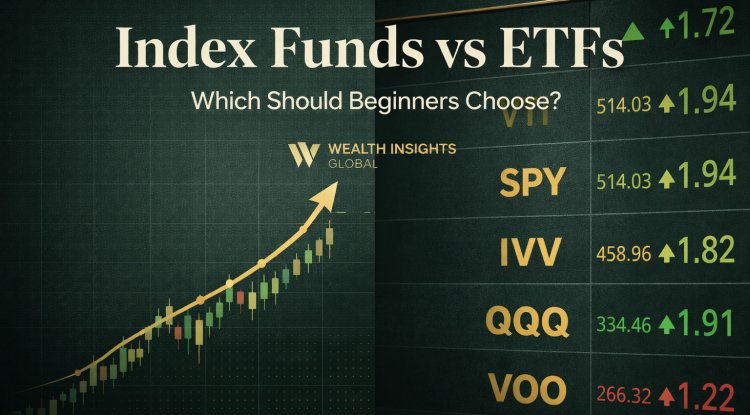
Index Funds vs ETFs: Which Is Better for Beginners?
Not sure whether to start with index funds or ETFs? This beginner's guide breaks down the key differences, pros and cons, and which investment option is the smarter choice for building long-term

Index Funds vs ETFs: Which Is Better for Beginners?
When you first start investing, two terms come up constantly — index funds and ETFs. Many beginners assume they're the same thing. They're similar, but there are important differences that can affect how you invest.
By the end of this article, you'll know exactly what each one is and which one makes more sense for your situation.
Table of Contents
What Is an Index Fund?
An index fund is a type of mutual fund designed to mirror the performance of a specific market index, like the S&P 500 or the total US stock market.
When you invest in an index fund, your money is pooled with thousands of other investors and used to buy all the stocks in that index. The fund automatically adjusts as companies enter or leave the index.
Key characteristics of index funds:
- Passively managed — no fund manager making decisions
- Very low fees
- Usually bought directly through a fund company like Vanguard or Fidelity
- Priced once per day after the market closes
- Often have a minimum investment requirement
What Is an ETF?
An ETF (Exchange-Traded Fund) is very similar to an index fund — it also tracks a market index and holds a basket of stocks. The key difference is in how you buy it.
ETFs trade on the stock market just like individual stocks. You can buy and sell them throughout the trading day at real-time prices.
Key characteristics of ETFs:
- Trade like stocks on an exchange
- Can be bought and sold anytime during market hours
- No minimum investment — buy as little as one share or a fraction
- Very low fees
- Highly liquid and flexible
Key Differences Between Index Funds and ETFs
| Feature | Index Fund | ETF |
|---|---|---|
| How you buy | Through a fund company | Through a brokerage like a stock |
| Trading | Once per day at market close | Throughout the trading day |
| Minimum investment | Often $1,000+ (some have none) | Price of one share or fractional |
| Fees | Very low | Very low |
| Tax efficiency | Good | Slightly better |
| Best for | Long-term, hands-off investors | Flexible, frequent investors |
Which One Should You Choose?
For most beginners, ETFs are the better starting point because:
- No minimum investment — You can start with $1 using fractional shares
- More accessible — Available on every major brokerage platform
- Flexible — You can buy and sell whenever you want
- Lower barrier to entry — Perfect when starting with small amounts
The honest truth is: both are excellent choices. The difference between them matters much less than the act of actually starting to invest.
The Best Index Funds and ETFs for Beginners
Best ETFs for Beginners
| Ticker | Name | What It Tracks |
|---|---|---|
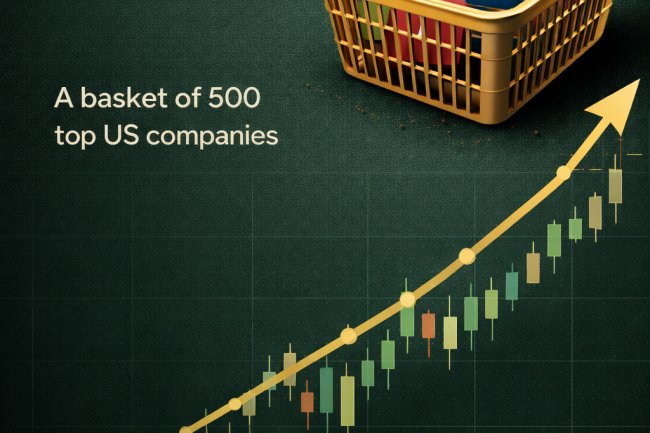
| VOO | Vanguard S&P 500 ETF | S&P 500 (top 500 US companies) |
| VTI | Vanguard Total Stock Market ETF | Entire US stock market |
| QQQ | Invesco Nasdaq-100 ETF | Top 100 tech companies |
| VT | Vanguard Total World ETF | Global stocks across 50+ countries |
Best Index Funds for Beginners
| Ticker | Name | Minimum |
|---|---|---|
| FXAIX | Fidelity 500 Index Fund | $0 |
| VTSAX | Vanguard Total Stock Market Index | $3,000 |
| SWTSX | Schwab Total Stock Market Index | $0 |
Frequently Asked Questions
They are very similar but not identical. Both track market indexes, but ETFs trade like stocks on an exchange while traditional index funds do not.
Both have very low fees. ETFs may have a slight edge in tax efficiency, but the difference is minimal for most investors.
Yes, in the short term. But historically, broad market index funds and ETFs have always recovered and grown over long periods of time.
There's no harm in owning both, but for simplicity, picking one and investing consistently is better than overthinking the choice.
The best investment is the one you actually make.
Whether you choose an index fund or an ETF, starting today is more important than choosing perfectly.
Explore more investing guides at wealthinsights.co.ke
What's Your Reaction?