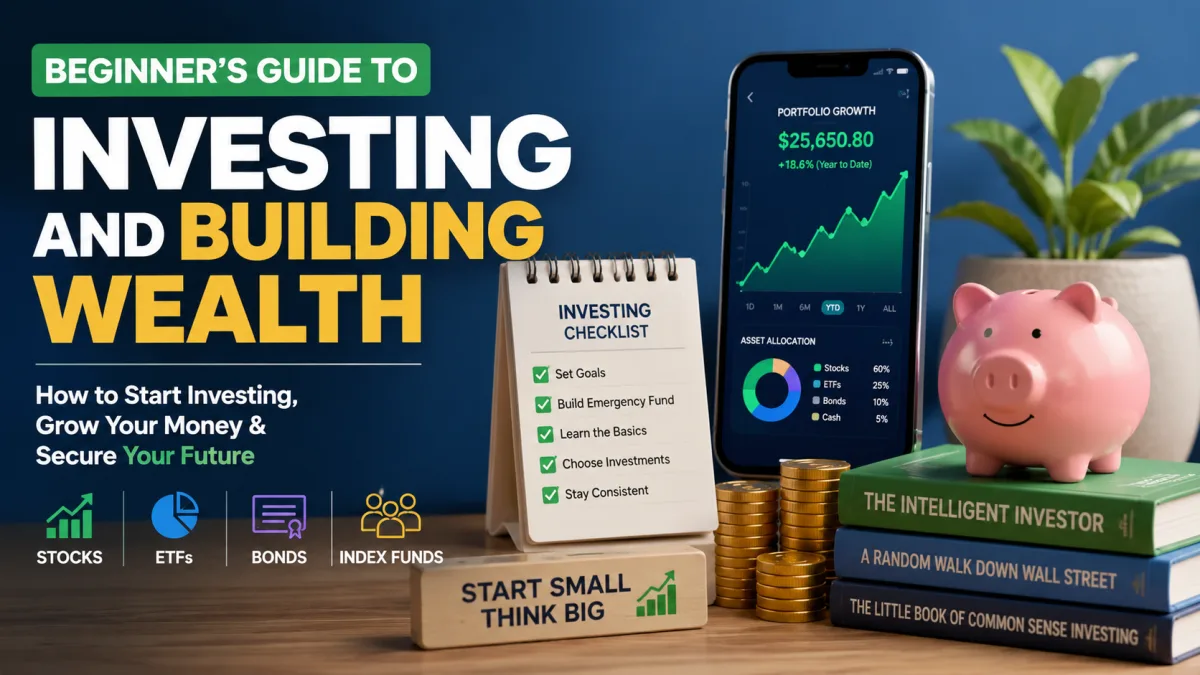
The First Ownership Step: How New Investors Begin Building Wealth
Most people are introduced to money through work.
They learn that money is earned by giving time, skill, labor, attention, or energy to someone else. A paycheck arrives because hours were worked. A salary appears because responsibilities were handled. A bonus is paid because performance targets were met. For many people, this becomes the entire financial model: work, earn, spend, save a little, repeat.
That model can provide stability. It can pay bills. It can support a household. It can create comfort. But by itself, it rarely creates lasting wealth.
Wealth usually begins when a person moves beyond earning money and starts owning things that can grow, produce income, or increase in value over time. That is the first ownership step. It is the moment a person stops seeing money only as something to spend and begins seeing it as something that can be deployed.
Investing is the disciplined practice of putting money into assets with the expectation that those assets can create future value. It is not magic. It is not reserved for the rich. It is not a casino when done properly. At its best, investing is the process of turning today’s surplus into tomorrow’s freedom.
The beginner’s challenge is that investing can look complicated from the outside. Stocks, bonds, index funds, exchange-traded funds, real estate, dividends, interest rates, inflation, risk tolerance, retirement accounts, brokerage platforms, market cycles, asset allocation, and compounding can feel like a language built for insiders.
But the foundation is simpler than it appears.
Investing is about ownership, patience, and consistency. Ownership gives you a claim on future value. Patience gives that value time to develop. Consistency allows small actions to build into meaningful results.
A person does not need to be wealthy before investing. In many cases, investing is one of the ways ordinary people begin building wealth. The mistake is believing that investing starts after financial success. For many households, investing is part of how financial success is created.
Why Saving Alone Is Not Enough
Saving money is essential. No serious wealth-building plan works without the ability to keep some portion of what you earn. Savings provide safety. They cover emergencies. They reduce dependence on debt. They create breathing room when life becomes unpredictable.
But saving and investing are not the same thing.
Saving protects money. Investing seeks to grow it.
Cash is useful because it is stable and accessible. If a car breaks down, a medical bill appears, rent is due, or income is interrupted, cash can solve urgent problems. That makes cash valuable. The danger comes when cash becomes the only long-term plan.
Over time, inflation reduces the purchasing power of money. Inflation means the general cost of goods and services rises. When prices rise, the same amount of cash buys less than it used to. A dollar kept under a mattress may still be a dollar years later, but it may not command the same amount of groceries, transportation, housing, or healthcare.
This is why saving alone often fails as a wealth strategy. A person may be disciplined enough to save, but if all of that money remains idle for decades, inflation quietly works against them.
Investing exists partly to solve this problem. The goal is to own assets that have the potential to grow faster than inflation over long periods. Not every investment succeeds. Not every year produces positive returns. But over long stretches of time, productive assets have historically played a central role in helping households, institutions, and nations build wealth.
Cash gives you liquidity. Investments give you growth potential. A wise financial life usually needs both.
What Investing Really Means
Investing means putting money into something that has the potential to create future value.
That value can appear in several ways. A stock may rise in price as a company grows. A bond may pay interest. A rental property may produce monthly income. A fund may distribute dividends. A business may generate profit. An asset may become more valuable because demand increases, productivity improves, or cash flow expands.
At the center of investing is a simple idea: money can be used to acquire ownership or income-producing claims.
This is different from spending. Spending exchanges money for consumption. You pay for a meal, a phone, a vacation, a subscription, or clothing. Some spending is necessary. Some improves quality of life. But once the money is spent, it usually stops working for you.
Investing is different because the money is assigned a job. That job is to grow, produce income, preserve purchasing power, or help build future security.
A beginner does not need to understand every financial instrument before starting. What matters first is understanding the purpose of investing. You are not trying to look sophisticated. You are not trying to impress anyone. You are not trying to predict every market movement. You are trying to build ownership over time.
That ownership is the foundation of wealth.
The Difference Between Income and Wealth
One of the most important lessons in personal finance is that income and wealth are not the same.
Income is money coming in. Wealth is what remains and grows.
A person can earn a high income and still have little wealth if most of the money is spent. Another person can earn a modest income and build wealth steadily by saving, investing, and avoiding destructive financial habits.
Income gives you financial capacity. Wealth gives you financial strength.
Income can disappear if a job is lost, a business slows, health changes, or an industry declines. Wealth, if built carefully, can provide resilience. It can create income of its own. It can reduce dependence on any single employer or client. It can give a person more choices.
This is why investing matters. Investing allows income to be converted into assets. Without that conversion, money passes through your life. With that conversion, money begins to accumulate into ownership.
The goal is not simply to earn more. The deeper goal is to keep more, direct more, and own more.
Ownership Is the Wealth Divider
The modern economy rewards ownership in powerful ways.
Workers are paid for labor. Owners receive claims on profits, cash flow, appreciation, interest, rent, or equity growth. Both labor and ownership matter, but they operate differently.
Labor is limited by time and energy. A person can work only so many hours. Even highly paid professionals face limits. Ownership can continue working while the owner sleeps, rests, studies, travels, or works elsewhere.
This does not mean ownership is effortless. Investors must make decisions, accept risk, stay disciplined, and continue learning. But once money is placed into productive assets, those assets can participate in economic activity beyond the investor’s personal labor.
When you buy shares in a broad stock market index fund, you may own tiny pieces of many companies. Those companies employ workers, sell products, develop technology, serve customers, manage supply chains, build brands, and pursue profits. You do not have to personally operate each company to participate in a portion of the results.
When you own a bond, you are lending money to an organization in exchange for interest. When you own rental property, tenants may pay rent for the use of that property. When you own a business, profit may remain after expenses are paid.
Ownership does not guarantee success. Owners can lose money. Assets can decline. Businesses can fail. Properties can require repairs. Markets can fall. But ownership is still the central path through which wealth compounds.
The first step for a new investor is not to become an expert in every asset class. It is to understand the role ownership plays in financial freedom.
The Main Types of Investments
Investments come in many forms, but beginners should first understand the major categories. Each has different risks, potential returns, income characteristics, and time horizons.
Stocks
A stock represents ownership in a company.
When you buy a share of stock, you own a small piece of that business. If the company grows, earns more profit, becomes more valuable, or returns money to shareholders, your investment may benefit. If the company struggles, loses customers, faces competition, or becomes less profitable, your investment may decline.
Stocks can build wealth because successful companies can grow significantly over time. A business can develop new products, expand into new markets, improve efficiency, raise prices, acquire competitors, or benefit from long-term economic growth.
But individual stocks also carry company-specific risk. A single company can disappoint investors. Management can make poor decisions. An industry can be disrupted. A once-dominant firm can lose relevance.
For beginners, this is why buying a few individual stocks is usually riskier than owning a diversified fund. Owning one company means your outcome depends heavily on that company. Owning hundreds or thousands of companies spreads the risk.
Exchange-Traded Funds
Exchange-traded funds, often called ETFs, are baskets of investments that trade on stock exchanges.
An ETF may hold stocks, bonds, commodities, or other assets. Many ETFs are designed to track a specific index, sector, region, or strategy. For example, an ETF might hold large U.S. companies, international companies, dividend-paying companies, short-term bonds, or a mix of assets.
ETFs are popular because they make diversification easier. Instead of buying many individual stocks one by one, an investor can buy one ETF that contains many holdings.
This matters because diversification reduces the impact of any single investment performing poorly. If one company inside a broad ETF struggles, the entire investment may not be destroyed because many other companies remain in the basket.
ETFs can also be cost-efficient. Many broad-market ETFs charge low fees compared with traditional actively managed funds. For long-term investors, fees matter because every dollar paid in fees is a dollar that cannot remain invested and compound.
Index Funds
Index funds are investment funds designed to track a market index.
An index is a collection of investments that represents a particular market or segment of the market. A broad stock index may include hundreds or thousands of companies. An index fund tries to match the performance of that index rather than trying to beat it through constant trading.
Index funds are attractive for beginners because they are simple, diversified, and often low-cost. They do not require the investor to pick individual winners. Instead, the investor owns a broad slice of the market.
This approach accepts a humble truth: most people are not skilled at predicting which stock will outperform, which manager will stay ahead, or which sector will dominate next. Rather than trying to outsmart the market, index investors aim to participate in the market’s long-term growth.
That humility can be powerful. Many investing mistakes come from overconfidence. Index funds reduce the temptation to constantly trade, chase trends, or build a portfolio around guesses.
Bonds
A bond is a loan made by an investor to a borrower, often a government, municipality, or company.
When you buy a bond, the borrower generally agrees to pay interest and return the principal at a specified time, assuming it does not default. Bonds are often considered more stable than stocks, but they are not risk-free.
Bonds can play several roles in a portfolio. They may provide income. They may reduce volatility. They may help preserve capital. They may give investors something steadier to hold during uncertain markets.
The tradeoff is that bonds usually have lower long-term growth potential than stocks. A bond’s return is often tied to its interest payments and repayment terms. Stocks, by contrast, can rise substantially if business value increases.
Beginners should understand that safety exists on a spectrum. Government bonds from financially stable countries may be considered relatively safe, while bonds issued by weaker companies can carry higher risk. Longer-term bonds can also move sharply when interest rates change.
Real Estate
Real estate investing involves owning property for income, appreciation, or both.
A rental property can produce monthly rent. A property may rise in value over time. Real estate can also provide tax advantages in some situations, though tax rules vary by location and should be studied carefully.
Real estate appeals to many investors because it is tangible. People can see it, visit it, improve it, insure it, and understand its basic use. Everyone needs places to live, work, shop, store goods, or conduct business.
But real estate is not passive by default. Properties require maintenance. Tenants may leave. Repairs can be expensive. Financing can increase risk. Local markets can weaken. Vacancies can reduce income. Taxes and insurance can rise.
For beginners, real estate should be approached with careful numbers rather than emotion. A property is not automatically a good investment because it looks attractive. The income, expenses, debt, location, tenant demand, maintenance needs, and purchase price all matter.
Cash and Cash Equivalents
Cash is not usually thought of as an investment, but it plays an important role in a financial plan.
Cash includes checking accounts, savings accounts, money market funds, and similar highly liquid holdings. It provides flexibility and protection. A person with cash reserves is less likely to sell investments at a bad time to cover an emergency.
The weakness of cash is that it has limited growth potential. Even when cash earns interest, inflation may reduce its real value over time. That is why cash is useful for short-term needs but weak as a long-term wealth engine.
A smart investor does not despise cash. A smart investor gives cash the right job. Cash is for stability, emergencies, near-term expenses, and opportunity. Growth assets are for long-term wealth building.
How Compounding Turns Small Amounts Into Wealth
Compounding is one of the most powerful forces in investing.
Compounding happens when returns begin generating returns of their own. At first, the effect can look small. Over time, it can become dramatic.
Imagine a person invests a modest amount every month. In the early years, most of the account growth may come from the money they personally contribute. The investment returns may seem small. This is the stage where many people lose patience.
But if the investor continues, the account may eventually reach a point where investment growth becomes more visible. Returns are earned not only on the original contributions, but also on previous gains. The base becomes larger. The growth has more money to work with.
This is why time matters so much. Time allows compounding to develop.
A person who starts investing early with small amounts can sometimes outperform someone who starts much later with larger amounts. The reason is not that the early investor is smarter. It is that money invested earlier has more years to compound.
Compounding rewards consistency, patience, and restraint. It punishes constant interruption. When investors repeatedly withdraw money, panic-sell, chase fads, or stop investing for long periods, they weaken the compounding process.
The most difficult part of compounding is psychological. The early results may not feel exciting. Wealth may seem to be growing too slowly. But compounding often works quietly before it works visibly.
New investors should respect the boring years. They are where the foundation is built.
Risk Is Not the Enemy
Many beginners hear the word risk and assume it means danger. In investing, risk is more nuanced.
Risk is the possibility that outcomes will differ from expectations. An investment may fall in value. A return may be lower than expected. Income may stop. Inflation may reduce purchasing power. A company may fail. Interest rates may change. A currency may weaken. A property may sit vacant.
Risk cannot be eliminated. It can only be understood, managed, reduced, transferred, or accepted.
A person who avoids investing because of risk may still face another kind of risk: the risk of not growing wealth at all. Holding only cash may feel safe, but inflation can erode purchasing power. Avoiding the market may prevent losses, but it can also prevent long-term gains.
The goal is not to avoid all risk. The goal is to take intelligent risk.
Intelligent risk is connected to a plan. It is diversified. It matches the investor’s time horizon. It is not based on hype. It does not rely on one lucky outcome. It allows room for mistakes and market declines.
Speculation is different. Speculation often depends on rapid price movement, excitement, leverage, or the hope that someone else will pay more later. Some speculation may succeed, but it is not the same as disciplined investing.
A beginner should learn to ask a simple question: Am I buying this because it has long-term value, or because I hope the price moves quickly?
That question alone can prevent many costly mistakes.
Diversification: The Investor’s Shock Absorber
Diversification means spreading money across different investments so that no single holding has too much power over your financial future.
The idea is simple: do not let one company, one sector, one property, one country, or one financial bet determine everything.
Diversification does not guarantee profit. It does not prevent losses. During severe market declines, many assets can fall at the same time. But diversification can reduce the damage caused by a single failure.
A person who owns only one stock depends on that company. A person who owns a broad stock fund depends on a large group of companies. A person who owns stocks, bonds, cash, and perhaps real estate has several sources of potential stability and growth.
Diversification is not glamorous. It rarely creates overnight wealth. But it helps investors survive.
Survival matters because long-term investing is a game of staying in the game. The investor who avoids ruin has time to recover, learn, and compound. The investor who concentrates too heavily in one bad decision may lose years of progress.
Beginners often want the highest possible return. Experienced investors often care deeply about avoiding permanent damage.
Asset Allocation: Choosing the Mix
Asset allocation is the way an investor divides money among different types of assets.
A simple portfolio might include stocks, bonds, and cash. A more complex portfolio might include domestic stocks, international stocks, real estate, short-term bonds, long-term bonds, inflation-protected securities, and other assets.
The right mix depends on several factors: age, goals, income stability, emergency savings, debt levels, investment knowledge, emotional tolerance, and time horizon.
A young investor saving for retirement decades away may be able to hold more stocks because they have time to recover from market declines. A person who needs money in two years for a home deposit should be more cautious because a market drop could arrive at the wrong time.
This is one of the most practical rules in investing: money needed soon should not be exposed to major short-term risk.
Long-term money can usually accept more volatility. Short-term money needs more stability.
Asset allocation helps match the investment strategy to the purpose of the money. Without that match, investors often make emotional decisions. They invest aggressively with money they need soon, then panic when prices fall. Or they keep long-term money too conservative and miss years of growth.
Every dollar should have a time horizon. The time horizon helps determine where that dollar belongs.
Market Volatility Is Normal
Markets rise and fall.
This is not a flaw in investing. It is part of investing.
Stock prices move because expectations change. Investors react to profits, interest rates, inflation, politics, wars, technology, recessions, optimism, fear, and uncertainty. Some days prices rise sharply. Other days they fall. Some years are excellent. Others are painful.
Beginners often believe market drops mean something has gone wrong. Sometimes a drop reflects a serious economic problem. Other times it reflects temporary fear. Either way, volatility is normal.
The danger is not volatility itself. The danger is making permanent decisions based on temporary emotions.
When markets fall, fear can make investors sell after prices have already declined. When markets rise quickly, excitement can make investors buy after prices have already become expensive. This emotional cycle leads many people to buy high and sell low.
A long-term plan helps protect against this behavior. If you know why you are invested, how long you plan to stay invested, and what role each asset plays, you are less likely to react impulsively.
The market will test every investor. The question is whether your plan is stronger than your emotions.
The Beginner’s Financial Foundation
Investing should not be separated from the rest of your financial life.
A person can own investments and still be financially fragile if they have no emergency fund, high-interest debt, poor spending habits, no insurance protection, or no clear goals. Wealth building works best when the foundation is stable.
Build an Emergency Fund
An emergency fund is money set aside for unexpected expenses or income disruptions.
This fund protects your investments. Without emergency savings, a person may be forced to sell investments during a market decline to cover urgent expenses. That can turn a temporary decline into a permanent loss.
The ideal size of an emergency fund depends on job stability, household expenses, dependents, health, and risk tolerance. Some people may feel comfortable with a few months of expenses. Others need more.
The point is not to follow a perfect formula. The point is to create a cash buffer between life’s surprises and your long-term investments.
Pay Down High-Interest Debt
High-interest debt can quietly destroy wealth.
If a credit card charges a very high interest rate, paying it down may produce a financial benefit that is difficult for investments to beat consistently. Carrying expensive debt while investing aggressively can be like filling a bucket while water leaks from the bottom.
Not all debt is the same. A reasonable mortgage, a manageable student loan, or a business loan used carefully may be different from high-interest consumer debt. The key is understanding the cost of the debt.
Before investing heavily, beginners should examine their debt. If the interest rate is high and the balance is growing, debt reduction may be one of the best investments they can make.
Create a Basic Budget
A budget is not a punishment. It is a visibility tool.
Many people do not struggle because they earn too little. They struggle because they do not know where their money is going. A budget shows the flow.
The purpose of budgeting is to create a gap between income and expenses. That gap becomes the source of savings, debt repayment, and investing. Without a gap, wealth building remains theory.
A good budget does not need to be complicated. It needs to answer three questions: How much money comes in? How much money goes out? How much is directed toward future goals?
Investing depends on cash flow. Cash flow depends on habits. Habits depend on awareness.
How to Start Investing
Starting does not require perfection. It requires a reasonable first step.
Define the Purpose
Before choosing investments, define the goal.
Are you investing for retirement? A future home? Financial independence? Education? Long-term family wealth? A business opportunity? A safety net?
The goal shapes the strategy. Retirement money may be invested differently from money needed for a home deposit. A twenty-year goal may allow more volatility than a two-year goal.
Investing without a goal creates confusion. Investing with a goal creates direction.
Choose the Right Account
Investments are held inside accounts. The type of account matters.
Some accounts are designed for retirement. Others are standard brokerage accounts. Some may offer tax advantages depending on the country and the investor’s situation. Some employer plans may include matching contributions, which can be extremely valuable.
Beginners should learn the account options available in their location. The investment itself matters, but the account structure can affect taxes, access, fees, and long-term planning.
A good investment in the wrong account may still work, but a good investment in the right account can be even more efficient.
Select a Simple First Investment
Many beginners delay investing because they believe they must choose the perfect investment.
Perfection is not the first goal. A sensible, diversified, low-cost beginning is often better than endless research with no action.
For many new investors, broad index funds or diversified ETFs can be useful starting points because they provide exposure to many companies at once. They are not guaranteed to rise. They can decline during market downturns. But they reduce the need to pick individual winners.
A beginner may start with a small amount, learn how the platform works, observe market movement, and build confidence over time.
The first investment should be understandable. If you cannot explain what you own, why you own it, how it can make money, and what risks it carries, you are not ready to invest heavily in it.
Automate Contributions
Automation turns investing from an occasional decision into a habit.
When contributions happen automatically, the investor is less dependent on motivation. Money can be invested monthly, biweekly, or whenever income arrives. This creates consistency.
Automation also reduces the temptation to time the market. Market timing means trying to buy at the perfect low and sell at the perfect high. Many people attempt it. Few do it consistently well.
Regular investing accepts that some purchases will happen when prices are high and others when prices are low. Over time, this can smooth the entry point.
The deeper benefit is behavioral. Automation helps investors act before emotions interfere.
Increase Contributions Over Time
Starting small is acceptable. Staying small forever may limit progress.
As income grows, debt falls, or expenses become more controlled, investors should look for opportunities to increase contributions. Even small increases can matter over long periods.
A raise can become lifestyle inflation, or it can become ownership. A bonus can disappear into spending, or it can strengthen a portfolio. A paid-off loan can free cash flow for investing.
Wealth often grows when people redirect financial improvements into assets instead of allowing every improvement to become a higher standard of consumption.
The Cost of Waiting
One of the most common investing mistakes is waiting too long.
People delay for many reasons. They want to earn more first. They want to understand everything first. They fear losing money. They believe investing is only for people with large sums. They assume they will start later.
Waiting feels harmless because nothing visibly bad happens immediately. But the cost is hidden. The lost years are years that money could have been compounding.
A person who starts investing early does not need to be brilliant. Time becomes an ally. A person who starts much later may need larger contributions to reach the same goal.
This does not mean older beginners should feel discouraged. The best time to start may have been earlier, but the next best time is when the foundation is ready and the plan is clear.
The point is not regret. The point is urgency without panic.
Investing rewards action, but it rewards thoughtful action. A beginner does not need to rush into risky investments. They need to stop postponing the learning process and begin building the habit.
The Danger of Fast-Money Thinking
Fast-money thinking is one of the great enemies of wealth.
It appears whenever people believe the normal path is too slow and the shortcut is more attractive. It can show up in hot stocks, speculative tokens, get-rich promises, leveraged trades, miracle strategies, or social media claims of effortless wealth.
The promise is always similar: large gains, little patience, minimal discipline.
Real wealth rarely works that way.
Some people do become rich quickly. A founder may build a company that succeeds. An early investor may buy an asset before it becomes popular. A trader may have an exceptional run. But these stories are often less repeatable than they appear.
Beginners are especially vulnerable because they may not yet know the difference between investing and gambling. They may confuse confidence with competence. They may mistake a rising price for proof of quality. They may assume that someone showing wealth online must understand wealth.
A disciplined investor asks different questions. What is the asset? How does it create value? What price am I paying? What could go wrong? How much can I afford to lose? Does this fit my plan?
Fast-money thinking avoids those questions because the answers often weaken the fantasy.
The goal of investing is not excitement. The goal is durable progress.
Why Fees Matter More Than Beginners Think
Investment fees can look small, but they matter.
A fund charging one percent may not seem expensive at first. But over decades, that fee is taken again and again. Because fees reduce the amount left to compound, their long-term impact can be significant.
This does not mean the lowest-fee option is always the best choice. Value matters. Advice, planning, tax strategy, or specialized management may be worth paying for in some situations. But beginners should understand what they are paying and why.
Common costs may include fund expense ratios, trading commissions, advisory fees, account fees, spreads, transaction costs, and tax consequences.
The key question is simple: Is this cost helping me earn, protect, or manage wealth in a way that justifies the price?
If the answer is unclear, the fee deserves scrutiny.
Taxes and Investing
Taxes can affect investment returns.
Depending on the country and account type, investors may owe taxes on dividends, interest, capital gains, rental income, or withdrawals. Tax-advantaged accounts may help investors defer, reduce, or avoid certain taxes if rules are followed.
Beginners do not need to become tax experts immediately, but they should understand that after-tax returns matter more than headline returns.
An investment that earns a high return but creates a large tax bill may be less attractive than it appears. An account that offers tax benefits may improve long-term outcomes. Holding investments for different periods may produce different tax treatment in some jurisdictions.
Tax rules can be complex and location-specific, so investors should use reliable local guidance when needed. The broader principle is universal: taxes are part of the investment equation.
Investing Through Market Drops
Every long-term investor will experience market declines.
The first serious decline can feel personal. Account values fall. News headlines become dramatic. People who were confident during rising markets suddenly question everything. Friends, relatives, and online commentators may offer conflicting advice.
This is when a plan becomes valuable.
If your investments were chosen for long-term goals, a temporary market decline may not require a dramatic response. It may even allow regular contributions to buy assets at lower prices. But that is only true if the investments remain sound and the money is not needed immediately.
Panic selling often creates damage. When investors sell after a decline, they lock in losses and may miss the recovery. Then they face a second difficult decision: when to get back in. Many wait until markets feel safe again, which may happen only after prices have already risen.
This is how emotion turns volatility into loss.
The better approach is to prepare before declines happen. Hold enough cash for emergencies. Avoid investing short-term money in volatile assets. Diversify. Choose an allocation you can live with. Understand that declines are part of the journey.
Market drops reveal whether an investor owns a plan or only owns optimism.
The Wealth Mindset Investors Need
Investing is not only a technical skill. It is also a mindset.
The wealth-building mindset is patient. It does not demand immediate results. It understands that meaningful financial progress is often built over years, not weeks.
It is disciplined. It invests according to a plan rather than mood, gossip, fear, or excitement.
It is humble. It accepts that the future cannot be predicted perfectly. It diversifies because it knows any single decision can be wrong.
It is ownership-oriented. It sees extra money not only as spending power, but as the raw material for assets.
It is resilient. It expects setbacks and continues anyway.
This mindset separates wealth builders from status seekers. Status seekers use money to appear successful. Wealth builders use money to become more free.
The difference is enormous.
A status seeker may upgrade every part of life as income rises, leaving little to invest. A wealth builder may enjoy life but still preserve the gap between income and spending. That gap becomes ownership. Ownership becomes optionality. Optionality becomes freedom.
Common Beginner Mistakes
Investing Without Understanding
Never invest heavily in something you do not understand.
This rule sounds obvious, yet many people break it. They buy because a friend recommended it. They buy because a price is rising. They buy because a public figure mentioned it. They buy because the story sounds exciting.
Understanding does not require knowing everything. It means knowing the basics: what the investment is, how it may make money, why it may lose money, what fees apply, how liquid it is, and how it fits your goals.
Putting Too Much Money in One Investment
Concentration can create wealth, but it can also destroy it.
A founder may become wealthy by owning a large share of one company. An investor may earn exceptional returns from one stock. But beginners should be careful about copying concentrated success stories without understanding the risk.
If one investment represents most of your portfolio, a single failure can damage your financial life. Diversification may reduce the chance of extreme success, but it also reduces the chance of catastrophic failure.
Confusing Past Performance With Future Certainty
An investment that performed well in the past may not perform well in the future.
Beginners often chase what has recently gone up. They assume strong recent returns prove an investment is safe or superior. Sometimes they are buying after much of the opportunity has already passed.
Past performance can provide information, but it is not a guarantee. Investors should study why returns occurred and whether the conditions that produced them are likely to continue.
Ignoring Fees
Small fees can become large over time.
Beginners should learn to read expense ratios, account charges, trading costs, and advisory fees. A higher fee is not automatically bad, but it must be justified.
Stopping During Difficult Periods
Some investors contribute only when markets feel good. When markets decline, they stop.
This behavior can be costly because lower prices may offer better long-term entry points. A consistent investor understands that discomfort is part of the process.
A Practical First-Year Investing Plan
A new investor’s first year should focus on education, foundation, and consistency.
First, build basic financial awareness. Track income, expenses, debts, and savings. Know your numbers. Investing without knowing your cash flow is like sailing without knowing the weather.
Second, create or strengthen an emergency fund. Even a small buffer is better than none. The fund reduces the chance that life’s surprises interrupt your investments.
Third, address high-interest debt. If expensive debt is growing, it may deserve priority before aggressive investing.
Fourth, open an appropriate investment account. Choose a reputable platform with clear fees, strong security, and access to diversified investments.
Fifth, begin with an amount you can sustain. The number should be meaningful enough to build the habit but not so large that it creates stress.
Sixth, choose simple investments you understand. Broad, low-cost funds are often easier for beginners than individual stock picking.
Seventh, automate contributions. Remove the need to decide every month.
Eighth, review without obsessing. Checking a portfolio daily can make normal volatility feel dramatic. A scheduled review may be healthier.
Ninth, keep learning. Study asset classes, taxes, risk, behavioral finance, retirement planning, and financial history.
Tenth, avoid comparing your progress to others. Comparison leads to impatience, and impatience leads to mistakes.
How Much Money Do You Need to Start?
Many people believe they need thousands of dollars to begin investing. That belief keeps them stuck.
The amount needed depends on the platform and investment choice, but the deeper truth is that the habit matters first. A person who learns to invest small amounts consistently is building the behavior that can handle larger amounts later.
Starting small has advantages. Mistakes are less costly. The investor gains experience. The emotional swings are easier to manage. The platform becomes familiar. Concepts become real.
Small beginnings should not be mocked. Large portfolios often begin as small accounts that were treated seriously.
The important question is not, “Is this amount impressive?”
The better question is, “Can I repeat this consistently and increase it over time?”
What Financial Freedom Really Means
Financial freedom is not only about never working again.
For some people, it means retiring early. For others, it means leaving a toxic job, supporting family, starting a business, traveling, reducing stress, choosing meaningful work, or simply sleeping better because money is no longer a constant emergency.
Investing helps create financial freedom because assets can reduce dependence on active labor. Dividends, interest, rents, business profits, and portfolio withdrawals can support life beyond a paycheck.
The path is usually gradual. First, investments may feel small. Then they may cover minor goals. Later, they may represent months of expenses. Eventually, they may become a meaningful source of security.
Freedom is built in layers.
The first layer is awareness. The second is saving. The third is debt control. The fourth is investing. The fifth is compounding. The sixth is optionality.
Most people want the final layer without building the early ones. Wealth does not usually cooperate with that approach.
The Quiet Power of Consistency
Consistency is not dramatic, but it is powerful.
A person who invests regularly, avoids major mistakes, keeps fees low, stays diversified, and allows time to work may achieve results that look impressive from the outside. But the process itself may feel ordinary.
That is why many people abandon it. They want wealth to feel exciting. They want a breakthrough moment. They want a secret.
Often, the secret is that there is no secret.
Spend less than you earn. Keep a safety reserve. Avoid destructive debt. Buy productive assets. Diversify. Keep costs reasonable. Stay invested. Increase contributions as income grows. Learn continuously. Give compounding time.
These principles are not flashy. They are durable.
Wealth building is not always about making extraordinary moves. It is often about making reasonable moves for an extraordinary length of time.
The First Step Is Not the Final Strategy
Beginners sometimes feel pressure to create the perfect lifelong portfolio immediately.
That pressure is unnecessary.
Your first investment plan is not your final investment plan. As your income, knowledge, goals, family situation, tax position, and risk tolerance change, your strategy may evolve.
The goal at the beginning is to build a solid base. Learn how investing works. Understand your emotions. Develop the habit. Avoid major mistakes. Keep the plan simple enough to follow.
Complexity can come later if it is useful. Many investors never need much complexity at all.
A simple plan followed consistently can outperform a brilliant plan abandoned during stress.
Start Before You Feel Fully Ready
No investor begins with perfect knowledge.
Every experienced investor was once a beginner. They had to learn the language, make decisions, experience market movement, and discover how they reacted to uncertainty.
Confidence comes from education and action together. Studying without action can become procrastination. Acting without education can become recklessness. The balance is to learn enough to make a sensible first move, then continue learning as you go.
Investing is one of the most important financial skills a person can develop. It teaches patience. It teaches ownership. It teaches long-term thinking. It reveals the difference between price and value, income and wealth, consumption and freedom.
You do not need perfect timing. You do not need to be rich. You do not need to predict the next market cycle.
You need a foundation. You need a plan. You need the discipline to keep going when the process feels slow.
The earlier you begin, the more time has a chance to work in your favor. The more consistently you invest, the more your habits begin to shape your future. The more ownership you build, the less dependent you become on earned income alone.
Most people work for money forever because they never learn how to make money work for them.
The investor learns a different lesson.
Money can become ownership. Ownership can become growth. Growth can become freedom.
That first step may look small. Take it seriously anyway.

