The Psychology of Money: Why Behavior Matters More Than Intelligence in Building Wealth
Discover how Morgan Housel's The Psychology of Money reveals that financial success is less about intelligence and more about your habits, emotions, and mindset around money
Why Behavior Beats
Intelligence in Building Wealth
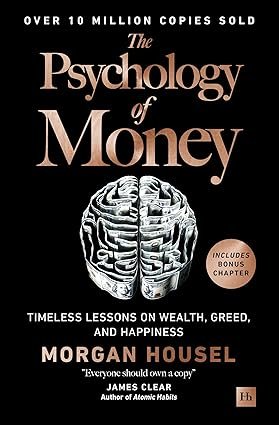
Morgan Housel's The Psychology of Money — the most important finance book of the past decade, reviewed in full.
A genius who loses control of their emotions can be a financial disaster. An ordinary person with a few good habits can build extraordinary wealth.
That single idea — stated plainly in the opening pages of The Psychology of Money by Morgan Housel — stopped me cold the first time I read it. Because it's true. And most of us know it. Yet we keep treating wealth-building as a math problem when it's really a behavior problem.
Published in 2020, Housel's book has sold over 4 million copies and been translated into more than 50 languages. For a financial book with no charts, no stock tips, and no technical jargon, that's a remarkable achievement. The reason? It speaks to the human side of money — the side no spreadsheet can capture.
This is my full review. I'll walk through the most important lessons, explain why this book hits differently from anything else in personal finance, and give you my honest assessment of who it's for.
What Makes This Book Different?
Most personal finance books fall into one of two camps: they either give you a rigid system ("do these 7 steps"), or they tell you abstract truths without any practical grounding. Housel does neither. He writes in short, story-driven chapters — each one examining a specific quirk of human psychology that shapes how we handle money.
He's not trying to teach you what to do with your money. He's trying to explain why we do what we do with it — and why our natural instincts are often exactly wrong.
Financial success is not primarily about technical knowledge, IQ, or access to information. It is about how you behave — especially under pressure, during market crashes, and when greed or fear takes over. Behavior is the last unfair advantage available to every investor.
Doing well with money has a little to do with how smart you are and a lot to do with how you behave.
— Morgan Housel, The Psychology of MoneyThe 8 Lessons That Will Stay With You
The book contains 20 chapters, each a standalone essay. These are the 8 that I believe will change how you think about money permanently.
No One Is Crazy
People make financial decisions based on their personal experiences — their era, upbringing, and what they've seen. Someone who grew up poor spends differently than someone who grew up wealthy. Neither is irrational. They're just working from different data sets. Understanding this builds empathy and self-awareness about your own money behaviors.
Luck and Risk Are Siblings
Housel argues that outcomes are never purely the result of skill or effort. Bill Gates went to one of the few high schools in the world with a computer. His friend Kent Evans, equally talented, died in a mountaineering accident before he could achieve anything. Luck and risk are two sides of the same coin — and humility requires acknowledging both in your own story.
Never Enough — The Danger of Moving Goalposts
The hardest financial skill is getting the goalpost to stop moving. When you make more, you want more. When you get the car, you want the next car. Housel profiles people who destroyed their lives chasing "more" past the point of reason — including Rajat Gupta and Bernie Madoff, who had more than most could dream of, yet risked everything for more.
Compounding — The 8th Wonder of the World
Warren Buffett's net worth is over $80 billion. But here's the overlooked fact: roughly $75 billion of that came after his 65th birthday. He's not just a great investor — he's been investing since he was 10. The magic isn't the returns. It's the time. Housel argues that good investing is not about earning the highest returns, but about earning very good returns for the longest possible time.
Getting Wealthy vs. Staying Wealthy
The skills that help you build wealth are completely different from the skills that help you keep it. Getting wealthy requires optimism, risk-taking, and boldness. Staying wealthy requires humility, fear, and the constant acknowledgment that things could go wrong. Most people master one and ignore the other.
You'll Change — Plan for It
We're notoriously bad at predicting what we'll want in the future. The 25-year-old who locks up all savings in a 30-year pension may hate that decision at 40. Housel advises building financial plans that give you optionality — the ability to adapt as your values, goals, and circumstances inevitably shift.
Wealth Is What You Don't See
We judge wealth by what people buy — the cars, the clothes, the houses. But true wealth is assets not yet spent. The person driving the luxury car may be in debt. The person driving the old sedan may be quietly wealthy. Wealth is what you don't spend. And we constantly mistake spending for wealth because spending is visible, savings are not.
Save Without a Reason
Most advice says: save for a house, save for retirement, save for emergencies. Housel says: save for the sake of saving. Because the real value of savings isn't what they're earmarked for — it's the optionality they give you. The ability to change jobs, take a risk, weather a crisis, or simply say no to things you hate.
Get The Psychology of Money
Available on Amazon in Kindle, Paperback, and Audiobook. One of the highest-rated finance books of the decade — and one of the easiest to read.
https://amzn.to/3NBBpmWAffiliate disclosure: As an Amazon Associate, Wealth Insights Global earns a small commission at no extra cost to you.
The Behavior Gap — Why Smart People Make Poor Money Decisions
One of the most powerful frameworks in the book is what Housel calls the gap between knowing and doing. Virtually everyone knows they should invest consistently, avoid panic-selling, live below their means, and think long-term. Almost nobody does it consistently. Why?
Because money is emotional before it is mathematical. We are wired for short-term survival. Markets speak in decades; our nervous systems speak in seconds. The investor who panics and sells during a downturn isn't stupid — they're human. But that humanity has a price.
| Common Money Behavior | Why It Happens | The Cost |
|---|---|---|
| Selling during a market crash | Fear of further loss triggers the survival instinct | Locking in losses; missing the recovery |
| Lifestyle inflation | Social comparison and the moving goalpost effect | No savings growth despite higher income |
| Timing the market | Overconfidence in predicting short-term movements | Missing the best recovery days; lower returns |
| Avoiding investing altogether | Fear of the unknown; loss aversion bias | Inflation slowly erodes purchasing power |
| Buying high, selling low | Recency bias — yesterday's performance feels predictive | The classic retail investor trap |
The highest form of wealth is the ability to wake up every morning and say, "I can do whatever I want today."
— Morgan Housel, The Psychology of MoneyHow This Book Compares to Rich Dad Poor Dad
These two books are often mentioned together as essential personal finance reading — and rightly so. But they work at different levels.
Rich Dad Poor Dad
Focuses on systems — assets vs liabilities, building income streams, understanding how the wealthy structure their money. It's a mindset shift about what to do.
The Psychology of Money
Focuses on behavior — why we self-sabotage, how emotions override logic, and why consistency beats cleverness. It's a mindset shift about how to think.
Read both. They are complementary, not competing. Kiyosaki shows you the map; Housel explains why most people can't follow it.
Who Should Read This Book?
- Anyone who earns but doesn't build wealth
- Investors who panic-sell during downturns
- Entrepreneurs building long-term financial security
- Young professionals beginning their wealth journey
- Anyone who struggles to stay consistent with investing
- People who compare themselves to others financially
- Anyone who has ever made an emotional financial decision
- Finance professionals who want a behavioral lens
Honest Pros & Cons
What Works
- Exceptional storytelling — reads like a novel
- Short chapters — readable in any order
- Tackles the emotional side no other book does
- Timeless — not tied to any market or era
- Humble, non-preachy tone throughout
- Compounding and long-term thinking explained brilliantly
Limitations
- No specific investment strategies or tactics
- Primarily US-centric examples and context
- Won't teach you how to pick stocks or assets
- Some chapters feel repetitive in theme
- Best paired with technical investing books
My Final Verdict
The Most Important Finance Book You'll Read This Decade
If I could only recommend one personal finance book to someone starting their wealth journey, it would be a close race between this and Rich Dad Poor Dad. But for someone who already understands the basics and keeps making the same mistakes? The Psychology of Money wins every time.
Housel doesn't lecture you. He doesn't shame you for your financial mistakes. He simply holds up a mirror and shows you why humans — all of us — are wired in ways that make wealth-building harder than it needs to be. And then he gives you the mental models to override those instincts.
At under $15 on Amazon, this is one of the highest-value purchases you will make all year. Buy it, read it twice, and share it with someone you care about.
The Psychology of Money — Morgan Housel
Available on Amazon in Kindle, Paperback, and Audiobook formats. Ships internationally. Rated 4.7 stars across 100,000+ reviews.
Affiliate disclosure: As an Amazon Associate, Wealth Insights Global earns a small commission at no additional cost to you. We only recommend books we genuinely believe in.
What's Your Reaction?