30 Steps to Get Rich in 2026: The Ultimate Wealth-Building Guide
Discover 30 proven steps to build real wealth in 2026. A complete, actionable guide covering mindset, investing, income, and financial freedom strategies.
30 Steps to Get Rich in 2026:
The Ultimate Wealth-Building Guide
Most people will spend their entire lives working hard and still never build real wealth.
Not because they are lazy. Not because they lack talent. But because nobody ever gave them a clear, step-by-step system for how wealth is actually built.
In 2026, the tools available to build wealth are more accessible than at any point in human history. You can invest from your phone. You can launch a business with zero capital. You can learn world-class financial skills for free online. The opportunity has never been greater. What's missing for most people is the roadmap.
This guide gives you that roadmap. Thirty steps — organized into four powerful phases — covering everything from mindset and habits, to income building, investing, advanced wealth strategies, and the elite-level moves that separate the financially free from everyone else.
Read every step. Apply them in order. Wealth is not an event. It is a process. And this is the process.
Build the Foundation
Wealth is not built on income alone. It is built on the invisible architecture of habits, beliefs, and financial clarity.
Adopt a Wealth Mindset
Your relationship with money determines your financial outcomes more than any single strategy. Wealthy people view money as a tool — neutral, learnable, and expandable. Most people view money as something that is always running out.
This scarcity mindset causes people to make small, fearful decisions that keep them financially stuck. Start by studying how wealthy people think. Read books like The Psychology of Money by Morgan Housel and Rich Dad Poor Dad by Robert Kiyosaki. Your beliefs about money are programmable — and reprogrammable.
Commit to Financial Education
Financial literacy is the highest ROI investment you can make in 2026. Understanding how compound interest works, how taxes affect your wealth, how inflation erodes savings, and how different asset classes perform — this knowledge is worth more than any single investment tip.
Dedicate at least 30 minutes every day to financial education. Podcasts, books, reputable financial websites, and long-form content are excellent sources. You cannot build what you do not understand.
Audit Your Current Financial Position
You cannot improve what you have not measured. Sit down and write out everything: your monthly income, every single expense, every debt you carry, every asset you own. Calculate your net worth — total assets minus total liabilities.
This number, however uncomfortable, is your starting point. Most people avoid this step because the truth is painful. But clarity — even painful clarity — is the beginning of real progress.
Set Specific, Time-Bound Wealth Goals
"I want to be rich someday" is a wish. "I want $300,000 in investable assets by December 2031" is a goal. Specific goals create specific plans. Write down exactly how much wealth you want, in what assets, and by what date. Then reverse-engineer the monthly actions required to get there.
A goal without a deadline is just a dream.
Identify and Destroy Limiting Money Beliefs
Deep-rooted beliefs like "money is the root of all evil" or "people like me don't get wealthy" are silent wealth killers. These beliefs were often planted in childhood and reinforced by environment. Left unchallenged, they cause subconscious self-sabotage — missed opportunities, impulsive spending, fear of investing.
Identify your limiting beliefs. Write them down. Challenge them with evidence. Replace them deliberately.
Create a Zero-Based Monthly Budget
A budget is not a punishment. It is a wealth allocation strategy. In a zero-based budget, every dollar of income is assigned a purpose — savings, investments, fixed expenses, variable expenses, and discretionary spending. At the end of the month, income minus all allocations equals zero.
This forces intentionality with every dollar you earn. People who budget consistently build wealth significantly faster than those who spend freely and save whatever is left — because whatever is left is usually nothing.
Stop Lifestyle Inflation
Every time your income increases, there is a powerful psychological pull to upgrade your lifestyle — a newer car, a bigger apartment, more expensive restaurants. This is called lifestyle inflation, and it is one of the most common reasons high earners remain poor.
The wealth-building principle: when your income grows, grow your investments first, not your expenses. Live on a flat lifestyle budget as long as possible while your investment portfolio grows aggressively.
Build a 6-Month Emergency Fund
An emergency fund is the bedrock of financial security. Without one, any unexpected event — a job loss, a medical emergency, a car breakdown — forces you to liquidate investments or take on debt. Both destroy wealth.
Save 3 to 6 months of living expenses in a high-yield savings account or money market fund. Do this before making any significant investments. Your emergency fund is insurance for your wealth-building journey.
Eliminate High-Interest Debt Immediately
High-interest debt — particularly credit card debt charging 20% to 35% annually — is the single most destructive force in personal finance. Every dollar you carry in high-interest debt is actively shrinking your net worth. No investment reliably returns 25% per year.
Use either the avalanche method (pay highest interest rate first) or the snowball method (pay smallest balance first). Either works. What matters is aggressive, consistent action.
Automate Your Wealth System
Discipline is unreliable. Automation is not. Set up automatic transfers from your income account to your savings and investment accounts on the day your salary or revenue arrives. Before you pay rent, before you buy groceries — your future wealth gets paid first.
This is the Pay Yourself First principle, and it is one of the most consistently cited habits among self-made millionaires worldwide.
Build Your Wealth Engines
A solid foundation protects wealth. But wealth engines — income streams, businesses, and investments — actually create it.
Maximize Your Primary Income
Your salary or primary business revenue is your first and most important wealth engine. Do not neglect it in pursuit of side hustles. Negotiate raises aggressively. Pursue promotions. Develop expertise that commands premium pay.
Research your market salary using platforms like Glassdoor, LinkedIn Salary, or Payscale. If you are being underpaid, you have a negotiation conversation to prepare for.
Develop a High-Income Skill
In 2026, certain skills command extraordinary market rates. Pick one that aligns with your interests and invest 6 to 12 months becoming genuinely excellent at it. A high-income skill can double or triple your earning capacity within two years.
- Software development and AI engineering
- Digital marketing and paid advertising
- Sales and business development
- Copywriting and content strategy
- Financial analysis and modelling
- Cybersecurity
- Video production and editing
Build a Side Income Stream
A second income stream is no longer optional for serious wealth builders in 2026 — it is essential. Options include freelancing, consulting, e-commerce, content creation, tutoring, or digital products.
Start small. Even $300 to $500 extra per month, invested consistently over 10 years, produces a meaningful portfolio. The goal is not just extra cash — it is building an income stream you fully control.
Invest in Index Funds and ETFs
For most people, low-cost index funds and ETFs are the single best investment vehicle available. They offer broad diversification, low fees, and historically strong long-term returns. The S&P 500 has returned an average of approximately 10% per year over the past century.
You do not need to pick stocks. You need to own the entire market and let time do the work. In 2026, platforms like Vanguard, Fidelity, and African market equivalents including the NSE and JSE offer accessible entry points at every income level.
Master the Power of Compound Interest
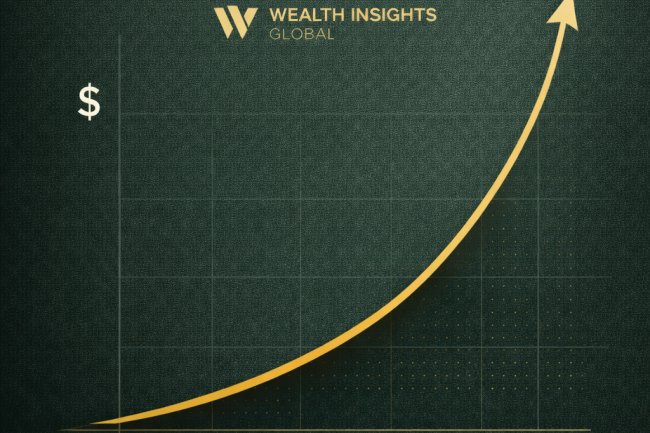
Compound interest is the mechanism that turns modest, consistent investing into extraordinary wealth. Here is the math: $500 invested monthly at 10% annual return for 30 years grows to over $1,000,000 — not because of the amount, but because of time and compounding.
The most important variable is time. Starting at 25 versus 35 produces a difference of hundreds of thousands of dollars by retirement. Every year you delay costs you dearly. Start now, regardless of how small.
Build a Real Estate Strategy
Real estate builds wealth through four mechanisms simultaneously: rental income, property appreciation, mortgage paydown by tenants, and tax advantages. You do not need to buy expensive property immediately — start by saving for a down payment and studying your local market.
In markets across Africa, Asia, and emerging economies, real estate offers particularly strong appreciation opportunities in 2026 due to rapid urbanization and housing demand growth.
Start or Acquire a Business
Employment generates income. Business generates wealth. A business is an asset you own — one that can generate income, appreciate in value, and eventually be sold. Even a small service business, digital product company, or online brand is a wealth-creating asset that an employment contract can never replicate.
In 2026, starting an online business has never required less capital. Content businesses, e-commerce stores, and consulting practices can all be launched with minimal upfront investment.
Diversify Across Multiple Income Streams
Studies consistently show that wealthy individuals average 7 or more income streams. Build these streams gradually and sequentially:
- Earned income — salary or freelance
- Business income — profits from owned ventures
- Dividend income — from stocks
- Rental income — from property
- Capital gains — from asset appreciation
- Royalty income — from intellectual property
- Interest income — from bonds or savings
Reinvest Every Return
The discipline of reinvestment is what separates the wealthy from the moderately comfortable. Every dividend received, every business profit earned, every investment return generated — reinvest it into more assets.
Resist the temptation to spend investment returns on lifestyle. Returns reinvested become the compounding engine that builds exponential wealth over time.
Protect Your Wealth with Insurance
Insurance is not an expense. It is a wealth protection tool. Health insurance, life insurance, income protection, and property insurance ensure that a single catastrophic event cannot wipe out years of wealth building.
Review your insurance coverage annually and ensure it matches your current asset level and life stage.
How Ordinary People Build Extraordinary Wealth
Earning $800/month, Amara rigorously followed steps 6–10 — creating a tight budget, building an emergency fund, and eliminating a personal loan. She then developed UI/UX design skills and raised her freelance rate. Within 18 months, her income tripled. She now invests 30% of everything she earns into index funds and a real estate savings plan.
Daniel spent his 20s lifestyle-inflating every salary increase. At 32 he had almost nothing saved. He reset — sold his financed car, moved to a smaller apartment, and applied steps 1–15 systematically. Three years later he has £40,000 invested, a consulting side income, and a clear plan to retire at 52.
The Common Thread
- Both started where they were, not where they wished they were.
- Both applied the steps sequentially, not randomly or all at once.
- Both were patient — understanding that wealth compounds over years, not weeks.
- Both treated setbacks as data, not as reasons to stop.
Accelerate and Protect
Once your wealth engines are running, these five steps dramatically accelerate your trajectory.
Build Your Network Strategically
Your network is your net worth — not as a cliché, but as a financial reality. The opportunities, partnerships, investment deals, clients, and mentors that accelerate wealth almost always come through relationships.
Attend industry events, join mastermind groups, and engage with communities of ambitious people. In 2026, digital networking through LinkedIn, X, and niche online communities is as powerful as in-person networking — often more so. Give value generously before expecting returns.
Read One Financial Book Every Month
Twelve books a year. Over a decade, that is 120 books on wealth, investing, business, and mindset. The compounding effect of sustained knowledge acquisition is staggering.
Titles like The Millionaire Next Door, The Intelligent Investor, Atomic Habits, and Die With Zero offer frameworks that save — and make — fortunes. Knowledge is the only investment that never depreciates.
Track Your Net Worth Monthly
What gets measured gets managed. Set up a simple spreadsheet or use a personal finance app to track your total assets, total liabilities, and net worth every single month.
Watching your net worth grow — even slowly at first — builds the motivation and discipline to keep going. Watching it stagnate forces an honest conversation about what needs to change. Measurement creates accountability.
Optimize Your Tax Strategy
Taxes are the single largest expense in most people's financial lives — and also the most legally manageable. Work with a qualified accountant or tax advisor to understand retirement account contributions, business expense deductions, capital gains tax strategies, and investment structures.
Every dollar saved in taxes is a dollar that compounds in your portfolio. Legal tax optimization is one of the highest-leverage moves available to any wealth builder.
Master Delayed Gratification
The ability to sacrifice short-term pleasure for long-term gain is, arguably, the single most important behavioural trait of the wealthy. Every time you choose to invest instead of spend, to study instead of scroll, to build instead of consume — you make a deposit into your future wealth account.
These micro-decisions, made thousands of times over years, produce dramatically different financial outcomes. Discipline compounded over decades is the real wealth multiplier.
Common Mistakes That Destroy Wealth
Mistake 1 — Trying to Get Rich Quickly
Get-rich-quick schemes destroy more wealth than they create. The lottery, crypto gambling, and suspicious investment schemes prey on impatience. Sustainable wealth is built steadily, not suddenly.
Mistake 2 — Confusing Income with Wealth
A doctor earning $300,000 per year with $500,000 in debt and no investments is not wealthy. Wealth is measured by assets and net worth — not income alone. High income without investment discipline produces nothing lasting.
Mistake 3 — Investing Without Understanding
Never invest in something you don't understand. From crypto to real estate syndicates, lack of understanding leads to catastrophic losses. Study before you commit capital to any opportunity.
Mistake 4 — Neglecting Mental and Physical Health
Your health is your most productive asset. Burnout, illness, and chronic stress destroy earning power and decision-making ability. Protect your health as aggressively as your money.
Elite Wealth Moves
These final five steps separate people who are comfortable from those who are genuinely, generationally wealthy.
Build a Personal Brand
In 2026, your personal brand is a financial asset. A strong personal brand attracts clients, speaking opportunities, investment partnerships, media features, and business deals that money alone cannot buy.
Start creating content in your area of expertise. Be consistent. Be authentic. Be valuable. It creates a platform through which your ideas generate income, your credibility commands premium rates, and your network grows on autopilot. The returns, while delayed, are extraordinary.
Create Assets That Generate Income While You Sleep
True financial freedom comes when your assets earn more than your expenses — without your active involvement. In 2026, passive income assets include:
- Dividend stock portfolios
- Rental properties
- Digital products — courses, e-books, templates
- Royalties from creative works or intellectual property
- Automated online businesses
Build these assets systematically. Each one you add reduces your dependence on active income and accelerates your path to freedom.
Give Generously
This step surprises people. But the data on generosity and wealth is consistent. Generous people — those who give time, money, knowledge, and resources — tend to build larger and more durable wealth than those who hoard.
Generosity expands your mindset from scarcity to abundance. It builds deep relationships and goodwill. It opens doors that transactional behaviour closes. Give before you feel ready. Give more than feels comfortable. It will return multiplied.
Review and Evolve Your Financial Plan Annually
The financial landscape in 2026 is not the same as it was in 2020. Interest rates shift. New asset classes emerge. Tax laws change. Business models evolve. Your financial plan must evolve with it.
Schedule a formal annual financial review — assess your portfolio performance, rebalance your asset allocation, review your insurance coverage, update your wealth goals, and adjust your strategy for the year ahead. Rigid plans fail. Adaptive plans endure.
Commit to Decades, Not Months
This is the final and most important step. Every person who has ever built significant wealth has done so over years and decades — not weeks and months. The compound interest on your investments, your skills, your network, and your knowledge all require time to produce extraordinary results.
The wealth-building journey will test your patience. There will be market crashes, business setbacks, personal crises, and moments of serious doubt. The people who persist through these moments are the ones who eventually achieve financial freedom. Start today. Stay consistent. Think in decades.
Thirty Steps. Four Phases.
One Destination.
Building wealth is not a mystery reserved for the lucky few. It is a learnable, repeatable process available to anyone willing to study it, commit to it, and apply it with patience.
Mindset and habits — the invisible foundation that makes everything else possible.
Income streams, investments, and assets — the engines that generate real wealth.
Knowledge, network, and tax strategy — the accelerators of your trajectory.
Personal brand, passive income, and long-term consistency — the elite-level moves.
You do not need to master all 30 steps simultaneously. Start with steps 1 through 5 this week. Master them. Then move forward.
The best time to start building wealth was yesterday. The second best time is right now.
For more wealth-building guides, investing frameworks, and financial education content, visit www.wealthinsights.co.ke — your home for practical, globally relevant financial education.
Explore More at Wealth Insights Global →What's Your Reaction?