
Before the First Investment: How to Build the Foundation That Makes Wealth Possible
Most people ask the wrong question when they begin thinking about investing. They ask which stock to buy, which fund has the best return, which asset class will rise next, or which opportunity will turn a small amount of money into a large one. The better question is quieter, less exciting, and far more important: are you financially ready to invest?
Investing is often presented as the starting point of wealth creation. In reality, it is usually the second stage. The first stage is saving. Before capital can be multiplied, it has to be accumulated. Before money can be put at risk, some money has to be protected. Before a person can think like an investor, they need the discipline and structure of a saver.
This does not mean that investing should be delayed forever. Waiting too long can be costly. Inflation erodes idle cash. Markets reward patient capital. Compounding works best when it has time. But investing without a financial foundation can be just as damaging as never investing at all. A person who invests money they may need next month is not building wealth; they are gambling with their stability.
The right way to start investing is not to rush into products. It is to build a system. That system begins with income, saving, emergency reserves, and clear financial priorities. It then expands into investment capital, portfolio design, diversification, risk management, and liquidity. The early investor’s greatest advantage is not secret information. It is order.
Why Saving Comes Before Investing
Saving and investing are often spoken about as if they are interchangeable. They are not. Saving is the act of setting money aside for future use, usually with an emphasis on safety and access. Investing is the act of allocating money to assets that may grow or generate income over time, usually with some degree of uncertainty. Saving protects purchasing power and creates readiness. Investing accepts risk in pursuit of return.
The distinction matters because different money has different jobs. Money needed for rent, school fees, insurance premiums, medical costs, taxes, travel, or upcoming purchases should not be treated like long-term investment capital. It has a date attached to it. It must be available when required. If that money is invested in an asset that falls at the wrong time, the owner may be forced to sell at a loss.
Many beginners make this mistake because they focus only on return. They see cash as lazy and investments as productive. That view is incomplete. Cash can be inefficient when held excessively, but it is powerful when held for the right reason. A person with cash reserves can withstand emergencies, avoid expensive debt, negotiate from strength, and continue investing when markets fall. A person with no cash may be forced to liquidate good investments during bad conditions.
Saving is not the opposite of investing. Saving is what makes intelligent investing possible. It creates the capital, patience, and emotional stability required to hold investments long enough for them to work. Without saving, investing becomes fragile. Every unexpected bill becomes a threat to the portfolio. Every decline in market value becomes emotionally intolerable. Every opportunity competes with immediate survival.
The first lesson for a new investor is simple: you need money before you can successfully invest money. That does not mean you need to be rich. It means you need a surplus. Wealth begins when income exceeds consumption and the difference is deliberately directed toward future value.
The Surplus Is the Engine
Every investment plan depends on a surplus. A surplus is the portion of income left after expenses. It is the raw material of wealth. Without it, even the best investment knowledge has little practical value. A person can study asset allocation, read annual reports, compare fund performance, and understand compound interest perfectly, but if there is no money left each month, there is nothing to allocate.
This is why the savings rate is so important. A person earning a high income but saving nothing is financially weaker than they appear. A person earning a moderate income but saving consistently has the beginning of power. Income determines capacity, but saving determines direction. The gap between what comes in and what goes out is where wealth is born.
A useful benchmark for many households is to aim for saving around 20 percent of income where feasible. This is not a law. It is not suitable for every income level, every location, or every life stage. A young professional living with family may be able to save far more. A parent carrying school fees, rent, medical obligations, and support responsibilities may struggle to save that much. The exact number matters less than the habit and the direction.
The deeper principle is that saving should become intentional rather than accidental. Many people save whatever remains after spending. This rarely works because spending expands quietly. A better system is to decide the savings amount first, move it away from daily spending, and then live on what remains. This is not deprivation for its own sake. It is financial architecture. It gives the future a claim on today’s income.
The early investor should ask a recurring question: what percentage of my income is being converted into future ownership? That question changes the way income is viewed. Salary is no longer merely a means of consumption. It becomes fuel for assets. Each month becomes a decision between spending money once and assigning money to work for years.
Why Income Growth Matters Too
Saving is powerful, but it has limits. A person can only cut expenses so far. Food, housing, transport, insurance, education, utilities, and family responsibilities place real demands on income. For many households, the path to higher savings is not only spending less. It is earning more.
This is an uncomfortable truth in personal finance. Frugality is often easier to preach than income growth because it sounds more controllable. Yet wealth creation usually requires both. Expense discipline prevents income from leaking away. Income growth increases the size of the surplus. Together, they accelerate the journey from financial survival to investment readiness.
Increasing income may mean negotiating a better salary, improving professional skills, starting a side business, building a client base, acquiring a certification, changing employers, expanding a trade, or creating a second stream of income. The method depends on the person’s situation. The principle is universal: the more money that flows into a disciplined system, the faster capital accumulates.
A high savings rate on a low income may build discipline but produce limited investment capital. A high income with no savings rate produces lifestyle inflation. The ideal combination is rising income and controlled lifestyle expansion. When income rises, the first question should not be, “What can I now afford?” It should be, “How much of this increase can I convert into assets?”
This is where many wealth journeys are won or lost. Raises, bonuses, commissions, business profits, and windfalls often disappear into upgraded consumption. A better approach is to assign a portion of every income increase to savings and investment before the money is absorbed into daily life. This allows lifestyle to improve gradually while wealth accelerates quietly.
The Three-Purpose Savings System
Not all savings should sit in one account. When money has no assigned purpose, it becomes easy to misuse. A single savings balance may look impressive, but it can hide confusion. Is the money for emergencies? A wedding? School fees? A future investment? A home deposit? A holiday? If all these goals live in the same account, every withdrawal feels negotiable.
A stronger approach is to divide savings into three broad purposes: emergency reserves, short-term expenses, and investment capital. This simple separation turns money into a system. It reduces emotional decision-making and protects long-term plans from short-term demands.
Emergency Fund
The emergency fund is the first and most defensive layer. It is money set aside for genuine surprises: job loss, medical costs, urgent family needs, essential home repairs, sudden relocation, business interruption, or unexpected income disruption. Its purpose is not to generate high returns. Its purpose is to prevent financial shock from becoming financial damage.
A common target is six months of essential living expenses. For households with dependents relying on one income source, a larger reserve, such as nine months, may be more appropriate. The right amount depends on job stability, health risks, family obligations, insurance coverage, debt levels, and access to other support. A freelancer with irregular income needs more protection than a salaried employee in a stable role. A household with children and one earner needs more margin than a dual-income household with low fixed costs.
The emergency fund should be liquid, separate, and boring. It should not be tied up in volatile assets. It should not be invested in long-term projects. It should not depend on selling property, shares, or business inventory at short notice. Emergency money must be available when life stops cooperating.
This reserve also has psychological value. People with emergency funds make better investment decisions because they are less desperate. They do not panic as quickly when markets decline. They do not need to sell a good asset because of a temporary crisis. They can say no to bad debt. They can absorb disruption without dismantling their future.
Short-Term Expenses
The second savings category is for known or likely expenses. These are not emergencies. They are predictable needs that have not yet arrived. Education costs, holidays, weddings, insurance premiums, household purchases, vehicle maintenance, professional exams, relocation costs, and planned medical procedures often fall into this category.
Many people treat predictable expenses as surprises simply because they failed to prepare for them. School fees are not an emergency if they occur every term. Insurance renewal is not an emergency if the date is known. A planned holiday is not an emergency. A wedding is not an emergency. These expenses become stressful when they are not funded in advance.
Separating short-term savings prevents these goals from invading the emergency fund or the investment account. It also improves spending decisions. When a person saves monthly toward a planned purchase, the true cost becomes visible. A holiday that seems affordable in one exciting moment may look different when funded gradually over several months.
This category also protects investments. Money needed within a short period should not be exposed to major market swings. If funds are required in six months or one year, the priority is access and stability, not maximum return. The shorter the time horizon, the less suitable volatile investments become.
Investment Capital
The third category is investment capital. This is money that remains after emergency reserves and short-term obligations are properly funded. It is money that can be committed for long-term growth. It does not need to be withdrawn at the first sign of inconvenience. It can tolerate market cycles, business cycles, and temporary uncertainty.
Investment capital is different because its job is expansion. It may be used to buy diversified funds, shares, bonds, real estate, retirement products, business interests, or other assets suitable to the investor’s goals and risk tolerance. Unlike emergency savings, investment capital is allowed to fluctuate. Unlike short-term savings, it does not have an urgent spending date.
This separation is one of the most important habits a beginner can develop. It prevents the investor from expecting one pool of money to do everything. Money cannot simultaneously be fully safe, instantly accessible, and aggressively growing. Each goal requires trade-offs. The three-purpose system makes those trade-offs visible.
Where Money Market Funds Fit
For many savers, the traditional bank savings account is the default place for idle cash. It is familiar, easy to access, and usually perceived as safe. Yet depending on the financial market and the provider, standard savings accounts may offer very low returns. Over time, low-yield cash can lose purchasing power, especially when inflation is high.
Money Market Funds can play a useful role in cash management. A Money Market Fund is a professionally managed fund that typically invests in short-term, relatively high-quality debt instruments. Its goal is usually to preserve capital, provide liquidity, and generate a return above many basic savings accounts. For emergency funds and short-term reserves, this combination can be attractive.
The appeal is practical. Money Market Funds often allow savers to earn a better yield while still keeping money accessible. This can make them suitable for emergency reserves, school fee funds, tax reserves, planned purchases, and other cash that should not be exposed to long-term market volatility. They can also help people take saving more seriously because the money is separated from daily transaction accounts.
Yet Money Market Funds should not be misunderstood. They are not magic. They are not the same as guaranteed wealth creation. Returns vary by provider, interest-rate conditions, fees, tax treatment, and the quality of underlying instruments. They may preserve purchasing power better than low-interest bank accounts in some environments, but they do not always beat inflation. They also require the saver to understand withdrawal rules, fund charges, minimum balances, and any risks attached to the instruments in the fund.
The right question is not whether every saver must use a Money Market Fund. The right question is whether idle cash is being managed deliberately. Money that sits in a current account may be too easy to spend. Money that sits in a low-yield account may be too passive. Money that is locked away too aggressively may be unavailable when needed. A good cash-management system balances return, access, safety, and purpose.
The Danger of Investing Too Early
There is a seductive idea that the sooner a person invests, the better. Time in the market matters, but timing is not the only consideration. Investing before building a foundation can create avoidable harm.
The first risk is forced selling. If a beginner invests money they need for emergencies or short-term bills, they may have to sell during a downturn. Markets do not respect personal deadlines. A fund, share, property stake, or business investment can decline just when cash is needed. The investor may then convert a temporary loss into a permanent one.
The second risk is panic. People who invest without reserves often feel every decline more intensely because their financial survival is attached to the portfolio. A 10 percent market drop is uncomfortable for any investor. For someone with no emergency fund, it can feel like danger. Fear then leads to impulsive decisions: selling low, chasing safer assets too late, abandoning the plan, or blaming investing itself.
The third risk is expensive debt. Without cash reserves, unexpected expenses are often funded through credit cards, salary advances, mobile loans, informal borrowing, or high-interest personal loans. The investment may earn a modest long-term return while the debt charges a much higher short-term cost. In that case, the household is not building wealth efficiently. It is investing with one hand while financial leakage continues with the other.
The fourth risk is confusion. Beginners who invest too early often treat investments as savings accounts. They expect liquidity, stability, and growth at the same time. When the investment behaves like an investment, fluctuating in value or requiring patience, they feel betrayed. The real problem is not the asset. It is the mismatch between the money’s purpose and the chosen vehicle.
Starting well means accepting that some money should not be invested. This is not a lack of ambition. It is risk management. The goal is not to invest every possible coin. The goal is to invest the right money, for the right time horizon, in the right assets, with the right expectations.
The Danger of Waiting Too Long
While investing too early can be harmful, waiting too long has its own cost. Some people become permanent savers. They keep building cash because cash feels safe. They tell themselves they will invest once they have more money, more knowledge, more certainty, or better market conditions. Years pass. Inflation quietly reduces the value of their savings. Opportunities compound for others.
Cash is necessary, but cash is not a complete wealth strategy. It is a foundation, not the entire building. Once emergency funds are adequate and short-term obligations are funded, excess savings should begin moving into assets that can grow. The longer money remains idle beyond its purpose, the more it sacrifices potential return.
This is one reason a clear system matters. Without defined targets, people do not know when to move from saving to investing. They keep adding to emergency reserves long after those reserves are sufficient. They keep waiting for the perfect opportunity. They confuse caution with progress.
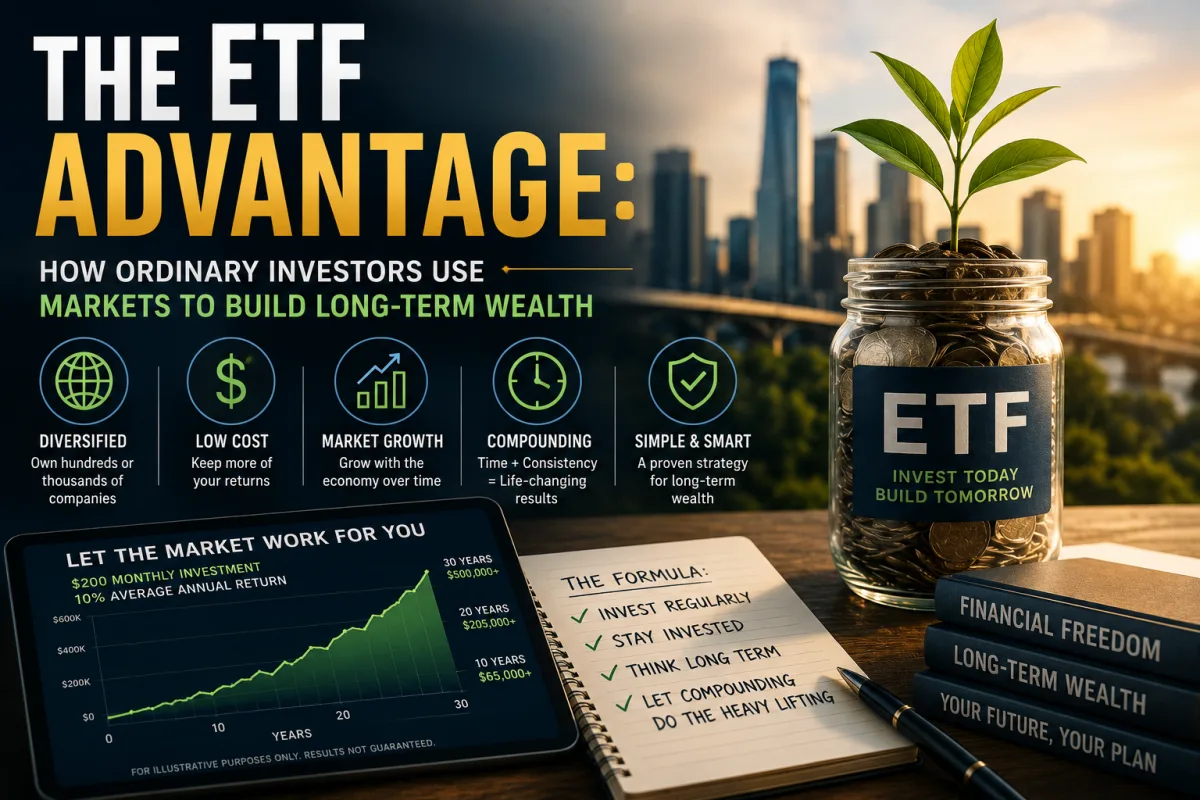
A practical rule of thumb is to compare annual savings with expected annual investment growth. Suppose a person saves a certain amount every year. At first, annual savings may be the main driver of wealth because invested assets are still small. But as the portfolio grows, investment returns begin to matter more. When total invested assets multiplied by a reasonable expected annual return exceeds annual savings, the portfolio itself becomes a major engine of wealth creation.
This is not a precise financial planning formula. Expected returns are uncertain. Markets fluctuate. Taxes, fees, and inflation matter. But the concept is useful because it shows the transition from accumulation by effort to accumulation by ownership. Early wealth is usually built by saving from income. Later wealth is increasingly built by assets producing returns.
For example, an investor with a small portfolio may depend almost entirely on monthly contributions. A 7 percent return on a small amount may not change their life. But a 7 percent return on a much larger portfolio can exceed what they save from salary in a year. At that stage, asset allocation, risk management, cost control, and discipline become even more important. The investor’s money has become a worker.
Investing Is Not Only for the Rich
A common belief says investing is for rich people. The belief contains a small truth but leads many people in the wrong direction. It is true that wealthier people have more capital to invest, more access to advice, and more room to make mistakes. But it is not true that ordinary earners should wait until they feel rich before investing. Most people become investors before they become wealthy, not after.
The more useful distinction is this: saving builds the first capital, investing builds the long-term wealth. Saving is the bridge from income dependence to asset ownership. It is not a class identity. It is a behavior. Investing is not a luxury reserved for the wealthy. It is the process through which disciplined savers gradually buy assets.
The danger of saying “investing is for the rich” is that it can become an excuse. A person may assume that because they are not rich, investing does not concern them. They spend everything, postpone financial education, and remain outside the ownership economy. Years later, they discover that the people who built wealth did not wait for permission. They started with small surpluses and repeated the process.
The opposite belief is also dangerous: that investing alone can rescue someone from poor financial habits. A person who cannot save consistently is unlikely to invest consistently. A person who spends impulsively may also trade impulsively. A person who cannot distinguish emergency money from long-term money may sabotage their own portfolio. Investing magnifies behavior. It does not automatically correct it.
The goal, then, is not to divide people into savers and investors. The goal is to progress from one discipline to the next. First, learn to produce a surplus. Then protect yourself from shocks. Then fund known obligations. Then invest for ownership, income, and growth.
The First Portfolio Is a Personal Balance Sheet
When beginners hear the word portfolio, they usually think of stocks, funds, bonds, real estate, or other investment assets. But the first portfolio is broader than that. It is the person’s entire financial position: cash, debt, income, obligations, insurance, skills, savings habits, and future earning power.
A person with no debt, stable income, strong savings, and an emergency fund may be able to take more investment risk than someone with the same income but high debt and no reserves. Two people can buy the same investment and experience very different levels of risk because their personal balance sheets are different.
This is why copying another investor can be dangerous. One person’s aggressive strategy may be suitable because they have stable income, low expenses, and large reserves. Another person using the same strategy may be taking reckless risk because they need the money soon. The asset is only one part of the decision. The investor’s life is the other part.
Before buying investments, a beginner should review their financial foundation. Are essential expenses understood? Is there a reliable surplus? Are high-interest debts under control? Is there an emergency fund? Are major near-term expenses funded? Is income stable or volatile? Are dependents relying on this income? Is insurance adequate for major risks? These questions are not distractions from investing. They define the amount of risk the investor can responsibly carry.
Good investing is personal before it is technical. The best portfolio is not the one with the most impressive return in isolation. It is the one that fits the investor’s goals, time horizon, income pattern, liquidity needs, risk tolerance, and behavior.
Security: Invest Only in What You Understand
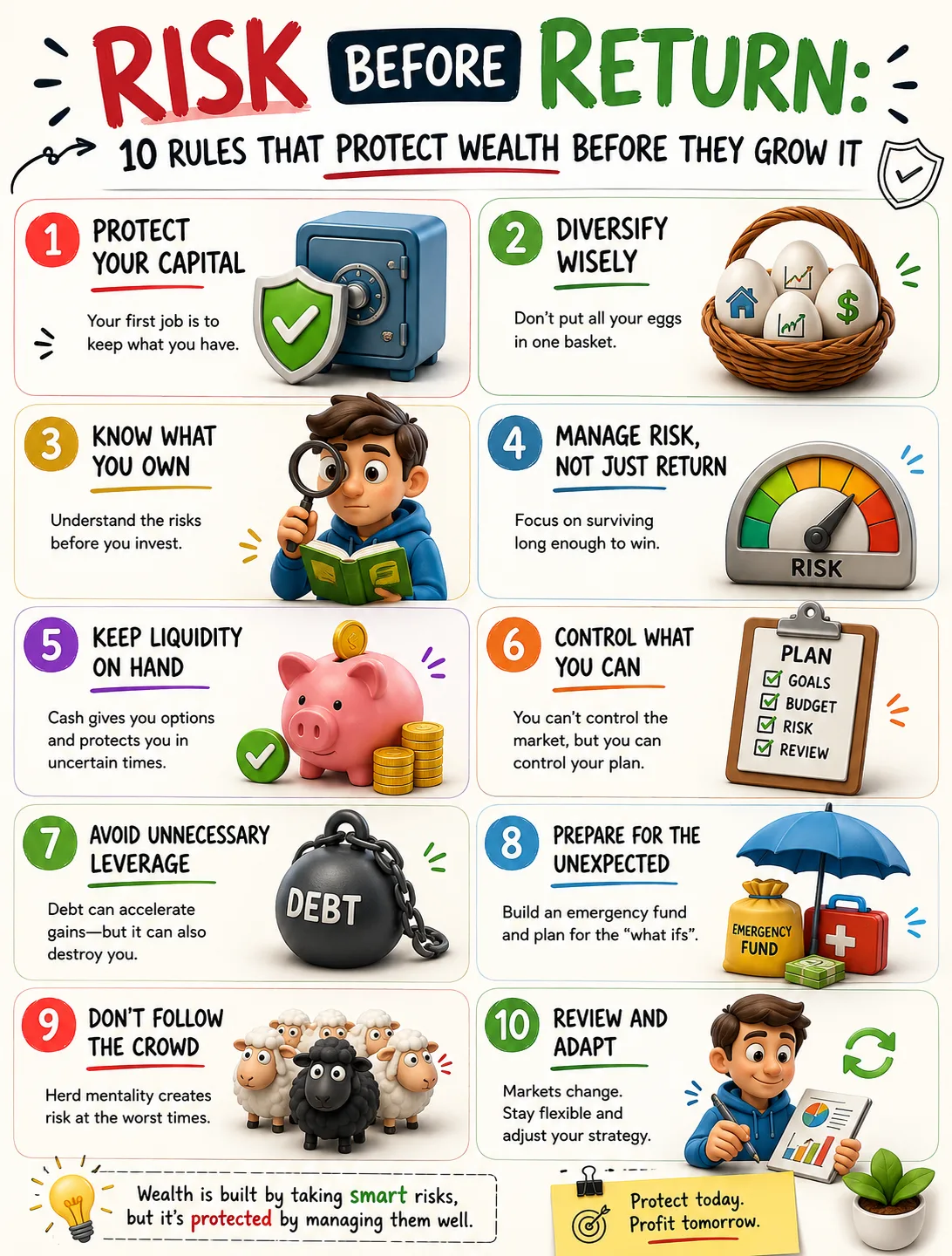
The first principle of portfolio design is security. This does not mean every investment must be risk-free. No serious investment world works that way. Security means the investor understands what they own, why they own it, how it may generate returns, what could go wrong, and how easily they can exit.
Many beginners are attracted to complexity because complexity can look sophisticated. They assume that if an opportunity is difficult to understand, it must be advanced. Often the opposite is true. Complexity can hide fees, leverage, conflicts of interest, weak economics, or outright fraud. A simple investment that is understood is usually better than an impressive-sounding investment that relies on blind trust.
Understanding an investment begins with basic questions. What asset am I buying? Who manages it? How does it make money? What return is being promised or expected? Is that return realistic? What are the fees? What are the risks? Can the value fall? Can income stop? How long is the money locked in? Who regulates the provider? What happens if the provider fails? How has the asset behaved in difficult conditions?
If these questions cannot be answered clearly, the investor should slow down. This is especially important when an investment promises unusually high returns with little or no risk. Risk and return are connected. Not perfectly, not mechanically, but meaningfully. When someone claims to offer high return, high safety, and easy access all at once, the investor should be skeptical.
Security also means avoiding concentration in what is familiar simply because it is familiar. Many people feel safe investing in land, property, a relative’s business, employer shares, or a popular local opportunity because they can see it or hear others discussing it. Familiarity is not the same as safety. A visible asset can be overpriced. A local business can fail. A property can be illiquid. An employer’s stock can decline at the same time the employee’s job becomes insecure.
The beginner’s rule should be firm: never invest in something merely because others are doing it. Invest because you understand the role it plays in your financial plan.
Diversification: Do Not Let One Decision Decide Your Future
Diversification is one of the most important ideas in investing because the future is uncertain. No investor knows with certainty which company, sector, property market, currency, fund manager, or asset class will perform best. Diversification accepts this uncertainty and spreads risk across different holdings.
At its simplest, diversification means not placing all capital in one investment. A person who owns one stock is exposed to that company’s fortunes. A person who owns one rental property is exposed to that location, tenant, maintenance burden, financing structure, and property market. A person who keeps all wealth in one currency is exposed to that currency’s purchasing power. A person who invests only in their own business may benefit greatly if it succeeds but suffer heavily if it fails.
Diversification does not eliminate risk. It changes the nature of risk. Instead of one failure destroying the plan, losses in one area may be offset by stability or gains elsewhere. A diversified investor is less dependent on being perfectly right. They build resilience into the portfolio.
For beginners, diversification can start simply. Broad funds, retirement schemes, balanced portfolios, government securities, quality fixed-income instruments, and carefully selected collective investment vehicles can provide exposure without requiring the investor to pick individual winners. As wealth grows, diversification can expand across asset classes, sectors, geographies, currencies, and income sources.
There is also such a thing as false diversification. Owning several investments that behave the same way may not provide real protection. For example, owning many companies in the same industry may still leave the investor exposed to one sector shock. Owning several properties in the same neighborhood may still depend on one local market. Owning multiple funds that all hold similar assets may create the appearance of diversification without much substance.
Good diversification asks what risks are actually being spread. Are the assets affected by different economic forces? Do they respond differently to inflation, interest rates, currency changes, recessions, or business cycles? Are income sources varied? Are liquidity needs protected? The goal is not to own many things. The goal is to avoid letting one bad outcome control the entire financial future.
Risk Appetite: The Investor Must Survive the Strategy
Risk tolerance is often described as a personality trait. Some people are aggressive, others conservative. That is partly true, but incomplete. Risk appetite has two sides: willingness and ability. Willingness is emotional. Ability is financial. A person may feel comfortable with risk, but if they need the money soon, they may not be able to take it. Another person may have enough wealth to take risk but may panic emotionally during losses.
Good investing requires both dimensions to be considered. A young investor with stable income, no dependents, and a long time horizon may have a high ability to take risk. But if they cannot sleep when their portfolio falls, their emotional tolerance may be lower than their financial capacity. A business owner with irregular income may understand risk deeply but still need a larger cash buffer because their income is volatile.
Risk appetite also changes over time. A single professional in their twenties may invest differently after marriage, children, a mortgage, business obligations, or approaching retirement. The portfolio that fits one season of life may not fit another. This is why investing should be reviewed periodically, not because one should constantly change direction, but because life changes the investor.
Beginners should avoid choosing investments solely by return potential. The higher-returning option may also carry larger drawdowns, longer lockups, more uncertainty, or more complexity. The right investment is not always the one that can make the most money. It is the one the investor can hold responsibly through realistic conditions.
A strategy that looks excellent on paper but causes panic in practice is not a good strategy. The investor must be able to survive the journey. Wealth is not created by choosing assets only when they rise. It is created by holding appropriate assets through cycles, continuing contributions, and resisting destructive behavior when conditions become uncomfortable.
Liquidity: The Forgotten Form of Protection
Liquidity is the ease with which an asset can be converted into cash without a major loss of value. It is one of the least glamorous concepts in finance and one of the most important. Many investors learn its value only during stress.
An investment can be valuable but illiquid. Property may hold long-term value but take months to sell. A private business stake may be profitable but difficult to exit. A fixed deposit may be safe but inaccessible without penalties. A long-term project may offer attractive returns but provide no cash when needed. Illiquidity is not always bad; investors may be rewarded for accepting it. But it must be intentional.
Liquidity matters because life requires cash. Medical bills, family obligations, business opportunities, job transitions, school fees, and emergencies do not always arrive when markets are favorable. If all wealth is tied up in illiquid assets, the investor may be asset-rich but cash-poor. This can lead to borrowing, forced sales, or missed opportunities.
The right amount of liquidity depends on circumstances. People with stable salaries and strong insurance may need less cash than entrepreneurs with unpredictable income. Households with dependents need more accessible reserves than individuals with low obligations. Investors with large illiquid assets should hold more liquid assets to balance the portfolio.
Liquidity should not be confused with fear. Holding liquid reserves is not a sign that the investor lacks ambition. It is what allows the investor to be patient with long-term assets. Cash and near-cash instruments are the shock absorbers of a wealth plan. They may not produce the highest return, but they protect the assets that do.
How the Beginner’s Investment Journey Can Unfold
A practical investment journey can be viewed in stages. The first stage is financial awareness. The beginner tracks income and expenses, identifies leaks, understands obligations, and calculates the monthly surplus. This stage may feel basic, but it is essential. You cannot manage what you refuse to measure.
The second stage is disciplined saving. The investor chooses a target savings rate, ideally moving toward 20 percent or more where feasible, and automates the process. The purpose is to make saving a default behavior rather than a monthly debate. This stage builds both capital and identity. The person begins to see themselves as someone who keeps part of what they earn.
The third stage is emergency protection. The saver builds a reserve of several months of essential expenses, with the target adjusted for income stability, dependents, and risk exposure. The money is placed somewhere accessible and relatively stable, possibly in a well-selected Money Market Fund or another suitable cash-management vehicle.
The fourth stage is short-term goal funding. Known expenses are separated from emergency reserves. Instead of raiding long-term money for predictable needs, the investor creates sinking funds for major upcoming costs. This brings calm to cash flow and prevents false emergencies.
The fifth stage is initial investing. Once the foundation is in place, excess savings begin moving into long-term assets. The beginner may start with diversified, transparent, regulated investment vehicles before attempting more complex choices. The focus is not excitement. The focus is consistency, low avoidable cost, reasonable diversification, and alignment with goals.
The sixth stage is portfolio expansion. As assets grow, the investor reviews allocation across cash, fixed income, equities, real assets, retirement accounts, and possibly business interests. The goal is to avoid concentration, manage risk, and improve long-term return potential. At this stage, the investor begins thinking less like a buyer of products and more like an owner of a balance sheet.
The seventh stage is wealth acceleration. Eventually, investment returns may become as important as annual savings. The portfolio begins to contribute meaningfully to net worth growth. At this stage, decisions about asset allocation, tax efficiency, reinvestment, risk control, estate planning, and income generation become increasingly important.
Common Mistakes First-Time Investors Make
The first common mistake is investing without a cash reserve. This creates fragility. The investor may have assets but no protection. A single emergency can disrupt the plan.
The second mistake is chasing returns without understanding risk. Beginners often compare investments by advertised return alone. They may ignore fees, liquidity, volatility, credit risk, regulation, taxes, and the possibility of permanent loss. A return that is not understood is not a plan.
The third mistake is confusing saving products with investments and investments with saving products. Emergency money should behave like emergency money. Long-term investment money should be allowed to fluctuate. Problems arise when investors expect short-term stability from long-term assets or long-term growth from idle cash.
The fourth mistake is copying others. Friends, colleagues, relatives, and online commentators may share opportunities with confidence, but they rarely share their full financial context. An investment suitable for one person may be unsuitable for another. Personal finance is personal because goals, timelines, obligations, and risk capacity differ.
The fifth mistake is overconcentration. Beginners may put too much money into one asset because it feels familiar or because early success creates overconfidence. Concentration can build wealth, but it can also destroy it. A beginner should earn the right to concentrate by first understanding risk, liquidity, and downside.
The sixth mistake is stopping after the first investment. Buying one fund, one property, or one asset is not the same as having a wealth strategy. Investing is an ongoing process of earning, saving, allocating, reviewing, and adjusting. The first investment is not the finish line. It is the beginning of a new discipline.
Inflation, Taxes, and the Real Return
Beginners often focus on the stated return of an investment. If a fund earns a certain percentage or an asset rises in price, the investor feels wealthier. But the real question is what remains after inflation, taxes, fees, and risk.
Inflation reduces purchasing power. If cash earns a low return while prices rise faster, the saver may have more nominal money but less real value. This is why holding too much idle cash for too long can be harmful. Cash protects against short-term shocks, but it may not build long-term purchasing power.
Taxes also matter. Interest income, dividends, capital gains, rental income, business distributions, and retirement withdrawals may be treated differently depending on jurisdiction and account structure. An investment with a high pre-tax return may be less attractive after tax. A lower-returning investment with favorable tax treatment may sometimes be more efficient.
Fees are another quiet force. Management charges, transaction costs, advisory fees, fund expenses, entry fees, exit fees, and spreads can reduce long-term results. A small annual fee difference may look harmless in one year but become significant over decades. Beginners should learn to ask not only, “What can I earn?” but also, “What will this cost me?”
The real return is what the investor keeps after these forces. Wealth is not built by impressive percentages alone. It is built by durable after-cost, after-tax, after-inflation growth that can be sustained over time.
Behavior Is the Hidden Asset
The technical side of investing receives most of the attention, but behavior often determines the outcome. Two people can use the same investment product and achieve different results because one remains disciplined while the other reacts emotionally.
Behavior begins with saving. A person who saves consistently has already developed a key investor trait: delayed gratification. They understand that not all income must become immediate consumption. They can assign money to the future. This habit carries directly into investing.
Behavior also appears during market declines. Every investor says they are long-term when markets rise. The test comes when values fall, headlines turn negative, and other people panic. Investors with a solid foundation are better positioned to stay calm because they are not relying on the portfolio for immediate survival.
Automation can support good behavior. Automatic transfers to savings, scheduled investment contributions, separate accounts for different goals, and periodic portfolio reviews reduce the need for constant willpower. Good systems protect people from their own inconsistency.
Education also improves behavior. When investors understand that volatility is normal, liquidity has value, diversification reduces dependence on one outcome, and compounding takes time, they are less likely to sabotage themselves. Knowledge does not remove emotion, but it gives emotion less control.
The Role of Debt Before Investing
No beginner investment framework is complete without considering debt. Debt changes the investment equation because it creates a guaranteed obligation. Some debt is productive or manageable, such as a reasonable mortgage, business financing with strong cash flow, or education debt that increases earning power. Other debt is destructive, especially high-interest consumer debt used to fund lifestyle spending.
If a person carries expensive debt, investing may not be the best first use of surplus cash. Paying down debt with a high interest rate can produce a risk-free improvement in financial position. For example, eliminating a costly loan may be more valuable than investing in an asset with uncertain returns. The comparison should consider interest rates, tax treatment, liquidity, penalties, and personal stress.
This does not mean every debt must be paid off before any investing begins. The decision depends on the cost and type of debt. Low-cost, structured debt may coexist with investing. High-interest, short-term, or unstable debt usually deserves urgent attention. A person investing while repeatedly borrowing for basic expenses should revisit the foundation.
Debt also affects risk tolerance. A heavily indebted investor has less room for error. Fixed repayments continue even when income falls or markets decline. This makes emergency reserves and liquidity even more important. The more obligations a person has, the more carefully they must manage investment risk.
How to Choose the First Investment
The first investment should be understandable, diversified where possible, regulated, cost-conscious, and aligned with the investor’s time horizon. For many beginners, this points toward collective investment vehicles, retirement accounts, diversified funds, government securities, or other transparent products rather than speculative single assets.
The right choice depends on the market available to the investor, their country’s regulations, tax rules, income stability, and financial goals. A person saving for retirement has a different need from someone building a house deposit. A person with a ten-year horizon can accept different volatility from someone who needs money in two years. The investment must match the purpose.
A beginner should be careful with investments promoted through urgency. Phrases such as “limited chance,” “guaranteed high return,” “everyone is joining,” or “you will miss out” should trigger caution. Good investing rarely requires panic. A legitimate opportunity should withstand basic questions and careful review.
The first investment should also be sized appropriately. Starting small can be wise. It allows the investor to learn how contributions, statements, price movements, fees, and emotions work in practice. As confidence and understanding grow, contributions can increase. The objective is not to impress anyone with the first transaction. The objective is to begin a sustainable process.
When Saving Becomes Investing, and Investing Becomes Ownership
At the beginning, wealth grows mainly through effort. The saver works, earns, spends less than they earn, and sets aside the difference. Progress may feel slow because every unit of wealth comes from active labor. This stage requires discipline, humility, and patience.
Over time, invested assets begin to change the equation. Interest earns interest. Dividends can be reinvested. Businesses can produce profit. Real estate can generate rent. Funds can compound. The investor is no longer relying only on labor. They are building ownership.
This transition is one of the most important shifts in personal finance. Saving turns income into capital. Investing turns capital into assets. Assets create the possibility of income and growth that do not depend entirely on daily work. That is the foundation of financial independence.
But ownership must be built carefully. An asset is not valuable simply because someone calls it an investment. True assets have a reasonable expectation of preserving or increasing value, generating income, or both. They must be purchased at sensible prices, held with appropriate expectations, and evaluated within a broader plan.
The beginner should aim to become an owner gradually. Own emergency liquidity. Own productive investments. Own retirement assets. Own skills that increase earning power. Own a system that converts income into long-term value. Wealth is not one product. It is an ecosystem.
A Practical Starting Framework
The right way to start investing can be summarized as a sequence, but it should be lived as a system. First, understand your income and expenses. Without clarity, every plan rests on guesswork. Track what comes in, what goes out, and what remains. Identify spending that does not match your priorities.
Second, establish a savings habit. Choose a target percentage of income and make the transfer automatic. Move toward saving 20 percent where possible, but begin with what is realistic. A smaller consistent habit is better than an ambitious plan abandoned after two months.
Third, build an emergency fund. Aim for several months of essential expenses, adjusted for your personal risk. Keep it separate from daily spending and accessible enough to serve its purpose. Consider suitable cash-management options, including Money Market Funds where appropriate, while understanding fees, access, and risk.
Fourth, fund short-term obligations. Create separate reserves for known expenses. Do not let predictable costs raid emergency money or long-term investments. Give every major upcoming expense a place in the plan.
Fifth, begin investing with long-term money. Choose investments you understand. Favor diversification early. Avoid unnecessary complexity. Match the investment to your time horizon and risk tolerance. Keep contributing, even if the first amounts are modest.
Sixth, review and improve. As income rises, increase contributions. As assets grow, broaden diversification. As life changes, revisit liquidity needs and risk appetite. As knowledge deepens, refine the portfolio. The process should become more intelligent over time.
The Quiet Power of Starting Correctly
Starting correctly may feel slower than jumping into the latest opportunity. It does not offer the thrill of speculation or the social excitement of chasing trends. But it creates something more valuable: durability.
A beginner who builds savings first is not being timid. They are building the base that allows risk to be taken intelligently. A beginner who separates emergency money from investment capital is not being overly cautious. They are protecting the long-term portfolio from short-term disruption. A beginner who studies liquidity, diversification, and risk before chasing return is not delaying wealth. They are learning how wealth survives.
The financial world will always offer noise. There will always be a new opportunity, a hot market, a confident prediction, a fashionable asset, or a story of someone who became rich quickly. Some opportunities will be real. Many will not. The investor with a strong foundation does not need to react to all of them. They can evaluate, choose, and wait.
The right way to start investing is not with fear, but it is also not with recklessness. It begins with respect for money’s different roles. Some money protects. Some money prepares. Some money grows. Confusing those roles creates stress. Honoring them creates strength.
Investing is ultimately about ownership of the future. Saving gives you the first claim on that future. Emergency reserves protect it. Short-term planning keeps it from being interrupted. Investment capital expands it. Diversification strengthens it. Liquidity preserves it. Risk discipline keeps it alive long enough to matter.
The first investment is important, but the foundation beneath it is more important. A person who learns to save, protect, allocate, and wait has already begun thinking like an investor before buying anything. That mindset is the real starting point. The portfolio comes after.
 Article
 Article
 Article
 Article
 Article
 Article
 Article
 Article