
The Young Investor’s Edge: Why Time, Skills, and Discipline Matter More Than Starting Rich
Most young people begin their financial lives with more ambition than capital. They have dreams, energy, curiosity, and time, but not much money. Their bank accounts may be small. Their salaries may be modest. Their careers may still be uncertain. Their investment portfolios, if they exist at all, may look insignificant compared with older professionals who already own homes, businesses, retirement accounts, land, shares, or rental property.
This can create the wrong kind of pressure. A young person may look at wealthier people and assume the race has already been lost. They may feel late before they have even started. They may believe investing is only for people with large salaries. They may chase risky opportunities because slow investing feels too small. They may ignore investing completely because the first amounts they can afford seem unimportant.
That is a mistake. Youth has financial power that is easy to underestimate. A young investor may not have much money, but they have something older investors cannot buy back: time. Time allows skills to grow, income to rise, mistakes to be corrected, investments to compound, and risks to be absorbed. Time turns small habits into large outcomes. Time rewards consistency. Time gives young people the opportunity to build wealth gradually before heavy obligations make every decision more complicated.
The young investor’s advantage is not only the ability to invest early. It is the ability to invest in the right sequence. Before obsessing over stocks, property, crypto, businesses, or funds, a young person must understand that their first and most important asset is often themselves. Their skills, education, health, discipline, network, reputation, and earning potential will shape almost every future financial decision.
A young person who doubles their income through valuable skills has changed their financial life more than someone who earns a small return on a tiny portfolio. A young person who builds discipline around saving and investing has created a system that can absorb future income growth. A young person who learns patience early can avoid the speculative traps that destroy beginners. A young person who understands risk can use it wisely instead of fearing it or worshiping it.
Investing for young people is therefore not only about where to put money. It is about how to build a life that can produce money, preserve money, and grow money over decades. It is about becoming the kind of person who can handle capital before large capital arrives. It is about using youth not as an excuse for financial delay, but as an advantage for financial preparation.
Your First Investment Is Not a Stock. It Is You.
The most valuable asset a young person owns is usually not in a brokerage account. It is not a piece of land. It is not a retirement fund. It is not a business idea written in a notebook. It is human capital: the ability to earn income through knowledge, skill, experience, health, judgment, creativity, and reliability.
Human capital is the engine that funds financial capital. Your salary funds your first emergency fund. Your skills help you negotiate better pay. Your expertise attracts clients. Your reputation opens doors. Your health allows you to work, learn, build, travel, think, and create. Your discipline determines whether income becomes wealth or disappears through lifestyle.
This is why young people should not think of education and skill development as separate from investing. Learning a valuable skill can be an investment. Building communication ability can be an investment. Becoming excellent at sales, accounting, software development, design, nursing, engineering, financial analysis, farming, teaching, logistics, marketing, project management, writing, data analysis, law, or entrepreneurship can be an investment. Improving your health can be an investment because poor health can reduce earning power and increase expenses.
A young person with KES 20,000 available may wonder whether to invest it in a financial product or use it to learn a skill. The answer depends on the circumstances, but the principle is clear: if the skill can raise earning power for years, it may produce a return far greater than a small financial investment. A course, certification, tool, professional exam, mentorship program, or industry event can sometimes change the path of income. That higher income can later fund investments many times larger than the original amount.
This does not mean every course is worth paying for. The world is full of shallow training, inflated promises, and expensive certificates with little market value. A serious young investor must evaluate education like any other investment. What problem will this skill help me solve? Who pays for this skill? Is there demand? Can I practice it? Can I demonstrate competence? Will it improve my career or business prospects? Is the cost reasonable compared with the likely benefit?
Investing in yourself also includes building character traits that compound. Reliability compounds because people recommend reliable people. Discipline compounds because disciplined people save, invest, and finish what they start. Curiosity compounds because curious people keep learning as the world changes. Courage compounds because courageous people apply for opportunities, ask better questions, start projects, and recover from rejection.
A young person should not underestimate the financial value of being known as competent, honest, teachable, and hardworking. Reputation is a form of capital. It may not appear on a balance sheet, but it affects who trusts you, who hires you, who partners with you, who mentors you, and who gives you access to opportunity.
Income Growth Matters More Than Tiny Optimization
Many young people are taught personal finance as if the main goal is to cut every possible expense. Frugality matters. Waste should be avoided. Spending should be intentional. But a financial life cannot be built on cutting alone. There is a floor beneath expenses. You can only cut so much before the exercise becomes miserable or unrealistic. Income, however, can often grow far beyond its starting point.
This is especially important for young people because early income is often low. A person earning very little may not become financially strong by saving small coins alone. They need to increase earning power. That may mean acquiring higher-value skills, changing industries, improving performance, negotiating better, taking on freelance work, starting a side business, moving to a better employer, or learning how to sell their abilities in the market.
Expense control creates the gap between income and spending. Income growth widens that gap. Wealth is built inside the gap.
Consider two young professionals. One earns KES 50,000 per month and saves KES 5,000. Another earns KES 150,000 per month and saves KES 45,000. The second person is not merely earning three times more; they may be saving nine times more. Higher income, when not swallowed by lifestyle inflation, accelerates investment capacity dramatically.
This is why income growth must be paired with discipline. A higher salary without a higher savings rate can become a trap. People often increase spending as soon as income rises. They move to a more expensive neighborhood, upgrade their car, take on subscriptions, eat out more often, travel more, borrow more, and support more expectations. The income rises, but wealth does not.
The young investor must learn to capture part of every income increase. When income rises, direct a portion immediately to savings, investments, debt repayment, or skill development. Enjoy some of the increase, but do not consume all of it. This habit turns career progress into wealth progress.
The purpose of earning more is not simply to spend more. It is to create more choices. Higher income can buy time, reduce stress, fund investments, support family, build emergency savings, and provide room for calculated risks. But only if it is managed deliberately.
Time Is the Young Investor’s Greatest Advantage
Time is the quiet force behind investing. It allows compounding to work. It allows temporary losses to recover. It allows small contributions to become meaningful. It allows knowledge to deepen and mistakes to be corrected.
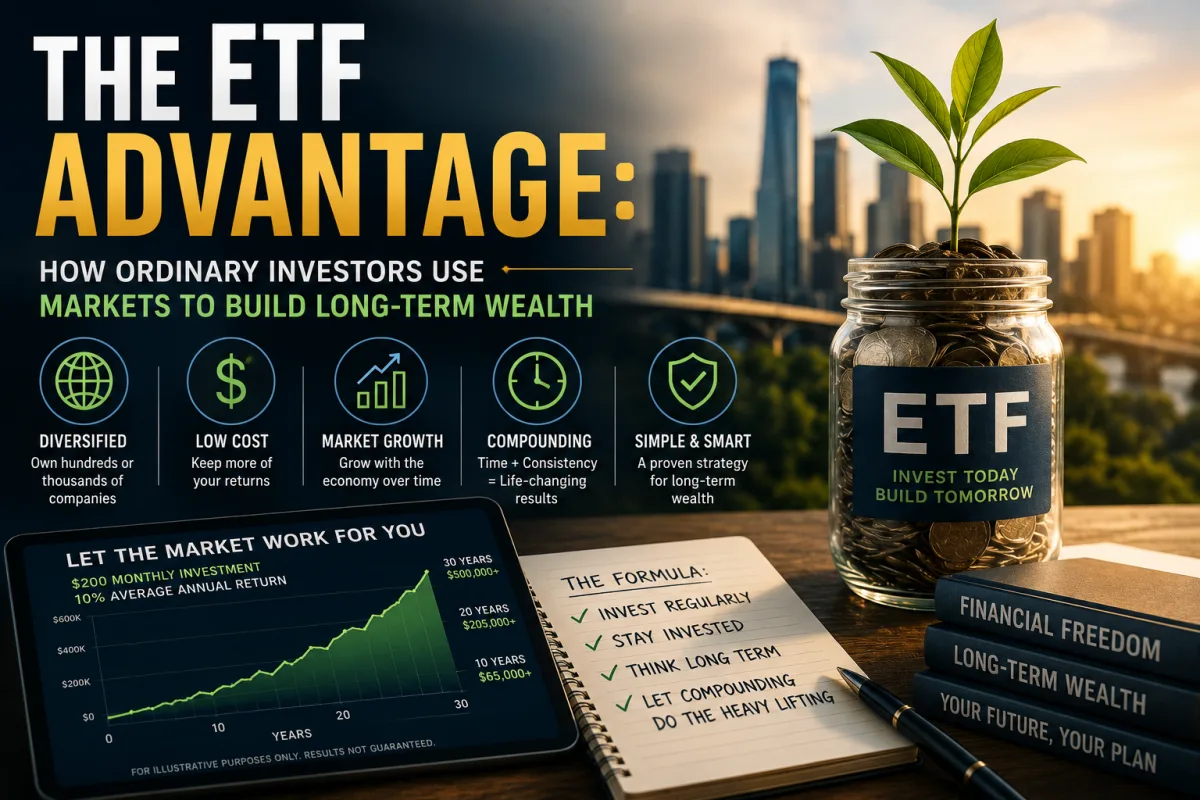
Compounding occurs when returns begin earning returns of their own. A small investment grows. The growth remains invested. Future returns are earned not only on the original contribution but also on prior gains. Over long periods, this process can become powerful. The early years may look slow, but the later years can accelerate because the base is larger.
This is why starting early matters even when the amount is small. A young person who invests consistently at 23 may build habits and capital that a person starting at 40 must work much harder to match. The older investor may have more income, but less time. The young investor may have less income, but more years for compounding.
Time also reduces the need for desperation. A person who starts early does not need a miracle return. They can accept reasonable returns over long periods. They can diversify. They can ride out market volatility. They can increase contributions as income grows. They can recover from early mistakes because the journey is long.
The danger is that young people often waste the very advantage they have. Because retirement feels distant, investing feels optional. Because the first contributions look small, they seem meaningless. Because life is full of immediate desires, the future receives leftovers. Years pass. Then the person reaches their thirties or forties and realizes that time, once ignored, has become scarce.
The best moment to begin investing is rarely perfect. The young investor may not feel ready. They may not understand everything. They may not have a large amount. But beginning creates momentum. The first investment teaches more than endless reading without action. The first monthly contribution builds identity. The first market decline teaches emotional control. The first dividend, interest payment, or portfolio statement makes the future tangible.
Starting early is not about becoming rich quickly. It is about giving slow wealth enough time to become large wealth.
Risk Is Not the Enemy. Misunderstood Risk Is.
Young investors often receive conflicting advice about risk. Some are told to be very aggressive because they are young. Others are warned to avoid risk entirely because they lack experience. Both messages can be incomplete.
Risk is not automatically bad. Without risk, there is usually limited return. Ownership assets such as shares, businesses, and property can fluctuate in value, but they may also build wealth over time. A young person with decades ahead can often tolerate more volatility than someone already retired and depending on investments for monthly income.
But risk must be understood. There is a difference between calculated investment risk and reckless speculation. Buying diversified assets for a long-term goal is not the same as gambling on a rumor. Starting a small business after learning the market is not the same as borrowing heavily for an idea you have not tested. Investing in an index fund is not the same as putting all your savings into one fashionable stock, coin, scheme, or online trading promise.
Young people have risk capacity because they have time to recover, future income to invest, and often fewer obligations than older adults. But risk capacity does not eliminate the need for wisdom. A young investor can recover from mistakes, but recovery still costs time and confidence. Some mistakes are not merely temporary losses; they can create debt, legal problems, damaged relationships, or years of discouragement.
The right approach is to take risks that have a positive expected value and limited downside. Learn skills that can raise income. Start small experiments before large business commitments. Invest in diversified portfolios. Avoid debt-funded speculation. Protect your emergency fund. Never risk money needed for rent, food, school fees, medical care, or essential obligations.
Risk should be connected to time horizon. Money needed next month should not be in volatile investments. Money needed for a home deposit in one year should be treated differently from retirement money needed in thirty years. A long horizon allows more exposure to growth assets. A short horizon requires more stability.
The young investor’s goal is not to avoid risk. It is to choose risk intelligently.
Early Wealth Building Should Not Be All About Financial Markets
Many young people think investing means choosing stocks, funds, crypto, or property. Those can be part of a financial plan, but early wealth building is broader. A young person should think in terms of building capacity.
Capacity includes earning capacity, saving capacity, investing capacity, risk capacity, and opportunity capacity. Earning capacity comes from skills and work. Saving capacity comes from discipline and cost control. Investing capacity comes from regular surplus. Risk capacity comes from time, resilience, and low dependency on invested funds. Opportunity capacity comes from liquidity, network, and readiness.
A young person with no emergency fund but a speculative portfolio is not necessarily investing wisely. A young person who owns shares but has no marketable skill may be financially fragile. A young person who buys land but cannot pay for professional development may have tied up money that could have increased income. A young person who invests every coin but neglects health may be undermining their most important asset.
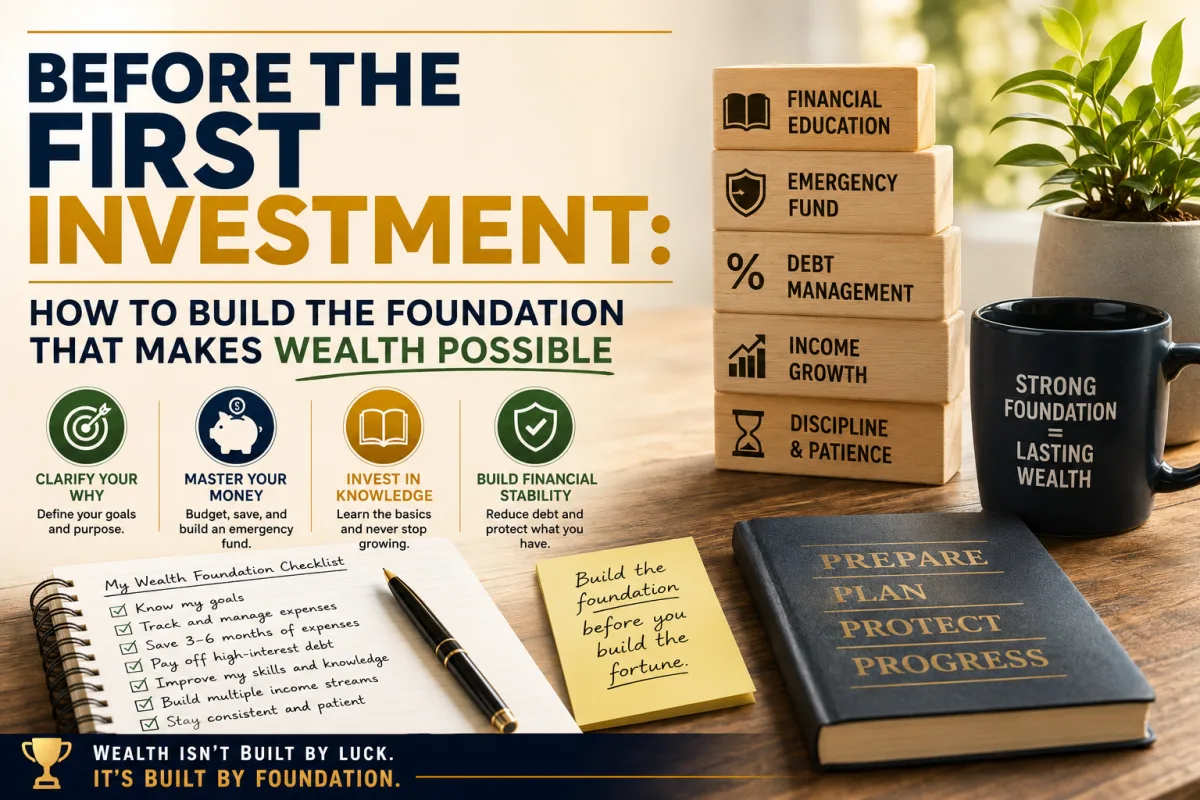
The early years should be used to build a strong base. This base includes an emergency fund, debt control, career growth, basic insurance where needed, financial literacy, and consistent investing. The order matters. Investing without stability can force you to sell at the wrong time. Investing without knowledge can expose you to fraud. Investing without income growth can keep the portfolio too small to matter.
The goal is not to choose between self-investment and financial investment. The goal is to integrate them. Invest in skills so income grows. Use income to save. Use savings to create an emergency fund. Use surplus to buy diversified assets. Use investment growth to build long-term freedom. Use financial stability to take better career and business risks.
This is a more complete view of investing. It recognizes that money does not grow in isolation. It grows within a life.
Index Funds and the Case for Simplicity
Young investors are often attracted to complicated investments because complexity feels sophisticated. They may believe wealth comes from discovering secret opportunities, timing markets, or selecting the next winning stock. Sometimes individual stock picking works. Sometimes entrepreneurship creates enormous wealth. But for many long-term investors, a simple diversified strategy can be more reliable than constant prediction.
Index funds are popular because they offer broad exposure to a market or segment of a market. Instead of trying to choose one winning company, the investor buys a fund designed to track an index. This provides diversification, reduces dependence on one company, and often comes with lower costs than actively managed alternatives.
The beauty of index investing is not excitement. It is discipline. A young investor can contribute regularly, remain diversified, reinvest returns, and allow time to work. They do not need to know which single company will dominate the future. They participate in the broader growth of markets, subject to market risks.
Index funds are not risk-free. Their value can fall. Markets can remain weak for extended periods. Currency, inflation, fees, taxes, and platform choices matter. Investors still need to understand what index the fund tracks, what assets it holds, what fees apply, how liquid it is, and whether it matches their goals. But compared with concentrated speculation, diversified index investing can be a sensible foundation.
A young person does not need to make investing complicated to make it effective. In fact, complexity often creates room for mistakes. The investor may trade too often, chase performance, pay high fees, follow influencers, or abandon the plan during downturns. Simplicity can be a strength because it is easier to maintain.
A practical approach may include building an emergency fund first, then investing regularly in diversified funds aligned with long-term goals, while continuing to grow income and financial knowledge. As the investor matures, they may add other assets such as bonds, property, business interests, retirement accounts, or direct shares. But the foundation should be understandable and repeatable.
The young investor should remember that boring strategies can produce beautiful results when given enough time.
Avoid Gambling Disguised as Investing
Every generation has its own version of financial temptation. Some opportunities are real. Many are not. Young people are especially vulnerable because they want progress quickly, are comfortable with technology, and may be surrounded by online stories of sudden wealth.
Speculation is not always obvious. It can appear as day trading, sports betting, forex schemes, crypto hype, pyramid structures, unregulated investment clubs, guaranteed-return offers, or “insider” opportunities. The language may sound professional. The returns may sound impressive. The people promoting it may look successful. The urgency may be intense.
The first warning sign is the promise of high return with little or no risk. Real investing involves uncertainty. Anyone guaranteeing unusually high returns should be questioned carefully. The second warning sign is pressure to act quickly. Fraud thrives on urgency because urgency prevents due diligence. The third warning sign is lack of transparency. If you cannot understand how money is made, who holds the assets, what regulation applies, and how you exit, you should be cautious.
Gambling becomes especially dangerous when it is funded by debt or essential money. Losing surplus money is painful. Losing rent, school fees, borrowed money, or business capital can be destructive. A young investor must never confuse adrenaline with strategy.
The desire for quick wealth is understandable. Slow progress can feel frustrating, especially when peers appear to be moving faster. But many displays of wealth are incomplete stories. The person showing profits may hide losses. The trader showing a luxury lifestyle may earn more from selling courses than from trading. The friend with a new car may also have a large loan. The influencer promoting an opportunity may be paid to promote it.
Good investing does not require secrecy, pressure, or emotional manipulation. It can be explained. It can be reviewed. It can be compared. It allows questions. It respects risk.
The young investor should protect capital with humility. Money that is lost early is not only money lost; it is compounding lost. A reckless loss at 25 can cost far more than the amount itself because that money could have grown for decades. Avoiding foolish losses is part of wealth creation.
Use Youth for Calculated Experiments
While young people should avoid reckless speculation, they should not become so cautious that they never experiment. Youth is a good season for calculated risk-taking. A young person often has more flexibility, fewer dependents, more energy, and more time to recover from failure. This can make it a suitable period to test business ideas, learn demanding skills, relocate for opportunity, build networks, take challenging jobs, or create side income.
The key word is calculated. A calculated experiment has limited downside, clear learning value, and a path to improvement. For example, starting a small online service while employed may be a calculated risk. Borrowing heavily to open a business in an industry you do not understand is a much larger and more dangerous risk. Learning to code, design, sell, write, analyze data, or manage projects can be a calculated investment. Paying for an expensive program with no evidence of outcomes may not be.
Young people should build a portfolio of experiments. Some will fail. Some will teach. Some will become income streams. A weekend business may reveal a market. A mentorship conversation may open a career path. A small investment habit may become lifelong. A failed project may teach pricing, customer service, marketing, and resilience.
Failure is not automatically good. Failure without learning is waste. Failure that creates unmanageable debt is dangerous. Failure that damages reputation can be costly. But small, thoughtful failures can be valuable. They provide information. They reveal strengths and weaknesses. They build judgment.
A young person who never takes calculated risks may avoid embarrassment but also avoid growth. A young person who takes reckless risks may create avoidable damage. The balance is intelligent experimentation.
Build an Emergency Fund Before Chasing High Returns
An emergency fund is not exciting, but it is essential. It is money set aside for unexpected necessary expenses: job loss, medical costs, family emergencies, urgent travel, car repairs, equipment replacement, or temporary income disruption.
Young investors sometimes skip emergency savings because they want to invest aggressively. This can backfire. Without an emergency fund, any surprise can force them to sell investments at the wrong time, borrow expensively, or interrupt long-term plans. The emergency fund protects the investment portfolio from life.
The first goal does not need to be huge. Start with one month of essential expenses. Then build toward three months. A self-employed person, freelancer, or business owner may need more because income can fluctuate. The fund should be liquid, safe, and separate from daily spending money.
Emergency savings also provide psychological strength. A person with a buffer can make better decisions. They can leave a harmful workplace, handle a delayed salary, avoid panic borrowing, and take advantage of opportunities. Liquidity creates dignity.
The emergency fund may not produce high returns, but it produces stability. Stability is a form of return because it prevents forced mistakes.
Debt Can Delay the Young Investor’s Future
Debt is one of the greatest threats to young wealth building. The early years should ideally be used to build assets, increase income, and develop discipline. But consumer debt can redirect income away from the future and toward the past.
Not all debt is the same. Debt used to acquire productive assets or increase earning power may be useful if the numbers work. But debt used for lifestyle, status, entertainment, gadgets, clothes, holidays, or social pressure can become a serious burden.
The problem is not only the interest rate. It is the habit. A young person who becomes comfortable borrowing for consumption may normalize living ahead of income. Every month begins partly owned by lenders. Saving becomes harder. Investing becomes irregular. Stress rises. Opportunities are missed because cash flow is already committed.
Young people should be especially careful with easy digital credit. Convenience can hide cost. Small loans can multiply. Borrowing can become emotional rather than strategic. A person may borrow not because of true need but because access is immediate.
A simple rule helps: do not borrow for things that lose value, disappear quickly, or exist mainly to impress others. If debt does not increase your earning power, acquire a productive asset, or solve a serious necessity, question it. Even then, calculate the repayment burden before committing.
Debt freedom is not always possible immediately, especially for those with education loans, family obligations, or unavoidable expenses. But the young investor should have a debt strategy. List all debts. Know the interest rates. Pay minimums on all. Attack the most expensive or most stressful debt aggressively. Avoid adding new consumer debt. Redirect freed repayments into savings and investments once debts fall.
Debt repayment may not feel like investing, but eliminating high-cost debt can be one of the best financial moves available. It frees future income and reduces risk.
Do Not Let Frugality Become Small Thinking
Frugality is useful when it means avoiding waste and spending intentionally. It becomes harmful when it turns into fear, scarcity, or refusal to invest in growth. A young person should not confuse being cheap with being wise.
Sometimes spending money is the right decision. Paying for a useful course, attending a professional event, buying a reliable laptop, improving health, moving closer to opportunity, hiring help for a business, or investing in better tools can be financially intelligent. The question is not whether money leaves your account. The question is whether the spending creates value.
Extreme frugality can also limit relationships and experience. A young person who refuses every social event, travel opportunity, learning experience, or networking moment may save money but lose exposure. Exposure matters. Many careers and businesses grow through people, environments, and ideas.
The balance is intentionality. Spend less on low-value consumption so you can spend more on high-value growth. Cut waste, not opportunity. Avoid status spending, not strategic spending. Be disciplined, not afraid.
The goal is not to live the smallest life possible. The goal is to build the strongest life possible.
Balance Wealth Building With Meaningful Life Experiences
Young investors sometimes swing between two extremes. One extreme is careless spending: enjoy now, worry later. The other is rigid accumulation: save everything, experience nothing. Neither is ideal.
Life is not only a spreadsheet. Youth has experiences that may not be available in the same way later. Friendships, travel, creative exploration, service, learning, family time, and personal growth matter. A financial plan that ignores life can become emotionally empty.
But experiences should be chosen consciously. There is a difference between meaningful experience and impulsive consumption. A trip planned and paid for in cash may enrich life. Constant expensive outings funded by debt may create regret. Investing in a hobby that develops talent may be worthwhile. Spending to keep up with friends may not.
Money should support values. If a young person values travel, they can budget for it while still investing. If they value family support, they can plan for it without destroying savings. If they value learning, they can allocate money to books, courses, and events. The key is to give every priority a place instead of allowing impulse to decide.
Wealth building should increase life options, not remove joy. The young investor should learn to enjoy life within a framework. Save first, invest consistently, avoid bad debt, then spend guilt-free within planned limits. This is healthier than both reckless spending and joyless hoarding.
Mentorship and Networks Are Financial Assets
A young person’s network can shape their financial future. The right mentor can save years of mistakes. The right professional circle can reveal opportunities. The right peers can raise standards. The wrong crowd can normalize debt, waste, speculation, and short-term thinking.
Mentorship does not always require a formal arrangement. It can come from a supervisor, business owner, older professional, teacher, family friend, author, coach, or colleague. The important thing is access to better judgment. A mentor can help a young person understand industry realities, negotiate pay, avoid poor career moves, identify useful skills, and think long term.
Networks matter because opportunity often travels through people. Jobs, clients, partnerships, investments, and ideas frequently emerge from relationships. A young person should build relationships before they need favors. This means being useful, respectful, reliable, curious, and generous with effort.
But networking should not become shallow social climbing. The goal is not collecting contacts. It is building trust. Trust grows through competence and character. If people know you do good work, keep your word, and learn quickly, they are more likely to think of you when opportunities arise.
A young investor should also choose peers carefully. If your closest circle spends everything, mocks discipline, chases scams, and measures success by appearance, your financial habits will be under pressure. If your circle discusses skills, business, investing, books, health, and growth, your standards may rise.
Environment is not destiny, but it is influence. Choose influences that make wealth-building behavior feel normal.
Health Is Part of Wealth
Young people often treat health as unlimited. They work long hours, sleep poorly, eat carelessly, ignore exercise, and postpone medical checkups. This may seem productive in the short term, but poor health can become expensive. It can reduce energy, focus, earning power, and quality of life.
Health is part of human capital. A brilliant skill set is less useful if the body and mind cannot support sustained work. Burnout can interrupt careers. Chronic illness can increase costs. Poor mental health can weaken decision-making. Addiction, stress, and exhaustion can damage both income and relationships.
Investing in health does not require luxury. Sleep, movement, nutrition, preventive care, stress management, and healthy relationships are foundational. For young people building careers and businesses, energy is a strategic asset.
Health insurance, where affordable and appropriate, should also be considered. A medical emergency can destroy savings and force debt. Young people may feel invincible, but financial planning must respect uncertainty.
The point is not to fear illness. It is to recognize that wealth without health can become difficult to enjoy. A serious financial plan protects the person, not just the portfolio.
How Young Investors Should Think About Asset Allocation
Asset allocation is the way money is divided among different asset classes such as cash, bonds, shares, property, retirement funds, and business interests. For young investors, asset allocation should reflect goals, time horizon, risk tolerance, income stability, and knowledge.
Money needed soon should be kept relatively safe and liquid. Emergency funds, rent deposits, near-term school fees, and short-term goals should not be exposed to major volatility. Long-term money can usually accept more risk because there is time to recover from market declines.
A young investor with a stable income, emergency fund, and decades before retirement may hold a larger portion of long-term investments in growth assets such as diversified equity funds. Someone with irregular income, family obligations, or near-term goals may need more cash and lower-risk instruments.
There is no single perfect allocation for all young people. Age matters, but life situation matters too. A 25-year-old supporting parents and siblings may have less risk capacity than a 30-year-old with no dependents and high income. A young entrepreneur with unstable income may need more liquidity than a salaried employee. A young parent may need insurance and emergency savings before aggressive investing.
The main principle is matching money to purpose. Short-term money needs stability. Long-term money needs growth. Essential money needs protection. Surplus money can take more risk. Speculative money, if used at all, should be money one can afford to lose without damaging the plan.
The Role of Retirement Investing While Young
Retirement may feel distant to a young person, but that distance is exactly why it should be addressed early. The longer retirement money is invested, the less pressure there may be later. Small contributions made early can reduce the burden of large catch-up contributions in middle age.
Retirement investing also builds discipline. It teaches long-term thinking in a culture that often rewards immediate consumption. It reminds young people that future independence will not happen automatically.
Where employer pension contributions or retirement plans are available, young workers should understand them. Employer matching or contributions can be valuable. Ignoring such benefits can mean leaving compensation unused. Self-employed young people should create their own retirement structure instead of waiting for formal employment benefits.
Retirement planning is not about becoming old. It is about buying future freedom. The older version of you will either thank or question the younger version of you. Starting early is one way to show respect to the person you are becoming.
Increase Your Savings Rate as Your Income Grows
A young person does not need to begin with a perfect savings rate. The first goal is consistency. But over time, the savings and investment rate should rise. This is how income growth becomes wealth.
One useful strategy is to save part of every raise before adjusting lifestyle. If your income increases by KES 30,000, you might invest KES 15,000, increase emergency savings by KES 5,000, and use KES 10,000 for lifestyle improvement. The exact numbers will differ, but the principle is powerful: every income increase should strengthen the balance sheet.
This habit prevents lifestyle inflation from capturing all progress. Lifestyle inflation is not always obvious. It often happens through small upgrades that become permanent: more expensive rent, more frequent outings, higher transport costs, more subscriptions, more convenience purchases, more status expectations. None may look dangerous alone, but together they can consume future wealth.
A rising savings rate gives young investors flexibility. It allows larger investments, faster debt repayment, better emergency reserves, and more opportunity capital. It also builds confidence. The investor sees that income growth is producing visible progress.
Learn Before You Invest Heavily
Financial literacy is a form of protection. A young person does not need to become a professional analyst before investing, but they should understand the basics: risk, return, diversification, inflation, fees, liquidity, taxes, compounding, asset classes, and scams.
Learning should come from credible sources, not only social media. Books, reputable financial institutions, regulators, experienced investors, qualified advisers, and long-form educational material can provide deeper understanding. Social media can introduce ideas, but it can also reward confidence over accuracy.
The young investor should develop the habit of asking questions. What exactly am I buying? How does it make money? What could go wrong? What fees apply? How do I exit? Who regulates it? What is the time horizon? Is the return guaranteed or projected? What happens in a bad market? Am I investing or gambling?
These questions slow down bad decisions. They also strengthen good decisions. A person who understands an investment is more likely to hold it through normal volatility. A person who bought only because someone recommended it may panic at the first sign of decline.
Knowledge reduces emotional investing. It does not eliminate risk, but it improves judgment.
Do Not Wait Until You Feel Ready
Many young people delay investing because they want to understand everything first. This caution is understandable, but it can become procrastination. You do not need perfect knowledge to begin. You need enough knowledge to start safely.
Start small. Build an emergency fund. Open the right accounts. Choose simple, diversified investments. Automate contributions. Read regularly. Review progress. Increase contributions as knowledge and income grow.
Experience teaches lessons that theory cannot. The first year of investing reveals your emotions. You learn how you react to market declines, slow progress, fees, statements, and temptation. You learn whether your budget can support contributions. You learn how much risk you can actually tolerate, not just what you think you can tolerate.
Starting small also reduces fear. A young investor who begins with modest amounts can learn without putting their entire future at risk. Over time, confidence grows. The investor becomes more capable of handling larger sums.
Waiting for the perfect time can cost years. The market will never be perfectly safe. Income will never feel completely enough. Life will always have expenses. The disciplined investor begins within reality, not after reality becomes convenient.
The Young Investor’s Financial Order of Operations
Although every person’s situation is different, a sensible sequence can help young investors avoid common mistakes.
First, build basic financial awareness. Know your income, expenses, debts, and obligations. You cannot invest well if your monthly cash flow is a mystery.
Second, create a small emergency buffer. Even before investing aggressively, set aside money for immediate shocks. This prevents every surprise from becoming debt.
Third, eliminate or reduce expensive consumer debt. High-interest debt can cancel out investment progress. Paying it down may provide a guaranteed improvement in cash flow.
Fourth, invest in earning power. Learn valuable skills, improve performance, build networks, and pursue opportunities that raise income.
Fifth, begin long-term investing with simple diversified products. Index funds, retirement accounts, and other diversified vehicles can form a foundation.
Sixth, protect major risks. If dependents rely on you, consider life insurance. If medical costs could destroy savings, consider health cover. If your income depends on your ability to work, think about disability risk where products are available.
Seventh, increase contributions as income rises. Do not let lifestyle absorb every raise.
Eighth, diversify over time. As assets grow, consider how cash, bonds, equities, property, business interests, and retirement funds fit together.
This order is not rigid. Some steps overlap. But the principle is clear: build stability, grow earning power, invest consistently, and avoid risks that can force you backward.
What Young Investors Should Avoid
Young investors should avoid pretending that appearances are wealth. A lifestyle can be rented, financed, borrowed, or staged. Wealth is what remains after obligations. It is not the car, the phone, the outfit, or the holiday photo. It is the assets, skills, options, and freedom behind the image.
They should avoid investing only because friends are investing. Peer enthusiasm can create bubbles of confidence. If everyone around you is making quick money, the pressure to join can be intense. But your financial plan must survive after the excitement fades.
They should avoid overconfidence after early success. A rising market can make beginners feel brilliant. Luck can be mistaken for skill. The danger comes when early gains lead to larger, riskier bets.
They should avoid ignoring fees. Fees may look small, but over decades they matter. High fees reduce compounding. Understand what you are paying and why.
They should avoid tying up all money in illiquid assets. Property, land, private businesses, and long-term products may be valuable, but liquidity matters. A young person needs flexibility for career moves, emergencies, and opportunities.
They should avoid neglecting records. Keep investment statements, policy documents, tax records, contracts, loan agreements, and account details organized. Financial maturity includes documentation.
They should avoid shame. Many young people feel embarrassed about starting small. But small beginnings are normal. The person investing KES 2,000 consistently is building a habit that can later handle KES 20,000, KES 200,000, or more. The habit matters.
Building Wealth Without Losing Yourself
There is a subtle danger in wealth-building culture. It can make young people feel that every moment must be monetized, every relationship optimized, every hobby turned into a business, and every life decision judged by financial return. Ambition is valuable, but obsession can be costly.
A good financial life supports a good human life. Money should increase freedom, not create a new prison. The young investor should build wealth with seriousness, but also with perspective. Relationships matter. Health matters. Faith, purpose, service, creativity, rest, and joy matter. Wealth is powerful, but it is not the whole of life.
This is why balance is important. Invest early, but do not become joyless. Work hard, but do not destroy your health. Save aggressively where possible, but do not treat every meaningful experience as waste. Build income, but do not measure your worth only by income. Take risks, but do not gamble with your future.
The best financial plan helps you become more capable, not more anxious. It creates confidence without arrogance. It creates ambition without comparison. It creates discipline without emptiness.
The Long Game Belongs to the Patient
Young investors often want the secret. They want the asset that will explode, the business that will scale quickly, the fund that will outperform, the opportunity that will change everything. Sometimes wealth does come from unusual opportunities. But for most people, the foundation is less mysterious: skills, income, savings, diversification, patience, and discipline.
The young investor’s edge is not predicting the future perfectly. It is preparing for the future consistently. It is investing in human capital before financial capital becomes large. It is using time instead of wasting it. It is taking enough risk to grow but not so much risk that one mistake destroys the journey. It is choosing assets over appearances. It is allowing compounding to work quietly.
A young person does not need to start rich to become financially strong. They need to start honestly. Know where you are. Build useful skills. Increase income. Save first. Avoid destructive debt. Invest early. Keep learning. Protect your health. Choose friends and mentors wisely. Stay away from gambling disguised as investing. Let time work.
The first years may not look impressive. The portfolio may be small. The sacrifices may feel unnoticed. The progress may seem slow. But wealth often begins invisibly. It begins in habits, skills, choices, and identity long before it appears in large balances.
One day, the young investor becomes the older investor. The question is what they will have allowed time to build. If they used youth for consumption alone, time will reveal the cost. If they used youth for discipline, learning, investing, and thoughtful risk, time will reveal the reward.
That is the real strategy for young people. Not to chase every opportunity. Not to fear every risk. Not to wait until life feels perfect. But to understand the advantage of youth and use it deliberately. Time is already passing. The wise investor gives it something worthwhile to multiply.
 Article
 Article
 Article
 Article
 Article
 Article
 Article
 Article