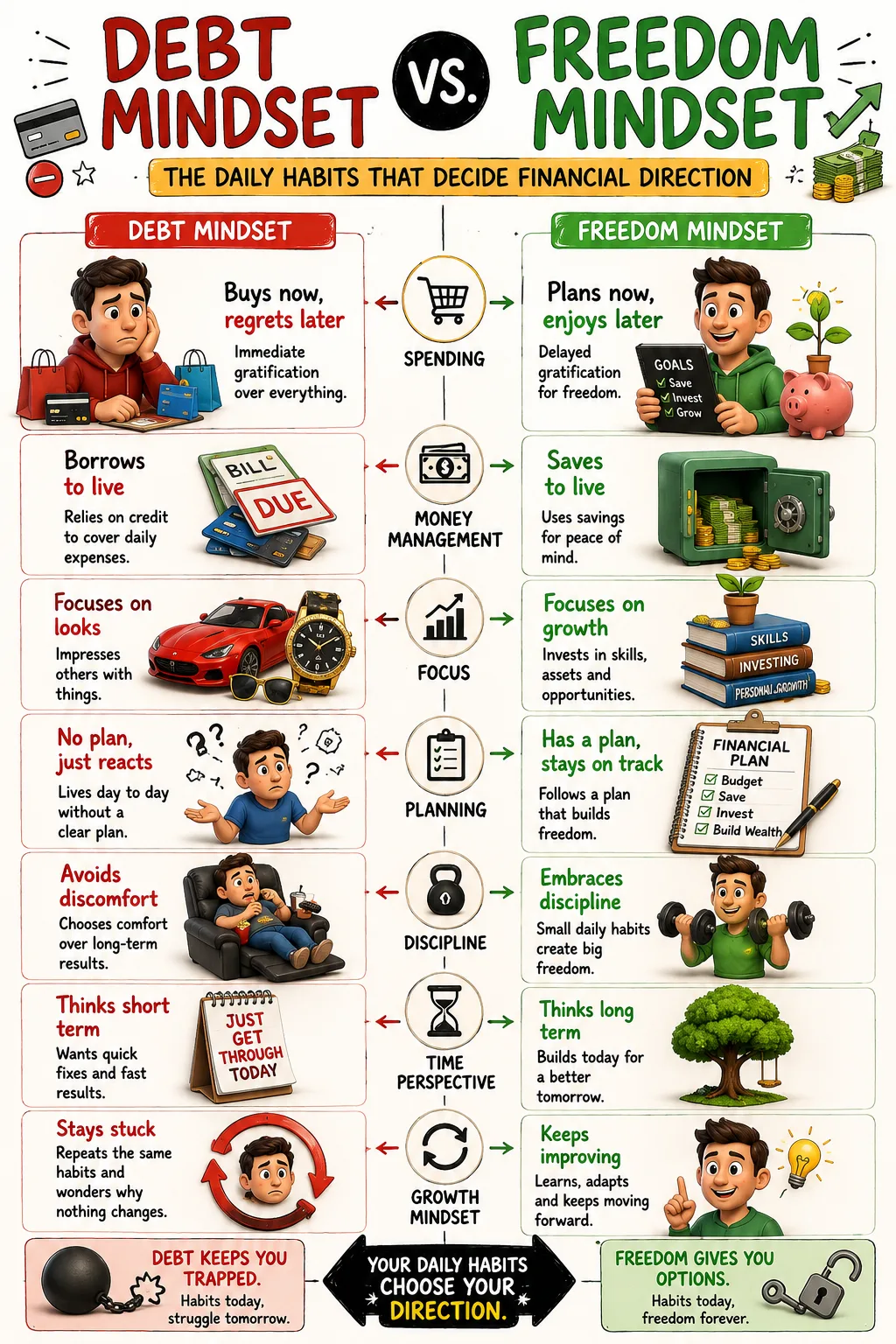
Debt Mindset vs. Freedom Mindset: The Daily Habits That Decide Financial Direction
Financial freedom is not usually created by one heroic decision.
It is created by repeated decisions that seem small when viewed alone. Saving before spending. Waiting before buying. Tracking money instead of guessing. Paying down expensive debt. Investing consistently. Saying no to status purchases. Keeping emergency cash. Choosing strategy over trends. Living below income instead of stretching beyond it.
These decisions do not feel dramatic in the moment. They rarely impress anyone. No one applauds a skipped impulse purchase. No one sees the automatic transfer to savings. No one praises a credit card balance that was never created. No one photographs a budget meeting. Yet these quiet behaviors compound. Over time, they can separate a household that is always reacting from a household that has room to choose.
This is the useful message behind the contrast between a “debt mindset” and a “freedom mindset.” The framework is simple: one side borrows often, buys status, wants everything now, lives beyond its means, ignores budgets, chases trends, and creates stress. The other saves regularly, builds wealth, waits patiently, lives below its means, tracks spending, follows strategy, and creates freedom.
As a teaching tool, the contrast works because it highlights the direction of behavior. Some habits move a household toward dependence. Others move it toward resilience. But the framework also needs nuance. Debt is not always bad. Borrowing can help a person buy affordable housing, obtain education that increases earning power, or build a profitable business. A mortgage can support wealth building when the home is affordable. A student loan can be productive if the education leads to earnings that justify the cost. A business loan can create value when it funds profitable growth.
The real dividing line is not debt versus no debt. It is whether money decisions increase future options or reduce them.
High-interest consumer debt used to fund lifestyle usually reduces options. Productive debt used carefully may increase options. Saving regularly increases options. Living beyond one’s means reduces options. Budgeting increases awareness. Chasing trends creates instability. Long-term planning gives money a direction.
That is the deeper financial principle: freedom is built when today’s choices create more room tomorrow.
The Consumer Financial Protection Bureau defines financial well-being in terms of a person’s ability to meet current and ongoing obligations, feel secure about the future, and make choices that allow enjoyment of life. The CFPB’s Financial Well-Being Scale is designed to measure that broader condition rather than income alone. The OECD similarly treats financial literacy as a combination of awareness, knowledge, skills, attitudes, and behaviors that help people make informed financial decisions and support resilience. These definitions matter because financial freedom is not merely having a high salary. It is having stability, choice, and resilience.
A person can earn a lot and still live in financial stress. Another person can earn modestly and still build freedom if they maintain a surplus, avoid destructive debt, and accumulate assets over time. The difference is not only income. It is the direction of behavior.
The Problem With Calling It a “Debt Mindset”
The phrase “debt mindset” is memorable, but it can be misleading if interpreted too literally.
Debt is a tool. Like any tool, it can build or damage depending on how it is used. A hammer can build a house or break a window. Debt can fund productive assets or finance consumption that quickly loses value. The danger is not the existence of debt. The danger is debt without purpose, affordability, discipline, or a repayment plan.
Consumer debt is often the most damaging form because it usually funds goods and services that do not generate future income. Credit card balances, payday loans, high-interest personal loans, and buy-now-pay-later obligations used for discretionary spending can create a cycle where future income pays for past consumption. The household appears to maintain a lifestyle, but it does so by selling pieces of future freedom.
Productive debt is different. It may finance education, a business, equipment, or property that can increase future earning power or net worth. But productive debt is not automatically safe. An expensive degree with weak labor market returns can become a burden. A mortgage on an unaffordable home can strain the entire household. A business loan for an untested idea can create stress instead of growth. The label “productive” must be earned through analysis.
The better distinction is between debt that strengthens the balance sheet and debt that weakens it.
Strengthening debt is affordable, purposeful, and connected to a realistic future benefit. Weakening debt is expensive, impulsive, poorly understood, or used to maintain appearances. The freedom mindset does not reject all borrowing. It asks what the borrowing is for, what it costs, what can go wrong, and whether the household can repay without sacrificing basic stability.
That is why the most financially mature question is not, “Is debt bad?” It is, “Does this obligation increase or reduce my future choices?”
Borrowing Often vs. Saving Regularly
Frequent borrowing is one of the clearest signs that a household lacks financial margin.
Borrowing once for a major planned purchase may be reasonable. Borrowing repeatedly for groceries, fuel, subscriptions, clothing, entertainment, or ordinary bills is different. It means current income does not support current spending. The household may still function, but it is functioning by moving today’s costs into tomorrow.
That pattern becomes expensive because debt creates fixed claims on future income. A paycheck arrives, but part of it is already committed to previous purchases. Interest charges reduce flexibility. Minimum payments crowd out savings. Fees create additional pressure. Eventually, the household is no longer deciding freely where money should go. Earlier decisions have already decided.
Saving regularly creates the opposite pattern. It moves money from today into future protection. At first, the amounts may be small. A household may save $10, $25, or $100 at a time. But the habit matters because it changes the direction of cash flow. Instead of the future paying for the past, the present begins funding the future.
Emergency savings are especially important. The Federal Reserve’s 2025 report on the economic well-being of U.S. households in 2024 found that 18 percent of adults said the largest emergency expense they could handle using only savings was under $100, and 13 percent said they could handle only $100 to $499. These numbers show why saving regularly is not merely a nice habit. It is a form of protection against expensive borrowing.
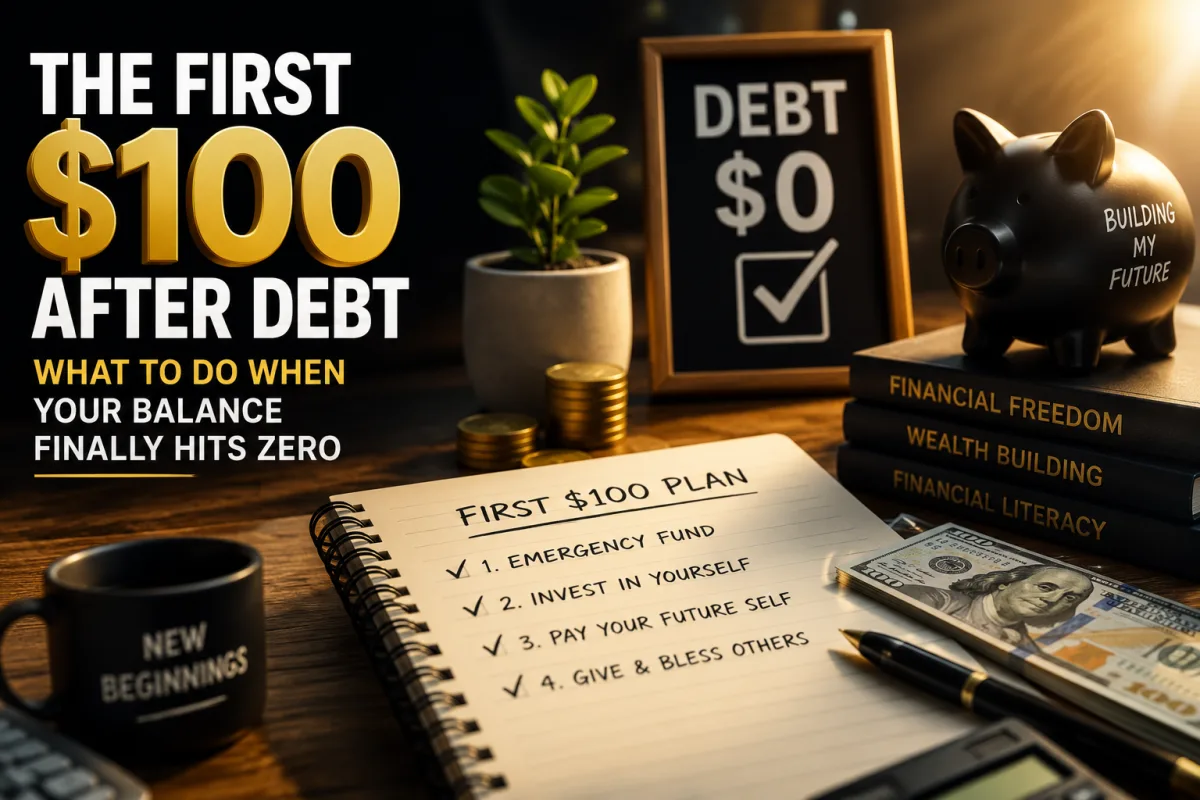
The freedom mindset begins with building a buffer. The first target does not need to be large. It may be one week of expenses, then one month, then three months or more depending on income stability and household responsibilities. The purpose is to create distance between life and debt.
Saving also changes emotional posture. A person with no savings experiences every surprise as a threat. A person with savings experiences the same surprise as an inconvenience. That difference is freedom in practical form.
Buying Status vs. Building Wealth
Status spending is powerful because it promises emotional return immediately.
A luxury item, expensive car, premium phone, designer outfit, exclusive membership, or high-end holiday can make a person feel successful before their balance sheet confirms it. The purchase communicates something to others: I have arrived. I belong. I am doing well. I am not behind.
The danger is that status purchases often consume the money needed to build actual wealth. They can increase monthly obligations, reduce savings, create debt, and reset expectations. What once felt special becomes normal. The next status purchase must be larger to create the same feeling. This is how lifestyle inflation becomes a treadmill.
Building wealth is less visible. It looks like buying diversified investments, funding retirement accounts, paying down high-interest debt, maintaining insurance, building a cash reserve, or investing in skills. These choices rarely create social applause. But they increase net worth, resilience, and future options.
The conflict is not between enjoyment and wealth. A healthy financial life includes pleasure. The conflict is between spending for genuine value and spending to perform success. A person can enjoy a good meal, quality clothing, travel, or comfort without making status the financial strategy. The issue is whether consumption crowds out ownership.
The freedom mindset asks a simple question before major purchases: will this make me look wealthier while making me financially weaker?
If the answer is yes, the purchase deserves caution. Real wealth does not always advertise itself. Often, it grows quietly in accounts no one sees.
Wanting Now vs. Waiting Patiently
Patience is one of the most underrated financial skills.
Modern consumer life is designed to reduce waiting. Credit cards, instant checkout, buy-now-pay-later offers, same-day delivery, social media advertising, and lifestyle comparison all encourage immediate consumption. The message is constant: you can have it now.
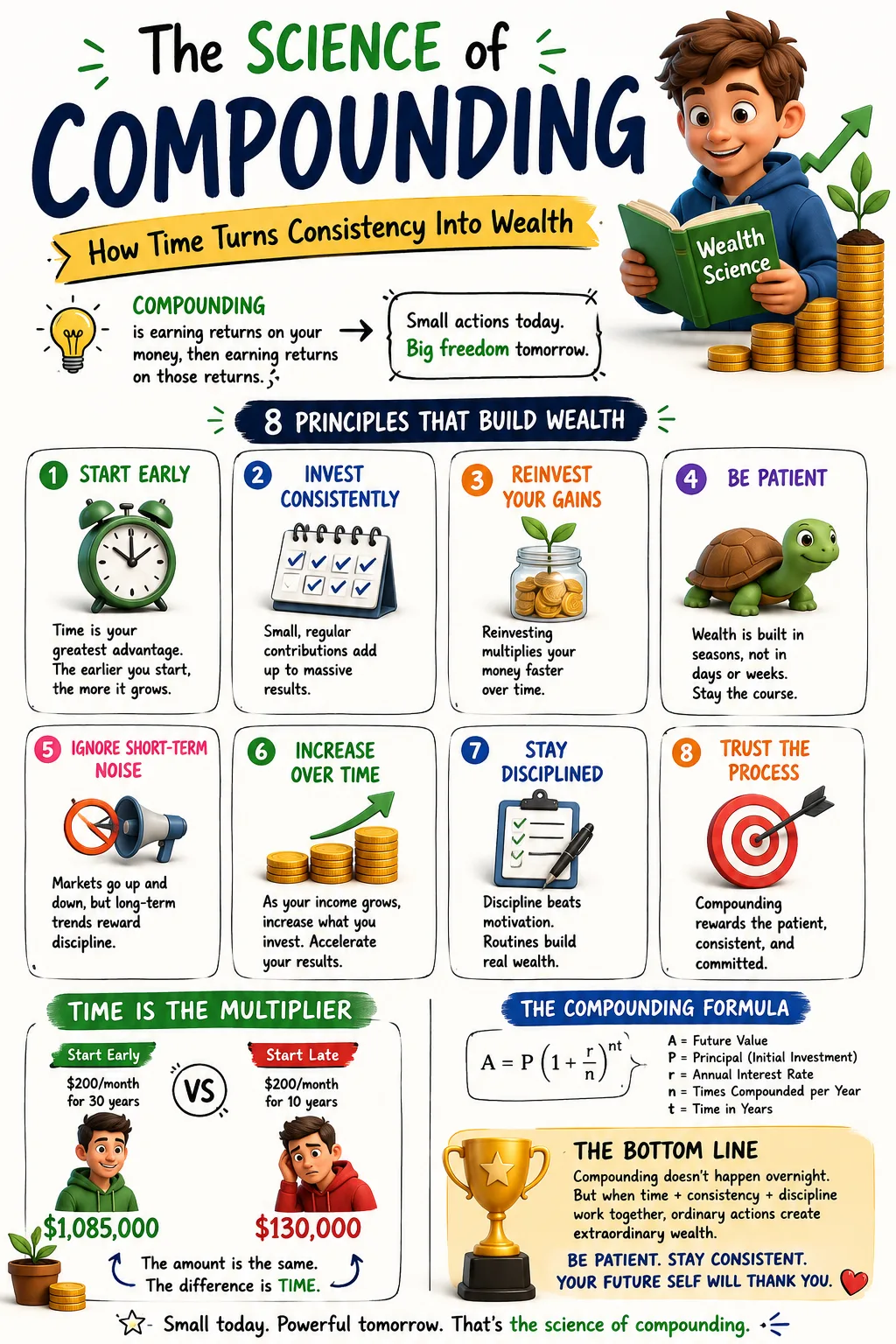
But wealth building often depends on the ability to wait. Waiting allows money to be saved before a purchase. Waiting allows investments to compound. Waiting allows a person to compare options instead of buying emotionally. Waiting allows a household to avoid paying interest for something that could have been purchased later with cash.
Delayed gratification does not mean permanent denial. It means choosing timing wisely. A person who waits three months to buy something may discover they no longer want it. Or they may buy it later without debt. Or they may choose a better option. Waiting creates space between impulse and decision.
Patience also matters in investing. Long-term strategies often fail not because the strategy is weak, but because the investor cannot endure boredom or volatility. They want quick profits, so they chase trends. They want certainty, so they sell during declines. They want excitement, so they abandon diversified plans for speculative bets.
Vanguard’s investing principles emphasize clear goals, diversification, low costs, and long-term discipline. These principles are not designed for emotional excitement. They are designed for durability. The investor who can wait has an advantage over the investor who constantly needs action.
Waiting patiently is not passive. It is active restraint. It is the discipline of allowing time to work before impatience interrupts the process.
Living Beyond Means vs. Living Below Means
Living below your means is the foundation of financial freedom because it creates surplus.
Surplus is the gap between income and spending. Without surplus, there is no money for emergency savings, investing, debt reduction, insurance, education, or opportunity. A household may earn a high income, but if every dollar is consumed, the household remains financially fragile. A household may earn a modest income, but if it consistently maintains a surplus, it can gradually build resilience.
Living beyond one’s means does the opposite. It creates a deficit that must be funded by savings, debt, family support, or delayed obligations. The lifestyle may feel manageable for a while, especially if credit is available. But the gap eventually becomes visible through balances, fees, stress, and limited options.
Living below means is often misunderstood as extreme frugality. It does not require rejecting every comfort or pleasure. It requires making sure the total cost of life leaves room for future needs. The goal is not to spend as little as possible. The goal is to spend in a way that does not consume tomorrow’s freedom.
The most important expenses are usually the large fixed ones: housing, transportation, debt payments, insurance, childcare, taxes, and recurring commitments. A household can cut small expenses and still struggle if the major obligations are too large. Living below means often requires discipline at the moment of big decisions: choosing a home, car, school, loan, or lifestyle standard.
One of the most powerful wealth-building moves is keeping expenses stable as income rises. If a raise is immediately absorbed by a larger car payment, more expensive housing, and higher lifestyle expectations, income growth does not become wealth. If part of every raise is saved or invested, income growth becomes future freedom.
Living below means is not about thinking small. It is about creating the financial space to think bigger.
Ignoring Budgets vs. Tracking Spending
A budget is not a punishment. It is a map.
Many people avoid budgeting because they think it will restrict them. In reality, the absence of a budget often creates more restriction. When spending is unclear, money disappears into categories that may not reflect true priorities. At the end of the month, the household may have little left and no clear explanation. Without visibility, improvement is guesswork.
Tracking spending creates awareness. It shows where money actually goes, not where a person thinks it goes. This can be uncomfortable because the numbers may contradict the story. Someone may believe they are careful with money until subscriptions, delivery fees, impulse purchases, interest charges, or small daily expenses are added up. But discomfort is useful if it creates clarity.
A good budget aligns money with values. It does not require every household to use the same categories or percentages. One person may value travel. Another may value homeownership. Another may prioritize early retirement, debt freedom, education, family support, or business building. The budget should reflect the life being built.
Tracking also helps identify leaks. Some spending brings joy or utility. Other spending is automatic, forgotten, or driven by stress. The freedom mindset does not cut every expense blindly. It distinguishes between spending that is worth it and spending that quietly weakens the plan.
Technology has made tracking easier through banking tools, budgeting apps, spreadsheets, and automated alerts. But the tool matters less than the habit. A simple notebook can work if it creates awareness. A sophisticated app fails if ignored.
The budget is not the goal. The goal is control. Tracking spending gives the household the information needed to make intentional decisions before money disappears.
Chasing Trends vs. Following Strategy
Financial trends are emotionally tempting because they offer belonging and urgency.
A stock rises. A cryptocurrency becomes popular. A property market heats up. A celebrity promotes an investment. A friend claims to have doubled their money. Social media turns isolated success stories into apparent instructions. The fear of missing out becomes stronger than the discipline of planning.
Trend chasing is dangerous because it often replaces analysis with excitement. People buy because prices have risen, not because value is clear. They follow because others are following. They risk money without understanding liquidity, valuation, fees, taxes, downside, or how the investment fits their goals.
A strategy is different. A strategy begins with objectives. What is the money for? When will it be needed? How much risk is appropriate? What assets are suitable? How diversified should the portfolio be? How much cash should be kept? What debt should be paid down first? How often should the plan be reviewed?
Strategy reduces the need to react to every headline. It tells the investor what to do during excitement and fear. It may include automatic contributions, asset allocation, rebalancing, emergency savings, debt repayment, and rules for speculative investments. The point is not to predict every market move. The point is to prevent every market move from controlling behavior.
For most households, the core drivers of wealth are not constant trading or trend chasing. They are saving consistently, investing over long periods, keeping costs reasonable, diversifying, avoiding destructive debt, and staying disciplined. Vanguard’s framework places discipline alongside goals, balance, and costs for this reason.
This does not mean a person can never invest in emerging themes or new technologies. It means such investments should be sized appropriately and understood as part of a broader plan. A small, intentional allocation to a risky opportunity is different from moving the family’s future into a trend because everyone is talking about it.
The freedom mindset knows the difference between opportunity and impulse.
Creating Stress vs. Creating Freedom
Money stress is not only about numbers. It affects sleep, relationships, work performance, health, and decision-making.
High debt can create a feeling of constant pressure because obligations do not care how a person feels. Payments arrive on schedule even when income is disrupted, children need support, emergencies occur, or prices rise. The more fixed obligations a household has, the less room it has to adapt.
Financial stress can also create avoidance. People stop opening bills. They avoid checking balances. They delay conversations. They use credit to postpone discomfort. Unfortunately, avoidance usually increases the problem. Fees accumulate. Interest grows. Options narrow.
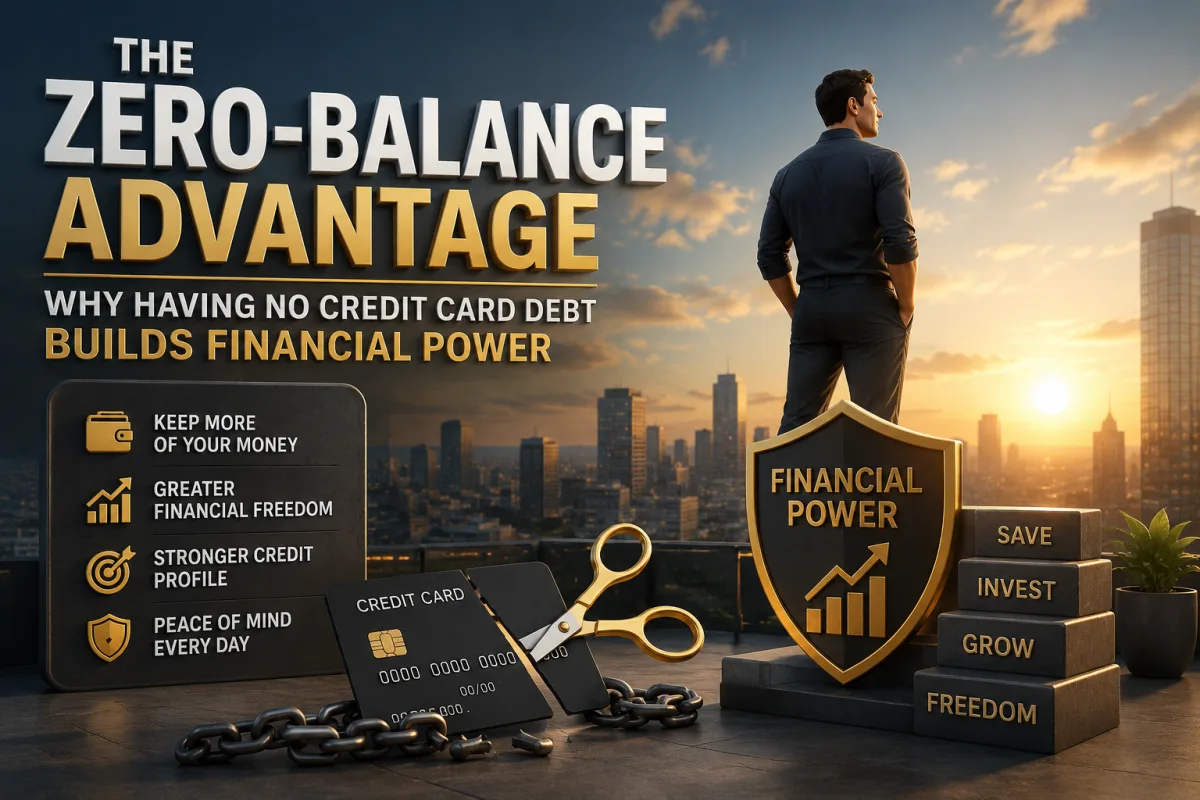
Financial freedom is not necessarily being rich. It is having enough control and margin that money no longer dominates every decision. It may mean having emergency savings, manageable debt, stable housing, insurance, investments, and the ability to say no to bad opportunities because survival is not immediately threatened.
The CFPB’s approach to financial well-being is useful because it connects financial health to security and choice, not only income level. A person with high income and high stress may have less financial well-being than someone with moderate income, low debt, savings, and flexibility.
Freedom is built in layers. First, the household can cover essentials. Then it can handle small emergencies. Then it can pay down expensive debt. Then it can invest. Then it can build multiple options: career flexibility, business opportunities, retirement security, generosity, and time.
The freedom mindset creates peace not by avoiding responsibility, but by accepting responsibility early enough that money becomes manageable.
Why Not All Debt Is the Same
The most important nuance in any debt discussion is that the purpose and cost of borrowing matter.
High-interest credit card debt used for discretionary spending is usually harmful because it finances consumption while charging expensive interest. Payday loans and similar products can be even more damaging because the cost of borrowing is often extremely high. Consumer debt used to maintain status can keep a person looking successful while weakening their balance sheet.
Debt tied to productive use can be different. A mortgage on an affordable home may help build equity while providing housing stability. Education debt may increase lifetime earnings if the program is reasonably priced and connected to strong employment outcomes. Business debt may help purchase equipment, inventory, or systems that generate profit.
But productive debt still requires caution. A mortgage can become dangerous if the house is too expensive. Education debt can become a burden if earnings do not justify the cost. Business debt can become destructive if sales disappoint or margins are weak. Debt magnifies both good and bad decisions.
The OECD defines household debt broadly as household liabilities requiring payments of interest or principal, including mortgage loans, consumer credit, and other accounts payable. That definition reminds us that debt is not one thing. It includes different obligations with different risks.
A useful debt test includes five questions. What is the money being used for? What is the interest rate and total cost? What future income or value is expected? What happens if the expected benefit does not occur? Can the household repay without sacrificing essential stability?
If the debt funds something that loses value, carries high interest, and depends on optimistic assumptions, it is likely weakening the household. If it funds a realistic asset or opportunity, is affordable, and has a clear repayment plan, it may be part of a wealth-building strategy.
Debt is not morality. Debt is structure. The structure must be examined.
The Psychology Behind the Two Mindsets
The difference between debt-driven and freedom-driven behavior is partly psychological.
Debt-driven behavior often comes from immediacy. The person wants relief now, status now, comfort now, or escape now. This may be understandable. People under stress often seek quick relief. A purchase can create a momentary sense of control. Borrowing can make a problem disappear temporarily. Avoiding a budget can delay discomfort.
Freedom-driven behavior comes from future orientation. The person is willing to experience some discomfort now to create more security later. They save before spending. They wait before buying. They invest before upgrading. They face the numbers before the numbers become unmanageable.
Behavioral economics shows that humans are not perfectly rational calculators. People are influenced by present bias, loss aversion, overconfidence, social comparison, mental accounting, and emotion. This is why systems matter. A person should not rely only on willpower. They should design financial habits that make the better choice easier.
Automatic savings reduce the need to decide every month. Separate accounts reduce accidental spending. Waiting periods reduce impulse purchases. Written plans reduce emotional investing. Spending reviews create feedback. Debt payoff schedules create momentum. Environmental design turns good intentions into repeatable behavior.
The freedom mindset is not a personality type. It is a system of behaviors that can be practiced.
How to Move From Debt Pressure to Financial Freedom
The first step is to face the numbers. List all debts, balances, interest rates, minimum payments, due dates, fees, and whether each debt is secured or unsecured. Avoiding the list may feel easier, but it gives the debt more power. Clarity is the beginning of control.
The second step is to separate essential expenses from discretionary spending. Essentials include housing, food, utilities, transport, insurance, minimum debt payments, childcare, and basic medical needs. Discretionary spending should not be judged only by whether it is enjoyable. It should be judged by whether it fits the current financial reality.
The third step is to build a small emergency buffer while paying minimums. This may sound counterintuitive for someone with debt, but even a small cash reserve can prevent new borrowing when minor emergencies occur. Without a buffer, every surprise adds to the balance.
The fourth step is to attack high-interest debt. The avalanche method prioritizes the highest interest rate first, which saves the most money mathematically. The snowball method prioritizes the smallest balance first, which can build motivation. The best method is the one that reduces debt consistently while preventing new balances from forming.
The fifth step is to automate savings once the most urgent debt pressure is under control. Automation helps transform financial improvement from a monthly debate into a default behavior.
The sixth step is to increase income where possible. Debt advice often focuses on cutting expenses, but many households face an income problem, not merely a spending problem. Skill development, negotiation, better employment, side income, overtime, freelancing, or business activity may be necessary to create surplus.
The seventh step is to invest once the foundation is stable. Long-term wealth requires ownership. After high-interest debt is managed and emergency savings are growing, consistent investing can begin converting income into assets.
The eighth step is to review the plan regularly. Income, expenses, debt, family responsibilities, and goals change. A freedom mindset is not rigid. It adapts without abandoning the core principle: today’s choices should increase tomorrow’s options.
When Extreme Frugality Becomes a Problem
Living below your means is powerful, but extreme frugality can become harmful when it prevents necessary investments in health, education, relationships, career development, or quality of life.
A person may avoid spending on training that could increase income. They may skip medical care and create larger future costs. They may refuse tools that improve productivity. They may become so focused on cutting expenses that they ignore earning potential. They may damage relationships by treating every shared experience as a financial threat.
The freedom mindset is not about spending the least possible amount. It is about spending intentionally. Sometimes the financially wise choice is to spend: on education, health, childcare, reliable transportation, professional clothing, business tools, insurance, or rest. These expenses can support income, stability, and well-being.
Frugality becomes wealth-building when it redirects money from low-value consumption to high-value goals. It becomes fear-based when it prevents a person from making investments that improve life and earning power.
The goal is not deprivation. The goal is alignment.
How Financial Literacy Supports Freedom
Financial literacy matters because people cannot manage what they do not understand.
A person who does not understand interest may underestimate the cost of debt. A person who does not understand compounding may delay investing. A person who does not understand inflation may keep long-term money too conservatively. A person who does not understand diversification may concentrate too much in one risky asset. A person who does not understand credit terms may accept expensive borrowing without realizing the consequences.
The OECD’s work on financial education emphasizes that knowledge, skills, attitudes, and behaviors together support financial resilience and well-being. This is important because knowledge alone is not enough. A person may know debt is expensive and still borrow impulsively. They may know saving matters and still fail to automate it. Financial literacy must become behavior.
Good financial education should also protect people from oversimplified messages. “All debt is bad” is too simple. “Debt is how the rich get richer” is also too simple. “Budgeting fixes everything” ignores income constraints. “Just invest” ignores emergency savings and risk tolerance. “You only need discipline” ignores external conditions.
True literacy gives people better questions. What is the cost of this debt? What is the opportunity cost of this purchase? What is my savings rate? What risks am I carrying? What happens if income stops? What assets am I building? What assumptions am I making?
Better questions produce better decisions.
A Balanced Freedom Mindset
A mature freedom mindset includes both personal responsibility and economic realism.
Personal responsibility says that daily choices matter. Spending, saving, borrowing, investing, budgeting, and planning compound. A household that repeatedly borrows for lifestyle will usually become more fragile. A household that saves, invests, and controls debt will usually become more resilient.
Economic realism says that not every household has the same room to maneuver. Income constraints, high housing costs, medical bills, caregiving responsibilities, unemployment, discrimination, inflation, and local labor markets all shape financial outcomes. Some people are not in debt because they lack discipline. They are in debt because income has not kept pace with essential expenses or because life delivered costs they could not avoid.
The best financial advice respects both truths. It does not shame people for hardship. It also does not pretend choices are irrelevant.
A balanced freedom mindset asks, “What can I control, what can I influence, and what support or structural change may be needed?”
Some households need budgeting. Some need debt restructuring. Some need higher income. Some need public assistance. Some need financial counseling. Some need legal protection from predatory lending. Some need health support. Some need to change industries. Some need to stop buying status. Some need to stop blaming themselves for circumstances beyond their control and focus on the next available step.
Freedom begins with honest diagnosis.
The Real Meaning of Financial Freedom
Financial freedom is often marketed as luxury: beaches, cars, watches, private jets, and passive income fantasies. That version can be misleading. For most people, financial freedom begins much more practically.
It is the ability to pay bills without panic. It is having enough savings to handle a repair. It is not needing credit cards for groceries. It is being able to leave a harmful job with a plan. It is choosing a career move based on opportunity rather than desperation. It is investing for retirement. It is helping family without destroying stability. It is sleeping without fear of every due date.
Eventually, financial freedom may include work optionality, business ownership, investment income, travel, generosity, or early retirement. But the foundation is resilience.
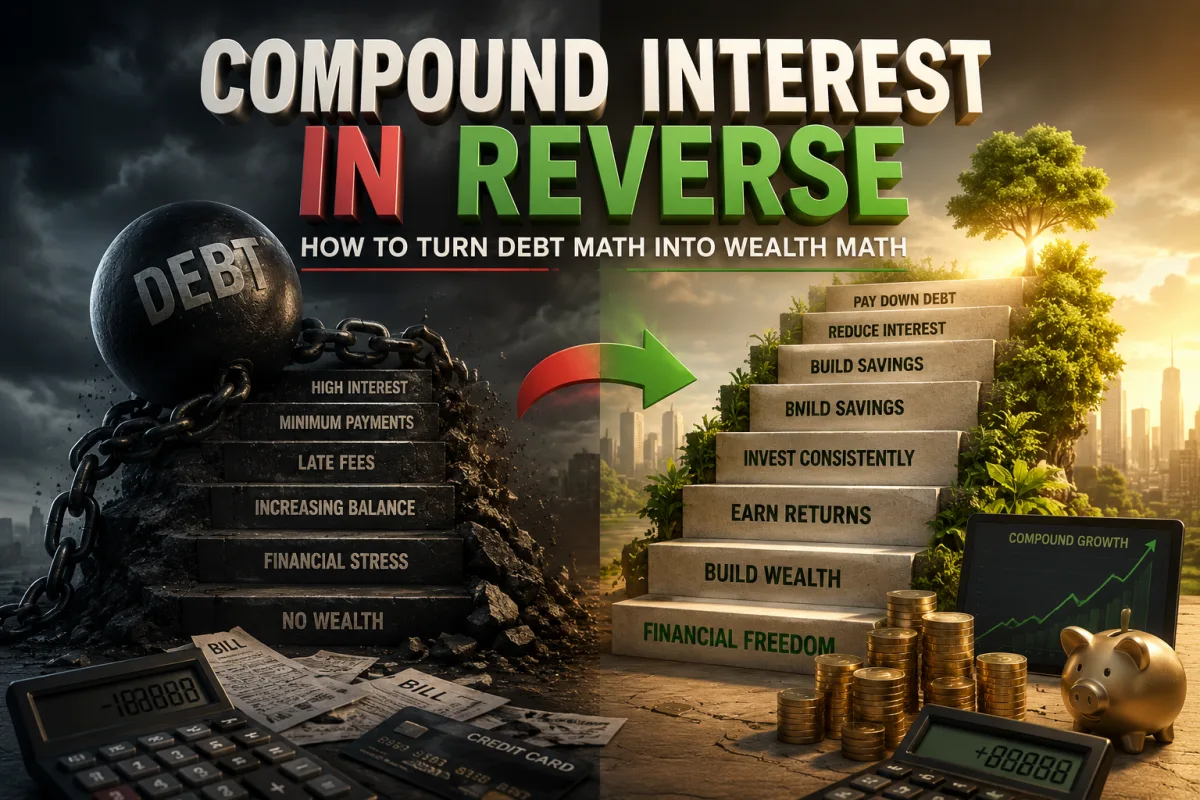
The debt mindset reduces resilience by committing future income to past consumption. The freedom mindset increases resilience by turning current income into future options.
That is the real difference.
Final Thought: The Direction of Money Becomes the Direction of Life
Every household has a financial direction, whether it is intentional or not.
If money consistently flows toward interest, status, impulse, and unplanned consumption, the household moves toward pressure. If money consistently flows toward savings, assets, debt reduction, protection, and purposeful spending, the household moves toward freedom.
The shift does not require perfection. It requires direction. A person may still have debt and be building freedom. A person may still enjoy life and be financially disciplined. A person may still borrow responsibly and be wealth-minded. The issue is not whether every financial decision fits a slogan. The issue is whether the overall pattern strengthens or weakens the future.
Borrowing often, buying status, wanting everything now, living beyond means, ignoring budgets, chasing trends, and creating stress are not isolated habits. They form a system. Saving regularly, building wealth, waiting patiently, living below means, tracking spending, following strategy, and creating freedom also form a system.
The system you repeat becomes the life you finance.
Debt is not always the enemy. But unconscious debt is. Spending is not always the enemy. But status spending can be. Comfort is not the enemy. But comfort funded by future stress is expensive. Freedom is not created by rejecting money. It is created by directing money toward stability, ownership, and choice.
The freedom mindset is ultimately the discipline of asking one question again and again: will this decision give my future self more options or fewer?
Answer that question honestly, and the path becomes clearer.
 Article
 Article
 Article
 Article
 Article
 Article
 Article
 Article