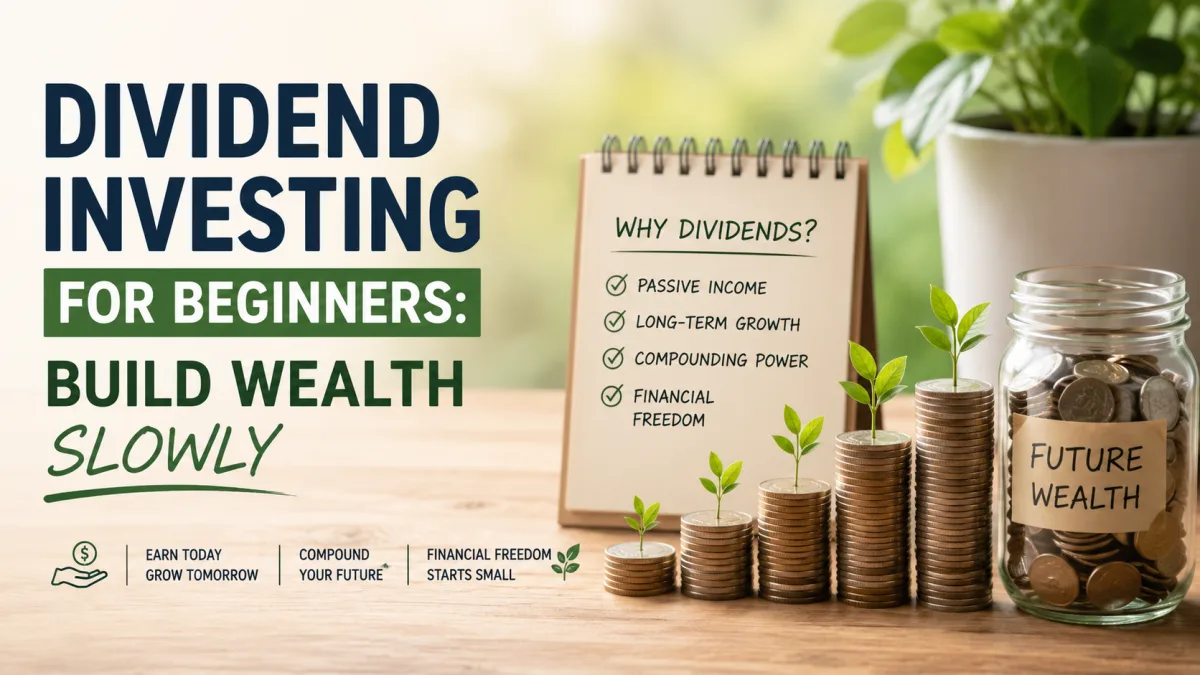
The Dividend Discipline: Turning Company Profits Into Long-Term Wealth
Dividend investing begins with a simple idea: when you own a piece of a profitable business, that business may share part of its profits with you.
That payment is called a dividend.
For many beginners, dividends are the first moment when investing feels real. A stock is no longer just a price moving up and down on a screen. It becomes ownership. A company sells products, earns revenue, manages expenses, produces profit, and sends a portion of that profit to shareholders. The investor does not need to clock in, manage employees, open a store, or design a product. The investor participates because they own part of the business.
This is why dividend investing has remained one of the most enduring wealth-building strategies in financial markets. It is easy to understand, but not always easy to practice well. The simplicity attracts beginners. The discipline rewards long-term investors.
Dividend investing is not about guessing which stock will explode next month. It is not about chasing the highest yield on a list. It is not a shortcut to instant income. At its best, dividend investing is a patient ownership strategy built around durable companies, recurring cash flow, reinvestment, and time.
It teaches one of the most important lessons in finance: wealth is not only built by selling assets for more than you paid. Wealth can also be built by owning assets that produce income while you continue to hold them.
What Dividends Really Represent
A dividend is a payment a company makes to its shareholders. Most dividends are paid in cash, although some companies pay dividends in shares of stock. In many markets, cash dividends are commonly paid quarterly, meaning four times per year. Some companies pay monthly, semiannually, or annually, depending on their policy, country, industry, and financial structure.
To understand dividends properly, it helps to step behind the stock quote. A share of stock represents partial ownership in a company. If a company has one billion shares outstanding and you own one thousand shares, you own a tiny fraction of the enterprise. That fraction gives you a claim on future profits, voting rights in many cases, and the possibility of receiving dividends if the board of directors approves them.
Companies do not pay dividends automatically. A board of directors decides whether to pay a dividend, how much to pay, and when to pay it. The decision depends on profits, cash flow, business needs, debt levels, economic conditions, and management’s long-term priorities.
A company with strong profits has several choices. It can reinvest money back into the business, pay down debt, buy other companies, repurchase its own shares, hold cash for future opportunities, or distribute part of the profit to shareholders as dividends. Dividend investors look for companies that can reward owners without weakening the business.
This distinction matters. A good dividend is not merely a payment. It is a signal that the company has enough financial strength to share profits while still funding operations, growth, and future resilience. A weak dividend, by contrast, may be a warning sign if the company is paying more than it can afford.
Why Companies Pay Dividends
Companies pay dividends for several reasons. The most obvious is to return capital to shareholders. When a business consistently earns more money than it needs to reinvest, distributing some of that excess cash can be a rational use of capital.
Mature companies are often more likely to pay dividends than young, fast-growing companies. A young technology business may need every dollar to hire engineers, develop products, expand into new markets, or compete aggressively. A mature consumer goods company, utility, bank, insurer, telecom business, or industrial firm may already have an established market position. It may still grow, but it may not need to reinvest all profits to remain competitive.
Dividends can also attract a certain type of shareholder. Income-focused investors, retirees, pension funds, endowments, and long-term investors often value predictable cash distributions. A company with a long record of paying dividends may appeal to investors who prefer stability over speculation.
Dividends can create accountability. Once a company establishes a dividend, investors often expect it to continue. Management teams know that cutting the dividend can damage investor confidence. This expectation can encourage financial discipline, because executives must think carefully before committing to a dividend that future profits cannot support.
A dividend can also communicate confidence. When a company raises its dividend, management may be signaling that it expects future cash flows to remain strong enough to support the higher payment. That does not guarantee future success, but dividend growth can be one useful clue when evaluating business quality.
The Difference Between Dividend Investing and Speculation
Many beginners enter the stock market thinking primarily about price. They ask which stock will go up, which sector is hot, or which company might deliver the biggest short-term gain. Dividend investing asks a different set of questions.
Can this company generate reliable profits? Does it have a durable business model? Does it produce enough cash to support the dividend? Has management treated shareholders responsibly? Is the balance sheet strong enough to survive recessions, rate increases, or industry disruption? Can the dividend grow over time?
These questions shift the investor’s mindset from prediction to ownership. A speculator often needs the market to agree with them quickly. A dividend investor can benefit while waiting, because the asset may produce cash along the way.
This does not mean dividend stocks cannot fall in price. They can. Sometimes they fall sharply. A dividend does not protect investors from poor business performance, overvaluation, recessions, inflation, rising interest rates, or management mistakes. The difference is that dividend investing tends to reward a more patient framework. The investor is not relying only on selling to someone else at a higher price. They are also evaluating the business as a source of recurring owner income.
How Dividend Investing Builds Wealth
The wealth-building power of dividends comes from three forces working together: income, reinvestment, and compounding.
The income is straightforward. If you own shares of a company that pays dividends, you receive cash payments according to the company’s dividend schedule. Some investors use this income for living expenses. Others accumulate it as cash. Many long-term investors reinvest it.
Reinvestment is where dividend investing becomes especially powerful. When dividends are reinvested, the cash is used to buy more shares. Those additional shares may then produce their own dividends. Over time, the investor owns more shares without adding new money from outside the portfolio. The portfolio begins to feed itself.
Compounding occurs when returns begin generating more returns. In dividend investing, compounding can happen in several ways. The company may grow earnings. The dividend per share may increase. Reinvested dividends may purchase more shares. Those shares may pay more dividends. The stock price may appreciate as the business becomes more valuable. None of these outcomes is guaranteed, but together they explain why dividends have played an important role in long-term equity returns.
Consider a simple example. An investor buys shares of a company that pays a modest dividend. Instead of spending the payments, the investor reinvests them every quarter. During the first year, the results may look unimpressive. The dividend payments may seem small. The additional shares purchased may appear almost meaningless.
But over many years, the pattern changes. More shares create more dividend income. Higher dividend income buys more shares. If the company raises its dividend, the process accelerates. If the investor continues adding new money, the compounding base grows even faster.
This is why dividend investing requires patience. The early years often feel slow. The later years can reveal the strength of consistent ownership.
The Historical Appeal of Dividend Stocks
Dividends have been part of equity investing for centuries. Long before modern trading platforms, financial television, index funds, or mobile investing apps, investors valued businesses that distributed cash. In earlier eras, dividends were often the primary reason to own shares. Investors expected companies to produce income, not just price appreciation.
Over time, markets evolved. Growth investing became more prominent, especially as technology companies and high-growth businesses captured investor attention. Many successful companies chose to reinvest profits rather than pay dividends. This made sense for businesses with large growth opportunities. A company that can reinvest each dollar at high returns may create more value by keeping profits than by distributing them.
Still, dividends never disappeared. They remained central to the investment case for many mature businesses. Banks, insurers, consumer staples companies, energy firms, utilities, real estate investment trusts, healthcare companies, industrial leaders, and telecommunications businesses have often attracted income-oriented investors.
The historical appeal is easy to understand. Dividends can impose discipline. They can help investors remain patient during market declines. They can provide cash flow without requiring the sale of shares. They can also reveal something about a company’s financial culture. A long record of maintaining or increasing dividends through different economic cycles may suggest resilience, though it should never replace deeper analysis.
Dividend Yield: The Number Beginners Notice First
Dividend yield is one of the first terms every beginner encounters. It shows the annual dividend payment as a percentage of the stock price.
If a stock trades at $100 and pays $4 per share in annual dividends, its dividend yield is 4 percent. The formula is simple: annual dividend per share divided by current share price.
Dividend yield helps investors compare the income produced by different stocks. A 4 percent yield produces more current income than a 2 percent yield, assuming the same amount invested. But dividend yield can be misleading if viewed alone.
A high yield is not always attractive. Sometimes a yield becomes high because the stock price has fallen sharply. If the market believes the company is in trouble, the share price may decline while the dividend remains unchanged for the moment. This makes the yield appear larger. A beginner may see a 10 percent yield and think it is an opportunity. In reality, the market may be signaling that the dividend is at risk.
This is called a yield trap. The yield looks tempting, but the underlying business may be weakening. If profits fall, cash flow deteriorates, debt becomes burdensome, or management cuts the dividend, the investor may suffer both lost income and capital losses.
Dividend yield should be treated as a starting point, not a conclusion. It answers one question: how much income does the stock currently offer relative to its price? It does not answer whether the income is safe, whether the company is healthy, or whether the stock is a good long-term investment.
Payout Ratio: The Sustainability Test
The payout ratio shows how much of a company’s earnings are being paid out as dividends. If a company earns $5 per share and pays $2 per share in annual dividends, its payout ratio is 40 percent.
A lower payout ratio may suggest that the dividend has room to grow or withstand temporary earnings pressure. A very high payout ratio may suggest limited flexibility. If a company pays nearly all its profits as dividends, it may have little margin for error when business conditions weaken.
Payout ratios must be interpreted by industry. Some industries naturally pay out more of their earnings. Real estate investment trusts, for example, often distribute a large portion of income because of their structure. Utilities may also carry higher payout ratios because their revenues can be relatively stable. Fast-growing companies may have low or no payout ratios because they reinvest heavily.
Earnings can also be noisy. A company may report lower accounting earnings in a year when cash flow remains healthy, or it may report earnings that do not fully reflect future risk. For that reason, experienced dividend investors often examine free cash flow as well as earnings. Free cash flow is the cash left after a company pays for operating expenses and capital investments needed to maintain or grow the business.
A dividend funded by durable free cash flow is generally more attractive than a dividend funded by borrowing, asset sales, or temporary accounting gains. Sustainable dividends come from real economic strength.
Dividend Growth: The Quiet Wealth Builder
Some beginners focus only on current yield. Experienced long-term investors often pay close attention to dividend growth.
Dividend growth occurs when a company increases its dividend per share over time. A stock yielding 2.5 percent today may become far more powerful if the company raises its dividend consistently for many years. The investor’s income on the original investment can rise meaningfully even if they do nothing.
Imagine buying shares at $50 when the annual dividend is $1.50 per share. The starting yield is 3 percent. If the company grows the dividend to $3 per share over time, the investor now receives a 6 percent yield on the original purchase price. The market price may have changed, but the investor’s cash income relative to their original cost has doubled.
This is one reason dividend growth investing appeals to patient investors. It combines income with business progress. A company that can raise dividends year after year often needs rising earnings, disciplined capital allocation, and durable cash flow. The dividend record does not prove quality by itself, but it can point investors toward companies worth studying.
Dividend growth can also help protect purchasing power. Inflation erodes the value of fixed income. A payment that stays the same for twenty years may buy much less in the future. A growing dividend has the potential to offset some of that erosion, provided the company can continue increasing payments at a healthy rate.
High-Yield Dividend Stocks
High-yield dividend stocks offer above-average dividend yields. They are popular among investors seeking current income. A higher yield can be useful, especially for investors who need portfolio cash flow, but it requires careful analysis.
High yield can come from different sources. Sometimes it reflects a stable business with limited growth prospects. Sometimes it reflects an industry structure where companies distribute much of their cash flow. Sometimes it reflects market pessimism. Sometimes it is a warning sign.
A company may offer a high yield because its share price has declined after disappointing results. The business may be facing falling demand, rising debt costs, regulatory pressure, technological disruption, or shrinking margins. If the dividend is eventually cut, the high yield disappears.
Beginners should be especially cautious with extremely high yields. A yield that looks unusually generous compared with similar companies deserves investigation. The key question is not, “How much does this pay?” The better question is, “Why is the market offering this yield, and can the company afford it?”
High-yield stocks can have a place in a portfolio, but they should not be chosen only because the percentage looks attractive. Income without sustainability is fragile.
Dividend Growth Stocks
Dividend growth stocks are companies that regularly increase their dividends. They may not offer the highest starting yield, but they can deliver rising income over time.
These companies often appeal to investors with long time horizons. A young investor may not need high current income. They may benefit more from a company that can grow earnings and dividends for decades. A retiree may also value dividend growth because living costs tend to rise over time.
Dividend growth companies are often found in industries with durable demand, strong brands, recurring revenue, pricing power, or efficient operations. Examples may include consumer staples, healthcare, industrial firms, financial companies, and certain technology businesses that have matured enough to return cash to shareholders.
The best dividend growth investing is not about buying a stock simply because it has raised dividends in the past. It is about understanding whether the business can continue doing so. Past dividend growth is history. Future dividend growth depends on future profits, cash flow, competition, balance sheet strength, and management decisions.
Blue-Chip Dividend Stocks
Blue-chip dividend stocks are shares of large, established companies with strong reputations, long operating histories, and significant market positions. These companies are often household names. Many operate globally. Many have survived recessions, inflationary periods, wars, interest-rate cycles, and industry changes.
Blue-chip does not mean risk-free. Large companies can still decline. Famous brands can lose relevance. Debt can become dangerous. Management can make poor acquisitions. Industries can be disrupted. A blue-chip label should never replace analysis.
Still, many beginners are drawn to blue-chip dividend stocks because they are easier to understand than speculative companies. A beginner may already know the products, stores, services, or brands. That familiarity can make research more accessible.
The value of blue-chip dividend investing lies in combining quality with discipline. A strong company bought at a reckless price can still produce disappointing returns. A respected dividend history can still be interrupted if the business weakens. The investor must study both the company and the valuation.
Dividend Dates: How Payments Actually Work
Dividend investing has its own calendar. Beginners should understand the major dates attached to each dividend payment.
The declaration date is when the company announces the dividend. The announcement usually includes the dividend amount, the record date, the ex-dividend date, and the payment date.
The record date is the date when the company checks its shareholder records to determine who is eligible to receive the dividend.
The ex-dividend date is the key date for buyers. To receive the upcoming dividend, an investor must own the stock before the ex-dividend date. If they buy on or after the ex-dividend date, they generally will not receive that specific dividend payment.
The payment date is when the dividend is actually paid to shareholders.
Some beginners try to buy stocks right before the ex-dividend date just to collect the dividend. This strategy is usually less clever than it appears. Stock prices often adjust downward by roughly the dividend amount when shares trade ex-dividend, though normal market movement can obscure the adjustment. A dividend is not free money. It is a transfer of value from the company to shareholders.
Long-term dividend investing should not be built around trying to capture individual payments. It should be built around owning strong businesses capable of producing cash flow for many years.
Dividend Reinvestment Plans
A dividend reinvestment plan allows investors to automatically use dividends to purchase additional shares. Many brokerage platforms make reinvestment easy. Investors can often choose whether dividends are paid as cash or reinvested into the same security.
Automatic reinvestment can be helpful because it removes emotion from the process. The investor does not need to decide every quarter what to do with the cash. Dividends buy more shares through market ups and downs. When prices are lower, the dividend buys more shares. When prices are higher, it buys fewer shares.
This resembles dollar-cost averaging. The investor is steadily acquiring ownership over time without trying to predict short-term market movements.
Reinvestment is especially powerful for investors who do not need current income. A person building wealth over several decades may benefit more from compounding than from spending the dividends. Later in life, they may choose to stop reinvesting and use the dividend income for expenses.
The decision depends on personal goals. Someone building a retirement portfolio may reinvest. Someone already retired may take dividends as cash. Someone seeking flexibility may reinvest some dividends and keep others. The principle is to match the dividend strategy to the investor’s financial plan.
The Role of Dividends in Total Return
Total return includes both price appreciation and income. A stock can reward investors through rising share prices, dividends, or both.
Beginners sometimes separate dividend investing and growth investing too sharply. In reality, many strong dividend companies also grow. A company that increases earnings over time may see its share price rise while also paying dividends. The investor benefits from both capital appreciation and cash income.
On the other hand, a high dividend cannot rescue a poor investment if the business is deteriorating. A stock that pays a 6 percent yield but falls 40 percent because profits collapse has not protected the investor. Income matters, but total return matters too.
This is why dividend investors should avoid thinking only in terms of yield. A lower-yielding company with strong growth, moderate payout ratios, and durable competitive advantages may outperform a higher-yielding company with stagnant earnings and rising debt.
The goal is not to maximize yield. The goal is to build sustainable wealth.
Why Dividends Can Help Investor Behavior
One overlooked benefit of dividend investing is behavioral. Investing is not only a math problem. It is also an emotional challenge.
Markets decline. Headlines create fear. Stock prices fluctuate daily. Many investors struggle to stay patient when their portfolio value falls. Dividends can provide a different focal point. Instead of watching only the market price, the investor can track business income.
If a portfolio of high-quality companies continues paying and growing dividends during a market downturn, the investor may find it easier to remain calm. The cash flow reminds them that the portfolio represents ownership in real businesses, not just changing numbers on a screen.
This does not mean investors should ignore falling prices. Sometimes falling prices reveal real business problems. A dividend cut may follow. But when the underlying businesses remain healthy, dividends can reinforce long-term thinking.
Dividend investing can also encourage consistency. Investors who reinvest dividends and contribute regularly may become less tempted to chase trends. They develop a habit of accumulation. Over time, that habit can be more valuable than any single stock pick.
The Risks of Dividend Investing
Dividend investing has risks, and beginners should understand them clearly.
The first risk is dividend cuts. A company can reduce or suspend its dividend if business conditions worsen. Dividends are not guaranteed. When profits fall, cash flow weakens, or debt becomes difficult to manage, the dividend may become unaffordable.
The second risk is concentration. Some investors load their portfolios with a few high-yield stocks or one income-heavy sector. This can create hidden danger. If energy prices fall, banks face credit losses, real estate declines, or utilities suffer from rate pressure, a concentrated dividend portfolio can be hit hard.
The third risk is valuation. A great company can be a poor investment if purchased at too high a price. Dividend investors can become so focused on quality that they forget price matters. Paying too much reduces future returns.
The fourth risk is slow growth. Some dividend-paying companies distribute cash because they have limited reinvestment opportunities. That may be acceptable for income investors, but a portfolio made entirely of slow-growth companies may lag over long periods.
The fifth risk is inflation. A high current yield may look attractive, but if the dividend never grows, inflation can reduce its real value. Investors should ask whether the company has the ability to raise dividends over time.
The sixth risk is false safety. Dividends can make a stock feel safer than it is. A familiar company with a long dividend history may still face disruption. Investors should not confuse a stable past with a guaranteed future.
How to Evaluate a Dividend Stock
A beginner does not need to become a Wall Street analyst overnight, but they should learn a basic framework for evaluating dividend stocks.
Start with the business. What does the company sell? Who are its customers? Why do customers keep buying? Is demand recurring or cyclical? Does the company have competitors? Can it raise prices? Does it operate in a growing industry or a shrinking one?
Then examine profitability. A dividend must ultimately come from profits and cash flow. Look for companies with a history of earning money through different economic environments. Temporary setbacks are normal. Chronic weakness is different.
Next, study cash flow. Earnings can be affected by accounting rules, but dividends are paid in cash. A company that produces strong free cash flow has more flexibility to pay dividends, reinvest, reduce debt, and survive downturns.
Review the payout ratio. A sustainable payout ratio gives the company room to handle difficult periods. A payout ratio that is too high may signal danger, especially if earnings are cyclical or declining.
Look at debt. Debt is not always bad, but too much debt can threaten dividends. Interest payments compete with dividends for cash. Rising interest rates can make refinancing more expensive. A heavily indebted company may have to protect creditors before rewarding shareholders.
Study the dividend history. Has the company paid dividends consistently? Has it raised them? Did it cut dividends during past recessions? A long record can be useful, but it should be combined with current analysis.
Assess valuation. Compare the stock price with earnings, cash flow, dividends, growth prospects, and industry peers. A quality company may deserve a premium, but no company is attractive at any price.
Finally, consider the role of the stock in your portfolio. A dividend stock should not be evaluated in isolation. It should fit within a broader plan that includes diversification, risk tolerance, time horizon, and financial goals.
The Danger of Chasing Yield
Yield chasing is one of the most common beginner mistakes in dividend investing.
The mistake usually begins with a list. An investor sorts stocks by dividend yield and sees companies paying 8 percent, 10 percent, or more. Compared with a 2 percent or 3 percent yield, the higher number looks superior. The investor buys the highest yield without understanding why it is high.
This approach can be costly. The market is not always right, but it is rarely generous without reason. An unusually high yield often reflects investor concern. The company may be in a declining industry. Its earnings may be unstable. Its debt may be high. Its dividend may exceed free cash flow. Its assets may be losing value. Its management may be trying to maintain the dividend longer than the business can support.
When the dividend is cut, the stock may fall further. Investors who bought for income may sell in disappointment. The promised yield vanishes.
A disciplined dividend investor does not ask, “Which stock pays the most?” They ask, “Which companies can pay, sustain, and potentially grow dividends while preserving financial strength?”
This question leads to better decisions.
Diversification for Dividend Investors
Diversification means spreading investments across different companies, industries, and sources of return. It reduces the damage that any single mistake can cause.
A dividend investor may be tempted to concentrate in sectors known for income. Utilities, real estate, energy, financials, telecom, and consumer staples often contain many dividend payers. But each sector carries its own risks.
Utilities may be affected by regulation, interest rates, infrastructure costs, and debt. Banks may be affected by credit cycles, loan losses, interest margins, and financial crises. Energy companies may be affected by commodity prices and political pressure. Real estate companies may be affected by vacancies, financing costs, and property values. Consumer staples companies may face changing consumer behavior, currency fluctuations, or margin pressure.
A diversified dividend portfolio avoids relying too heavily on one economic outcome. It may include companies with different growth rates, payout ratios, yields, and business drivers. It may also include dividend-focused funds rather than only individual stocks.
Diversification does not eliminate risk, but it can reduce dependence on a single company’s dividend decision.
Individual Dividend Stocks vs Dividend Funds
Beginners can invest in dividends through individual stocks, dividend-focused exchange-traded funds, mutual funds, or broad market index funds that include dividend-paying companies.
Individual stocks offer control. The investor chooses each company, studies its financials, and builds a portfolio according to their preferences. This can be rewarding for someone who enjoys research and wants direct ownership.
The downside is company-specific risk. A single business can disappoint. A dividend can be cut. A stock can decline for reasons the investor failed to anticipate. Building a diversified portfolio of individual stocks takes time, knowledge, and discipline.
Dividend funds offer convenience and diversification. A dividend ETF may own dozens or hundreds of companies. This reduces the impact of any single dividend cut. Funds can be designed around high yield, dividend growth, quality screens, low volatility, or broad income exposure.
The downside is less control. The investor accepts the fund’s methodology, holdings, fees, turnover, and sector exposure. Some dividend funds may be concentrated in certain industries. Others may chase yield mechanically. Beginners should read the fund’s strategy before investing.
For many beginners, dividend funds can be a practical starting point. They allow investors to learn while reducing the risk of making one or two poor stock selections. Over time, investors who want more control may add individual companies.
Dividend Investing and Taxes
Taxes can affect dividend returns. The rules vary by country, account type, income level, and the type of dividend received. Some dividends may receive favorable tax treatment. Others may be taxed as ordinary income. Dividends held in retirement accounts may be treated differently from dividends held in taxable accounts.
Beginners should not ignore taxes, but they should also avoid letting taxes become the only driver of investment decisions. A poor investment does not become good because of tax treatment. A strong investment should still be evaluated after tax.
Tax awareness matters most when deciding where to hold dividend investments. Some investors prefer to hold high-income assets in tax-advantaged accounts when available. Others hold qualified dividend-paying stocks in taxable accounts because of favorable rates in their jurisdiction. The right answer depends on personal circumstances.
Because tax laws change and individual situations differ, investors should consult reliable tax guidance or a qualified professional when necessary. The main principle is simple: focus on after-tax returns, not just headline yield.
Dividend Investing During Market Downturns
Market downturns test every investor. Dividend investors are not exempt. Share prices can fall. Companies can cut dividends. Fear can spread quickly.
Yet downturns can also reveal the quality of a dividend strategy. Strong companies with durable cash flows may continue paying dividends even when stock prices decline. Some may continue raising dividends. For long-term investors reinvesting dividends, lower prices can allow dividends to buy more shares.
This is one of the psychological strengths of dividend investing. A market decline can feel less like pure loss and more like an opportunity to accumulate ownership at better prices, provided the businesses remain healthy.
The phrase “provided the businesses remain healthy” is essential. A falling stock is not automatically a bargain. Sometimes it is a warning. Dividend investors should use downturns to review fundamentals. Has revenue collapsed temporarily or permanently? Is debt manageable? Is the dividend still covered by cash flow? Is the company protecting its balance sheet? Is management honest about challenges?
Patience is valuable, but blind loyalty is dangerous. The goal is to hold quality through volatility, not to ignore deterioration.
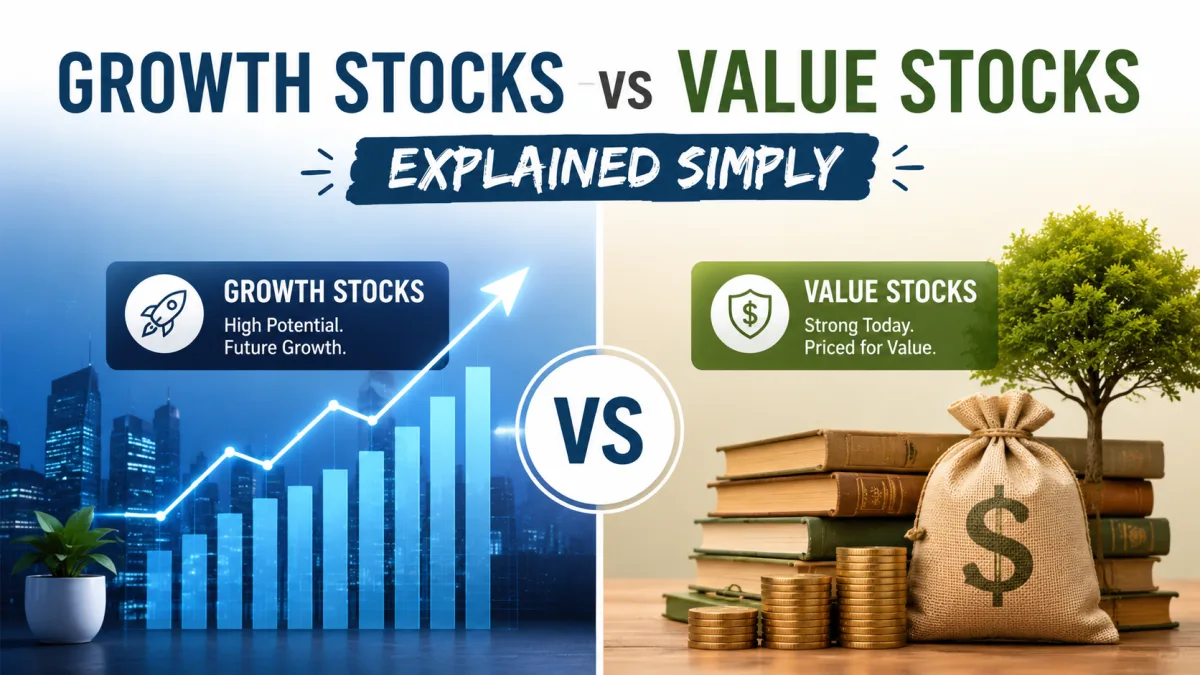
Dividend Investing vs Growth Investing
Dividend investing and growth investing are often presented as opposites. That framing is too simple.
Growth investors focus on companies expected to increase revenue, earnings, and market value at above-average rates. These companies may reinvest most or all profits back into expansion. They may pay no dividends because management believes reinvestment offers better returns.
Dividend investors focus on companies that return cash to shareholders. These companies may be mature, profitable, and financially stable. They may grow more slowly, but they provide income along the way.
Both approaches can work. Both can fail. A growth stock can become overvalued. A dividend stock can stagnate. A company can pay dividends while still growing. A growth company may eventually mature and begin paying dividends. An investor does not need to choose one identity forever.
Many successful portfolios include both. Growth investments may drive capital appreciation. Dividend investments may provide income and stability. Broad index funds may hold both types automatically.
The right mix depends on age, income needs, risk tolerance, goals, and temperament. A young investor with decades ahead may lean more toward growth and dividend growth. An investor approaching retirement may value current income and lower volatility. A financially independent investor may design a portfolio around cash flow. The best strategy is the one that an investor can understand, maintain, and stick with through market cycles.
How Beginners Can Start Dividend Investing
The first step is education. Beginners should understand what dividends are, how they are paid, and what makes them sustainable. Buying before understanding creates avoidable mistakes.
The second step is financial readiness. Investing should usually come after basic financial foundations: emergency savings, manageable debt, clear goals, and a long-term plan. Dividend stocks can fall in value. Money needed for near-term expenses should not be exposed to unnecessary market risk.
The third step is choosing an investment approach. A beginner may start with a diversified dividend ETF, a broad market index fund, or a small group of carefully researched dividend stocks. There is no need to rush into complexity. Simplicity often helps beginners stay consistent.
The fourth step is setting reinvestment rules. Investors building wealth may choose automatic dividend reinvestment. Investors seeking income may take dividends as cash. The decision should match the purpose of the portfolio.
The fifth step is contributing regularly. Dividend investing becomes more powerful when combined with consistent saving. A small monthly investment may not feel dramatic, but repeated over years it can build meaningful ownership.
The sixth step is reviewing without overreacting. Investors should monitor dividend coverage, debt levels, earnings trends, and major business changes. But they should avoid obsessing over daily price movements. Dividend investing is a long-term strategy.
A Practical Beginner Framework
A beginner can use a simple checklist before buying a dividend investment.
First, understand the business in plain language. If you cannot explain how the company makes money, you are not ready to buy it.
Second, examine the dividend yield. Is it reasonable compared with similar companies, or unusually high? A very high yield deserves extra caution.
Third, check the payout ratio. Is the company paying a manageable portion of earnings or cash flow, or stretching to maintain the dividend?
Fourth, review dividend history. Has the company paid consistently? Has it increased payments? How did it behave during difficult periods?
Five, study debt. Does the company have enough financial flexibility, or is debt consuming too much cash?
Six, consider growth. Can the company grow earnings and dividends over time, or is it slowly shrinking?
Seven, evaluate valuation. Are you paying a sensible price for the income and growth prospects?
Eight, think about diversification. Will this investment make your portfolio too dependent on one company or sector?
This framework will not eliminate mistakes. No checklist can. But it can prevent the most common errors: chasing yield, ignoring debt, overpaying for quality, and confusing a dividend history with a dividend guarantee.
Why Patience Matters More Than Prediction
Dividend investing rewards patience because businesses need time to create value. A company does not build factories, expand distribution, strengthen brands, develop products, or compound earnings overnight. Dividends reflect the slow work of business productivity.
Many investors sabotage themselves by demanding quick results from long-term assets. They buy a dividend stock, watch it for three months, become bored, sell it, and chase something more exciting. This behavior turns investing into entertainment.
A dividend investor should think like a business owner. If you owned a profitable private company, you would not value it minute by minute. You would care about sales, margins, cash flow, debt, competitive position, and the cash distributions it could send you over time. Public markets provide daily prices, but daily prices are not daily truth.
Patience does not mean doing nothing forever. It means giving sound investments time to work while remaining alert to real changes in the business. It means distinguishing between price volatility and fundamental deterioration. It means allowing compounding to breathe.
The Ownership Mindset
Dividend investing is ultimately about ownership. This mindset separates investors from consumers.
A consumer spends money and receives a product or experience. An owner buys assets that may produce future cash flow. The difference is not moral. People need and enjoy consumption. But wealth is built when a meaningful portion of income is converted into ownership.
Dividend investing makes this visible. Every dividend payment is a reminder that capital can work. A shareholder owns a claim on a business. The business sells goods or services across cities, countries, or continents. Employees operate systems. Managers allocate resources. Customers pay for value. After expenses, taxes, reinvestment, and obligations, part of the remaining cash may flow to owners.
This is one of the most powerful lessons a beginner can learn. Money can buy things that decline in value, or it can buy assets that may produce more money. Dividend investing is one path toward the second outcome.
Common Beginner Mistakes
The first mistake is buying only the highest yield. Yield is visible, but sustainability is more important.
The second mistake is ignoring total return. A dividend payment is helpful, but not if the underlying investment steadily destroys capital.
The third mistake is failing to diversify. Owning one or two dividend stocks is not a complete income strategy.
The fourth mistake is assuming dividends are guaranteed. Companies can and do cut dividends when conditions require it.
The fifth mistake is neglecting valuation. A wonderful company can produce poor returns if bought at an inflated price.
The sixth mistake is selling too quickly. Dividend investing often looks unimpressive in the short run. The benefits become clearer over long periods.
The seventh mistake is never reviewing holdings. Long-term investing does not mean permanent neglect. Businesses change. Balance sheets change. Industries change. Dividend policies change.
The eighth mistake is investing without a plan. A dividend strategy should connect to clear goals: income, reinvestment, retirement preparation, financial independence, or long-term wealth building.
What Makes a Dividend Company Strong?
A strong dividend company usually has several qualities.
It sells products or services with durable demand. Customers keep coming back because the company provides something useful, trusted, necessary, or difficult to replace.
It has a competitive advantage. This may come from brand strength, scale, patents, regulation, network effects, cost advantages, distribution, customer relationships, or operational excellence.
It produces consistent cash flow. Dividends require cash, not promises. A company with recurring cash generation has more room to reward shareholders.
It maintains a sensible balance sheet. Debt can help companies grow, but excessive debt can threaten dividends during stress.
It allocates capital wisely. Management must balance dividends with reinvestment, acquisitions, buybacks, and debt reduction. A company that pays dividends while starving its future may be weakening itself.
It has room to grow. Even mature companies need some growth to protect dividends from inflation and changing markets.
It treats shareholders as long-term partners. Dividend policy is part of corporate culture. A responsible management team avoids reckless promises and communicates honestly.
Building a Dividend Portfolio Over Time
A dividend portfolio does not need to be built all at once. In fact, beginners are often better served by building gradually.
Start with a core. This may be a diversified dividend fund or broad market fund. The core provides exposure while the investor learns.
Then add carefully. If the investor wants individual stocks, they can study one company at a time. They can learn how to read annual reports, compare payout ratios, review debt, and understand industry economics.
Reinvest dividends when appropriate. Reinvestment turns cash flow into additional ownership. It is one of the simplest ways to automate compounding.
Contribute regularly. A portfolio grows through returns and contributions. Beginners often focus too much on return percentage and too little on savings rate. In the early years, the amount invested can matter more than the yield.
Review annually or semiannually. Too much checking can lead to emotional decisions. Too little checking can allow problems to go unnoticed. A scheduled review creates balance.
Keep records. Track purchase reasons, dividend history, reinvestment, and portfolio income. This helps investors learn from decisions rather than react to headlines.
Dividend Income and Financial Independence
Dividend investing is often connected to financial independence because it creates cash flow from assets. A portfolio that produces enough sustainable income can reduce dependence on wages.
This idea is appealing, but beginners should keep expectations realistic. Building meaningful dividend income takes capital, time, and discipline. A portfolio yielding 4 percent needs $25,000 to produce $1,000 of annual income before taxes. It needs $250,000 to produce $10,000. It needs $1 million to produce $40,000.
These numbers are not discouraging. They are clarifying. Dividend income is powerful, but it is built through accumulation. Small beginnings matter because they establish the habit of ownership.
A beginner receiving a few dollars in dividends should not dismiss the payment. That small amount represents a system. Capital was invested. A business earned money. A shareholder received cash. When repeated and scaled over years, the system can become meaningful.
Financial independence is rarely created by one dramatic decision. It is usually built through repeated choices: spending less than income, avoiding destructive debt, investing consistently, reinvesting returns, increasing earning power, and allowing time to compound.
The Balanced View
Dividend investing deserves respect, but not worship. It is a strategy, not a religion.
Some excellent companies do not pay dividends. Some poor companies do. A dividend does not automatically make a stock safe. Lack of a dividend does not automatically make a stock speculative. The best investors remain flexible.
The real lesson of dividend investing is not that every investor must own only dividend stocks. The lesson is that cash flow matters. Business quality matters. Capital allocation matters. Time matters. Ownership matters.
A beginner who learns dividend investing properly gains more than an income strategy. They learn how to think about companies as productive assets. They learn to ask whether profits are real, whether payments are sustainable, whether management is disciplined, and whether an investment can support long-term goals.
These lessons apply far beyond dividends.
Final Thoughts
Dividend investing is one of the clearest ways for beginners to understand wealth building. It connects the stock market to the real economy. Businesses earn profits. Owners may receive cash. Reinvested cash can buy more ownership. More ownership can create more future income.
The strategy is simple, but the discipline is demanding. Investors must resist the temptation to chase high yields, ignore risk, overpay for famous companies, or abandon patience during market volatility. They must learn to evaluate dividend sustainability, business quality, balance sheets, payout ratios, and long-term growth.
The reward for that discipline is not instant riches. It is something more durable: a growing understanding of ownership, income, and compounding.
For beginners, the best starting point is not the highest-yielding stock. It is the right mindset. Buy assets with care. Focus on quality. Diversify. Reinvest when appropriate. Think in years and decades. Let profitable businesses, recurring cash flow, and time do their quiet work.
Dividend investing is not exciting in the way speculation is exciting. It is powerful in the way ownership is powerful. It turns savings into productive capital. It turns company profits into investor income. When practiced with patience and judgment, it can become one of the most reliable foundations for long-term wealth.
 Article
 Article
 Article
 Article
 Article
 Article
 Article
 Article