
The Ownership Advantage: Why Investors Build Wealth While Others Consume
Wealth rarely announces itself in the way people expect.
It is not always the person driving the newest car, wearing the most visible watch, or living in the largest house who is financially secure. Sometimes those symbols represent abundance. Often, they represent obligation. A luxury car can be an asset for the company that financed it and a liability for the person making the monthly payment. A large home can be a store of value, but it can also be a machine that consumes taxes, insurance, repairs, utilities, and time. Expensive clothing may signal taste, but it does not produce income. The appearance of wealth and the structure of wealth are two very different things.
The rich do many things differently, but most of those things are not secrets in the traditional sense. They are not hidden formulas whispered in private rooms. They are not mysterious codes unavailable to ordinary people. They are principles that are easy to understand and hard to practice consistently. The difficulty is not usually intelligence. It is behavior. It is patience. It is the ability to make decisions today for the benefit of a future self who cannot yet thank you.
The central difference is ownership.
People who consume first spend money to improve the present. People who build wealth use money to purchase claims on the future. They buy assets. They build businesses. They invest in securities. They acquire skills. They create intellectual property. They develop networks. They place capital, time, and energy into things that can later produce more capital, opportunity, or freedom.
A paycheck can fund a life. Ownership can change one.
The Difference Between Income and Wealth
Income is money coming in. Wealth is what remains, grows, and works after the income has been received.
This distinction sounds simple, but it explains why some high earners remain financially fragile while some modest earners quietly become wealthy. A surgeon earning a large salary but spending nearly all of it may have impressive income and little freedom. A teacher, engineer, small business owner, or civil servant who invests steadily for decades may eventually own a portfolio that provides security beyond any single paycheck.
Income measures current earning power. Wealth measures accumulated ownership.
Many people confuse the two because income is visible. Wealth is often quiet. Income shows up in lifestyle. Wealth shows up in balance sheets. Income buys comfort. Wealth buys optionality. Income can disappear quickly if a job, business, client, health condition, or industry changes. Wealth can provide resilience when income is disrupted.
This is why the wealthy often focus less on how much money they make in a single year and more on what their money is becoming. They ask different questions. Not only, “How much did I earn?” but, “How much did I keep?” Not only, “What can I afford?” but, “What will this purchase cost me over time?” Not only, “How can I look successful?” but, “How can I become more financially independent?”
The shift from income thinking to ownership thinking is one of the most important turning points in personal finance.
They Make Money Work for Them
Most people begin their financial lives by trading time for money. This is normal. A job is often the first wealth-building engine. Employment provides income, structure, experience, social proof, and access to benefits. There is nothing wrong with earning a paycheck. The problem begins when a paycheck remains the only engine.
Wealthy people understand that labor income has limits. A person has only so many hours, so much energy, and so many working years. Even a high income can become a trap if every dollar depends on personal effort. The goal is not to reject work. The goal is to convert part of the reward from work into assets that work independently.
That is the basic logic of investing. Money earned from labor is used to purchase ownership. Ownership produces cash flow, appreciation, or both. Those returns can then be reinvested into more ownership. Over time, the system becomes less dependent on the original labor.
Stocks represent ownership interests in companies. Bonds represent contractual claims on future payments. Real estate can produce rent and potential appreciation. A business can generate profit beyond the owner’s hourly input. Royalties can pay creators after the original work is complete. Digital products, licensing agreements, private investments, and intellectual property can all become financial engines when structured properly.
The important idea is not that every person must own every type of asset. It is that wealth grows when money stops being only a medium of consumption and becomes a tool of production.
Consider two people who each receive an extra $10,000. One uses it for a luxury vacation. The other invests it in a diversified portfolio. The vacation may create memories, and there is nothing inherently wrong with that. But financially, the money has completed its journey. The invested money is different. It has been converted into ownership. It may rise or fall in the short term, but over time it has the possibility of producing dividends, capital gains, and future flexibility.
That difference compounds across decades. Wealth is often built through thousands of small conversions: income into capital, capital into assets, assets into more income, income into more capital.
They Think in Decades, Not Paydays
Short-term thinking is expensive.
It encourages people to ask, “What do I want now?” Long-term thinking asks, “What will this decision become?” That question changes everything.
The wealthy tend to view money through a longer lens. They know that meaningful wealth is rarely created in one month, one bonus season, or one lucky trade. It is built through long accumulation periods, repeated decisions, and the patient ownership of productive assets.
Long-term thinking does not mean ignoring the present. People still need housing, food, transportation, relationships, health, and enjoyment. A miserable life in pursuit of a distant financial goal is not wisdom. But wealthy people often organize the present so it does not steal from the future.
This perspective influences how they invest. Instead of obsessing over daily price movements, long-term investors focus on business quality, cash flow, valuation, diversification, and time horizon. Instead of asking whether the market will rise next week, they ask whether owning productive assets over many years is likely to improve their financial position.
It also influences career decisions. A person thinking only about next month may choose the job with the highest immediate pay. A person thinking in decades may choose the path that builds skills, relationships, ownership potential, or industry leverage. The second choice may not always pay more immediately, but it can create a larger opportunity set over time.
Long-term thinking is also crucial in business. Many companies fail because owners try to extract too much too early. Durable wealth often requires reinvestment before harvest. The business owner who continually improves systems, hires carefully, protects reputation, and serves customers well may build an asset that becomes more valuable over time. The owner who drains cash, neglects quality, and chases short-term margins may enjoy temporary profits while destroying enterprise value.
The wealthy are not immune to impatience, but the best wealth builders understand that time is not merely something to endure. Time is an ingredient. Given enough of it, good habits become powerful, investments mature, knowledge deepens, and relationships compound.
They Buy Assets Before Luxuries
One of the clearest differences between wealth builders and wealth imitators is the order of operations.
Many people buy luxuries first and hope to invest later. Wealth builders often invest first and allow luxuries to come later, preferably from surplus rather than sacrifice.
This does not mean wealthy people never enjoy expensive things. Many do. But the disciplined ones understand sequencing. They know that buying luxuries before building assets can create a lifestyle that must be constantly defended. The higher the fixed cost of life, the harder it becomes to take intelligent risks, leave a poor job, invest through downturns, or build a business.
An asset-first mindset changes the purpose of money. Instead of asking, “What can this buy me?” the wealth builder asks, “What can this become?” A dollar spent on a depreciating luxury leaves the owner with an object that may decline in value. A dollar invested in a productive asset may create future dollars. Enough productive dollars eventually make luxury spending less dangerous because the spending comes from strength rather than insecurity.
This is why some wealthy people appear surprisingly restrained. Their restraint is not necessarily lack of taste. It may be strategy. They understand that early capital is precious. The first dollars invested are often the most valuable because they have the longest time to compound. Spending heavily too early can be more expensive than it appears because the true cost is not only the purchase price. It is the future growth that money could have produced.
A $5,000 discretionary purchase made in youth is not merely $5,000. If that money could have compounded for decades, the opportunity cost may be many times larger. This does not mean every dollar should be invested and no enjoyment should occur. It means the financially mature person sees the hidden trade-off.
Assets first. Luxuries later. This order protects freedom.
They Understand Compound Growth
Compounding is often described as magical, but it is better understood as mathematical patience.
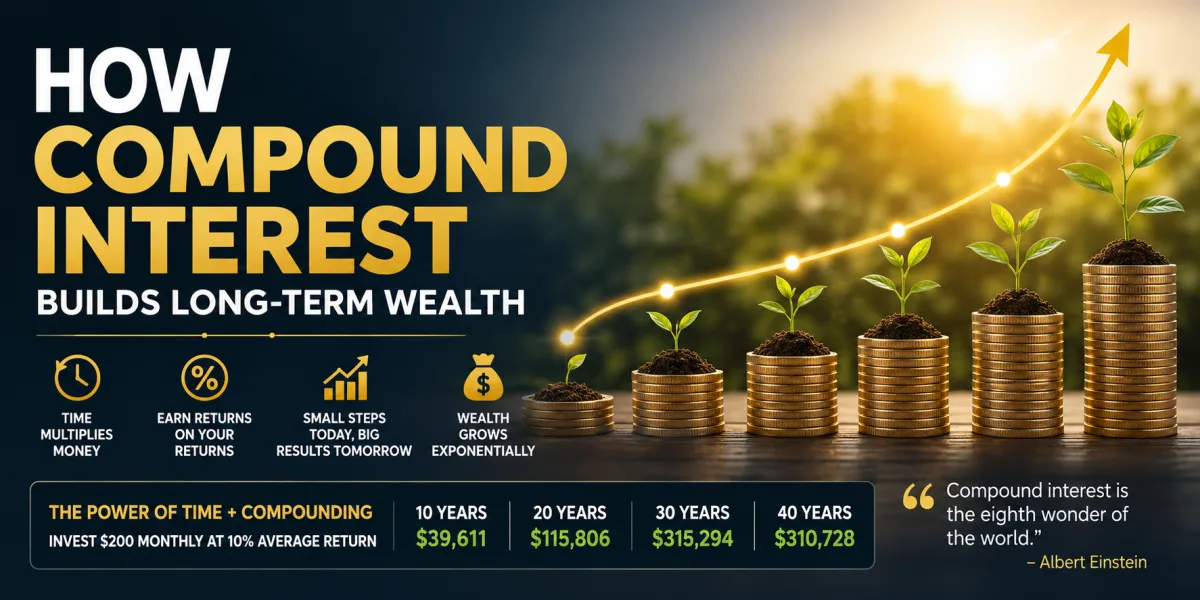
Money earns a return. That return is reinvested. Then the original money and the prior return both have the opportunity to earn more returns. Over time, growth begins to build on itself. The process may look slow at first, then surprisingly powerful later.
The challenge is that compounding rewards those who can tolerate boredom. In the early years, progress may seem unimpressive. A small portfolio does not produce life-changing dividends. A modest retirement contribution may feel insignificant. A business reinvestment may not immediately transform revenue. But compounding does not reveal its strength evenly. It often looks ordinary for a long time before it begins to look extraordinary.
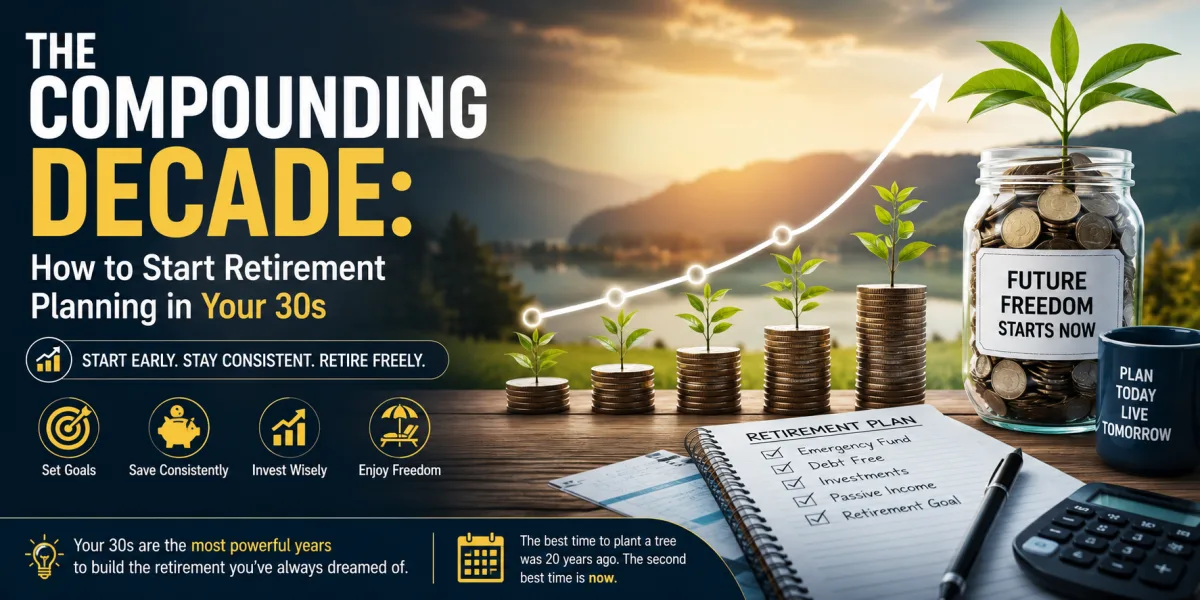
This is why time matters so much. A person who invests consistently for 30 or 40 years has an advantage that cannot easily be replaced by last-minute intensity. Larger contributions help, but time is unique because lost years cannot be recreated. The earlier an investor begins, the longer each dollar has to work.
Compounding applies beyond money. Knowledge compounds when one idea connects to another. Skills compound when practice increases competence, which leads to better opportunities, which lead to more practice. Relationships compound when trust built over years produces introductions, partnerships, and credibility. Reputation compounds when consistent reliability makes others more willing to do business with you.
This broader understanding matters because financial compounding usually depends on behavioral compounding. A person who builds the habit of saving, learning, investing, and improving decision-making becomes more capable over time. The wealth is not only in the account. It is in the person’s system.
The wealthy often respect compounding because they have seen both sides of it. Assets compound positively. Debt can compound negatively. Good habits compound into opportunity. Bad habits compound into pressure. A small financial leak ignored for years can become a major obstacle. A small investment habit maintained for years can become a serious asset base.
The lesson is simple but demanding: give productive things enough time to grow, and prevent destructive things from growing against you.
They Keep Learning Because Money Punishes Ignorance
Financial education is not optional for anyone who wants to build and protect wealth.
Money touches nearly every area of adult life: taxes, housing, insurance, debt, investing, retirement, business, estate planning, risk management, career choices, and family decisions. A person does not need to become an expert in every field, but ignorance is costly. It leads to poor contracts, excessive fees, bad loans, panic selling, underinsurance, overconcentration, lifestyle inflation, and missed opportunities.
Wealthy people often invest in knowledge because knowledge improves judgment. They read. They ask questions. They study markets. They learn from mentors. They analyze mistakes. They pay attention to incentives. They try to understand how systems work rather than merely reacting to events.
Financial knowledge also helps people avoid being impressed by the wrong things. Without education, a person may confuse complexity with intelligence. They may assume a complicated investment must be sophisticated. They may trust confident salespeople. They may buy products they do not understand because the language sounds professional.
The financially educated person asks sharper questions. How does this investment make money? What are the fees? What are the risks? What happens if conditions change? Who benefits if I buy this? How liquid is it? What is the tax treatment? What assumptions must be true for this to work? What could go wrong?
These questions do not eliminate risk, but they improve decision quality.
Education is especially important because financial markets evolve. Interest rates change. Tax laws change. Technology creates new industries and disrupts old ones. Inflation alters purchasing power. Insurance costs rise and fall. Credit conditions tighten and loosen. A strategy that worked in one environment may not work the same way in another.
The wealthy do not necessarily predict the future better than everyone else. Often, they simply prepare better. Preparation begins with learning.
They Value Time More Than Money
Time is the one asset that cannot be earned back.
Money can be lost and regained. Businesses can fail and be rebuilt. Investments can decline and recover. Time spent is permanently spent. Wealthy people often become highly aware of this because money eventually becomes less scarce than attention, energy, and years.
This is why they focus on leverage. They look for ways to produce more value without personally performing every task. Leverage can come from employees, technology, capital, systems, media, code, distribution, or brand. The goal is not laziness. The goal is to direct limited human energy toward the highest-value activities.
A business owner who spends every hour on low-value administration may save money in the short term but limit growth. A professional who refuses to delegate may feel responsible but remain trapped. An investor who spends endless hours trying to time small market movements may sacrifice attention that could be used to increase income, improve skills, or build relationships.
Valuing time means understanding opportunity cost. Every hour spent on one activity is an hour not spent on another. The wealthy tend to ask, “Is this the best use of my time?” That question can be uncomfortable because it forces prioritization.
Outsourcing is one expression of this principle, but it should not be misunderstood. A person who is financially unstable should not outsource everything in the name of thinking rich. The point is not to spend carelessly. The point is to recognize when paying for help creates more value than doing everything personally.
For a young professional, valuing time might mean using free hours to study for a credential rather than scrolling online. For a parent, it might mean simplifying finances so less energy is lost to chaos. For an entrepreneur, it might mean hiring someone for operational tasks so the owner can focus on sales, product quality, or strategy. For an investor, it might mean choosing a simple long-term approach rather than constantly chasing predictions.
Time is not only a personal resource. It is a financial resource. Used well, it produces knowledge, assets, health, relationships, and opportunity. Used poorly, it disappears quietly.
They Build Multiple Income Streams
A single income stream is fragile.
It may feel stable when conditions are good, but dependence creates vulnerability. A job can be lost. A client can leave. A business can face disruption. A commission cycle can slow. A market can turn. A health issue can reduce working capacity. The more a household depends on one source of income, the more financial life resembles a bridge with one support beam.
Many wealthy individuals reduce this fragility by building multiple income streams. These may include employment income, consulting fees, business profits, dividends, interest, rental income, royalties, licensing revenue, capital gains, digital products, or partnership distributions.
Not every income stream is equal. Some require active labor. Some require capital. Some require expertise. Some require risk. Some require a long setup period before producing meaningful cash flow. The goal is not to collect random side hustles. The goal is to build income sources that fit a person’s skills, capital, time, and risk tolerance.
There is a major difference between multiple income streams and multiple distractions. A person working three exhausting low-margin side jobs may have more income sources but less freedom. A person who builds one strong career, invests consistently, and later acquires rental property or business equity may create a more durable structure.
The first additional income stream for many people is investment income. Dividends, interest, and long-term capital appreciation may begin small, but they represent an important psychological shift. The household is no longer funded only by labor. Capital has started to contribute.
For others, the second stream may come from expertise. A skilled employee may consult, teach, write, advise, or create products based on knowledge already developed. A designer may sell templates. A software engineer may build tools. A financial professional may create educational content within ethical and regulatory boundaries. A musician may earn royalties. A landlord may earn rental income. An entrepreneur may own a business that produces profit beyond wages.
Multiple streams provide resilience, but they also require management. Taxes become more complex. Records matter. Insurance may need adjustment. Legal structures may become relevant. Time must be protected. The wealthy do not merely chase income streams; they organize them.
They Live Below Their Means
Living below your means is one of the least glamorous financial principles and one of the most powerful.
It creates the gap from which wealth is built. Without a gap between income and expenses, there is no capital to invest. Without invested capital, there is no ownership growth. Without ownership growth, financial life remains dependent on continuous income.
The phrase “live below your means” is sometimes misunderstood as a call to deprivation. It is better understood as the practice of creating financial breathing room. The goal is not to live poorly. The goal is to avoid allowing spending to rise automatically with income.
Lifestyle inflation is one of the great enemies of wealth. It often happens quietly. A raise becomes a larger apartment. A bonus becomes a new car. A promotion becomes more expensive vacations. New friends, new neighborhoods, and new expectations reset what feels normal. The person earns more but does not become freer because every increase in income is absorbed by lifestyle.
Wealth builders interrupt that pattern. They may improve their lives as income rises, but they do not surrender every new dollar to consumption. They direct a portion of increased income toward investments, debt reduction, cash reserves, business building, or skill development.
This is why a high savings rate can be more powerful than a high income alone. A person earning $300,000 and spending $310,000 is moving backward. A person earning $80,000 and spending $55,000 has capital to deploy. The numbers differ, but the principle is the same: wealth is built from what is retained and productively used.
Frugality at its best is not cheapness. Cheapness focuses only on price. Frugality focuses on value. A cheap decision may save money today but create higher costs later. A frugal decision considers durability, utility, opportunity cost, and long-term benefit. Wealthy people are often willing to pay for quality where quality matters, while refusing to waste money on purchases that do not improve life or build value.
The ability to live below one’s means also increases courage. A person with low fixed expenses and strong savings can leave a toxic job, negotiate better, invest during downturns, start a business, or move for opportunity. A person with high fixed expenses may feel trapped even with a large income.
Financial discipline is not about denying joy. It is about buying freedom first.
They Take Calculated Risks
Wealth building requires risk, but not recklessness.
This distinction matters. Some people avoid all risk and then wonder why their financial life never changes. Others chase risk blindly and mistake gambling for ambition. Wealth builders usually occupy the middle ground. They take calculated risks: risks that have been studied, sized, and understood.
A calculated risk begins with the downside. What can be lost? How likely is the loss? Can the household survive it? Is the risk concentrated or diversified? Is the potential reward worth the exposure? What assumptions must be true? What information is missing? What is the exit plan?
The wealthy are often comfortable with uncertainty because they do not require certainty to act. They require favorable odds, a margin of safety, or a risk they can afford. This is true in investing, business, career decisions, and real estate.
Starting a business is risky. But the risk can be reduced by testing demand, controlling fixed costs, building cash reserves, understanding customers, and avoiding unnecessary debt. Investing in stocks is risky. But the risk can be reduced through diversification, long time horizons, valuation discipline, and emotional control. Buying real estate is risky. But the risk can be reduced through conservative financing, careful location analysis, adequate reserves, and realistic rental assumptions.
Calculated risk is also necessary in careers. Staying in a familiar role may feel safe, but it can become risky if skills become outdated or income growth stalls. Changing industries, asking for responsibility, negotiating compensation, relocating, or investing in education may involve uncertainty, but these decisions can increase long-term earning power.
The wealthy often understand that safety is not the same as avoiding movement. Sometimes the greatest risk is remaining dependent on a single employer, a single skill, a single market, or a single plan.
Risk should be respected, not worshiped. The goal is not to be fearless. Fear can be useful when it forces preparation. The goal is to avoid being controlled by fear or seduced by greed.
They Build Valuable Networks
Money is not created in isolation.
Opportunities often travel through people. Jobs, partnerships, investments, clients, mentorship, referrals, board seats, acquisitions, and early information frequently move through networks long before they become visible to the general public.
This does not mean wealth is only about knowing the right people. Skill, integrity, timing, and execution still matter. But relationships can multiply all of them. A talented person with no network may struggle to find opportunity. A talented person trusted by the right people may see doors open faster.
Wealthy people often invest in relationships deliberately. They attend industry events, maintain friendships, join professional groups, seek mentors, help others, and build reputations for competence. The strongest networks are not built through shallow transactions. They are built through repeated value exchange.
A valuable network is not simply a list of contacts. It is a web of trust. Trust grows when people consistently do what they say, respect confidential information, show good judgment, and create value without demanding immediate repayment.
The financial benefits of networks can be substantial. An entrepreneur may meet a partner who brings distribution. An investor may learn from someone with deeper industry expertise. A young professional may find a mentor who helps avoid costly career mistakes. A business owner may receive referrals that reduce marketing costs. A real estate investor may find contractors, lenders, brokers, and property managers who improve execution.
Networks also shape behavior. The people around you influence what you consider normal. If your circle spends every raise, debt may feel normal. If your circle invests, builds businesses, studies taxes, discusses books, and thinks long term, wealth-building behavior becomes more natural.
This is not about abandoning old friends or treating people as financial instruments. It is about recognizing that environment matters. Relationships can either reinforce consumption or reinforce growth.
They Focus on Ownership
Ownership is the engine beneath most lasting wealth.
Employees earn wages. Owners build equity. Wages can be high, honorable, and necessary, but they usually stop when work stops. Equity can continue to grow, produce income, or be sold. That difference is why ownership is so central.
Ownership can take many forms. A stock investor owns slices of public companies. A founder owns part of a private business. A real estate investor owns property. A creator may own copyrights, trademarks, software, patents, courses, books, or media assets. A professional may own a practice. A family may own land. A retiree may own a portfolio of income-producing securities.
The form matters less than the principle: wealth builders seek claims on assets that can produce future value.
Ownership also changes incentives. An employee may be paid for effort, hours, or outcomes. An owner benefits from systems, scale, and appreciation. When a business improves, the owner’s equity may rise. When a property generates rent and appreciates, the owner participates. When a company grows earnings, shareholders may benefit through dividends and stock price appreciation.
This does not mean ownership is easy. Owners absorb risk. Businesses fail. Stocks decline. Properties require maintenance. Intellectual property may not sell. Concentrated ownership can create large losses. But without ownership, wealth accumulation is often limited to savings from labor income.
The ownership mindset asks, “How can I participate in the upside?”
An employee might participate by investing part of salary into retirement accounts or brokerage accounts. A skilled professional might negotiate equity compensation. A freelancer might create products rather than only selling hours. A business owner might build systems that make the company valuable beyond personal labor. A creator might retain rights to work that can generate royalties.
The wealthy tend to understand that income pays bills, but ownership builds balance sheets.
They Track Money Carefully
Many people imagine millionaires as careless spenders who never look at prices. Some are. But many financially successful people know their numbers with surprising precision.
They understand cash flow. They know where money enters, where it leaves, what is owed, what is owned, and what must be reserved. They may not use a traditional household budget, but they monitor financial reality. They do not drift.
Tracking money matters because untracked money tends to disappear. Small recurring expenses accumulate. Fees hide inside accounts. Subscriptions renew unnoticed. Interest charges quietly transfer wealth from borrower to lender. Taxes surprise the unprepared. Insurance gaps remain invisible until a crisis.
A budget is not merely a restriction. It is a map. It shows whether a person’s stated priorities match actual behavior. Someone may say investing is important, but a cash flow statement reveals whether investing receives money before or after impulse spending. Someone may say debt freedom matters, but payment history reveals whether principal is declining meaningfully.
The wealthy often treat personal finances with the seriousness of a business. A business that never reviews revenue, expenses, margins, debt, or cash reserves is poorly managed. A household is not identical to a business, but it still has inflows, outflows, assets, liabilities, and risks.
Tracking also helps reduce anxiety. Avoidance creates fear because the unknown grows larger in imagination. Clarity may reveal problems, but it also makes solutions possible. A person who knows the exact debt balance, interest rate, monthly surplus, and payoff strategy has more power than someone who only feels overwhelmed.
At higher wealth levels, tracking becomes more complex. There may be multiple accounts, properties, entities, tax obligations, insurance policies, estate documents, and investment strategies. Organization becomes a form of protection. Poor recordkeeping can cause tax mistakes, missed payments, inefficient portfolios, and family confusion.
The principle applies at every level: what gets measured can be managed. What gets ignored often becomes expensive.
They Solve Problems the Market Values
Wealth is often a reward for solving problems.
The marketplace pays for value. The more painful, urgent, complex, or widespread the problem, the greater the potential reward for solving it effectively. This is why many wealthy people are builders, investors, operators, specialists, or owners of systems that serve others.
A business exists to solve a problem for customers. A professional career grows when a person becomes trusted to solve difficult problems. An investment performs well when the underlying asset creates value that others recognize. Even real estate investing solves problems: housing, location, convenience, development, financing, or property improvement.
People who focus only on making money often struggle because money is an outcome, not the starting point. The better question is, “What valuable problem can I solve?”
A software company may solve inefficiency. A logistics firm may solve distribution. A doctor solves health problems. An attorney solves legal problems. A financial planner helps solve planning and behavioral problems. A teacher solves knowledge problems. A contractor solves construction and repair problems. A content creator may solve education, entertainment, or trust problems.
Income potential often rises when the problem requires rare skills, high trust, scale, or responsibility. A task that almost anyone can do usually commands limited compensation. A problem that few can solve well may command much more. This is not always fair in a moral sense, but it is a common economic pattern.
This principle gives individuals a practical path. To increase earning power, become more capable of solving valuable problems. That may mean learning technical skills, improving communication, understanding sales, developing leadership, studying an industry, building a reputation, or combining abilities in unusual ways.
Wealthy people often position themselves close to value creation. They do not only ask how to get paid more. They ask how to become more useful, more trusted, more scalable, or more essential.
They Use Debt Strategically, Not Emotionally
Debt can either build wealth or destroy it.
The difference is purpose, cost, structure, and discipline. Wealthy people tend to distinguish between debt that finances productive assets and debt that finances consumption. This distinction is not perfect, but it is useful.
Consumer debt often allows people to pull future income into the present. Credit cards, high-interest personal loans, and financing plans can make purchases feel affordable while quietly increasing long-term cost. The borrower gets the object now. The lender gets interest. If the purchase does not increase income or value, debt can become a claim against future freedom.
Productive debt is different when used carefully. A mortgage on a reasonably priced property may help acquire an asset. A business loan may finance equipment that increases revenue. Student loans may improve earning power if the degree cost is sensible relative to career outcomes. Even then, productive debt can become dangerous if assumptions are too optimistic.
The wealthy are not automatically debt-free. Many use debt. But sophisticated borrowers respect terms. They pay attention to interest rates, amortization schedules, covenants, collateral, refinancing risk, cash flow coverage, and downside scenarios. They ask what happens if income falls, rates rise, vacancies increase, sales slow, or markets decline.
Debt magnifies outcomes. Used wisely, it can accelerate asset acquisition. Used poorly, it can turn a manageable mistake into a crisis. This is why calculated risk and financial education are inseparable.
For households, one of the most powerful steps is eliminating high-interest consumer debt. The guaranteed burden of expensive debt can overwhelm the uncertain returns of investing. Paying down a credit card charging high interest is often equivalent to earning a strong risk-free return because it stops interest from compounding against the borrower.
The wealth builder wants interest working for them, not against them.
They Protect What They Build
Building wealth is only half the assignment. The other half is protecting it.
Many people focus intensely on returns while neglecting risk management. But a single uninsured event, lawsuit, medical crisis, disability, market panic, fraud, or poor estate plan can undo years of progress. Wealthy people often think carefully about defense.
Protection begins with liquidity. An emergency fund may not feel exciting, but it prevents ordinary disruptions from becoming financial disasters. Cash reserves allow investors to avoid selling long-term assets at the wrong time. They allow business owners to survive slow periods. They allow families to handle repairs, medical costs, travel emergencies, or job transitions.
Insurance is another defensive layer. Health insurance, life insurance, disability insurance, property insurance, liability coverage, and business insurance can all matter depending on the household. The purpose of insurance is not to cover every inconvenience. It is to transfer risks that could cause serious financial harm.
Diversification also protects wealth. Concentration can create fortunes, but it can also destroy them. Many entrepreneurs become wealthy through concentrated ownership in a business, then preserve wealth by diversifying over time. Investors who hold only one stock, one property, one industry, or one country may underestimate how quickly conditions can change.
Legal and estate planning matter as well. Beneficiary designations, wills, trusts, powers of attorney, business succession plans, and proper account titling can prevent confusion and conflict. Wealth without planning can become a burden for the next generation.
Protection is not pessimism. It is respect for reality. The future will include events that are inconvenient, unfair, surprising, or severe. The financially mature person does not assume every year will be favorable. They build systems that can survive stress.
They Stay Consistent When Motivation Fades
Consistency is one of the least dramatic wealth-building traits, which is why it is often underestimated.
Many people are capable of making one good financial decision. Fewer can make good decisions repeatedly for years. They start investing, then stop. They create a budget, then abandon it. They pay down debt, then rebuild it. They read one finance book, then never apply the lessons. They chase a new strategy every time enthusiasm changes.
Wealth usually comes from repetition. Earn. Spend less than you earn. Invest the difference. Manage risk. Increase skills. Avoid destructive debt. Protect assets. Repeat. The formula is not glamorous, but it is powerful because it can be practiced across decades.
Consistency matters because financial life contains emotional seasons. There will be periods of excitement, fear, boredom, envy, uncertainty, and fatigue. Markets will fall. Friends will appear to get rich faster. Social media will display lifestyles without showing liabilities. Business ideas will fail. Jobs will disappoint. Expenses will surprise. Motivation will not always be available.
Systems are stronger than motivation. Automatic investing, scheduled reviews, written plans, debt payoff calendars, emergency funds, diversified portfolios, and clear spending rules help good behavior continue even when emotions fluctuate.
The wealthy often reduce the number of decisions they must make repeatedly. They automate what should be automatic. They create defaults. They work with advisors where appropriate. They build routines. They understand that decision fatigue can become financially expensive.
Consistency also creates identity. A person who invests every month begins to see themselves as an investor. A person who studies regularly begins to see themselves as a learner. A person who tracks spending begins to see themselves as financially responsible. Identity reinforces behavior, and behavior reinforces identity.
The Wealth Formula
At its simplest, wealth building can be expressed in a sequence.
Earn more. Spend less than you earn. Invest the difference. Own appreciating or income-producing assets. Keep learning. Stay patient. Repeat for decades.
Each step sounds simple. None is always easy.
Earning more may require skill development, negotiation, career change, business building, sales ability, or geographic flexibility. Spending less than you earn may require resisting social pressure, delaying gratification, and designing a life that does not inflate automatically. Investing the difference requires education, emotional control, and trust in a long-term process. Owning assets requires accepting volatility, maintenance, risk, and responsibility. Learning requires humility. Patience requires emotional discipline. Repetition requires endurance.
The formula works not because it is clever, but because it aligns with economic reality. Capital accumulates when inflows exceed outflows. Capital grows when placed into productive assets. Productive assets require time. Time rewards consistency. Consistency is sustained by habits, systems, and mindset.
This is why luck and income, while important, are not the whole story. Luck can create opportunity, but poor habits can waste it. High income can accelerate wealth, but uncontrolled spending can neutralize it. A brilliant investment can help, but one success rarely replaces decades of discipline. Sustainable wealth is usually built from a structure, not a moment.
What This Means for Ordinary Investors
The principles of the wealthy are not reserved for people who are already rich.
A person does not need millions to begin thinking like an owner. The shift can start with the next paycheck. Set aside a portion before lifestyle absorbs it. Build an emergency fund. Pay down destructive debt. Contribute to retirement accounts. Buy diversified investments. Learn the basics of taxes and insurance. Improve earning power. Track spending. Avoid purchases designed mainly to impress people. Build relationships. Look for ways to create value.
Small actions matter because they establish direction. The first investment may not make anyone rich. The first month of budgeting may not transform a household. The first book may not create expertise. But these actions create a new pattern. Over time, the pattern becomes powerful.
For a young adult, the most valuable asset may be time. Starting early allows compounding to work longer. For someone in midlife, the most valuable step may be focus: eliminating waste, increasing income, investing consistently, and avoiding panic. For someone near retirement, the priority may be protection, income planning, healthcare costs, and sustainable withdrawals. The principles remain, but application changes with life stage.
The most dangerous belief is that wealth building is only for people who already have wealth. That belief keeps people passive. While starting conditions matter, behavior still matters. A person may not control family background, economic cycles, or every opportunity. But many financial decisions remain within reach: what to learn, how to spend, whether to invest, how to manage debt, what risks to take, who to spend time with, and how consistently to act.
The Quiet Nature of Real Wealth
Real wealth is often quieter than people expect.
It may look like freedom from panic when an emergency happens. It may look like the ability to leave a job that no longer fits. It may look like helping family without destroying personal finances. It may look like owning time, choosing meaningful work, or sleeping well because the household is not one missed paycheck away from crisis.
Consumption can be photographed. Freedom is harder to display.
This is why so much financial confusion comes from judging wealth by appearance. A person can look rich by spending heavily. A person can become rich by owning quietly. The two paths often move in opposite directions.
The wealthy habits that matter most are not complicated: ownership, long-term thinking, asset accumulation, compounding, learning, time management, diversified income, disciplined spending, calculated risk, strong networks, cash flow tracking, problem solving, financial education, and consistency. These habits reinforce one another. Learning improves risk taking. Tracking improves spending. Spending discipline creates investment capital. Investment capital creates ownership. Ownership creates income. Income creates more capital. Networks create opportunities. Time allows everything to compound.
The biggest secret of the rich is that there is usually no single secret. There is a system of principles practiced long enough to matter.
Wealth is less about appearing exceptional and more about behaving consistently. It is less about one extraordinary move and more about thousands of ordinary decisions made in the right direction. It is less about luck alone and more about what a person does with opportunity when it appears.
The ownership advantage belongs to those who understand that money can either leave their life through consumption or remain in their life as capital. The first path may feel rewarding immediately. The second path can change the future.
The wealthy choose the second path often enough, and long enough, that eventually their money begins to work even when they are not working. That is the difference. That is the advantage.
 Article
 Article
 Article
 Article
 Article
 Article
 Article