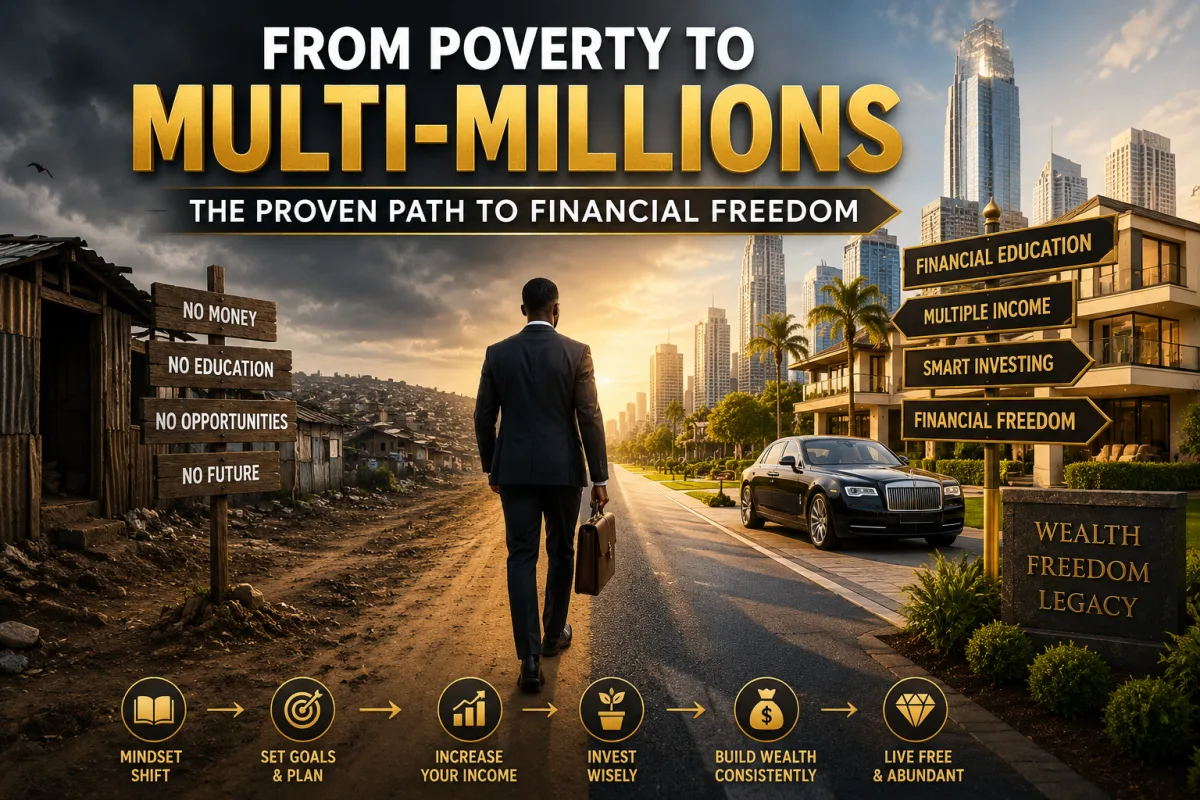
From Poverty to Multi-Millions: The Proven Path to Financial Freedom
The journey from poverty to multi-millions is often misunderstood.
From the outside, wealth can look sudden. A founder sells a company. An investor makes a major gain. A real estate owner holds property through a boom. A professional becomes highly paid. A creator builds a large audience. The story is often compressed into one dramatic moment, as if money arrived through a single decision, a lucky break, or a secret strategy.
But lasting wealth rarely forms that way.
The path from poverty to financial freedom is usually a sequence of stages. First, a person must survive. Then they must stabilize. Then they must increase earning power. Then they must control spending. Then they must eliminate destructive debt. Then they must build savings. Then they must acquire productive assets. Then they must protect those assets. Then they must learn to think like an owner instead of a consumer.
That sequence is not glamorous. It does not promise overnight riches. It does not depend on pretending poverty can be solved by positive thinking alone. Poverty is real. It limits choices, drains energy, narrows time horizons, and punishes mistakes. Anyone who has lived close to the financial edge understands that money problems are not merely mathematical. They are emotional, social, psychological, and practical.
Yet the fact that the path is difficult does not mean it is mysterious.
People who rise from poverty to significant wealth usually do not follow identical careers, but they often share similar financial principles. They increase the value of their labor. They avoid lifestyle inflation long enough to build capital. They learn how money works. They use income to acquire assets. They build businesses, invest in ownership, or develop scarce skills. They protect their downside. They surround themselves with people who expand their standards. They stop measuring success only by what they can buy and start measuring it by what they control.
The distance between poverty and multi-millions is large, but it is not crossed in one leap. It is crossed through a series of financial transformations.
The First Transformation: Escaping Survival Mode
Poverty forces short-term thinking because survival is immediate.
When rent is due, food is uncertain, transportation is unreliable, debt collectors are calling, or one emergency can destroy the month, long-term planning can feel like a luxury. This is one of poverty’s cruelest effects. It does not only reduce money. It consumes attention.
A person in survival mode may know that saving, investing, and skill-building matter, but daily pressure leaves little room to act. The first step is not building a portfolio. The first step is creating enough stability to think clearly.
Stability begins with income, shelter, food, transportation, basic safety, and control of immediate obligations. This may require taking imperfect work, sharing housing, using public assistance where available, negotiating bills, seeking community resources, selling unused items, reducing expenses aggressively, or accepting temporary sacrifices that are not meant to last forever.
This stage is not about pride. It is about oxygen.
A person cannot build wealth while every financial event becomes a crisis. The first goal is to create breathing room. Even a small buffer changes the mind. Having one month of basic expenses saved can reduce panic. Having reliable transportation can protect employment. Having a basic budget can turn chaos into visibility. Having a plan for bills can reduce late fees and emotional stress.
In this stage, the most important financial skill is not investing. It is control. You must know what comes in, what goes out, what is due, what is negotiable, and what threatens stability. Poverty often creates avoidance because the numbers are painful. But the numbers cannot be improved while they remain hidden.
The first transformation is from chaos to clarity.
Write down every source of income. Write down every bill. Write down every debt. Write down due dates. Write down interest rates. Write down the cost of food, transport, housing, phone service, insurance, and essentials. This may feel discouraging at first, but it is the beginning of power. A hidden problem controls you. A visible problem can be attacked.
Financial freedom begins when reality becomes measurable.
The Second Transformation: Building Income Capacity
Cutting expenses matters, but there is a limit to how much can be cut. Income has more upside.
For someone starting from poverty, the most urgent wealth-building asset is earning power. Before stocks, real estate, business equity, or private investments, the first productive asset is the ability to earn more money in the marketplace.
This does not mean every person needs an expensive degree. It means every person needs a plan to become more valuable. The market pays for value, scarcity, reliability, trust, speed, skill, judgment, risk-taking, and results. The path out of poverty usually requires moving from replaceable labor to more valuable labor.
There are many routes. Skilled trades. Sales. Technology. Healthcare. Logistics. Finance. Digital marketing. Design. Project management. Entrepreneurship. Real estate services. Specialized administration. Data analysis. Cybersecurity. Artificial intelligence operations. Business development. The specific field matters less than the economic principle: acquire a skill that solves a problem people will pay more to solve.
Low-wage work often pays for time. Higher-income work pays for outcomes, expertise, trust, or responsibility. The goal is to climb that ladder.
At the beginning, a person may need to work for survival. But even while working, they should be studying the next rung. What roles pay more? What skills do those roles require? What certifications matter? Who hires for those skills? What proof can be built? What free or low-cost training exists? What job can be used as a bridge?
Income growth often comes from stacking skills rather than relying on one skill alone. A person who can communicate, sell, use software, manage projects, and understand customer needs may become more valuable than someone with only one narrow ability. A technician who learns sales can move into higher compensation. A nurse who learns management can move into leadership. A driver who learns logistics coordination can move into operations. A bookkeeper who learns advisory services can serve better clients. A writer who learns distribution can build a business.
The most powerful early question is: what skill can I learn in six to eighteen months that would permanently raise my income?
That question changes the future because it shifts attention from survival wages to earning capacity. Poverty often teaches people to ask only, “How do I get through this week?” Wealth building requires also asking, “What can I build this year that makes every future year easier?”
Increasing income is not always easy. It may require studying after work, taking exams, applying repeatedly, being rejected, moving industries, building a portfolio, taking an apprenticeship, or starting at the bottom of a better ladder. But the return can be enormous because higher income creates the capital needed for the next stages.
You cannot save your way to multi-millions on a poverty income alone. You need earning power.
The Third Transformation: Rejecting Lifestyle Inflation
The first time income rises, the temptation is to spend.
This is understandable. People who have lived with scarcity often carry a backlog of unmet needs and delayed desires. Better housing, better food, reliable transportation, medical care, clothing, small pleasures, and dignity all matter. Escaping poverty should improve life.
But one of the great dangers of upward mobility is lifestyle inflation. Income rises, but spending rises just as quickly. The person who once struggled at $30,000 may later struggle at $70,000, then $120,000, then $250,000. The numbers change, but the pattern remains.
This is how high earners stay poor.
The wealth builder must learn to create a gap between income and lifestyle. That gap is called surplus. Surplus becomes savings. Savings become capital. Capital buys assets. Assets create income and appreciation. Without surplus, wealth cannot form.
The key is to upgrade life slowly and intentionally. When income increases, do not let every dollar become part of permanent lifestyle. Decide in advance how raises, bonuses, side income, and tax refunds will be divided. A practical rule is to direct a major portion of every income increase toward savings, debt repayment, or investing before increasing spending.
For example, if monthly income rises by $1,000, a person may decide that $600 goes toward wealth building, $200 improves lifestyle, and $200 builds emergency reserves. The exact numbers can vary, but the principle is essential: income growth must create asset growth, not only consumption growth.
This is where many people lose the path. They work hard to escape poverty, then immediately copy the consumption patterns they once admired from a distance. They buy the car, the clothes, the apartment, the vacations, the electronics, and the status symbols. They deserve comfort, but they may accidentally recreate financial pressure at a higher level.
The wealthy mindset asks a different question. Not “Can I afford the payment?” but “Will this purchase move me closer to freedom or farther from it?”
Some spending is necessary. Some spending is joyful. Some spending is an investment in health, safety, relationships, or career. But status spending can become a trap, especially for people who grew up feeling unseen. The desire to prove success can be expensive.
The path to multi-millions requires a season where income rises faster than lifestyle. That season is not punishment. It is the capital formation period.
Every dollar not absorbed by lifestyle becomes a soldier working for your freedom.
The Fourth Transformation: Destroying Destructive Debt
Not all debt is equal.
Debt used to acquire productive assets can sometimes accelerate wealth. Debt used to finance consumption often delays it. High-interest consumer debt is especially dangerous because it turns past spending into a claim on future income.
For someone building from poverty, destructive debt must be treated as an emergency. Credit card balances, payday loans, high-interest personal loans, predatory auto loans, and unpaid bills can trap income before it has a chance to become capital. The person works, gets paid, and immediately sends money backward to cover yesterday’s decisions.
Debt repayment is not glamorous, but it is wealth building. Every high-interest balance eliminated increases future cash flow. Every payment removed creates more freedom. Every avoided interest charge keeps money in your system.
There are two common methods. The debt snowball pays the smallest balances first to create momentum. The debt avalanche pays the highest-interest balances first to reduce total interest. The best method is the one a person will actually complete. Mathematics matters, but behavior matters too.
Debt freedom also requires understanding why the debt appeared. Was it an income problem? A spending problem? A medical emergency? Lack of savings? Emotional spending? Family pressure? Irregular work? Poor planning? Without addressing the cause, debt repayment may only reset the cycle.
Emergency savings and debt repayment should often work together. If every spare dollar goes to debt and no cash buffer exists, the next emergency may go back onto a credit card. Even a modest emergency fund can prevent relapse.
The deeper transformation is psychological. A person escaping poverty must stop seeing debt as normal. Normal does not mean harmless. Many societies normalize payments: car payments, phone payments, furniture payments, buy-now-pay-later purchases, credit card minimums. But a life built on payments can become a life without surplus.
The goal is not merely to pay off debt. The goal is to become the kind of person who refuses to finance a lifestyle that steals from future freedom.
The Fifth Transformation: Building the First Capital Base
The first serious capital base is a turning point.
It may be $5,000, $10,000, $25,000, or $100,000 depending on income and circumstances. The amount matters less than the shift it creates. For the first time, the person has money that is not already promised to bills, debt, emergencies, or consumption.
This capital base creates options.
It can fund education. It can support a job transition. It can start a small business. It can serve as a down payment. It can provide emergency security. It can be invested. It can prevent desperate decisions. It can allow a person to say no to bad jobs, bad loans, bad relationships, and bad opportunities.
Capital is stored choice.
Building the first capital base requires consistency. Automatic transfers help. Separate accounts help. Clear targets help. The money should be protected from casual spending. It should not sit in the same account used for groceries, entertainment, and bills. Money without a job tends to disappear.
At this stage, the most important principle is not chasing high returns. It is preserving the foundation. People who have recently accumulated their first meaningful savings are often tempted by risky opportunities because they want to accelerate. They may fall for schemes, speculative trades, questionable business deals, or social pressure from people who see their progress.
The first capital base should not be gambled away. It represents years of discipline compressed into cash. Treat it with respect.
A good capital base has layers. The first layer is emergency savings. The second may be short-term goal savings. The third is investment capital. The fourth may be business or opportunity capital. Mixing these layers creates danger. Money needed for rent should not be in speculative investments. Money needed for taxes should not be used for lifestyle. Money for emergencies should not be locked away where it cannot be accessed.
Poverty often means having no buffer between life and disaster. The first capital base creates that buffer. Once the buffer exists, a person can begin to take smarter risks.
The Sixth Transformation: Learning the Language of Assets
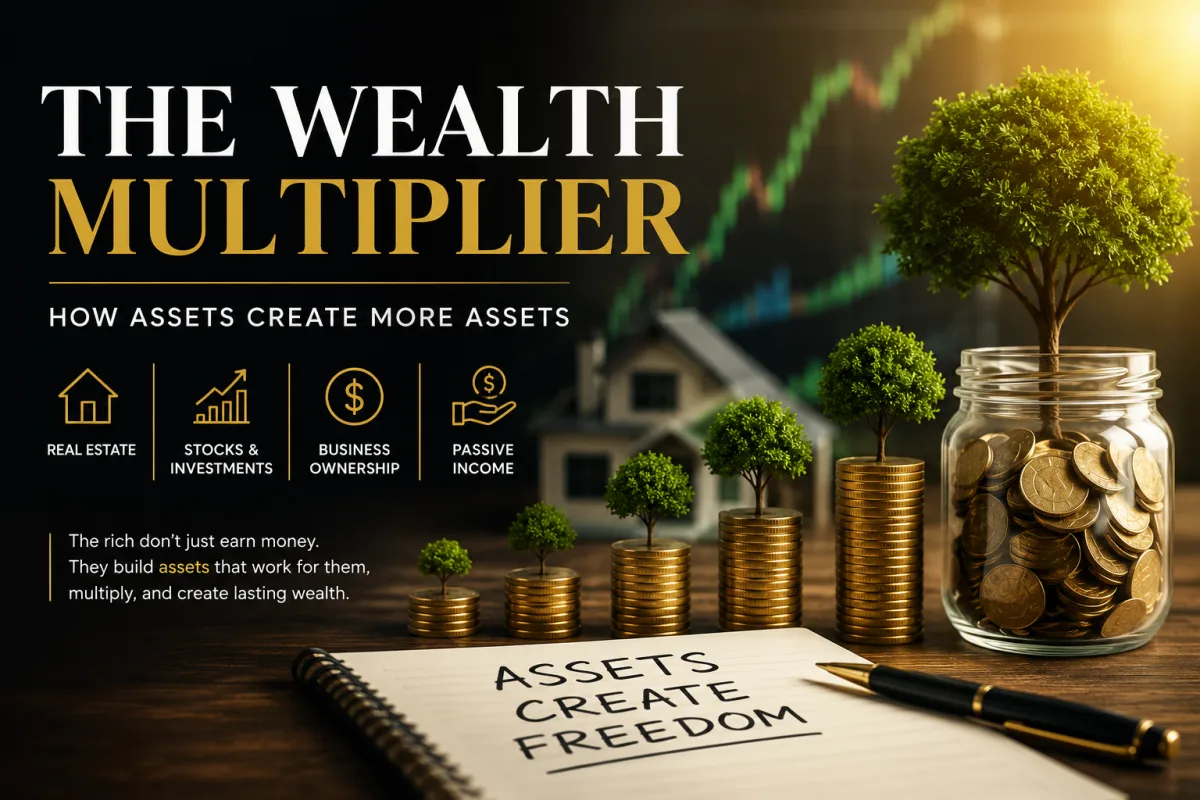
To move from survival to wealth, a person must understand assets.
An asset is something that has economic value. A productive asset is something that can generate income, appreciate, or both. Stocks, bonds, real estate, businesses, intellectual property, royalties, cash-flowing websites, private investments, and certain professional licenses or tools can all function as assets.
Consumers ask, “What can I buy?” Wealth builders ask, “What can I own?”
This shift is one of the most important in the entire journey. Poverty often trains people to focus on immediate use: food, rent, transportation, clothing, utilities. As income rises, consumer culture encourages upgraded use: better cars, better apartments, better phones, better vacations. But wealth requires buying things that can pay you back.
Owning assets changes the direction of money. When you own only liabilities and consumption goods, money flows away from you. When you own productive assets, money can begin flowing toward you.
Public market investing is one accessible path. Buying shares of quality companies through diversified funds allows ordinary people to own pieces of businesses. Retirement accounts and brokerage accounts can become wealth-building vehicles when contributions are consistent and time is allowed to work.
Real estate is another path, though it requires knowledge, capital, and risk management. Rental property can produce income and appreciation, but it also brings debt, maintenance, vacancies, insurance, taxes, and tenant risk. It is not passive in the way beginners often imagine. It can build wealth when purchased carefully and managed properly.
Business ownership is a powerful path because it can create income, equity value, and control. A business can begin as a side service, a local operation, an online product, a consulting practice, a trade company, or a small acquisition. Businesses are risky, but they can also create wealth faster than wages alone because they allow value to scale beyond one paycheck.
Intellectual property and digital assets can also matter. A book, course, software tool, licensing agreement, content library, newsletter, or specialized database can create repeated value if connected to real demand.
The key is not to chase every asset class. The key is to learn one or two deeply enough to act intelligently. Many people lose money because they buy assets they do not understand. They confuse popularity with quality. They buy because others are excited. They use leverage without understanding downside. They mistake rising prices for skill.
The language of assets includes cash flow, equity, yield, appreciation, liquidity, risk, taxes, maintenance, volatility, debt service, margin, return on capital, and opportunity cost. A person serious about wealth must become fluent in these terms.
You do not become rich by merely earning money. You become rich by converting money into ownership.
The Seventh Transformation: Building Multiple Income Streams the Right Way
Multiple income streams are often promoted poorly.
Some people interpret the idea as chasing every opportunity at once: trading, dropshipping, rental property, affiliate marketing, gig work, content creation, vending machines, coaching, and cryptocurrency all at the same time. This creates distraction, not wealth.
The right way to build multiple income streams is sequentially.
First, strengthen the primary income stream. If a person’s main income is weak, unstable, or underdeveloped, spreading attention too early can slow progress. Increasing salary, commissions, professional fees, or business income may produce the fastest early gains.
Second, create surplus from that income. Without surplus, additional income streams may simply fund additional spending.
Third, invest surplus into assets or scalable side income. This is where a second stream begins. It may be investment dividends, rental income, a freelance service, a small business, digital products, or consulting.
Fourth, systematize the second stream before adding a third. A side business that depends entirely on exhausting labor may not create freedom. It may create a second job. The goal is to build income streams that become more efficient over time.
Multiple income streams protect against dependence. If one source weakens, another may support the household. They also accelerate capital formation. Extra income can be invested instead of consumed.
But each income stream has a cost. It requires time, attention, skill, management, and sometimes capital. The person who tries to manage too many too soon may fail at all of them. Wealthy people often appear diversified, but many built their first fortune through focus before diversifying later.
A practical model is to think in stages. Active income first. Skill-based side income second. Investment income third. Business or asset income fourth. Over time, the goal is for more income to come from ownership and less from direct labor.
The path from poverty to multi-millions is rarely built on one paycheck forever. But it is also rarely built by chaotic multitasking. It is built by adding income streams with strategy.
The Eighth Transformation: Turning Skill Into Ownership
Skill can raise income. Ownership can build wealth.
At some point, the person escaping poverty must ask whether their skills can be converted into an asset. This is the difference between being paid for work and being paid for value that continues beyond the work.
A skilled employee may become a consultant. A consultant may create a productized service. A productized service may become an agency. An agency may become a business with systems and employees. A technician may start a company. A teacher may build a curriculum. A designer may sell templates. A software developer may create a tool. A salesperson may build a distribution company. A nurse may create training programs or healthcare staffing services.
The path does not have to be immediate. Not everyone should quit a job quickly. In fact, keeping stable income while building ownership on the side can reduce risk. But the ownership question should remain alive: how can my knowledge, relationships, or abilities become something I own?
Ownership requires a different mindset. Employees often ask what tasks are assigned. Owners ask what problem is profitable. Employees often seek approval. Owners seek customers. Employees are paid for effort and role. Owners are paid for value, risk, and results.
This transition can be uncomfortable for someone from poverty because risk feels dangerous. When money has been scarce, the idea of investing savings into a business, declining a safe path, or charging higher prices can trigger fear. That fear is not irrational. It should be respected. But it should not permanently prevent growth.
Smart ownership begins small. Test demand before investing heavily. Sell the service before building the full infrastructure. Build a small product before launching a large company. Start with one customer. Track numbers. Keep expenses low. Learn sales. Protect cash.
The first business may not make someone rich. It may teach pricing, marketing, operations, customer psychology, taxes, and resilience. Those lessons can be worth more than early profit because they prepare the person for larger opportunities.
Ownership is the doorway to multi-million-dollar outcomes because it allows value to accumulate in an asset. A salary can be spent. A business can be sold. A property can appreciate. Equity can compound. Intellectual property can be licensed. Systems can be scaled.
To move beyond comfort into wealth, skill must eventually meet ownership.
The Ninth Transformation: Choosing the Right Vehicle
There is no single path to multi-millions.
Some people build wealth through a high-income career and disciplined investing. Some through business ownership. Some through real estate. Some through equity compensation. Some through sales. Some through professional partnerships. Some through acquiring small companies. Some through creative ownership. Some through investing early and consistently for decades.
The important decision is choosing a vehicle that fits your strengths, temperament, resources, and time horizon.
A person who hates managing people may struggle with a labor-intensive business. A person who dislikes uncertainty may struggle as a full-time entrepreneur. A person with strong analytical ability may prefer investing or technical work. A person with high social skill may thrive in sales, partnerships, or client services. A person with construction knowledge may understand real estate better than public equities. A person with deep industry expertise may spot business opportunities others miss.
Wealth vehicles have different characteristics.
A high-income career can provide stability and capital, but the upside may be limited without equity or ownership. Business ownership offers high upside but higher risk and complexity. Real estate can create leverage and cash flow but requires capital, patience, and management. Public market investing is accessible and scalable but requires long-term discipline and emotional control. Equity compensation can create wealth if the company succeeds, but concentration risk must be managed. Content and intellectual property can scale, but audience building is uncertain.
The wrong vehicle creates frustration. The right vehicle aligns with your abilities and gives you a realistic path to asset accumulation.
This does not mean you must know the perfect path immediately. Many people discover their vehicle through experimentation. The key is to avoid endless wandering. At some point, wealth requires depth. You must commit long enough to build expertise and accumulate meaningful ownership.
Ask four questions. What can I become excellent at? Where is there real demand? What path can produce ownership or scalable income? What risks am I willing and able to manage?
The answers point toward your wealth vehicle.
The Tenth Transformation: Developing Financial Discipline Without Shame
Financial discipline is often discussed harshly, as if people struggle only because they lack character. That view is incomplete.
People from poverty may carry trauma around money. They may have seen eviction, hunger, debt, family conflict, unstable work, or humiliation. They may spend impulsively because money once disappeared quickly anyway. They may avoid budgeting because numbers trigger fear. They may give too much to family because guilt is powerful. They may distrust financial institutions. They may feel uncomfortable having more than others around them.
Discipline cannot be built on shame alone. Shame may produce temporary restriction, but it rarely creates healthy long-term behavior.
The better foundation is self-respect. You manage money because your future matters. You save because you deserve options. You invest because your labor should not be your only source of security. You say no because your goals are real. You learn because you are capable of understanding wealth.
Discipline is not punishment. It is protection.
One of the most important disciplines is telling money where to go before other people do. If your income has no plan, advertisers, friends, relatives, emergencies, subscriptions, lenders, and impulses will create one for you. A budget is not a cage. It is a leadership document.
Another discipline is delaying upgrades. This is difficult because poverty creates legitimate desire for relief. But delayed upgrades can create enormous future freedom. Driving a modest car for five extra years, living below your means, avoiding unnecessary debt, and investing the difference can change the trajectory of a life.
A third discipline is emotional awareness. Spending often expresses feelings: stress, loneliness, celebration, anger, insecurity, boredom, or the desire to belong. The wealthy person must learn to pause before converting emotion into expense.
Discipline becomes easier when tied to a vision. Saving for no reason feels restrictive. Saving to buy freedom feels powerful. Investing for an abstract future may feel distant. Investing to ensure your children never experience certain hardships may feel deeply meaningful.
Financial discipline is not about becoming cold. It is about becoming loyal to your future.
The Eleventh Transformation: Breaking the Poverty Network Effect
Environment shapes financial destiny.
A person trying to escape poverty may face social pressure from people who are not on the same path. Friends may mock ambition. Family may request money. Communities may normalize debt, short-term spending, or distrust of investing. People may interpret boundaries as arrogance. Success may create guilt.
This is one of the hardest parts of upward mobility. The person is not only changing finances. They may be changing identity, relationships, and expectations.
Breaking the poverty network effect does not mean abandoning everyone. It means becoming conscious of influence. If everyone around you spends every dollar, you need exposure to people who invest. If everyone around you sees jobs as the only path, you need exposure to owners. If everyone around you fears negotiation, you need exposure to people who negotiate. If everyone around you believes wealth is impossible, you need evidence that it is not.
Standards are contagious.
Find rooms where people discuss skills, business, investing, ownership, health, discipline, and long-term thinking. These rooms may be online communities, professional groups, trade associations, business meetups, investing clubs, mentorship programs, faith communities, alumni networks, or workplace relationships. The point is not to collect rich friends. The point is to change what feels normal.
When you are surrounded by people who build, saving feels normal. Investing feels normal. Negotiating feels normal. Learning feels normal. Talking about assets feels normal. That shift can alter behavior more powerfully than motivation.
At the same time, boundaries are essential. If relatives or friends repeatedly pull money out of your financial system, you may need a giving budget. Decide in advance what you can help with and what you cannot. Helping others from a place of instability can keep everyone unstable. Building wealth may eventually allow you to help more effectively, but only if the foundation is protected.
Escaping poverty may require becoming misunderstood for a season. That is painful. But the alternative is allowing other people’s expectations to define your ceiling.
The Twelfth Transformation: Learning to Sell
Selling is one of the most important wealth skills.
Many people dislike the word because they associate sales with manipulation. But ethical selling is not manipulation. It is the ability to communicate value, understand needs, build trust, and move decisions forward.
Almost every path to wealth requires selling. Employees sell their value in interviews and salary negotiations. Entrepreneurs sell products and services. Freelancers sell expertise. Leaders sell vision. Real estate investors sell deals to lenders and partners. Creators sell ideas. Professionals sell trust.
A person who cannot sell is often underpaid, even if talented.
Learning to sell begins with understanding problems. People do not pay for your effort. They pay for solutions, relief, status, profit, safety, convenience, growth, or transformation. The better you understand the buyer’s problem, the more effectively you can communicate value.
Sales also requires confidence in pricing. People from poverty often undercharge because they fear rejection or feel guilty asking for money. But underpricing can trap a person in overwork. If your service creates value, you must learn to capture some of that value.
Negotiation is part of selling. Negotiating salary, rates, contract terms, equity, payment schedules, and scope can produce enormous financial gains over a lifetime. Many people focus only on saving small amounts while failing to negotiate large amounts.
The ability to sell also protects against dependency. If you know how to generate revenue, you are less vulnerable. A person who can find customers, close deals, build relationships, and communicate value has economic power.
Sales is not a personality type. It is a learnable skill. Study questions, listening, objection handling, follow-up, positioning, and persuasion. Practice. Track results. Improve. The path from poverty to multi-millions almost always passes through the ability to create revenue.
The Thirteenth Transformation: Understanding Risk
Poverty makes risk complicated.
Some people from poverty avoid risk because they cannot afford loss. Others take reckless risks because they feel they have little to lose. Both responses can be dangerous.
Wealth building requires intelligent risk. This means taking risks where the upside is meaningful, the downside is survivable, and the odds improve with skill.
Starting a small side business while keeping a job may be intelligent risk. Quitting with no savings, no customers, and no plan may be reckless. Investing consistently in diversified assets may be intelligent risk. Putting all savings into a speculative trend may be reckless. Moving to a better job market may be intelligent risk. Taking on unaffordable debt to look successful may be reckless.
The key question is not, “Is this risky?” Everything is risky. Staying in a low-income path forever is risky. Not investing is risky. Depending on one employer is risky. Taking debt is risky. Starting a business is risky. The better question is, “Which risk is worth taking, and how can I limit the downside?”
Risk can be reduced through education, small tests, savings, contracts, insurance, diversification, mentors, due diligence, and phased decisions. A person does not need to jump blindly. They can build a bridge.
For example, someone interested in real estate can study financing, shadow investors, analyze deals, save capital, and start with a small property rather than rushing into a large project. Someone interested in entrepreneurship can sell a service before renting an office or hiring staff. Someone interested in investing can begin with broad funds before attempting individual stock selection.
The wealthy do not avoid all risk. They avoid ruin.
This distinction is essential. A failed experiment should teach. It should not destroy the entire foundation. Protecting against ruin allows a person to stay in the game long enough for good decisions to compound.
The Fourteenth Transformation: Making the First Major Investment
There is a moment when saving alone is no longer enough.
Savings protect. Investments grow. The person who wants financial freedom must eventually put capital to work.
The first major investment may be a diversified investment portfolio, a business, a rental property, a professional certification, a tool that increases earning power, or equity in an opportunity. What matters is that the investment has a credible path to increasing future wealth.
Before making a major investment, a person should understand the expected return, risks, liquidity, time horizon, fees, taxes, and worst-case scenario. They should also understand their own behavior. Can they handle volatility? Can they manage tenants? Can they operate a business? Can they wait years for a return? Can they avoid panic?
One reason many people from poverty hesitate to invest is that losing money feels unbearable. That fear is understandable. The solution is not to ignore it, but to invest within a structure that matches knowledge and risk tolerance.
For many beginners, broad market investing through retirement accounts and low-cost funds can be a practical starting point. It provides ownership without requiring expertise in individual businesses. For others with specific knowledge, small business or real estate may be suitable. The right answer depends on circumstances.
The first major investment should not be made because of pressure, hype, or envy. It should be made because the person understands the asset and has prepared for the downside.
Investing marks a psychological turning point. The person is no longer only earning and saving. They are becoming an owner. Their money begins to participate in economic activity beyond their own labor.
This is where compounding enters the journey.
The Fifteenth Transformation: Using Compounding as a Life Strategy
Compounding is often explained through investment returns, but it applies more broadly.
Money compounds when returns generate more returns. Skills compound when learning makes future learning easier. Reputation compounds when reliability creates more opportunities. Relationships compound when trust deepens. Business systems compound when each improvement makes future operations stronger.
The path from poverty to multi-millions depends on compounding because linear effort alone is not enough. A person has limited hours. Wealth requires building things that grow beyond direct effort.
Compounding rewards consistency, time, and reinvestment. It appears slow at first. This is why many people quit. Early investment balances look small. Early business profits are modest. Early skill-building does not immediately change income. Early networking feels uncertain. But over time, the curve can bend.
The danger is interrupting compounding too often. Selling investments during every downturn interrupts compounding. Spending every raise interrupts compounding. Starting over repeatedly in new fields interrupts skill compounding. Damaging reputation interrupts trust compounding. Pulling profits out of a business too early can interrupt business compounding.
To use compounding as a life strategy, reinvest gains. When income rises, invest more. When skills improve, pursue higher-value opportunities. When business profits appear, improve systems. When reputation grows, protect it. When relationships strengthen, create more value.
Compounding is not exciting in the beginning. It is powerful at the end. The wealthy understand that the quiet years matter.
The Sixteenth Transformation: Protecting Wealth as It Grows
Building wealth is one challenge. Keeping it is another.
As assets grow, new risks appear. Taxes become more complex. Lawsuits become more costly. Family requests increase. Bad investment pitches multiply. Lifestyle expectations rise. Business risks expand. Health risks matter more. Estate planning becomes important.
Protection must grow with wealth.
This includes insurance, legal structures, emergency reserves, diversification, cybersecurity, estate documents, tax planning, and careful contracts. It also includes avoiding people and opportunities that threaten stability.
A person with few assets may not think much about lawsuits, disability coverage, umbrella insurance, business entities, wills, or tax planning. But as wealth grows, these become part of responsible stewardship. One major uninsured event can erase years of progress.
Protection also includes privacy. Not everyone needs to know your income, savings, investments, or plans. Visibility can create pressure. It can attract requests, envy, scams, or obligations. Quiet wealth is often safer than performative wealth.
Another part of protection is diversification. The asset that creates wealth may not be the asset that should hold all wealth forever. A founder may need to diversify after a liquidity event. A real estate investor may need reserves and different markets. A professional with company stock may need to reduce concentration. The point is not to avoid upside, but to prevent one failure from destroying everything.
The mindset changes from “How do I get rich?” to “How do I make this durable?”
Financial freedom requires durability.
The Seventeenth Transformation: Defining Financial Freedom Clearly
Financial freedom is not the same for everyone.
For one person, it means no debt and a paid-off home. For another, it means enough investments to cover basic living expenses. For another, it means the ability to leave a job and run a business. For another, it means generational wealth. For another, it means time with family, travel, philanthropy, or creative work.
Without a clear definition, financial freedom becomes a moving target. The person may always need more. More income. More status. More assets. More comparison. More proof.
A practical definition includes expenses, desired lifestyle, dependents, healthcare, housing, taxes, risk tolerance, and purpose. How much monthly income would cover your needs? How much would cover a comfortable life? How much investment capital would be required to produce that income? What debts must be eliminated? What work would you continue even if you did not need the money?
Multi-millions can mean different things depending on spending. A person with $2 million and modest needs may be freer than someone with $10 million and enormous obligations. Freedom is not only net worth. It is the relationship between assets, expenses, risk, and choice.
This is why lifestyle design matters. If every increase in wealth creates a larger lifestyle, freedom keeps moving away. The goal is not deprivation. The goal is enough. Enough creates peace. Excess without clarity can create a new kind of pressure.
Define the number. Define the lifestyle. Define the purpose. Then build the system.
The Eighteenth Transformation: Moving From Individual Success to Generational Strategy
The final stage of wealth is not only personal freedom. It is stewardship.
A person who rises from poverty to multi-millions often carries a unique responsibility. They may become the first in the family to understand investing, taxes, business ownership, estate planning, and asset protection. That knowledge can change more than one life.
Generational strategy begins with education. Children and family members should learn how money works. Not merely how to spend, but how to earn, save, invest, give, protect, and think. Wealth without education can disappear. Education without wealth can still create future opportunity.
Estate planning matters. Wills, beneficiaries, trusts, insurance, business succession plans, and clear instructions can prevent confusion and conflict. Many families lose wealth not because the assets were insufficient, but because planning was poor.
Generational strategy also includes values. What is the wealth for? Education? Security? Entrepreneurship? Community? Philanthropy? Freedom? If heirs receive money without values, wealth can weaken character. If they receive values without tools, they may struggle unnecessarily. The strongest legacy transfers both.
For someone from poverty, this stage can be emotional. It may bring pride, guilt, pressure, and healing. The person may want to help everyone. But sustainable help requires structure. Giving should not destroy the foundation. Family support should be planned, not impulsive. Teaching may be more powerful than rescuing.
The highest form of financial freedom is not simply escaping hardship alone. It is creating a system where knowledge, values, and assets can outlive the first wealth builder.
The Proven Path in Practice
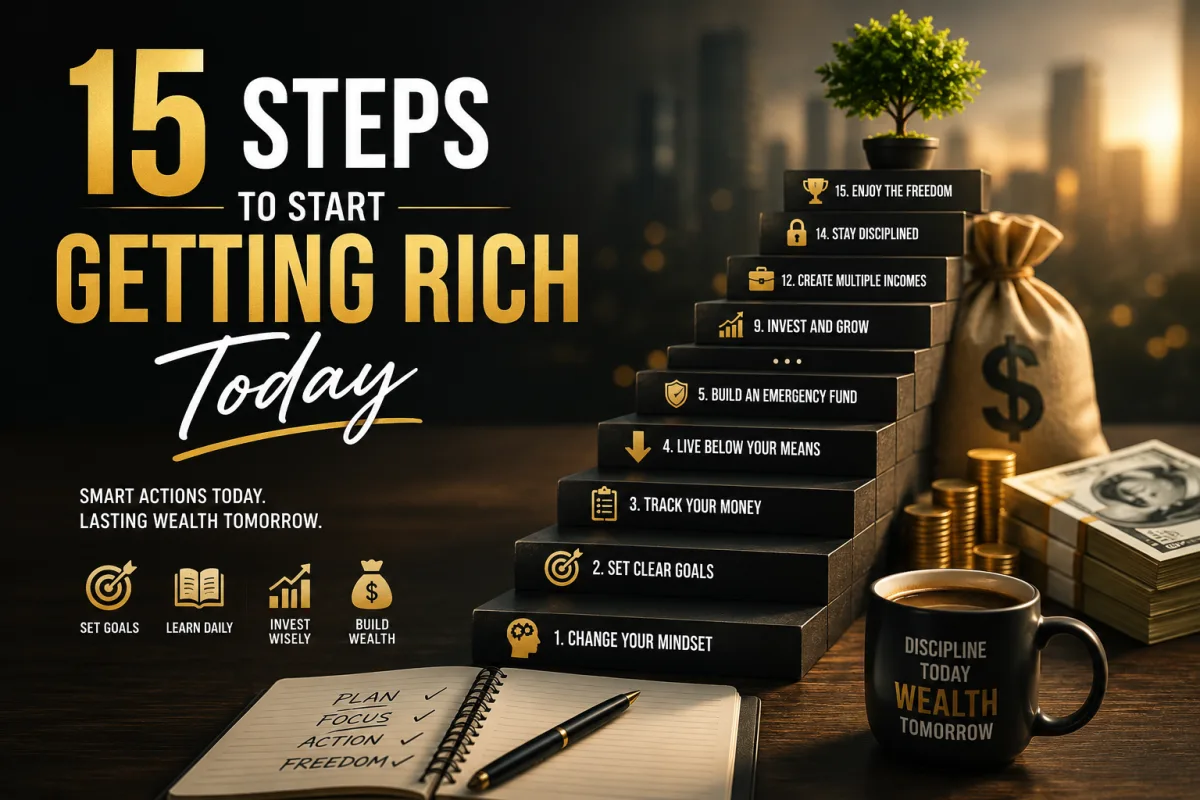
The path from poverty to multi-millions can be summarized simply, but living it requires discipline.
Stabilize first. Increase income. Control lifestyle. Eliminate destructive debt. Build savings. Learn assets. Invest consistently. Build or buy ownership. Use risk intelligently. Protect the downside. Let compounding work. Define freedom. Prepare the next generation.
Each stage supports the next. Skipping stages creates fragility. Investing without emergency savings can lead to forced selling. Starting a business without financial control can create chaos. Taking debt without income stability can create danger. Chasing high returns without education can destroy capital. Building wealth without protection can invite loss.
The path is not perfectly linear. Life will interrupt it. Job losses, family obligations, health problems, market declines, mistakes, and setbacks may slow progress. But the principles remain. Return to stability. Rebuild surplus. Continue learning. Keep acquiring assets. Protect what has been built.
The people who make the journey are not always the smartest or the luckiest. They are often the ones who keep converting pain into discipline, income into capital, capital into assets, and assets into freedom.
The Mindset That Carries the Journey
The mindset required is not blind optimism. It is grounded belief.
Blind optimism says everything will work out without a plan. Grounded belief says the future can improve if behavior, skills, systems, and decisions improve. Blind optimism ignores obstacles. Grounded belief studies them. Blind optimism chases shortcuts. Grounded belief builds foundations.
A person from poverty must often believe in a future they have not seen modeled closely. That is difficult. If no one around you owns assets, investing may feel foreign. If no one negotiates salaries, asking for more may feel wrong. If no one starts businesses, entrepreneurship may feel impossible. If debt is normal, freedom may feel unrealistic.
But every new financial identity begins before the evidence is complete.
You become an investor by investing. You become disciplined by keeping promises. You become an owner by acquiring ownership. You become financially literate by studying money. You become free by making decisions that favor freedom before freedom has fully arrived.
The journey from poverty to multi-millions is not only a change in net worth. It is a change in identity. From survivor to strategist. From consumer to owner. From short-term reaction to long-term design. From scarcity alone to stewardship.
The Final Lesson
There is no honest guarantee that every person who starts in poverty will become a multi-millionaire. Circumstances differ. Health, family responsibilities, local economies, discrimination, education access, timing, and luck all matter. Any message that ignores those realities is selling fantasy.
But it is equally false to say the path is unknowable.
The proven path is not a secret. It is the disciplined application of financial principles over time. Earn more. Spend less than you earn. Avoid destructive debt. Build capital. Buy assets. Increase ownership. Take intelligent risks. Protect against ruin. Learn constantly. Surround yourself with higher standards. Let compounding work. Define freedom before lifestyle consumes it.
This path does not always move quickly. In the early years, progress may feel painfully slow. The emergency fund grows slowly. Debt falls slowly. Skills improve quietly. Investments look small. Business ideas fail. Family pressure appears. Motivation fades. But the system keeps working if the person keeps returning to it.
Then one day, the numbers begin to look different. Debt is gone. Savings are real. Investments produce income. Business equity has value. Skills command higher pay. Opportunities improve. Choices expand. The person who once lived in survival mode now has options.
That is financial freedom beginning to appear.
Multi-millions are not built by wishing for a different life. They are built when a person designs a different financial machine and keeps feeding it with skill, discipline, capital, ownership, and time.
The journey begins with one decision: to stop being only a consumer of money and become a builder of assets.
From there, the path is difficult, but it is real.
 Article
 Article
 Article
 Article
 Article
 Article
 Article
 Article