
The First Wealth Decision: How Beginners Start Building Real Financial Strength
Building wealth begins with a decision that is easy to underestimate.
It is not the decision to buy a stock. It is not the decision to start a business. It is not the decision to follow a famous investor, chase a market trend, or memorize complicated financial terms. The first wealth decision is simpler and more personal: you decide that money will no longer pass through your life without direction.
That decision changes everything.
Many people earn money for years without building wealth because income alone does not create financial strength. Income is only the beginning. What matters is what happens after money arrives. Does it disappear into bills, impulse spending, interest payments, and lifestyle pressure? Or is part of it directed toward savings, investments, skills, ownership, and future freedom?
Wealth is not built by accident. It is built through repeated decisions. Some are large, such as buying a home, starting a business, changing careers, or investing through market downturns. Most are small, such as saving part of every paycheck, avoiding unnecessary debt, increasing retirement contributions, learning a new skill, reviewing expenses, and refusing to spend money simply to impress others.
Beginners often imagine wealth building as something reserved for people who already have money. That belief is understandable, but dangerous. It turns wealth into an identity instead of a process. The truth is that most wealth-building principles can be practiced before a person feels wealthy. In fact, they must be practiced before wealth appears.
A person does not become financially strong and then start behaving wisely. More often, a person starts behaving wisely and gradually becomes financially strong.
This article is for beginners, but it will not treat beginners as incapable. The basics of wealth are simple enough to understand and powerful enough to transform a life when practiced consistently. The challenge is not intelligence. The challenge is behavior, patience, and clarity.
Wealth is not merely having a large bank balance. It is having assets, options, resilience, and time. It is the ability to survive emergencies without panic. It is the ability to make choices without being trapped by every paycheck. It is the ability to invest in your future instead of constantly paying for your past. It is the gradual shift from financial reaction to financial control.
What Wealth Really Means
Before learning how to build wealth, it is important to understand what wealth is.
Wealth is not the same as income. Income is the money you receive from work, business, investments, or other sources. Wealth is what you keep and build. A person earning a high salary can be broke if their expenses, debts, and lifestyle consume everything. A person earning a moderate income can become wealthy if they consistently save, invest, and acquire assets over time.
Wealth is also not the same as looking rich. A new car, expensive clothes, luxury vacations, and a large home may signal success, but they may also signal debt. Many people confuse visible spending with financial strength. Real wealth is often quiet. It may look like retirement accounts, emergency savings, a paid-off loan, a growing investment portfolio, business equity, insurance protection, or freedom from high-interest debt.
Wealth is measured by ownership and resilience. What do you own? What do you owe? How long could you survive without your next paycheck? How much of your income is already promised to lenders? Do your assets grow while you sleep? Are you building future options, or are you only maintaining current appearances?
These questions reveal financial strength more accurately than lifestyle does.
A beginner should think of wealth as a system with several parts. Cash flow keeps the system alive. Savings protect the system. Debt management prevents leaks. Investing grows the system. Income expansion feeds the system. Insurance protects the system from disaster. Financial knowledge improves the system over time.
No single part is enough. A person who invests but has no emergency fund may be forced to sell investments at the wrong time. A person who saves but never invests may lose purchasing power over time. A person who earns more but spends more may never escape financial pressure. A person who avoids debt but never builds assets may remain stable but not free.
Wealth building requires coordination. The beginner’s goal is not perfection. The goal is to make the system stronger every year.
The Foundation: Spend Less Than You Earn
Every wealth plan begins with a gap.
The gap is the distance between what you earn and what you spend. If you earn more than you spend, you create surplus. That surplus can become savings, investments, debt payments, education, business capital, or security. If you spend everything you earn, there is no surplus. If you spend more than you earn, you create debt.
This sounds basic, but it is the foundation of all personal wealth. Without surplus, there is no capital to deploy. Without capital, you remain dependent on the next paycheck. Without breathing room, every unexpected expense becomes a crisis.
Beginners often look for advanced strategies before fixing the gap. They ask which stock to buy, which business to start, or which investment will produce passive income. Those questions matter later. The first question is more direct: does your monthly life produce surplus?
If the answer is no, wealth building must begin with cash flow.
Cash flow is not about shame. It is about awareness. Many people do not know where their money goes because spending happens in fragments. A subscription here, a restaurant meal there, delivery fees, small upgrades, interest charges, convenience purchases, social obligations, bank fees, and impulse spending. Each item may seem harmless. Together, they can consume the future.
The goal is not to become miserable or to remove all enjoyment from life. Extreme deprivation rarely lasts. The goal is to become intentional. Money should move toward what matters, not leak toward what is forgotten.
A beginner can start by tracking spending for one month. Do not judge it at first. Observe it. Separate spending into essential needs, financial obligations, future-building payments, and lifestyle choices. The purpose is to see the truth clearly.
Once the truth is visible, decisions become easier. Some expenses may be necessary. Some may be valuable. Some may be habits. Some may be emotional. Some may be maintained only because canceling, negotiating, or changing them feels inconvenient.
Wealth begins when you stop treating every expense as permanent.
Create a Beginner Budget That Actually Works
A budget is not a punishment. It is a plan for power.
Many people dislike budgeting because they imagine it as restriction. But a useful budget does not exist to make life smaller. It exists to make priorities clearer. A budget tells your money where to go before the world tells it where to disappear.
For beginners, a budget should be simple enough to maintain. A complicated system that gets abandoned after two weeks is less useful than a basic system used for years.
Start with four categories.
The first category is needs. These include housing, utilities, basic groceries, transportation, insurance, essential medical costs, and minimum debt payments. Needs are the expenses required to keep life functioning.
The second category is future money. This includes emergency savings, investing, extra debt payments, retirement contributions, and savings for known goals. This category is the heart of wealth building.
The third category is lifestyle. This includes dining out, entertainment, shopping, travel, hobbies, upgrades, subscriptions, and personal spending. Lifestyle spending is not wrong, but it must have boundaries.
The fourth category is giving and family obligations, if relevant. Many people support relatives, communities, religious institutions, or causes. These commitments should be planned honestly instead of treated as surprises every month.
A beginner does not need a perfect percentage immediately. The first goal is to make sure future money exists. Even a small amount matters because it builds the habit of paying your future self. Over time, the goal should be to increase that amount.
One of the strongest budgeting habits is automation. When money arrives, automatically move a portion to savings or investments before lifestyle spending begins. This is sometimes called paying yourself first. The idea is simple: if wealth building waits until the end of the month, it often loses. Bills, wants, and emergencies will compete for every dollar. Automatic saving protects the future before the present consumes it.
A budget should also include irregular expenses. Many budgets fail because they ignore costs that do not happen every month: car repairs, school fees, insurance premiums, holidays, medical visits, clothing, home maintenance, professional licenses, gifts, and travel. These expenses are not emergencies if they are predictable. They should be saved for gradually.
The best beginner budget is not the strictest. It is the one you can actually follow. It should create surplus, reduce stress, and make progress visible.
Build an Emergency Fund Before Chasing Returns
An emergency fund is one of the least glamorous parts of wealth building. It is also one of the most important.
An emergency fund is money set aside for unexpected expenses or income disruption. It protects you from turning every problem into debt. Without emergency savings, a car repair becomes a credit card balance. A medical bill becomes a loan. A job loss becomes panic. A family emergency becomes financial instability.
Beginners often want to invest immediately, and investing is essential for long-term wealth. But investing without emergency savings can create a fragile situation. If markets decline and an emergency arrives, you may be forced to sell investments at a loss. The emergency fund exists to prevent forced selling and desperate borrowing.
A starter emergency fund may be modest. The first target can be enough to cover a small but disruptive expense. After that, aim for one month of essential expenses, then three months, then more depending on your job stability, family responsibilities, health, and income variability.
The money should be safe and accessible. An emergency fund is not meant to produce the highest return. It is meant to be there when needed. This is why it should not be invested in volatile assets. Its job is protection, not growth.
Some people hesitate to keep cash because inflation reduces purchasing power over time. That concern is valid for long-term wealth, but it misses the purpose of emergency money. Cash is not the engine of wealth. It is the shock absorber. A car needs an engine, but it also needs brakes. Investments are the engine. Emergency savings are part of the brakes.
When beginners build emergency funds, they often experience a psychological shift. Life feels less fragile. Decisions become calmer. A person with savings can negotiate better, avoid predatory loans, leave unhealthy situations more easily, and handle setbacks without financial collapse.
That stability is not small. It is the emotional foundation of wealth.
Understand Debt Before It Controls You
Debt is one of the most important forces in personal finance because it can either help build wealth or quietly destroy it.
Not all debt is the same. Debt used to acquire or improve a productive asset may have a role in wealth building. A reasonable mortgage, a business loan with strong cash flow, or education debt tied to a clear increase in earning power can sometimes be strategic. But debt used for consumption, status, or impulse purchases often weakens financial progress.
The most dangerous debt for beginners is high-interest consumer debt. Credit cards, payday loans, personal loans, and expensive financing arrangements can turn yesterday’s spending into tomorrow’s burden. Interest charges reduce future cash flow. The more income that goes to lenders, the less income is available for saving and investing.
Debt also creates emotional pressure. A person with heavy payments may feel trapped in a job, relationship, business, or city because they cannot afford disruption. Debt reduces optionality. It makes life less flexible.
Beginners should list every debt clearly. Include the balance, interest rate, minimum payment, due date, and lender. Clarity removes some of the fear. Once debts are visible, they can be attacked.
There are two common repayment methods. The debt snowball focuses on paying off the smallest balance first while making minimum payments on the rest. This creates quick wins and motivation. The debt avalanche focuses on paying off the highest-interest debt first, which can save more money mathematically. The best method is the one you will follow consistently.
While paying down debt, avoid adding new debt unless absolutely necessary. It is difficult to escape a hole while still digging. This may require lifestyle changes, uncomfortable conversations, and delayed gratification. But the reward is powerful: every debt paid off frees cash flow.
Imagine a person who pays off a loan with a monthly payment. That payment can now be redirected toward emergency savings, investing, or another debt. Debt freedom creates momentum because money that once belonged to lenders returns to your control.
The beginner’s debt rule should be clear: borrow carefully, understand the terms, avoid high-interest consumer debt, and never confuse monthly affordability with true affordability. A payment may fit into your budget while still delaying your future.
Increase Income, But Do Not Let Lifestyle Absorb It
Cutting expenses matters, but there is a limit to how much a person can cut. Income growth expands possibility.
Beginners sometimes focus only on frugality. Frugality is useful because it creates discipline and surplus. But wealth building becomes much easier when income rises and expenses remain controlled. The combination is powerful: earn more, keep more, invest more.
Income can increase in several ways. You can improve skills, negotiate pay, change employers, work overtime temporarily, start a side business, freelance, earn commissions, build a digital product, rent out an asset, or move into a higher-value industry. Not every path fits every person, but almost everyone can think strategically about earning power.
The modern economy rewards skills that solve valuable problems. Technical skills, sales ability, leadership, communication, financial knowledge, healthcare expertise, trade skills, software capability, project management, writing, design, operations, and entrepreneurship can all increase income when applied well.
Beginners should treat skill development as an investment. A course, certification, apprenticeship, book, mentorship, or difficult project can produce returns far greater than many financial assets if it increases earning power for years. The return on self-education can be enormous when it leads to better work.
But income growth has a trap: lifestyle inflation.
Lifestyle inflation occurs when spending rises automatically with income. A raise becomes a larger apartment. A bonus becomes a new car. A promotion becomes expensive restaurants, clothes, travel, and subscriptions. The person earns more but feels no richer because every increase is absorbed.
The solution is to decide in advance what happens when income rises. For example, commit to investing a percentage of every raise. Use part of a bonus to reduce debt before spending any of it. Increase retirement contributions when salary increases. Save business profits before upgrading lifestyle.
This does not mean you cannot enjoy progress. Enjoyment matters. The danger is allowing every income increase to become permanent spending. The wealthy use income growth to buy assets. Many others use income growth to buy obligations.
A beginner who learns to capture raises early can change their financial trajectory. The first raise invested may feel small. The fifth raise invested can become significant. Over a career, this habit may be worth more than any single investment decision.
Buy Assets, Not Just Things
One of the central principles of wealth building is learning the difference between assets and consumption.
An asset is something that has the potential to produce income, appreciate in value, reduce future expenses, or increase earning power. Examples include diversified investments, business equity, rental property, productive equipment, intellectual property, education tied to income growth, and certain forms of real estate.
Consumption is money spent for immediate use or enjoyment. Food, entertainment, travel, clothing, furniture, gadgets, and experiences can improve life, but they usually do not create future cash flow. Some consumption is necessary. Some is meaningful. The problem arises when consumption leaves no room for assets.
Wealthy people often become wealthy because they own assets. Not because they never spend, but because they consistently direct meaningful capital toward things that can grow.
For beginners, the easiest asset to start with is often a diversified investment account. Through retirement accounts or brokerage accounts, a person can own shares of many companies. This allows ordinary workers to become partial owners of productive businesses. Over time, those businesses may generate profits, reinvest, pay dividends, and increase in value.
Another asset is a business. This does not have to be a giant company. A small service business, online business, trade business, consulting practice, or product-based business can create equity if it develops customers, systems, and profit beyond the owner’s immediate labor.
Skills can also behave like assets. A valuable skill can produce higher income for decades. Unlike a stock or property, a skill cannot be sold separately from you, but it can create cash flow through your labor, business, or expertise.
The beginner’s goal is to gradually shift money from consumption to asset acquisition. This does not require wealth at the start. It requires direction. Even small monthly investments create the identity of an owner. Over time, the amounts can grow.
Every dollar has a destination. Some dollars maintain life. Some dollars create memories. Some dollars buy comfort. Some dollars build the future. Wealth grows when enough dollars are assigned to the future.
Start Investing Before You Feel Like an Expert
Many beginners delay investing because they feel intimidated. They think they need to understand every financial term, predict the market, identify the best stock, or wait for the perfect time. This delay can become expensive.
You do not need to know everything to begin investing wisely. You do need to understand the basics.
Investing is the act of putting money into assets with the expectation that they may grow, produce income, or both. The most common beginner investments include retirement accounts, index funds, mutual funds, exchange-traded funds, bonds, and sometimes real estate. For many beginners, diversified funds are a practical starting point because they spread money across many companies instead of relying on one.
The stock market can be volatile. Prices rise and fall. Some years are excellent. Some are painful. Beginners must understand that volatility is normal. The purpose of long-term investing is not to avoid every decline. It is to own productive assets long enough for growth and compounding to work.
Compounding is the process where returns begin earning returns. In the early years, compounding may feel slow. Later, it can become powerful because growth builds on a larger base. Time is one of the beginner’s greatest advantages. A person who starts investing small amounts early may outperform someone who waits years and invests larger amounts later.
The most important investing habits for beginners are consistency, diversification, low costs, patience, and emotional discipline.
Consistency means investing regularly, not only when you feel excited. Diversification means not depending on one company, one sector, or one idea. Low costs matter because fees reduce returns over time. Patience allows compounding to work. Emotional discipline prevents panic selling during downturns and reckless buying during hype.
Beginners should be cautious of anyone promising guaranteed high returns, secret strategies, or fast wealth. Real investing involves risk. Fraud and speculation often disguise themselves as opportunity. If an investment cannot be explained clearly, requires urgency, or depends mainly on recruiting others, be careful.
Investing does not require arrogance. It requires humility. The humble investor admits they cannot predict everything, so they diversify. They admit emotions can mislead them, so they automate. They admit markets will decline, so they keep emergency savings. They admit wealth takes time, so they remain patient.
The best time to learn investing is before you have large sums. Small mistakes are cheaper than large mistakes. Begin carefully, learn continuously, and increase sophistication over time.
Use Retirement Accounts as Wealth-Building Machines
Retirement accounts are often misunderstood. Some beginners see them as boring, distant, or only relevant for older people. In reality, they can be among the most powerful wealth-building tools available to ordinary workers.
A retirement account gives structure to long-term investing. Depending on the country and account type, it may offer tax advantages, employer contributions, automatic payroll deductions, or investment access. These features can make wealth building easier and more efficient.
Employer matching is especially valuable where available. If an employer contributes money when you contribute, that is part of your compensation. Failing to use a match can mean leaving money unclaimed. Beginners should understand their workplace benefits carefully.
The power of retirement investing comes from time and repetition. Money contributed regularly over decades can grow substantially. The investor does not need to predict every market movement. They need to participate consistently in long-term growth while avoiding major behavioral mistakes.
Retirement accounts also help separate future money from current spending. Money inside the account is less likely to be used for impulse purchases. The structure creates discipline.
Beginners should learn the rules of their specific accounts: contribution limits, tax treatment, withdrawal rules, employer match policies, investment options, fees, and beneficiary designations. A retirement account is not something to open and ignore forever. It should be reviewed periodically, especially after job changes, marriage, children, divorce, or major financial shifts.
The mistake is thinking retirement is too far away to matter. The distant future becomes the present faster than most people expect. A person who starts early gives their future self a gift that cannot be rushed later: time.
Protect Yourself With Insurance and Risk Planning
Wealth building is not only about growth. It is also about protection.
A financial plan can be damaged quickly by illness, accident, disability, death, legal claims, property loss, or business interruption. Insurance exists to protect against risks that could be financially devastating.
Beginners often ignore insurance because it feels like an expense with no immediate reward. But insurance is not meant to make you rich. It is meant to prevent one event from making you poor.
The types of insurance needed depend on life circumstances. Health coverage, auto insurance, renters or homeowners insurance, disability insurance, life insurance, liability coverage, and business insurance may all be relevant at different stages. A single person with no dependents has different needs from a parent with children. A renter has different needs from a homeowner. An employee has different risks from a business owner.
Life insurance is especially important for people whose income supports others. The purpose is not emotional comfort; it is financial protection. If dependents would struggle without your income, coverage may be necessary. Disability insurance can also be critical because the ability to earn income is often a person’s largest financial asset.
Risk planning also includes legal and administrative basics. Beneficiary designations should be updated. Important documents should be organized. Couples should understand shared finances. Business owners should use written agreements. Parents should consider guardianship planning. These steps may feel uncomfortable, but avoiding them does not remove risk.
Wealth is fragile when protection is ignored. A beginner who combines saving, investing, and insurance builds a stronger foundation than someone who chases returns while leaving major risks uncovered.
Build Credit Without Becoming a Servant to Debt
Credit can be useful, but it must be handled carefully.
A strong credit profile may help with renting, buying a home, qualifying for reasonable loan terms, obtaining business credit, or reducing insurance costs in some places. But credit is not wealth. It is access to borrowed money. Access can help or harm depending on behavior.
Beginners should build credit by paying bills on time, keeping balances low, avoiding unnecessary applications, understanding loan terms, and using credit cards responsibly if they use them at all. Payment history matters because lenders want evidence of reliability.
The danger is psychological. Credit can make spending feel painless. A card swipe separates the pleasure of buying from the pain of paying. Financing can make expensive purchases seem affordable by shrinking them into monthly payments. But monthly payments can quietly capture your future.
Good credit should increase options, not increase recklessness. It should help you secure fair terms when borrowing is strategic, not encourage you to live beyond your means.
A beginner should treat credit as a tool with sharp edges. Use it to build credibility. Do not use it to imitate wealth.
Choose Your Environment Carefully
Financial behavior is influenced by environment.
The people around you, the media you consume, the neighborhood you live in, the workplace culture you absorb, and the social expectations you accept all shape money decisions. If everyone around you spends aggressively, debt may feel normal. If everyone around you invests, builds businesses, studies markets, and discusses opportunity, wealth building may feel normal.
Beginners often underestimate this. They assume financial decisions are purely individual. But humans are social. We compare, imitate, justify, and compete. Lifestyle pressure can be expensive because it turns other people’s expectations into your financial obligations.
One of the most powerful beginner decisions is to reduce exposure to environments that encourage financial self-sabotage. This does not mean abandoning friends or family because they think differently. It means becoming aware of influence. You can love people without copying their money habits.
Build an information environment that supports growth. Read financial education. Listen to thoughtful investors and business builders. Learn from people who value ownership, discipline, and long-term thinking. Avoid content that turns wealth into gambling, status, or fantasy.
Also seek peers who are building. A friend who is paying off debt, learning a skill, starting a business, or investing consistently can be more valuable to your future than a crowd that only normalizes spending. Accountability becomes easier when progress is shared.
Environment does not determine destiny, but it influences default behavior. Wealth building becomes easier when the people and information around you make wise choices feel normal.
Learn the Difference Between Good Sacrifice and Bad Sacrifice
Building wealth requires sacrifice, but not all sacrifice is wise.
Good sacrifice trades something less important today for something more important tomorrow. It may mean cooking more meals at home to build an emergency fund. Driving a reliable used car instead of financing a luxury vehicle. Living with roommates temporarily to invest. Working evenings to build a skill. Delaying a vacation to eliminate debt.
Bad sacrifice damages health, relationships, integrity, or long-term capacity in ways that money cannot easily repair. Working endlessly without rest, ignoring medical care, neglecting children, destroying a marriage, or compromising ethics for money may create financial gain while weakening life.
Beginners need wisdom here. Wealth should support life, not consume it. The goal is not to become rich while becoming empty. The goal is to build financial strength in a way that protects dignity, health, family, and purpose.
There will be seasons of intensity. A person may work hard to escape debt, finish school, grow a business, or save aggressively. But intensity should have direction. It should not become permanent chaos.
Money is a tool. If the tool destroys the builder, the strategy has failed.
Avoid the Beginner’s Trap of Chasing Fast Wealth
The desire to become wealthy quickly is understandable. Financial stress is exhausting. Slow progress can feel frustrating. Social media makes other people’s success appear instant. But fast wealth promises are dangerous because they often exploit impatience.
Beginners are common targets for scams, speculative schemes, and exaggerated investment claims. The pitch usually contains similar ingredients: urgency, exclusivity, dramatic returns, simple explanations for complex outcomes, testimonials, and pressure to act before thinking.
Real wealth building is rarely instant. Businesses take time. Investing takes time. Skill development takes time. Debt repayment takes time. Compounding takes time. There are exceptions, but exceptions are not reliable plans.
This does not mean beginners should avoid ambition. Ambition is valuable. The danger is confusing ambition with desperation. Desperation makes people ignore risk. It makes them trust strangers with money they cannot afford to lose. It makes them borrow to speculate. It makes them chase what they do not understand.
A sound wealth plan should be understandable. It should not require secrecy. It should survive basic questions. Where does the return come from? What is the risk? How does the person promoting it get paid? What happens if the market falls? Can I lose my money? Can I exit? Is this regulated? Is there a written agreement?
If an opportunity collapses under simple questions, it is not an opportunity. It is a warning.
Build Wealth Through Habits Before Strategies
Advanced strategies cannot compensate for poor habits.
A person who overspends, avoids planning, panics during volatility, ignores debt, and chases hype will struggle even with access to sophisticated investments. A person with strong habits can build wealth with simple tools.
The most important wealth habits are not complicated. Track your money. Spend less than you earn. Save automatically. Invest consistently. Avoid high-interest debt. Increase income. Learn continuously. Review progress. Protect against major risks. Stay patient.
These habits sound ordinary because they are. Their power comes from repetition.
Imagine two beginners. One searches constantly for the perfect investment but saves irregularly and carries credit card debt. The other invests modestly every month, avoids consumer debt, builds skills, and increases contributions over time. The second person may appear less sophisticated, but they are building a stronger system.
In personal finance, consistency often beats cleverness. Cleverness may produce occasional wins. Consistency produces a life.
Create a Simple Wealth Plan
A beginner wealth plan does not need to be complicated. It should answer several practical questions.
How much money comes in each month? How much goes out? How much is being saved or invested? What debts exist? What interest rates are being paid? How much emergency money is available? What insurance protection is needed? What income growth strategy is being pursued? What assets are being acquired? What financial knowledge is being developed?
Turn these answers into a written plan.
First, stabilize cash flow. Track spending, reduce waste, and create surplus.
Second, build a starter emergency fund. This prevents small emergencies from becoming debt.
Third, attack high-interest debt. Interest is a leak in the wealth system.
Fourth, begin investing consistently, especially through tax-advantaged or employer-supported accounts where available.
Fifth, increase income through skills, negotiation, career moves, business building, or additional income streams.
Sixth, expand emergency savings and insurance protection as responsibilities grow.
Seventh, keep learning and adjust the plan annually.
The written plan matters because vague intentions are weak. “I want to be better with money” is not a plan. “I will save a fixed amount every payday, pay extra toward my highest-interest debt, contribute to retirement, and review spending every Sunday” is closer to a plan.
A plan turns desire into behavior.
Measure Progress the Right Way
Beginners often measure progress by how much money is in the checking account. That number matters, but it is incomplete.
Better measures include net worth, savings rate, debt reduction, investment balance, emergency fund coverage, income growth, credit improvement, and financial stress level.
Net worth is what you own minus what you owe. It may be negative at first, especially for people with student loans, consumer debt, or little savings. That is not a reason for shame. It is a starting point. The goal is to move the number in the right direction over time.
Savings rate shows how much of your income is being directed toward the future. Increasing this rate is one of the strongest signs of progress.
Debt reduction matters because every balance paid down improves flexibility. Investment balance matters because assets are the engine of future growth. Emergency fund coverage matters because resilience is part of wealth.
Progress should be reviewed regularly, but not obsessively. Monthly reviews are useful for cash flow. Quarterly or annual reviews may be better for investment progress because markets fluctuate.
The purpose of measurement is not self-criticism. It is feedback. If the numbers improve, continue. If they stall, adjust. If they worsen, investigate.
What gets measured tends to become more real. Beginners who measure progress are less likely to drift.
Understand That Wealth Building Has Seasons
Financial life does not move in a straight line.
There may be seasons of debt repayment, seasons of aggressive saving, seasons of career investment, seasons of family responsibility, seasons of business building, seasons of recovery, and seasons of growth. A beginner should not expect every season to look the same.
During some seasons, the main goal may be survival and stabilization. During others, the goal may be expansion. A new parent, recent graduate, business owner, caregiver, or person recovering from job loss may need different priorities.
The danger is comparison. Someone else may be investing heavily while you are paying off debt. Someone else may be buying property while you are building an emergency fund. Someone else may be starting a business while you are stabilizing income. Their season is not your season.
Wealth building requires personal context. The principles remain, but the order and pace may vary.
A beginner should ask: what is the most important financial weakness to fix next? If you have no emergency fund, build one. If high-interest debt is draining you, attack it. If income is too low, invest in earning power. If savings are strong but money is idle, learn to invest. If dependents rely on you, review insurance.
The right next step is the one that strengthens the weakest part of your system.
The Role of Mindset in Building Wealth
Money mindset is not magic. Positive thinking alone does not build wealth. But beliefs influence behavior, and behavior influences outcomes.
A person who believes wealth is impossible may not try. A person who believes investing is only for the rich may delay for years. A person who believes all debt is normal may never question payments. A person who believes looking successful matters more than becoming secure may overspend. A person who believes they can learn may begin.
Beginners need a mindset built on responsibility, patience, and possibility.
Responsibility means accepting influence over your financial choices, even when circumstances are difficult. It does not mean pretending everyone starts with the same advantages. They do not. Some people inherit money, education, networks, stability, and support. Others start with debt, family obligations, low wages, or financial trauma. But responsibility means focusing on the choices still available.
Patience means understanding that wealth grows through time. It resists the pressure to compare your beginning with someone else’s middle.
Possibility means believing that skills can improve, income can grow, habits can change, and financial knowledge can be learned.
A strong money mindset does not deny reality. It faces reality without surrendering to it.
Teach Yourself the Language of Money
Financial ignorance is expensive.
Beginners do not need to become economists, but they should learn the basic language of money: assets, liabilities, interest, inflation, diversification, risk, return, liquidity, cash flow, net worth, taxes, insurance, credit, equity, bonds, funds, and compounding.
Each concept improves decision-making. Understanding interest helps you see why credit card debt is dangerous. Understanding inflation helps you see why long-term cash hoarding is risky. Understanding diversification helps you avoid betting everything on one idea. Understanding liquidity helps you avoid being asset-rich but cash-poor.
Financial education is not a one-time event. It is a lifelong advantage. Read books, listen to credible educators, study your own financial statements, ask questions, and learn from mistakes. The more fluent you become, the less vulnerable you are to confusion and manipulation.
Money is a language. Beginners build power by learning to speak it.
Make Wealth Building Boring Enough to Work
There is a strange truth about personal finance: the best systems often feel boring.
Automatic saving is boring. Diversified investing is boring. Paying down debt is boring. Reviewing insurance is boring. Increasing contributions after a raise is boring. Staying invested through market cycles is boring.
But boring can be beautiful when it works.
Excitement often leads beginners into trouble. Exciting investments, exciting purchases, exciting lifestyles, and exciting promises can drain capital. Boring systems quietly build it.
This does not mean life should be dull. It means wealth building should not depend on constant drama. A strong financial system runs in the background while you live your life. Money moves automatically toward savings and investments. Bills are planned. Debt is shrinking. Skills are growing. Assets are accumulating.
Over time, the boring system produces exciting results: less stress, more options, growing net worth, stronger confidence, and greater freedom.
The Beginner’s Roadmap to Real Wealth
Building wealth for beginners can be reduced to a practical sequence.
First, know your numbers. Track income, expenses, debts, and assets. You cannot improve what you refuse to see.
Second, create surplus. Spend less than you earn by increasing income, reducing waste, or both.
Third, build emergency savings. Protect yourself from small shocks before pursuing aggressive growth.
Fourth, eliminate high-interest debt. Stop allowing interest charges to consume your future.
Fifth, invest consistently. Use simple, diversified tools and focus on long-term participation rather than perfect timing.
Sixth, grow income. Skills and earning power are major wealth-building assets.
Seventh, acquire assets. Turn income into ownership.
Eighth, protect your progress. Use insurance, legal planning, and liquidity to defend against major setbacks.
Ninth, avoid lifestyle inflation. Let income growth expand freedom before it expands obligations.
Tenth, keep learning. Financial wisdom compounds like money does.
This roadmap is simple, but not easy. It requires repetition through real life: unexpected bills, family pressure, market declines, job changes, temptation, fatigue, and comparison. The person who continues through those conditions builds more than wealth. They build financial character.
The First Step Matters Most
Beginners often delay because the full journey feels overwhelming. They imagine the distance between where they are and where they want to be, then freeze. But wealth is not built by solving every problem at once. It is built by taking the next correct step.
If you have no savings, save the first amount. If you have debt, list every balance. If you do not invest, learn the basics of your retirement account. If spending is unclear, track it for thirty days. If income is too low, identify one skill that could increase it. If you are financially disorganized, gather your documents. If you feel ashamed, replace shame with action.
The first step matters because it changes identity. You are no longer someone avoiding money. You are someone managing it. You are no longer waiting for wealth to happen. You are building it.
Every wealthy person, every financially independent household, every successful investor, and every disciplined business owner had to begin somewhere. The beginning may not look impressive. It may be a small transfer to savings, a canceled subscription, an extra debt payment, a first investment contribution, or an honest conversation with a spouse.
Small beginnings are not failures. They are foundations.
Real Wealth Is Built Before It Is Seen
The early stage of wealth building can feel unrewarding because results are not immediately visible. You may make sacrifices and still feel far from wealthy. You may save for months and see only a modest balance. You may invest small amounts and wonder whether it matters. You may pay down debt and feel frustrated that the remaining balance is still large.
This is normal.
Wealth is built underground before it appears above the surface. Habits form before balances grow. Knowledge develops before confidence arrives. Debt shrinks before freedom expands. Investments compound slowly before they become powerful.
The visible breakthrough is often the result of invisible repetition.
A beginner who continues long enough begins to notice changes. Emergencies become manageable. Debt payments disappear. Investments grow. Income improves. Financial conversations become less frightening. Opportunities become easier to accept because there is some cushion. Stress declines. Choices expand.
This is the real reward of wealth building. Not just money, but strength.
Final Lesson: Become an Owner of Your Future
The beginner’s path to wealth is not mysterious. It is demanding, but understandable.
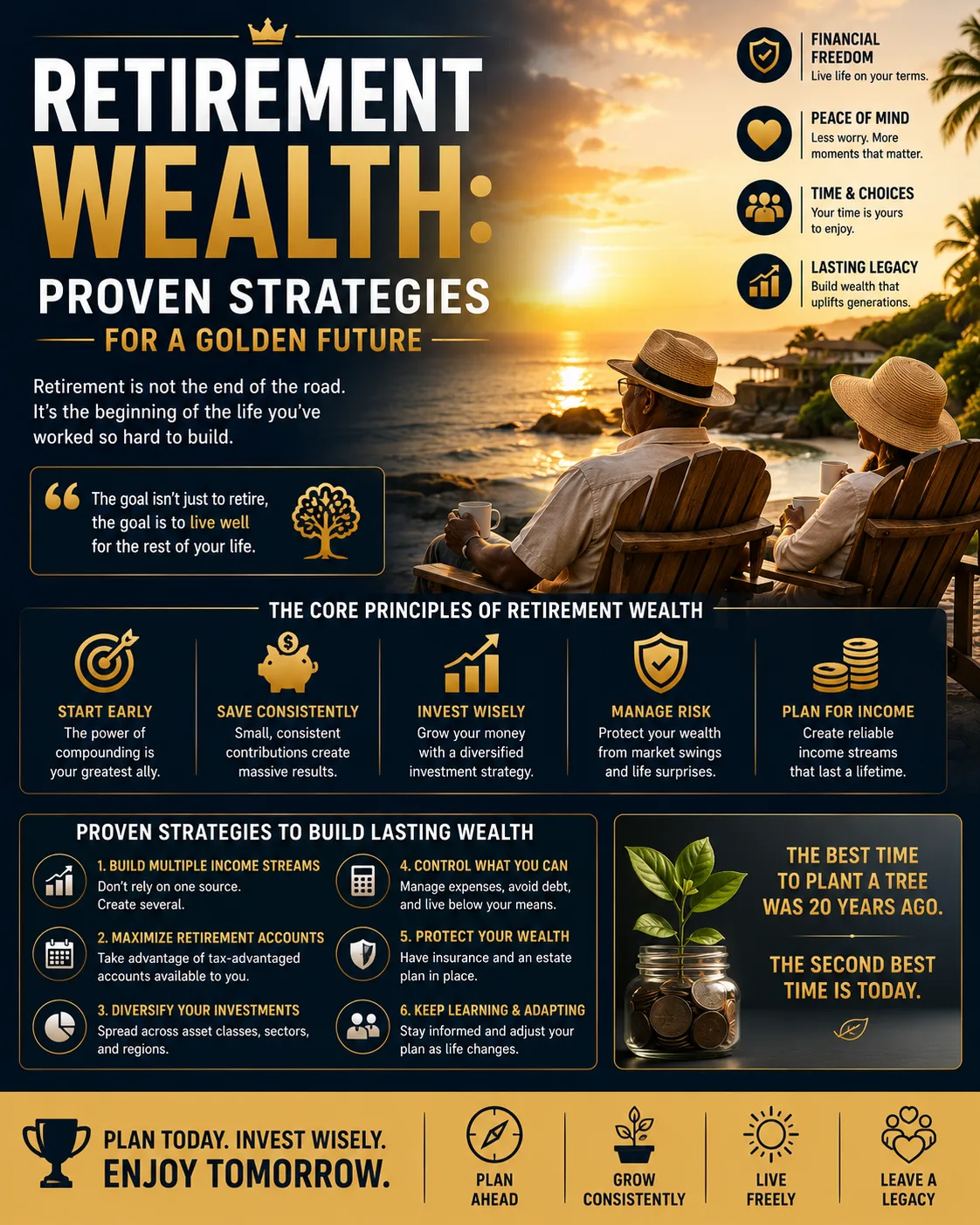
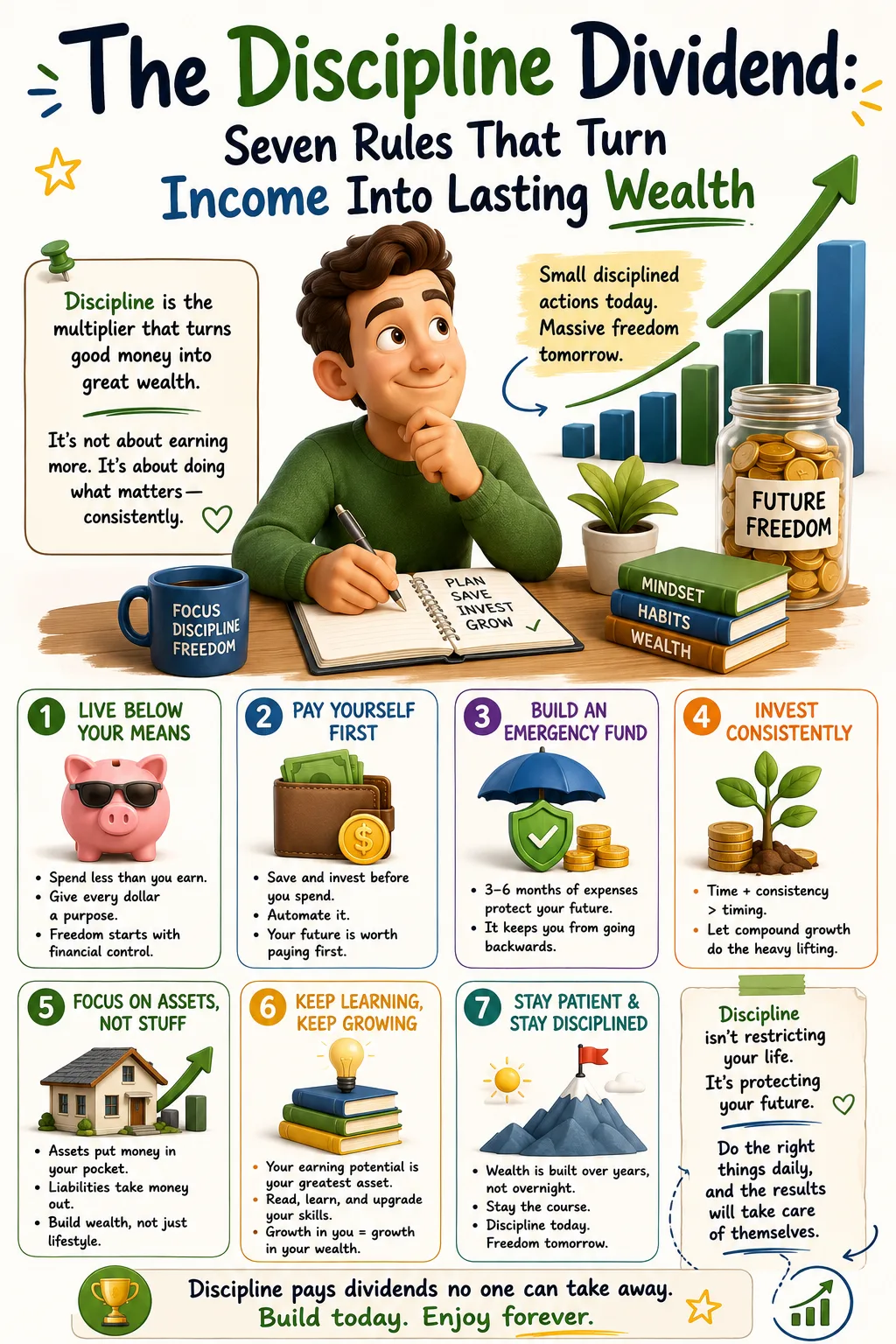
Spend less than you earn. Save for emergencies. Pay down destructive debt. Invest consistently. Increase income. Buy assets. Protect yourself. Keep learning. Think long term. Repeat.
These principles may not sound dramatic, but they have changed countless financial lives. The reason they work is that they shift a person from consumption to ownership, from reaction to planning, from fragility to resilience.
Building wealth is not about becoming obsessed with money. It is about using money to create stability, dignity, options, and freedom. It is about reducing the power of emergencies. It is about giving your future self more choices. It is about building a life that is not controlled by every bill, every lender, every employer, or every crisis.
The first wealth decision is the decision to direct your money with intention.
Once you make that decision, the beginner is no longer merely beginning. The beginner is building.
 Article
 Article
 Article
 Article
 Article
 Article
 Article
 Article