
How to Actually Make Money Online in 2026
The internet has never had more ways to make money, and that is exactly why so many people struggle.
Choice can look like opportunity from a distance. Up close, it can become confusion. One person tells you to start freelancing. Another says dropshipping is back. Someone else insists you should launch a newsletter, create a course, sell templates, build an AI automation agency, become a content creator, trade crypto, manage social media, sell on marketplaces, coach online, or become a prompt engineer. Every path sounds urgent. Every platform has success stories. Every headline suggests someone is getting rich while you are falling behind.
Most of that noise hides the simple truth: making money online in 2026 is not mysterious. It is just frequently misunderstood.
The internet does not pay people for existing online. It pays people for solving problems, creating demand, reducing effort, delivering trust, entertaining attention, educating buyers, building systems, selling useful products, and owning assets that keep producing value. The screen is not the business. The platform is not the strategy. The app is not the income. Online money is still money. It follows value.
What has changed is the speed, scale, and accessibility of value creation. Artificial intelligence can help one person do work that once required a small team. Freelance platforms can connect specialists to clients across borders. E-commerce tools can let a small brand sell without owning a physical storefront. Creator platforms can turn expertise or entertainment into audience-based revenue. Remote work infrastructure lets companies hire beyond their city. Digital products can be sold repeatedly after the first version is built.
These shifts are not imagined. The World Economic Forum’s Future of Jobs Report 2025 identified AI and big data, technological literacy, analytical thinking, creative thinking, resilience, and flexibility as major skills for the changing labor market. Upwork’s research has also highlighted rising demand for AI-related and human-centric skills in independent work, while its 2025 skills reporting pointed to demand in areas such as generative AI, web design, and product management. Fiverr’s 2026 business trends reporting pointed to continued demand around AI automation, AI-generated video ads, video editing, Shopify execution, and content-driven marketing. The creator economy is also projected by market research firms to keep expanding through the decade, with 2026 estimates commonly placing the market in the hundreds of billions of dollars.
Yet none of that means online income is easy. It means the tools are stronger, the competition is broader, and the market is less forgiving of mediocrity.
In 2026, the person who wins online is not usually the person who finds a secret. It is the person who stops looking for one.
The First Principle: Online Money Is Not Separate From the Real Economy
One of the most damaging beliefs about online income is that the internet operates by different economic laws. People imagine that because the business is digital, value does not matter. They want a trick, a shortcut, a loophole, a viral angle, an algorithmic hack, or a template that prints money without skill.
That belief is expensive.
The online economy is still the economy. Buyers still have needs. Businesses still have costs. Customers still compare options. Trust still matters. Reputation still compounds. Bad products still create refunds. Weak services still lose clients. Poor communication still destroys deals. Overpriced nonsense still fails once people recognize it. The internet may help a product spread faster, but it also helps disappointment spread faster.
The proper question is not, “How do I make money online?”
The proper question is, “What valuable outcome can I deliver through the internet?”
That outcome may be convenience, speed, education, entertainment, status, productivity, clarity, design, automation, access, community, analysis, transformation, or specialized expertise. The internet is the delivery system. The value is the business.
This is why two people can use the same platform and get completely different results. One freelancer earns very little because they offer generic work with no positioning, weak proof, and poor communication. Another earns strong fees because they solve a specific business problem, show evidence, understand the buyer, and deliver reliably. One creator posts daily and earns nothing because their content is unfocused and forgettable. Another posts less often but builds trust with a clear audience and a valuable offer. One e-commerce seller loses money because they sell commodity products with thin margins. Another builds a brand, improves customer experience, and owns the relationship with buyers.
The platform did not create the difference. Strategy did.
In 2026, the online income game is not about being everywhere. It is about being useful somewhere specific.
Why Most People Fail to Make Money Online
Most people fail online before they even begin because they choose the wrong starting point.
They start with the method instead of the market. They ask whether they should start a YouTube channel, sell on Etsy, join Upwork, build a course, launch a store, write a newsletter, or create an AI agency. Those are channels. They are not strategies. A channel only matters after you know who you serve, what problem you solve, what value you deliver, and how money changes hands.
The second reason people fail is that they underestimate skill. They believe online money should be fast because the tools are fast. But speed of access is not the same as speed of competence. Anyone can open a design tool. Not everyone understands visual hierarchy, brand positioning, conversion, or buyer psychology. Anyone can ask AI to write copy. Not everyone can create persuasive messaging that reflects a real customer problem. Anyone can create a store. Not everyone can source products, price properly, manage fulfillment, and build trust.
The third reason people fail is inconsistency. They try one path for two weeks, get no results, switch to another, and repeat. The internet rewards iteration, not panic. Most legitimate online income paths require time to learn, test, publish, pitch, improve, and build proof. A person who changes direction every time a new video appears never gives any skill enough time to compound.
The fourth reason is lack of distribution. Many people create things but do not know how to get them in front of buyers. They build a product but have no audience. They learn a skill but do not pitch. They post content but do not understand search, social platforms, partnerships, paid acquisition, email lists, or communities. Online income requires distribution because invisible value earns nothing.
The fifth reason is chasing passive income too early. Passive income is attractive because it promises freedom. But most passive income begins as active skill, active creation, active selling, active audience building, or active capital allocation. A course does not sell itself just because it exists. A digital product does not earn because it is uploaded. A blog does not produce revenue without traffic, trust, and monetization. A rental marketplace listing, software tool, newsletter, affiliate site, or membership must first be built and improved.
The internet can eventually separate income from time, but only after value has been created and systems have been built.
The Real Online Income Map
There are many online income ideas, but most legitimate models fall into five categories.
The first category is selling services. You use your skill to help a client solve a problem. This includes writing, design, editing, bookkeeping, consulting, coding, virtual assistance, automation, marketing, research, tutoring, coaching, recruiting, project management, data analysis, and many other services.
The second category is selling products. These may be physical products through e-commerce or digital products such as templates, courses, software, guides, calculators, presets, research reports, or paid communities.
The third category is selling attention. This includes creator income, advertising, sponsorships, affiliate marketing, newsletters, podcasts, video channels, and social media businesses. Attention becomes valuable when it is trusted, focused, and connected to a buyer or advertiser.
The fourth category is selling access. This includes memberships, subscriptions, paid groups, premium databases, specialized communities, software-as-a-service, and ongoing advisory relationships.
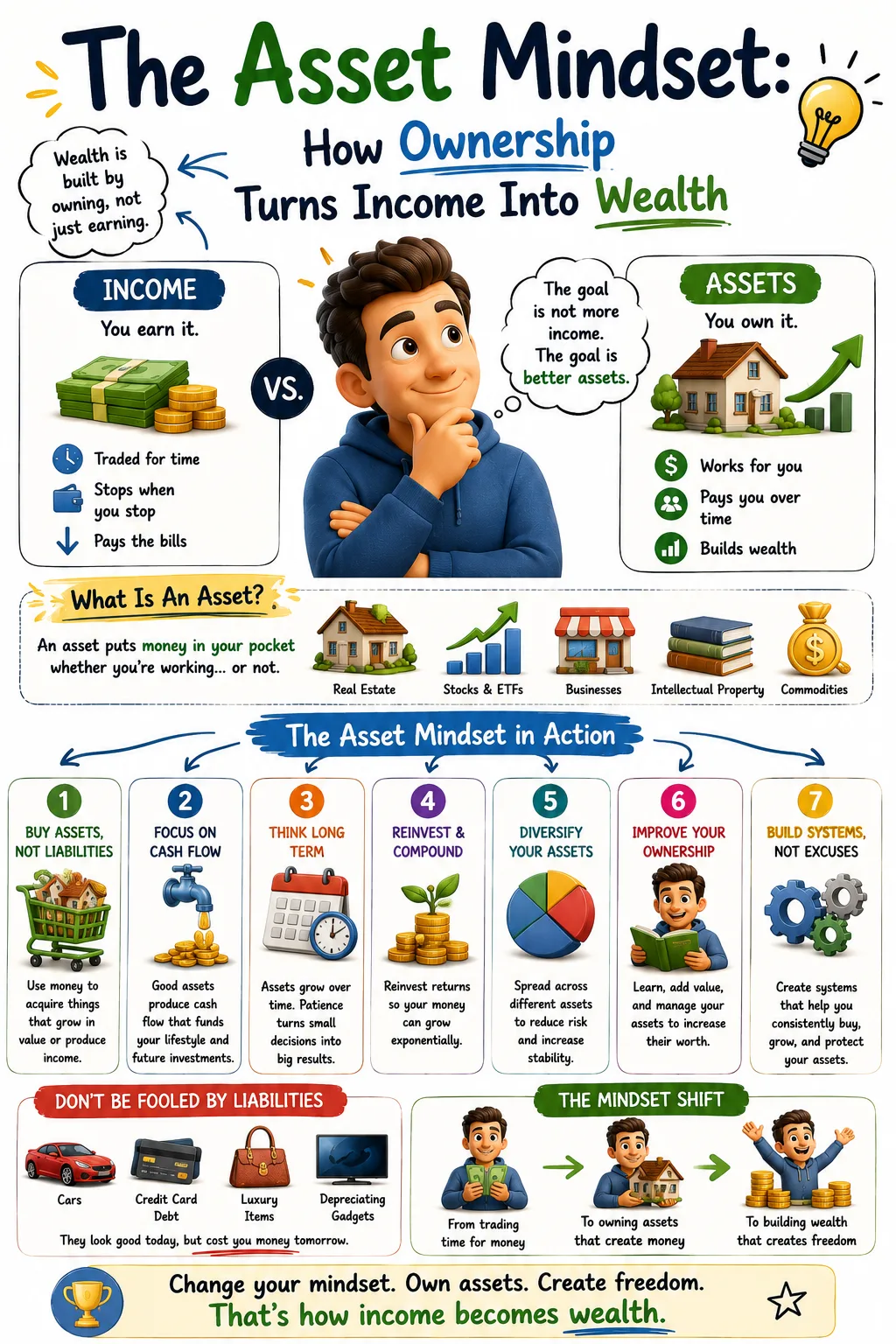
The fifth category is owning assets. This includes equity in online businesses, websites, intellectual property, software tools, content libraries, investment portfolios, royalties, and digital brands that can produce future cash flow.
These categories often overlap. A consultant may sell services, then create templates, then launch a course, then build a membership, then invest profits into assets. A creator may begin with attention, sell products, offer services, and eventually build a company. A software developer may sell services first, then use client insights to build a product. A financial educator may build an audience, sell learning resources, and earn through partnerships.
The mistake is trying to jump to the final stage without earning the right to be there.
If you have no skill, start with learning. If you have skill but no proof, start with small projects. If you have proof but no clients, start with outreach and distribution. If you have clients but no systems, start with process improvement. If you have systems and demand, start productizing. If you have cash flow, start building assets.
The sequence matters.
Path One: Sell a High-Value Service
For most beginners, the fastest realistic way to make money online in 2026 is to sell a service.
Services are powerful because they do not require large starting capital. You do not need inventory, a warehouse, manufacturing, complex software, or a huge audience. You need a skill someone values, a clear offer, a way to reach buyers, and the discipline to deliver well.
The best online services in 2026 usually sit near business pain. Businesses pay to get customers, save time, reduce errors, increase revenue, improve operations, create content, manage data, support customers, automate workflows, strengthen trust, and make better decisions. Consumers also pay for transformation, education, convenience, health, career growth, organization, beauty, confidence, and financial clarity.
AI has changed service work, but it has not removed the need for service providers. It has raised the standard. A basic content writer who only produces generic articles may struggle. A content strategist who uses AI for research, understands audience intent, interviews experts, builds authority, and improves conversion can still be valuable. A basic virtual assistant who only handles simple tasks may face pricing pressure. An operations assistant who can automate scheduling, organize systems, manage client onboarding, and improve workflows can earn more. A basic graphic designer who makes pretty images may compete with templates. A brand designer who understands positioning, buyer psychology, and launch strategy offers more.
In 2026, a service provider should not sell labor alone. They should sell outcomes.
Instead of saying, “I write blog posts,” say, “I help financial advisors turn technical expertise into trust-building articles that attract qualified clients.” Instead of saying, “I do social media,” say, “I help local service businesses create short-form educational content that turns attention into consultation requests.” Instead of saying, “I automate tasks,” say, “I help small agencies reduce manual admin work by building client onboarding and reporting workflows.”
The clearer the outcome, the easier it becomes for a buyer to understand why they should pay.
The service path has four stages. First, choose a skill that connects to a real need. Second, create proof, even if it begins with sample work, personal projects, discounted pilot projects, or work for a small client. Third, reach buyers directly through platforms, email, social media, communities, referrals, or partnerships. Fourth, improve delivery until your results justify higher prices.
Service income is active income, but it is an excellent starting point because it teaches the market. Clients reveal what they care about, what they will pay for, what language they use, and what problems repeat. Those lessons can later become digital products, courses, tools, or agencies.
Path Two: Use AI to Build an Online Service Business
AI service businesses are popular in 2026, but many people misunderstand them. They believe the business is “using AI.” That is too vague. Clients do not pay for your access to tools. They pay for a result.
An AI service business should be built around a specific business improvement. For example, you might help real estate agents create listing descriptions, neighborhood guides, follow-up emails, and client education content. You might help coaches turn long videos into short clips, newsletters, and course materials. You might help e-commerce brands analyze customer reviews and improve product pages. You might help law firms create internal knowledge systems, while respecting privacy and professional rules. You might help clinics create patient education content and appointment follow-up workflows.
The money is in combining AI with domain understanding.
Many people can use a chatbot. Fewer can understand a client’s workflow, identify bottlenecks, choose the right tools, protect sensitive information, create a repeatable system, train staff, and measure the result. That is where value lives.
AI service opportunities in 2026 include workflow automation, AI-assisted content systems, customer support knowledge bases, internal documentation, lead qualification systems, research support, data cleanup, proposal drafting, sales follow-up, training materials, and reporting dashboards.
The safest way to begin is with a narrow offer. Do not sell “AI automation for businesses.” Sell a specific solution for a specific buyer. For example: “I build AI-assisted client onboarding systems for small marketing agencies.” That offer is easier to understand, easier to demonstrate, and easier to price.
You should also understand risk. Businesses may handle customer data, financial information, health records, legal documents, employee details, or proprietary strategy. A careless AI consultant can create privacy, security, or compliance problems. This is why cybersecurity awareness and ethical judgment matter. The service provider who understands both productivity and protection will be more credible than someone who only promises speed.
AI should make you more useful, not more careless.
Path Three: Freelancing With Positioning
Freelancing remains one of the most practical online income paths, but generic freelancing is becoming harder. Competition is broad, AI tools are common, and clients are more aware that some tasks can be done cheaply. The answer is not to avoid freelancing. The answer is to position better.
Positioning means becoming known for a specific kind of outcome for a specific type of client.
A freelancer who says, “I can do anything” sounds flexible, but also replaceable. A freelancer who says, “I help SaaS founders turn product features into conversion-focused landing pages” sounds more useful. A freelancer who says, “I create financial literacy content for credit unions and personal finance brands” is easier to remember than a general writer. A freelancer who says, “I build automated reporting dashboards for e-commerce stores” is easier to hire than a general data analyst.
Good positioning increases trust before the client speaks to you. It suggests that you understand their world. It also makes your portfolio stronger because every project supports the same reputation.
Freelancers in 2026 should build assets around their service: case studies, sample audits, before-and-after examples, process documents, testimonials, short educational posts, and a simple website or profile that explains their offer clearly. These assets reduce the effort required to sell.
Freelance platforms can help, but they should not be your only source of clients. Platforms control visibility, fees, rules, and competition. A serious freelancer should also build direct relationships, referral systems, email outreach, LinkedIn presence, niche communities, and partnerships. The goal is to avoid depending entirely on one marketplace.
The best freelance businesses often become small agencies, productized services, training businesses, or consulting practices. Freelancing is not the ceiling. It can be the laboratory where you discover what the market wants.
Path Four: Create Digital Products
Digital products are attractive because they can be created once and sold many times. But that sentence hides the hard part. They sell only when they solve a real problem for a reachable audience.
Digital products include templates, spreadsheets, Notion systems, design assets, stock media, courses, ebooks, paid research, calculators, scripts, prompts, swipe files, study guides, business playbooks, software tools, and memberships. The best ones help people save time, make money, reduce confusion, improve quality, or achieve a desired outcome faster.
A good digital product usually grows out of repeated experience. If clients keep asking the same questions, that may become a guide. If you use the same spreadsheet for every project, that may become a template. If your audience struggles with the same process, that may become a course. If you have a framework that helps people make better decisions, that may become a paid tool.
The mistake is creating a product before proving demand. Many people spend months building a course nobody asked for. They design beautiful templates without knowing whether buyers need them. They write ebooks that solve no urgent problem. Creation feels productive, but the market is silent.
A smarter approach is to validate first. Publish free content around the problem. Ask your audience what they struggle with. Offer a small paid workshop. Sell a beta version. Build a minimum useful product. Improve based on feedback. The first version does not need to be perfect. It needs to be useful enough that real buyers will pay and tell you what to improve.
Digital products can become semi-passive, but they still need distribution, updates, support, and trust. A template store needs traffic. A course needs buyers. A membership needs retention. A software product needs maintenance. A paid newsletter needs consistent value.
The advantage is that digital products can turn knowledge into assets. They allow you to earn from what you know without repeating the same explanation one person at a time forever.
Path Five: Build a Content Business
Content is one of the most misunderstood ways to make money online.
People see successful creators and assume the income comes from posting. It rarely does. The money comes from the business model attached to the attention. That model may include sponsorships, affiliate income, digital products, services, memberships, live events, books, merchandise, consulting, licensing, or brand partnerships.
Content creates leverage because it allows one person to build trust with many people at once. A helpful article, video, podcast, newsletter, or social post can introduce your thinking to thousands of potential buyers. Over time, content can become a distribution asset.
But content without strategy becomes performance. Many people post constantly and earn little because they do not know who they are serving, what problem they solve, or how attention becomes revenue. They chase views instead of trust. They imitate trends instead of building authority. They speak to everyone and convert no one.
A content business begins with three decisions: audience, promise, and monetization.
The audience is who you serve. The promise is what transformation, insight, entertainment, or value they receive. Monetization is how the trust eventually becomes income. A personal finance creator might earn through courses, coaching, affiliate partnerships, sponsorships, or a paid community. A software educator might earn through templates, training, consulting, or product partnerships. A fitness creator might earn through programs, apps, coaching, supplements, or events.
The creator economy is larger and more professional than it once was. Agencies, brands, platforms, and investors increasingly treat creators as businesses rather than hobbyists. Recent creator economy reporting and market forecasts point to continued growth, but also to a more competitive environment where authenticity, brand trust, and diversified income matter.
The practical content strategy is simple but demanding. Choose a narrow audience. Publish useful content consistently. Build an email list or owned audience channel. Create proof of expertise. Sell a relevant offer. Study what converts. Improve the offer. Repeat.
Content is not the business unless it produces cash flow or assets. Attention is raw material. Trust is the real currency.
Path Six: Affiliate Marketing With Integrity
Affiliate marketing allows you to earn a commission by recommending products or services. It can work well, but it is often abused.
The weak version is posting links everywhere and hoping someone buys. The harmful version is recommending products you do not understand because the commission is attractive. That destroys trust. In 2026, audiences are more skeptical, and platforms are crowded with recommendations. Integrity is not optional. It is the business model.
Affiliate marketing works best when you have a specific audience and can help them make better buying decisions. That may involve product reviews, comparisons, tutorials, case studies, buyer guides, implementation advice, or curated recommendations. The value is not the link. The value is your judgment.
For example, a creator who teaches small business finance might recommend accounting software, invoicing tools, business banking products, or tax resources after explaining who each tool is best for. A web designer might recommend hosting platforms, design tools, or automation software. A fitness educator might recommend equipment, apps, or programs that align with a specific training philosophy.
The best affiliate marketers build trust before monetization. They disclose relationships, explain limitations, avoid exaggerated claims, and recommend based on fit. They also diversify. Relying on one affiliate program is risky because commission rates, rules, and product quality can change.
Affiliate marketing is not a shortcut. It is a trust business. If people believe your recommendations are honest and useful, affiliate income can become meaningful. If they believe you are selling them for commission, the asset dies.
Path Seven: E-Commerce With Ownership
E-commerce remains a real online income path, but the easy-money version has become less convincing. Selling random products with no brand, no customer relationship, no margin discipline, and no operational advantage is difficult. Advertising costs, shipping expectations, refunds, competition, and platform rules can quickly expose weak stores.
The stronger version of e-commerce is ownership-based. You build a brand, understand a specific customer, improve the product experience, control your website or customer list where possible, and use marketplaces strategically rather than dependently.
A small e-commerce business can sell physical products, print-on-demand items, handmade goods, beauty products, clothing, specialty foods where legally appropriate, educational kits, accessories, tools, or niche products. The winning factor is rarely just the product. It is the combination of product, positioning, trust, fulfillment, customer experience, content, and repeat purchase.
AI can help with product research, customer review analysis, product descriptions, ad variations, email sequences, inventory forecasting, and customer support. But it cannot replace the hard economics. Margins must work. Shipping must be reliable. Quality must be consistent. Returns must be managed. Customers must trust the seller.
Businesses are also becoming more aware of the need to own their digital infrastructure rather than rely entirely on social platforms or third-party marketplaces. Recent e-commerce commentary around AI and small business platforms has emphasized the importance of direct digital presence and control over sales infrastructure.
For beginners, e-commerce is usually harder than services because it requires capital, operations, and risk management. That does not mean it should be avoided. It means it should be entered with discipline. Test demand before buying large inventory. Understand unit economics. Build an email list. Keep customer service strong. Avoid products with legal, safety, or compliance issues you do not understand.
E-commerce can build wealth when it becomes a brand asset, not just a product listing.
Path Eight: Online Education and Coaching
Online education continues to grow because people need skills, guidance, accountability, and interpretation. AI can explain many things, but it does not eliminate the need for trusted teachers, coaches, mentors, and structured learning experiences.
The opportunity is strongest for people who can help a specific audience achieve a specific outcome. That might include career coaching, language learning, exam preparation, business training, fitness coaching, parenting support, financial literacy, software training, leadership development, writing instruction, or creative skills.
The danger is selling expertise you do not have. Online coaching has attracted many unqualified people who confuse personal confidence with competence. That may produce short-term sales, but it harms clients and damages reputation. The best educators are honest about scope, evidence, limitations, and appropriate boundaries.
A strong online education business can begin with one-on-one sessions, then move into group coaching, workshops, courses, memberships, books, templates, or certification-style programs. The progression allows you to learn what students struggle with before building scalable products.
AI can support education through lesson planning, quizzes, summaries, personalized practice, feedback drafts, and content repurposing. But the teacher’s value lies in sequencing, motivation, diagnosis, encouragement, accountability, and real-world judgment.
The best education businesses do not simply sell information. They sell transformation. Information is abundant. Structured progress is valuable.
Path Nine: Remote Employment With Digital Leverage
Making money online does not always require entrepreneurship. Remote or hybrid employment can be one of the most stable ways to earn online, especially for people who need predictable income, benefits, or career structure.
Remote work has matured. It is no longer only an emergency arrangement from the pandemic years. Many companies now operate with distributed teams, digital collaboration systems, and flexible work models. Reporting on flexible work in 2026 continues to describe hybrid and remote arrangements as a lasting part of modern work, supported by better collaboration technology and AI-enabled productivity tools.
The online income lesson is this: a job can still be a digital wealth platform if used properly.
A remote employee can earn from anywhere, reduce commuting costs, access international opportunities, develop AI-enhanced productivity, and build savings or investments. The danger is treating remote work as comfort rather than leverage. If the job gives you flexibility, use some of that flexibility to increase skills, build a portfolio, network, and create assets.
The most valuable remote workers are not merely available online. They communicate clearly, manage projects independently, use tools well, document work, collaborate across time zones, solve problems without constant supervision, and understand business priorities.
Remote employment can also become a bridge. A person may begin as an employee, freelance on the side where allowed, build savings, create digital products, or eventually start a business. The key is not to despise employment. The key is not to depend on it blindly.
Path Ten: Build Small Software or No-Code Tools
Software is one of the strongest online wealth vehicles because it can scale. But in 2026, building software does not always require a traditional engineering background. No-code platforms, AI coding assistants, templates, APIs, and automation tools allow more people to create simple tools, internal systems, prototypes, and niche applications.
The best opportunity is not usually building the next giant platform. It is solving a narrow problem for a specific group.
A property manager may need a better inspection checklist and tenant communication system. A tutor may need a student progress tracker. A small law office may need a document intake workflow. A fitness coach may need a client habit dashboard. A church, school, clinic, agency, or local business may need simple digital systems that large software companies ignore.
Small software can be sold as a subscription, one-time product, internal tool, template, or service-enhanced system. The founder’s advantage often comes from understanding the problem deeply, not from having the most advanced technology.
AI can help write code, generate documentation, debug, design interfaces, and test workflows. But software still requires product judgment. Users do not care that you built something with AI. They care whether it works, saves time, and feels reliable.
For beginners, the best path is to start with no-code or low-code tools and build something useful for yourself or a small group. Then test whether others will pay. Avoid spending a year building in private. The market should shape the product early.
How to Pick the Right Online Income Path
The right path depends on your starting point.
If you need money quickly, start with services. Services have the shortest path from skill to cash. Learn a marketable skill, create proof, pitch buyers, deliver well, and improve pricing.
If you already have expertise and an audience, consider digital products, education, affiliate marketing, or consulting. Your trust can become distribution.
If you have capital and operational discipline, e-commerce may be possible. But do not enter it casually. Product businesses can drain money before they produce profit.
If you have technical curiosity and understand a niche problem, software or automation tools may be attractive. Start small and validate demand.
If you want stability, remote employment may be the best foundation while you build other income streams slowly.
If you enjoy teaching, communicating, or entertaining, content can become powerful, but it should be attached to a business model from the beginning.
Do not choose a path because it looks glamorous. Choose based on your skills, constraints, risk tolerance, market access, and ability to stay consistent.
A young person with time but little money may begin with freelancing, content, and skill development. A working parent may choose remote work, a productized service, or weekend consulting. A professional with deep expertise may create a course or advisory business. A designer may sell templates and services. A finance person may build educational products and advisory systems. A developer may build niche tools. A teacher may tutor online, then create learning resources.
The best online income path is not the one that works for someone else. It is the one where your abilities meet a real market need in a way you can sustain.
The 90-Day Online Income Plan
A practical online income plan should produce learning quickly. Ninety days is enough time to choose a direction, test the market, and create early income signals. It is not always enough time to build wealth, but it is enough time to stop wandering.
In the first 30 days, choose one buyer and one problem. Do not choose “everyone who needs help.” Choose a specific audience. Small business owners who need content. Coaches who need client onboarding systems. Job seekers who need CV improvement. E-commerce stores that need product page optimization. Students who need exam tutoring. Real estate agents who need listing marketing. Local clinics that need patient education materials.
Then define one offer. Make it small enough to deliver well. A beginner does not need a complex agency. A beginner needs a clear service that solves one problem.
During these first 30 days, create proof. Build samples. Audit real examples. Create a mini case study. Offer a pilot project. Publish useful content. Show your thinking. Buyers need evidence that you can help.
In days 31 to 60, focus on outreach and conversations. Contact potential buyers directly. Use freelance platforms carefully. Join communities where your buyers already gather. Ask for referrals. Share useful posts. Send thoughtful messages. Do not beg. Do not spam. Explain the problem you solve and show proof.
The goal is not only to close deals. The goal is to learn what buyers respond to. If nobody understands your offer, improve the message. If people show interest but do not buy, study the objection. If buyers want a different version of the service, listen carefully.
In days 61 to 90, deliver, refine, and systemize. If you get clients, do the work well. Document your process. Collect feedback. Ask for testimonials if appropriate. Measure results. Turn repeated tasks into templates. Improve pricing. Decide whether to continue, narrow the niche, or adjust the offer.
If you do not get clients after serious outreach, do not immediately assume the entire path is impossible. Diagnose. Was the buyer wrong? Was the offer unclear? Was the proof weak? Was the outreach lazy? Was the price unrealistic? Was the problem not urgent enough? Was your skill not strong enough yet?
The 90-day plan is not a fantasy. It is a market test.
How Much Money Can You Actually Make?
Income varies widely online. Anyone who gives one simple number is usually selling hope.
A beginner service provider may earn very little at first while learning. A skilled freelancer with strong positioning may earn more than many full-time employees. A creator may earn nothing for months, then begin earning through products or sponsorships. A digital product may sell a few copies or become a serious asset. An e-commerce store may lose money or grow into a brand. A software tool may fail quietly or become recurring revenue.
The range is wide because online income depends on skill, demand, trust, distribution, pricing, consistency, and business model.
It is healthier to think in stages.
The first stage is proof income. This may be your first $100, $500, or $1,000 earned online. The amount matters less than the evidence that someone will pay for your value.
The second stage is reliable side income. This may cover a bill, debt payment, savings goal, or investment contribution. At this stage, consistency matters more than excitement.
The third stage is income replacement. Online work earns enough to replace a job or major income source. This requires stronger systems, client flow, risk management, and financial discipline.
The fourth stage is asset income. Your online work produces products, subscriptions, royalties, equity, software revenue, or investment capital that can grow beyond your direct labor.
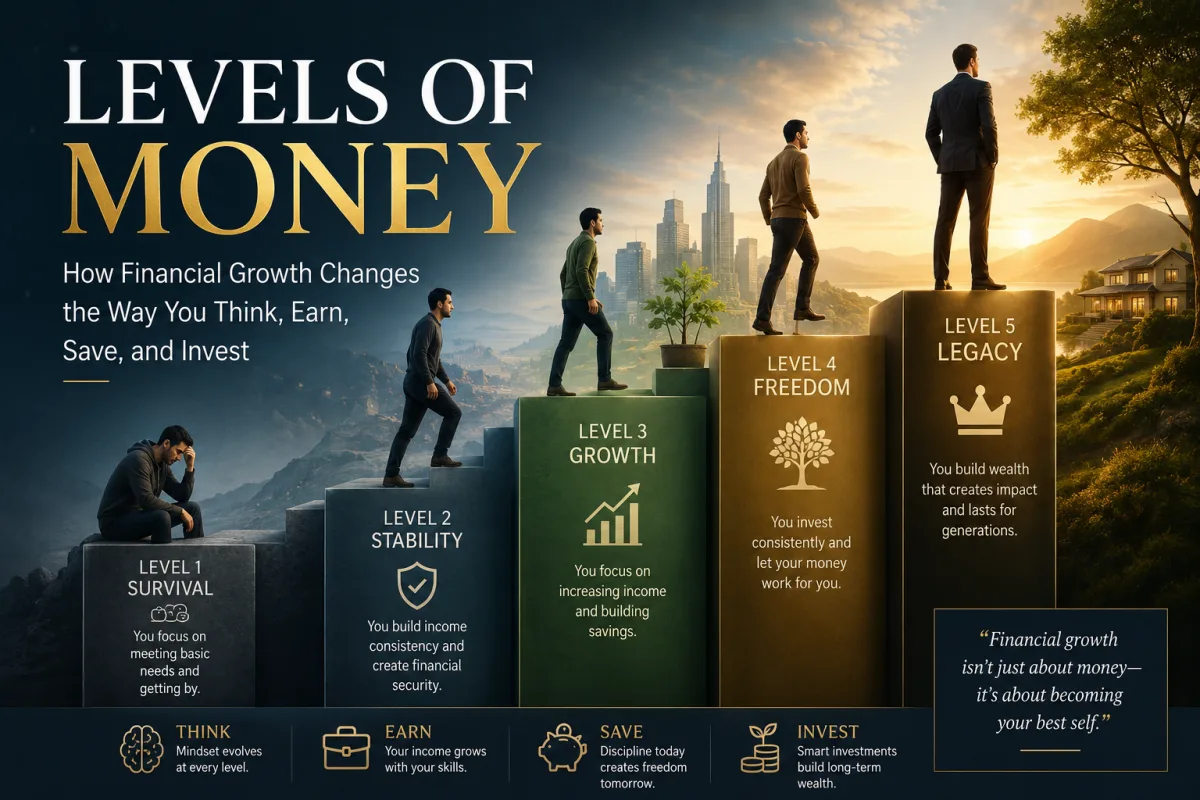
Many people want stage four immediately. But wealth usually respects sequence. First prove value. Then create reliability. Then scale. Then build assets.
The Online Money Traps to Avoid
The internet is full of traps disguised as opportunities.
The first trap is guaranteed income. Any opportunity promising easy, certain, fast money should be treated with caution. Real businesses involve risk, effort, learning, and uncertainty.
The second trap is paying too much to learn too little. Courses can be valuable, but not every course is worth buying. Some people spend more money studying online income than they ever earn from it. Before buying education, ask whether the teacher has credible experience, whether the promise is realistic, whether the content matches your stage, and whether you will actually apply it.
The third trap is platform dependency. Building entirely on one social platform, marketplace, or algorithm can be risky. Accounts can be restricted. Reach can decline. Fees can change. Competition can increase. Build owned assets where possible, especially an email list, website, customer database, or direct relationships.
The fourth trap is pretending every online activity is a business. Posting is not a business unless it connects to revenue. Learning is not a business unless it turns into action. Building a logo is not a business. Buying a domain is not a business. Planning is not a business. A business creates value for buyers and receives money in return.
The fifth trap is ignoring taxes and records. Online income is still income. A person who earns online without tracking revenue, expenses, invoices, contracts, and tax obligations may create future stress. Financial intelligence must grow with income.
The sixth trap is copying visible success without understanding hidden structure. You may see someone selling a course, but not see the years of audience building behind it. You may see an e-commerce brand’s revenue, but not its advertising costs and refund rate. You may see a creator’s sponsorship, but not their team, strategy, and negotiation. Do not copy the surface. Study the system.
How AI Changes the Rules in 2026
AI changes online income in three major ways.
First, it lowers the cost of production. Writing drafts, designing prototypes, editing videos, generating code, summarizing research, creating images, analyzing data, and building workflows can all be faster with AI assistance. This helps beginners move faster, but it also increases competition.
Second, it raises the value of judgment. When everyone can create, buyers need help deciding what is good, true, useful, compliant, strategic, and trustworthy. The person who can evaluate AI output becomes more valuable than the person who merely produces it.
Third, it increases the importance of originality and trust. Generic content becomes abundant. Real expertise becomes more important. People will pay for human interpretation, lived experience, accountability, taste, and ethical responsibility.
Academic and industry research on freelancing and AI continues to explore how generative tools affect online labor markets, skill signaling, and human-AI collaboration. Recent studies have noted that freelancers use generative AI for learning and market viability, while still facing challenges around verification, signaling, and the complexity of real-world work.
The lesson is not to fear AI or worship it. Use it as leverage. Let it speed up research, drafts, analysis, ideation, operations, and production. But keep human responsibility at the center. Check facts. Protect data. Respect clients. Improve taste. Build trust. AI can help you move faster, but it cannot care about your reputation for you.
From Online Income to Online Wealth
Making money online is not the same as building wealth online.
Income is money coming in. Wealth is money that remains, grows, and produces future value. A freelancer can earn well and stay broke if every payment disappears into lifestyle. A creator can have a large audience and little net worth if revenue is unstable and expenses are high. An e-commerce founder can show impressive sales and weak profit. A remote worker can earn in a strong currency and still fail to invest.
The wealth-building question is: What does your online income become?
Does it become better skills? Does it become savings? Does it reduce debt? Does it fund investments? Does it build a product? Does it buy tools that genuinely improve productivity? Does it create intellectual property? Does it build a brand? Does it become equity? Does it create cash-flowing assets?
The goal is to move from selling time to owning systems. Services can lead to products. Products can lead to subscriptions. Content can lead to audience assets. Audience can lead to brands. Skills can lead to equity. Cash flow can lead to investments. Knowledge can lead to intellectual property.
This is where many online earners fail. They make money but never build anything durable. They upgrade lifestyle too quickly. They rent status. They chase every trend. They buy tools they do not need. They confuse revenue with freedom.
A better approach is to assign every online dollar a role. Some money covers living costs. Some pays taxes. Some builds emergency reserves. Some funds skill development. Some improves the business. Some invests in assets. Some supports enjoyment. Without this structure, online income can become as fragile as any paycheck.
The Practical Starting Point
To actually make money online in 2026, begin with a simple decision: choose a problem you can solve for a person or business that can pay.
Then choose the smallest credible offer that proves your value.
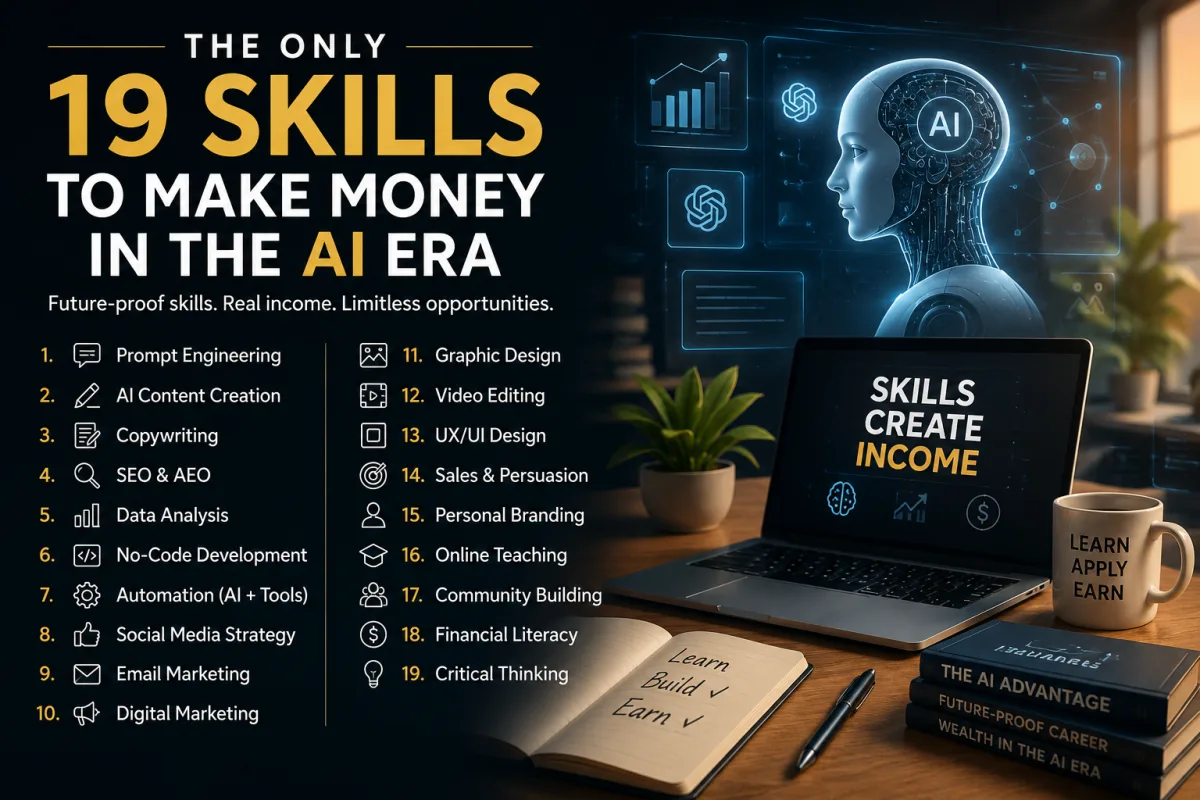
If you can write, write for a niche that needs trust and conversion. If you can design, solve business communication problems, not just aesthetic ones. If you can organize, help businesses manage operations. If you understand AI tools, apply them to a specific workflow. If you know finance, teach, advise, analyze, or create tools within your competence. If you know a language, tutor, translate where appropriate, or create learning resources. If you can code, build small tools for narrow problems. If you can sell, help businesses turn leads into revenue. If you can teach, create structured learning. If you can research, package insight for decision-makers.
Do not wait until you feel fully ready. Readiness often comes after market contact. But do not sell what you cannot deliver. The balance is to begin with honest scope. Offer a result you can realistically produce. Improve with every project.
Your first online dollar matters because it breaks an illusion. It proves that value can travel through the internet and return as income. After that, the work becomes refinement. Better skill. Better offer. Better proof. Better distribution. Better systems. Better financial management.
The New Online Money Mindset
The old online money mindset was based on tricks. Find a loophole. Beat an algorithm. Copy a funnel. Use a viral sound. Launch a store overnight. Sell a course about a result you barely achieved. Pretend confidence is expertise.
That mindset is weaker in 2026 because the market is more crowded and buyers are more skeptical.
The new online money mindset is based on value and ownership. Learn useful skills. Solve real problems. Use AI wisely. Build trust. Package outcomes. Create distribution. Protect reputation. Keep good records. Convert income into assets.
This mindset is less flashy, but it lasts longer.
It also gives you dignity. You are not begging an algorithm for attention. You are not gambling on hype. You are not pretending to be rich to sell richness to others. You are building economic capability in public or private, one useful offer at a time.
The internet is still one of the greatest wealth-building tools available to ordinary people. It can connect you to buyers, teachers, tools, markets, communities, capital, and audiences that previous generations could not access so easily. But access is not achievement. Opportunity still requires discipline.
To make money online in 2026, stop asking where the easy money is. Ask where the real problem is. Then become the person who can solve it better, faster, more clearly, or more trustworthily than the alternatives.
That is the online income formula beneath every trend.
Value first. Distribution second. Trust always. Ownership next.
If you follow that sequence, online money stops being a fantasy and becomes a system. Not overnight. Not without effort. Not without mistakes. But realistically, intelligently, and in a way that can grow beyond the next trend.
 Article
 Article
 Article
 Article
 Article
 Article
 Article
 Article