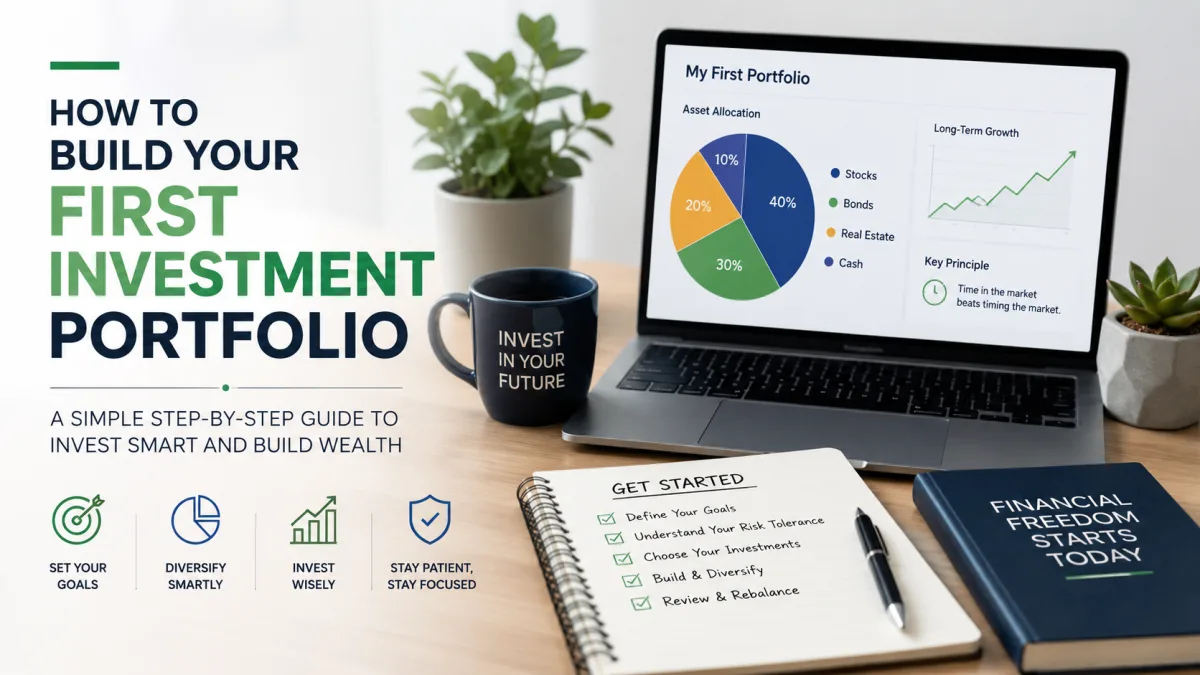
The First Portfolio: How Beginners Turn Savings Into Long-Term Wealth
Your first investment portfolio does not need to be complicated.
That may be the most important sentence a beginner can hear.
Many people delay investing because they believe they need expert knowledge before they begin. They imagine investing as a world reserved for analysts, fund managers, financial planners, economists, and people who understand every market headline before breakfast. They think they must know how to pick the perfect stock, predict recessions, read central bank policy, understand every valuation ratio, and avoid every market decline.
That belief keeps people on the sidelines for years.
The truth is simpler. A beginner does not need a perfect portfolio. A beginner needs a sensible portfolio. A portfolio that is diversified, aligned with personal goals, easy to maintain, and built for time rather than excitement can be a powerful starting point.
Investing is not about appearing sophisticated. It is about turning savings into productive assets. It is about owning pieces of businesses, funds, bonds, and cash reserves in a way that supports future goals. It is about learning to make money work alongside you, instead of relying only on income from labor.
Your first portfolio is not the final version of your financial life. It is the foundation. Like any foundation, it should be strong, simple, and durable.
What an Investment Portfolio Really Is
An investment portfolio is a collection of assets you own.
Those assets may include stocks, exchange-traded funds, index funds, mutual funds, bonds, cash investments, real estate funds, dividend-paying investments, or other financial instruments. Some portfolios are simple. Others are complex. But every portfolio has the same basic purpose: to organize capital in a way that balances growth, income, stability, and risk.
Think of a portfolio as a financial engine. Each part has a role. Some investments are designed to grow over many years. Some may produce income. Some may reduce volatility. Some may provide liquidity so you are not forced to sell long-term investments at the wrong time. The goal is not for every part to do the same thing. The goal is for the parts to work together.
A beginner portfolio might include a broad market index fund, a bond fund, a dividend ETF, and a cash reserve. A more aggressive beginner might hold mostly stock funds. A more conservative beginner might hold more bonds and cash. The right portfolio depends on the investor’s goals, time horizon, risk tolerance, and financial situation.
This is why copying another person’s portfolio can be dangerous. A portfolio that works for a 25-year-old investing for retirement may not fit a 60-year-old preparing to preserve income. A portfolio that works for someone with stable employment and no debt may not fit someone with uncertain income and major short-term expenses. A portfolio should be personal, even when the building blocks are simple.
Why Beginners Should Start Simple
Complexity can feel impressive, but simplicity is often more useful.
A beginner does not need twenty individual stocks, five trading strategies, three alternative assets, and a daily market routine. A beginner needs a structure they understand well enough to maintain during good markets and bad markets.
Simple portfolios have several advantages. They are easier to manage. They reduce the temptation to make constant changes. They help beginners focus on saving and consistency rather than speculation. They are less likely to hide unnecessary fees, overlapping holdings, or concentrated risks. Most importantly, they are easier to stick with.
Investing success often comes less from finding the perfect strategy and more from staying with a good strategy long enough for compounding to matter.
A complicated portfolio may look intelligent on paper but fail in real life if the investor does not understand it. When markets fall, confusion becomes fear. Fear becomes selling. Selling at the wrong time can destroy years of progress.
A simple portfolio gives the investor clarity. You know what you own. You know why you own it. You know what role each investment plays. That clarity becomes especially valuable during market declines, when emotional decision-making becomes most dangerous.
The Real Purpose of Your First Portfolio
The first purpose of a beginner portfolio is not to maximize returns immediately. It is to build the habit of ownership.
This is a major shift. Many people spend most of their income on consumption. Some consumption is necessary. Some is enjoyable. But wealth grows when a portion of income is converted into assets that can produce future value.
An investment portfolio represents that conversion. Instead of leaving every dollar in a checking account or spending it on things that decline in value, the investor buys ownership. They may own pieces of thousands of companies through an index fund. They may own bonds that pay interest. They may own dividend funds that distribute income. They may hold cash for stability and opportunity.
The second purpose is to create financial direction. A portfolio turns vague goals into an organized plan. “I want to build wealth” becomes monthly contributions into specific investments. “I want to retire someday” becomes a retirement account with an asset allocation. “I want passive income” becomes ownership of income-producing assets. “I want financial freedom” becomes a long-term system.
The third purpose is education. Your first portfolio teaches lessons that books alone cannot teach. It teaches how markets move. It teaches how your emotions respond to volatility. It teaches the difference between headlines and long-term progress. It teaches patience.
The first portfolio should be built carefully, but it does not need to be perfect. Starting well matters. Starting at all matters even more.
Step One: Define Your Financial Goals
Before choosing investments, define the reason you are investing.
This sounds obvious, but many beginners skip it. They ask what to buy before asking what the money is for. That is like choosing a vehicle before knowing the destination. A sports car, pickup truck, bus, and bicycle can all be useful, but not for the same journey.
Your goals determine your investment strategy.
Are you investing for retirement? Are you building long-term wealth? Are you saving for a home many years from now? Are you trying to create future passive income? Are you investing for financial independence? Are you preserving capital you already have? Are you trying to outpace inflation?
Each goal has a different time horizon and risk profile. Money for retirement decades away can usually accept more short-term volatility than money needed for a house deposit in two years. Money intended for long-term growth can be invested differently from money needed for emergency security.
A useful goal has three features: purpose, time horizon, and priority.
Purpose means knowing what the money is for. Time horizon means knowing when you may need it. Priority means knowing how important the goal is compared with other financial needs.
For example, “I want to invest for retirement in 30 years” suggests a growth-oriented long-term portfolio. “I need money for school fees next year” suggests safety and liquidity, not stock market risk. “I want to build wealth over 20 years while keeping some stability” suggests a diversified portfolio with a strong equity core and some defensive assets.
Investing without goals often leads to random decisions. A clear goal gives the portfolio a job.
Step Two: Build a Financial Safety Base First
Before investing aggressively, beginners should consider their financial foundation.
Investing works best when it is not competing with financial emergencies. If every unexpected expense forces an investor to sell assets, the portfolio becomes fragile. A market decline at the wrong time can turn a temporary loss into a permanent setback.
A basic safety base often includes emergency savings, manageable debt, stable cash flow, and proper protection against major risks. The size of an emergency fund depends on personal circumstances, but the principle is universal: some money should be available without needing to sell long-term investments.
High-interest debt deserves special attention. If someone carries expensive debt, investing while ignoring that debt may weaken their financial position. Paying down high-interest debt can be one of the most reliable financial returns available because it reduces guaranteed interest costs.
This does not mean everyone must be completely debt-free before investing. Many people invest while paying a mortgage, student loan, or other manageable debt. The issue is whether debt costs, emergency needs, or unstable income could force poor investment decisions.
A portfolio is strongest when it rests on a stable financial base. Investing is not separate from personal finance. It is part of it.
Step Three: Understand Risk Tolerance
Risk tolerance is your ability and willingness to handle investment uncertainty.
Many beginners think they have high risk tolerance during rising markets. They imagine themselves as patient long-term investors. Then the market falls 20 percent, headlines become frightening, and the same investor discovers that risk feels different when real money is involved.
Risk tolerance has two sides: financial ability and emotional capacity.
Financial ability is based on facts. How long until you need the money? How stable is your income? Do you have emergency savings? How much debt do you carry? Are others financially dependent on you? The stronger your financial position and the longer your time horizon, the more market volatility you may be able to accept.
Emotional capacity is based on temperament. Can you watch your portfolio decline without panicking? Can you keep investing when news is negative? Can you avoid chasing hot investments when others seem to be getting rich quickly? Can you stay disciplined when your strategy underperforms for a while?
Both forms of risk tolerance matter. A person may have a long time horizon but still panic during volatility. Another person may be emotionally calm but financially unable to take much risk because they need the money soon.
A good beginner portfolio should fit both the numbers and the person.
Risk Is Not Only Volatility
Investors often define risk as price movement. A stock fund that rises and falls sharply is called risky. A cash account that barely moves is called safe. This is partly true, but incomplete.
Volatility is one form of risk. But there are others.
Inflation risk is the risk that your money loses purchasing power over time. Cash may feel safe because the balance does not fluctuate, but if prices rise year after year, the same cash buys less.
Concentration risk is the risk of having too much money in one company, sector, country, or asset. A portfolio built around one exciting stock may rise quickly, but it can also fall sharply if that company disappoints.
Liquidity risk is the risk that you cannot access money when you need it without taking a loss or facing delays.
Behavioral risk is the risk that your own decisions damage your returns. Panic selling, trend chasing, overtrading, and abandoning a plan can be more harmful than normal market volatility.
Valuation risk is the risk of paying too much for an investment, even if the underlying asset is high quality.
A well-built portfolio does not eliminate risk. It organizes risk intelligently.
Step Four: Learn the Main Building Blocks
Before building a portfolio, beginners should understand the main investment building blocks.
Stocks represent ownership in companies. When you buy a stock, you own a small piece of a business. Stocks can produce wealth through price appreciation, dividends, or both. They also fluctuate and can lose value.
Bonds represent loans. When you buy a bond, you are lending money to a government, company, or other issuer in exchange for interest payments and the return of principal at maturity, assuming the issuer can meet its obligations. Bonds are often used for income and stability, though they also carry risks such as interest-rate risk, inflation risk, and credit risk.
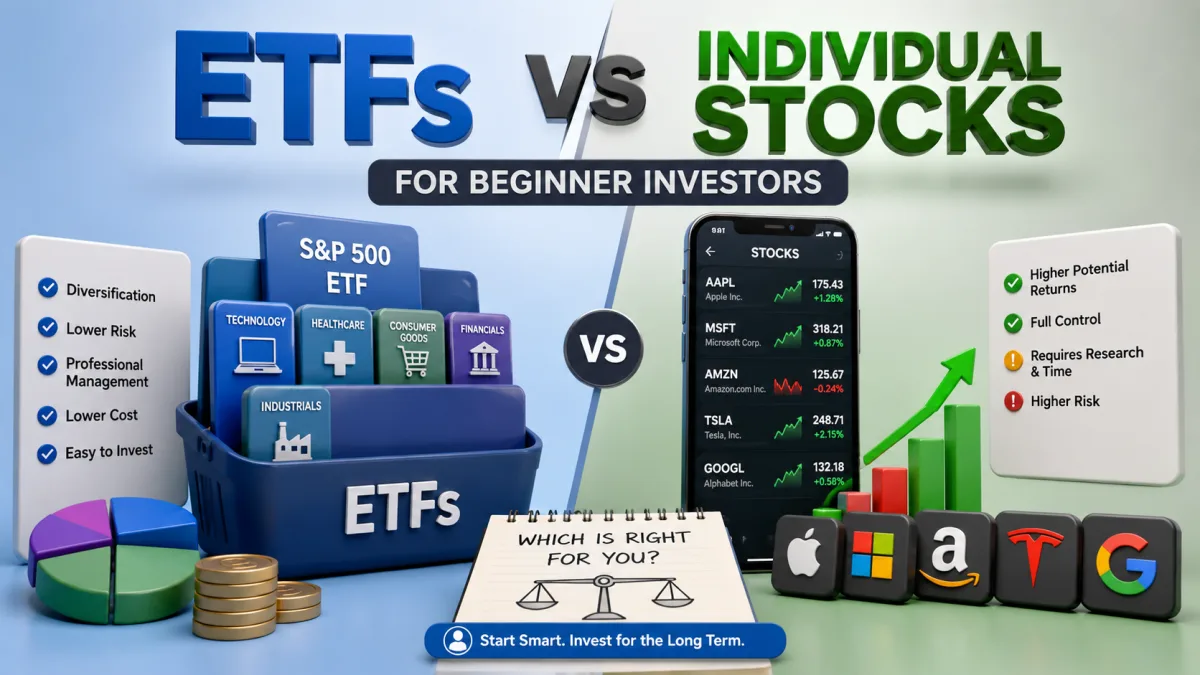
Exchange-traded funds, or ETFs, are investment funds that trade on exchanges like stocks. They can hold baskets of stocks, bonds, or other assets. ETFs are popular because they offer diversification, transparency, and ease of trading.
Index funds are funds designed to track a market index, such as a broad stock market index. Instead of trying to pick winning stocks, they aim to capture the performance of a market segment. Many beginners use index funds because they are simple, diversified, and often low-cost.
Dividend stocks are shares of companies that pay part of their profits to shareholders. Dividend investments can provide income, but investors still need to evaluate business quality and dividend sustainability.
Cash investments include savings accounts, money market funds, Treasury bills, certificates of deposit, or similar instruments. Cash provides liquidity and stability, but usually offers lower long-term growth than stocks.
These building blocks can be combined in many ways. The art of portfolio construction is deciding how much of each belongs in your plan.
Step Five: Start With Core Investments
Beginners should usually build the core of their portfolio before adding specialized investments.
A core investment is a broad, diversified holding that can serve as the foundation of a portfolio. For many investors, this means broad market index funds or ETFs. These funds can provide exposure to hundreds or thousands of companies in a single investment.
The strength of a broad core is that it reduces dependence on any one company. If one business fails, the entire portfolio does not collapse. If one sector struggles, other sectors may help offset the weakness. The investor participates in the overall growth of the market rather than trying to predict individual winners.
This is especially helpful for beginners because stock picking requires skill, time, and emotional discipline. A broad fund allows the beginner to begin investing while still learning.
A core portfolio might include a total stock market fund, a global stock market fund, a bond fund, and a cash reserve. Some investors may add a dividend ETF, growth ETF, or value ETF later. But the foundation should be understandable.
Specialized investments should come after the core, not before it. A portfolio built only around trends, themes, or individual stock ideas is often fragile. A portfolio built around a strong core can afford a limited amount of exploration.
Step Six: Understand Asset Allocation
Asset allocation means dividing your portfolio among different asset classes, such as stocks, bonds, and cash.
This decision is one of the most important in investing. It affects expected return, volatility, income, and resilience. A portfolio with 90 percent stocks will behave very differently from a portfolio with 50 percent stocks and 50 percent bonds. Neither is automatically right or wrong. The right allocation depends on the investor.
Stocks are usually the growth engine. They offer higher long-term return potential, but they can decline sharply. Bonds may provide income and stability, but they generally offer lower long-term growth than stocks. Cash provides liquidity and psychological comfort, but too much cash can reduce long-term wealth building because inflation erodes purchasing power.
A young investor with decades before retirement may choose a stock-heavy allocation because they have time to ride out market declines. A conservative investor may choose a more balanced allocation because stability matters more than maximum growth. An investor nearing a major goal may reduce stock exposure to protect money they will soon need.
Asset allocation is not a one-time personality test. It should reflect goals, time horizon, risk tolerance, and financial capacity.
Example Beginner Allocations
A growth-oriented beginner with a long time horizon might consider a portfolio heavily weighted toward stocks. For example, they may hold a broad stock market fund as the majority of the portfolio, with a smaller amount in bonds or cash for stability.
A balanced beginner may prefer a mix of stocks and bonds. This approach accepts some market volatility while reducing the full impact of stock market declines.
A conservative beginner may hold a larger allocation to bonds and cash. This can reduce volatility but may also reduce long-term growth.
These are not universal recommendations. They are examples of how allocation reflects purpose. A 70 percent stock and 30 percent bond portfolio is not better or worse than an 80 percent stock and 20 percent bond portfolio in isolation. The better portfolio is the one that fits the investor’s needs and can be maintained through market cycles.
The danger is choosing an allocation based only on recent performance. When stocks are rising, investors often want more stocks. When stocks are falling, they often want fewer. A disciplined allocation is chosen before emotions take over.
The Role of Index Funds
Index funds are among the most useful tools for beginner investors.
An index fund does not attempt to beat the market through active stock selection. It tracks an index. If the index includes hundreds or thousands of companies, the fund gives investors broad exposure in one holding. This simplicity makes index funds attractive for people who want to build wealth without constantly analyzing individual stocks.
Index funds also help reduce the risk of picking the wrong company. Instead of betting on one business, the investor owns a slice of many businesses. Some will struggle. Some will perform well. The overall result depends on the collective performance of the market segment.
Another advantage is cost. Many index funds and ETFs have low expense ratios compared with actively managed funds. Lower costs leave more of the return for the investor. Over decades, even small differences in fees can matter.
Index investing does not guarantee profits. Index funds fall when markets fall. They can be heavily influenced by the largest companies in the index. They still require patience. But for beginners, they offer a clear and efficient starting point.
The Role of ETFs
ETFs are flexible portfolio tools. Like mutual funds, they hold baskets of investments. Like stocks, they trade on exchanges during the trading day.
Beginners can use ETFs to access broad stock markets, bond markets, dividend strategies, growth stocks, value stocks, international markets, sectors, commodities, or other themes. This flexibility is useful, but it can also tempt beginners into unnecessary complexity.
A broad ETF can be a strong core holding. A narrow thematic ETF can be much riskier. For example, an ETF focused on one emerging industry may rise quickly during periods of enthusiasm but fall sharply if expectations change. A beginner should understand whether an ETF is broad and diversified or concentrated and speculative.
ETFs also have costs. Expense ratios, bid-ask spreads, and trading behavior can affect results. Low-cost, broad ETFs are often suitable for beginners. High-cost, highly specialized ETFs require more caution.
The best use of ETFs in a first portfolio is usually simplicity: broad exposure, low cost, and clear purpose.
The Role of Bonds
Bonds can provide stability and income in a portfolio.
When investors buy bonds directly or through bond funds, they are generally seeking interest payments and lower volatility than stocks. Bonds can help reduce the severity of portfolio declines, especially for investors who cannot tolerate an all-stock portfolio.
But bonds are not risk-free. When interest rates rise, existing bond prices often fall. Bonds issued by weaker borrowers may carry credit risk. Long-term bonds can be more sensitive to rate changes than short-term bonds. Inflation can reduce the real value of bond income.
Still, bonds play an important role. They can help investors stay invested. A portfolio with some bonds may be easier to hold during stock market declines. For many investors, this behavioral benefit is valuable. A slightly lower expected return may be worthwhile if it prevents panic selling.
Beginners should think of bonds as a stabilizer, not as a magic shield. They reduce certain risks while introducing others. Used thoughtfully, they can make a portfolio more durable.
The Role of Cash
Cash is often underrated by investors seeking high returns. It usually does not build wealth as effectively as stocks over long periods, but it serves important purposes.
Cash provides liquidity. It allows you to handle emergencies, opportunities, and near-term expenses without selling investments during a downturn. Cash also provides emotional comfort. Investors who know they have a reserve may be less likely to panic when markets fall.
The danger is holding too much cash for too long. Inflation can quietly reduce purchasing power. A person who avoids investing for years because cash feels safer may face a different risk: failing to grow wealth enough to meet future goals.
A sensible portfolio uses cash intentionally. Emergency savings and short-term goals belong in stable, liquid places. Long-term wealth goals usually require productive assets with growth potential.
Should Beginners Buy Individual Stocks?
Individual stocks can build wealth, but they require more research and discipline than many beginners expect.
Buying a single stock means relying on one company’s future. The company may perform well, or it may disappoint. It may face competition, regulation, management mistakes, debt problems, or industry disruption. Even strong companies can be poor investments if bought at excessive prices.
Beginners who want to buy individual stocks should start cautiously. They should keep the majority of their portfolio in diversified core holdings and treat individual stocks as a smaller learning allocation. They should understand the business, read basic financial information, consider valuation, and know why they own the stock.
A beginner should avoid buying individual stocks only because they are popular, mentioned online, or rising quickly. Excitement is not analysis.
There is nothing wrong with learning through direct stock ownership. But the first portfolio should not depend entirely on a beginner’s ability to pick winners.
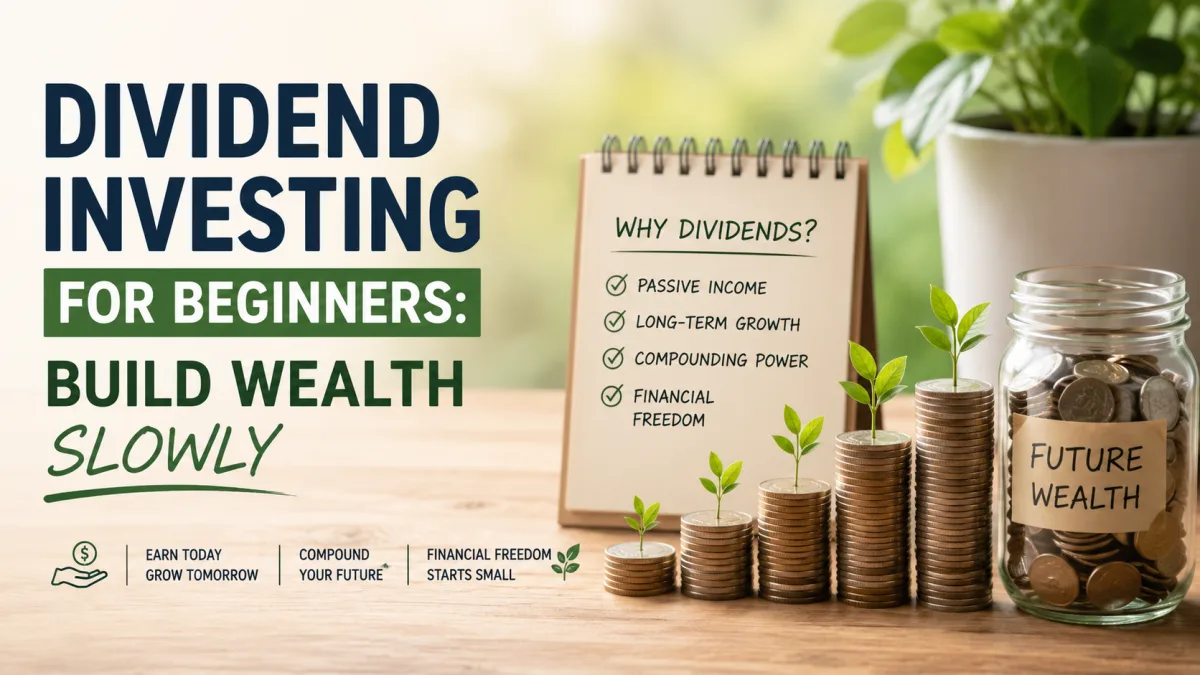
Dividend Stocks and Income
Dividend stocks can appeal to beginners because they produce visible cash flow. Receiving a dividend can make investing feel tangible. It reminds the investor that stocks represent ownership in real businesses.
Dividend investments can be useful, especially for investors seeking income or reinvestment opportunities. Reinvested dividends can buy more shares, which may produce more dividends over time. This creates a compounding effect.
But dividend stocks are not automatically safe. Companies can reduce or suspend dividends. A high dividend yield may signal risk if the market expects the payment to be cut. Investors should evaluate payout ratios, cash flow, debt, and business quality.
For beginners, dividend ETFs may provide diversified income exposure without depending on one company. Individual dividend stocks can be added later with research.
The goal is not to chase the highest yield. The goal is to own sustainable income-producing assets.
Growth Investments and Long-Term Expansion
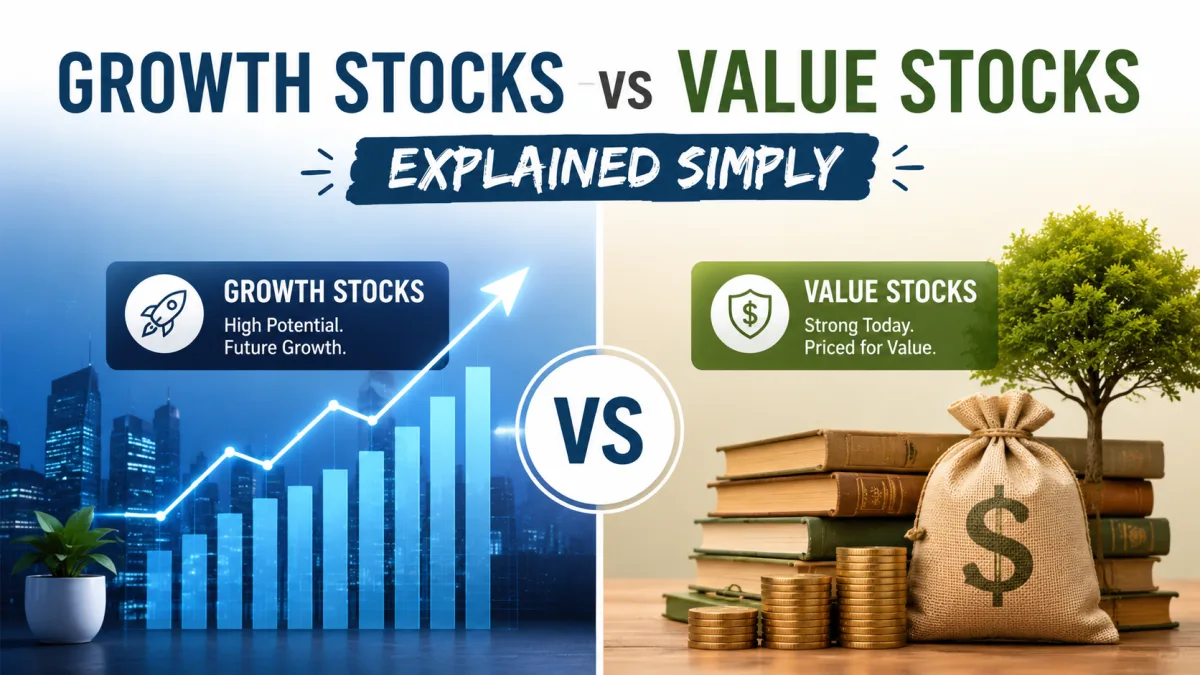
Growth investments focus on companies expected to expand revenue and profits faster than the broader market. They can be powerful wealth builders, especially over long horizons.
Growth stocks and growth funds may include technology, healthcare innovation, consumer platforms, artificial intelligence, software, e-commerce, or other fast-expanding industries. These investments often pay little or no dividend because companies reinvest profits into expansion.
The risk is valuation. Growth investments can become expensive when investors become overly optimistic. If growth slows, prices can fall sharply. A strong company can still be a poor investment if the purchase price assumes too much future success.
Beginners can include growth exposure through diversified funds rather than concentrated bets. This allows participation in innovation while reducing the risk of depending on one company.
Growth belongs in many long-term portfolios, but it should be balanced with discipline.
International Diversification
Many beginners invest only in their home country. That may feel comfortable, but the global economy is larger than any single market.
International diversification gives investors exposure to companies, currencies, economies, and industries outside their domestic market. It can reduce dependence on one country’s political, economic, and market conditions.
International investing also carries risks. Currency movements can affect returns. Accounting standards, regulations, taxes, corporate governance, and political stability vary by country. Some markets are more volatile than others.
A broad international fund can be a simple way to gain exposure without selecting individual foreign companies. The right allocation depends on the investor’s goals and comfort level.
The main principle is that diversification can extend beyond sectors and asset classes. It can also include geography.
Dollar-Cost Averaging: Investing Without Market Timing
Dollar-cost averaging means investing a fixed amount regularly regardless of market conditions.
For example, an investor might invest the same amount every month into a diversified portfolio. When prices are high, the contribution buys fewer shares. When prices are low, it buys more shares. Over time, this creates a disciplined accumulation process.
The greatest benefit of dollar-cost averaging is behavioral. It removes the pressure to predict the perfect entry point. Many beginners delay investing because they are waiting for the right moment. But the right moment is often clear only in hindsight.
Markets are unpredictable in the short term. A beginner who waits for a crash may miss years of growth. A beginner who invests all at once may feel regret if the market declines soon after. Regular investing can reduce emotional stress and build consistency.
Dollar-cost averaging does not guarantee profits or prevent losses. It is not a magic formula. But it helps beginners focus on controllable behavior: saving regularly, investing repeatedly, and staying committed.
Compounding: The Engine Behind Long-Term Wealth
Compounding is the process where returns generate additional returns.
If an investment grows, the larger balance can produce larger future gains. If dividends or interest are reinvested, they can buy more assets, which can produce more income or growth. Over long periods, this can create powerful results.
Compounding is slow at first. A beginner may invest for a year and feel unimpressed. The balance may not change dramatically. Dividends may be small. Market fluctuations may hide progress.
But compounding rewards time. The longer money remains invested, the more opportunity it has to grow on itself. This is why starting early is valuable. Time is not just a calendar measurement. It is a financial asset.
The enemy of compounding is interruption. Constantly withdrawing money, selling during downturns, chasing trends, and abandoning the plan can break the compounding process. A first portfolio should be designed to stay invested.
Reinvesting Returns
Reinvesting means using dividends, interest, or capital gains distributions to buy more investments instead of spending them.
For beginners focused on long-term wealth, reinvestment can accelerate compounding. A dividend payment may seem small, but when reinvested repeatedly over years, it increases ownership. More ownership can produce more future returns.
Reinvestment also teaches discipline. It turns portfolio income into future growth. Instead of treating every payment as spending money, the investor allows the portfolio to strengthen itself.
There are times when taking income makes sense. Retirees or investors seeking cash flow may use dividends and interest for living expenses. But beginners building wealth often benefit from reinvesting as much as possible.
The question is simple: do you need the income now, or can it be used to buy more future income?
Rebalancing: Keeping the Portfolio Aligned
Over time, investments perform differently. Stocks may rise faster than bonds. Growth funds may outperform value funds. One asset class may become a larger share of the portfolio than intended.
Rebalancing means adjusting the portfolio back toward its target allocation.
Suppose an investor wants 80 percent stocks and 20 percent bonds. After a strong stock market rally, the portfolio may become 90 percent stocks and 10 percent bonds. Rebalancing would involve shifting some money back to bonds or directing new contributions toward bonds until the target is restored.
Rebalancing helps control risk. It prevents a portfolio from becoming more aggressive than intended after markets rise. It can also encourage disciplined buying of underperforming assets, though investors should understand what they are buying and why.
Beginners do not need to rebalance constantly. Annual or semiannual reviews may be enough for many simple portfolios. Overtrading can create costs, taxes, and unnecessary stress.
The purpose of rebalancing is not to predict markets. It is to maintain the plan.
Fees Matter More Than Beginners Think
Investment fees may look small, but they can have a large effect over time.
A fund expense ratio is the annual cost of owning the fund, expressed as a percentage of assets. A low-cost fund may charge only a small fraction of one percent. A high-cost fund may charge much more. The difference may appear minor in one year, but over decades it can reduce wealth significantly.
Trading costs, advisory fees, account fees, tax costs, and bid-ask spreads can also affect results. Beginners should not obsess over every tiny cost, but they should avoid unnecessary expenses.
Low-cost diversified funds are popular for a reason. They allow investors to keep more of the market return. High fees require strong performance just to catch up.
The investor cannot control market returns. They can control costs. That makes fees one of the most practical areas of discipline.
Taxes and Account Location
Taxes can affect investment returns. The rules depend on the country, account type, investment type, and personal circumstances. Some accounts may offer tax advantages for retirement or education. Some dividends, interest payments, and capital gains may be taxed differently.
Beginners should understand the basic tax treatment of their investment accounts. Tax-advantaged accounts can be powerful because they may allow investments to grow with deferred taxes, tax-free withdrawals, or other benefits depending on the rules.
Taxable accounts offer flexibility but may create tax obligations when investments pay income or are sold for gains. Frequent trading can increase tax complexity.
Taxes should not be the only driver of investing decisions, but they should not be ignored. A portfolio’s true return is what the investor keeps after costs and taxes.
Because tax rules vary and change, investors should use reliable tax guidance or consult a qualified professional when needed.
Common Beginner Mistake: Chasing Trends
Trend chasing is one of the fastest ways to weaken a first portfolio.
A hot stock rises. A new technology dominates headlines. Social media celebrates quick gains. Friends talk about money they made. The beginner feels pressure to act before missing out.
This emotional pressure is powerful. It turns investing from a wealth-building plan into a popularity contest. The investor buys not because they understand the asset, but because others seem excited.
Trends can continue longer than skeptics expect, but they can also reverse quickly. When expectations are too high, even good news may not be enough. Beginners who buy late in a trend often experience the downside without enjoying the early gains.
A disciplined portfolio can include exposure to innovation, but it should not be built on hype. The question should always be: does this investment fit my plan, or am I reacting to excitement?
Common Beginner Mistake: Lack of Diversification
Concentration can create dramatic gains, but it can also create dramatic losses.
Some beginners put most of their money into one company, one sector, one cryptocurrency, one theme, or one country. If the bet works, the results may look impressive. If it fails, the damage can be severe.
Diversification is not designed to make investors rich overnight. It is designed to keep one mistake from destroying the plan. It accepts that the future is uncertain. Even smart investors can be wrong. Even strong companies can disappoint.
A diversified portfolio spreads exposure across different assets and sources of return. It may not capture the full upside of the single best investment, but it also avoids depending entirely on finding that investment in advance.
For beginners, diversification is not a weakness. It is wisdom.
Common Beginner Mistake: Emotional Decisions
Markets provoke emotion. Rising markets create greed and confidence. Falling markets create fear and doubt. Both can be dangerous.
During rising markets, beginners may take too much risk. They may believe investing is easy. They may abandon diversification because concentrated bets are working. They may confuse luck with skill.
During falling markets, beginners may sell quality investments because losses feel unbearable. They may stop contributing. They may wait for certainty before investing again. By the time certainty returns, prices may already have recovered.
Emotional investing often follows a damaging cycle: buy after excitement, sell after fear, repeat. This behavior can turn a good market into poor personal results.
A written investment plan can help. It should explain the portfolio’s purpose, target allocation, contribution schedule, rebalancing rules, and reasons for selling. The plan becomes a decision-making anchor when emotions rise.
Common Beginner Mistake: Trying to Get Rich Quickly
Wealth building is usually slower than people want.
This is why get-rich-quick ideas are so tempting. They promise to compress decades of discipline into one trade, one stock, one coin, one option strategy, or one secret system. The promise is exciting because patience is difficult.
But durable wealth is usually built through repeated sound decisions: earning, saving, investing, reinvesting, avoiding destructive debt, controlling costs, and staying disciplined through cycles.
A first portfolio should not be treated like a lottery ticket. It should be treated like a financial institution you are building for your future self.
That mindset changes behavior. You stop asking, “What can double quickly?” You start asking, “What can I own for many years? What can compound? What risk am I taking? What role does this investment play?”
Those questions build wealth more reliably than speculation.
A Simple Beginner Portfolio Example
A simple beginner portfolio might include four parts.
The first part is a broad market stock ETF or index fund. This serves as the growth engine and provides exposure to many companies.
The second part is a bond ETF or bond fund. This adds stability and income, especially for investors who do not want an all-stock portfolio.
The third part is a dividend or value-oriented ETF. This can provide exposure to companies with cash flow, income potential, and more established business models.
The fourth part is a cash reserve. This is not designed for high return. It is designed for liquidity, emergencies, and emotional stability.
An aggressive beginner might hold a larger stock allocation. A conservative beginner might hold more bonds and cash. A beginner who wants simplicity might use only one broad stock fund and one bond fund. Another might choose a target-date fund or balanced fund that manages allocation automatically.
The exact mix matters less than the logic. Each holding should have a purpose. The portfolio should be diversified. The investor should understand it. The plan should be easy to maintain.
Target-Date and Balanced Funds
Some beginners prefer an all-in-one solution. Target-date funds and balanced funds can serve that role.
A target-date fund is designed around an approximate future date, often a retirement year. The fund typically starts with a more growth-oriented allocation and becomes more conservative as the target date approaches. This can simplify investing for people who do not want to manage asset allocation themselves.
A balanced fund usually holds a fixed mix of stocks and bonds, such as 60 percent stocks and 40 percent bonds. It provides diversification in one fund and may rebalance automatically.
These funds can be useful, but investors should still understand what they own. Not all target-date funds have the same allocation, fees, or glide path. Not all balanced funds take the same risks. Simplicity should not mean ignorance.
For beginners who want a low-maintenance approach, an all-in-one fund may be a reasonable starting point.
How Much Money Do You Need to Start?
Many beginners assume they need a large amount of money to start investing. This belief can delay progress.
In reality, the habit matters more than the starting amount. A small portfolio built consistently can become meaningful over time. The first contribution teaches action. The second teaches consistency. The hundredth begins to show the power of discipline.
Modern brokerage platforms and investment accounts often allow small investments, fractional shares, or automatic contributions. This makes it easier for beginners to start with modest amounts.
The key is to invest money that can remain invested. A beginner should not invest rent money, emergency money, or funds needed in the near future. But once basic stability exists, small regular contributions can begin the wealth-building process.
Starting small is not failure. It is how many serious investors begin.
How Often Should Beginners Check Their Portfolio?
Beginners often check their portfolios too frequently.
Daily checking can create unnecessary stress. Markets move constantly, and most daily movement is noise for long-term investors. Watching every fluctuation can make a beginner feel as if action is required when patience would be better.
A portfolio does need review, but review should be purposeful. Monthly checks may be useful for contributions and basic monitoring. Quarterly or semiannual reviews may be enough for asset allocation. Annual reviews can assess goals, risk tolerance, fees, taxes, and rebalancing needs.
The more often an investor checks, the more they may be tempted to react. Long-term investing requires the ability to ignore much of the short-term noise.
Review the plan, not just the price.
When Should You Change Your Portfolio?
A portfolio should change when your life, goals, risk tolerance, or investment evidence changes. It should not change simply because the market had a bad week.
Good reasons to adjust a portfolio may include a shorter time horizon, a major life event, improved financial stability, approaching retirement, a change in income needs, excessive concentration, high fees, or a holding no longer matching its purpose.
Poor reasons include panic, boredom, envy, headlines, social media excitement, or frustration after short-term underperformance.
Every change should answer a clear question: does this adjustment make the portfolio better aligned with my long-term plan?
If the answer is no, the change may be emotional rather than strategic.
The Importance of a Written Investment Policy
A beginner can benefit from writing a simple investment policy.
This does not need to be a formal legal document. It can be one page. It should explain why you are investing, your target allocation, how much you plan to contribute, when you will rebalance, what types of investments you will use, and what conditions would justify selling.
The value of a written plan appears during stress. When markets fall, the plan reminds you that volatility was expected. When trends become exciting, the plan reminds you not to abandon diversification. When you feel uncertain, the plan provides structure.
A written policy turns investing from a series of reactions into a disciplined process.
Learning While Investing
Beginners should keep learning, but they should not wait to know everything before beginning.
Investing knowledge builds over time. At first, learn the basics: asset classes, diversification, fees, taxes, risk, compounding, and account types. Then learn more about valuation, financial statements, economic cycles, behavioral finance, and portfolio construction.
Education should improve discipline, not create constant activity. Some beginners learn just enough to become overconfident. They start trading frequently, predicting market moves, or abandoning diversified funds for complex strategies. Knowledge should make investing more thoughtful, not more impulsive.
The best investors remain students. They learn from markets, mistakes, history, and their own behavior.
Why Time in the Market Matters
Many beginners focus on timing the market. They want to invest at the perfect moment: after a decline, before a rally, when the economy is safe, when headlines are positive, when uncertainty disappears.
The problem is that uncertainty never disappears. Markets move before the news feels comfortable. Waiting for perfect conditions can become a permanent excuse.
Time in the market allows compounding to work. It gives businesses time to grow, dividends time to reinvest, and contributions time to accumulate. Missing years of participation can be costly, especially for long-term goals.
This does not mean investors should throw all their money into the market without thought. It means they should build a plan and begin in a disciplined way. Regular contributions can help reduce the pressure of choosing one perfect entry point.
Investing is not about knowing the future. It is about preparing for it.
The First Portfolio as a Wealth Habit
Your first portfolio is more than a set of holdings. It is a wealth habit.
Every contribution says that part of today’s income belongs to tomorrow’s freedom. Every reinvested dividend says that small cash flows can become larger assets. Every decision not to chase hype says that discipline matters more than excitement. Every market decline endured with patience strengthens the investor’s character.
This is why the first portfolio matters even if the starting balance is small. It changes the way you relate to money. You begin to see income not only as something to spend, but as something to deploy. You begin to understand ownership. You begin to measure progress in years instead of days.
The beginner who learns this early has an advantage that no market prediction can replace.
Final Thoughts
Your first investment portfolio is not about perfection. It is about direction.
You do not need to know every stock. You do not need to predict the next recession. You do not need a complicated strategy filled with impressive language. You need clear goals, a stable financial base, sensible diversification, low-cost investments, consistent contributions, and enough patience to let compounding work.
Start with the basics. Understand why you are investing. Know your time horizon. Choose an asset allocation you can live with. Use broad funds when simplicity is useful. Keep costs low. Reinvest returns when appropriate. Review the portfolio without obsessing over daily movement. Avoid trends that do not fit your plan.
The first portfolio is a beginning, not a finish line. It will evolve as your income, knowledge, goals, and life circumstances change. But its foundation should remain steady: ownership, discipline, diversification, and time.
Wealth is rarely built by one perfect decision. It is built by repeated intelligent decisions made consistently over many years.
Your first portfolio is where that process begins.
``` Article
 Article
 Article
 Article
 Article
 Article
 Article
 Article