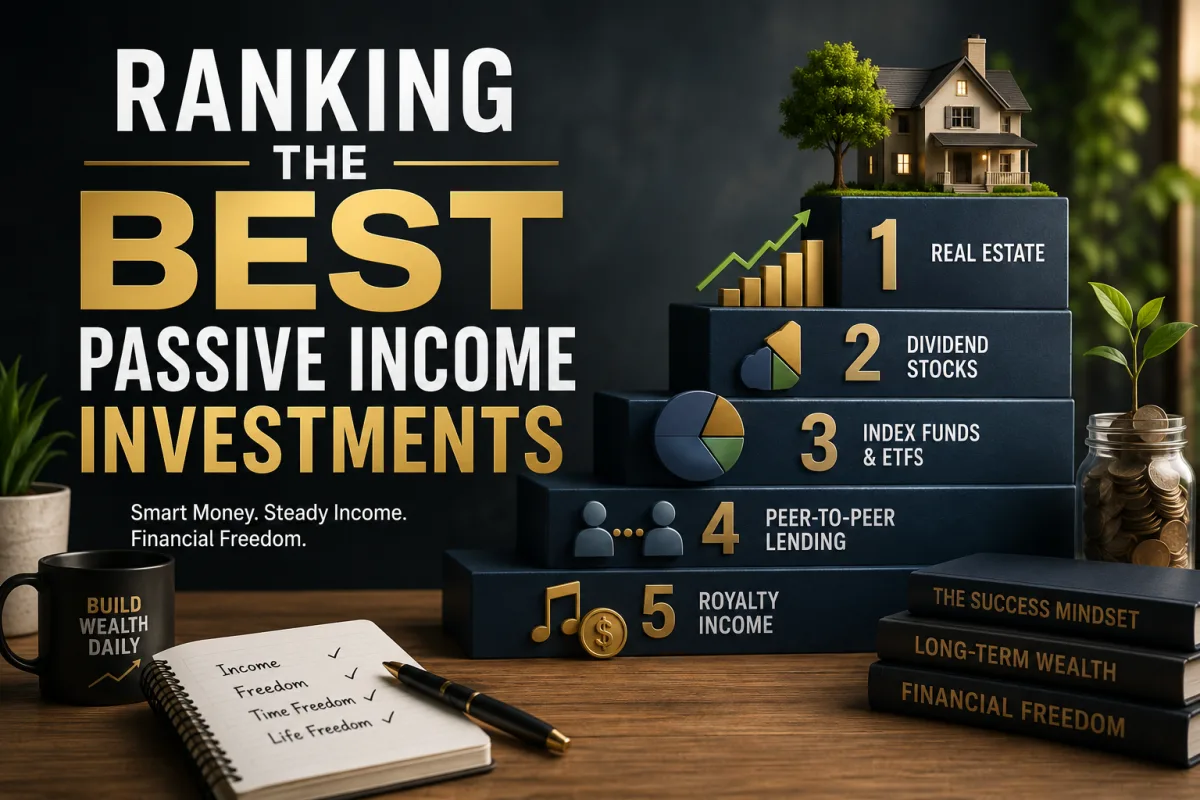
Ranking The Best Passive Income Investments
Passive income has become one of the most attractive ideas in personal finance, but also one of the most misunderstood. The phrase suggests ease, freedom, and money arriving without effort. In reality, the best passive income investments are not magic income machines. They are ownership structures. They require capital, discipline, patience, risk management, and a clear understanding of what kind of income an asset can realistically produce.
The strongest passive income investments do two jobs at once. First, they generate recurring cash flow. Second, they preserve or grow the underlying capital that produces that cash flow. The weakest passive income investments often do the opposite. They offer an attractive yield upfront while quietly eroding capital, creating tax problems, adding hidden risk, or demanding more work than expected.
That distinction matters because passive income is not the same thing as yield. A 12 percent yield attached to a declining asset can leave an investor poorer. A 2 percent dividend attached to a high-quality business that raises its payout for decades can become a wealth-building engine. A rental property with modest cash flow can create lasting value if the debt amortizes, rents rise, and the location improves. A bond ladder may not make anyone rich quickly, but it can provide stability when markets become volatile.
This ranking evaluates passive income investments by seven practical standards: reliability of cash flow, preservation of principal, inflation protection, scalability, liquidity, tax efficiency, and the amount of work required after purchase. The goal is not to crown the investment with the highest advertised income. The goal is to identify which assets are most useful for building durable, repeatable, long-term wealth.
What Passive Income Really Means
Passive income is often described as money earned without working. That definition is appealing, but incomplete. Most passive income requires work at one of three stages: before the investment is made, while the investment is being managed, or when something goes wrong.
A dividend portfolio requires research, asset allocation, rebalancing, and emotional discipline. Rental property requires tenant screening, maintenance, insurance, financing, and legal awareness. Bonds require interest-rate judgment, credit-risk awareness, and maturity planning. Even digital products, royalties, and licensing income usually require meaningful upfront creation before they produce income.
A better definition is this: passive income is cash flow generated from assets rather than from selling time. The investor is compensated for ownership, capital allocation, risk bearing, or intellectual property, not for showing up to an hourly job.
That ownership-based definition separates real passive income from side hustles disguised as passive income. A YouTube channel, online store, consulting funnel, or short-term rental can become semi-passive after systems are built, but they begin as businesses. They may be excellent wealth builders, yet they are not passive in the same way a Treasury bill, dividend ETF, or REIT is passive.
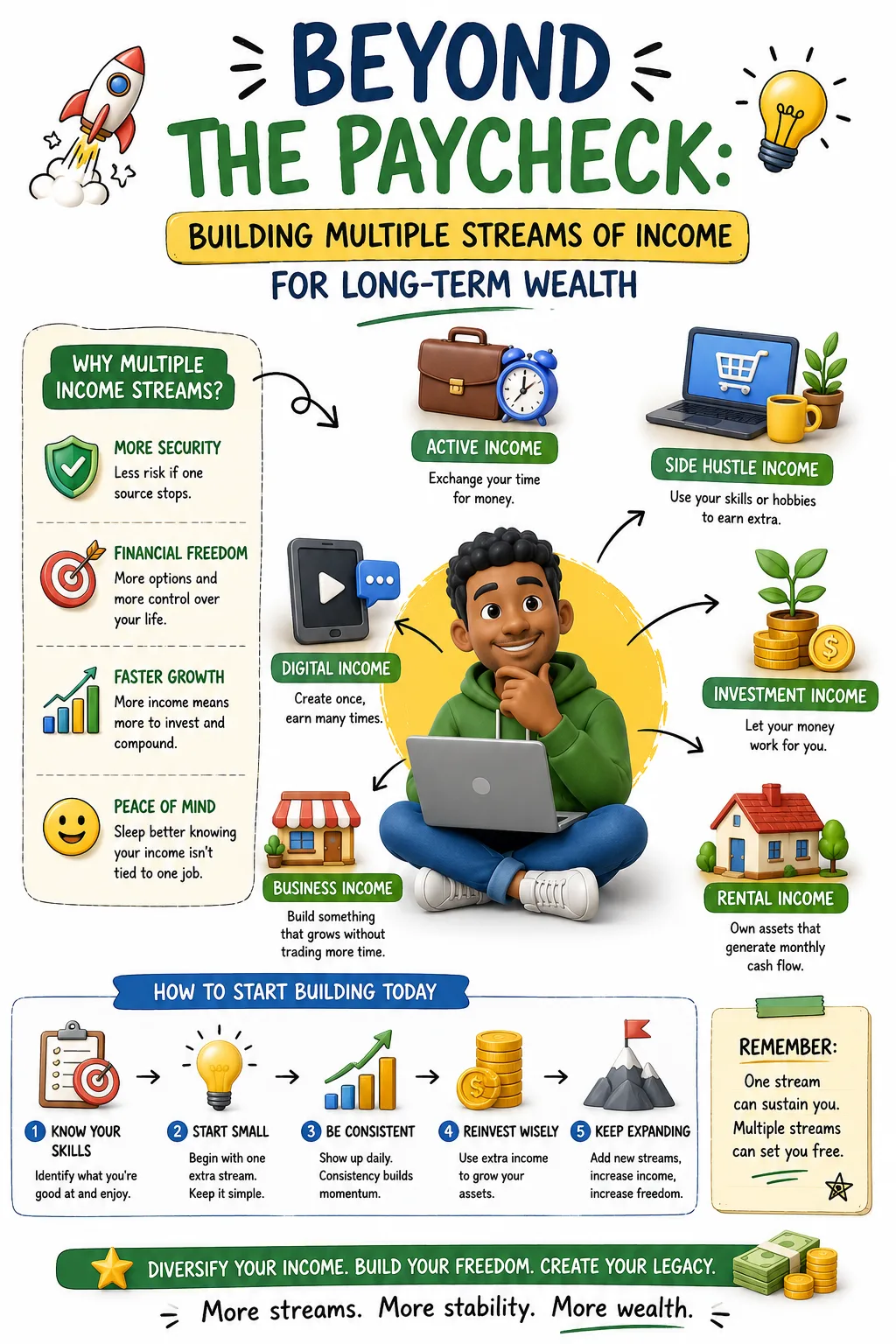
The best passive income strategy is usually layered. Cash and short-term bonds provide safety. Dividend equities provide long-term growth. Real estate adds inflation-linked income and leverage. Retirement accounts improve tax efficiency. Business or intellectual property income can add upside for people willing to do more upfront work. Each layer serves a different purpose.
The Ranking Method
Ranking passive income investments requires more than comparing yields. A high yield can signal opportunity, but it can also signal danger. When an investment advertises unusually high income, the investor should ask a simple question: why is the market offering me this much cash flow?
Sometimes the answer is reasonable. A bond may yield more because interest rates are elevated. A rental property may cash flow well because the buyer negotiated a strong purchase price. A private credit fund may pay more because the loans are illiquid and carry borrower risk.
Sometimes the answer is troubling. A stock may yield 10 percent because the market expects the dividend to be cut. A mortgage REIT may pay double-digit income because its business model is highly sensitive to interest rates and leverage. A peer-to-peer loan portfolio may look attractive before defaults arrive. A covered-call fund may produce monthly distributions while sacrificing long-term upside.
For that reason, this ranking favors investments that can support income across full market cycles. The best assets are not always the most exciting. They are the ones most likely to keep working when inflation rises, recessions occur, interest rates move, tenants leave, markets fall, or dividends slow.
The ranking also assumes the investor wants wealth, not just income. That means capital appreciation matters. A passive income asset that pays cash while rising in value is far more powerful than one that only distributes income while slowly shrinking.
1. Dividend Growth Stocks and Dividend-Focused Index Funds
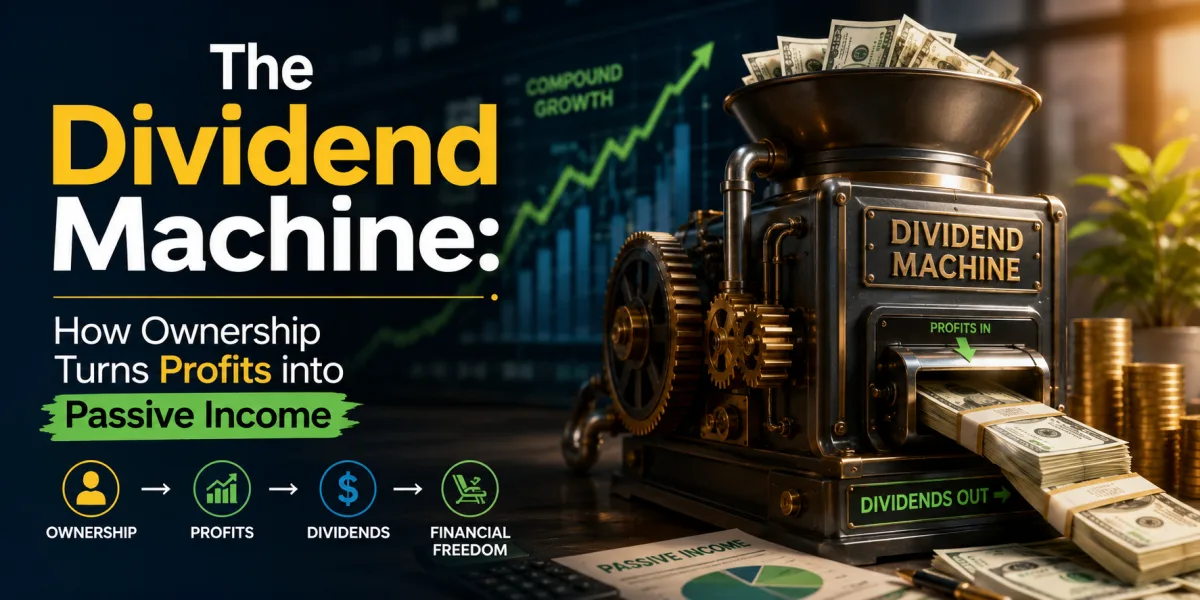
Dividend growth investing earns the top position because it combines cash flow, ownership, liquidity, scalability, and long-term compounding. A dividend is a share of corporate profits paid to owners. When those profits grow, the dividend can grow too. Over time, this creates one of the most elegant passive income models in finance: owning productive companies that send cash back to shareholders while continuing to build enterprise value.
The strongest version of this strategy is not chasing the highest dividend yield. It is owning a diversified portfolio of companies with durable earnings, conservative payout ratios, strong balance sheets, and a history of increasing dividends. Many investors access this through dividend growth ETFs or broad equity index funds rather than individual stocks. The investment company industry has grown around this kind of pooled access, with ETFs and mutual funds giving ordinary investors diversified ownership at low cost. The Investment Company Institute’s Fact Book tracks the scale and role of these funds in U.S. markets.
Dividend growth investing is powerful because it lets investors participate in the productivity of businesses. A company that sells medicine, software, household products, energy infrastructure, payment services, or industrial equipment may earn profits across many economic environments. If management allocates capital well, shareholders can benefit from both dividends and rising share prices.
The historical logic is straightforward. A bond coupon is usually fixed. A savings account rate changes with interest rates. A dividend from a high-quality business can rise over time. That rising income stream can help offset inflation. If a company pays $1 per share in annual dividends today and grows that dividend by 6 percent per year, the income roughly doubles in about twelve years. The investor does not need to buy more shares for that income growth to occur, though reinvesting dividends can accelerate the effect.
The main weakness is volatility. Dividend stocks are still stocks. Their prices can fall sharply during bear markets, recessions, financial crises, or sector-specific shocks. A dividend ETF may decline even while its income continues. Individual companies can cut dividends when profits weaken. Banks did it during financial crises. Energy companies have done it during commodity downturns. Retailers have done it after competitive disruption.
This is why diversification matters. A portfolio built around one or two high-yield companies is fragile. A portfolio spread across sectors, countries, and hundreds of companies is stronger. Investors who want less company-specific risk often prefer dividend growth ETFs, total market index funds, or a combination of both.
Dividend growth investing also benefits from simplicity. Once a portfolio is built, the ongoing work is limited: maintain asset allocation, reinvest or withdraw dividends, manage taxes, and avoid panic selling. The investor does not need to fix toilets, negotiate leases, underwrite private loans, or operate a business.
The best use case is long-term wealth building. A younger investor may reinvest dividends for decades, turning cash distributions into more shares. A retiree may use dividends as part of a withdrawal strategy, reducing the need to sell shares during down markets. A financially independent investor may combine dividends with bond interest, rental income, and cash reserves to create a resilient income floor.
Dividend growth investing ranks first because it is scalable, liquid, accessible, and tied to productive enterprise. It is not the highest-yielding passive income investment. It is often the most balanced.
2. Rental Real Estate
Rental real estate earns the second position because it can produce income, appreciation, tax advantages, and inflation protection in one asset. Few passive income investments offer the same combination. A well-bought rental property can generate monthly rent, benefit from long-term property appreciation, use fixed-rate debt as leverage, and gradually transfer ownership from the lender to the investor as tenants help pay down the mortgage.
The appeal is easy to understand. People need places to live. Businesses need places to operate. Land is limited in desirable areas. Construction can be slow, regulated, and expensive. When demand rises faster than supply, rents and property values can increase. An owner who controls a useful property in a strong location owns an asset that can become more valuable over time.
Rental real estate is also one of the clearest examples of inflation-linked income. When prices rise across the economy, replacement costs for buildings often rise too. Labor, materials, insurance, taxes, and land all become more expensive. In many markets, rents eventually adjust upward. A landlord with long-term fixed-rate debt may see income rise while the mortgage payment remains stable.
The wealth-building mechanics are more layered than the monthly rent check suggests. A rental property can create returns through cash flow, loan amortization, appreciation, tax deductions, and strategic refinancing. A property that barely breaks even in year one can become highly profitable years later if rents rise and debt remains fixed. This is why experienced real estate investors focus less on first-year yield alone and more on location, financing structure, tenant quality, expense control, and long-term demand.
Real estate also offers control. A shareholder in a public company cannot personally improve the company’s operations. A landlord can improve a property, raise standards, reduce vacancy, add amenities, refinance debt, or hire better management. That control can create value.
But rental real estate is not truly passive unless systems are in place. Tenants move out. Roofs leak. Property taxes rise. Insurance premiums can jump. Local laws change. Vacancies happen at inconvenient times. Bad property managers can destroy returns. A rental property bought at the wrong price, with the wrong debt, in the wrong neighborhood, can become a financial burden.
Liquidity is another weakness. Stocks can usually be sold in seconds. A property sale can take months and involve brokers, inspections, repairs, negotiations, taxes, and closing costs. Real estate also concentrates risk. A new investor may place a large share of net worth into one property in one city, exposed to one local economy and one set of tenants.
Rental real estate ranks below dividend growth investing because it requires more capital, more knowledge, more management, and more legal responsibility. It ranks above most other passive income investments because, when done well, it can build serious wealth. The best investors treat rental property not as a get-rich-quick asset, but as a long-duration business with conservative financing.
3. Broad-Market Index Funds Used With a Withdrawal Strategy
Many people think passive income must arrive as interest, dividends, or rent. That view is too narrow. A broad-market index fund may not produce a large cash yield, but it can support passive income through systematic withdrawals. The investor owns a diversified portfolio of businesses, allows it to grow, and sells a modest portion over time to fund spending.
This approach deserves a high ranking because total return matters. An investment that earns 8 percent through price appreciation and 2 percent through dividends is not inferior to one that pays a 6 percent cash yield but never grows. Wealth is built by total return after taxes and inflation, not by yield alone.
Broad-market index funds are among the most efficient ownership vehicles ever created for ordinary investors. They offer diversification, low costs, transparency, liquidity, and minimal maintenance. Instead of trying to select the perfect dividend stock or rental property, an investor can own thousands of companies through a single fund.
The income strategy is simple in concept. During accumulation years, the investor reinvests dividends and keeps contributing. During financial independence or retirement, the investor withdraws a percentage of the portfolio. Some years, dividends may cover part of the withdrawal. Other years, shares are sold. The investor is not relying on income yield alone.
The strength of this method is flexibility. If dividend yields are low, the investor can still create income. If one sector struggles, broad diversification helps. If a company cuts its dividend, the impact is diluted across the index. The investor does not need to build a high-yield portfolio that may sacrifice quality.
The weakness is sequence risk. If markets fall sharply early in retirement and the investor keeps withdrawing aggressively, the portfolio can suffer lasting damage. This is why broad-market withdrawal strategies work best with cash reserves, bonds, flexible spending, and conservative withdrawal rates.
Another weakness is psychology. Many investors feel comfortable spending dividends but uncomfortable selling shares. Yet economically, selling a small portion of a diversified portfolio can be just as rational as receiving a dividend. A dividend reduces the company’s value by the amount paid out. A share sale reduces the investor’s ownership slightly. Both are ways of turning capital into cash.
Broad-market index funds rank third because they are one of the most reliable long-term wealth-building tools, even if they do not look like traditional passive income. For investors focused on financial independence, they may be more powerful than many higher-yielding alternatives.
4. REITs: Real Estate Income Without Direct Landlord Work
Real estate investment trusts, or REITs, allow investors to own portfolios of income-producing real estate through publicly traded shares. A REIT may own apartments, warehouses, data centers, medical offices, cell towers, shopping centers, storage facilities, hotels, or other property types. In exchange for favorable tax treatment, REITs are generally required to distribute a significant portion of taxable income to shareholders.
REITs rank highly because they solve one of rental real estate’s biggest problems: operational burden. The investor can gain exposure to real estate income without buying a building, arranging financing, screening tenants, replacing appliances, or managing repairs. Public REITs are also liquid, allowing investors to buy or sell shares through a brokerage account.
REITs provide access to property sectors that individual investors often cannot buy directly. Few individuals can purchase a portfolio of logistics warehouses, hospitals, cell towers, or data centers. A REIT can. This makes REITs useful not just as income investments, but as diversification tools.
The history of REITs shows why they belong in a serious passive income discussion. Nareit tracks annual REIT index values and returns going back decades, offering a long record across property sectors and market cycles. Public REITs have experienced booms, crashes, recoveries, and sector rotations, which makes them more transparent than many private real estate offerings.
The income can be attractive, but REIT investors must understand the risks. REITs are sensitive to interest rates because real estate is capital intensive. When borrowing costs rise, property values can come under pressure and refinancing becomes more expensive. REIT prices may fall when bond yields rise because income investors compare REIT dividends with safer fixed-income alternatives.
Sector selection matters. Apartment REITs behave differently from office REITs. Data center REITs behave differently from mall REITs. Industrial warehouses may benefit from e-commerce and logistics demand. Office properties may struggle in cities where remote work reduces tenant demand. Hotels can be cyclical because their “leases” reset nightly.
REIT dividends also have tax considerations. They may not receive the same favorable treatment as qualified dividends from many corporations. Tax-efficient placement matters. Some investors prefer to hold REITs inside retirement accounts to reduce annual tax drag.
REITs rank below direct rental real estate because investors have less control and cannot use property-level improvements or individualized financing in the same way. They rank above many alternatives because they are liquid, diversified, professionally managed, and accessible with modest capital. For investors who want real estate exposure without becoming landlords, REITs are one of the most practical passive income investments available.
5. Treasury Bills, Treasury Notes, TIPS, and Bond Ladders
Fixed-income investments do not usually create spectacular wealth, but they are essential for durable passive income. Treasury bills, Treasury notes, Treasury bonds, inflation-protected securities, municipal bonds, investment-grade corporate bonds, and bond funds can all play a role. Their purpose is not to outperform equities over decades. Their purpose is stability, predictable income, and portfolio balance.
U.S. Treasury securities are backed by the federal government and are widely treated as among the safest income-producing assets in dollar terms. Treasury bills mature in one year or less. Notes mature in two to ten years. Bonds mature over longer periods. TIPS adjust principal based on inflation, which can help protect purchasing power.
Interest rates have made fixed income more relevant than it was during the ultra-low-rate years. The Federal Reserve’s H.15 release showed Treasury bill and Treasury constant maturity yields near the 3 percent to 4 percent range in early July 2026, giving investors meaningful income from government securities. Rates change, but the larger lesson is stable: when safe assets pay reasonable yields, they deserve attention.
A bond ladder is one of the cleanest passive income structures. The investor buys bonds or Treasury securities with different maturity dates. As each security matures, the investor can spend the proceeds or reinvest at current rates. This reduces the risk of putting all money into one maturity at the wrong time.
For example, an investor might build a five-year Treasury ladder with maturities every year. In year one, the first Treasury matures. The investor can use that cash for living expenses or buy a new five-year Treasury. Over time, the ladder creates rolling liquidity and interest income.
TIPS deserve special attention because they address one of fixed income’s central problems: inflation. A traditional bond may pay a fixed coupon, but inflation can reduce the real value of that income. TIPS adjust principal based on inflation, though their market prices can still fluctuate with real interest rates.
Municipal bonds may appeal to investors in higher tax brackets because interest is often exempt from federal income tax and sometimes state income tax when issued by the investor’s home state. The after-tax yield, not the headline yield, determines value.
Corporate bonds can pay more than Treasuries because companies can default. The extra yield is compensation for credit risk. Investment-grade corporate bonds may be reasonable for diversified portfolios. High-yield bonds require caution because they can behave more like equities during recessions.
The weakness of bonds is limited growth. Bond interest usually does not rise with corporate profits. A bond investor is generally lending money, not owning the upside. Long-term bonds can lose value when interest rates rise. Bond funds do not have the same maturity certainty as individual bonds unless the fund has a defined maturity structure.
Bonds rank fifth because they are not the most powerful wealth-building assets, but they are among the best tools for income reliability. A passive income plan without fixed income may work during bull markets. It may feel fragile when equities fall and rental markets soften. Bonds bring ballast.
6. High-Yield Savings Accounts, Money Market Funds, and Certificates of Deposit
Cash-like investments are often overlooked because they are not glamorous. Yet they are among the most useful passive income tools for safety, liquidity, and short-term planning. High-yield savings accounts, money market funds, certificates of deposit, and short-term Treasury funds can provide interest while keeping capital relatively accessible.
These vehicles are best understood as parking places for money that cannot take long-term risk. Emergency funds, tax reserves, house down payments, business operating cash, and near-term spending needs belong in safe, liquid assets. The investor should not chase stock-like returns with money needed soon.
The income from cash rises and falls with interest rates. During low-rate environments, cash yields very little. During higher-rate environments, it can become surprisingly productive. The Federal Reserve’s rate data provides a useful reminder that short-term yields can change meaningfully across cycles.
Certificates of deposit offer fixed rates for fixed terms, often through banks or credit unions. They may be insured within applicable limits when held at insured institutions, but early withdrawal penalties can reduce flexibility. Money market funds are investment products, not bank deposits, and their risks should be understood, though high-quality government money market funds are commonly used as cash management tools.
The biggest advantage is optionality. Cash gives investors the ability to handle emergencies, avoid selling stocks during downturns, buy assets when opportunities appear, and sleep well. A portfolio with no cash may have a higher expected return on paper, but it can force bad decisions in real life.
The biggest weakness is inflation. Cash is safe in nominal terms but not always safe in purchasing-power terms. If inflation exceeds the after-tax yield, the investor becomes poorer in real terms. Cash is a tool, not a long-term wealth engine.
Cash-like investments rank sixth because they are excellent for liquidity and stability but poor for long-term growth. They are the foundation under the wealth-building structure, not the structure itself.
7. Preferred Stocks
Preferred stocks sit between common stocks and bonds. They usually pay fixed or floating dividends and have priority over common stock dividends, but they generally offer less upside than common shares. Many preferred stocks are issued by banks, utilities, real estate companies, and financial institutions.
Preferred stocks can produce attractive income, especially when interest rates are higher. They may appeal to investors seeking cash flow above ordinary bonds without taking full common-stock volatility. Some preferred dividends may qualify for favorable tax treatment, depending on the issuer and structure.
The main appeal is income. A preferred stock may pay a stated dividend rate, often quarterly. If the issuing company remains healthy, the investor receives recurring cash flow. Preferred shares can also be diversified through funds or ETFs.
The risks are significant. Preferred stocks are sensitive to interest rates. When rates rise, fixed-rate preferred shares can fall in price. Many preferreds are callable, meaning the issuer can redeem them under certain conditions. This can limit upside when rates fall because companies may refinance expensive preferred shares.
Credit risk also matters. Preferred shareholders rank ahead of common shareholders but behind bondholders. If a company enters serious distress, preferred investors can suffer losses. Dividends may be suspended depending on the terms.
Preferred stocks rank in the middle because they can be useful income instruments, but they are not ideal core wealth builders. They work best as a satellite allocation for investors who understand credit risk, interest-rate risk, and call provisions.
8. Covered-Call ETFs and Option-Income Funds
Covered-call funds have become popular because they often advertise high monthly distributions. The basic strategy involves owning stocks or an index and selling call options against that position. The option premiums create income. In exchange, the fund gives up some upside when markets rise beyond the option strike price.
This strategy can be appealing in flat or mildly rising markets. The investor receives distributions, and the option premiums may reduce volatility compared with owning the underlying stocks outright. For retirees or income-focused investors, the monthly cash flow can feel attractive.
But covered-call income is often misunderstood. The distribution is not free money. It is compensation for selling upside. If the market rises sharply, the covered-call investor may lag a simple index fund. If the market falls sharply, option premiums may soften the blow but do not eliminate losses.
Some funds also include return of capital in distributions, which can create confusion. Return of capital is not automatically bad. In some option strategies, it may be part of tax or accounting mechanics. But investors must understand whether distributions are supported by true economic gains or partly by returning the investor’s own capital.
Covered-call funds are best for investors who prioritize current income over long-term capital appreciation. They may be less suitable for younger accumulators who need maximum compounding. A high distribution can feel rewarding while quietly limiting future wealth.
These funds rank eighth because they can serve a role, but they are often oversold. They are income tools, not miracle assets. The investor should compare them against simply holding equities and selling shares as needed. In many cases, total return will matter more than monthly distribution size.
9. Private Credit and Direct Lending Funds
Private credit has attracted attention because it can offer yields above public bonds. These funds lend money to private companies, real estate projects, consumers, or specialized borrowers. Investors receive interest income, while borrowers gain financing outside traditional bank or public bond markets.
The appeal is clear. When banks tighten lending or public markets become difficult, private lenders can command higher rates and stronger covenants. For income investors, this can create attractive cash flow.
Private credit also offers diversification because returns may not move exactly like public stocks or bonds. Some strategies use floating-rate loans, which can benefit when interest rates rise. Others are secured by collateral, such as business assets or real estate.
The risks are equally clear. Private credit is often illiquid. Investors may not be able to redeem quickly. Valuations can be less transparent than public markets. Defaults may rise during recessions. Fees can be high. Fund structures vary widely. Some managers are disciplined underwriters; others grow too aggressively when capital floods into the sector.
Private credit should not be judged by yield alone. A fund paying 9 percent may be attractive if loans are well-underwritten, secured, diversified, and conservatively managed. The same yield may be inadequate if the borrower pool is weak, leverage is high, or liquidity terms are restrictive.
This category ranks ninth because it can be useful for sophisticated investors but is not ideal as a first passive income investment. The less transparent the asset, the more the investor depends on manager skill and honesty. For most households, public bonds, dividend funds, REITs, and rental property are easier to understand and monitor.
10. Annuities
Annuities are contracts with insurance companies. In the passive income context, the most relevant type is an income annuity, where an investor gives capital to an insurer in exchange for a stream of payments. The payments may last for a set period or for life, depending on the contract.
Annuities can solve a real problem: longevity risk. A retiree does not know how long they will live. A lifetime income annuity can provide payments that continue no matter how long life lasts, assuming the insurer remains able to meet its obligations.
This makes annuities different from most investments. A stock portfolio can grow, but it can also be depleted. A bond ladder can provide scheduled income, but it eventually matures. A properly structured lifetime annuity pools longevity risk across many policyholders.
The trade-offs are substantial. Annuities can be complex, expensive, illiquid, and difficult to compare. Some products include layers of riders, surrender charges, caps, participation rates, spreads, and fees. The investor may give up access to principal. Inflation protection may be limited or costly. The strength of the issuing insurer matters.
Simple immediate annuities or deferred income annuities can be useful for retirees who want to cover essential expenses. Complex variable or indexed annuities require careful scrutiny. The question should never be “How high is the promised income?” The better question is “What am I giving up to receive this income?”
Annuities rank tenth because they can provide valuable income security for the right person at the right stage of life, but they are not flexible wealth-building assets. They are insurance tools first and investments second.
11. Royalties and Intellectual Property
Royalties are one of the most interesting forms of passive income because they can separate income from capital markets. A songwriter, author, software creator, patent owner, photographer, course creator, or media producer may earn recurring payments from work completed earlier.
The upside can be extraordinary. A book, song, software tool, image library, trademark, or licensing agreement can produce income for years. The creator may earn money while sleeping because the asset is being used, sold, streamed, licensed, or distributed by others.
Royalties also have a powerful psychological advantage. They reward creation rather than only capital ownership. Someone without a large investment portfolio can build an income-producing intellectual asset through skill, persistence, and distribution.
But royalties are rarely passive at the start. They require creation, marketing, legal protection, platform access, and often years of trial and error. Most books do not become bestsellers. Most songs do not generate meaningful streaming income. Most courses do not sell without an audience. Most patents do not become profitable licensing assets.
There is also platform risk. A creator who depends on one marketplace, streaming platform, algorithm, publisher, or distributor may see income change suddenly. Intellectual property can be copied, ignored, replaced, or buried.
Investors can also buy royalty interests, such as music catalogs, mineral rights, or revenue streams. These can provide income but require specialized knowledge. The buyer must evaluate duration, legal ownership, decline rates, counterparty risk, and price.
Royalties rank below traditional investments because they are less predictable and harder to scale passively unless the creator already has an audience or specialized asset. They rank above many speculative ventures because the best royalty assets can produce cash flow with low ongoing capital needs.
12. Online Businesses Built for Semi-Passive Cash Flow
Online businesses are often marketed as passive income, but most are active businesses in disguise. Affiliate websites, newsletters, e-commerce stores, software products, digital downloads, membership communities, and advertising-supported media can produce recurring income, yet they usually demand ongoing work.
The appeal is scalability. A digital product can be sold repeatedly. A software subscription can generate monthly recurring revenue. A website can earn affiliate commissions from search traffic. A newsletter can sell sponsorships. Unlike traditional service work, revenue is not always limited by the creator’s available hours.
The economics can be attractive. Digital businesses may have low marginal costs, global distribution, and automation tools. A well-built system can continue producing income after the initial work is done.
The risks are substantial. Traffic can disappear after a search engine update. Advertising rates can fall. Payment processors can change rules. Competitors can copy products. Customer support can become demanding. Technology can break. Tax and compliance obligations can grow.
Online businesses rank outside the top ten because they are not truly passive for most people. They can become semi-passive after systems, employees, contractors, and recurring demand are established. At that point, they may become valuable assets. But they begin as entrepreneurship, not investing.
For the right person, this category can beat every traditional passive income investment. A $5,000 portfolio will not produce life-changing dividends. A $5,000 investment in skills, software, content, or a product might. The trade-off is uncertainty and labor.
13. Peer-to-Peer Lending
Peer-to-peer lending allows investors to fund consumer or small-business loans through online platforms. Borrowers make payments, and investors receive interest and principal. On paper, the yields can look attractive compared with savings accounts or high-quality bonds.
The problem is credit risk. Borrowers who use these platforms may have limited access to cheaper financing. Defaults can rise quickly during economic stress. Platform underwriting may look strong during good times and weaker during downturns. Fees and taxes can reduce returns.
Liquidity can also be limited. The investor may need to wait for loans to amortize. Secondary markets, if available, may not provide attractive prices during stress.
Peer-to-peer lending ranks low because the investor often takes equity-like downside for bond-like upside. The income may be appealing, but defaults can erode it. For most investors, diversified bond funds, Treasury ladders, or high-quality private credit managers offer cleaner ways to earn lending income.
14. Master Limited Partnerships and Energy Infrastructure
Energy infrastructure investments, including some master limited partnerships, can produce high cash distributions. These entities may own pipelines, storage facilities, processing assets, or other energy infrastructure. Their revenue may be tied to volumes, contracts, and energy demand rather than direct commodity prices, depending on the structure.
The appeal is high income and exposure to essential infrastructure. Pipelines and storage assets can be difficult to replicate. Long-term contracts may support cash flow.
The challenges are complexity and concentration. Energy demand, regulation, commodity cycles, tax reporting, leverage, and capital expenditure requirements all matter. Some MLPs issue Schedule K-1 tax forms, which can complicate tax filing. Distribution cuts have occurred in the sector when debt levels, commodity downturns, or capital market conditions became unfavorable.
This category ranks low not because it lacks opportunity, but because it is specialized. Investors who understand energy infrastructure may find value. Investors who only see a high yield may underestimate the risks.
15. High-Yield Stocks Chosen Only for Yield
The lowest-ranking category is not a specific asset class, but a behavior: buying stocks simply because they have high dividend yields. This is one of the most common passive income mistakes.
A high dividend yield can mean the company is generous. It can also mean the stock price has fallen because investors expect trouble. If a stock pays a $5 annual dividend and trades at $100, the yield is 5 percent. If the stock falls to $50, the yield becomes 10 percent. The income looks better, but the business may be deteriorating.
Dividend cuts can be brutal. The investor loses income and often suffers capital losses at the same time. A company that cuts its dividend may be signaling weak cash flow, excessive debt, declining demand, poor management, or a need to preserve capital.
High-yield traps often appear in troubled sectors: declining retailers, overleveraged telecoms, commodity producers after price spikes, mortgage REITs during rate stress, and companies facing secular disruption. The yield attracts income investors, but the underlying business cannot support the payout.
The lesson is simple. Yield must be earned by economic strength. A sustainable 3 percent dividend from a growing company can be far better than a fragile 9 percent dividend from a shrinking one.
How the Best Passive Income Portfolio Is Usually Built
The best passive income portfolio is not built from one investment. It is built from layers that behave differently.
The first layer is liquidity. This includes emergency savings, money market funds, Treasury bills, or other cash-like assets. This layer prevents forced selling and protects the investor from ordinary life disruptions.
The second layer is stability. This may include Treasury notes, bond ladders, municipal bonds, TIPS, or high-quality bond funds. This layer creates predictable income and reduces dependence on stock market performance.
The third layer is growth income. This includes dividend growth stocks, broad-market index funds, and equity funds. This layer is essential because inflation is the quiet enemy of passive income. A portfolio that does not grow may slowly fail even if it pays regular income.
The fourth layer is real assets. Rental properties, REITs, infrastructure, and certain inflation-linked assets can help connect income to physical demand, replacement costs, and long-term economic growth.
The fifth layer is entrepreneurial or intellectual property income. This may include royalties, digital products, licensing, or semi-passive businesses. This layer is optional, but it can create asymmetric upside for people with specialized skills.
A young investor may emphasize growth income and reinvestment. A mid-career investor may add rental real estate or business assets. A retiree may increase bonds, cash reserves, annuities, and dividend-paying equities. The right allocation depends on age, income needs, tax bracket, risk tolerance, family obligations, and investment knowledge.
The Tax Side of Passive Income
Taxes can change the ranking of passive income investments. A 5 percent pre-tax yield is not always better than a 3.5 percent tax-advantaged yield. What matters is after-tax, after-inflation income.
Qualified dividends may receive favorable tax rates for many investors. Ordinary bond interest is generally taxed as ordinary income. Municipal bond interest may be tax-exempt at the federal level. REIT dividends may have special rules. Rental real estate may allow depreciation deductions, though taxes can arise later through depreciation recapture or capital gains. Retirement accounts can defer or eliminate certain taxes depending on account type.
Tax-advantaged accounts are especially powerful for income-producing assets. The IRS increased the IRA contribution limit to $7,500 for 2026, with a higher limit for eligible older savers, and also announced a higher 401(k) contribution limit for 2026. These limits matter because sheltering income and compounding can improve long-term results.
Asset location is the practice of placing investments in the account type where they are most tax efficient. For example, high-income bond funds and REITs may be better suited for tax-advantaged accounts, while broad-market index funds can often be tax efficient in taxable accounts. The exact answer depends on the investor’s country, tax bracket, and withdrawal plan.
Taxes should not drive every investment decision, but they should never be ignored. Passive income that creates a large tax bill may be less useful than income that compounds quietly inside the right structure.
Why Highest Yield Rarely Wins
Many passive income investors begin with a yield screen. They search for the highest dividend stocks, highest-yielding funds, highest-paying notes, or highest advertised distributions. This instinct is understandable. Income is the goal, so more income appears better.
But yield is only one part of return. The investor must also ask whether the income is sustainable, whether the principal is safe, whether income can grow, whether taxes are manageable, and whether liquidity exists when needed.
A 4 percent dividend that grows for twenty years can become more valuable than an 8 percent yield that gets cut in year three. A rental property with modest early cash flow can become excellent if the mortgage is fixed and rents rise. A Treasury bill may yield less than a private loan but offer far greater certainty. A broad-market index fund may pay little income but create strong total return.
The best passive income investors think like owners, not yield shoppers. They ask what economic engine produces the cash. They examine balance sheets, locations, tenants, borrowers, payout ratios, debt maturities, fees, and incentives. They prefer income that comes from strength rather than desperation.
How Much Money Is Needed to Live on Passive Income?
The amount required depends on spending, taxes, inflation, investment returns, and risk tolerance. A person who needs $40,000 per year from a portfolio will require far less capital than someone who needs $150,000. The withdrawal rate or income yield matters.
At a 4 percent income rate, $1 million produces $40,000 per year before taxes. At 3 percent, it produces $30,000. At 5 percent, it produces $50,000. But these simple calculations can mislead. A safe income rate is not just a math formula. It depends on asset mix and durability.
Someone relying entirely on high-yield stocks may appear to generate $80,000 from $1 million, but that income may be fragile. Someone relying on a diversified portfolio with a lower starting yield may have better long-term security. A landlord with $1 million in equity may generate income differently depending on debt, location, repairs, and vacancy. A retiree with pension income or Social Security may need less from investments than someone with no guaranteed income.
The practical approach is to build an income floor first. Essential expenses should be covered by reliable sources: cash reserves, bonds, pensions, annuities, conservative withdrawals, or stable rental income. Discretionary expenses can be funded by more variable sources: dividends, equity withdrawals, REIT distributions, business income, or royalties.
The Best Passive Income Investment for Beginners
For most beginners, the best starting point is not rental property, private credit, options income, or high-yield stocks. It is a combination of cash reserves, retirement account contributions, and diversified funds.
A beginner needs simplicity. The early goal is not to maximize income. The goal is to build capital, avoid catastrophic mistakes, and develop investing discipline. A low-cost broad-market index fund, a dividend growth ETF, or a balanced fund can teach ownership without overwhelming complexity.
Cash reserves come first because emergencies destroy investment plans. A person without savings may be forced to sell assets at the worst possible time. After liquidity is established, tax-advantaged retirement accounts become powerful. Regular contributions create the habit of ownership.
Once a foundation exists, the investor can consider dividend funds, bond ladders, REITs, or rental property. Each new layer should be added because it serves a role, not because it sounds exciting.
The Best Passive Income Investment for High Earners
High earners face a different problem. They may have strong savings capacity but limited time. They also face higher tax sensitivity. For them, passive income investing should emphasize tax efficiency, delegation, and long-term asset accumulation.
Broad-market index funds, municipal bonds, retirement accounts, backdoor or workplace retirement strategies where appropriate, and professionally managed real estate exposure may be more practical than labor-intensive rental portfolios. High earners should be careful about buying complexity to reduce taxes. A bad investment does not become good because it has deductions.
Direct real estate can work well for high earners if they have the temperament and systems for it. But a demanding career and a poorly managed property can be a costly combination. Passive real estate funds and REITs may offer cleaner exposure, though fees and liquidity must be evaluated.
The Best Passive Income Investment for Retirees
Retirees need a different balance. Growth still matters because retirement can last decades, but income reliability becomes more important. A retiree has less ability to replace losses with wages.
The strongest retirement income plans often combine several sources: cash reserves for near-term spending, bonds for stability, dividend-paying equities for growth income, broad-market funds for total return, Social Security or pension income where available, and sometimes annuities for longevity protection.
Retirees should be especially careful with high-yield products. The desire for income can make risky investments look safer than they are. A retiree who reaches for yield may suffer permanent damage if dividends are cut, credit losses rise, or illiquid products freeze withdrawals.
The goal is not to avoid all risk. The goal is to match risk to spending needs. Essential expenses deserve reliable funding. Market-linked income can support lifestyle flexibility.
The Final Ranking
Ranked by overall usefulness for long-term passive income and wealth building, the best passive income investments are:
First, dividend growth stocks and dividend-focused index funds. They offer ownership, liquidity, growing income potential, and long-term compounding.
Second, rental real estate. It can produce income, appreciation, leverage, tax benefits, and inflation protection, but it requires skill and management.
Third, broad-market index funds used with a disciplined withdrawal strategy. They may not offer high yield, but they are among the strongest total-return vehicles.
Fourth, REITs. They provide real estate income without direct property management and offer access to diversified property sectors.
Fifth, Treasury securities, TIPS, and bond ladders. They bring stability, predictable income, and portfolio resilience.
Sixth, high-yield savings, money market funds, and CDs. They are excellent for liquidity and short-term safety, but weak as long-term wealth builders.
Seventh, preferred stocks. They can enhance income but require attention to credit risk, interest rates, and call provisions.
Eighth, covered-call ETFs and option-income funds. They can create distributions but often trade away upside.
Ninth, private credit and direct lending funds. They may offer attractive income but require careful manager selection and tolerance for illiquidity.
Tenth, annuities. They can provide lifetime income security, but flexibility and complexity are major trade-offs.
Eleventh, royalties and intellectual property. They can be powerful but are usually built through upfront creation rather than passive investing.
Twelfth, online businesses. They can become semi-passive, but they are businesses first.
Thirteenth, peer-to-peer lending. The yield can look attractive, but defaults, taxes, and platform risk reduce appeal.
Fourteenth, energy infrastructure and master limited partnerships. They can generate income but require specialized knowledge.
Fifteenth, high-yield stocks chosen only for yield. This is less an asset class than a warning. Unsustainable income is not wealth.
The Real Lesson
The best passive income investments are not the ones that promise the most cash today. They are the ones most likely to keep producing cash tomorrow, next year, and decades from now.
True passive income is built on productive ownership. Businesses produce profits. Real estate provides shelter and utility. Bonds compensate lenders. Intellectual property earns from repeated use. Cash earns interest when capital has value in the marketplace.
The investor’s job is to decide which income streams are durable, which risks are acceptable, and which assets fit their stage of life. A young investor should prioritize compounding. A retiree should prioritize resilience. A high earner should prioritize tax efficiency and simplicity. A real estate specialist may create wealth through property. A creator may build royalty income. There is no universal portfolio, but there are universal principles.
Do not confuse activity with progress. Do not confuse yield with safety. Do not confuse complexity with sophistication. The strongest passive income plans are usually built from simple assets, bought at reasonable prices, held with patience, and supported by enough liquidity to survive difficult periods.
Passive income is not the absence of effort. It is the result of effort converted into ownership. The earlier that conversion begins, the more time ownership has to work.
 Article
 Article
 Article
 Article
 Article
 Article
 Article
 Article