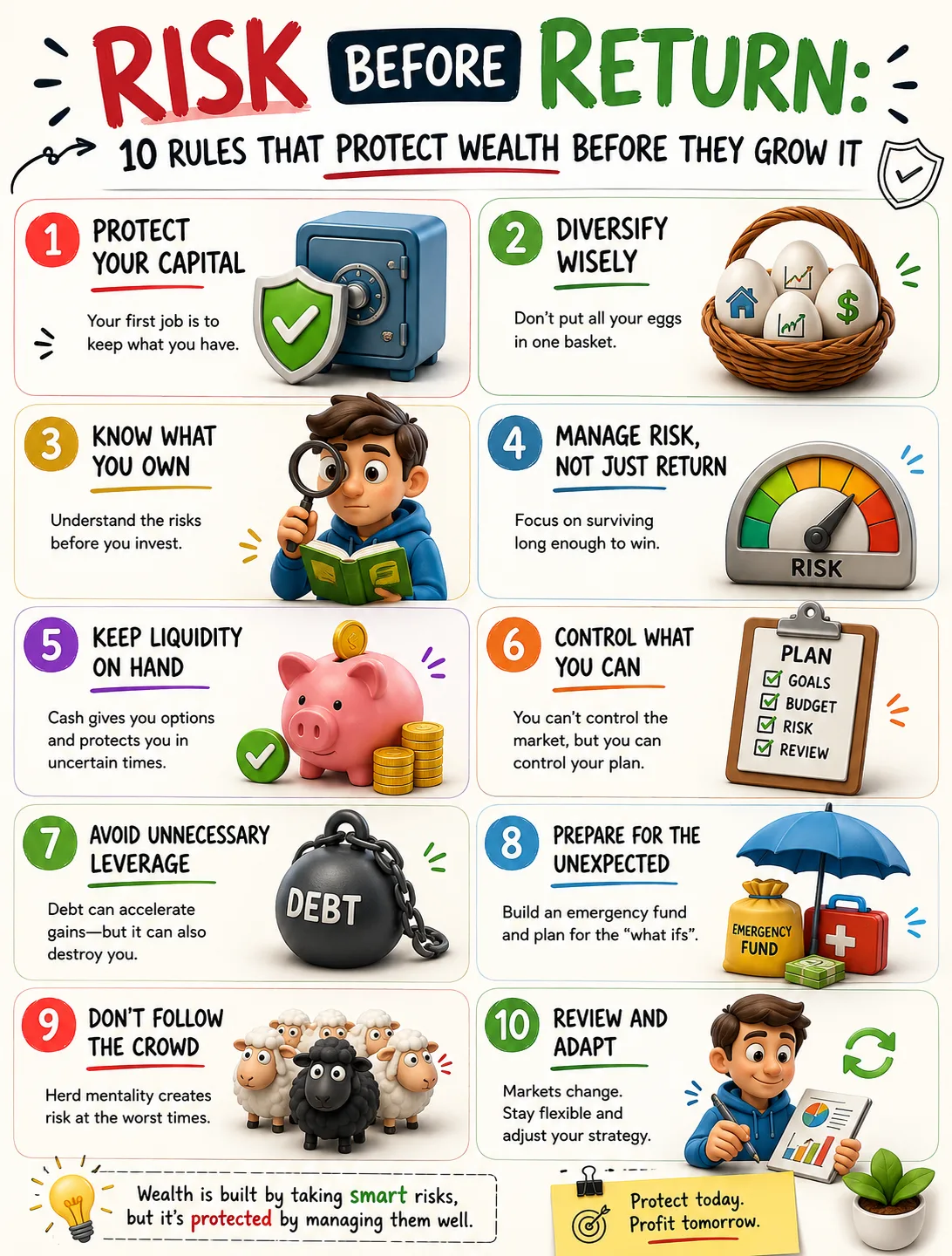
Risk Before Return: 10 Rules That Protect Wealth Before They Grow It
Most people discover risk after they have already taken too much of it.
They learn about leverage after a loan becomes difficult to service. They learn about diversification after one investment falls harder than expected. They learn about liquidity after a cash emergency forces them to sell at the wrong time. They learn about emotional decision-making after fear pushes them out of the market or greed pulls them into an overvalued asset. They learn about position sizing after a single mistake damages years of progress.
Wealth is often discussed as a pursuit of return. People ask which stock will rise, which property market will boom, which business will scale, which cryptocurrency will multiply, which fund will outperform, or which strategy will create financial freedom fastest. These questions are understandable. Return is exciting. Return creates stories. Return makes wealth visible.
Risk management is quieter. It asks less glamorous questions. What happens if this goes wrong? How much can I afford to lose? What if income stops? What if rates rise? What if the tenant leaves? What if the business fails? What if the investment cannot be sold quickly? What if the market falls 30 percent and I panic? What if I am right about the opportunity but wrong about the timing?
These questions do not make people feel rich. They help people stay solvent.
The wealthy often understand, sometimes through painful experience, that protecting capital is not the opposite of building wealth. It is one of the conditions that allows wealth to compound. A person who avoids ruin gets to remain in the game. A person who preserves liquidity can act when others are forced to sell. A person who manages debt carefully can survive downturns. A person who controls emotions can allow a long-term plan to work. A person who reviews strategy can adapt before small problems become permanent damage.
This does not mean every wealthy person is prudent. Plenty of rich people take foolish risks. Some inherit money and lose it. Some build fortunes and destroy them through leverage, speculation, ego, or lifestyle inflation. The goal is not to imitate wealthy people blindly. The goal is to understand the risk-management principles that support durable wealth.
The 10 rules in this article come from a risk-first mindset. Some are universal personal finance principles. Others are most relevant to active traders and should not be confused with rules for long-term investors. That distinction matters. A stop-loss order can be useful for a trader managing short-term price movements. A diversified retirement investor may not need stop-loss orders at all. A 2 percent risk rule may help a trader limit losses on individual positions. A long-term investor may instead manage risk through asset allocation, diversification, liquidity, and rebalancing.
Good financial advice always asks: risk for whom, over what time horizon, with what goal, and under what conditions?
Risk management is not fear. It is structure. It is the discipline of arranging a financial life so that mistakes, downturns, and surprises do not destroy the future. The aim is not to avoid all risk. That is impossible. Holding cash has inflation risk. Investing has market risk. Borrowing has repayment risk. Owning property has maintenance and liquidity risk. Starting a business has execution risk. Working for one employer has income concentration risk.
The aim is to take risks that are understandable, survivable, and appropriately rewarded.
1. Never Risk More Than 2 Percent per Trade
The 2 percent rule is one of the most widely repeated risk-management ideas in trading. In simple terms, it means a trader should not risk more than 2 percent of total trading capital on a single trade. If a trading account has $50,000, the maximum planned loss on one trade would be $1,000. The position size is then calculated around the distance between the entry price and the exit point.
This rule exists because trading is a game of probabilities, not certainty. Even a sound trading strategy can produce a series of losses. If each loss is too large, the trader may be ruined before the strategy has time to work. The 2 percent rule is designed to prevent one bad decision, one unexpected price movement, or one emotional mistake from destroying the account.
The logic is useful beyond trading: no single decision should be able to wreck the financial life. But the exact 2 percent figure is not universal. It is a trading guideline, not a law of wealth building.
Long-term investors should be careful not to apply this rule mechanically. A person investing in a diversified retirement fund is not “risking 2 percent per trade” in the same way an active trader risks capital on a short-term position. A retirement investor manages risk through asset allocation, diversification, time horizon, contribution discipline, liquidity planning, and periodic rebalancing. The portfolio may fall in value during market declines, but the investor is not necessarily taking a discrete trade with a predetermined loss limit.
The real lesson for long-term wealth builders is position sizing. Position sizing asks how much of your financial life depends on one outcome. If most of your savings are in one stock, one cryptocurrency, one business, one property, or one speculative idea, you are not merely investing. You are concentrating your future.
Concentration can create wealth, but it can also destroy it. Many fortunes were built from concentrated ownership in businesses or real estate. But many financial disasters also came from concentration. The difference is often whether the person had enough liquidity, income, diversification, and risk capacity to survive failure.
The middle-class investor should be especially cautious with oversized bets. A wealthy investor might allocate a small slice of net worth to a risky opportunity and remain secure if it fails. A household still building its first meaningful savings base may not have that luxury. The same asset can carry very different risk depending on the investor’s balance sheet.
A practical version of the 2 percent principle is this: before entering any investment or trade, decide how much loss you can survive without changing your life, damaging your obligations, or abandoning your long-term plan. If the answer is unclear, the risk is not yet understood.
2. Diversify Your Income Streams
Income concentration is one of the most overlooked risks in personal finance.
People understand investment diversification more easily than income diversification. They know it can be dangerous to put all their money into one stock. But many households depend entirely on one paycheck, one employer, one client, one business, one industry, or one local economy. If that source weakens, the entire financial structure can become unstable.
Diversifying income does not mean everyone must run five side hustles or work every hour of the day. That version of diversification can create burnout rather than resilience. True income diversification means reducing the risk that one disruption eliminates all cash flow.
There are several ways to do this. A professional can build skills that are valuable across employers. A household can maintain two earners where feasible. A freelancer can avoid depending on a single client. A business owner can diversify customer channels. An investor can build dividend, interest, rental, or business income over time. A worker can develop a modest side income that supports savings or debt repayment. A retiree can combine pensions, investments, cash reserves, and flexible spending rules.
The most important form of income diversification is often employability. A person who continually improves skills, maintains relationships, builds a reputation, and understands their industry has more options if a job disappears. This may not feel like passive income, but it is a form of risk management. Human capital is an asset.
For many middle-class households, the first goal is not to create a large second income. It is to build a backup path. If the main job ends, can you replace income within a reasonable period? If a client leaves, can you find others? If an industry changes, are your skills transferable? If business slows, do you have reserves?
Diversified income becomes especially powerful when additional income is converted into assets. A side income that is fully consumed may reduce short-term stress, but it does not necessarily build wealth. A side income used to pay down high-interest debt, build emergency savings, fund retirement accounts, or invest in productive assets can change the trajectory of a household.
The wealthy often become wealthy because they own multiple claims on income. They may earn from businesses, investments, property, royalties, partnerships, or capital gains. The middle class can move in that direction gradually. The first step is to stop depending entirely on a single fragile source without a plan.
3. Always Use a Stop-Loss
A stop-loss is an order or predetermined rule to exit a position if the price falls to a certain level. Traders use stop-losses to limit downside and prevent a small loss from becoming a catastrophic loss. In active trading, where positions may be short-term and based on price behavior, stop-loss rules can provide discipline.
But “always use a stop-loss” is not universal advice.
For active traders, stop-losses can be valuable because the trader’s thesis may depend on short-term price action. If the price moves against the trade, the original setup may no longer be valid. A stop-loss forces the trader to accept the loss and preserve capital for the next opportunity.
For long-term investors, the situation is different. A person investing in a diversified portfolio for retirement may not want to sell simply because the market declines. Market volatility is part of long-term investing. A stop-loss can trigger a sale during a temporary decline and leave the investor in cash when recovery begins. The investor may then face the difficult psychological task of deciding when to re-enter.
This is why long-term investors often rely on asset allocation rather than stop-loss orders. They decide in advance how much to hold in stocks, bonds, cash, property, or other assets based on goals, time horizon, and risk tolerance. When markets move, they rebalance rather than react emotionally to every decline.
The deeper principle behind a stop-loss is not the order itself. It is the idea of having an exit plan.
Every investment should have a reason for ownership and a reason for sale. A trader may sell because a price level is reached. A long-term investor may sell because the investment no longer fits the plan, the fundamentals have deteriorated, the portfolio has become too concentrated, a financial goal has changed, or rebalancing requires reducing exposure.
Without an exit framework, people improvise under stress. They may hold a losing speculative position because they cannot admit they were wrong. They may sell a quality long-term investment during panic because headlines are frightening. They may average down into a collapsing asset without understanding whether the decline reflects opportunity or permanent impairment.
A stop-loss is one tool. A written investment policy is another. The common theme is discipline before emotion.
The question is not whether every investor should use a mechanical stop-loss. The question is whether every investor knows what would make them sell, hold, rebalance, or buy more. If that answer is determined only after fear arrives, the plan is already weak.
4. Protect Capital First, Profits Second
The first rule of compounding is survival.
A person cannot compound money that has been permanently lost. This is why capital protection is central to wealth building. It does not mean avoiding all volatility or refusing every risk. It means avoiding losses so severe that recovery becomes difficult or impossible.
Large losses are mathematically punishing. A 10 percent loss requires about an 11 percent gain to recover. A 50 percent loss requires a 100 percent gain. An 80 percent loss requires a 400 percent gain. The deeper the loss, the more extraordinary the recovery must be. This asymmetry is why protecting capital matters.
Many investors focus on upside because upside is emotionally attractive. Doubling money feels exciting. Finding a winning stock feels intelligent. Buying into a booming market feels validating. But wealth is not only determined by how much is made during good periods. It is also determined by how much is kept during bad periods.
Protecting capital includes diversification, avoiding excessive leverage, maintaining cash reserves, understanding what you own, controlling position sizes, using insurance where appropriate, and refusing risks that can create ruin. It also includes avoiding fraud, unrealistic promises, and investments that cannot be explained clearly.
Capital protection does not mean holding everything in cash forever. That would expose long-term wealth to inflation risk and opportunity cost. A young investor saving for retirement may need growth assets to preserve and increase purchasing power over decades. But growth should be pursued inside a structure that can survive downturns.
The phrase “protect capital first, profits second” is especially important for people trying to recover financially. A household with limited savings cannot afford repeated major mistakes. Before chasing high returns, it should eliminate destructive debt, build liquidity, protect income, and create a reliable investment process.
The wealthy often think in terms of staying power. They know that opportunities appear over time, but only those with capital can take advantage of them. Cash and preserved capital are not signs of weakness. They are options.
Profit is the reward for taking risk well. Capital preservation is what allows you to keep taking intelligent risks.
5. Avoid Emotional Decision-Making
Markets are emotional because people are emotional.
Fear makes losses feel permanent. Greed makes rising prices feel safe. Envy makes someone else’s success feel like an instruction. Regret makes people chase what they missed. Overconfidence makes recent winners believe they are skilled. Panic makes long-term plans seem irrelevant. Pride makes people hold bad decisions too long because selling would mean admitting error.
Emotional decision-making is dangerous because it often reverses the correct order. A sound investor creates a plan first and acts within it. An emotional investor feels something first and then searches for reasons to justify action.
This is why people buy aggressively after prices have already risen. The emotion is fear of missing out. The justification is that the asset has momentum, that the world has changed, or that old valuation rules no longer matter. It is also why people sell after prices have fallen. The emotion is fear. The justification is that conditions are uniquely bad and waiting is too risky.
Emotional decisions are not always wrong. Sometimes fear points to real danger. Sometimes enthusiasm reflects real opportunity. The problem is not emotion itself. The problem is letting emotion become the decision-maker.
The antidote is process. A process defines what you will do before the emotional moment arrives. It may include automatic contributions, rebalancing rules, position limits, debt limits, spending rules, emergency fund targets, and written criteria for new investments. The process does not eliminate emotion. It prevents emotion from taking full control.
For traders, avoiding emotion may mean using predetermined entries, exits, position sizes, and maximum daily loss limits. For long-term investors, it may mean maintaining a target allocation, ignoring short-term noise, and reviewing the plan on a schedule rather than in response to headlines. For households, it may mean delaying large purchases, using separate accounts, and discussing major financial decisions before committing.
Emotional discipline also requires sleep, health, and perspective. People make worse financial decisions when exhausted, ashamed, stressed, or desperate. A household living without cash reserves is more likely to make emotional decisions because every surprise feels urgent. This is another reason liquidity matters: it buys calm.
The goal is not to become emotionless. The goal is to ensure that fear and greed do not write checks that the future must pay.
6. Do Your Research Before Investing
Research is the difference between investing and hoping.
Before committing money, an investor should understand what the asset is, how it may generate return, what risks it carries, how it can be sold, what fees apply, what tax issues may arise, and how it fits into the broader financial plan. If the investment cannot be understood, it should not be purchased simply because someone else sounds confident.
Research begins with basic questions. What am I buying? Is it a share of a company, a fund, a loan, a property, a commodity, a digital asset, a partnership interest, an insurance product, or something else? How does it make money? What must go right? What could go wrong? How have similar assets behaved in different conditions? Who benefits from selling it to me? What are the costs? Can I exit? What happens if I need cash quickly?
For stocks, research may involve revenue, earnings, debt, competitive position, valuation, management quality, industry dynamics, and cash flow. For funds, it may involve holdings, expense ratios, strategy, tracking error, turnover, manager process, and historical behavior in different markets. For real estate, it may involve location, rental demand, financing terms, maintenance costs, taxes, insurance, vacancy, legal rules, and cash flow. For private businesses, it may involve margins, customer concentration, working capital, competition, and management.
Research also includes understanding oneself. An investment can be objectively reasonable and personally unsuitable. A volatile asset may be acceptable for someone with a long time horizon and strong cash reserves but inappropriate for someone who needs the money soon. An illiquid investment may suit a wealthy household with other liquid assets but create danger for someone with limited savings.
One of the most common mistakes is outsourcing conviction. A person hears a persuasive argument from an influencer, friend, adviser, celebrity, or online community and borrows their confidence. But borrowed conviction often disappears during the first decline. If you do not know why you own something, you will not know whether to hold, sell, or buy more when conditions change.
Research does not guarantee success. Sound decisions can still produce unfavorable outcomes because the future is uncertain. But research improves the quality of decision-making and reduces avoidable mistakes. It also helps distinguish a bad outcome from a bad process.
The wealthy often have access to advisers, analysts, lawyers, accountants, and networks. The ordinary investor may not have the same resources, which makes simplicity valuable. If a strategy requires more expertise than the investor has, the safer choice may be a diversified, low-cost approach rather than a complex product that cannot be properly evaluated.
Research is not about knowing everything. It is about knowing enough to understand the risk you are choosing.
7. Keep Cash Reserves
Cash rarely makes people feel wealthy, but it often keeps them from becoming poor.
An emergency fund is the most basic form of financial defense. It provides liquid money for unexpected expenses, temporary income loss, medical bills, repairs, family needs, job transitions, or opportunities that require quick action. Without cash reserves, a household may be forced to borrow, sell investments, miss payments, or accept unfavorable terms during stress.
Cash has an opportunity cost. Money held in savings may earn less than long-term investments. Inflation may reduce its purchasing power over time. This is why some investors argue that cash is inefficient. But that argument depends on context. A wealthy person with substantial assets, multiple income sources, and access to low-cost credit may need less idle cash. A middle-class household with one income source and limited savings needs liquidity.
The common recommendation of three to six months of essential expenses is a useful starting point, but it should be customized. A single person with stable employment and low fixed costs may need less. A family with children, a mortgage, variable income, medical needs, or one primary earner may need more. A freelancer or business owner may need a larger reserve because income can be uneven.
The purpose of cash reserves is not maximum return. It is maximum readiness.
Cash reserves also improve investment behavior. An investor with adequate emergency savings is less likely to sell long-term assets during a market decline to cover ordinary expenses. Liquidity protects the investment plan. It allows growth assets to remain long-term because short-term needs are already funded.
Cash also creates opportunity. During downturns, people with liquidity can invest, negotiate, move, buy assets, or start businesses when others are constrained. This is one reason preserving cash is not merely defensive. It can be strategic.
Building reserves should be approached gradually. The first goal may be one week of expenses, then one month, then three months. Progress matters more than perfection. A household with no emergency fund is exposed. A household with even a small reserve has begun to change its relationship with risk.
Cash is not lazy when it is assigned a job. Its job is to protect the household from being forced into bad decisions at bad times.
8. Use Leverage Carefully
Leverage is borrowed power.
Used well, it can help acquire assets, build businesses, buy homes, finance education, and expand productive capacity. Used poorly, it can magnify mistakes, increase stress, and destroy wealth. Debt is not automatically good or bad. Its quality depends on purpose, cost, repayment ability, collateral, risk, and the borrower’s financial resilience.
Wealthy people often use leverage in ways that look sophisticated. Real estate investors use mortgages. Business owners borrow for expansion. High-net-worth individuals may borrow against portfolios. Corporations finance growth with debt. This can lead ordinary households to believe that borrowing is a sign of financial intelligence.
But wealthy borrowers often have advantages: assets, cash reserves, advisers, diversified income, tax planning, bargaining power, and the ability to survive setbacks. A middle-class household using debt to maintain lifestyle does not have the same risk profile.
The most dangerous leverage is debt used to buy depreciating consumption or speculative assets without a margin of safety. Credit card balances, high-interest personal loans, payday loans, and lifestyle borrowing reduce future cash flow. Borrowing to invest can be even more dangerous because losses may occur while the debt remains fixed.
Debt becomes especially risky when conditions change. Interest rates can rise. Income can fall. Tenants can leave. Property values can decline. Businesses can lose customers. Markets can drop. A loan that felt manageable in good times can become suffocating when the environment shifts.
Careful leverage begins with stress testing. Can you still make payments if income falls? What if rates rise? What if the asset produces less income than expected? What if repairs are higher? What if the investment declines? What if you cannot refinance? What if you need to sell and the market is weak?
Low debt is not always the mathematically optimal choice, but it often creates emotional and strategic freedom. A household with modest fixed obligations can adapt. It can change jobs, withstand emergencies, invest through downturns, and sleep better. A household with heavy debt may be forced to optimize every month just to survive.
Leverage should serve a plan. It should not serve impatience.
9. Learn from Losses, Not Excuses
Every investor, business owner, and household experiences losses. The question is whether those losses become tuition or trauma.
A financial loss can teach position sizing, diversification, due diligence, emotional control, liquidity management, or humility. But it teaches only if the person is willing to examine it honestly. Excuses prevent learning. They protect ego at the cost of progress.
This does not mean every loss is the result of a bad decision. That distinction is crucial. A sound decision can produce a bad outcome because uncertainty is real. An investor can make a diversified, rational investment and still experience a market decline. A business owner can launch a thoughtful product and still face unexpected economic conditions. A homeowner can buy responsibly and still encounter a major repair.
Learning from losses requires separating process from outcome.
A bad outcome does not always mean the decision was bad. A good outcome does not always mean the decision was good. Someone can make money through reckless speculation and learn the wrong lesson. Someone can lose money after careful analysis and abandon a sound process too early.
The right post-loss questions are specific. Did I understand the investment? Was the position too large? Did I rely on someone else’s confidence? Did I ignore liquidity? Did I use too much debt? Did I have an exit plan? Did emotion influence the decision? Did I confuse a short-term decline with permanent loss? Did I violate my own rules? Did something happen that could not reasonably have been predicted?
Traders often keep journals for this reason. A journal records the reason for entry, position size, risk, exit plan, emotional state, and result. Long-term investors and households can use a similar practice. Document major financial decisions. Review them later. Patterns will appear.
Learning from losses also requires forgiveness. Shame can be as damaging as arrogance. If a person cannot face a mistake, they cannot repair it. The goal is not self-punishment. It is better judgment.
Wealth grows when experience becomes wisdom. But experience becomes wisdom only after honest review.
10. Review and Adjust Your Strategy
A financial strategy should be stable enough to guide behavior but flexible enough to reflect reality.
Life changes. Income changes. Family obligations change. Interest rates change. Tax rules change. Markets change. Health changes. Goals change. A strategy created at 25 may not fit at 45. A portfolio built before marriage, children, business ownership, relocation, inheritance, or retirement may need adjustment.
Reviewing a strategy does not mean constantly reacting. Over-adjustment can be as harmful as neglect. Some people mistake activity for intelligence. They change investments every time headlines shift. They revise plans after every market move. They chase trends and call it adaptation.
A useful review process is scheduled rather than emotional. Many households can review finances quarterly or semiannually, with a deeper annual review. Investors may review asset allocation, contribution rates, fees, rebalancing needs, tax opportunities, insurance coverage, estate documents, debt levels, and progress toward goals. Traders may review performance, drawdowns, rule adherence, win-loss patterns, and risk limits more frequently.
The review should ask whether the plan still fits the person’s life. Has income become less stable? Has debt increased? Is the emergency fund adequate? Has one investment become too large a share of net worth? Are insurance policies outdated? Are retirement contributions sufficient? Are fees too high? Are taxes being considered? Has risk tolerance changed after experiencing real volatility?
Adjustment should be based on evidence, not mood. A market decline alone does not necessarily mean the plan is broken. A rising market alone does not mean the plan should become more aggressive. The review should connect changes to goals, time horizon, cash needs, valuation, risk capacity, and life circumstances.
Good strategy has both discipline and feedback. Discipline prevents emotional overreaction. Feedback prevents stubbornness. The combination is powerful.
The Difference Between Trading Risk and Wealth-Building Risk
One of the most important lessons in risk management is that traders and long-term investors are not playing the same game.
A trader may focus on short-term price movements, entries, exits, stop-losses, win rates, drawdowns, and position sizing. The trader’s risk is often defined at the trade level. The question is: how much can this position lose before the setup is invalidated?
A long-term investor focuses on goals, asset allocation, diversification, contributions, fees, taxes, inflation, liquidity, and behavior across decades. The investor’s risk is often defined at the life-plan level. The question is: what portfolio gives me a reasonable chance of reaching my goals without taking risks I cannot endure?
Confusing these games creates bad decisions. A long-term investor who uses tight stop-losses may repeatedly sell during normal volatility. A trader who refuses to cut losses because “markets recover over time” may turn a trading error into a disaster. A retirement saver who copies a day trader’s risk rules may overcomplicate a simple plan. A trader who copies a long-term investor’s patience may hold losing positions long after the original thesis has failed.
Risk tools must match the strategy.
The 2 percent rule and stop-losses are most natural in active trading. Diversification, emergency savings, careful leverage, research, emotional discipline, and periodic review apply more broadly. Protecting capital applies to everyone, but the method differs. A trader protects capital by limiting losses per trade. A household protects capital through cash reserves, insurance, debt control, and avoiding concentrated ruin. A long-term investor protects capital by owning a diversified portfolio aligned with time horizon and risk capacity.
The wealthy often understand which game they are playing. The middle class can suffer when it copies tools without understanding the game behind them.
Why Protecting Wealth Is Harder Than It Sounds
Risk management sounds obvious when explained calmly. In real life, it is difficult because the best risk decisions often feel wrong in the moment.
Diversification feels frustrating when one asset is soaring. Cash reserves feel inefficient during bull markets. Low leverage feels conservative when borrowed money appears to create easy gains. Selling a losing trade feels painful because it admits error. Reviewing mistakes feels uncomfortable because it challenges ego. Avoiding emotional decisions is hard when everyone else seems to be getting rich or panicking.
Risk management also lacks immediate applause. People admire large gains more than avoided disasters. No one celebrates the investment you did not make before it collapsed. No one sees the emergency fund that prevented credit card debt. No one praises the modest mortgage that allowed you to survive a layoff. No one compliments the insurance policy that protected your family. The benefits of risk management are often invisible because the crisis never fully happens.
This invisibility makes risk discipline psychologically demanding. It requires valuing what did not go wrong.
The investor who avoids excessive leverage may look less brilliant during a boom. The household that keeps cash may look less optimized. The business owner who expands slowly may seem cautious. But when conditions change, the value of restraint becomes clear.
Wealth is often lost when people become unable to distinguish between caution and cowardice. Caution is not fear of opportunity. It is respect for consequences. It allows risk-taking from a position of strength.
A Practical Risk-Management Framework for Households
For most households, risk management should begin before investing decisions. The first layer is survival risk. Can the household pay for food, housing, utilities, transport, insurance, and essential medical needs? If not, the priority is stability, not portfolio optimization.
The second layer is liquidity. Build a starter emergency fund, then expand it toward a level appropriate for the household’s income stability and obligations. Liquidity prevents small emergencies from becoming expensive debt.
The third layer is debt risk. Identify high-interest debt and create a repayment plan. Reduce reliance on credit for lifestyle spending. Be cautious with new obligations that raise fixed monthly costs.
The fourth layer is income risk. Improve employability, maintain professional networks, consider supplemental income where realistic, and avoid dependence on one fragile source without a backup plan.
The fifth layer is insurance risk. Protect against losses that would be financially devastating: health events, disability, death of a primary earner, liability, property loss, or business risks. The right coverage depends on household circumstances.
The sixth layer is investment risk. Use an asset allocation aligned with goals and time horizon. Diversify. Control costs. Avoid concentration before the foundation is strong. Understand what each investment is supposed to do.
The seventh layer is behavior risk. Automate good decisions. Use written rules. Review periodically. Avoid making major financial decisions under stress, envy, panic, or excitement.
This framework may not sound dramatic, but it is the architecture of resilience. It protects the household from being forced into bad decisions and creates the stability needed for long-term wealth building.
How Investors Can Apply the 10 Rules Without Becoming Fearful
Risk management should not make people timid. A life with no risk is impossible, and a portfolio with no risk may fail to grow enough to meet long-term goals. The purpose is not to hide from uncertainty. The purpose is to engage with uncertainty intelligently.
For long-term investors, this means accepting market volatility while avoiding unnecessary fragility. It means investing money that has a long enough time horizon, not rent money or emergency savings. It means holding a diversified portfolio rather than betting the future on one asset. It means choosing an allocation that can be held during downturns. It means avoiding high-cost products that quietly reduce returns. It means reviewing the plan without constantly rewriting it.
For traders, this means treating risk as the core of the profession. Position sizing, stop-losses, maximum drawdown rules, journaling, and emotional control are not optional decorations. They are survival tools.
For business owners, risk management means understanding cash flow, customer concentration, debt, margins, working capital, contracts, insurance, and personal guarantees. A profitable business can fail from poor liquidity. A growing business can become dangerous if expansion is financed recklessly.
For families, risk management means building a life that can bend without breaking. That may include modest fixed expenses, multiple income possibilities, emergency savings, appropriate insurance, and thoughtful lifestyle choices.
Risk management is not one rule. It is a posture. It is the habit of asking what could go wrong before committing money, time, reputation, or future income.
The Wealthy Principle Beneath All 10 Rules
The unifying principle is simple: avoid ruin.
A person who avoids ruin remains able to work, save, invest, recover, learn, and compound. A person who takes one catastrophic risk may spend years rebuilding. This is why the wealthy often obsess over downside even while pursuing upside. They understand that staying in the game is more important than winning every round.
Avoiding ruin does not require perfect decisions. It requires avoiding fatal decisions. You can survive a small investment loss. You may not survive a leveraged speculation that wipes out savings and leaves debt behind. You can recover from a modest business mistake. You may not recover quickly from personally guaranteeing debt you cannot repay. You can endure normal market volatility. You may not endure panic selling your retirement assets and never returning.
Risk management gives mistakes a boundary. It turns errors into lessons rather than disasters.
This is why the first job of money is not luxury. It is protection. Before money buys status, it should buy resilience. Before it funds speculation, it should fund liquidity. Before it chases maximum return, it should prevent catastrophic loss.
Final Thought: Wealth Is Built by Those Who Survive Their Mistakes
Every financial life contains uncertainty. There will be downturns, bad investments, unexpected bills, changing markets, emotional mistakes, and plans that require revision. The goal is not to avoid every loss. That is impossible. The goal is to make sure losses are survivable and instructive.
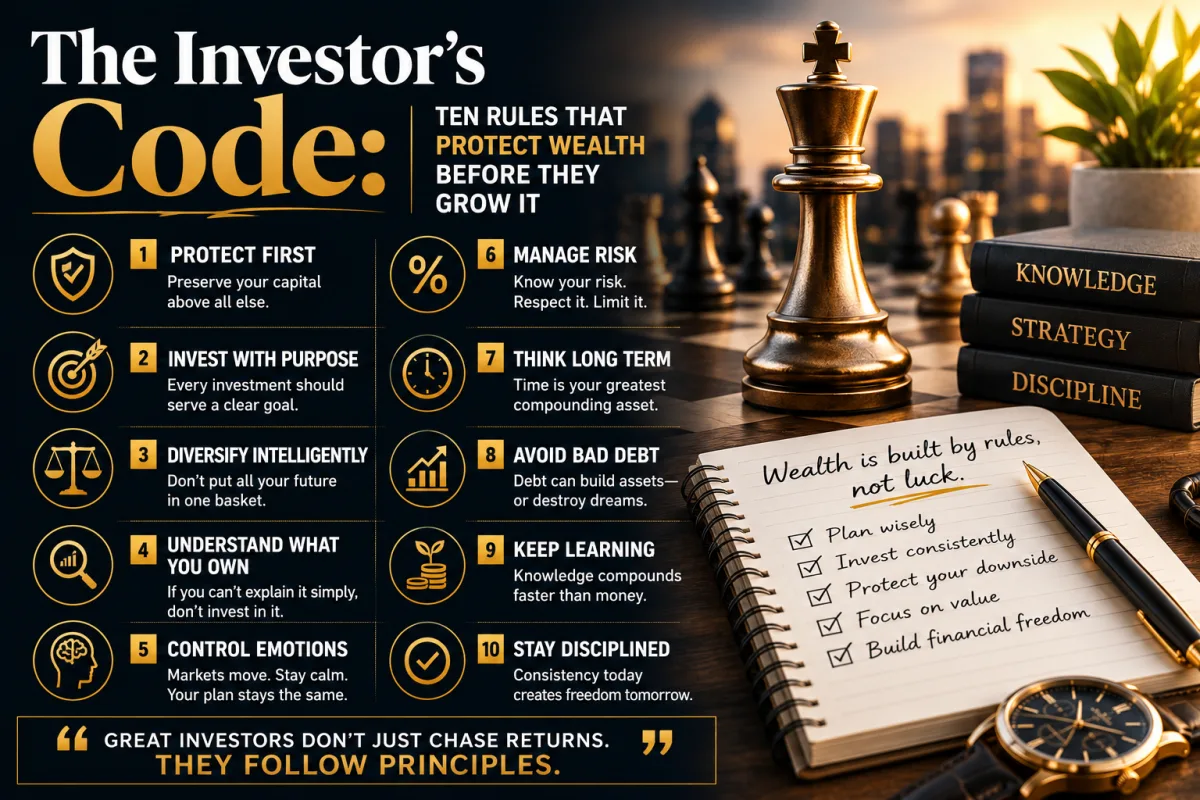
The 10 rules of risk management are not slogans to memorize. They are reminders of how wealth is protected. Limit the damage of any single trade. Diversify income. Use exit plans where appropriate. Protect capital before chasing profit. Keep emotion out of major decisions. Research before committing money. Maintain cash reserves. Use leverage carefully. Learn from losses. Review and adjust strategy as life changes.
Some of these rules belong mainly to active trading. Others belong to every serious financial plan. Together, they teach the same lesson: risk comes before return because return only matters if you remain solvent enough to enjoy it.
The financially mature person does not ask only, “How much can I make?” They ask, “What can I lose, can I survive it, and does this risk serve my long-term goals?”
That question may not sound exciting. But it is one of the questions that separates temporary gains from lasting wealth.
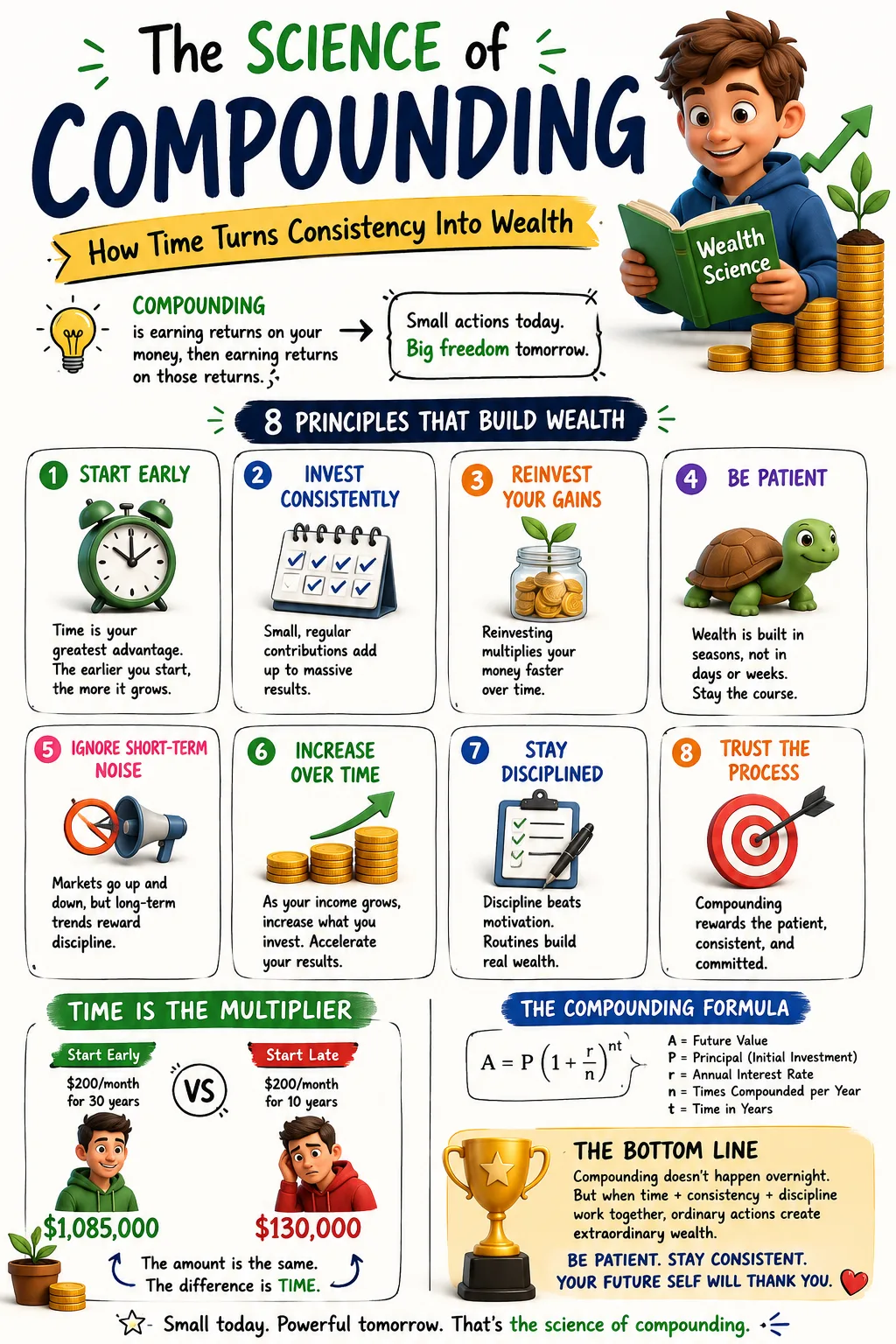 Article
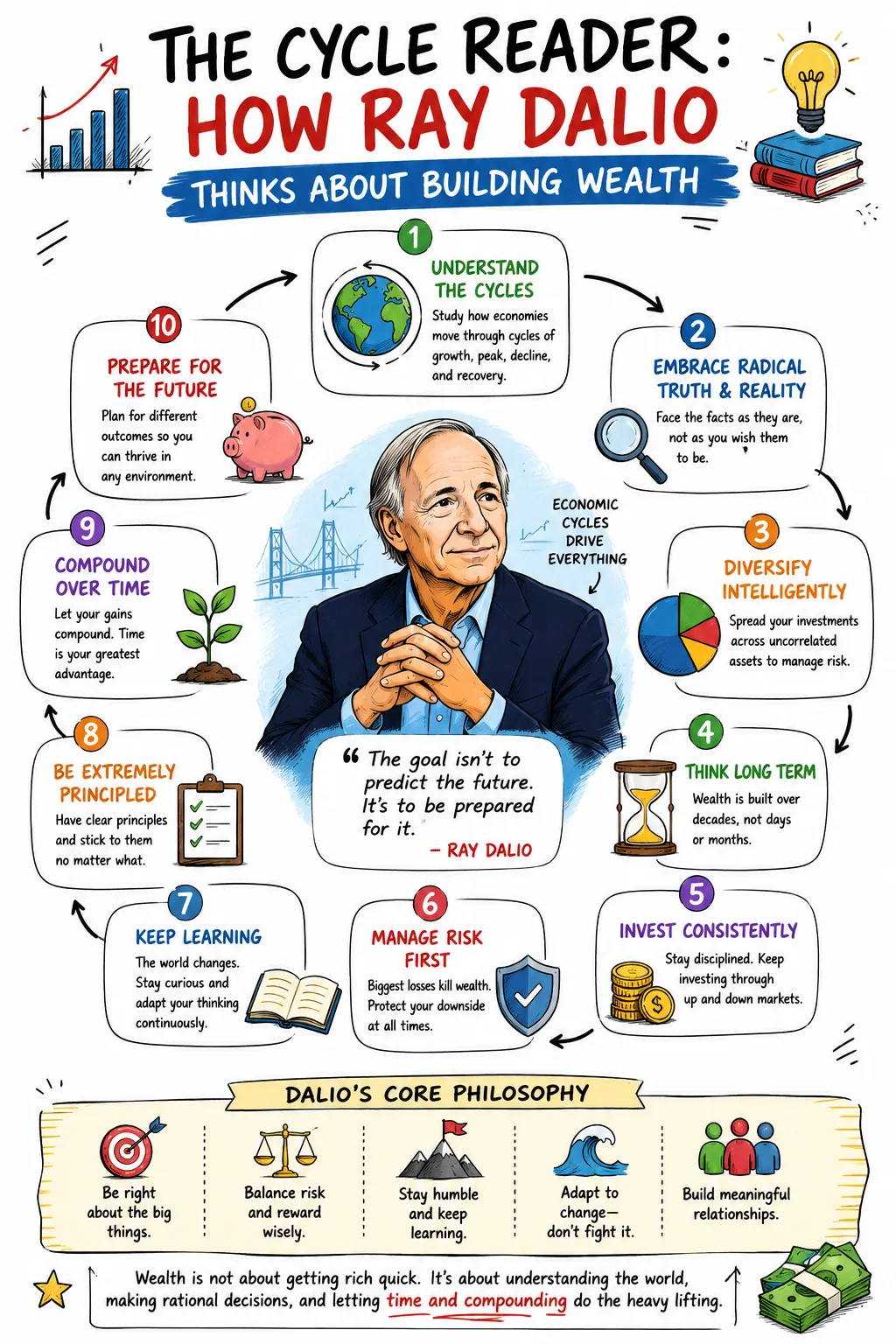 Article
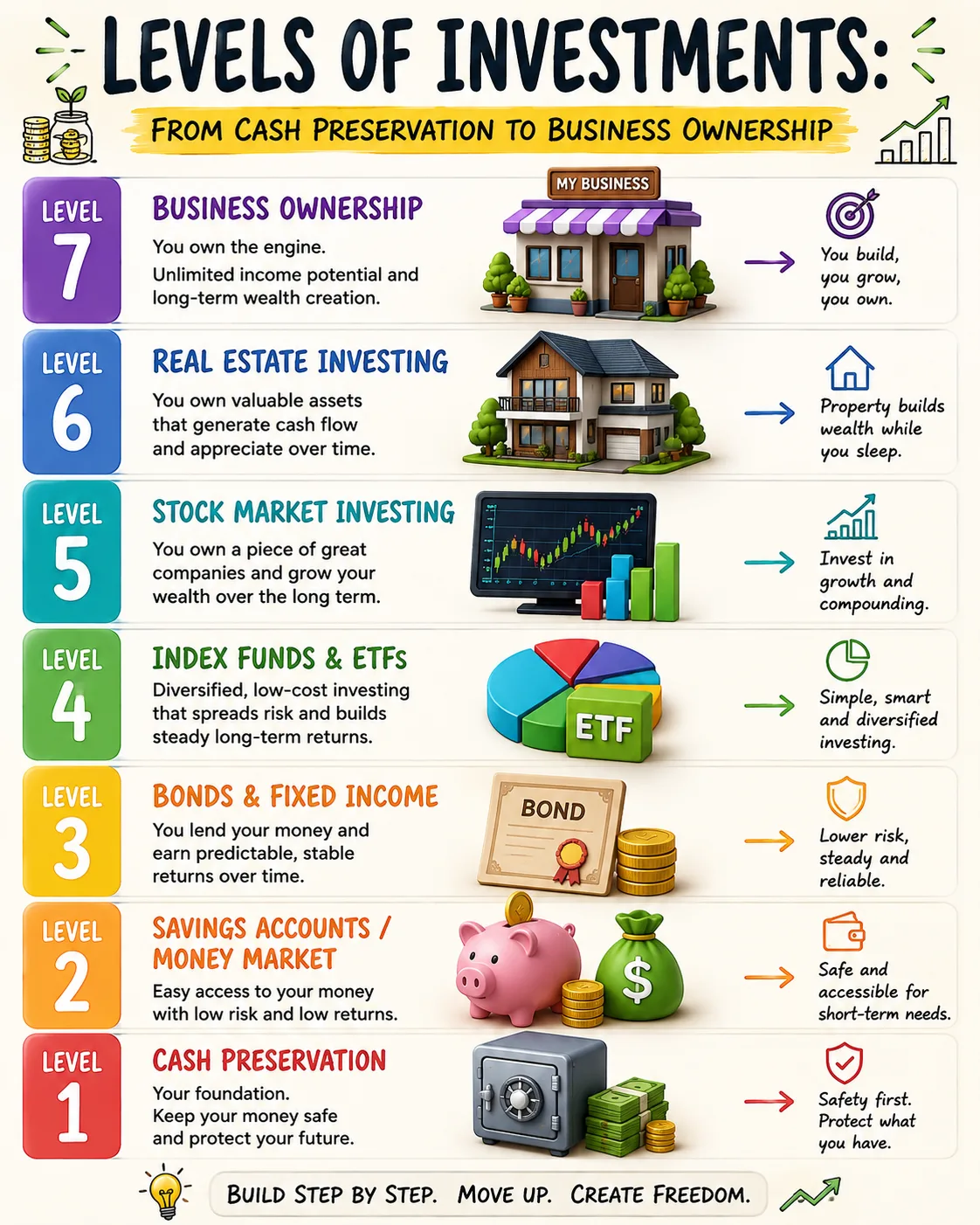 Article
 Article
 Article
 Article
 Article
 Article