
The Investor’s Map: How to Understand Assets, Risk, and the Tools That Build Wealth
\nInvesting becomes less intimidating when you understand the map.
\nMost beginners do not struggle because there are too few investment choices. They struggle because there are too many. One person says index funds are the only sensible path. Another argues that dividend stocks are the secret to financial freedom. Someone else promotes real estate investment trusts, blue-chip companies, value stocks, growth stocks, crypto assets, options strategies, robo-advisors, bond funds, money market funds, or international portfolios. The result is confusion disguised as opportunity.
\nGood investing does not begin with asking which asset will make the most money next year. It begins with understanding what each investment is designed to do, what risk it carries, how it behaves in different market conditions, and whether it fits your goals. The same investment can be sensible for one person and unsuitable for another. A retiree seeking income does not have the same needs as a 25-year-old building wealth for 40 years. A business owner with unstable cash flow does not have the same risk capacity as a salaried employee with emergency savings and no debt. A speculative investor with money they can afford to lose should not use the same tools as someone saving for a home deposit due next year.
\nThe phrase “investment vehicles” is often used loosely. Strictly speaking, some items commonly listed as investment vehicles are not vehicles at all. Bond ETFs and index funds are investment vehicles because they are structures through which investors hold assets. REITs are securities that give exposure to real estate. Dividend stocks, blue-chip stocks, growth stocks, and value stocks are categories or styles of stock investing. Crypto assets are a speculative asset class. Stock options are derivative instruments. Robo-advisors are platforms or services, not investments themselves.
\nThis distinction matters because clarity protects investors. A stock is not a strategy by itself. A fund is not automatically safe. A platform is not an asset. A high return is not proof of quality. A low-risk label does not mean no risk. The intelligent investor asks: what do I own, why do I own it, how can it make money, how can it lose money, what does it cost, and how does it fit with everything else I own?
\nThe ten investment types and strategies explored here cover much of the landscape: bond ETFs, index funds, dividend stocks, REITs, blue-chip stocks, growth stocks, robo-advisors, value stocks, crypto assets, and stock options. They range from conservative fixed-income exposure to speculative instruments with significant downside. Each has a role, but not every investor needs each one.
\nA portfolio is not stronger because it contains everything. It is stronger when every holding has a purpose.
\nBefore Choosing Investments, Understand the Job of a Portfolio
\nA portfolio is a collection of assets designed to serve financial goals. It should not be a random basket of ideas collected from headlines, social media, friends, or market excitement. A good portfolio has structure. It reflects time horizon, risk tolerance, liquidity needs, income requirements, tax considerations, currency exposure, and personal circumstances.
\nTime horizon is one of the most important factors. Money needed within a year should usually be treated differently from money intended for retirement decades away. Short-term money needs stability and liquidity. Long-term money can often accept more volatility because it has time to recover from market downturns.
\nRisk tolerance is emotional. It asks how much fluctuation you can psychologically endure. Risk capacity is financial. It asks how much loss or volatility your financial life can actually absorb. Someone may have high emotional tolerance but low financial capacity if they have no emergency fund, unstable income, or large debts. Another person may have strong financial capacity but low emotional tolerance if market declines cause panic selling. Both matter.
\nLiquidity also matters. Some investments can be sold quickly. Others may be difficult to exit without delay or loss. A publicly traded ETF is usually more liquid than physical real estate. Cash is more liquid than a business. Liquidity is valuable during emergencies, but too much liquidity can tempt frequent trading. A good portfolio balances access and discipline.
\nFees matter because they reduce returns. A fund with high costs must overcome those costs before the investor benefits. Trading fees, advisory fees, expense ratios, spreads, taxes, and hidden charges all affect net performance. Investors should care less about headline returns and more about what remains after costs, taxes, and inflation.
\nDiversification is the principle of not depending too heavily on one outcome. It can occur across companies, sectors, countries, currencies, asset classes, investment styles, and time. Diversification does not eliminate loss, but it reduces the damage that one failed investment can cause. A portfolio built around one stock, one property, one cryptocurrency, one employer, or one business may appear bold, but it is fragile.
\nFinally, an investor needs purpose. Some assets provide income. Some provide growth. Some provide stability. Some hedge inflation. Some preserve capital. Some are speculative. Some are tools for advanced strategies. A mistake many investors make is buying an asset because it is popular without defining its role. If you do not know why you own something, you will not know when to hold, sell, add, or avoid it.
\nBond ETFs: Stability, Income, and the Myth of “No Risk”
\nBond ETFs provide exposure to bonds through an exchange-traded fund. A bond is essentially a loan made by investors to a government, company, municipality, or other issuer. In return, the issuer typically pays interest and repays principal at maturity, assuming it does not default. A bond ETF owns a portfolio of bonds and allows investors to buy shares of that portfolio on an exchange.
\nBond ETFs are often viewed as lower risk than stocks because bonds generally have more predictable income streams and are higher in the capital structure than equity. If a company faces trouble, bondholders usually have a stronger claim than shareholders. Government bonds issued by financially strong governments may also be considered relatively safe compared with corporate stocks.
\nBut lower risk does not mean risk-free.
\nBond ETFs carry interest-rate risk. When interest rates rise, the market value of existing bonds often falls because newer bonds may offer higher yields. Longer-duration bond funds are usually more sensitive to interest-rate changes than shorter-duration funds. An investor who assumes a bond ETF cannot decline may be surprised when prices fall during periods of rising rates.
\nThey also carry credit risk. If the bonds inside the ETF are issued by companies or governments with weaker financial positions, there is a possibility of default or downgrade. High-yield bond ETFs may offer higher income, but they are not the same as high-quality government bond funds. The extra yield exists because the risk is higher.
\nBond ETFs also have inflation risk. If inflation rises faster than the income produced by the bonds, the investor’s purchasing power may decline. A bond can preserve nominal capital while failing to preserve real wealth.
\nDespite these risks, bond ETFs can play an important role. They may reduce portfolio volatility, provide income, preserve capital relative to equities, and offer diversification. For retirees, conservative investors, or people approaching a financial goal, bond exposure can help reduce dependence on stock market performance. For younger investors, bonds may still provide stability and emotional comfort during market declines.
\nThe key is knowing what type of bond ETF you own. A short-term government bond ETF is different from a long-term corporate bond ETF. An inflation-linked bond fund is different from a high-yield bond fund. A domestic bond ETF is different from an international bond ETF with currency exposure. The label “bond” is not enough.
\nBond ETFs are best understood as tools for stability and income, not as guaranteed stores of value. They can reduce risk in a portfolio, but they do not remove risk from investing.
\nIndex Funds: The Quiet Core of Long-Term Investing
\nIndex funds are one of the most important inventions in modern investing. They are designed to track a market index rather than select individual securities through active management. An index fund may track a broad stock market, a bond market, a sector, a region, or a specific group of assets.
\nThe basic appeal is simple: instead of trying to pick the winning stocks, the investor owns a broad slice of the market at low cost. This provides diversification, reduces dependence on one company, and avoids the challenge of consistently beating professional investors.
\nFor many long-term investors, broad, low-cost index funds can form the core of a portfolio. They are transparent, efficient, and easy to understand. A total market index fund or broad equity index fund gives exposure to hundreds or thousands of companies. If some fail, others may grow. The investor participates in the overall progress of businesses rather than betting everything on a few names.
\nThe greatest strength of index funds is also their discipline. They do not chase trends. They do not depend on a manager’s prediction. They do not require constant buying and selling. They simply follow the index methodology. This makes them useful for investors who want long-term exposure without turning investing into a second job.
\nLow cost is a major advantage. Fees compound just as returns do. A small annual difference in expense ratio can become significant over decades. Index funds often cost less than actively managed funds because they require less research, trading, and management judgment.
\nHowever, index funds are not magic. They can fall sharply when markets decline. A stock index fund still carries equity risk. If the broad market drops, the fund drops with it. Index investing does not protect investors from recessions, bear markets, valuation excesses, currency fluctuations, or emotional mistakes.
\nIndex funds also reflect the composition of the index. In some markets, a few large companies may dominate the index. This can create concentration that investors may not fully realize. A global index may be diversified across countries, but still heavily weighted toward certain markets. A domestic index may be concentrated in a few sectors. Investors should understand what the index actually holds.
\nThere is also a difference between using index funds wisely and buying every index fund available. A portfolio with too many overlapping funds may appear diversified while owning the same underlying companies repeatedly. Simplicity is often a strength.
\nIndex funds are best suited for investors who value diversification, low costs, and long-term participation in market growth. They are not designed to make investors rich overnight. Their power comes from consistent contributions, reinvestment, patience, and time.
\nDividend Stocks: Income, Discipline, and the Dividend Trap
\nDividend stocks are shares of companies that distribute part of their profits to shareholders in the form of dividends. Many investors like dividend stocks because they provide cash flow without requiring the investor to sell shares. This can be attractive for retirees, income-focused investors, or anyone who values visible returns.
\nCompanies with long histories of raising dividends often receive special attention. The phrase “Dividend Aristocrats” usually refers to companies that have increased dividends for at least 25 consecutive years, depending on the market and index definition. Such records can signal business durability, disciplined capital allocation, and shareholder-friendly management.
\nDividend investing has several strengths. Dividends can provide income. Dividend growth can help offset inflation. Reinvested dividends can contribute significantly to long-term total returns. Companies that pay sustainable dividends are often mature, profitable, and cash-generative. For some investors, dividends also create emotional discipline because they make investing feel productive even when stock prices fluctuate.
\nBut dividends are often misunderstood. A high dividend yield does not automatically make a stock attractive. Sometimes the yield is high because the stock price has fallen sharply due to business problems. If the dividend is not sustainable, the company may cut it, and the investor may suffer both lost income and capital decline. This is known as a dividend trap.
\nInvestors should examine dividend safety. Does the company generate enough earnings and cash flow to support the payout? Is debt manageable? Is the business stable? Is the dividend growing faster than profits? Is the company sacrificing necessary reinvestment to maintain the dividend? A dividend funded by financial weakness is not a strength.
\nDividend stocks also have opportunity cost. A company that pays out a large share of earnings may have fewer opportunities to reinvest for growth. That is not necessarily bad. Mature companies may return cash because they do not need all profits for expansion. But investors should understand the trade-off between income today and growth tomorrow.
\nTax treatment matters as well. In some jurisdictions, dividends may be taxed differently from capital gains. For investors in taxable accounts, the after-tax return may differ from the headline yield.
\nDividend stocks can play an important role in a portfolio, especially for income needs. But they should not be selected by yield alone. A sustainable dividend from a strong business at a reasonable valuation is very different from a high yield attached to a deteriorating company.
\nREITs: Real Estate Exposure Without Direct Property Ownership
\nReal estate investment trusts, or REITs, allow investors to gain exposure to income-producing property without buying and managing buildings directly. A REIT may own apartments, offices, warehouses, shopping centers, hospitals, data centers, hotels, cell towers, storage facilities, or other real estate assets. Investors buy shares and receive exposure to rental income and property values through the security.
\nREITs appeal to investors because real estate is a familiar wealth-building asset. Property can generate income, appreciate over time, and provide diversification from traditional stocks and bonds. REITs make this exposure more accessible. Instead of needing a large down payment, mortgage approval, property management skills, and maintenance reserves, an investor can buy shares in a publicly traded REIT or REIT fund.
\nMany REITs distribute a significant portion of income to shareholders, which can make them attractive to income-focused investors. They may also provide liquidity compared with physical property because publicly traded REIT shares can usually be bought and sold more easily than buildings.
\nHowever, REITs are not the same as owning a local rental property. Their share prices can fluctuate like stocks. During market stress, REITs may decline significantly even if the underlying properties continue operating. They are affected by interest rates, property valuations, tenant health, debt levels, occupancy rates, and economic cycles.
\nInterest rates are especially important. Real estate often uses debt financing, and higher rates can increase borrowing costs and reduce property values. Higher bond yields can also make REIT dividends less attractive by comparison. This does not mean REITs perform poorly in every rising-rate environment, but rate sensitivity should be understood.
\nProperty type matters. A warehouse REIT exposed to e-commerce logistics has different drivers from an office REIT facing remote-work pressure. A healthcare REIT differs from a hotel REIT. A data center REIT differs from a retail mall REIT. Treating all REITs as identical ignores the economics of the underlying properties.
\nREITs can be useful for diversification and income, but investors should watch leverage, occupancy, tenant concentration, property quality, dividend coverage, and valuation. A REIT with a high dividend yield may be attractive or may be signaling risk. As with dividend stocks, income must be evaluated for sustainability.
\nFor investors who want real estate exposure without direct landlord responsibilities, REITs can be a practical tool. But they still require analysis and risk management.
\nBlue-Chip Stocks: Quality Does Not Mean Invincible
\nBlue-chip stocks are shares of large, established companies with strong reputations, durable businesses, significant market presence, and often long operating histories. These companies may have recognizable brands, stable earnings, global operations, strong balance sheets, and proven management teams.
\nInvestors often view blue-chip stocks as stability-focused investments. Compared with smaller or more speculative companies, blue chips may have greater access to capital, diversified revenue streams, and resilience during downturns. They may pay dividends, repurchase shares, or reinvest profits at scale.
\nBut the phrase “blue chip” can create false comfort. Large companies can decline. Established companies can become disrupted. Strong brands can weaken. Management can make poor decisions. Debt can become excessive. Valuations can become too expensive. Even high-quality companies can lose significant market value during recessions, crises, or bear markets.
\nHistory is full of companies once considered dominant that later struggled. The lesson is not that blue chips are bad investments. The lesson is that quality must be monitored. A company’s past reputation does not guarantee future performance.
\nValuation matters. A wonderful company can be a poor investment if purchased at an excessive price. Investors sometimes assume that buying the best-known companies is automatically safe. But if expectations are too high, even good results may disappoint the market. Price and quality must be considered together.
\nBlue-chip stocks can play a role as core equity holdings, especially for investors who prefer individual stocks but want companies with established operations. They can also be accessed through index funds or large-cap funds, which reduce single-company risk.
\nThe key is diversification. Owning one or two blue-chip stocks is not the same as owning a diversified portfolio. Concentrated exposure to even excellent companies can be risky. A blue-chip stock should be respected, not worshiped.
\nGrowth Stocks: High Potential, High Expectations
\nGrowth stocks are shares of companies expected to grow revenue, earnings, cash flow, or market share faster than the broader market. They often reinvest profits into expansion rather than paying large dividends. Technology, healthcare, consumer platforms, software, biotechnology, and innovative industries often produce growth stock candidates, though growth companies can exist in many sectors.
\nThe appeal is obvious. If a company can expand rapidly for many years, shareholders may benefit from rising business value and stock appreciation. Some of the most successful investments in history were growth companies that scaled from small or mid-sized businesses into dominant enterprises.
\nBut growth investing carries unique risks. Growth stocks often trade at high valuations because investors expect strong future performance. If growth slows, margins disappoint, competition rises, regulation appears, or interest rates change, the stock price can fall sharply. When expectations are high, the margin for error is low.
\nMany growth companies also have uncertain profitability. Some reinvest heavily and may report limited current earnings. This can be reasonable if reinvestment produces durable future cash flows. It can also be dangerous if the business model never becomes profitable. Revenue growth alone is not enough. Eventually, a business must create economic value.
\nInterest rates can affect growth stocks because much of their value may depend on profits expected far in the future. When discount rates rise, future cash flows may be valued less highly, pressuring valuations. This is one reason growth stocks can be volatile in changing rate environments.
\nGrowth investing requires patience and risk tolerance. Even successful growth companies may experience large declines along the way. Investors must distinguish between temporary volatility and permanent business deterioration. That requires understanding the business, competitive advantage, market size, balance sheet, and valuation.
\nFor most investors, broad funds may be a safer way to gain growth exposure than selecting individual names. A growth fund or broad index may capture successful companies while reducing the risk of one failed stock dominating results.
\nGrowth stocks can build wealth, but they can also punish overconfidence. High upside is never free. It comes with uncertainty, volatility, and the possibility that the future will not match the story.
\nRobo-Advisors: A Platform, Not an Asset
\nRobo-advisors are automated investment platforms that use algorithms to build and manage portfolios based on an investor’s goals, time horizon, and risk tolerance. They often invest client money in ETFs or funds, rebalance portfolios automatically, and may offer features such as tax-loss harvesting, goal tracking, or automatic contributions.
\nA robo-advisor is not an investment vehicle in the same sense as an ETF or stock. It is a service. The investments inside the account are usually funds. The robo-advisor provides allocation, automation, and management.
\nFor beginners, robo-advisors can be useful because they reduce decision overload. Instead of choosing individual funds, deciding asset allocation, and remembering to rebalance, the investor answers questions and receives a managed portfolio. This can help people start investing sooner and stay consistent.
\nAutomation is one of the strongest benefits. Regular contributions, automatic rebalancing, and goal-based portfolios can prevent common mistakes. Rebalancing matters because market movements can shift a portfolio away from its intended risk level. If stocks rise significantly, the portfolio may become riskier than planned. If stocks fall, it may become too conservative. Rebalancing restores target allocation.
\nHowever, robo-advisors are not a substitute for understanding. Investors should still know what they own, what fees they pay, how the portfolio is allocated, and what risks exist. A platform may simplify investing, but it cannot eliminate market risk. A robo-advisor portfolio can still decline in value.
\nFees deserve attention. Robo-advisors often charge an advisory fee in addition to the expense ratios of underlying funds. These fees may be reasonable for the service provided, especially for investors who would otherwise do nothing or make poor decisions. But investors should compare costs and understand long-term impact.
\nRobo-advisors may not fit every situation. Investors with complex tax issues, concentrated stock positions, business ownership, estate planning needs, or unusual financial circumstances may need human advice. Others may prefer managing a simple index fund portfolio themselves at lower cost.
\nThe best role for a robo-advisor is as an accessible, disciplined investing system. It is useful for people who want automation and guidance but do not need complex personal advisory work. It should be judged not by marketing promises, but by portfolio quality, costs, usability, transparency, and fit.
\nValue Stocks: Buying Below Worth, Avoiding the Value Trap
\nValue stocks are shares that appear to trade below their estimated intrinsic value. Value investors seek companies that the market may be underpricing due to pessimism, temporary problems, neglect, or misunderstanding. The idea is to buy assets for less than they are worth and wait for value to be recognized.
\nValue investing has a long intellectual tradition. It is rooted in the idea that price and value are not always the same. Markets can become overly optimistic or overly pessimistic. A disciplined investor may benefit by buying when expectations are too low and selling or holding as fundamentals improve.
\nCommon value indicators include low price-to-earnings ratios, low price-to-book ratios, high free cash flow yields, strong balance sheets, and dividend support. But no single metric proves a stock is undervalued. A low valuation may reflect real problems. A cheap stock can become cheaper. A declining business can look statistically inexpensive while destroying shareholder value.
\nThis is the value trap. A stock appears cheap based on traditional measures, but the business is deteriorating. Revenue falls, margins shrink, debt rises, competition intensifies, or management misallocates capital. Investors who focus only on low price may mistake decline for opportunity.
\nGood value investing requires analysis. Why is the stock cheap? Is the problem temporary or structural? Does the company have assets, earnings power, or cash flow that the market is undervaluing? Is debt manageable? Is management capable? What could unlock value? What could prove the thesis wrong?
\nValue investing also requires patience. The market may take time to recognize value. A stock can remain undervalued for years. Investors need emotional discipline and a clear thesis. Buying cheap without understanding why it should become fairly valued is not investing; it is hoping.
\nValue stocks can provide diversification because they may perform differently from growth stocks. In some market environments, value outperforms. In others, growth dominates. A balanced portfolio may include both styles through diversified funds or careful selection.
\nThe central lesson of value investing applies beyond stocks: do not confuse price with worth. Whether buying shares, property, businesses, or funds, investors should care about what they receive for the price paid.
\nCrypto Assets: Speculation, Innovation, and Extreme Volatility
\nCrypto assets are digital assets that use cryptographic technology and decentralized or distributed ledger systems. The category includes major cryptocurrencies, tokens, stablecoins, decentralized finance assets, and many speculative digital projects. It is one of the most volatile and controversial areas of modern investing.
\nCrypto attracts investors because it combines technology, scarcity narratives, decentralization, global access, and the possibility of very high returns. Some investors view certain crypto assets as alternative stores of value. Others see them as infrastructure for future financial systems. Others trade them purely for speculation.
\nThe opportunity is real enough to deserve study, but the risk is also real enough to demand caution.
\nCrypto prices can move dramatically in short periods. Large gains can be followed by severe crashes. Many tokens lose most of their value. Projects fail. Exchanges collapse. Hacks occur. Regulation changes. Liquidity can disappear. Fraud and manipulation have been persistent risks in parts of the ecosystem. Unlike productive businesses, many crypto assets do not generate cash flow, making valuation difficult.
\nThis does not mean every crypto asset is worthless or that the technology has no future. It means investors should separate technological possibility from portfolio suitability. An innovation can be important without every token being a good investment. A price can rise without the asset being safe. A community can be passionate without the economics being sound.
\nFor most investors, any crypto allocation should be modest and funded only with money they can afford to lose. Crypto should not replace emergency savings, retirement contributions, debt repayment, or diversified long-term investing. Borrowing to buy crypto is especially dangerous because volatility can combine with debt to produce rapid financial damage.
\nSecurity is also critical. Investors must understand custody, wallets, private keys, exchange risk, scams, and transaction finality. Mistakes can be irreversible. Traditional investor protections may be limited or absent depending on jurisdiction and platform.
\nCrypto can play a role for some investors as a speculative satellite allocation. It should not be mistaken for a guaranteed path to wealth. The correct mindset is not fear or worship. It is disciplined skepticism: understand the thesis, size the risk appropriately, and never let excitement override financial survival.
\nStock Options: Powerful Instruments With Serious Risk
\nStock options are contracts that give the holder the right, but not the obligation, to buy or sell an underlying stock at a specified price before or at a certain date. Calls give the right to buy. Puts give the right to sell. Options can be used for hedging, income strategies, speculation, or risk management.
\nOptions are powerful because they involve leverage. A relatively small amount of money can control exposure to a larger stock position. This leverage can magnify gains, but it can also magnify losses. Options are time-sensitive instruments. Their value is affected not only by the underlying stock price, but also by time decay, volatility, interest rates, dividends, and strike price.
\nFor beginners, options can be dangerous because they appear simple on the surface. Buy a call if you think a stock will rise. Buy a put if you think it will fall. But making money with options requires more than being directionally correct. The move must happen within the expected time frame and often by enough to overcome the premium paid. An investor can correctly predict that a stock will rise and still lose money if it rises too slowly or not enough.
\nSelling options can create income, but it carries its own risks. Covered calls may limit upside. Cash-secured puts require willingness and ability to buy shares. Naked options can expose investors to very large losses and should not be used casually. Complex spreads may define risk but require understanding of execution, liquidity, assignment, and pricing.
\nOptions are not inherently bad. Institutions and sophisticated investors use them for legitimate purposes: hedging portfolios, managing risk, generating income, or expressing views efficiently. But they are not necessary for most long-term investors. A person can build significant wealth without ever trading options.
\nThe danger is that options attract people who want speed. The possibility of large gains from small capital can feel irresistible, especially to investors who feel behind. But leverage is unforgiving. A few poor trades can destroy an account. Frequent options trading can also create high transaction costs, tax complexity, and emotional stress.
\nAnyone considering options should first understand basic investing, portfolio construction, risk management, and the specific mechanics of options pricing. They should begin, if at all, with defined-risk strategies and small position sizes. Options should be treated as advanced instruments, not shortcuts.
\nWhat the List Leaves Out
\nThe ten investment types above are useful, but they do not represent the full investment universe. Several common options deserve mention.
\nCash and high-yield savings accounts are not exciting, but they are essential for liquidity and emergency funds. They preserve access and reduce forced selling risk. Money market funds can serve a similar role, depending on structure and jurisdiction.
\nCertificates of deposit or fixed deposits may provide predictable interest for a set period. They can suit short-term goals or conservative investors, though early withdrawal penalties and inflation risk should be considered.
\nIndividual bonds allow investors to lend directly to governments or companies, but they require understanding of maturity, credit quality, yield, interest-rate risk, and liquidity. Bond funds are easier for many investors, but individual bonds may suit specific needs.
\nTreasury securities or government bills and bonds can provide relatively safe income in many countries, depending on the issuer’s creditworthiness and currency stability. They are often used for capital preservation and short-term cash management.
\nInternational equity funds give exposure beyond a single domestic market. This can improve diversification, though currency risk, geopolitical risk, and different market structures must be understood.
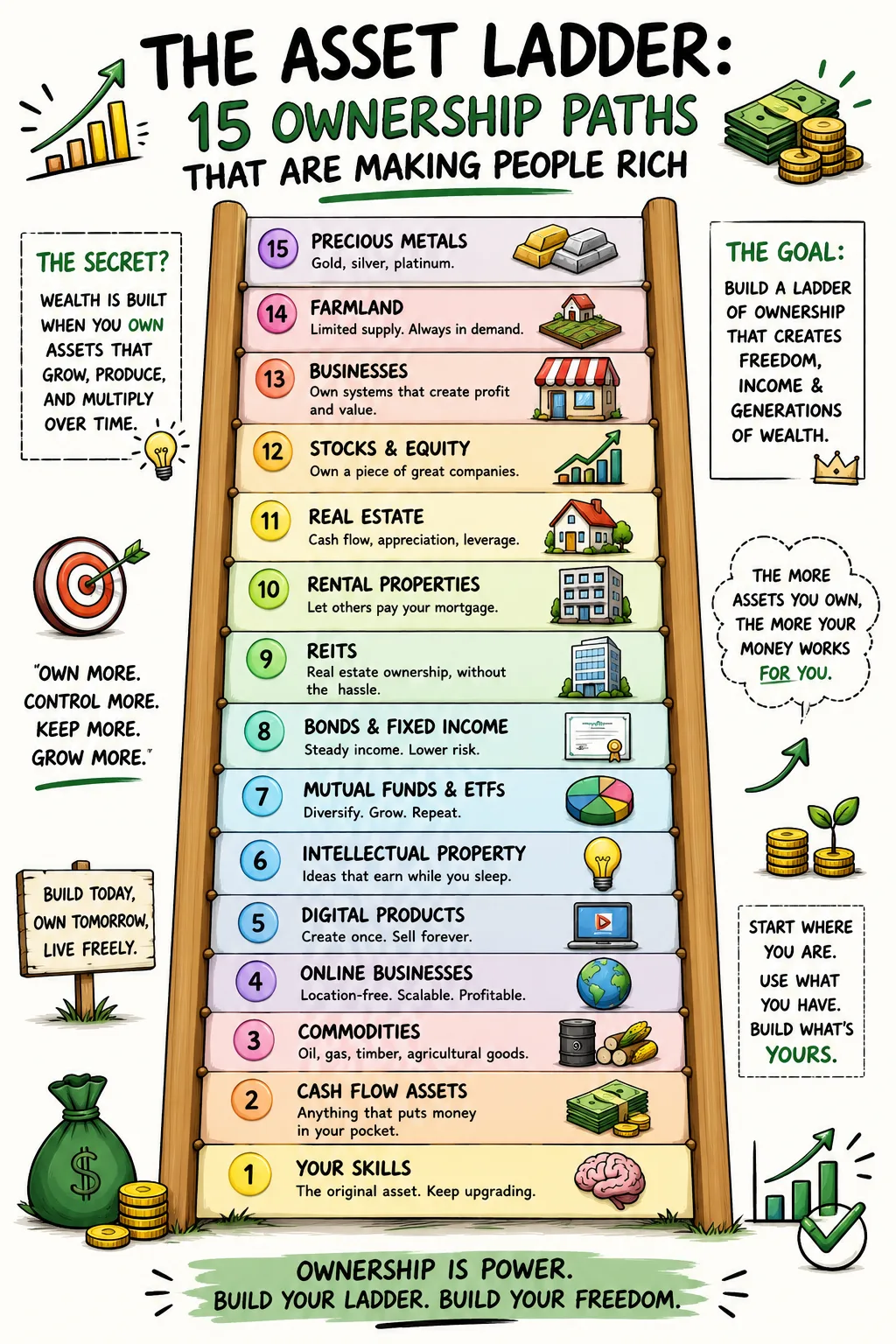
\nCommodities such as gold, oil, or agricultural products can serve as inflation hedges or diversifiers, but they can be volatile and may not produce income. Gold is often viewed as a store of value, but it does not generate cash flow like a business or bond.
\nTarget-date funds combine stocks, bonds, and other assets in a portfolio that becomes more conservative as a target retirement date approaches. They can be useful for retirement savers who want a simple all-in-one approach.
\nPrivate investments, venture capital, private equity, collectibles, and direct real estate can also appear in advanced portfolios, but they often involve higher minimums, less liquidity, greater complexity, and harder valuation.
\nThe existence of more options does not mean investors need more complexity. The best portfolio is often simpler than the menu of available products.
\nCore and Satellite: A Practical Way to Organize Investments
\nOne useful framework is the core-and-satellite portfolio. The core contains the stable foundation: diversified index funds, broad bond funds, retirement accounts, or balanced funds suited to the investor’s goals. This part of the portfolio is designed for long-term compounding and should not depend on constant tactical decisions.
\nSatellites are smaller allocations around the core. They may include individual dividend stocks, REITs, blue-chip stocks, growth stocks, value stocks, crypto, sector funds, or other higher-conviction ideas. Satellites allow personalization and opportunity-seeking without putting the entire portfolio at risk.
\nThis framework helps investors control excitement. Instead of allowing every new idea to dominate, they assign size based on risk. A broad index fund may deserve a large core allocation. A speculative crypto asset may deserve only a small satellite allocation, if any. Options may be used only with strict limits or avoided altogether.
\nThe core-and-satellite approach also protects beginners from overtrading. The core continues working quietly while the investor learns. Satellites can be added gradually as knowledge improves. If a satellite fails, the financial damage is contained. If it succeeds, it contributes without defining the whole plan.
\nMatching Investment Types to Goals
\nDifferent goals require different tools.
\nFor an emergency fund, safety and liquidity matter more than return. Cash, savings accounts, money market funds, or short-term government instruments may be more appropriate than stocks, REITs, crypto, or long-duration bond funds.
\nFor a home deposit needed within a few years, capital preservation is important. A severe market decline at the wrong time could delay the purchase. Conservative instruments may be more suitable than volatile equity-heavy portfolios.
\nFor retirement decades away, diversified equity exposure through index funds or retirement funds may play a larger role because the time horizon can absorb volatility. Bonds may provide stability. Contributions and patience matter more than short-term prediction.
\nFor income needs, dividend stocks, bond funds, REITs, and income-oriented funds may be relevant, but sustainability and diversification are crucial.
\nFor speculative growth, a small allocation to growth stocks, crypto, or options may appeal to some investors, but these should not threaten the financial foundation.
\nFor investors who lack time or confidence, robo-advisors, target-date funds, or simple balanced funds may provide structure. The best investment is not the most sophisticated one. It is the one that fits the goal and can be held through real market conditions.
\nThe Risk Ladder: From Preservation to Speculation
\nInvestments can be viewed on a risk ladder, though the exact ranking depends on the specific product. Cash and short-term government instruments usually sit near the conservative end. High-quality short-term bond funds may follow. Broad bond ETFs, balanced funds, and diversified index funds occupy different middle zones depending on allocation. Dividend stocks, blue-chip stocks, REITs, value stocks, and growth stocks carry equity risk. Crypto assets and options generally sit toward the speculative end because volatility and loss potential can be high.
\nBut investors should avoid oversimplifying. A long-term bond ETF can be more volatile than expected. A blue-chip stock can fall more than a diversified growth fund. A REIT can behave like a stock during market stress. A value stock can be riskier than a growth stock if the business is deteriorating. Risk depends on the specific holding, price paid, concentration, leverage, time horizon, and investor behavior.
\nThe biggest risk is often not the asset but the mismatch. A good long-term investment becomes risky if used for short-term money. A volatile asset becomes dangerous if bought with borrowed funds. A conservative asset becomes risky if it cannot keep up with inflation over decades. A complex instrument becomes risky in the hands of someone who does not understand it.
\nHow Beginners Should Start
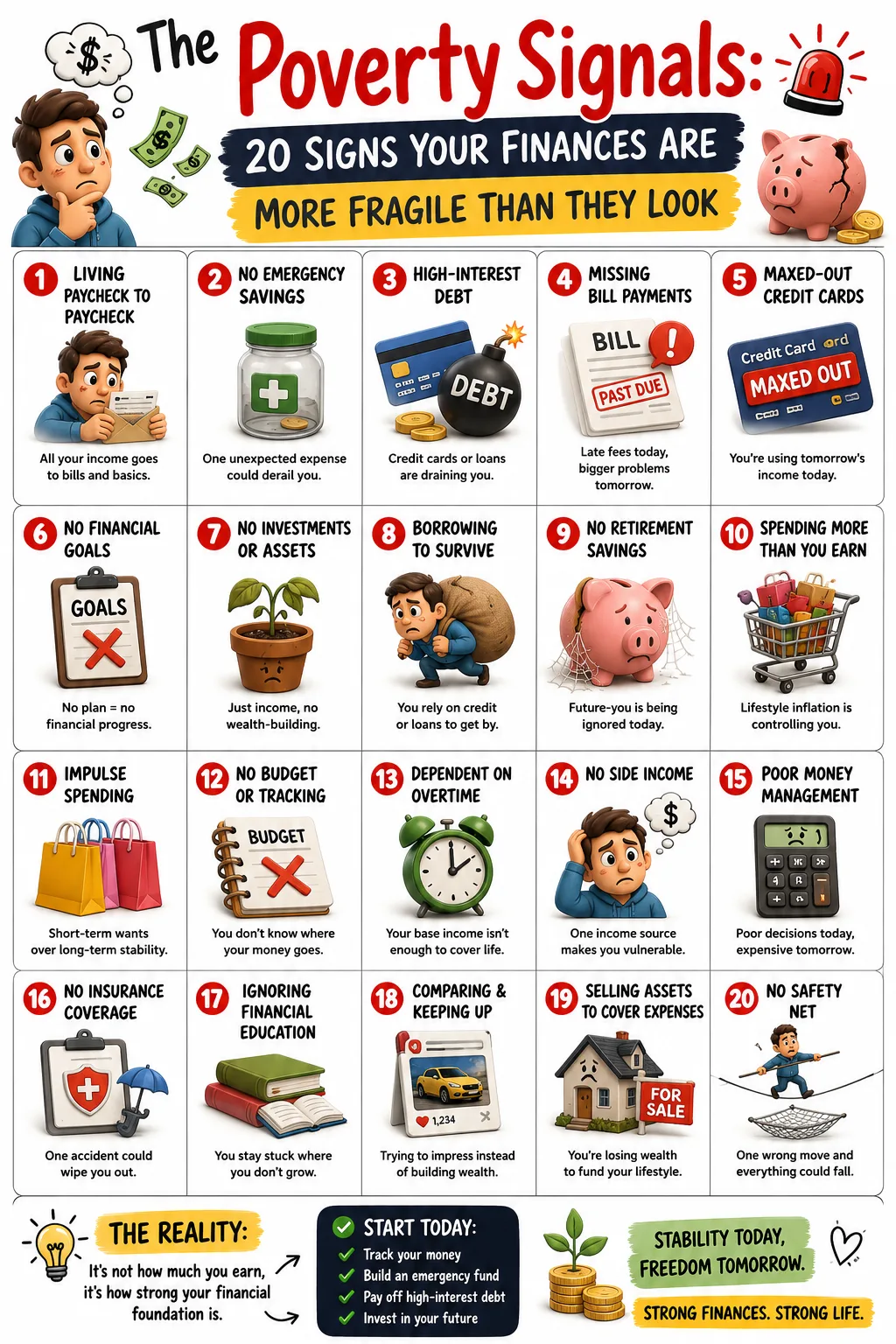
\nA beginner should usually begin with financial foundation before investment complexity. Build an emergency fund. Pay down high-interest debt. Understand income and expenses. Clarify goals. Learn basic investing terms. Then start with simple diversified investments appropriate to the time horizon.
\nFor many people, broad index funds, retirement accounts, pension plans, or diversified robo-advisor portfolios are more suitable starting points than individual stock picking, crypto speculation, or options trading. Simple does not mean weak. Simple often means robust.
\nOnce the foundation is in place, education can expand. Learn how bonds work. Learn the difference between dividends and total return. Learn what drives REIT performance. Learn valuation basics. Learn why growth and value styles behave differently. Learn how fees affect returns. Learn tax rules in your country. Learn the risks before increasing complexity.
\nPosition size should reflect knowledge and risk. If you do not understand an investment well, it should not be a large part of your portfolio. Curiosity is fine. Concentrated ignorance is expensive.
\nWhat Experienced Investors Still Need to Remember
\nExperience does not eliminate risk. In fact, success can create overconfidence. An investor who made money in growth stocks may assume they understand all markets. A crypto investor who survived one cycle may take larger risks in the next. An options trader with early gains may increase leverage. A dividend investor may ignore deteriorating fundamentals because income has always arrived.
\nMarkets have a way of humbling certainty. Risk management remains essential at every level. Diversification, valuation discipline, liquidity, position sizing, tax awareness, and emotional control matter even more as portfolios grow.
\nExperienced investors should also review whether their portfolio still matches their life. A strategy suitable at 28 may not fit at 58. A portfolio built for growth may need more income and stability near retirement. A concentrated business owner may need more liquid diversification. A family with new dependents may need insurance and estate planning alongside investments.
\nInvesting is not a one-time choice. It is an ongoing alignment between assets and life.
\nContinue Building Your Investing Knowledge
Use these guides to explore the major decisions, risks, and investment vehicles introduced in this article.
- Build a stable financial foundation before investing
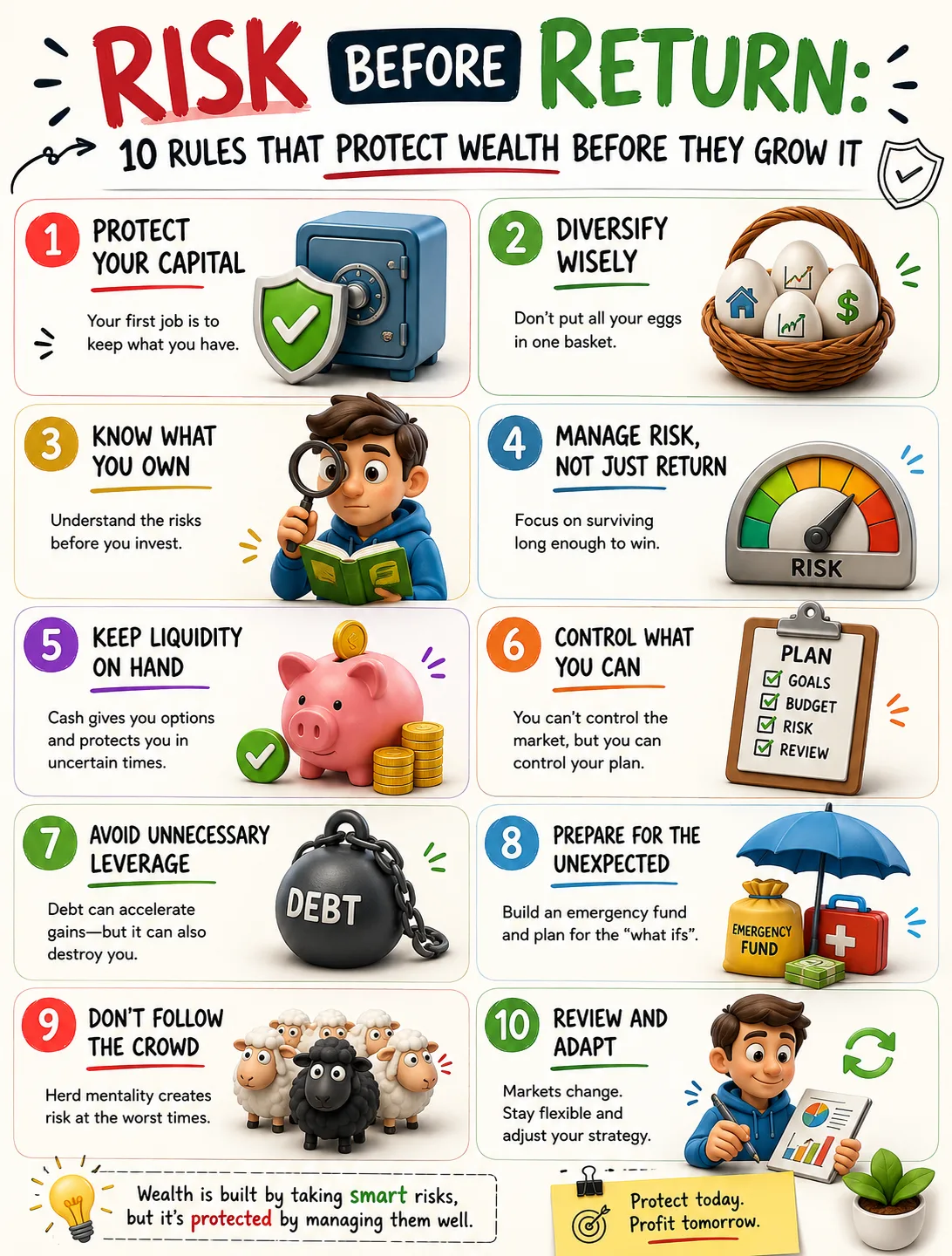
- Understand the risk rules that protect capital
- Avoid common beginner investing mistakes
- Understand the cost of waiting for the perfect market entry
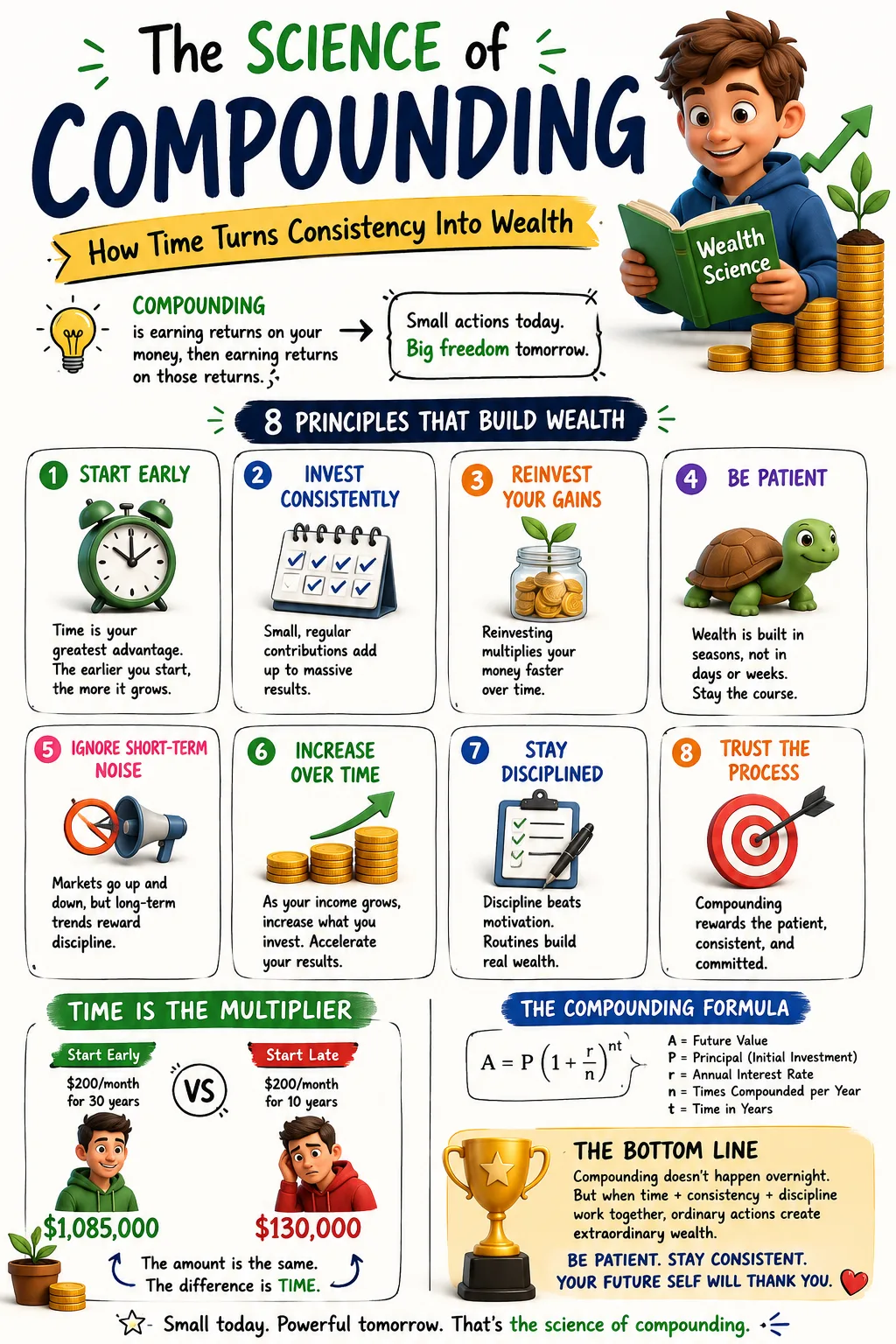
- Learn how time and consistency drive compound growth
- Explore diversified ETF investing
- Compare individual stocks with ETFs
- Understand how stock ownership builds long-term wealth
- Learn why dividend yield alone can be misleading
- Explore Treasury bills, bonds, and government securities
- Understand money market funds and mutual funds
- Improve how you evaluate risk, value, and opportunity
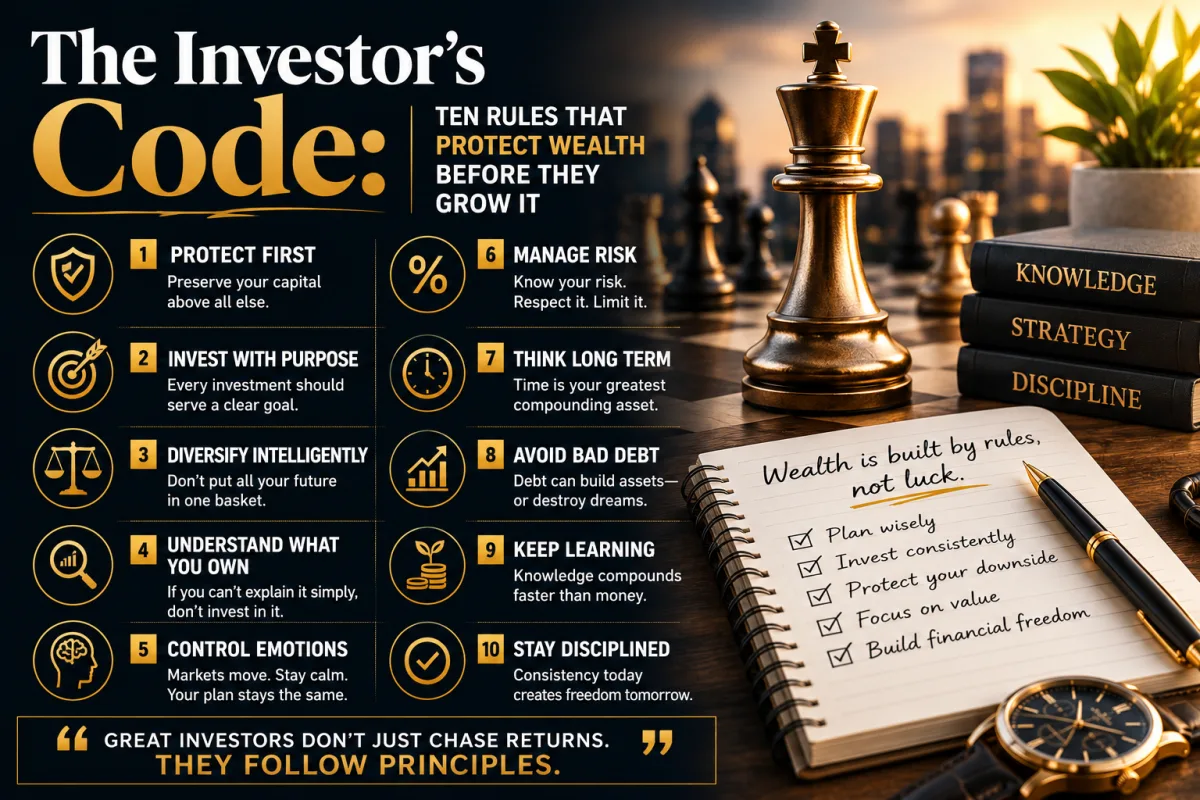
- Review ten investing rules for long-term discipline
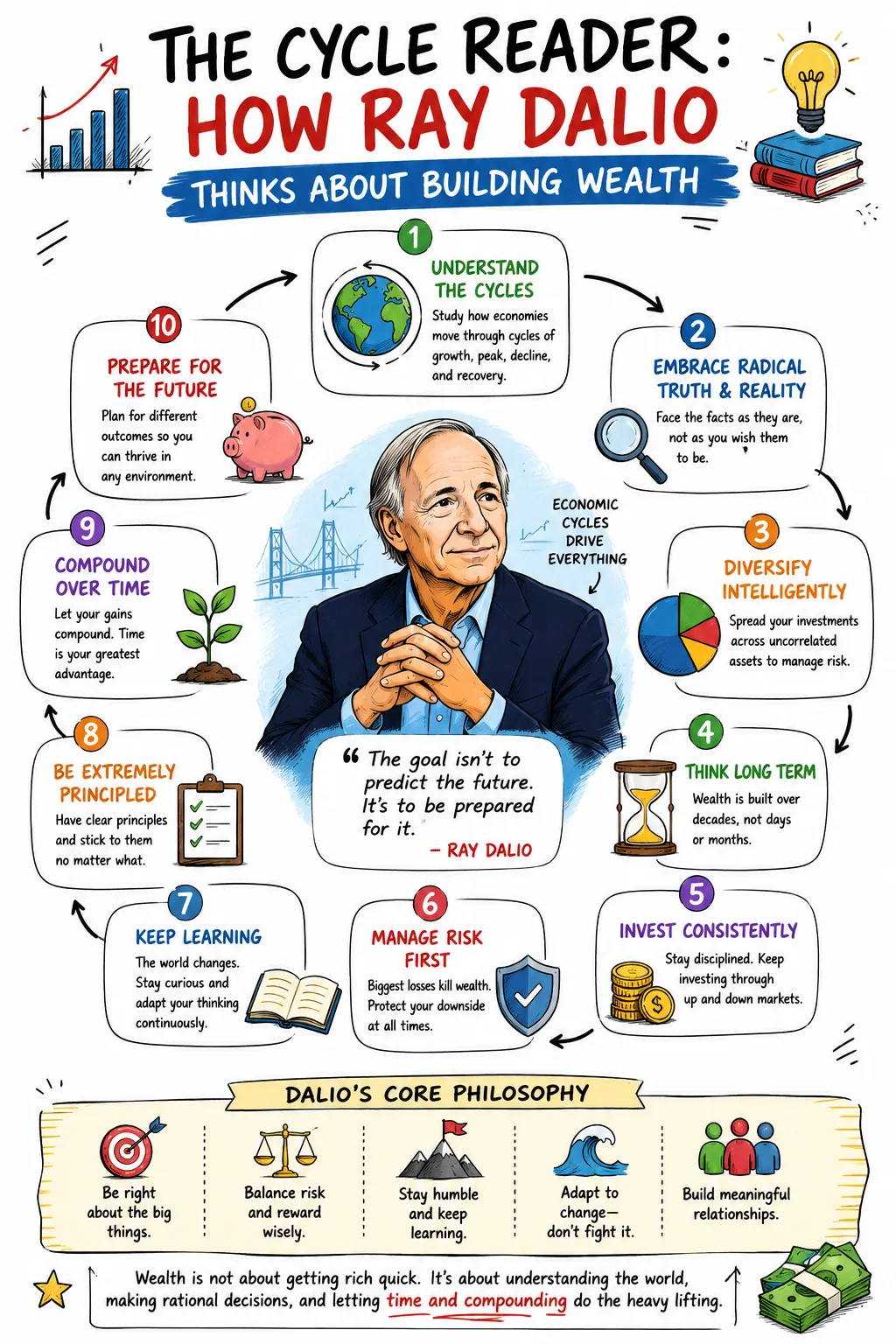
- Understand market cycles and economic environments
- Connect investing decisions to the complete wealth-building system
Frequently Asked Questions About Investing
How much money do I need to start investing?
There is no universal minimum. The appropriate starting amount depends on the platform, fees, emergency savings, debt, and cash-flow stability. Begin with money that can remain invested for the intended time horizon.
Should beginners buy stocks or ETFs?
Individual stocks require company research and create concentration risk. Broad ETFs may provide diversification through one investment. The right choice depends on knowledge, risk tolerance, costs, and portfolio strategy.
What should I do before making my first investment?
Understand your cash flow, maintain emergency savings, control expensive debt, define the goal, establish the time horizon, and assess how much loss you can tolerate without abandoning the plan.
What is investment risk?
Investment risk is the possibility that actual outcomes will differ from expectations. It can include market losses, inflation, credit failure, liquidity problems, currency movements, concentration, and permanent capital loss.
How do I choose an investment?
Begin with the investment’s role in the portfolio. Evaluate expected return, risk, fees, liquidity, tax treatment, diversification, complexity, and how well it matches the goal and time horizon.
What is diversification?
Diversification spreads exposure across different assets, companies, sectors, or markets. It cannot eliminate losses, but it can reduce dependence on one investment or outcome.
Is market timing a good investing strategy?
Consistently predicting short-term market movements is extremely difficult. Many long-term investors instead use regular contributions, diversification, and a disciplined allocation that matches their goals.
How often should I review my portfolio?
Review the portfolio periodically and after major financial changes. Frequent checking can encourage emotional decisions. A formal annual review may be sufficient for many long-term investors.
What fees should investors watch?
Important costs may include management fees, fund expense ratios, trading commissions, advisory charges, platform fees, taxes, foreign-exchange costs, and withdrawal penalties.
Are dividends guaranteed?
No. Companies can reduce, suspend, or eliminate dividends. Investors should evaluate payout sustainability, business quality, valuation, and total return rather than focusing only on yield.
Are bonds risk-free?
No. Bonds may face interest-rate risk, inflation risk, credit risk, liquidity risk, and currency risk. Government securities may have lower default risk in some markets, but their value can still change.
What is the best investment for beginners?
No single investment is best for everyone. A suitable beginner investment is understandable, diversified, affordable, aligned with the goal, and appropriate for the investor’s risk tolerance and time horizon.
The Real Lesson of Investment Vehicles
\nThe most important lesson is not that one investment type is best. It is that each investment has a job, a risk, and a cost.
\nBond ETFs can provide income and stability, but they carry interest-rate, credit, and inflation risk. Index funds can provide broad low-cost diversification, but they still fall with markets. Dividend stocks can create income, but yield must be sustainable. REITs provide real estate exposure, but property cycles and rates matter. Blue-chip stocks offer quality, but quality is not invincibility. Growth stocks offer upside, but expectations can be unforgiving. Robo-advisors provide automation, but they are platforms, not assets. Value stocks offer potential bargains, but cheap can become cheaper. Crypto assets offer speculative upside, but volatility and failure risk are high. Options provide leverage and strategy, but complexity can quickly become loss.
\nA serious investor does not ask only, “What can make me rich?” A serious investor asks, “What can help me reach my goals with a level of risk I can survive?”
\nThat question changes everything. It moves investing away from excitement and toward design. It turns assets into tools. It turns diversification into protection. It turns patience into strategy. It turns education into risk management.
\nThe investor’s map is wide, but the path does not need to be complicated. Build the foundation. Keep costs low where possible. Diversify. Match assets to goals. Respect risk. Avoid products you do not understand. Let time work. Use speculation sparingly, if at all. Review periodically. Remember that the purpose of investing is not to own every vehicle on the road. It is to reach the destination without wrecking the journey.
 Article
 Article
 Article
 Article
 Article
 Article
 Article
 Article