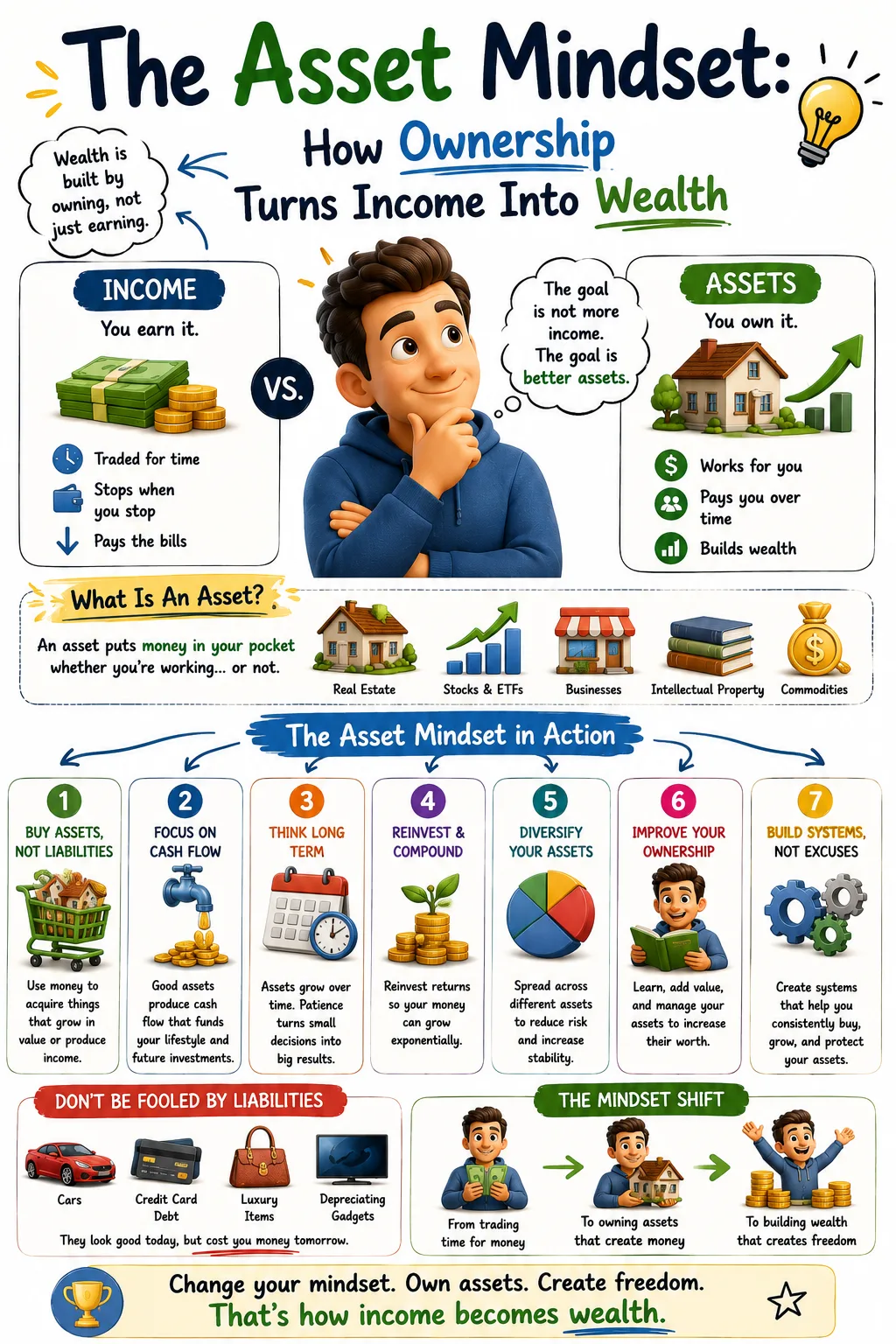
The Asset Mindset: How Ownership Turns Income Into Wealth
The most important financial shift a person can make is not from spending to saving. That shift matters, but it is only the first step. The deeper shift is from earning to owning.
Earning money creates financial capacity. Ownership creates financial momentum. A paycheck can pay bills, fund a lifestyle, and create breathing room. But unless some portion of that paycheck is converted into assets, the worker remains dependent on the next paycheck. The asset mindset changes the direction of money. Instead of letting income flow only toward expenses, status, convenience, and consumption, it directs income toward things that can produce more income, appreciate over time, or strengthen financial independence.
This is the heart of wealth building. Income must become capital. Capital must become ownership. Ownership must be protected, reinvested, and allowed to compound.
The idea is simple enough to fit on a page: buy assets first, think cash flow, own income generators, reinvest earnings, and build continuously. But the simplicity can be deceptive. Assets can create wealth, but they can also create risk. Cash flow can create security, but it is not the only measure of investment quality. Leverage can accelerate growth, but it can also accelerate losses. Reinvestment can compound wealth, but only when the underlying asset is productive. Consistency wins, but only when it is applied to sound decisions.
The asset mindset is not about buying anything labeled an investment. It is not about chasing rental properties, dividend stocks, business ideas, or private deals without understanding them. It is not about using debt recklessly in the name of leverage. It is not about rejecting all spending or treating life as a spreadsheet. It is about learning to see every financial decision through a larger question: does this move me closer to ownership, resilience, and long-term freedom?
People who build wealth tend to understand that income is not the final destination. Income is the raw material. What matters is what income becomes.
The Difference Between Earning and Owning
Earning and owning are both important, but they are not the same. Earning is active. It usually requires labor, time, skill, effort, or business activity. Owning is structural. It gives a person a claim on future value.
A worker earns wages. A shareholder owns part of a business. A landlord owns property that may generate rent. A bondholder owns a contractual claim on interest and principal. A business owner owns a system that may produce profit. A creator may own intellectual property that generates royalties. An investor in a diversified fund owns small pieces of many companies. These forms of ownership vary in risk, complexity, liquidity, tax treatment, and suitability, but they share one important feature: they are not limited strictly to the owner’s hourly labor.
This is why ownership is central to wealth creation. A person has only so many hours to sell. Even highly paid professionals eventually face limits: time, energy, health, family obligations, industry demand, and retirement. Assets can continue working when the owner is not working, though they still require oversight and risk management.
The worker without assets must keep earning to keep living. The owner of productive assets gradually builds options. Assets may provide income, appreciation, collateral, flexibility, retirement support, family security, or business opportunity. The more productive assets a household owns relative to its expenses, the less dependent it becomes on immediate labor income.
This does not make employment inferior. A strong career can be the engine that funds ownership. For many households, earned income is the bridge to wealth. The mistake is not having a job. The mistake is earning for years and never turning part of that income into assets.
What Is an Asset?
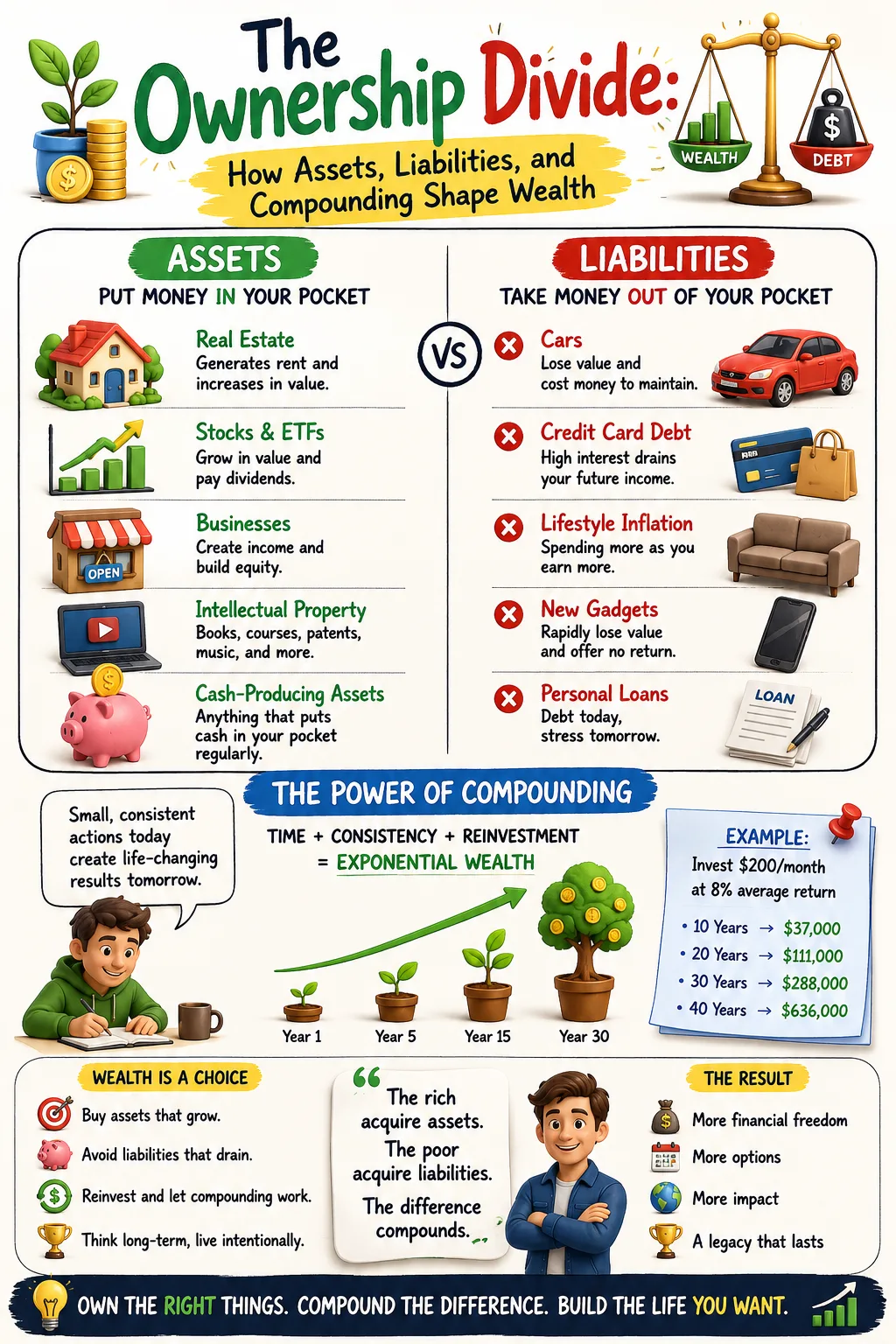
An asset is something with economic value. In personal finance, the most useful assets are those that can produce income, appreciate over time, reduce future costs, or improve financial flexibility. Assets can include cash, savings accounts, stocks, bonds, mutual funds, exchange-traded funds, retirement accounts, rental real estate, private businesses, intellectual property, farmland, royalties, and ownership interests in companies.
Not all assets behave the same way. Cash is stable and liquid, but it may lose purchasing power to inflation. Stocks can generate long-term growth, but their prices fluctuate. Bonds may provide income and stability, but they carry interest-rate and credit risk. Rental property can produce cash flow and appreciation, but it requires maintenance, management, insurance, taxes, and tenant risk. A business can create significant wealth, but it can also fail. Intellectual property may generate royalties, but income can be uncertain.
The asset mindset does not treat all assets as equal. It asks what role each asset plays. Does it provide liquidity? Does it generate income? Does it grow? Does it protect against inflation? Does it diversify the household? Does it create tax advantages? Does it require active management? Can it be sold easily? What could go wrong?
This distinction is essential because people often use the word “asset” too loosely. A luxury car may be an asset in the accounting sense because it can be sold, but it is usually a depreciating asset that requires fuel, insurance, maintenance, and financing costs. A large primary residence may build equity, but it may also absorb cash through mortgage payments, taxes, repairs, and utilities. Collectibles may rise in value, but they may be illiquid and speculative. A business idea is not an asset until it has real economic value.
The wealth-building asset is not merely something owned. It is something that improves the financial position over time.
Assets Versus Liabilities
A liability is an obligation. It is money owed to someone else. Credit card balances, personal loans, auto loans, student loans, mortgages, business loans, unpaid taxes, and other debts are liabilities. Some liabilities are manageable or even strategic. Others are destructive.
The difference depends on cost, purpose, risk, and repayment capacity. A mortgage on a reasonable home can help a household build stability, though it still creates fixed obligations. A student loan may support higher earning power if the education produces economic value. A business loan may help acquire equipment or inventory that generates profit. These debts can still be risky, but they may be connected to productive outcomes.
Bad debt is different. High-interest consumer debt used to fund lifestyle spending is one of the great enemies of wealth building. It turns future income into payment for past consumption. It reduces the gap between income and expenses. It delays investing. It increases stress. It limits choices.
The asset mindset does not mean avoiding every liability. It means understanding that liabilities must serve a purpose. Debt should either help acquire something productive, solve a necessary problem at a reasonable cost, or fit safely within a broader plan. Debt that exists only to make consumption appear affordable is usually a warning sign.
Buy Assets First
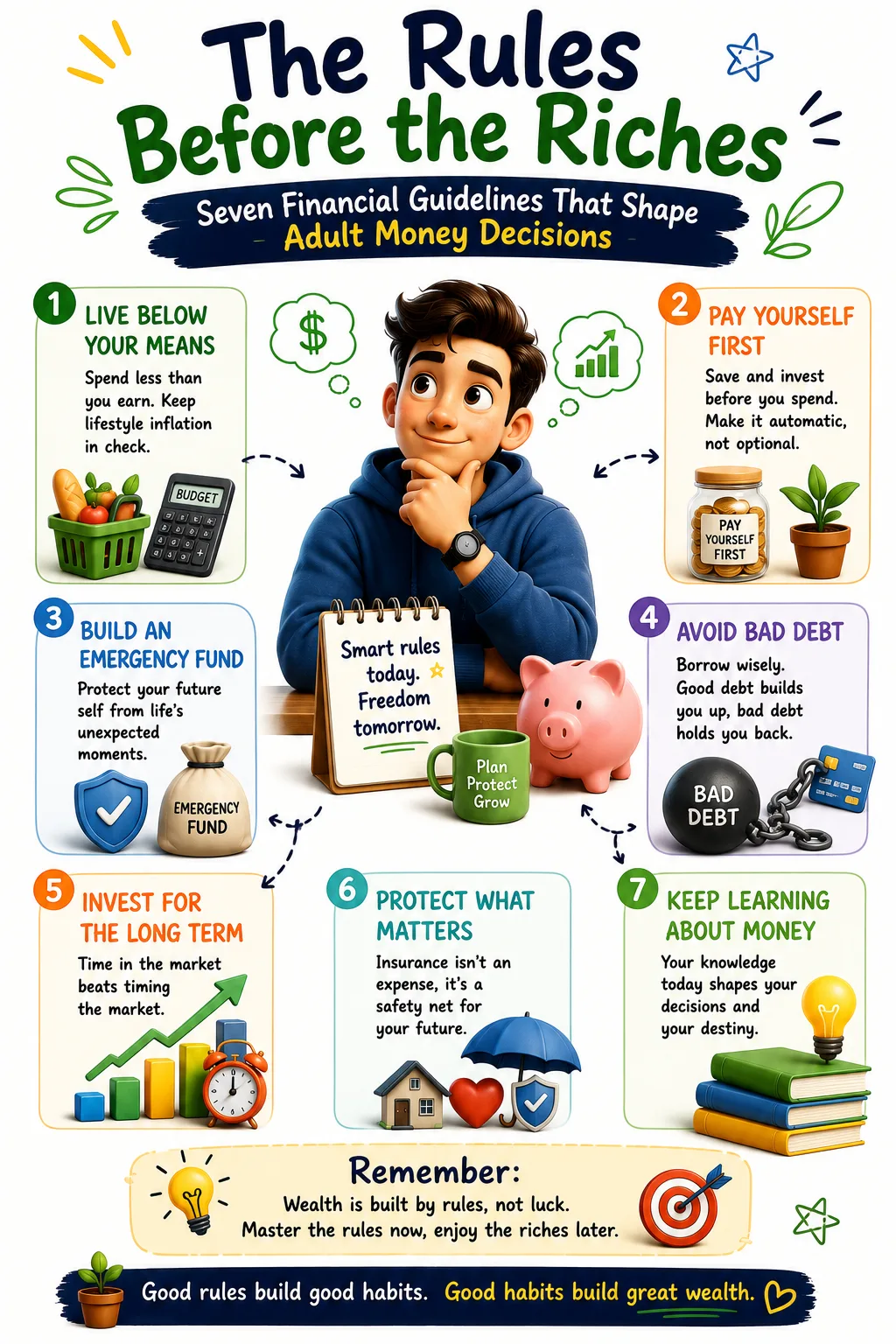
“Buy assets first” is one of the clearest wealth-building principles, but it requires careful interpretation. It does not mean ignoring rent, food, insurance, transportation, healthcare, family needs, or emergency savings. It does not mean investing aggressively while carrying severe high-interest debt. It means that once essentials and basic financial defenses are covered, asset acquisition should become a priority rather than an afterthought.
Many households follow the opposite pattern. Income arrives. Bills are paid. Lifestyle spending happens. Subscriptions renew. Small conveniences accumulate. Debt payments continue. Whatever remains, if anything, is saved or invested. This approach treats wealth building as optional. It depends on leftovers.
Buying assets first reverses the order. The household decides in advance that a portion of income will be directed toward financial growth. This may happen through automatic retirement contributions, scheduled transfers to investment accounts, recurring purchases of diversified funds, debt repayment above the minimum, business reinvestment, or savings for a future property or venture.
The principle is sometimes called paying yourself first. But the phrase can be misleading if it suggests money should sit idle without purpose. The stronger version is paying your future first. Current income is assigned to future freedom before current desire consumes it.
This is a behavioral advantage. People tend to spend what is available. If savings and investments happen only at the end of the month, they compete with every impulse. If they happen first, the household learns to live on what remains. Over time, this creates a financial identity: investing is not something done when convenient. It is part of the cost of becoming free.
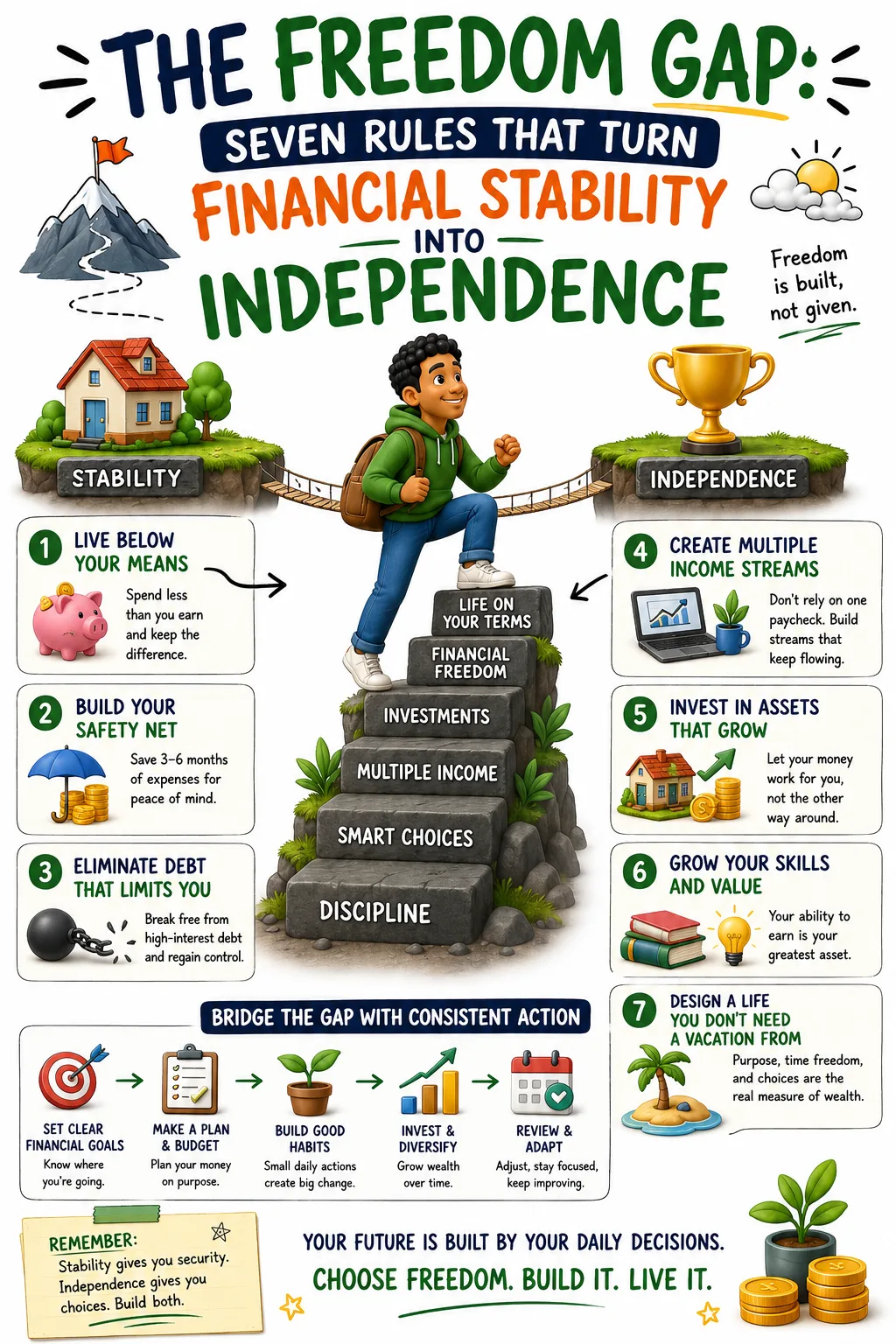
The Right Order: Defense Before Aggression
Buying assets first should not be confused with skipping the foundation. A person with no emergency fund, no insurance, and high-interest debt may not be ready to invest aggressively. Financial growth without financial defense can become fragile.
The first layer is liquidity. An emergency fund protects against job loss, medical costs, car repairs, home repairs, family emergencies, and unexpected expenses. Without liquidity, a person may be forced to use credit cards, sell investments at the wrong time, or borrow under pressure. Cash may not produce exciting returns, but it protects the plan.
The second layer is debt control. Very high-interest debt often deserves priority because the interest cost can exceed reasonable expected investment returns. Paying off expensive debt is not glamorous, but it can be one of the most powerful balance-sheet improvements available.
The third layer is protection. Health insurance, disability coverage, life insurance where dependents rely on income, property insurance, liability coverage, and estate documents can prevent one event from destroying years of progress. Asset building without risk management is like constructing a house without checking the foundation.
Only after these basics are addressed does aggressive asset accumulation become safer. The goal is not to choose between protection and growth. The goal is to sequence them intelligently.
Think Cash Flow
Cash flow is the movement of money in and out of a household, business, or investment. Positive cash flow means more money comes in than goes out. Negative cash flow means the opposite. Cash flow creates stability because it determines whether obligations can be met without selling assets or borrowing.
For households, cash flow begins with employment income, business income, investment income, rental income, pensions, government benefits, royalties, or other receipts. Outflows include housing, food, transportation, debt payments, taxes, insurance, education, healthcare, family support, savings, and lifestyle spending. Wealth building becomes possible when inflows exceed outflows and the surplus is directed toward productive uses.
Thinking cash flow means paying attention to recurring income and recurring obligations. A person with a high net worth but poor liquidity can still face stress if bills cannot be paid easily. A business with strong sales but weak cash collection can fail. A rental property with paper appreciation but constant negative cash flow can become a burden. An investment portfolio with no income may still be excellent for long-term growth, but the owner must understand how spending needs will be funded.
Cash flow matters most when flexibility matters. Retirees need dependable income. Business owners need operating liquidity. Families need emergency margin. Investors using debt need enough cash flow to service obligations during downturns. Cash flow is the oxygen of financial life.
Cash Flow Is Not the Same as Wealth
Cash flow is important, but it should not be worshiped blindly. Some assets produce high current income but little growth. Others produce little income but strong long-term appreciation. A dividend-paying stock may provide cash flow, but a growth-oriented company may reinvest profits internally and increase value over time. A rental property may generate monthly rent, but a diversified equity portfolio may deliver superior total return across decades. A bond may produce interest, but inflation can erode purchasing power if returns are too low.
Total return matters. Total return includes income plus capital appreciation. During the accumulation phase, many investors may benefit from focusing on total return rather than current income alone. During retirement, cash flow becomes more important, but even then inflation and longevity require growth considerations.
The asset mindset should include both cash flow and capital growth. Income creates stability. Appreciation creates expansion. Liquidity creates flexibility. Diversification reduces dependence on one outcome. The right mix depends on age, goals, risk tolerance, tax situation, income needs, and time horizon.
A young investor may not need large current income from investments if employment income covers expenses. Reinvested growth may be more powerful. A retiree may need more predictable income to fund living costs. A business owner may need liquidity reserves more than long-term appreciation. A family preparing for a home purchase may need cash safety rather than market exposure.
Thinking cash flow is wise. Thinking only cash flow can be limiting.
Own Income Generators
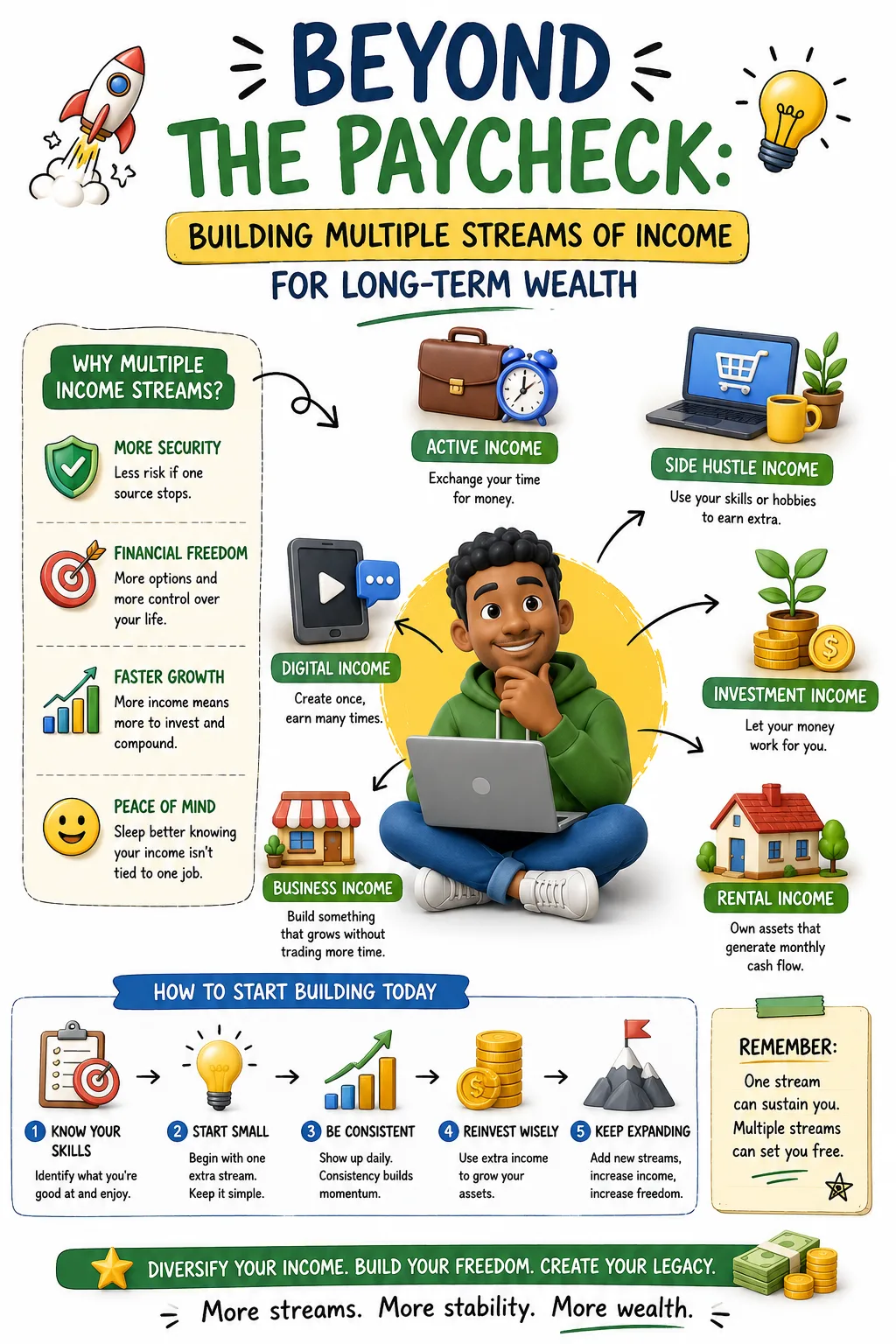
An income generator is an asset or system that produces recurring money. This can include dividend-paying stocks, bonds, rental properties, private businesses, royalties, digital products, licensing agreements, farmland leases, equipment rentals, or professional practices. The appeal is obvious: income generators can reduce dependence on a paycheck.
Ownership creates leverage when the asset can produce value beyond the owner’s direct time. A rental property may generate rent each month. A business may earn profits through employees, systems, and customer relationships. A stock portfolio may distribute dividends from companies operated by other people. A book, patent, song, software product, or online course may produce royalties or sales after the original work is completed.
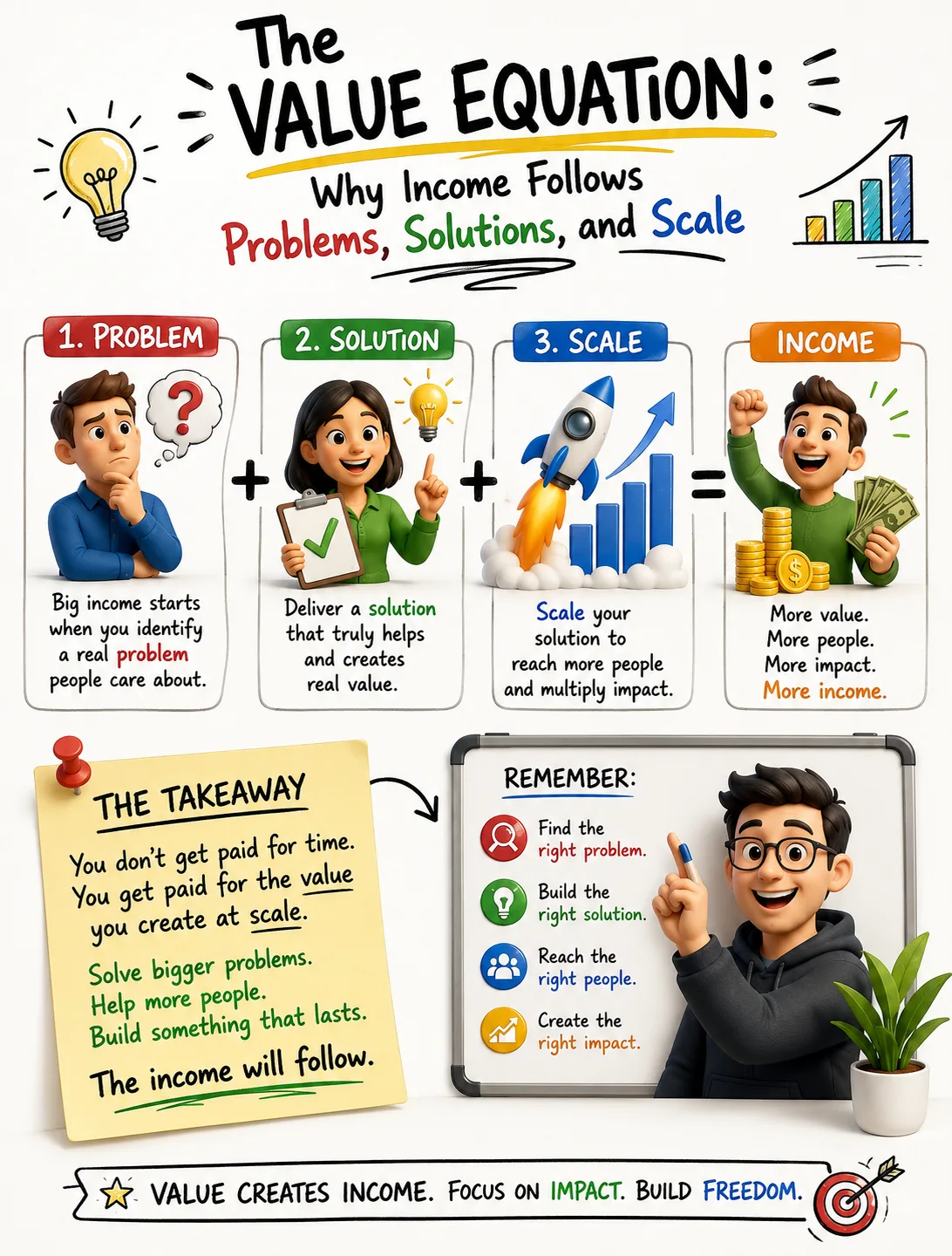
This kind of leverage is powerful because time is limited. The worker sells hours. The owner builds claims. The more claims a person owns on productive economic activity, the more potential they have to earn while not actively working.
But income generators are not passive in the way many marketing messages suggest. Rental properties require tenant screening, repairs, vacancies, insurance, taxes, legal compliance, financing decisions, and management. Businesses require strategy, operations, accounting, leadership, marketing, customer service, and risk. Dividend portfolios require diversification, valuation awareness, and patience through market cycles. Royalties require creation, protection, distribution, and relevance.
The phrase “passive income” can mislead people into underestimating effort and risk. A better phrase is “ownership income.” Ownership income may become less labor-intensive than wage income, but it still requires capital, judgment, and stewardship.
The Power and Danger of Leverage
Leverage means using something to magnify results. In finance, it often means using borrowed money to acquire assets. A mortgage is a common example. A person buys property with a combination of equity and debt. If the property appreciates and cash flow covers costs, leverage can increase returns on the owner’s invested capital. Businesses also use leverage when they borrow to expand operations, purchase equipment, or acquire other companies.
Leverage can accelerate growth, but it also accelerates losses. If asset values fall, income declines, interest rates rise, tenants leave, customers disappear, or expenses increase, debt remains. The lender still expects payment. A leveraged investor has less room for error.
This is why ownership should not be confused with reckless borrowing. Some people hear “assets create wealth” and rush to buy assets with too much debt. They assume the asset will always rise in value or produce enough income. That assumption can be expensive. Real estate cycles turn. Businesses fail. Markets decline. Financing costs change. Liquidity disappears.
Prudent leverage begins with stress testing. Could the borrower survive a vacancy? A recession? A rate increase? A repair bill? A delayed customer payment? A decline in asset value? If the plan works only when everything goes right, it is not a plan. It is a gamble.
Leverage is a tool, not a virtue. Used carefully, it can support wealth building. Used carelessly, it can destroy the very assets it was meant to acquire.
Reinvest Earnings
Reinvestment is where wealth begins to compound. When an asset produces income, the owner has a choice. Spend the income or reinvest it. Spending may be appropriate at certain life stages, especially in retirement. But during the accumulation phase, reinvestment can be transformative.
Dividends can buy more shares. Interest can be added to principal. Rental profits can fund repairs, reserves, or additional properties. Business profits can hire talent, improve systems, expand inventory, reduce debt, develop new products, or increase marketing. Royalties can fund new creative work. The common pattern is that today’s earnings become tomorrow’s productive capital.
Compounding occurs when returns generate returns. At first, the effect may seem small. A small dividend reinvested into a portfolio may not feel meaningful. A modest business profit reinvested into better tools may not change the owner’s life immediately. But over long periods, reinvestment can create exponential differences.
The power of compounding depends on time, return, consistency, and the avoidance of major losses. It also depends on not interrupting the process unnecessarily. Investors who constantly withdraw gains for lifestyle spending slow the compounding engine. Business owners who remove every dollar of profit may starve the company. Property owners who fail to reinvest in maintenance may damage long-term value.
Reinvestment is not only financial. Skills can be reinvested. A person can use income to buy education, tools, coaching, credentials, software, or time-saving support. A business can reinvest in employee training. A household can reinvest in health, relocation, childcare, or professional development if those decisions improve long-term earning power and quality of life.
The principle is broader than money: growth funds more growth.
When Not to Reinvest
Reinvestment is powerful, but it should not be automatic in every situation. If an asset is poor quality, reinvesting into it may compound mediocrity. If a business has weak economics, pouring more money into it may deepen losses. If a property has structural problems or poor location, reinvestment may not produce adequate returns. If a portfolio is overly concentrated, reinvesting all income into the same holding may increase risk.
There are also times when income should be used to strengthen the balance sheet rather than chase expansion. Paying down high-cost debt may be better than reinvesting in risk assets. Building cash reserves may be better than buying another property. Diversifying away from a concentrated business may be better than reinvesting every dollar into the same company.
Good reinvestment requires judgment. The question is not, “Can I reinvest?” The question is, “Where does the next dollar produce the best risk-adjusted improvement in my financial life?”
Sometimes the answer is the stock market. Sometimes it is debt repayment. Sometimes it is a business. Sometimes it is education. Sometimes it is insurance. Sometimes it is cash. The asset mindset is not rigid. It is capital allocation.
Build Continuously
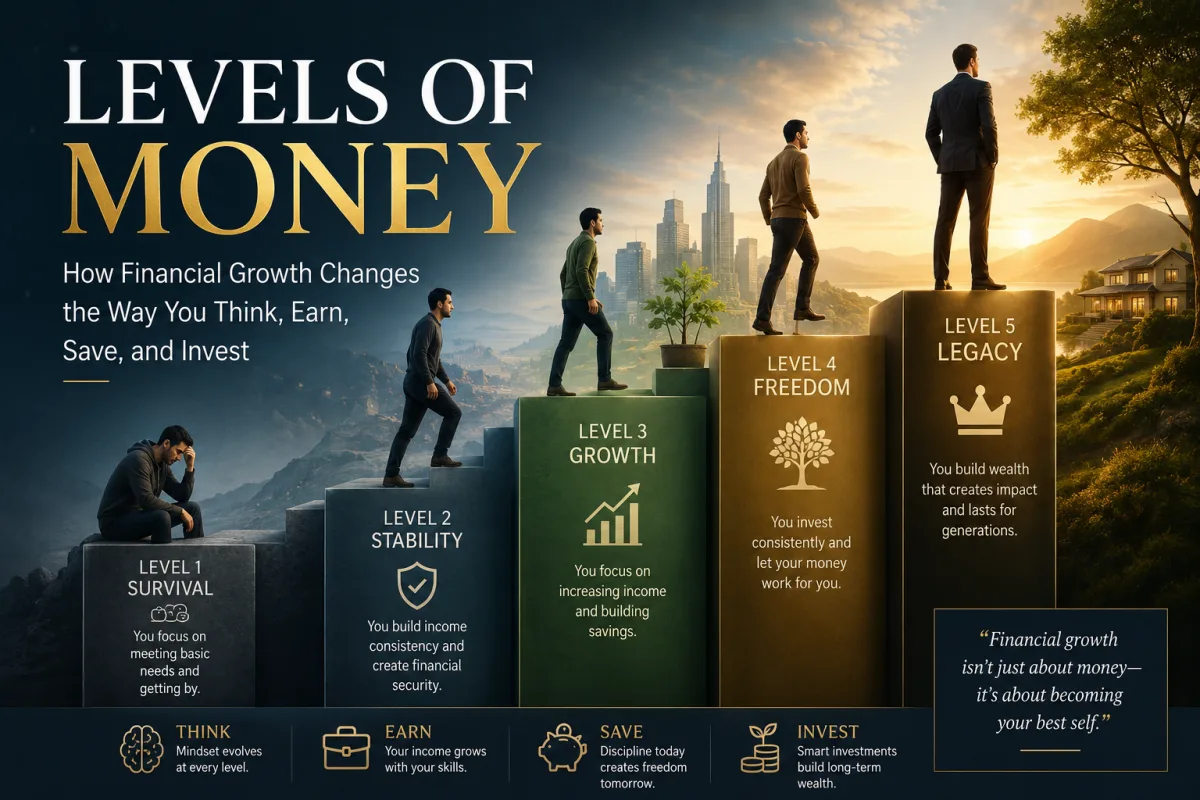
Wealth is accumulated. That word matters. Accumulation suggests repetition. It means progress is made through repeated contributions, reinvested returns, disciplined decisions, and time. Wealth building is not a single event but a process.
Many people search for the one breakthrough: the perfect investment, the perfect business, the perfect market moment, the perfect property, the perfect stock. Breakthroughs happen, but they are unreliable as a plan. Continuous building is more dependable.
Continuous building means saving during ordinary months, not only after bonuses. It means investing through market cycles, not only when headlines are positive. It means improving skills even when income is already comfortable. It means maintaining assets before they deteriorate. It means reviewing insurance before disaster strikes. It means updating estate documents before a family crisis. It means increasing contributions when income rises rather than letting lifestyle absorb everything.
Consistency wins because it reduces dependence on timing. The investor who contributes regularly does not need to identify the perfect market bottom. The saver who automates transfers does not need monthly motivation. The professional who learns continually is less vulnerable to industry change. The household that reviews its plan annually catches problems early.
Consistency also builds identity. A person who invests every month begins to see themselves as an investor. A person who pays down debt every month begins to see themselves as someone who keeps promises to the future. A business owner who reinvests consistently begins to see the company as an asset rather than merely a job. Identity reinforces behavior.
The Asset Mindset in Everyday Life
The asset mindset is not limited to investors with large portfolios. It can begin at almost any level, though the pace and options differ by income and circumstance.
For someone living paycheck to paycheck, the first asset may be a small emergency fund. That may not sound like wealth building, but liquidity is an asset because it prevents small shocks from becoming debt. A few hundred dollars can protect against late fees, overdraft charges, or high-interest borrowing. The first asset is often breathing room.
For a young worker, the asset mindset may mean contributing to a retirement plan, building skills, avoiding car debt, and buying diversified funds instead of upgrading lifestyle too quickly. The most valuable asset at this stage may be earning power, supported by education, reputation, and disciplined savings.
For a family, the asset mindset may mean balancing homeownership, retirement contributions, education savings, insurance, and emergency reserves. It may require resisting the pressure to look wealthier than the balance sheet actually is. Children, housing, and healthcare can make financial progress difficult. The asset mindset helps prioritize decisions that improve resilience.
For a business owner, the asset mindset means building a company that has value beyond personal labor. That may involve systems, documented processes, recurring revenue, trained employees, strong customer relationships, clean financial records, and reduced dependence on the founder. A business that cannot operate without the owner may provide income, but it may not yet be a transferable asset.
For someone approaching retirement, the asset mindset shifts from pure accumulation to income design and preservation. Which assets will fund spending? Which should remain invested for growth? Which income sources are reliable? How will inflation be handled? What healthcare costs may arise? What estate documents are needed? At this stage, owning assets is not enough. The assets must be organized into a retirement system.
Productive Assets and Personal Assets
Not every valuable thing in life is a productive financial asset. A home may provide stability, comfort, and family meaning. A car may be necessary for work. Education may improve opportunity. Health spending may improve quality of life. Travel may create memories. Generosity may express values. These uses of money matter.
The asset mindset becomes unhealthy if it treats every non-investment expense as failure. Money is meant to support life. The goal is not to own assets while refusing to live. The goal is to avoid letting consumption permanently block ownership.
A useful distinction is between productive assets and personal assets. Productive assets are expected to generate income or appreciation. Personal assets support lifestyle, identity, comfort, or use. A primary home may be both, but often less liquid and more expensive than people assume. A car may be useful but usually depreciates. Furniture, electronics, clothing, and luxury goods may improve life but rarely build wealth.
There is nothing wrong with personal assets when purchased within a plan. Problems arise when personal assets are financed with bad debt, mistaken for investments, or allowed to crowd out productive assets. The asset mindset asks for proportion. How much of your income goes toward things that lose value? How much goes toward things that may grow? How much goes toward protection? How much goes toward freedom?
Diversification: Owning Without Overexposure
Ownership creates opportunity, but concentrated ownership creates vulnerability. A household whose wealth is tied entirely to one employer, one stock, one business, one property, one industry, or one country may be exposed to risks it does not fully understand.
Diversification spreads risk. It does not eliminate losses, but it reduces the chance that one failure destroys the entire plan. A diversified investor owns many companies rather than one. A property owner may diversify by location or asset type. A business owner may diversify personal wealth outside the business. A professional may diversify skills and relationships rather than relying on one employer.
Diversification can feel less exciting than concentration. Concentrated bets create the biggest success stories. They also create many failures that receive less attention. For every founder who becomes wealthy through one company, many founders lose savings, time, and opportunity. For every investor who picked the winning stock, many others picked companies that disappointed or disappeared.
The asset mindset should be ambitious but not reckless. The goal is to build wealth that can survive mistakes.
Asset Protection: Keeping What You Build
Building assets is only half the work. Keeping them is the other half. Asset protection includes insurance, diversification, legal structure, estate planning, tax awareness, cybersecurity, fraud prevention, debt management, and prudent recordkeeping.
Insurance protects against losses too large to comfortably absorb. Health insurance can reduce medical financial shocks. Disability insurance can protect income. Life insurance can protect dependents. Property insurance can protect homes, vehicles, and business assets. Liability insurance can protect against claims. The right coverage depends on circumstances, but the principle is clear: one event should not wipe out decades of effort if protection was available and appropriate.
Estate planning protects assets during incapacity and after death. A will, trust where appropriate, beneficiary designations, power of attorney, healthcare directive, and asset inventory can reduce confusion and delay. Wealth without instructions can become a burden for heirs. Ownership should be paired with transfer planning.
Legal structure matters for business owners and property investors. Separating personal and business finances, maintaining proper records, using suitable entities where appropriate, and following legal requirements can reduce risk. This is an area where qualified professional advice can be valuable.
Cybersecurity has become part of asset protection. Financial accounts, digital wallets, business platforms, tax records, and identity information can be vulnerable. Strong passwords, multifactor authentication, secure storage, careful sharing, and monitoring are practical wealth-preservation tools.
Tax awareness also matters. Taxes should not drive every decision, but ignoring them can reduce returns. Different assets produce different tax consequences. Interest, dividends, capital gains, rental income, business income, retirement withdrawals, gifts, and inheritances may be treated differently depending on jurisdiction. A tax-efficient plan can help more of the return remain with the owner.
The Psychology of the Asset Mindset
The asset mindset is not only about financial instruments. It is a psychological orientation. It changes how a person interprets money.
A consumption mindset asks, “What can this money buy me now?” An asset mindset asks, “What can this money become?” A consumption mindset values visible proof. An asset mindset values future optionality. A consumption mindset is often shaped by comparison. An asset mindset is shaped by strategy.
This does not mean asset-minded people never spend. It means they understand opportunity cost. Every dollar has a job. A dollar spent on interest cannot buy assets. A dollar spent on status cannot build reserves. A dollar invested may create more dollars. A dollar used for education may increase earning power. A dollar used for insurance may prevent financial ruin. A dollar given intentionally may support values.
The asset mindset also requires delayed gratification. Assets often reward patience. A portfolio takes time to grow. A business takes time to stabilize. A property takes time to generate meaningful equity. Skills take time to increase income. Reinvestment takes time to compound. The early stages can feel slow, especially when consumption offers immediate pleasure.
This is why discipline matters. The asset mindset asks a person to choose future freedom over some present temptations. Not all present pleasures. Some. Enough to create a surplus. Enough to buy assets. Enough to allow compounding to begin.
Common Mistakes People Make When Adopting the Asset Mindset
Buying Assets They Do Not Understand
The desire to own assets can lead people into investments they do not understand. They may buy complex funds, speculative cryptocurrencies, private deals, franchises, rental properties, or business opportunities because someone else presents them as wealth-building assets. Complexity can hide risk. If the buyer cannot explain how the asset makes money, what could go wrong, how it is valued, how liquid it is, and what fees or obligations exist, caution is necessary.
Ignoring Liquidity
An asset can be valuable and still fail to solve a cash problem. Real estate, private businesses, collectibles, and long-term investments may not be easy to sell quickly at a fair price. Households need liquid assets for emergencies and near-term obligations. Being asset-rich and cash-poor can create stress.
Confusing Debt-Fueled Growth With Wealth
Borrowing to buy assets can make a balance sheet look larger. It does not automatically make it stronger. Net worth depends on assets minus liabilities. Cash flow depends on income minus obligations. If debt payments are too high, the owner may be vulnerable even when asset values appear impressive.
Chasing Yield
Income-producing assets can be attractive, but unusually high yields often signal risk. A high dividend may be unsustainable. A high-interest investment may reflect credit risk. A rental property with attractive projected returns may require unrealistic assumptions. Yield should be examined, not worshiped.
Failing to Maintain Assets
Assets require care. Properties need repairs. Businesses need reinvestment. Skills need updating. Portfolios need rebalancing. Legal documents need review. Insurance needs adjustment. Neglected assets can lose value.
Selling Too Early
Many assets need time. Investors may sell during market volatility. Business owners may abandon strategies before they mature. Property owners may underestimate the value of long holding periods. Patience does not mean ignoring bad investments, but it does mean understanding that compounding requires time.
How to Build an Asset Acquisition Plan
An asset acquisition plan begins with clarity. What are you trying to build? Emergency security? Retirement independence? Monthly cash flow? Business value? A home? Education funding? Generational wealth? Different goals require different assets.
The second step is capacity. How much surplus can be created each month? This requires income analysis, spending review, debt strategy, and realistic budgeting. Asset building cannot depend on fantasy numbers. The plan must fit actual cash flow.
The third step is priority. Before acquiring aggressive investments, address high-interest debt, emergency reserves, and essential insurance. Then determine which assets fit the time horizon. Money needed in one year should not usually be exposed to the same risk as money intended for retirement in thirty years.
The fourth step is automation. Regular contributions reduce reliance on motivation. Automatic transfers into savings, retirement accounts, or investment accounts make asset buying part of the financial system.
The fifth step is diversification. Avoid putting every dollar into one asset type. A balanced plan may include cash, retirement investments, taxable investments, business ownership, property, or other assets depending on circumstances. The mix should reflect risk tolerance and goals.
The sixth step is review. Asset values, income, expenses, tax rules, family needs, and goals change. A plan should be reviewed at least annually and after major life events.
The Asset Mindset and Retirement
Retirement is the stage where the asset mindset becomes most visible. A person who has spent decades converting income into assets may eventually use those assets to replace employment income. Retirement income may come from investment withdrawals, dividends, bond interest, rental income, pensions, annuities, business sale proceeds, or government benefits.
The quality of retirement depends not only on how much was earned during working years, but on how much was retained and invested. A high earner who saved little may reach retirement with limited options. A moderate earner who consistently bought assets may enter retirement with greater flexibility.
In retirement, the asset mindset shifts from accumulation to distribution. The question becomes: how can assets support spending without being depleted too quickly? This requires withdrawal strategy, tax planning, healthcare planning, inflation protection, and risk management. Cash flow matters more, but growth still matters because retirement can last decades.
Asset ownership also affects dignity in retirement. The retiree with sufficient assets may choose where to live, how much to work, how to handle healthcare, whether to help family, and how to give. The retiree without assets may depend heavily on government benefits, family support, or continued work. Assets create choices.
The Asset Mindset and Legacy
Assets outlive income. This is why ownership is central to legacy. A paycheck stops. A well-structured portfolio, business, property, trust, or insurance policy can continue serving others.
Legacy does not require extreme wealth. A family home, retirement account, education fund, small business, life insurance policy, or debt-free estate can change the next generation’s starting point. But legacy requires planning. Assets must be titled correctly. Beneficiaries must be updated. Wills and trusts must reflect current wishes. Powers of attorney and healthcare directives must prepare for incapacity. Digital assets must be documented. Executors and trustees must be chosen carefully.
The asset mindset becomes incomplete if it focuses only on accumulation and ignores transfer. Wealth that is not organized can create confusion. Wealth that is transferred without values can be wasted. Wealth that is left with unclear instructions can divide families.
Legacy-minded ownership asks: Who should benefit from these assets? When? Under what conditions? With what guidance? How can taxes, delays, and disputes be reduced? How can heirs be prepared for responsibility?
Assets are not only numbers. They are future influence.
Why Consistency Beats Intensity
Many people approach wealth building with bursts of intensity. They become motivated, cut spending dramatically, invest aggressively, start a business idea, or study finance obsessively for a few weeks. Then the intensity fades. Old habits return.
Consistency is less dramatic but more powerful. A modest investment made every month for decades can become significant. A small business improvement repeated weekly can transform operations. A regular debt payment above the minimum can shorten repayment by years. A yearly financial review can catch problems before they become expensive. A habit of reinvesting can quietly change the shape of a balance sheet.
Intensity relies on emotion. Consistency relies on systems. Emotion fluctuates. Systems endure.
The best asset builders design systems that make good behavior easier. They automate savings. They separate spending money from investment money. They use checklists. They schedule reviews. They set rules for windfalls. They maintain insurance. They keep documents organized. They track net worth. They avoid environments that trigger unnecessary spending. They make wealth building part of ordinary life.
What the Asset Mindset Is Not
The asset mindset is not greed. It is not worship of money. It is not refusing generosity. It is not judging people by net worth. It is not taking foolish risks. It is not buying assets to impress others. It is not assuming every person has the same opportunities. It is not pretending that structural barriers do not exist.
At its best, the asset mindset is responsibility. It recognizes that money can either disappear into consumption or be organized into future strength. It values freedom, resilience, and stewardship. It understands that wealth is not built only by earning more, but by keeping, investing, and protecting enough of what is earned.
It also recognizes that assets should serve life, not replace it. A person can build a portfolio and still invest in relationships, health, community, and meaningful experiences. The goal is not to die with the highest possible account balance. The goal is to use ownership to create security, options, generosity, and dignity.
A Practical Starting Point
To begin adopting the asset mindset, start with a personal balance sheet. List what you own and what you owe. Include cash, investments, retirement accounts, property, business interests, vehicles, valuable personal assets, credit card debt, loans, mortgages, and other obligations. Net worth is assets minus liabilities. This number is not a measure of personal worth. It is a financial snapshot.
Next, review cash flow. Identify monthly income and expenses. Find the current gap. If there is no gap, decide whether the first move is spending reduction, income growth, debt restructuring, or all three. Without positive cash flow, asset building will remain difficult.
Then create a first-asset priority. For some, it will be emergency savings. For others, retirement contributions. For others, high-interest debt repayment. For others, a diversified investment account. For business owners, it may be reinvesting in a profitable system. The right first move depends on the situation.
Automate the behavior. Choose an amount that can be repeated. Increase it over time. Avoid waiting for perfect conditions. Wealth building often begins before confidence arrives.
Finally, protect the progress. Review insurance. Avoid unnecessary debt. Diversify. Keep records. Update beneficiaries. Learn before investing. Ask for professional guidance when legal, tax, or investment complexity exceeds your expertise.
The Quiet Power of Ownership
The asset mindset is powerful because it changes the destination of income. Money no longer exists only to be spent. It becomes a tool for building claims on the future.
Assets create income. Income can build wealth. Cash flow creates security. Ownership creates leverage. Reinvestment allows growth to fund more growth. Consistency allows time to magnify effort. These principles are simple, but they are not shallow. They are the foundation of most durable financial progress.
The challenge is that the asset mindset often requires choosing invisible wealth over visible consumption. It asks a person to buy investments instead of status, reserves instead of impulse, insurance instead of denial, and patience instead of excitement. The reward is not always immediate. But over years, the balance sheet begins to tell a different story.
At first, assets may support only a small part of life. A few dollars of interest. A modest dividend. A small retirement account. A tiny business profit. Then the numbers grow. The portfolio becomes meaningful. The debt shrinks. The income sources diversify. The household becomes less fragile. Choices expand.
That is how ownership changes a life. Not all at once, and not without risk, but steadily.
Income pays for today. Assets prepare for tomorrow. The asset mindset is the decision to make tomorrow stronger every time money passes through your hands.
 Article
 Article
 Article
 Article
 Article
 Article
 Article
 Article