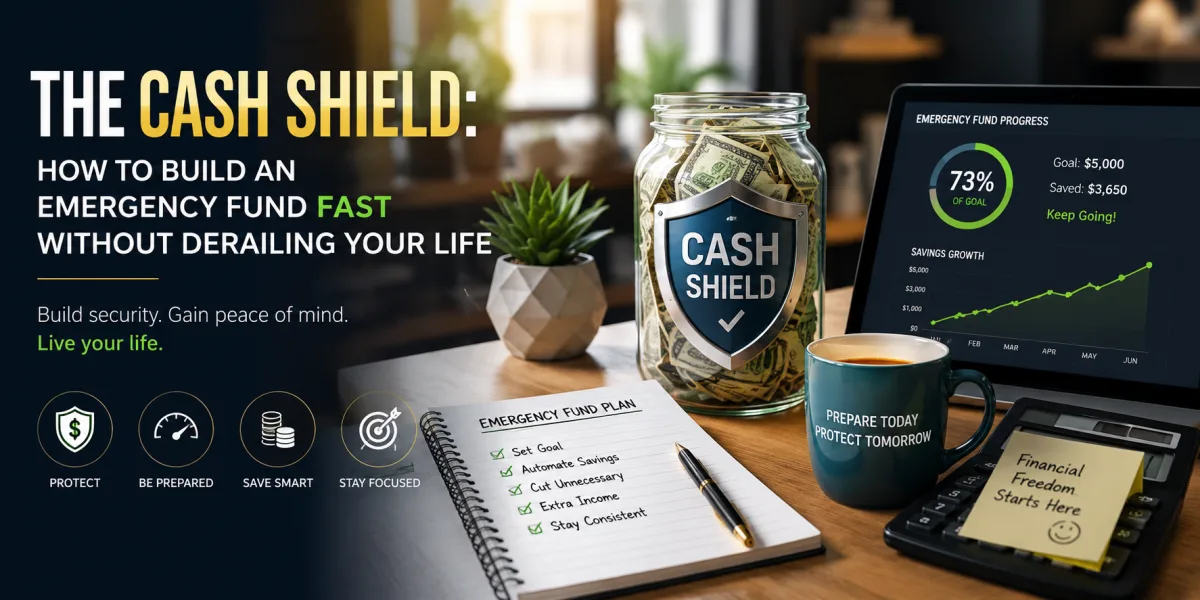
The Cash Shield: How to Build an Emergency Fund Fast Without Derailing Your Life
An emergency fund is not glamorous. It will not make you feel like a market genius. It will not produce dramatic charts, sudden windfalls, or cocktail-party stories about perfect timing. It is quiet money. It sits in the background, waiting for the moment life stops following the plan.
That quietness is exactly what makes it powerful.
A broken transmission, a medical bill, a delayed paycheck, a sudden move, a family emergency, a job loss, a leaking roof, a lost phone, a funeral flight, a veterinary bill, or a surprise insurance deductible can turn an ordinary month into a financial crisis. Without cash, the emergency often becomes debt. With cash, the same event becomes inconvenient, stressful, and expensive, but survivable.
The purpose of an emergency fund is not to eliminate hardship. It is to prevent hardship from becoming a chain reaction.
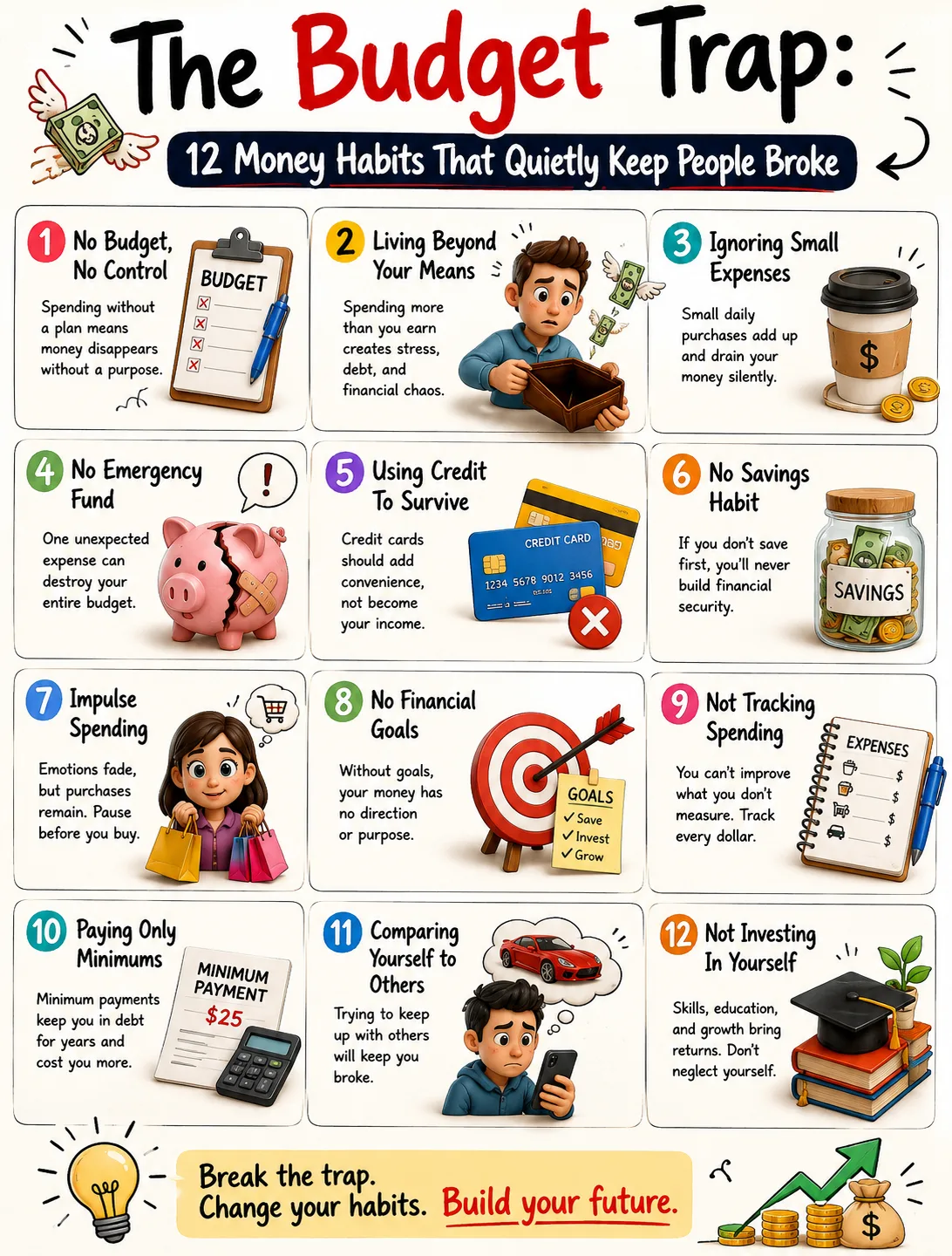
Many people understand this in theory. The problem is speed. Traditional advice often says to save three to six months of expenses, which is useful as a long-term target but intimidating as a first step. If your monthly essentials are $3,000, a six-month emergency fund is $18,000. That number can feel so large that it delays action. People look at the mountain and never pick up the first stone.
The faster approach is different. Build a starter emergency fund first. Stabilize the household. Create breathing room. Then expand the fund over time.
An emergency fund does not have to begin large to be useful. The first $500 can prevent a small crisis from becoming credit card debt. The first $1,000 can absorb many common surprises. One month of expenses can protect you from a temporary income disruption. Three to six months can create serious financial resilience. The fund grows in stages, but the protection begins early.
Building an emergency fund fast is not about panic. It is about focus. For a short period, you redirect money, reduce leakage, increase income where possible, and treat cash security as a financial priority. The objective is not to live forever in austerity. It is to build a cash shield quickly enough that the next emergency does not decide your financial future for you.
Why Speed Matters
Financial advice often assumes stability. It assumes there is time to optimize, compare, automate, and gradually improve. But real life often moves faster than a spreadsheet. Emergencies arrive before people feel ready. That is why the speed of building an emergency fund matters.
A person with no emergency fund is exposed. Exposure means that even a small disruption can force expensive decisions. A $600 car repair may go on a credit card. A missed paycheck may lead to a personal loan. A medical bill may sit unpaid until it becomes a collection account. A family emergency may create overdrafts and late fees. Once the first problem creates debt, the debt creates its own monthly burden.
The danger is not only the emergency itself. It is the financial aftershock.
Emergency savings interrupts that aftershock. Cash gives you the ability to handle a surprise without borrowing at the worst possible moment. It also gives you time. Time to compare repair quotes. Time to wait for insurance reimbursement. Time to negotiate a bill. Time to look for a better job rather than accept the first available option. Time is one of the most underrated benefits of liquidity.
Speed also matters psychologically. When people see savings grow quickly, they begin to trust the process. A slow, vague savings plan can feel invisible. A focused 30-day or 90-day emergency fund sprint creates proof. The balance rises. The anxiety falls. The saver sees that financial control is not only a theory; it is something that can be built.
Start With the Right Target
The first mistake people make is choosing a target that is either too small to matter or too large to begin. The right target depends on where you are starting.
If you have no savings at all, the first target should be a starter fund of $500 to $1,000. This is not a full emergency fund. It is the first layer of defense. It can handle many ordinary shocks: a minor car repair, urgent medication, a utility bill spike, a small home repair, a school cost, or a travel change.
The next target is one month of essential expenses. Essential expenses are not your full lifestyle. They are the costs required to keep your household functioning: housing, utilities, groceries, transportation, insurance, minimum debt payments, phone service, childcare, and basic medical needs. If your normal monthly spending is $4,500 but your true essentials are $3,000, the first serious emergency target is $3,000, not $4,500.
After that comes three months of essential expenses. This is where the fund begins to provide genuine income protection. A job loss, medical leave, reduced hours, or business slowdown becomes less immediately dangerous. Six months may be appropriate for people with variable income, dependents, health concerns, single-income households, commission-based work, self-employment, or industries where job searches take longer.
The fast-building strategy uses stages because stages create momentum. Instead of saying, “I need $15,000,” say, “I need $1,000 first.” Once that is complete, say, “Now I need one month of essentials.” Then move toward three months. Each milestone changes your risk position.
Define What Counts as an Emergency
An emergency fund needs rules before the emergency happens. Without rules, the fund becomes a general spending account with a noble name.
A true emergency is urgent, necessary, and unexpected. Urgent means it cannot reasonably wait. Necessary means it protects health, housing, income, safety, or essential obligations. Unexpected means it was not a predictable expense that should have been planned separately.
A car repair needed to get to work is an emergency. A sale on furniture is not. A medical deductible after an accident may be an emergency. Holiday gifts are not. Replacing a broken refrigerator may be an emergency. Upgrading a working appliance is not. A last-minute flight for a family crisis may be an emergency. A spontaneous weekend trip is not.
This distinction matters because many expenses are irregular but not truly unexpected. Annual insurance premiums, school supplies, car registration, property taxes, professional license renewals, birthdays, holidays, and routine maintenance should eventually have their own sinking funds. A sinking fund is money saved gradually for a known future cost. The emergency fund is for the unknown or unavoidable.
In the beginning, the emergency fund may have to cover both emergencies and irregular expenses because you are still building the system. Over time, separate them. The more predictable expenses you prepare for, the less often you need to touch the emergency fund.
Choose the Right Place to Keep the Money
An emergency fund should be safe, liquid, and separate.
Safe means the money should not be exposed to market volatility. Stocks, crypto, long-term bonds, and speculative assets do not belong in an emergency fund. The money may need to be available during a market downturn, job loss, or personal crisis. If the fund falls in value at the same time you need it, it has failed its purpose.
Liquid means accessible. The money should not be locked in an account with penalties, long settlement periods, or complicated withdrawal rules. A high-yield savings account is often a strong choice because it can earn interest while keeping funds available. A money market deposit account may also work. Some people keep a small amount in checking for immediate access and the rest in high-yield savings.
Separate means not mixed with daily spending. Money left in checking tends to be absorbed by normal life. A separate savings account creates a boundary. It tells your brain, “This money has a job.” That boundary is especially important when building the fund quickly because the temptation to raid it will appear before the first real emergency does.
The ideal setup is simple: checking for bills and spending, high-yield savings for emergency cash, and optional separate savings buckets for known future expenses. Complexity is not necessary. The emergency fund should be boring by design.
The 30-Day Emergency Fund Sprint
To build an emergency fund fast, begin with a sprint. A sprint is a short period of unusual focus. It is not your permanent lifestyle. It is a temporary financial campaign with one objective: create cash protection quickly.
Start with a 30-day target. If you have nothing saved, aim for $500. If your income is higher or your expenses are flexible, aim for $1,000. If you already have a starter fund, aim for one month of essentials.
Write the target down. Open the account. Move the first dollar immediately. This matters because starting changes the identity of the project. You are no longer “thinking about saving.” You are building.
Then create a cash map for the next 30 days. List every expected source of income. List every required expense. Separate essential from optional. The gap between income and essential expenses is your potential emergency fund contribution. The goal is to capture as much of that gap as possible before it leaks into convenience spending.
For 30 days, pause nonessential upgrades. Delay clothing purchases unless necessary. Cancel unused subscriptions. Reduce restaurant meals. Use groceries already in the house. Avoid impulse purchases. Sell one or two unused items. Pick up extra shifts, freelance work, overtime, babysitting, tutoring, delivery work, or a weekend project if realistic. Put every extra dollar into the emergency fund.
The sprint works because it compresses motivation. A vague plan says, “I should save more.” A sprint says, “For the next 30 days, this is the priority.”
Find the Money Already Escaping
Most budgets leak. Not always dramatically, but consistently. Emergency fund speed often comes from finding the leaks and redirecting them.
Start with recurring charges. Subscriptions are easy to ignore because each one feels small. Streaming services, apps, cloud storage, memberships, premium tools, subscription boxes, unused gym memberships, delivery memberships, and small monthly upgrades can quietly consume cash. Cancel what you do not use. Pause what you can live without for 90 days. Downgrade what is excessive.
Next, review food spending. Food is not optional, but convenience food can become one of the largest budget leaks. Restaurant meals, delivery fees, coffee runs, snacks, and last-minute grocery trips often cost more than planned. The goal is not to shame enjoyment. The goal is to redirect money temporarily. A 30-day emergency fund sprint may involve cooking at home, planning meals, using leftovers, and limiting delivery.
Then look at transportation. Combine errands. Avoid unnecessary rideshare trips. Use public transit where practical. Keep tires properly inflated. Compare insurance rates if you have not done so in years. Delay nonessential car accessories or upgrades. Transportation can be expensive, but not every transportation cost is fixed.
Review banking fees. Overdraft fees, out-of-network ATM fees, late fees, and minimum balance fees are signs of financial friction. Some can be avoided by changing account settings, setting alerts, or switching accounts. Saving fast is partly about preventing money from leaving through avoidable penalties.
Review shopping patterns. Many people do not overspend on one large purchase; they overspend through dozens of small decisions. A waiting rule helps. For 30 days, any nonessential purchase above a set amount waits 48 hours. Urgency often fades. Money remains.
Use a Bare-Bones Budget Temporarily
A bare-bones budget is not a forever budget. It is a temporary version of your financial life that includes only essentials and carefully chosen priorities. It is useful when you need to build cash quickly.
List the essentials: housing, utilities, groceries, transportation, insurance, minimum debt payments, childcare, phone, prescriptions, and basic personal care. Then list obligations that cannot be skipped without serious consequences. Everything else becomes a candidate for pause, reduction, or delay.
This does not mean life becomes joyless. It means expensive convenience and low-value spending are temporarily sacrificed for stability. The sprint has an end date. That end date matters because people can tolerate discipline better when it is connected to a clear finish line.
A bare-bones budget may reveal that the household has more savings capacity than expected. It may also reveal a harder truth: income is too low for the current cost structure. That information is valuable. If there is no gap between income and essentials, building an emergency fund will require income growth, expense restructuring, or both. The budget is not judging you. It is showing you where the pressure is.
Automate the First Payment to Yourself
Saving what is left over rarely works because money without a job gets spent. Automation solves this by moving savings before spending expands.
Set an automatic transfer to your emergency fund on payday or the day after payday. Even if the amount is small, automate it. The transfer should happen before discretionary spending begins. If you are paid every two weeks, transfer a fixed amount every payday. If your income varies, automate a modest baseline and manually add more when income is higher.
Automation changes the decision from repeated willpower to default behavior. You do not have to decide twelve times a month whether saving matters. The system decides for you.
For a fast build, combine automation with manual sweeps. At the end of each week, move leftover money from checking into the emergency fund. If you save $75 automatically and sweep an extra $20 to $50 weekly, the balance can grow faster than expected.
Sell What No Longer Serves You
One of the fastest ways to build a starter emergency fund is to turn unused possessions into cash. Many households have money sitting in closets, drawers, garages, storage units, and spare rooms.
Look for electronics, furniture, tools, sports equipment, small appliances, children’s items, clothing, collectibles, books, instruments, and hobby gear. The question is not, “Could I use this someday?” The better question is, “Would I rather have this item or a stronger emergency fund?”
Selling unused items does more than raise money. It changes your relationship with consumption. You see past purchases as stored cash, sometimes discounted, sometimes wasted, sometimes recoverable. That lesson can reduce future impulse spending.
Start with easy items. Price them reasonably. Use safe local marketplace practices. Meet in public places when appropriate. Avoid complicated deals. The goal is not to extract the maximum possible price from every item. The goal is to convert clutter into protection.
Increase Income in Short Bursts
Cutting expenses has limits. Income expansion can accelerate the emergency fund dramatically. The fastest income strategies are usually temporary, practical, and close to skills or resources you already have.
Ask for overtime if your workplace offers it. Pick up extra shifts. Offer weekend services such as cleaning, lawn care, childcare, tutoring, pet sitting, moving help, photography, bookkeeping, editing, delivery, driving, or repair work. Freelancers can contact past clients with a specific availability window. Employees can ask about special projects, bonuses, or temporary additional responsibilities.
The goal is not to build a second career overnight. It is to create a cash surge. If you earn an extra $500 in one month and send all of it to the emergency fund, you may achieve in weeks what would have taken months through expense cutting alone.
Be careful with side hustles that require upfront spending. Buying equipment, paying for courses, carrying inventory, or leasing a vehicle to earn uncertain income can defeat the purpose. During an emergency fund sprint, favor income that uses what you already have.
Redirect Windfalls Immediately
Windfalls are emergency fund accelerators. Tax refunds, work bonuses, cash gifts, rebates, insurance reimbursements, refunds, side income, overtime checks, and sold items should be directed before they disappear into general spending.
The key is speed. Decide before the windfall arrives how much will go to the emergency fund. If a $1,200 refund lands in checking without a plan, it may fragment into small purchases. If the plan is already set, the money moves immediately.
Windfalls can feel like permission to spend because they are outside normal income. But that is exactly why they are powerful. Since your lifestyle may not depend on them, they can build savings without changing the regular budget.
A practical rule is to send at least 70 percent of any unexpected money to the emergency fund until the starter target is complete. The remaining 30 percent can cover needs or a modest reward. This balance preserves motivation while still prioritizing stability.
Temporarily Slow Extra Debt Payments
This may sound counterintuitive, especially for people aggressively paying off debt. But if you have no emergency fund, sending every spare dollar to debt can leave you exposed. The next surprise may force you to borrow again, undoing the progress.
A temporary pause on extra debt payments can make sense while building a starter emergency fund. Continue making minimum payments on all debts. Avoid late payments. But redirect extra principal payments toward the first $500 or $1,000 of emergency savings. Once the starter fund is built, resume the debt payoff strategy with more protection.
This is not an excuse to ignore debt. It is a sequencing decision. Cash reserves and debt repayment should work together. A starter emergency fund protects the debt payoff plan from interruption.
There are exceptions. If you have extremely high-cost debt, payday loans, or debts with immediate legal or collateral consequences, the strategy may need adjustment. But for many households, a modest cash buffer makes debt repayment more sustainable.
Negotiate Bills and Fixed Costs
Emergency fund speed improves when monthly obligations fall. Fixed costs are powerful because savings repeat every month.
Review insurance policies. Compare rates for auto, renters, homeowners, or other coverage. Do not reduce essential coverage recklessly, but check whether you are overpaying. Ask about discounts for safe driving, bundling, security systems, paperless billing, automatic payments, or loyalty. Insurance savings can be meaningful.
Review phone and internet plans. Many households pay for more data, speed, or features than they need. A plan downgrade can free cash without changing daily life much. Call providers and ask for current promotions or retention offers.
Review utilities. Adjust thermostats, fix leaks, reduce waste, and ask about budget billing or assistance programs if needed. Utility savings may not transform the budget alone, but they contribute.
Review debt rates. If you have credit card debt, ask the issuer for a lower rate or hardship option. If you have medical bills, ask for a payment plan or financial assistance. If a bill can be reduced directly, borrowing or draining savings may be unnecessary.
Build Around Paydays
Emergency funds grow faster when tied to income timing. Paydays are decision points. A saver who waits until the end of the pay cycle often finds that money has already been spent.
Create a payday routine. When income arrives, cover essential bills, transfer emergency savings, set aside money for groceries and transportation, and leave only planned discretionary money in checking. This prevents the common mistake of viewing the entire paycheck as available.
If you are paid biweekly, there may be two months each year with an extra paycheck. Those are powerful opportunities. Since many monthly bills are structured around two paychecks, a third paycheck can be directed largely toward savings if planned in advance.
If your income is irregular, use percentages instead of fixed amounts. For example, send 10 percent of every payment to emergency savings until the starter fund is complete. During stronger income months, increase the percentage. During weaker months, maintain the habit with a smaller transfer.
Use Cash Rules for Everyday Spending
Fast saving requires awareness. One way to create awareness is to use spending rules for categories that tend to expand.
For groceries, set a weekly limit and shop with a list. For dining out, set a temporary cap or pause. For personal spending, use a weekly allowance. For online shopping, remove saved cards from websites and apps. For entertainment, choose free or low-cost options during the sprint.
The point is not punishment. The point is visibility. Spending becomes easier to control when boundaries are clear. Without boundaries, every purchase must be negotiated in the moment, and the moment usually favors desire over discipline.
Some people benefit from using cash envelopes for variable categories. Others prefer separate digital accounts or budgeting apps. The method matters less than the result: discretionary spending must stop quietly consuming the emergency fund before it is built.
Protect the Fund From Yourself
The best emergency fund is accessible but not too accessible. If it is too hard to access, it may fail during a real emergency. If it is too easy to access, it may become weekend money.
One useful strategy is to keep the emergency fund at a different institution from your checking account. Transfers may take a day or two, which creates helpful friction. You can still access the money when needed, but impulse withdrawals become less convenient.
Another strategy is to name the account. “Emergency Fund” is better than “Savings.” Even better: “Rent and Job Loss Fund” or “Family Safety Fund.” A specific name reminds you what is at stake.
Set a rule that any withdrawal must be written down. What happened? How much was taken? When will rebuilding begin? This simple recordkeeping turns withdrawals into conscious decisions rather than silent leaks.
Rebuild Immediately After Using It
An emergency fund is meant to be used. Many people feel discouraged when they finally build savings and then an emergency wipes out part of it. But that is not failure. That is the fund doing its job.
The key is rebuilding quickly. After an emergency withdrawal, return to sprint mode until the fund is restored. Reduce discretionary spending, redirect extra income, and automate transfers. The emergency did not destroy the plan. It proved the plan was necessary.
This mindset prevents shame. A used emergency fund is not a broken emergency fund. It is a shield with dents. Repair the shield.
Know When the Fund Is Big Enough
Emergency saving can become excessive if fear takes over. Cash is essential, but holding too much cash for too long can slow wealth building. Once you have a starter fund, one month of expenses, then three to six months depending on your situation, additional money may be better directed toward high-interest debt, retirement accounts, investments, education, career development, or other goals.
The right emergency fund size depends on risk. A dual-income household with stable jobs and low expenses may need less than a single-income household with dependents. A tenured employee may need less than a contractor. A renter may need less than a homeowner responsible for major repairs. Someone with chronic medical expenses may need more than someone with low health costs.
Cash should match vulnerability. The more uncertain your income or obligations, the larger the fund should be.
Emergency Fund Versus Opportunity Fund
As your finances mature, it can help to separate emergency money from opportunity money. Emergency money protects you from downside. Opportunity money allows you to act when upside appears: a career move, relocation, business investment, course, certification, or discounted asset purchase.
Beginners should build the emergency fund first. Once it is stable, an opportunity fund can be created separately. This prevents the mistake of using emergency money for something that may be valuable but is not urgent.
The distinction is important because wealth is built through both defense and offense. The emergency fund is defense. It keeps you from losing ground. Opportunity capital is offense. It helps you move forward. Confusing the two weakens both.
A 90-Day Plan to Build an Emergency Fund Fast
In the first week, open a separate high-yield savings account or designate an existing safe savings account. Calculate one month of essential expenses. Set your starter target. Review subscriptions, recurring charges, and recent bank statements. Transfer an initial amount immediately, even if it is small.
In weeks two through four, run the 30-day sprint. Cut low-value spending. Use a bare-bones version of the budget. Sell unused items. Redirect windfalls. Automate payday transfers. Track progress weekly. The goal is to reach the first $500 or $1,000 as quickly as possible.
In month two, shift from emergency action to sustainable acceleration. Keep the automatic transfer. Add income where practical. Negotiate bills. Build meal planning and spending rules into normal life. Start identifying predictable irregular expenses that should eventually have sinking funds.
In month three, push toward one month of essential expenses. Review what worked. Keep the cuts that improved life or removed waste. Restore only the spending that truly matters. Create a rebuilding rule for future withdrawals. Decide whether the next target is three months of expenses, high-interest debt repayment, or a mix of both.
This 90-day plan will not fully fund every household. But it can transform financial vulnerability. A person who moves from $0 to $1,500 or $3,000 in emergency savings has changed their options. They have not solved every problem, but they have reduced the power of the next surprise.
The Deeper Lesson: Liquidity Is Freedom
Emergency funds are often described as defensive, but they also create freedom. Cash allows you to say no. No to bad loans. No to panic selling. No to staying in a harmful job because one missed paycheck would ruin you. No to putting every surprise on a credit card. No to financial decisions made from fear.
Liquidity gives households room to think. That room is valuable. Many bad financial decisions are made under pressure, and pressure is most intense when there is no cash. An emergency fund reduces pressure before it appears.
This is why building an emergency fund fast is not merely a savings challenge. It is a change in financial posture. You move from reactive to prepared. You stop hoping nothing goes wrong and start accepting that something eventually will. Preparation replaces denial.
The first dollar saved is a decision. The first $500 is a buffer. The first $1,000 is a boundary. The first month of expenses is breathing room. Three to six months is resilience.
Build it quickly, protect it carefully, and use it only for what truly matters. An emergency fund will not make life predictable. It will make you harder to knock off course.
 Article
 Article
 Article
 Article
 Article
 Article
 Article
 Article