
The Freedom Number: How Financial Independence and Early Retirement Really Work
Financial independence is often misunderstood as an escape fantasy. In popular culture, it is pictured as a person walking away from work forever, moving to a beach town, and living on investment income without another obligation. That version is visually appealing, but it is incomplete. Financial independence is not merely about leaving a job. It is about reaching the point where paid work becomes a choice rather than a requirement.
Early retirement is one possible expression of that freedom. It is not the only one. Some financially independent people stop working entirely. Some build small businesses. Some consult part-time. Some become teachers, artists, caregivers, investors, volunteers, or founders. Some keep working because they enjoy the work more once they no longer need the paycheck. The deepest promise of financial independence is not idleness. It is agency.
The movement often called FIRE, short for Financial Independence, Retire Early, grew because it challenged a traditional assumption: that most people must work full-time until their sixties, then retire when pensions, Social Security, and retirement accounts become available. FIRE asks a different question. What if a person saves and invests aggressively enough to compress the timeline? What if lifestyle inflation is not inevitable? What if the purpose of a rising income is not only consumption, but ownership?
That question has become more relevant as household costs have risen and retirement responsibility has shifted toward individuals. The U.S. Bureau of Labor Statistics reported average annual expenditures of $78,535 per consumer unit in 2024, while average income before taxes was $104,207. Those figures illustrate a central FIRE reality: independence is not created by income alone, but by the gap between income and spending.
Two people can earn the same salary and live in entirely different financial worlds. One spends nearly everything and remains dependent on the next paycheck. The other saves a large percentage, buys productive assets, and slowly converts labor income into investment income. Over time, the second person is not merely saving money. They are buying back future time.
What Financial Independence Actually Means
Financial independence means your assets can support your living expenses without requiring active employment. The practical definition is simple: your invested assets, cash reserves, and other reliable income sources can cover your cost of living for the rest of your life with an acceptable margin of safety.
This does not mean you never earn money again. It does not mean you must reject work. It means your survival is no longer tied to a specific employer, client, industry, or paycheck. That is a profound shift. Work may remain part of life, but it loses its coercive power.
Financial independence is measured by expenses, not by status. A household spending $40,000 per year needs far less invested capital than a household spending $180,000 per year. This is why FIRE thinking often begins with spending rather than income. Income is the engine, but expenses determine the distance to the destination.
A person earning $70,000 and spending $35,000 may be closer to independence than a person earning $250,000 and spending $240,000. The first person has a wide surplus that can be invested. The second person has a high-income lifestyle with little margin. Financial independence rewards the difference between what comes in and what goes out.
That difference is the savings rate. The savings rate is the percentage of income saved and invested rather than consumed. A traditional saver may save 10 percent of income. A FIRE-focused household may save 30 percent, 40 percent, 50 percent, or more. The higher the savings rate, the faster the timeline generally becomes because the person is doing two things at once: investing more money and learning to live on less.
The Freedom Number
The freedom number is the amount of invested wealth needed to make work optional. It is usually calculated by multiplying annual expenses by a chosen factor. A common starting point is 25 times annual expenses, which comes from the idea that a retiree might withdraw about 4 percent of the portfolio in the first year and adjust future withdrawals for inflation.
If annual expenses are $50,000, a 25-times target suggests a freedom number of $1.25 million. If annual expenses are $80,000, the target becomes $2 million. If expenses are $120,000, the target becomes $3 million. The math is not emotionally complex, but it can be psychologically powerful. Every recurring expense has a capital requirement attached to it.
A $100 monthly subscription costs $1,200 per year. Under a 25-times framework, supporting that subscription indefinitely requires roughly $30,000 of invested assets. A $600 monthly car payment costs $7,200 per year. Supporting it indefinitely requires roughly $180,000. This does not mean every expense is bad. It means every expense carries a freedom cost.
The freedom number is not a fixed truth. It is an estimate. It depends on investment returns, inflation, taxes, healthcare costs, housing, family obligations, longevity, market sequence, geography, spending flexibility, and future income. A person retiring at 65 with Social Security near at hand faces a different risk profile from a person retiring at 38 with fifty years of expenses ahead.
The purpose of the freedom number is not precision. It is orientation. It helps you understand the relationship between lifestyle and capital. Once you know the number, you can change the levers: earn more, spend less, invest more, reduce housing costs, create side income, delay full retirement, or build a more flexible lifestyle.
The 4 Percent Rule and Its Limits
The 4 percent rule is one of the most quoted ideas in retirement planning. It is based on historical research suggesting that a diversified portfolio could often support withdrawals of roughly 4 percent of the starting portfolio balance, adjusted for inflation, over a traditional retirement period. In FIRE circles, it became a simple shorthand: multiply annual spending by 25.
But a shorthand is not a guarantee. The 4 percent rule was designed around assumptions that may not fit every early retiree. A traditional retirement may last 30 years. An early retirement could last 45, 50, or 60 years. A traditional retiree may soon claim Social Security or pension income. A FIRE household may need to bridge decades before those benefits begin. Market valuations, bond yields, tax policy, healthcare costs, and inflation all influence safe withdrawal planning.
This does not make the 4 percent rule useless. It makes it a starting point. Conservative early retirees may use 3.5 percent, 3.25 percent, or 3 percent. More flexible retirees may be comfortable with a higher initial rate if they can reduce spending during market downturns, earn occasional income, delay large purchases, or adjust lifestyle as needed.
The strongest FIRE plans are dynamic. They do not assume the same withdrawal every year regardless of market conditions. They include cash reserves, spending flexibility, tax planning, and backup income. A rigid plan may fail under stress. A flexible plan can adapt.
Why Savings Rate Drives the Timeline
The FIRE timeline is often less about investment genius than savings rate. A high savings rate accelerates independence because it increases the amount invested while lowering the lifestyle that investments must support.
Consider two households earning the same income. One saves 10 percent and spends 90 percent. The other saves 50 percent and spends 50 percent. The second household invests five times as much as the first while needing a portfolio to support a much smaller lifestyle. This double effect explains why high savings rates can compress financial independence from several decades into one or two.
High savings rates do not require misery, but they do require intentional trade-offs. The largest categories matter most: housing, transportation, food, taxes, childcare, insurance, and debt. A person who tries to reach FIRE by canceling small pleasures while ignoring an oversized mortgage, expensive car habit, or uncontrolled restaurant spending may feel deprived without making meaningful progress.
The goal is not to become cheap. The goal is to become clear. Spend generously on what truly improves life. Cut ruthlessly where spending is driven by habit, comparison, convenience, or status. FIRE is not anti-spending. It is anti-unconscious spending.
The Three Engines of FIRE
Financial independence is powered by three engines: income, savings rate, and investment returns. Each matters, but they do not matter equally at every stage.
In the early stage, income and savings rate dominate. A person with little capital cannot rely on investment returns to do much work yet. The priority is creating surplus. That may mean increasing earnings, reducing expenses, paying off high-interest debt, and building the habit of investing consistently.
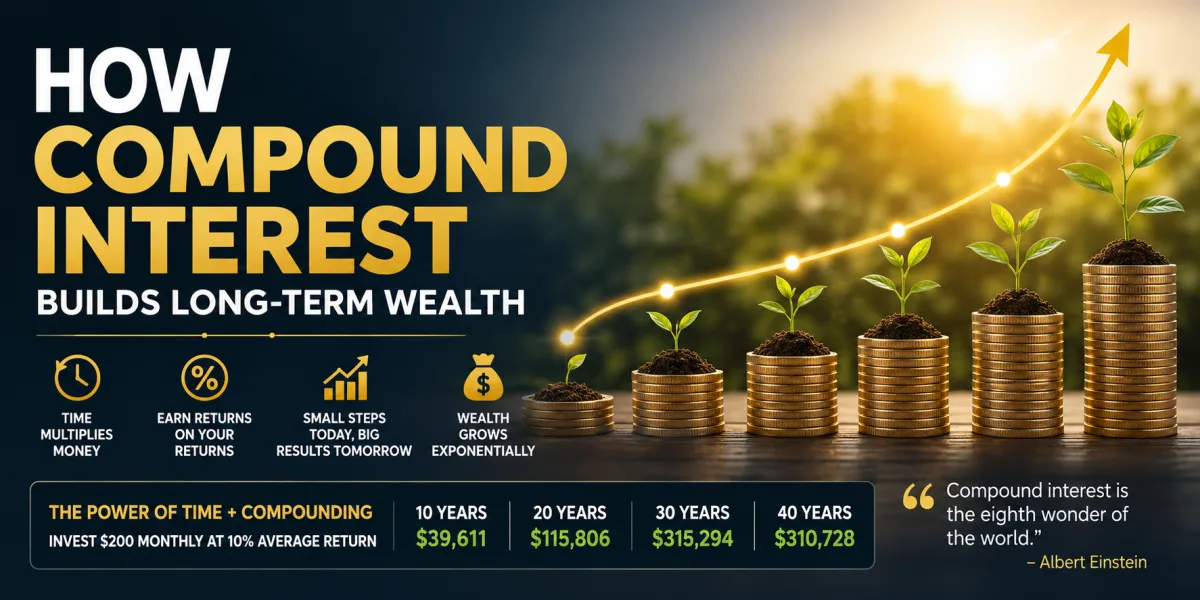
In the middle stage, contributions and returns work together. The portfolio begins to produce noticeable growth. Dividends, interest, and market appreciation become meaningful. The investor starts to see money making money.
In the late stage, the portfolio becomes the main engine. Market returns may exceed annual contributions. This is where compounding becomes visible. A strong market year may add more to the portfolio than the household saves from labor income. That can feel exhilarating, but it also requires emotional maturity because market declines can subtract large amounts just as quickly.
The FIRE journey is not a straight line. It is a transfer of dependence. At first, you depend almost entirely on labor income. Then you depend on labor income plus invested capital. Eventually, capital can support the lifestyle on its own. That transition is the essence of wealth building.
Income: The Acceleration Lever
Frugality gets attention in FIRE discussions, but income is often the larger lever. There is a limit to how much spending can be cut. There is much more upside in increasing income, especially for people early in their careers.
Income acceleration can come from negotiating salary, changing employers, gaining credentials, moving into higher-value roles, freelancing, consulting, building a business, acquiring rental property, developing digital products, or creating professional leverage. The best income strategy depends on skills, industry, risk tolerance, geography, and life stage.
The mistake is allowing every income increase to become lifestyle inflation. A raise can shorten the path to independence or simply upgrade consumption. A bonus can buy assets or disappear into spending. A promotion can build freedom or finance a more expensive version of dependence.
One powerful rule is to save most of every raise. If someone receives a $10,000 raise and saves $7,000 of it, their lifestyle still improves while their savings rate rises. Over time, this prevents income growth from being absorbed by new obligations.
FIRE is easier for high earners, but high income does not guarantee independence. Many high-income households are financially fragile because their expenses rise with their pay. The winning combination is rising income and controlled lifestyle expansion.
Spending: The Hidden Wealth Multiplier
Every dollar of recurring spending affects financial independence twice. First, it is a dollar that cannot be invested. Second, it increases the size of the portfolio needed to retire. This is why spending control is so powerful.
Housing is often the largest lever. A household that chooses a reasonable home relative to income may save hundreds or thousands per month compared with a household that buys at the edge of approval. Housing also influences taxes, insurance, utilities, maintenance, commuting, furniture, and lifestyle expectations. A house is not just a mortgage payment. It is an ecosystem of expenses.
Transportation is another major lever. Cars depreciate, require insurance, fuel, repairs, financing, registration, and parking. A household that avoids constant car upgrades may redirect enormous sums toward investments. This does not mean everyone should live car-free. It means transportation choices should be measured against freedom goals.
Food spending matters because it is frequent. Dining out, delivery, convenience meals, and unplanned grocery trips can quietly erode savings. A household does not need to abandon enjoyment, but it should know the difference between deliberate hospitality and default convenience.
The best FIRE spending strategy is not deprivation. It is alignment. Keep the expenses that produce real value. Eliminate the expenses that exist only because no one questioned them.
Investing for Financial Independence
Saving alone is rarely enough. Cash protects against emergencies, but long-term independence usually requires productive assets. These may include stock index funds, bond funds, real estate, business equity, retirement accounts, taxable brokerage accounts, and cash reserves.
For many FIRE households, broad low-cost index funds form the core portfolio. The reason is simple: they provide diversified ownership of businesses without requiring stock picking. Over decades, ownership of productive enterprises has historically been one of the main ways households build wealth. Index investing also reduces complexity, fees, and the temptation to constantly trade.
Asset allocation matters. A young FIRE investor may hold a stock-heavy portfolio during accumulation because the timeline is long and growth matters. As retirement approaches, the portfolio may include more bonds, cash, or other stabilizing assets to manage sequence-of-returns risk. The right allocation depends on age, risk tolerance, withdrawal needs, income flexibility, and emotional resilience.
Fees matter because FIRE timelines are long. A difference of 1 percent per year may look small, but over decades it can consume a significant share of wealth. Low-cost funds are not exciting, but keeping more of the return is a durable advantage.
The most important investing behavior is consistency. FIRE investors do not need to predict every market turn. They need to invest steadily, avoid panic selling, rebalance when appropriate, and stay aligned with a plan that can survive recessions, inflation, bear markets, and personal transitions.
Tax-Advantaged Accounts
Tax planning can accelerate FIRE because taxes are one of the largest lifetime expenses. Retirement accounts allow investors to shelter income, defer taxes, or build tax-free future income depending on the account type.
For 2026, the IRS announced that the employee contribution limit for 401(k), 403(b), most 457 plans, and the federal Thrift Savings Plan increased to $24,500, while the IRA contribution limit increased to $7,500. The IRS also noted higher catch-up contribution rules for certain older workers under SECURE 2.0.
These limits matter because FIRE investors often need to decide how to divide money between pre-tax retirement accounts, Roth accounts, taxable brokerage accounts, health savings accounts, and cash. Traditional retirement accounts may reduce taxable income today. Roth accounts may provide tax-free qualified withdrawals later. Taxable brokerage accounts provide flexibility before retirement-account access ages.
The challenge for early retirees is the gap between leaving work and accessing certain retirement accounts without penalty. That gap is manageable with planning. Strategies may include taxable brokerage investments, Roth IRA contribution withdrawals, Roth conversion ladders, substantially equal periodic payments, cash reserves, part-time income, and careful account sequencing. These strategies can be complex, so professional tax advice may be valuable before relying on them.
The key principle is tax diversification. A household with money in pre-tax accounts, Roth accounts, taxable accounts, and cash has more options than one with all wealth locked in a single account type.
The Taxable Brokerage Bridge
Many aspiring early retirees focus heavily on retirement accounts and forget the bridge years. If someone plans to stop full-time work at 45, they may need to fund many years before traditional retirement rules fully open. A taxable brokerage account can provide that bridge.
A taxable brokerage account has no contribution limit, no retirement age requirement, and no required distribution schedule. It is flexible. The trade-off is that dividends, interest, and realized capital gains may be taxable. Still, for FIRE planning, flexibility is valuable.
A taxable account can hold index funds, ETFs, municipal bonds, Treasury securities, or other investments depending on the plan. It can fund early retirement spending, large purchases, healthcare premiums, Roth conversion taxes, or years when taxable income is deliberately managed.
The taxable account is not inferior simply because it lacks a retirement-account wrapper. It serves a different purpose. FIRE planning often requires both tax efficiency and access. The taxable brokerage account helps solve the access problem.
Healthcare: The Early Retirement Challenge
Healthcare is one of the most important early retirement planning issues, especially in the United States. A traditional retiree may become eligible for Medicare at 65. An early retiree leaving work before that must plan for coverage through a spouse’s plan, Affordable Care Act marketplace coverage, COBRA, private insurance, health sharing arrangements, part-time employment benefits, geographic arbitrage, or other options.
Healthcare planning must be conservative because premiums, deductibles, prescriptions, and out-of-pocket costs can change. A FIRE plan that ignores healthcare is incomplete. The younger the retiree, the longer the bridge to Medicare.
Health savings accounts can play a role for eligible people with high-deductible health plans. HSAs offer tax advantages when used properly: contributions may be deductible or pre-tax, growth can be tax-free, and qualified medical withdrawals can be tax-free. For FIRE investors, an HSA can become both a healthcare reserve and a long-term tax-advantaged account.
But healthcare planning is not only about accounts. It is also about lifestyle, insurance literacy, preventive care, family history, and contingency planning. The cost of independence includes protecting the body that will live that independent life.
Social Security and Traditional Retirement Benefits
FIRE planning should not ignore Social Security, even though early retirees may stop full-time work decades before claiming it. Social Security can provide a later-life income floor, especially for people who earned substantial wages before retiring early. The Social Security Administration states that full retirement age is between 66 and 67 depending on birth year, and that benefits generally increase the longer a person waits to apply, up to age 70.
For people attaining age 62 in 2026, the current full retirement age is 67, according to the Social Security Administration.
The FIRE implication is important: an early retiree may need one plan for the years before Social Security and another plan after claiming benefits. If Social Security is expected to cover part of later spending, the portfolio may not need to support the same withdrawal burden forever. But benefits should be estimated conservatively because policy, earnings history, claiming age, and longevity all matter.
Pensions, deferred compensation, rental income, annuities, royalties, and part-time work can also change the calculation. Financial independence is not always funded by a single portfolio. It can be built from multiple income streams that support different stages of life.
Debt and FIRE
Debt changes the path to independence. High-interest debt is usually an emergency because it competes directly with investing. Credit card balances, payday loans, and expensive personal loans can destroy the savings rate. Paying them off often produces a guaranteed return equal to the avoided interest rate.
Lower-interest debt is more nuanced. A mortgage, student loan, or business loan may be managed alongside investing depending on rate, risk, cash flow, tax treatment, and personal preference. Some FIRE households prefer to retire debt-free for psychological security. Others carry a low-rate mortgage while investing more aggressively. Both approaches can be reasonable if they fit the household’s risk tolerance and cash flow.
The most dangerous debt is lifestyle debt: borrowing to maintain an image, convenience, or consumption level that income cannot support. FIRE requires honesty. If debt is being used to disguise overspending, the independence plan is not yet real.
Lean FIRE, Fat FIRE, Coast FIRE, and Barista FIRE
The FIRE movement includes several variations. These labels are not rigid rules. They are ways of describing different relationships between work, spending, and independence.
Lean FIRE means reaching independence with relatively low annual expenses. It often requires frugality, geographic flexibility, minimalist habits, and a willingness to keep spending modest. Its advantage is speed. Its risk is limited margin. A lean plan can become stressful if healthcare, housing, inflation, or family needs rise unexpectedly.
Fat FIRE means building enough wealth to support a more expensive lifestyle. It may include travel, private schooling, higher housing costs, premium healthcare, generous giving, or luxury spending. Its advantage is comfort and flexibility. Its cost is time and capital. A larger lifestyle requires a larger portfolio.
Coast FIRE means saving enough early that, without further contributions, the portfolio could grow to support traditional retirement later. A Coast FIRE person may still work, but they no longer need to save aggressively for retirement. This can allow a career change, lower-stress work, entrepreneurship, or more family time.
Barista FIRE means accumulating enough assets to reduce full-time work while using part-time income to cover some expenses, benefits, or healthcare. It is not full financial independence, but it can create lifestyle freedom sooner.
These variations matter because not everyone wants the same destination. FIRE is not one lifestyle. It is a framework for designing a life with more control over time.
The Emotional Side of Early Retirement
People often spend years asking whether they can afford to retire early and not enough time asking what they are retiring to. This is one of the most common FIRE mistakes.
Work provides more than income. It provides structure, identity, social contact, status, goals, and a reason to leave the house. A person who retires early without a replacement structure may feel lost. Financial independence solves the money problem. It does not automatically solve the meaning problem.
A healthier approach is to design the post-FIRE life before reaching the number. Test hobbies. Build friendships outside work. Develop physical routines. Volunteer. Travel slowly. Mentor. Create. Learn. Experiment with part-time work. Practice extended time off if possible.
Early retirement should not be a blank calendar. It should be a life with intentional commitments. Freedom is most satisfying when it is attached to purpose.
Sequence-of-Returns Risk
One of the biggest technical risks in early retirement is sequence-of-returns risk. This is the risk that poor market returns occur early in retirement, when withdrawals begin. A market decline during accumulation can be beneficial because new contributions buy assets at lower prices. A market decline during withdrawal can be dangerous because the retiree may have to sell assets at depressed prices to fund spending.
Two retirees can earn the same average return over 30 years but have different outcomes depending on the order of returns. Bad early returns can permanently damage a portfolio if withdrawals are too high and inflexible.
FIRE households can manage this risk in several ways. They can hold cash reserves for one to three years of spending. They can maintain a bond allocation. They can reduce discretionary spending during downturns. They can use part-time income when markets fall. They can delay large purchases. They can apply flexible withdrawal rules. They can maintain a margin between the portfolio target and actual spending.
The solution is not fear. It is resilience. A plan that assumes perfect markets is fragile. A plan that anticipates bad markets can survive.
Inflation and Lifestyle Creep
Inflation is the slow erosion of purchasing power. Lifestyle creep is the voluntary expansion of spending as income rises. FIRE investors must manage both.
Inflation increases the cost of necessities over time. Housing, healthcare, food, insurance, energy, education, and taxes may rise. A retirement plan must account for this. Investing in assets with long-term growth potential helps, but spending flexibility and conservative assumptions also matter.
Lifestyle creep is more personal. It happens when every raise becomes a nicer apartment, newer car, better restaurant, larger vacation, or more expensive routine. Some lifestyle improvement is normal and healthy. The problem is automatic escalation. If spending rises as fast as income, the savings rate never improves.
The antidote is conscious upgrading. Decide which improvements truly matter. Save a large percentage of raises before expanding spending. Avoid permanent expenses for temporary satisfaction. The FIRE path does not require rejecting comfort. It requires choosing comfort carefully.
Housing and Geographic Arbitrage
Housing can make or break a FIRE plan. In expensive cities, high salaries may be offset by rent, mortgages, taxes, childcare, transportation, and lifestyle pressure. In lower-cost areas, moderate incomes may produce higher savings rates. Geographic arbitrage means using location to improve financial freedom.
This can happen before or after financial independence. Before FIRE, a person may move to a lower-cost city while keeping a strong salary. Remote work has made this more possible for some professions. After FIRE, a person may move to a lower-cost region or country to reduce the required portfolio.
Geographic arbitrage is not only math. It affects family, community, healthcare, schools, climate, safety, culture, and belonging. A cheaper place is not better if it weakens the life you actually want. But location is too powerful to ignore. Many people try to solve a high-cost-life problem with small budget cuts when housing and geography are the real levers.
Children, Family, and FIRE
Financial independence with children is possible, but the plan must be more flexible. Children add costs, uncertainty, time demands, healthcare needs, education choices, and emotional priorities. A childless person can make lifestyle changes that may be harder for a family. A family may need a larger emergency fund, more insurance, estate planning, and a wider margin of safety.
Childcare can be one of the largest expenses during certain years. College planning may matter. Housing needs may change. One parent may reduce work hours. Medical needs may arise. These factors do not make FIRE impossible. They make realism essential.
Family FIRE also changes the purpose of independence. The goal may not be retiring at 35. It may be having one parent work part-time, taking summers off, homeschooling, caring for aging parents, choosing meaningful work over maximum pay, or living near family. Financial independence is not only an individual achievement. It can be a family design tool.
Insurance and Risk Protection
FIRE plans often focus on investment growth, but risk protection is just as important. A portfolio can be damaged by uninsured catastrophe, disability, liability, illness, death, or property loss.
Health insurance is essential. Disability insurance may be critical during accumulation because future earnings are the engine of the plan. Term life insurance may be necessary for people with dependents. Liability coverage, including umbrella insurance for some households, can protect assets. Home, renters, auto, and business insurance should match actual exposure.
As wealth grows, insurance needs change. A person with no dependents and substantial assets may need less life insurance. A person leaving employment may need replacement health coverage. A rental property owner may need landlord coverage. A business owner may need professional liability coverage.
The FIRE mindset is not only about accumulating assets. It is about protecting the assets and income streams that create freedom.
Building a FIRE Plan Step by Step
The first step is calculating current annual spending. Use actual bank and credit card statements, not estimates. Separate essential spending from discretionary spending. This gives you the baseline cost of life.
The second step is calculating net worth. List assets: cash, investments, retirement accounts, home equity, business equity, and other meaningful assets. List liabilities: credit cards, student loans, mortgage, auto loans, personal loans, and taxes owed. Net worth is assets minus liabilities.
The third step is calculating savings rate. Divide annual savings and investments by income. Use a consistent method. The exact formula matters less than tracking it over time. The goal is to increase the gap between income and spending.
The fourth step is setting the freedom number. Start with annual expenses multiplied by 25, then adjust for risk, age, healthcare, taxes, family, pensions, Social Security, and desired margin. A young early retiree may choose a more conservative number.
The fifth step is choosing investment accounts and asset allocation. Decide how much goes to employer retirement plans, IRAs, HSAs, taxable brokerage accounts, debt repayment, real estate, and cash reserves. The plan should handle both long-term growth and early-retirement access.
The sixth step is increasing income and reducing low-value spending. Focus on large levers first. Housing, cars, taxes, debt, career moves, and recurring lifestyle costs matter more than occasional small purchases.
The seventh step is reviewing annually. Update spending, net worth, portfolio allocation, tax strategy, insurance, and life goals. FIRE is not a one-time calculation. It is a living plan.
Common FIRE Mistakes
The first mistake is underestimating expenses. Many people calculate their freedom number from an idealized budget rather than real life. They forget taxes, healthcare, home repairs, car replacement, travel, aging parents, children, inflation, insurance, and occasional large purchases.
The second mistake is assuming investment returns will be smooth. Markets are volatile. A plan built only on average returns may fail when returns arrive in the wrong order.
The third mistake is over-optimizing and under-living. FIRE should not require sacrificing health, relationships, family, and joy for a number. A plan that creates wealth while damaging life is not freedom.
The fourth mistake is ignoring taxes. Tax location, withdrawal sequencing, Roth conversions, capital gains management, and account choice can materially affect the plan.
The fifth mistake is retiring from something rather than to something. Leaving a disliked job can feel good for a few months. A meaningful life requires more than absence of work.
The sixth mistake is comparing timelines. FIRE content can make people feel behind. Someone else’s savings rate, salary, inheritance, housing market, family structure, or risk tolerance may be completely different. Your plan must fit your reality.
Financial Independence Without Early Retirement
Not everyone who pursues financial independence wants early retirement. Some people want career freedom. Some want the ability to leave a toxic job. Some want to start a company. Some want to care for children or parents. Some want a sabbatical. Some want to work fewer hours. Some want to choose mission over salary.
This is why financial independence is broader and more durable than early retirement. Early retirement is a decision. Financial independence is a position of strength.
A person who reaches partial independence may already experience life-changing benefits. Six months of expenses creates courage. A year of expenses creates options. A portfolio covering half of annual expenses creates flexibility. A paid-off home reduces pressure. Coast FIRE can make lower-paid meaningful work possible. Full independence is powerful, but every layer before it matters.
The Real Meaning of FIRE
The best version of FIRE is not about rejecting work. It is about rejecting dependence. It asks people to become intentional with income, ownership, time, and desire. It exposes the trade-off between present consumption and future freedom. It turns financial planning into life design.
Some will pursue FIRE aggressively and retire decades early. Others will use the principles to build resilience, reduce stress, and gain career flexibility. Both are valid. The point is not to win a race against other people. The point is to buy enough control over your time that your life becomes more self-directed.
Financial independence is built through repeated decisions: save the raise, invest the surplus, avoid lifestyle debt, buy assets, protect health, manage risk, reduce waste, and choose work more deliberately. None of these decisions is dramatic by itself. Together, they change the balance of power between you and your paycheck.
The freedom number is not only a portfolio target. It is a mirror. It shows how much your current life costs, how much your future life requires, and how much of your time is being traded to sustain it. Once you see that clearly, you can make different choices.
Early retirement may or may not be the destination. Financial independence is the deeper prize. It is the moment when money stops being only a monthly pressure and becomes a source of optionality. It is the point where work can become contribution rather than compulsion. It is the quiet transformation from needing permission to having choices.
 Article
 Article
 Article
 Article
 Article
 Article
 Article
 Article