
The Money Habits That Create Financial Well-being
Financial well-being is not the same thing as being rich. A person can earn a high income and still feel financially trapped. Another person can earn a moderate income and feel calm, organized, and in control. The difference is not always the amount of money coming in. Often, it is the structure around the money: how it is earned, spent, saved, invested, protected, and understood.
This is why financial well-being deserves more attention than wealth alone. Wealth is usually measured by assets, income, and net worth. Financial well-being is broader. It asks whether money is helping you live with security, choice, dignity, and progress. It includes the ability to pay bills without panic, absorb emergencies without collapse, move toward long-term goals, and enjoy life without being controlled by debt or constant anxiety.
Many people assume their financial life will improve automatically when their income rises. Sometimes it does. A higher income can create room for savings, investments, better housing, education, healthcare, and business capital. But income alone does not guarantee stability. Without discipline, higher income often becomes higher spending. The person moves from a smaller salary and smaller problems to a bigger salary and bigger commitments.
This is the income illusion. More money feels like the solution until lifestyle expands to consume it. A promotion becomes a bigger apartment. A bonus becomes a new phone. A business profit becomes a car upgrade. A new client becomes a reason to spend in advance. The person is earning more, but the pressure remains. The bank balance still runs low. Debt still grows. Investment still waits for “next month.”
Financial well-being begins when money is given direction. It is built through habits that are repeated long enough to become a system. The habits are not glamorous. They include budgeting, saving before spending, avoiding destructive debt, tracking expenses, investing consistently, improving earning ability, and practicing patience. These habits sound simple, but simple does not mean easy. Most financial failure does not come from not knowing what to do. It comes from not doing the basics consistently.
The fundamentals matter because money compounds in both directions. Good habits compound into stability, assets, and freedom. Bad habits compound into debt, stress, and lost opportunity. A small monthly investment can become meaningful capital over time. A small daily expense can quietly drain wealth. A single consumer loan can become a pattern. A single disciplined saving habit can become the foundation of a future portfolio.
Financial well-being is therefore not one decision. It is a way of managing life. It is the quiet discipline of choosing long-term strength over short-term appearance. It is the ability to enjoy money without being ruled by it. It is the maturity to understand that wealth is built not only by what you earn, but by what you keep, what you grow, what you avoid, and what you protect.
Financial Well-being Begins With Control
The first sign of financial well-being is control over day-to-day money. This does not mean having unlimited money. It means knowing what is happening. You know what comes in, what goes out, what must be paid, what can be postponed, what needs to be saved, and what should be invested. You are not constantly surprised by your own financial life.
Many people live without this control. They are not irresponsible in character, but their money is unobserved. Income arrives, expenses consume it, and the month ends with confusion. They know they are working hard, but they cannot explain where the money went. They feel busy, tired, and financially stuck.
Control starts with visibility. You cannot manage what you refuse to see. A person who does not know their expenses cannot build a serious budget. A person who does not know their debt balances cannot create a repayment strategy. A person who does not know their savings rate cannot measure progress. A person who does not know their investment contributions cannot realistically estimate future wealth.
This is why financial well-being is deeply practical. It is not only about motivation or positive thinking. It requires records, decisions, reviews, and corrections. It requires looking at bank statements, mobile money transactions, loan balances, subscriptions, insurance premiums, school fees, rent, groceries, transport, giving, family support, and discretionary spending. Money must be brought out of the fog.
Control also creates peace. A person with a budget may still face pressure, but the pressure becomes specific. Instead of saying, “I do not know why I am broke,” they can say, “My rent is too high, my transport costs have risen, and I am spending too much on eating out.” Specific problems can be solved. Vague anxiety cannot.
Financial control is not restriction. It is direction. A budget does not exist to punish you. It exists to tell your money where to go before life, impulse, pressure, and advertising tell it for you.
Your Earning Ability Is Your First Major Asset
Before a person owns property, stocks, bonds, businesses, or retirement accounts, they usually own one major asset: their ability to earn. This is sometimes called human capital. It includes skills, education, experience, reputation, relationships, health, discipline, and the ability to solve valuable problems.
For most people, human capital produces the money that later becomes financial capital. Your salary funds your savings. Your skills attract clients. Your expertise builds a business. Your reliability creates opportunities. Your professional network opens doors. Your ability to learn protects you when industries change.
This makes career development one of the most important financial decisions a person can make. Education is not valuable merely because it produces certificates. It is valuable when it increases judgment, skill, credibility, and earning power. A short course that helps someone become better at accounting, sales, coding, project management, design, data analysis, negotiation, nursing, teaching, engineering, or business operations can be more valuable than an investment product bought without understanding.
Many financial plans fail because they focus only on cutting expenses. Expense control matters, but there is a limit to how much you can cut. There is no equal limit to how much you can grow your earning potential. A person who reduces waste and increases income is in a stronger position than a person who only reduces waste.
The best investment in early life is often not a stock, bond, or piece of land. It may be a skill that raises income for the next thirty years. A professional who increases their monthly income by KES 50,000 through better skills has created KES 600,000 of additional annual earning capacity. Over ten years, before taxes and changes, that is KES 6 million of extra gross income. If part of that increase is saved and invested, the skill becomes the source of financial assets.
This does not mean every educational expense is wise. Some courses are overpriced. Some degrees do not improve earning power. Some training is pursued for status rather than usefulness. The financial question is direct: will this improve my ability to create value, earn income, solve problems, or access better opportunities?
A person serious about financial well-being should regularly ask: what skill would make me more valuable? What problem can I learn to solve? What industry is growing? What weakness is holding back my earning power? What relationship or reputation do I need to build? What credential matters in my field? What technology should I understand?
Income growth is not always immediate, but it is rarely accidental. It is often the result of deliberate improvement repeated over time.
The Difference Between Good Debt and Bad Debt
Debt is not automatically evil. Some debt can help acquire productive assets, expand a business, finance education, or purchase a home. But debt becomes dangerous when it finances consumption, status, or lifestyle beyond real income.
Bad debt usually has three features. It is expensive, it does not create income or lasting value, and it is used to buy things that decline in value or disappear quickly. Consumer loans, payday-style borrowing, expensive mobile loans, credit used for entertainment, and borrowing to impress others can weaken a financial life quietly and then suddenly.
The problem with bad debt is not only interest. It is the loss of future freedom. Every repayment is a claim on income you have not yet earned. When enough future income is already promised to lenders, you lose the ability to save, invest, change jobs, start a business, help family, or recover from emergencies.
Debt also changes psychology. A person with heavy consumer debt often becomes short-term in thinking. They are not planning wealth. They are surviving due dates. They may take more expensive loans to repay older loans. They may avoid opening messages from lenders. They may work harder but feel poorer because much of the income belongs to yesterday’s decisions.
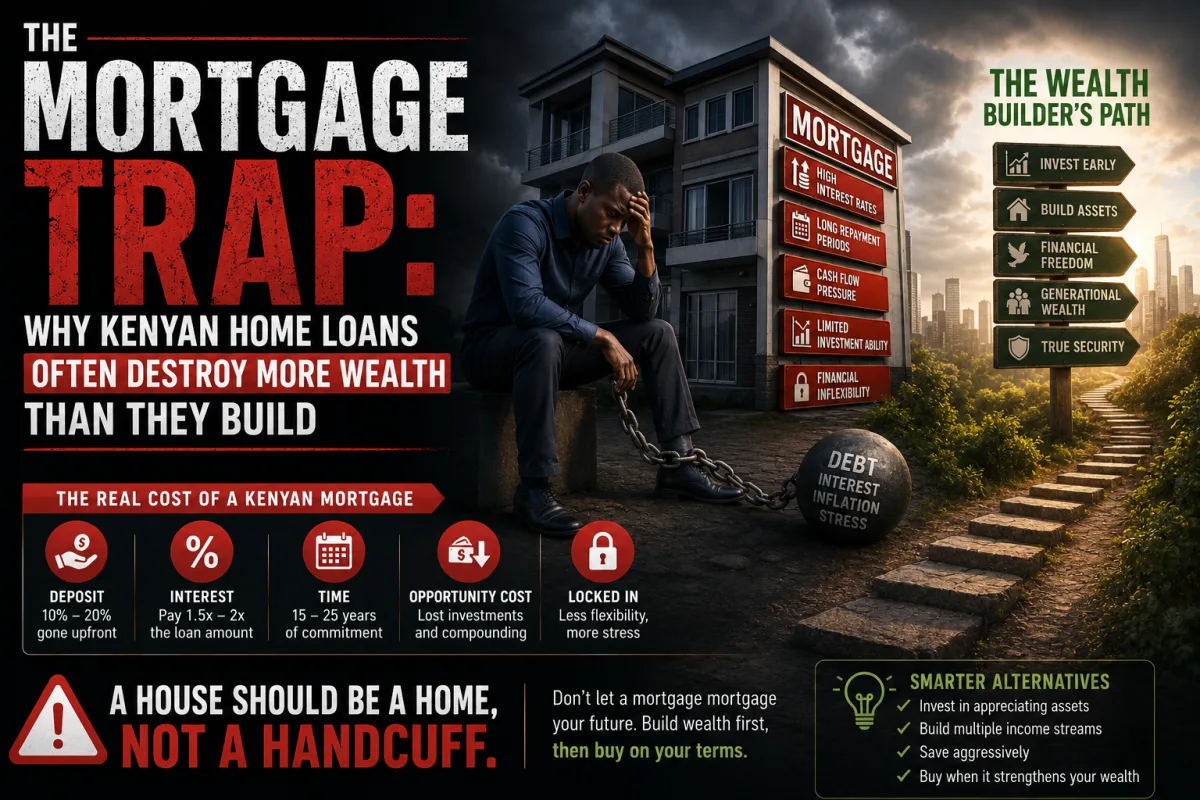
Good debt is different, but it still requires caution. A business loan can be productive if it finances inventory, equipment, expansion, or working capital that generates returns above the cost of borrowing. A mortgage can support ownership of a home or rental asset if the payments are affordable and the property decision is sound. Education debt can be worthwhile if it improves earning power enough to justify the cost.
But even good debt can become bad when the numbers are wrong. Borrowing for a business without cash flow discipline can destroy both the business and the household. Borrowing for education without employability can create years of pressure. Borrowing for property at an unaffordable payment can turn ownership into anxiety.
The wise question is not, “Can I get approved?” It is, “Will this debt improve my financial position after considering interest, risk, time, and opportunity cost?” Approval only means a lender is willing to give you money. It does not mean the debt is good for your life.
Financial well-being requires a cautious relationship with debt. Use it only when it strengthens your future, not when it decorates your present.
Saving First Changes Everything
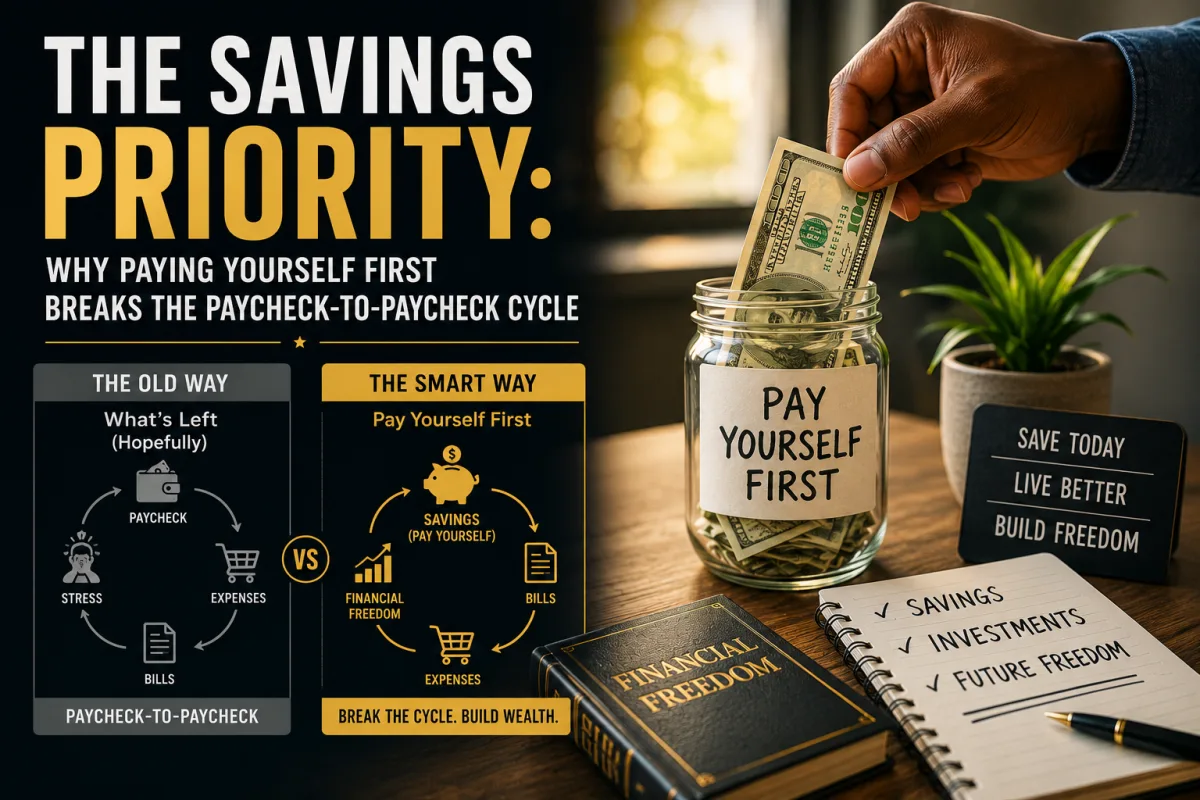
One of the most powerful personal finance rules is simple: save first and spend what remains. Many people do the opposite. They spend during the month and hope something will be left. Usually, nothing is left because money without a job finds somewhere to go.
Saving first works because it turns saving from an intention into a system. The moment income arrives, a portion is moved to savings, investments, debt repayment, or long-term goals. The remaining money becomes the spending limit. This one habit can change a financial life because it makes progress automatic rather than emotional.
The size of the savings rate matters. Saving 5 percent is better than saving nothing. Saving 10 percent builds discipline. Saving 20 percent or more can significantly accelerate wealth creation. A very high savings rate can create financial independence faster, especially when invested well. But the right savings rate depends on income, obligations, family structure, debt, and stage of life.
The deeper principle is not the exact percentage. It is priority. A person who saves first is saying, “My future has a claim on my income.” This is a different mindset from saving leftovers. Leftover saving treats the future as optional. Pay-yourself-first saving treats the future as a bill that must be honored.
Saving first also protects against lifestyle inflation. When income rises, increase saving before increasing lifestyle. If your salary rises by KES 40,000 and you immediately upgrade spending by KES 40,000, your financial position has not improved. But if you save or invest KES 20,000 of the increase and enjoy the rest, income growth becomes wealth growth.
Many people wait to save until they earn more. This is understandable but risky. If the habit does not exist at a lower income, it may not appear at a higher income. More income often arrives with more pressure, more expectations, and more tempting upgrades. Start with a small amount if necessary, but build the identity of a saver.
Savings are not only about wealth. They are about resilience. A person with savings can handle emergencies without panic borrowing. They can leave a toxic job with more options. They can take advantage of opportunities. They can repair a car, pay a medical bill, or support family without destroying the entire month.
Saving first is the foundation of financial breathing room.
Budgeting Is Not a Cage
Budgeting is often misunderstood as deprivation. People imagine a budget as a document that says no to everything enjoyable. But a good budget does not remove freedom. It organizes freedom.
A budget is simply a plan for income. It tells money where to go based on priorities. It allows you to decide in advance how much goes to rent, food, transport, school fees, debt repayment, savings, investment, giving, insurance, family support, entertainment, and personal enjoyment.
Without a budget, spending decisions happen one at a time. Each decision may seem harmless. A lunch here, a ride there, a subscription, a gift, an online purchase, a weekend outing, an impulse upgrade. But the total can damage the month. A budget forces the whole picture into view.
A strong budget should be realistic. An unrealistic budget fails quickly because it ignores human life. If you spend money on transport every day, budget for it. If family support is part of your life, budget for it. If you enjoy eating out occasionally, budget for it. If annual expenses such as insurance, school items, holidays, licenses, or repairs occur, budget monthly toward them.
The best budget is not the most severe. It is the one you can follow. A budget that cuts all enjoyment may work for two weeks and then collapse. A budget that includes modest enjoyment can last for years.
Budgeting also reveals trade-offs. You may discover that a house is too expensive for your income, that debt repayments are crowding out savings, that transport costs are too high, or that small lifestyle choices are delaying investment. This information may be uncomfortable, but it is useful.
Budgeting becomes easier when categories are simple. You do not need a complicated spreadsheet to begin. You need to know your fixed obligations, flexible expenses, savings and investments, debt payments, and discretionary spending. Over time, you can refine the system.
The purpose of budgeting is not perfection. It is awareness and direction. Some months will go off plan. Emergencies happen. Prices change. Guests come. Children need things. Business income fluctuates. A budget should be reviewed and adjusted, not abandoned.
Track the Small Expenses Before They Become Big Ones
Small expenses are dangerous because they feel too small to matter. One snack, one ride, one coffee, one subscription, one mobile bundle, one delivery fee, one convenience purchase. Individually, each may be insignificant. Together, they can quietly consume the money that should have gone to savings or investment.
Expense tracking is not about guilt. It is about truth. When you track spending for thirty days, patterns appear. You may discover that eating out costs more than electricity. You may find that mobile money charges, small loans, subscriptions, and delivery fees are draining cash. You may realize that your weekend spending is larger than your monthly investment contribution.
The emotional resistance to tracking is understandable. Many people do not want to know. But not knowing is expensive. Ignorance protects comfort in the short term and destroys control in the long term.
Tracking can be done through an app, spreadsheet, notebook, bank statement review, or mobile money statement. The method matters less than consistency. At the end of each week, review where the money went. Ask which expenses were necessary, which were enjoyable and worth it, which were wasteful, and which were emotional reactions.
This exercise often reveals spending triggers. Some people spend when stressed. Some spend to impress. Some spend when bored. Some spend when they feel behind in life. Some spend because friends set the pace. Some spend because digital payments make money feel invisible.
Modern money moves too easily. A tap, swipe, code, app, or transfer can separate you from cash without the physical feeling of spending. Tracking restores friction. It makes invisible money visible again.
Small savings created from tracking can become powerful when redirected. Cutting KES 5,000 of monthly waste creates KES 60,000 a year. Invested consistently, that can become meaningful over time. More important, it builds the discipline of noticing.
Contentment Is a Financial Skill
Contentment is rarely discussed in financial education, but it may be one of the most valuable money skills. Without contentment, no income feels enough. Every achievement creates a new comparison. Every purchase becomes outdated. Every social circle creates pressure. Every success by someone else becomes a personal accusation.
Contentment does not mean lack of ambition. It does not mean accepting poverty, avoiding growth, or refusing comfort. It means being able to enjoy what you have while working wisely toward what you want. It means your spending is not controlled by insecurity.
Many destructive financial decisions are driven by comparison. People buy cars to signal progress. They rent homes to match a perceived class. They borrow for ceremonies, clothes, gadgets, holidays, or entertainment because they fear looking unsuccessful. They spend money they need on people they do not truly need to impress.
Social media intensifies this pressure. It displays the highlight reel of other people’s lives and hides the debt, support systems, family wealth, business losses, or stress behind the image. A person comparing their real financial life to another person’s curated display is likely to overspend.
Contentment protects wealth because it lowers the cost of ego. The less you need to prove, the more you can build. The less you spend for appearance, the more you can allocate to assets. The less you chase every lifestyle upgrade, the more freedom you keep.
This does not mean never buying nice things. Money should support joy, beauty, rest, generosity, and meaningful experiences. The issue is not enjoyment. The issue is unconscious spending driven by insecurity. A financially healthy person can buy something because it fits their values and budget, not because they are trying to win an invisible competition.
Contentment gives you the patience to build slowly. It allows you to drive an older car while investing. It allows you to live in a modest house while saving for a deposit. It allows you to say no to expensive outings without shame. It allows you to measure progress by your balance sheet, not by applause.
Invest in Assets That Produce or Appreciate
Saving protects money. Investing grows it. A person who only saves may become stable, but inflation can erode purchasing power over time. Investing allows money to work beyond active labor.
An asset is something that can produce income, appreciate in value, or both. Examples include shares, bonds, unit trusts, money market funds, rental property, productive land, profitable businesses, intellectual property, retirement funds, and tools or equipment that increase earning ability. Not every asset is suitable for every person, and not every purchase called an asset truly behaves like one.
The key distinction is between assets and lifestyle possessions. A car used for personal convenience may be useful, but it usually depreciates and creates expenses. A car used profitably in a transport business may be productive if the numbers work. A home may provide stability and long-term value, but it may not produce cash unless rented or leveraged wisely. Land may appreciate, but it can also remain idle for years while rates, security, and opportunity costs accumulate.
Investing requires understanding. Beginners should avoid buying products they cannot explain. If you do not understand how the investment makes money, what risks exist, how you can exit, what fees apply, and what time horizon is required, slow down. Many people lose money not because investing is bad, but because they confuse speculation, hype, and pressure with investing.
Good investing is often boring. It involves regular contributions, diversification, patience, and realistic expectations. It does not depend on finding the perfect opportunity every month. A person who invests consistently in productive assets over many years can outperform someone who waits endlessly for a miracle investment.
Income-producing assets are especially powerful because they create cash flow. Dividends, interest, rent, business profit, royalties, or distributions can reduce dependence on salary. Over time, these cash flows can be reinvested to buy more assets. This is how assets create more assets.
The transition from labor income to asset income is one of the central movements in wealth building. At first, you work for money. Then you save part of that money. Then you invest it. Eventually, the investments begin producing income of their own. Financial well-being improves because your life is no longer supported by one income source alone.
Treat Investing Like a Bill You Owe Your Future
Many people invest only when they feel they have extra money. The problem is that extra money rarely appears consistently. There is always another need, another request, another expense, another reason to wait. Serious investing requires structure.
One useful approach is to treat investment like a recurring bill. Rent is paid because housing matters. School fees are paid because education matters. Loan payments are made because consequences follow. Investment should be treated with similar seriousness because future independence depends on it.
Automating investments can help. When money moves to an investment account shortly after income arrives, discipline becomes less dependent on mood. The investor does not have to debate every month. The system acts before impulse interferes.
Consistency is more important than dramatic amounts at the beginning. A person who invests KES 10,000 every month for years may build more wealth than someone who invests KES 100,000 once and then stops. Regular investing also reduces the pressure to time the market perfectly. It builds the habit of participation.
As income grows, investment contributions should grow too. This is one of the most important protections against lifestyle inflation. If every raise increases only consumption, income growth will not translate into wealth. But if every raise increases investment, the future becomes stronger.
Investing should also be connected to goals. Retirement, home ownership, children’s education, business capital, financial independence, emergency reserves, and estate planning may require different investment vehicles and time horizons. Money needed next year should not be exposed to the same risk as money needed in thirty years.
The investor’s job is not to chase every trend. It is to build a portfolio that matches goals, risk tolerance, time horizon, liquidity needs, and knowledge. The simpler strategy followed consistently is often better than the sophisticated strategy abandoned under stress.
Patience Is Part of the Return
Wealth building takes time because compounding needs time. Many people understand this intellectually but struggle emotionally. They want quick results. They compare their early progress to someone else’s mature portfolio. They become impatient when investments move slowly. They abandon good plans because the results are not immediate.
Patience is not passive. It is active discipline over a long period. It means continuing to invest when progress feels small. It means allowing assets time to grow. It means understanding that volatility is part of investing. It means resisting the temptation to turn every market movement into a personal crisis.
Impatience is expensive. It pushes people into scams, speculative schemes, overtrading, panic selling, and unrealistic promises. When someone promises unusually high returns with little risk, they are often selling hope to impatient money. The desire to get rich quickly can destroy the capital that would have grown slowly.
Long-term investing rewards those who can endure boredom, uncertainty, and delayed gratification. A tree does not look impressive the week after it is planted. Neither does a portfolio. But roots are forming. Contributions are accumulating. Reinvested income is adding weight. Time is doing work that cannot be rushed.
Patience also applies to career growth, debt repayment, and savings. A person does not become financially well in one month. They become financially well by repeating constructive actions across many months and years. The early stage may feel unrewarding because the visible results are small. But the invisible result is identity. You become the kind of person who manages money well.
Once that identity forms, progress accelerates. Saving becomes normal. Investing becomes expected. Debt becomes uncomfortable. Waste becomes visible. Financial decisions become calmer. This internal change may be more important than any single investment return.
Enjoying Life Is Not Financial Failure
Some people hear financial discipline and assume it means postponing all enjoyment. This is not healthy. Money is not only for survival and future accumulation. It is also for living. A financial plan that allows no joy may become emotionally unsustainable.
The goal is not to choose between saving and enjoying life. The goal is to enjoy life without sabotaging the future. This requires intentional spending. Spend on what genuinely matters to you. Cut what does not.
For one person, travel may be deeply meaningful. For another, it may be family gatherings, books, fitness, worship, art, good food, or quiet weekends. A healthy budget makes room for meaningful enjoyment while still funding savings, investments, obligations, and protection.
The danger is unconscious enjoyment: spending that provides a brief feeling but no lasting value, repeated so often that it delays important goals. There is a difference between a planned holiday paid in cash and a lifestyle of constant unplanned spending funded by debt. There is a difference between generosity within capacity and giving so much that your own household becomes unstable.
Financial well-being includes freedom of choice. That freedom is not created by hoarding every shilling. It is created by aligning money with values. A person may choose to live modestly in some areas to spend richly in others. They may choose a smaller car and better education for their children. They may choose fewer nights out and more travel. They may choose a smaller house and more investment freedom.
The point is choice. When money is unmanaged, choices are made by pressure. When money is managed, choices are made by values.
More Money Does Not Automatically Create Happiness
Money matters. It pays for shelter, food, healthcare, education, transport, safety, opportunity, and comfort. Lack of money can create real suffering. It is wrong to pretend money is unimportant.
But more money alone does not guarantee happiness. Once basic needs and reasonable security are met, the relationship between money and well-being becomes more complex. A person can increase income and also increase stress, comparison, debt, family conflict, lifestyle pressure, and fear of losing status.
This is why financial well-being must include emotional maturity. Money should serve life, not replace it. A bigger bank balance cannot repair every relationship, create purpose, or provide peace to a person who is always comparing. Wealth without wisdom can become another form of pressure.
A healthy financial life asks not only, “How can I get more?” but also, “What is enough for this season? What kind of life am I building? What am I sacrificing for money? What does freedom mean to me? Who benefits from my financial progress? What values should guide my spending?”
These questions prevent wealth building from becoming empty accumulation. They remind us that the purpose of money is not simply to have more money. The purpose is to support a life of security, contribution, opportunity, and dignity.
The Four Pillars of Financial Well-being
A strong financial life can be understood through four pillars: control, resilience, progress, and choice.
Control means you can manage day-to-day and month-to-month finances. Bills are not constantly surprising you. Spending is not completely impulsive. You have a plan for income. You know your obligations. You can make informed decisions.
Resilience means you can absorb financial shocks. An emergency does not immediately become a disaster. You have savings, insurance, family systems, or assets that provide a buffer. A medical bill, job loss, business delay, car repair, or family emergency may hurt, but it does not destroy the entire financial structure.
Progress means you are moving toward goals. You may not be wealthy yet, but you are not standing still. Debt is reducing. Savings are growing. Investments are being funded. Skills are improving. Retirement is being considered. Children’s education is being planned. The future is not being ignored.
Choice means money gives you room to make life decisions. You can choose work with more dignity. You can leave harmful situations. You can help family without collapsing. You can rest. You can invest in opportunities. You can enjoy experiences that matter. You are not controlled entirely by creditors, emergencies, or short-term survival.
These pillars show why financial well-being is more than net worth. A person may have assets but no liquidity, income but no control, savings but no joy, or investments but no protection. A complete financial life needs balance.
Building an Emergency Fund
No discussion of financial well-being is complete without emergency savings. An emergency fund is money set aside for unexpected but necessary expenses. It protects the financial plan from being destroyed by ordinary shocks.
Emergencies are not rare. Cars break down. Medical needs arise. Jobs end. Clients delay payment. Businesses have slow months. Family members need help. Rent deposits are required. School expenses appear. Without emergency savings, these events often lead to borrowing.
The right emergency fund depends on income stability and responsibilities. A person with a stable salary and few dependents may start with three months of essential expenses. A self-employed person, single-income household, or family with many dependents may need six months or more. The first goal can be smaller: one month of expenses, then two, then three.
Emergency funds should be liquid and safe. This is not money for speculation. It should be accessible when needed, not locked in a risky investment that may be down when the emergency occurs. The purpose is stability, not high return.
Emergency savings also improve decision-making. A person with no buffer may accept bad loans, bad jobs, bad business terms, or desperate sales. A person with a buffer has time to think. Time is a financial asset.
Financial Well-being Requires Regular Review
A financial plan is not something you write once and forget. Life changes. Income changes. Prices change. Family responsibilities change. Goals change. Investment markets change. Health changes. A plan that worked three years ago may be outdated today.
At least once or twice a year, review your financial life. Check income, expenses, debts, savings, investments, insurance, emergency fund, retirement progress, and major goals. Ask what improved, what worsened, and what needs adjustment.
Reviewing money regularly prevents drift. Without review, small problems become large. A subscription continues for two years. A loan balance remains high. An investment contribution stops. Insurance becomes outdated. Lifestyle quietly expands. The person wakes up later wondering why progress is slow.
Financial review should not be an exercise in shame. It should be an exercise in leadership. You are the manager of your financial life. Managers review performance, identify problems, and make decisions.
The Practical Path Forward
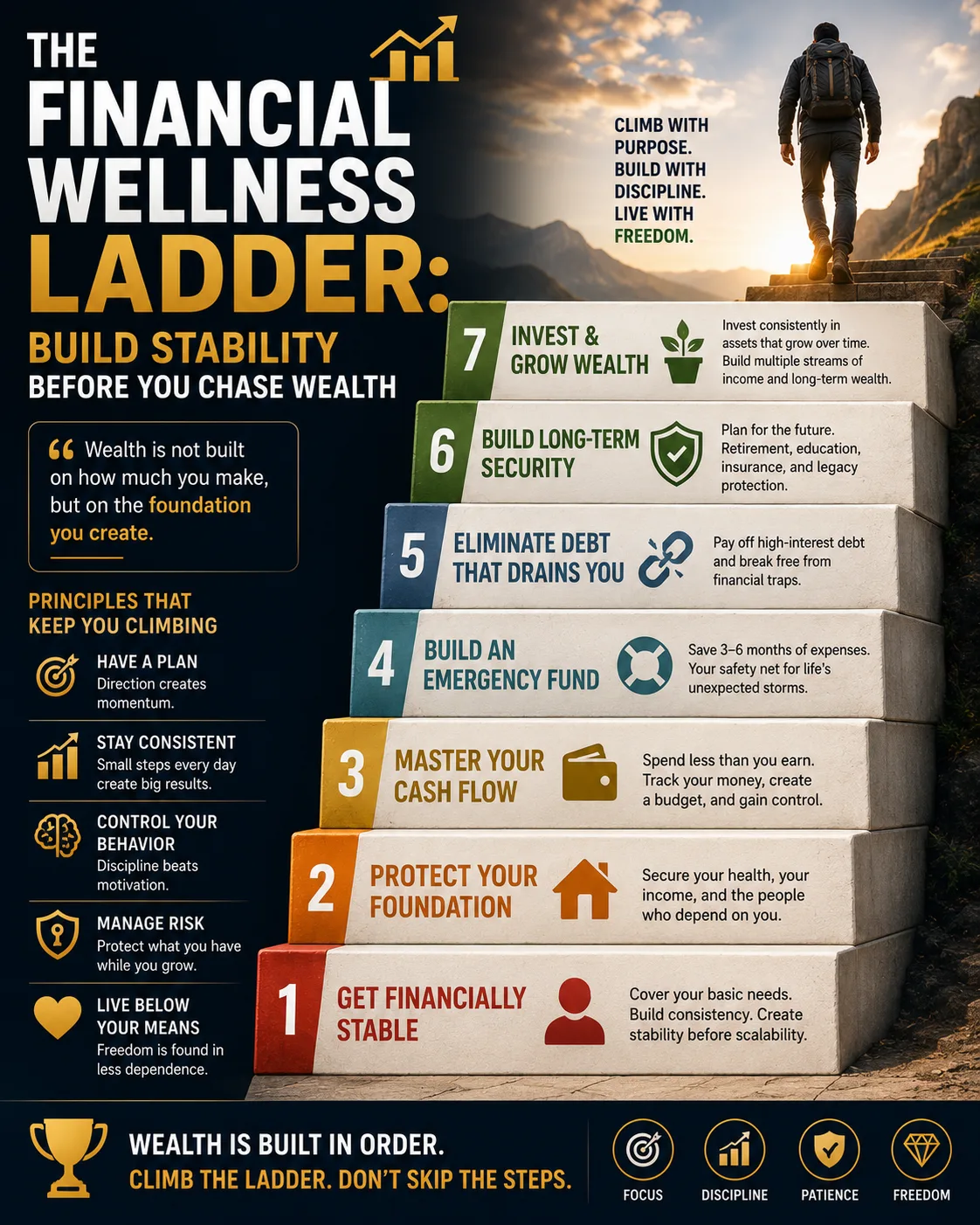
Financial well-being is built through a sequence of actions. First, know your numbers. List income, expenses, debts, savings, investments, and obligations. Second, create a realistic budget. Third, begin saving first, even if the amount is small. Fourth, build an emergency fund. Fifth, attack destructive debt. Sixth, improve earning ability. Seventh, invest consistently in assets you understand. Eighth, protect your household with appropriate insurance. Ninth, review your progress regularly. Tenth, practice contentment so that your money decisions are not controlled by comparison.
This path is not dramatic, but it works because it aligns behavior with reality. It does not depend on luck. It does not require pretending every person starts from the same place. It recognizes that income levels differ, family obligations differ, and opportunities differ. But within those differences, habits still matter.
A person with a modest income who saves, avoids bad debt, invests patiently, and grows skills can move steadily forward. A person with a high income who overspends, borrows for lifestyle, ignores investments, and chases status can remain financially fragile. The fundamentals do not guarantee equal outcomes, but they improve the odds.
The most important shift is identity. Do not think of yourself only as a consumer of income. Think of yourself as a builder of financial capacity. Every month, you are either strengthening or weakening that capacity. Every spending decision, debt decision, saving decision, and investment decision is a vote for the financial life you are creating.
The Quiet Power of Discipline
Discipline is often described as sacrifice, but in personal finance it is better understood as self-respect over time. It is the decision to care about your future self, your family, and your freedom enough to make choices today that protect tomorrow.
Discipline does not mean never failing. You will overspend sometimes. You may make a poor investment. You may take a loan you later regret. You may ignore your budget for a month. Financial maturity is not perfection. It is correction. The disciplined person returns to the plan.
This is encouraging because financial well-being is not reserved for people who have never made mistakes. Many people begin after debt, job loss, business failure, family pressure, or years of poor money habits. The past matters, but it does not have to control the future. A new system can begin with the next income cycle.
The fundamentals may look ordinary from the outside, but they are powerful when practiced consistently. Earn better. Spend intentionally. Save first. Avoid destructive debt. Track expenses. Invest in assets. Be patient. Enjoy life wisely. Refuse comparison. Review often.
These habits create more than wealth. They create stability. They reduce fear. They expand choice. They allow a person to support family with less resentment, face emergencies with more confidence, and pursue goals with greater clarity.
Financial well-being is not a finish line where all money problems disappear. It is a condition of increasing strength. You become less fragile, more prepared, more intentional, and more free. That is the real reward of the fundamentals. They do not promise overnight riches. They build something better: a financial life that can stand.
 Article
 Article
 Article
 Article
 Article
 Article
 Article
 Article