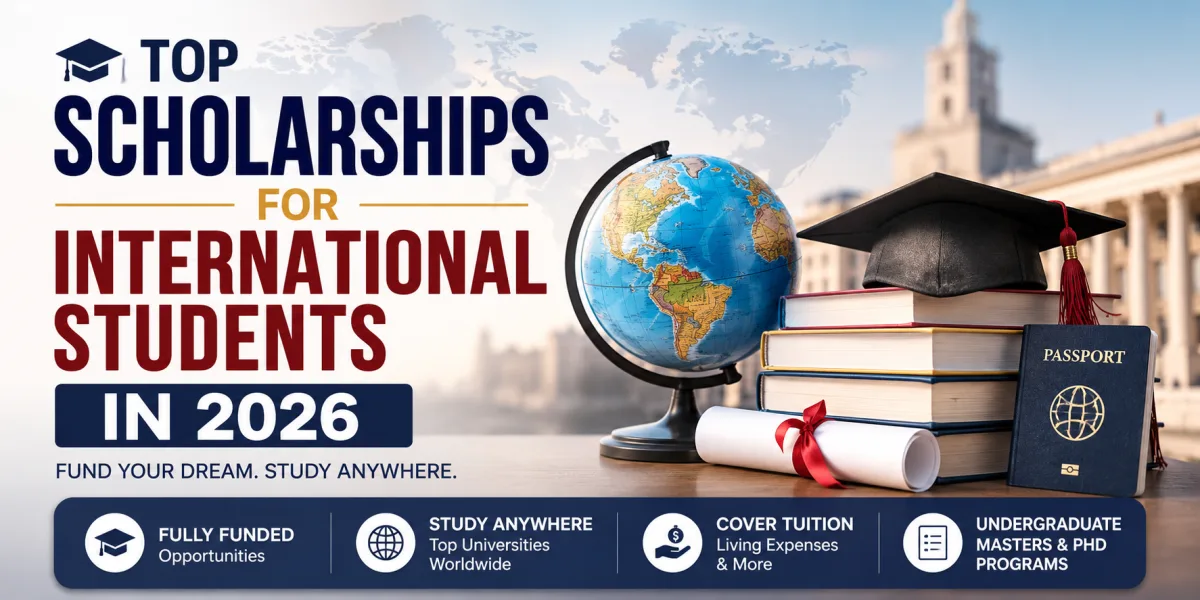
The Scholarship Ladder: Top Scholarships for International Students in 2026
A major international scholarship can change the financial trajectory of a student’s life. It can turn a university that looks impossible into a real option. It can replace years of family sacrifice with funded tuition, living support, travel assistance, research access, and a global academic network. For some students, a scholarship is not a discount. It is the bridge between talent and opportunity.
But scholarships are often misunderstood. Many applicants search for “fully funded scholarships” as if there is one universal list, one annual deadline, and one application formula. The reality is more complicated. The best scholarships differ by country, degree level, citizenship, field of study, leadership profile, income background, career goals, language ability, and admission status. Some are government-funded. Some are university-funded. Some are tied to development goals. Some are for one-year master’s degrees. Some fund research doctorates. Some require students to return home after study. Some require nomination by a university. Some require separate admission to a degree program. Some require the scholarship application first.
In 2026, timing matters especially. As of July 17, 2026, many scholarships for programs beginning in the 2026/27 academic year have already closed. Several major schemes are now moving into selection, while others have opened or are preparing for 2027 entry. That does not make them irrelevant. It means serious applicants should think one admissions cycle ahead. A student who wants to begin a program in late 2027 or 2028 should be planning now, not after deadlines appear.
The most valuable scholarships are not won by students who merely find them. They are won by students who match themselves carefully to the award’s mission, prepare documents early, choose programs strategically, and show why their study plan matters beyond personal advancement.
This article focuses on major scholarship programs that international students should know in 2026. It is not a promise that every student is eligible. It is a practical map of the most important funding ladders: where they lead, who they serve, what they usually require, and how applicants should think about them financially.
What Makes a Scholarship “Top” for International Students?
A top scholarship is not simply the one with the largest stipend. A strong scholarship does several things at once. It reduces or eliminates tuition. It supports living costs. It helps with travel or relocation. It improves visa credibility. It connects the student to a respected network. It aligns with a serious academic or professional goal. It does not leave the student underfunded in a high-cost country.
For international students, full funding matters because tuition is only one part of the cost. A student must also pay for housing, food, health insurance, visa fees, flights, books, deposits, winter clothing, local transport, emergency expenses, and sometimes proof-of-funds requirements. A partial tuition scholarship can be helpful, but it may still leave a large affordability gap.
The best scholarships therefore protect the whole study plan. They make the degree financially sustainable, not merely less expensive.
Another factor is portability. Some awards fund study at one university. Others fund study across a country. Some, such as Erasmus Mundus Joint Masters, support study across multiple institutions and countries. The broader the portability, the more strategic the student must be in choosing programs.
A third factor is mission fit. Scholarships are not charities in the casual sense. They are investments in people who match a mission. Chevening looks for future leaders and influencers connected to the UK. Fulbright is rooted in educational and cultural exchange. DAAD supports academic exchange with Germany. Commonwealth Scholarships focus on students from across the Commonwealth who could not otherwise afford UK study. Australia Awards connect education to development partnerships. A strong applicant does not only show need or grades. They show alignment.
Fulbright Foreign Student Program
The Fulbright Foreign Student Program is one of the most respected international scholarship programs for study and research in the United States. The official Fulbright site states that the program enables graduate students, young professionals, and artists from abroad to study and conduct research in the United States, operates in more than 160 countries, and awards approximately 4,000 foreign students each year.
Fulbright is especially important for students pursuing master’s, doctoral, research, or professional development opportunities in the United States. The exact structure depends on the applicant’s home country. Some countries offer degree funding. Others offer research grants. Some use a placement model where Fulbright helps place the student at a U.S. institution. Others require self-placement or university admission. The official Fulbright application page notes that eligibility, U.S. university admission and placement, and selection procedures vary widely by country.
Fulbright is not only about academic excellence. It values cultural exchange, leadership potential, public impact, and the ability to represent one’s country while building mutual understanding. A technically brilliant applicant with a vague purpose may be weaker than a focused applicant who can explain why the chosen field, U.S. study environment, and future home-country contribution fit together.
The financial value can be significant, but applicants must read country-specific terms carefully. Benefits may include tuition, living stipend, travel, health-related coverage, or other support depending on the commission or embassy program. Because Fulbright is decentralized by country, deadlines can differ widely. A serious applicant should begin by finding the Fulbright office or U.S. embassy information for their country rather than relying on a generic global deadline.
Fulbright is best for students who can articulate an academically serious and socially meaningful project. It is especially strong for applicants who can show that U.S. study will create knowledge, professional capacity, or public benefit that they intend to carry forward after the award.
Chevening Scholarships
Chevening is the United Kingdom government’s flagship global scholarship program for future leaders. It is one of the most recognizable fully funded scholarship routes for one-year master’s study in the UK. The official Chevening scholarship page states that applications are currently closed, which is important for 2026 applicants checking status midyear.
Chevening’s application guidance emphasizes several core requirements: applicants must be citizens of a Chevening-eligible country or territory, commit to returning to their home country for at least two years after the award, hold an undergraduate degree that qualifies them for a UK master’s program, and have at least two years of work experience, defined as 2,800 hours.
The work-experience requirement is one reason Chevening is different from many purely academic scholarships. It is not designed only for the student with the highest marks. It is designed for people who can show leadership, influence, professional maturity, and a credible plan for using UK study to create impact.
Chevening applicants usually need to choose eligible UK master’s courses, write strong essays on leadership, networking, studying in the UK, and career plans, and present a coherent post-study trajectory. The essays matter because Chevening is evaluating the person, not only the degree program.
Financially, Chevening can be transformative because one-year master’s degrees in the UK can be expensive for international students. A fully funded award can remove tuition and living-cost barriers that would otherwise prevent attendance. But the return-home condition matters. Applicants should not treat Chevening as a migration-first strategy. It is built around leadership development and return contribution.
Chevening is best for applicants with a record of leadership, public service, entrepreneurship, professional influence, civic engagement, or sector contribution who want a one-year UK master’s degree tied to a clear future mission.
Erasmus Mundus Joint Masters
Erasmus Mundus Joint Masters are among the most attractive scholarships for students who want an international European degree experience. The European Commission explains that students from all over the world are welcome, that they study at several universities in Europe and beyond, and that full scholarships are available for the best students. Students apply directly to the institution running their chosen program.
The distinctive feature of Erasmus Mundus is mobility. Instead of studying at only one university, students typically move between partner institutions in different countries. This can provide academic breadth, intercultural experience, professional networks, and exposure to multiple education systems. For students interested in international careers, research, policy, sustainability, technology, development, or cross-border industries, that structure can be extremely valuable.
The challenge is that Erasmus Mundus applications are program-specific. There is no single universal application for all courses. Each master’s consortium sets its own academic requirements, documents, deadlines, language expectations, and selection criteria. Some programs may require motivation letters, references, transcripts, proof of English or other languages, CV, passport, ranking of mobility tracks, and sometimes field-specific portfolios or research statements.
Because deadlines often fall months before the academic year begins, applicants should use the Erasmus Mundus course catalogue early and build a shortlist. A common mistake is applying to a famous scholarship name without understanding the specific master’s program. Selection committees want students who fit the academic design of that exact program.
Erasmus Mundus is best for academically strong students who want a structured, multi-country master’s experience and can explain why that specific joint program fits their goals better than a single-university degree.
DAAD Scholarships for Germany
DAAD is Germany’s major academic exchange organization and one of the most important scholarship sources for international students interested in Germany. DAAD funding is broad: master’s study, doctoral research, research stays, arts programs, development-related postgraduate programs, STEM fields, language courses, and country-specific opportunities.
DAAD’s deadlines vary by program, country, and academic level. For example, DAAD Office New York’s deadline calendar for 2026/27 listed different deadlines for architecture, music, master’s studies in all academic disciplines, and other categories. DAAD offices in different regions also publish their own program-specific announcements; DAAD Ukraine, for instance, announced that scholarship programs for 2027/2028 had been updated and that the DAAD portal was open for submissions.
The lesson is that DAAD is not one scholarship. It is a funding ecosystem. Applicants must use the DAAD funding database or their regional DAAD office to identify the right program. A master’s applicant in engineering, a doctoral researcher in history, an artist, and a development-policy professional may all be looking at different DAAD pathways.
Germany can also be financially attractive because many public universities have comparatively low tuition, though living costs, semester fees, health insurance, visa requirements, and proof-of-funds rules still matter. A DAAD scholarship can help make the full package manageable.
DAAD applications often reward academic seriousness, a strong study or research plan, credible motivation for Germany, and evidence that the applicant understands the chosen program. For research applicants, a supervisor connection or research proposal may be central.
DAAD is best for students who have a clear academic or research reason to study in Germany and are willing to navigate a program-specific application landscape rather than searching for one simple global form.
Commonwealth Master’s Scholarships
Commonwealth Master’s Scholarships are a major UK funding route for eligible students from Commonwealth countries. The British Council explains that Commonwealth Scholarships are aimed at students from across the Commonwealth who would not otherwise be able to afford to study in the UK and that the scheme supports future innovators and leaders through postgraduate study.
The official Commonwealth Scholarship Commission page states that applications for Commonwealth Master’s Scholarships for the 2026/27 academic year are now closed, and that the scholarships are for study in the UK beginning in September or October 2026. That status matters for students searching in mid-2026: the relevant window for 2026 entry has passed, but future cycles remain worth preparing for.
Commonwealth Scholarships are especially important because they link postgraduate education to development impact. Applicants usually need to show academic strength, financial need, and a credible plan for how their study will contribute to development in their home country or region.
This is not the right scholarship for a generic application. The strongest candidates connect the course, the development theme, their prior work, and their future contribution. A student applying for public health should show how the degree addresses a real health-system need. A student applying for climate policy should show why the training matters in their national or regional context.
Commonwealth Master’s Scholarships are best for eligible students from Commonwealth countries who need full funding and can present a compelling development-focused case for UK postgraduate study.
Gates Cambridge Scholarship
The Gates Cambridge Scholarship funds outstanding postgraduate students at the University of Cambridge who show academic excellence and commitment to improving the lives of others. The official Gates Cambridge site describes it as an international scholarship program at Cambridge for scholars with a commitment to changing the world for the better.
Gates Cambridge is highly competitive because it combines the prestige of Cambridge with full-cost postgraduate funding and a mission-driven scholar community. The official eligibility page states that applicants can apply if they are citizens of any country outside the United Kingdom and are applying for eligible postgraduate study.
Timing is critical. The Gates Cambridge timeline page states that applications for entry in the 2026/7 academic year are now closed and that applications will open again in September 2026 for entry in the 2027/8 academic year. Applicants should therefore prepare early for the next cycle, especially because Cambridge applications require careful course selection, references, research clarity, and sometimes supervisor contact.
The application is integrated with the University of Cambridge graduate application process. Gates Cambridge explains that applicants submit their application for admission and funding through the University’s Graduate Application Portal, including the Gates Cambridge funding section.
Gates Cambridge is best for students with exceptional academic records, a strong fit with a Cambridge postgraduate program, leadership or service evidence, and a persuasive commitment to improving lives beyond personal career advancement.
Rhodes Scholarship
The Rhodes Scholarship is one of the oldest and most prestigious international postgraduate scholarships in the world. The Rhodes Trust states that the scholarship enables outstanding young people from around the world to undertake full-time postgraduate study at the University of Oxford.
As of July 2026, Rhodes Trust information states that applications for the Rhodes Scholarship 2027 are open, with applications made this year for entry to Oxford in October 2027. This is a useful example of scholarship timing: students applying in 2026 may be applying for 2027 entry, not immediate 2026 enrollment.
The Rhodes Scholarship is not only an academic prize. It looks for intellectual distinction, leadership, character, service, courage, and commitment to making a difference. Applicants often need to apply through a constituency based on citizenship, residency, or region, and eligibility rules differ by constituency.
Because Rhodes is so competitive, applicants should not treat it as a standalone funding plan. It should be part of a broader scholarship portfolio. A serious Rhodes applicant may also apply for Clarendon, university departmental funding, national scholarships, and other Oxford funding routes.
Rhodes is best for applicants with exceptional academic records, demonstrated leadership, service orientation, and a coherent reason to pursue postgraduate study at Oxford.
Clarendon Fund at Oxford
The Clarendon Fund is one of Oxford’s most important graduate scholarship programs. The University of Oxford states that Clarendon offers over 200 new fully funded scholarships each year to outstanding graduate scholars and has no nationality restrictions.
Clarendon is powerful because applicants are generally considered through the Oxford graduate admissions process when they apply by the relevant course deadline. This means students do not always need a separate standalone scholarship application, although they must apply correctly and on time for their chosen course.
The no-nationality-restriction feature makes Clarendon especially important for international students who may not be eligible for country-specific awards. It is also valuable across disciplines, making it broader than many field-limited scholarships.
Clarendon is best for academically outstanding applicants to Oxford graduate programs who want full funding and can meet the December or January course deadlines that often determine scholarship consideration.
Australia Awards Scholarships
Australia Awards Scholarships are funded by the Australian government and target students from participating countries, especially in the Indo-Pacific and selected development partner regions. The official Department of Foreign Affairs and Trade page directs applicants to country information, participating countries, opening and closing dates, and participating institutions.
For the 2027 intake, DFAT’s opening and closing dates page listed many country application windows opening on February 1, 2026 and closing on April 30, 2026, though dates vary by country. As of July 2026, many of those 2027 intake windows have closed, so students should monitor their country page for future intake announcements.
Australia Awards are not simply scholarships for any international student who wants to study in Australia. They are connected to Australia’s development partnerships and country priorities. Applicants typically need to show how their study will contribute to development outcomes after returning home.
This makes country-specific research essential. A health professional from one country, an agriculture specialist from another, and a public administration applicant from a third may face different priority fields and selection expectations.
Australia Awards are best for students from participating countries whose career goals align with development priorities and who can show a strong plan to use Australian education for home-country or regional impact.
Japanese Government MEXT Scholarship
The Japanese Government MEXT Scholarship is a major pathway for international students who want to study in Japan. The official Study in Japan page for the 2026 Embassy Recommendation route states that applicants must read the application guidelines and submit required documents, including application forms, certificate of health, and recommendation letter, to the Japanese embassy or consulate general in their country.
MEXT is attractive because it can support different levels of study depending on category, including undergraduate, research, master’s, doctoral, specialized training, and Japanese studies routes. However, the exact categories and procedures vary by country and year. Some students apply through embassy recommendation, while others may apply through university recommendation.
The embassy-recommendation process often includes document screening, exams, interviews, placement steps, and final approval. Osaka University’s MEXT information explains that embassy-recommended scholarship recipients are recruited and initially screened by the Japanese embassy or consulate general depending on the country.
MEXT is best for students with a strong reason to study in Japan, a suitable academic plan, and the patience to navigate a multi-stage government scholarship process. For research applicants, clarity of research proposal and fit with Japanese universities can be especially important.
France Excellence Eiffel Scholarship
The France Excellence Eiffel Scholarship Program is funded by the French Ministry for Europe and Foreign Affairs and is designed to help French higher education institutions attract top foreign students to master’s and PhD programs. Campus France states that the 2026 call for applications was open and describes the program’s purpose as enabling French institutions to attract top foreign students.
The Eiffel scholarship is different from many scholarships because students are generally nominated by French higher education institutions rather than applying independently in the same way they might for other awards. That means the first strategic step is often identifying French programs and institutions that fit the applicant’s academic profile and can support the nomination process.
Euraxess information on the 2026 Eiffel scholarships notes that candidates from all nationalities except France can apply, with age limits applying at master’s and doctoral levels.
Eiffel is best for high-performing students who want to study in France, especially in fields prioritized by the program, and who can secure support from a French institution willing to put them forward.
How to Build a Scholarship Portfolio
The strongest students do not rely on one scholarship. They build a portfolio of possible funding sources. This includes global awards, country-specific awards, university scholarships, departmental funding, research assistantships, graduate assistantships, external foundations, employer sponsorship, and partial awards that can be stacked if rules allow.
A scholarship portfolio should include three types of opportunities. The first is reach scholarships: highly prestigious, fully funded, extremely competitive awards such as Rhodes, Gates Cambridge, Fulbright, Chevening, Erasmus Mundus, Commonwealth, DAAD, MEXT, Australia Awards, or Eiffel. The second is fit scholarships: awards tied closely to your country, field, identity, leadership area, or university. The third is practical scholarships: smaller awards, tuition discounts, assistantships, and departmental grants that may not cover everything but can close a funding gap.
Students often make the mistake of applying only to famous awards. Fame usually means competition. A less famous scholarship that fits your field and country may be more realistic than a global award with thousands of applicants.
The ideal funding plan asks: What full scholarships match my profile? What university-level awards are automatic if I apply by the deadline? What departmental funding exists? What country-specific awards apply to my citizenship? What smaller awards can reduce living costs, travel, or fees? What backup countries offer lower tuition if full funding does not arrive?
The Scholarship Calendar: Why 2026 Applicants Must Think Ahead
International scholarships often close long before the academic year starts. Some 2026/27 scholarships closed in late 2025. Some 2027 intake scholarships opened in early 2026. Some 2027/28 scholarships will open in late 2026. This timing surprises students who begin searching after university admission offers arrive.
For many top awards, the scholarship application is not the last step. It is the first gate. Chevening, Commonwealth, Fulbright, DAAD, Australia Awards, and MEXT may require applications months before travel. Gates Cambridge and Clarendon are tied to early university application deadlines. Erasmus Mundus deadlines are controlled by each consortium. Rhodes applications in 2026 are for Oxford entry in October 2027.
A serious applicant should build a 12-to-18-month calendar. If the goal is to start study in September 2027, preparation should begin in mid-2026. If the goal is 2028, preparation should begin even earlier for exams, publications, research proposals, language tests, and leadership evidence.
The calendar should include language test dates, transcript requests, passport renewal, referee outreach, university deadlines, scholarship deadlines, interview windows, admission decisions, visa timelines, and financial-document deadlines. Scholarships are won through preparation, not last-minute inspiration.
What Scholarship Committees Are Really Buying
A scholarship committee is not buying a student’s dream. It is investing in a person whose education is expected to produce value. That value may be academic, scientific, public, civic, diplomatic, professional, cultural, or developmental. The applicant must make the investment case clear.
There are usually five parts to that case. First, academic readiness: can you succeed in the program? Second, mission fit: do you match the scholarship’s purpose? Third, future impact: what will you do with the opportunity? Fourth, credibility: does your past behavior support your claims? Fifth, clarity: can the committee understand your story quickly?
Many students write applications that are emotionally sincere but strategically weak. They say they are passionate, hardworking, and deserving. Those qualities matter, but they are not enough. A strong application shows evidence: projects completed, research conducted, communities served, leadership taken, problems studied, results achieved, obstacles overcome, and future plans made specific.
Scholarships reward potential, but potential becomes convincing when it is anchored in proof.
How to Choose Which Scholarship to Prioritize
Choosing scholarships is a resource-allocation decision. Applications take time. References take goodwill. Essays take revision. Tests cost money. Applying everywhere without strategy can weaken every application.
Prioritize scholarships where you meet eligibility clearly. Do not waste time applying to awards where your citizenship, age, degree level, field, or experience does not fit. Next, prioritize awards where your story matches the mission. A development-focused scholarship may be stronger for someone with a public-impact career plan than for someone with only private career goals. A research scholarship may be stronger for someone with a clear proposal and supervisor fit. A leadership scholarship may be stronger for someone with demonstrated influence.
Then consider financial completeness. A full-cost scholarship is more valuable than a partial award if the remaining gap is unaffordable. But a partial award at a lower-cost country may be more realistic than a full scholarship in a very competitive destination.
Finally, consider the long-term network. Some scholarships provide communities that matter for decades. Fulbright, Chevening, Rhodes, Gates Cambridge, Erasmus Mundus, DAAD, Commonwealth, Australia Awards, and MEXT all carry reputational and network value beyond the tuition bill.
Common Mistakes International Students Make
The first mistake is starting too late. By the time many students begin searching, the best deadlines have already passed. Scholarship planning should begin before admission season.
The second mistake is using one generic essay for every award. Committees can recognize recycled applications. Every scholarship has a mission, and the application must speak to that mission.
The third mistake is ignoring eligibility details. Age limits, citizenship rules, work experience, return-home commitments, field priorities, language requirements, and admission deadlines can eliminate otherwise strong candidates.
The fourth mistake is applying to programs before understanding cost. A partial scholarship may still leave a student unable to afford housing, visa proof, flights, or health insurance.
The fifth mistake is choosing referees based only on title. A famous professor who barely knows you may write a weaker letter than a supervisor who can describe your work in detail.
The sixth mistake is treating scholarship essays as autobiography. Committees do not need every life event. They need a focused argument: who you are, what you have done, what you will study, why it matters, and why this scholarship is the right vehicle.
The seventh mistake is underestimating interviews. Many top scholarships involve interviews that test clarity, maturity, judgment, and mission fit. A brilliant written application can fail if the applicant cannot explain their choices aloud.
The Financial Strategy Behind Scholarship Applications
Scholarship applications should be treated like financial planning. A student is trying to finance a high-cost asset: education. That requires comparing cost, funding probability, and return.
Start with the total cost of attendance, not tuition alone. Add living expenses, travel, visa costs, health insurance, deposits, books, relocation costs, and emergency reserves. Then subtract confirmed funding. The gap is the real affordability problem.
Next, compare the degree’s likely economic and professional return. A fully funded degree in a strong program can be a major wealth-building opportunity because the student gains human capital without taking on crushing debt. A partially funded degree that requires large loans in a low-earning field may be financially dangerous. A lower-ranked but fully funded program may be wiser than a prestigious unfunded offer.
Scholarship success can also reduce family financial pressure. In many countries, international education is funded by family savings, land sales, debt, or high-interest borrowing. A full scholarship can protect household wealth while expanding opportunity.
That is why scholarship strategy belongs in financial education. It is not only an academic exercise. It is a capital-allocation decision that can affect a family’s balance sheet for years.
How to Strengthen Your Application in 2026
Begin with academic documents. Request transcripts early. Make sure names, dates, grading scales, and translations are correct. If your university takes weeks to issue documents, build that delay into the calendar.
Prepare a serious CV. Scholarship CVs should emphasize academic achievement, leadership, work experience, research, publications, service, awards, projects, and measurable outcomes. They should not read like a generic job resume.
Develop a coherent study plan. Know why you are choosing the country, university, program, and specialization. Avoid vague claims such as “world-class education.” Explain what the program offers that directly connects to your goals.
Choose referees early. Give them your CV, draft essays, program information, scholarship mission, and deadline. A good reference letter takes time and context.
Write essays in layers. The first draft clarifies ideas. The second draft improves structure. The third draft removes clichés. The fourth draft sharpens evidence. Strong essays rarely appear in one sitting.
Prepare for interviews by practicing concise answers. Be ready to explain your field, your leadership, your failures, your country context, your career goals, and why this scholarship matters. Interviewers are not looking for memorized speeches. They are looking for judgment.
The Top Scholarship Fit by Student Profile
For students seeking the United States, Fulbright should be one of the first programs to investigate because it operates in more than 160 countries and supports graduate study and research.
For students seeking a one-year master’s in the United Kingdom with leadership and return-home commitments, Chevening is a major target.
For students seeking multi-country European master’s study, Erasmus Mundus Joint Masters are among the strongest options.
For students focused on Germany, DAAD should be central, but applicants must use the right country and program-specific deadline.
For Commonwealth-country students who could not otherwise afford UK postgraduate study, Commonwealth Master’s Scholarships are highly relevant.
For exceptional postgraduate applicants to Cambridge with a mission to improve lives, Gates Cambridge is a major full-cost scholarship route.
For outstanding future leaders seeking Oxford postgraduate study, Rhodes remains one of the world’s most prestigious awards.
For academically outstanding Oxford graduate applicants across nationalities, Clarendon is crucial because it offers more than 200 fully funded scholarships annually with no nationality restrictions.
For students from participating countries aligned with development priorities, Australia Awards can be transformative.
For students who want Japan and can navigate embassy or university recommendation routes, MEXT is one of the most important government scholarship pathways.
For students targeting France through nominated institutional applications, the Eiffel Excellence Scholarship is a high-profile option.
The Real Lesson: Scholarships Reward Preparation Before Talent
Talent matters. Grades matter. Leadership matters. But preparation often separates the funded student from the disappointed one. Many capable students lose because they start late, misunderstand eligibility, write generic essays, miss document requirements, or apply to programs that do not fit their profile.
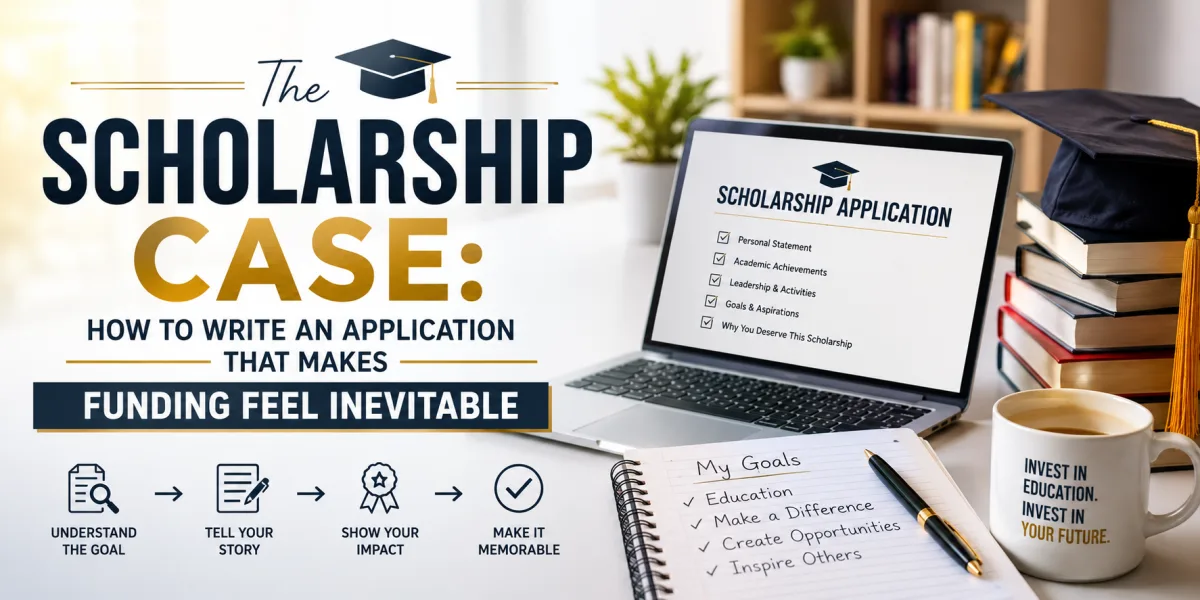
A scholarship application is a financial campaign. It requires research, positioning, documents, deadlines, references, proof, and follow-through. The student is not merely asking for help. The student is presenting a case for investment.
The strongest applicants know what they want to study, why it matters, how the scholarship’s mission fits, what they have already done, and what they will do after the degree. They can connect personal story to public purpose. They can show both humility and ambition. They can explain why funding them is not only generous, but wise.
International education can be expensive enough to reshape a family’s finances. Scholarships can reverse that equation. Instead of debt, they can create mobility. Instead of financial strain, they can create human capital. Instead of a closed door, they can create a funded path.
The top scholarships in 2026 are not only opportunities. They are tests of readiness. Students who treat them seriously, begin early, and match themselves intelligently to each award give themselves the best chance of turning academic ambition into funded reality.
 Article
 Article
 Article
 Article
 Article
 Article
 Article
 Article