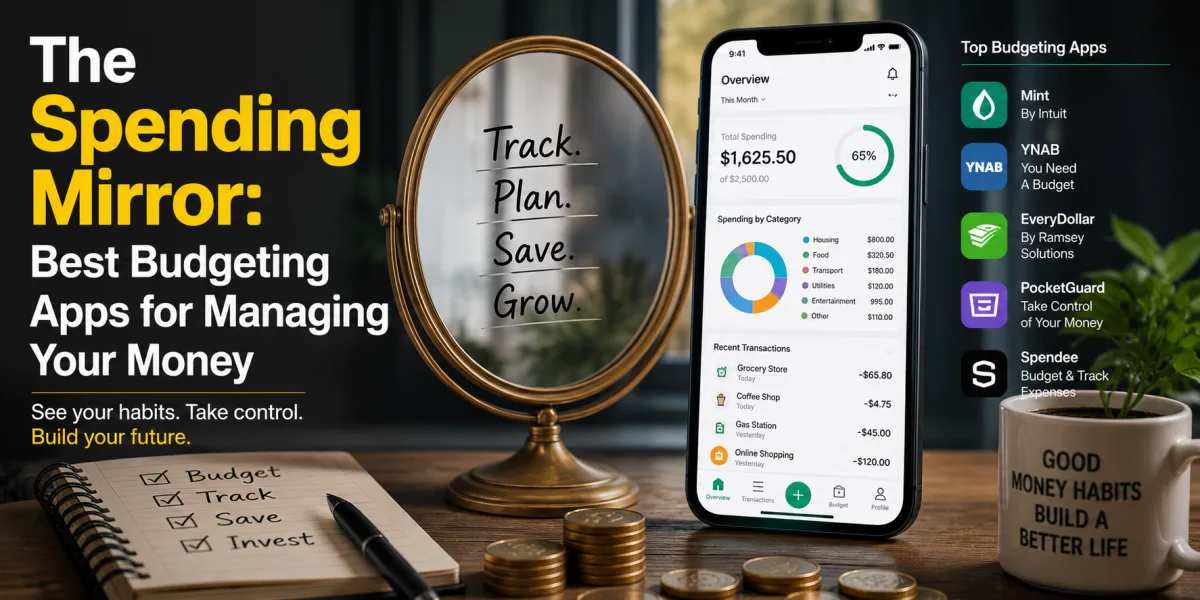
The Spending Mirror: Best Budgeting Apps for Managing Your Money
A budgeting app does not make someone good with money. It makes their money visible. That visibility can be powerful because many financial problems begin in the dark. Subscriptions renew quietly. Credit card balances rise gradually. Groceries cost more than expected. Small purchases scatter across accounts. Income arrives, disappears, and leaves only a vague feeling that something should have been saved.
The best budgeting apps act like a financial mirror. They show where money goes, what bills are coming, whether spending matches priorities, and how today’s decisions affect future goals. But a mirror only helps if the person looking into it is willing to respond. A budgeting app can organize information, but it cannot create discipline by itself.
This is why choosing the right app matters. Some people need a strict zero-based budget that tells every dollar where to go. Others need a simple spending tracker that warns them before they overspend. Couples may need shared visibility. Freelancers may need cash-flow forecasting. Investors may want net-worth tracking. People paying off debt may need payoff plans and category limits. A beginner may need simplicity more than advanced reports.
The budgeting-app market has changed substantially since Mint shut down and users began looking for alternatives. WalletHub noted in 2025 that Mint was no longer available and that Intuit steered users toward Credit Karma, which lacks some of Mint’s traditional budgeting features.
As of 2026, the leading budgeting apps are no longer trying to be identical. YNAB focuses on active zero-based budgeting. Monarch Money focuses on household collaboration and broad financial tracking. PocketGuard focuses on showing what is safe to spend. EveryDollar emphasizes zero-based budgeting with a simple Ramsey-style system. Quicken Simplifi offers a lower-cost paid tracker with spending plans. Goodbudget brings the envelope method into a digital format. Empower is useful for people who want a free dashboard that combines budgeting and investment visibility.
The best budgeting app is not the one with the longest feature list. It is the one you will actually use when the month becomes messy.
What a Budgeting App Should Actually Do
A budgeting app should help answer a few practical questions. How much money came in? Where did it go? What bills are still coming? Which categories are under pressure? How much can be safely spent before the next paycheck? Are savings goals moving forward? Is debt shrinking or only being shuffled? Is net worth rising over time?
Different apps answer those questions in different ways. Some connect automatically to bank accounts and credit cards. Some require manual entry. Some forecast future cash flow. Some focus only on monthly spending. Some include investments. Some help couples collaborate. Some are better for people who hate budgeting and need a simple number. Others are better for people who want detailed control.
A budgeting app should also reduce decision fatigue. If you must rebuild the system every week, the app will not last. Good budgeting software should make the next right action easier: spend less in one category, move money to another, pay a bill, transfer to savings, or pause before buying.
The app should also protect your attention. A beautiful dashboard that creates guilt but no action is not useful. A simpler app that changes one spending habit may be more valuable than a sophisticated platform ignored after two weeks.
YNAB: Best for People Who Need a Behavioral Reset
YNAB, short for You Need a Budget, is one of the strongest budgeting apps for people who want to change how they handle money, not merely observe it. It is built around zero-based budgeting, which means every dollar gets assigned a job: rent, groceries, debt payoff, emergency savings, travel, insurance, or future bills.
YNAB’s pricing page lists the annual plan at $109 per year, equivalent to $9.08 per month when paid annually, and the monthly plan at $14.99 per month, plus applicable tax. It also offers a 34-day free trial.
The strength of YNAB is that it is active. It forces the user to make decisions before spending. Instead of looking backward and saying, “Where did the money go?” YNAB encourages the user to decide where money should go before it leaves. That makes it especially helpful for people who earn enough but still feel behind, people trying to break paycheck-to-paycheck cycles, and people who need to stop relying on credit cards as a buffer.
The weakness is that YNAB requires participation. It is not a passive tracking app. Users must learn the method, maintain categories, adjust when life changes, and engage with the budget regularly. For some, that discipline is exactly the point. For others, it may feel like too much work.
YNAB is best for people who want a serious budgeting system, are willing to interact with their money often, and need to build stronger spending awareness. It is less ideal for someone who wants a free, passive overview or a lightweight app that requires little maintenance.
Monarch Money: Best for Couples and Full Financial Visibility
Monarch Money has become a major Mint replacement because it offers broad financial tracking, account syncing, budgeting tools, investment visibility, net-worth tracking, and shared household access. NerdWallet’s 2026 budgeting-app review says Monarch Money stands out for robust features and customizable budgeting tools, and notes that it works well for singles or couples because a household member can be added to the same subscription at no extra cost.
Monarch’s own pricing page emphasizes account syncing, spending optimization, investment analysis, and a policy of not selling financial data.
Monarch is especially useful for couples because shared money management is rarely just about math. It is about visibility, trust, and coordination. One partner may handle bills while the other handles groceries. One may be more detail-oriented. One may hate spreadsheets. A shared app can reduce the “I thought you paid that” problem and create a single view of household finances.
Monarch is also strong for people who want to track more than a monthly budget. It can help users monitor accounts, spending, investments, net worth, recurring transactions, and goals. That makes it useful for households whose finances are too complex for a simple envelope app but not complex enough to require professional financial-planning software.
The trade-off is cost and complexity. A person with a simple checking account, one credit card, and a basic savings goal may not need a premium household dashboard. Monarch is best for people who will actually use its broader view.
PocketGuard: Best for People Who Need a Simple “Can I Spend This?” Answer
PocketGuard is built around a simple psychological need: knowing how much money is safe to spend after bills, goals, and necessities are considered. Its “In My Pocket” approach is designed for people who do not want to manage every category in detail but need a clear warning before overspending.
PocketGuard’s pricing page describes the paid plan as costing $6.25 per month when billed annually. Other current app comparisons list PocketGuard Plus at $12.99 per month or $74.99 per year, showing why users should verify pricing directly before subscribing.
PocketGuard is useful for people whose main issue is not philosophical budgeting but daily spending control. They want to know whether they can afford dinner out, another online order, a weekend trip, or a larger purchase before the next payday. The app can also help identify recurring bills and subscriptions, which is valuable because subscription creep is one of the quietest forms of budget leakage.
PocketGuard is less ideal for someone who wants deep customization, household planning, or a strict zero-based method. It is not trying to be a full financial command center. Its strength is simplicity.
For people overwhelmed by detailed budgets, simplicity may be exactly what works.
EveryDollar: Best for Simple Zero-Based Budgeting
EveryDollar is a budgeting app connected to the Ramsey Solutions approach. It is designed around zero-based budgeting, but with a simpler interface than some more advanced budgeting systems. The free version allows manual budgeting, while the premium version adds features such as bank syncing, paycheck planning, savings goals, and debt-payoff planning.
EveryDollar’s help center states that Premium costs $17.99 per month or $79.99 per year after a free trial.
EveryDollar is best for people who like a straightforward plan and want to assign income to categories without getting lost in reports. It may be especially attractive to people following a debt-payoff strategy, building an emergency fund, or trying to move from financial chaos to monthly order.
The app’s worldview matters. EveryDollar is connected to a financial philosophy that prioritizes budgeting, debt reduction, emergency savings, and intentional spending. Some users appreciate that structure. Others may prefer a more flexible tool that does not carry a particular financial doctrine.
EveryDollar is strongest for people who want simplicity, a guided method, and a clear monthly plan. It is weaker for users who want advanced investment tracking, deep customization, or a more neutral financial dashboard.
Quicken Simplifi: Best Lower-Cost Paid Budgeting App
Quicken Simplifi is a strong option for people who want a paid budgeting and tracking tool without the higher annual price of some competitors. Quicken’s pricing page lists Simplifi as starting at $3.99 per month, billed annually, though promotional and renewal pricing can vary. Forbes Advisor’s 2026 review lists Simplifi at $5.99 per month or $95 per year billed annually, which shows why consumers should check the current price before committing.
Simplifi is designed for people who want spending tracking, reports, watchlists, cash-flow insight, and goal monitoring without adopting a strict budgeting doctrine. It can be useful for people who want to understand patterns and make adjustments but do not want every dollar assigned manually.
This makes Simplifi a strong middle-ground app. It is more robust than a basic spending tracker but may feel less demanding than YNAB. It can help users monitor subscriptions, spending categories, income, and upcoming bills.
Simplifi is best for people who want a polished, lower-cost paid app with broad money visibility. It is less ideal for users who want a free app, a manual envelope method, or a highly collaborative household platform.
Goodbudget: Best for Digital Envelope Budgeting
Goodbudget is built around the envelope method, one of the oldest and most understandable budgeting systems. The idea is simple: divide money into envelopes for categories such as groceries, rent, transport, giving, savings, debt, and entertainment. When an envelope is empty, spending in that category stops unless money is moved from another envelope.
Goodbudget describes itself as a home budget app for Android, iPhone, and the web, focused on helping people spend, save, and give toward what matters. Experian’s budgeting-app review notes that Goodbudget has a free basic tier and a premium tier costing $80 annually, and highlights its envelope-based approach for shared budgeting.
Goodbudget can be powerful because it makes trade-offs visible. If the dining-out envelope is empty, the user must decide whether to stop spending or take money from another goal. That decision is the heart of budgeting. Money cannot do everything at once.
The app is especially useful for people who like manual awareness. Automatic syncing can be convenient, but manual entry forces attention. For people trying to rebuild spending discipline, that friction can be beneficial.
Goodbudget is best for envelope-budgeting fans, couples or families who want shared category visibility, and people who prefer a simple method. It is less ideal for users who want automatic bank syncing on the free plan or advanced net-worth tracking.
Empower: Best Free Dashboard for Net Worth and Investments
Empower is not primarily a strict budgeting app in the same way YNAB or EveryDollar is. It is better understood as a free financial dashboard that combines spending, cash flow, net worth, and portfolio analysis. Empower’s budgeting and cash-flow page describes tools for adjusting budgets, tracking cash flow over time, and monitoring spending in one place.
Empower’s Google Play listing describes the free Empower Dashboard as a way to reduce spreadsheet work and gain financial clarity.
Empower is especially useful for people whose financial life includes investments, retirement accounts, and net-worth tracking. A person who wants to see spending and portfolio movement in one place may find it valuable. It can also be useful for people who want a free alternative to paid budgeting apps and are comfortable with a broader financial dashboard.
The limitation is that Empower may not provide the same hands-on budgeting discipline as YNAB, EveryDollar, or Goodbudget. It can show what is happening, but it may not force category-level decisions in the same way.
Empower is best for people who want free visibility across spending and investments. It is less ideal for someone whose main problem is daily overspending and who needs strict guardrails.
Which App Is Best by Money Personality?
The best budgeting app depends less on features than on behavior. A spender who avoids money needs a different tool from a planner who loves detail. A couple needs a different system from a single freelancer. A debt-payoff household needs different support from an investor tracking net worth.
If you need a full behavior change, YNAB is the strongest candidate because it requires active decisions and forces every dollar into a plan.
If you manage money with a partner, Monarch Money is one of the strongest choices because it supports household collaboration and broad financial visibility.
If you mostly need to prevent overspending, PocketGuard is useful because it simplifies the question to what remains available after obligations.
If you want a simple zero-based budget with a guided system, EveryDollar is a practical option, especially if you are focused on debt payoff and monthly discipline.
If you want a lower-cost paid tracker with reports and spending plans, Quicken Simplifi deserves comparison.
If you like the envelope method and do not mind manual entry, Goodbudget is a strong fit.
If you want free net-worth and investment visibility more than strict budgeting rules, Empower is a useful dashboard.
The Privacy Question
Budgeting apps ask for sensitive information. They may connect to bank accounts, credit cards, loans, investments, income records, spending patterns, and personal goals. That data can reveal far more than balances. It can reveal where you shop, where you travel, what subscriptions you use, whether you are paying medical bills, whether you give to charities, whether debt is rising, and whether income is unstable.
This makes privacy and security part of the app decision. Users should review data-sharing policies, security practices, authentication features, account-connection methods, and whether the company sells or uses data for advertising. Monarch’s pricing page explicitly states that it does not sell users’ financial data, positioning privacy as part of its value proposition.
Regulators have also paid attention to consumer financial data access. The CFPB finalized a personal financial data rights rule in 2024 intended to give consumers more control over access to data associated with bank accounts, credit cards, mobile wallets, payment apps, and other financial products.
The practical rule is simple: do not connect sensitive accounts to an app you do not trust. Use strong passwords, enable multi-factor authentication, avoid public Wi-Fi for financial apps, and review connected accounts regularly. Convenience should not come at the cost of careless data exposure.
Free Apps Versus Paid Apps
Free budgeting apps can be useful, especially for beginners. A free app, spreadsheet, or bank-provided tracker is better than no system at all. But free tools often come with trade-offs: fewer features, weaker support, ads, product recommendations, limited sync, or less customization.
Paid apps must justify their cost. A $109 annual YNAB subscription is worthwhile only if it changes behavior enough to save or redirect more than that. A $99 or similar Monarch subscription may be worthwhile for households that use its shared dashboard and planning tools. A lower-cost app like Simplifi may be enough for users who need tracking more than intensive budgeting.
The mistake is judging apps only by price. A free app that does not change behavior is expensive in hidden ways. A paid app that helps eliminate overdrafts, reduce credit card debt, cancel unused subscriptions, or increase savings may pay for itself quickly.
Still, no one should pay for features they will not use. If a spreadsheet works and you maintain it, that may be the best budgeting tool. The purpose is control, not subscription accumulation.
Budgeting Apps for Couples
Couples need more than categories. They need shared expectations. Money disagreements often come from different assumptions about what is affordable, what counts as necessary, how fast debt should be paid, how much should be saved, and how much personal spending is fair.
Monarch Money is strong for couples because NerdWallet notes that a household member can be added to the same subscription at no extra cost. Goodbudget can also work well for couples who like envelope budgeting and shared category tracking.
The best app for a couple is the one that reduces blame. A shared budget should not become surveillance. It should create a common map. Each partner should be able to see bills, savings goals, spending categories, and upcoming pressure points. Many couples also benefit from personal spending categories, where each person has money they can spend without debate.
The app matters, but the weekly money conversation matters more. A couple that reviews money together for 20 minutes each week will usually do better than a couple with the perfect app and no communication.
Budgeting Apps for Debt Payoff
For debt payoff, the best app is one that creates both visibility and pressure. The user needs to see minimum payments, due dates, interest rates, total balances, and progress over time. They also need to stop creating new debt while paying off old debt.
EveryDollar can be useful for debt payoff because its premium version includes debt-payoff planning, and its broader system is designed around intentional monthly budgeting. YNAB can also be powerful because it forces users to plan spending with money they actually have, reducing reliance on credit cards. PocketGuard may help users identify money available for debt reduction by clarifying what remains after bills and necessities.
Debt payoff requires more than tracking. It requires a system for avoiding new balances. A budgeting app should help identify the categories causing debt: food delivery, car costs, subscriptions, travel, childcare gaps, medical bills, income instability, or emergencies. Paying off debt without identifying the cause often leads to repeat borrowing.
Budgeting Apps for Irregular Income
People with irregular income need a different budgeting mindset. Freelancers, gig workers, salespeople, seasonal workers, and small business owners cannot always build a budget around the same paycheck every two weeks. They need cash-flow planning and buffers.
YNAB can work well for irregular income because it encourages users to budget only dollars already received, not hoped-for income. Monarch and Simplifi may also help irregular-income households by tracking cash flow and future obligations.
The key is building a one-month buffer. Irregular earners should aim to use this month’s income to fund next month’s expenses. That reduces panic and prevents every delayed invoice from becoming a crisis. A budgeting app should help separate taxes, operating expenses, personal spending, and savings goals.
Budgeting Apps for Beginners
Beginners often need simplicity, not perfection. The first goal is awareness: what comes in, what goes out, what bills are due, and where the leaks are. Too much complexity can cause abandonment.
PocketGuard is a good beginner option for people who want a simple safe-to-spend number. EveryDollar can work for beginners who want a straightforward zero-based budget. Goodbudget can work for beginners who like the envelope method and want a concrete sense of limits.
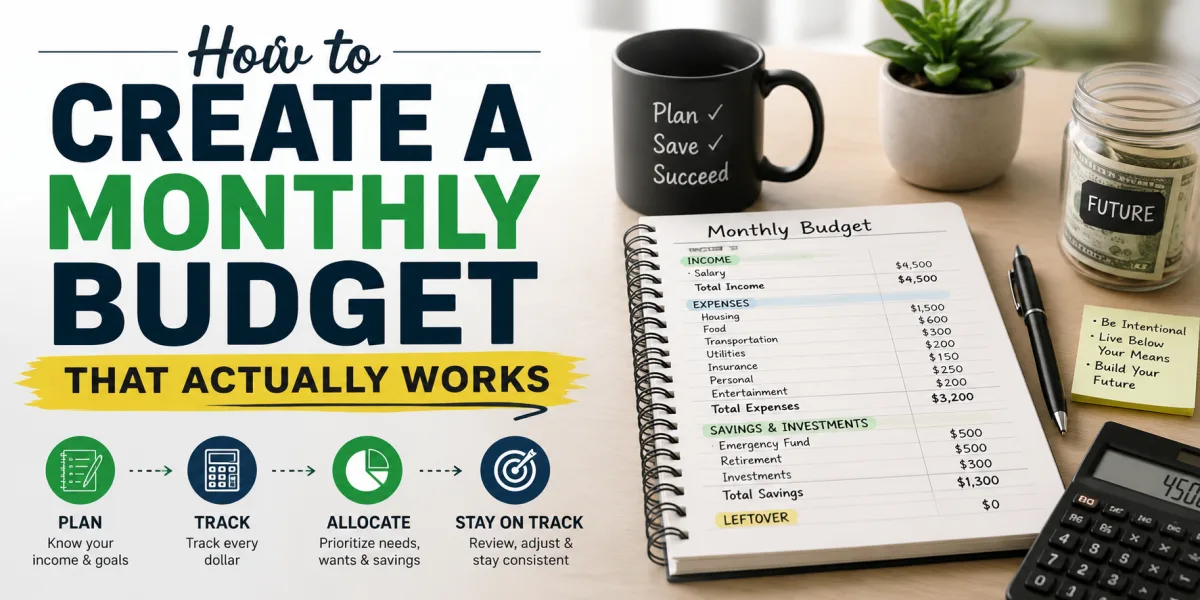
A beginner should not try to build 80 categories. Start with essentials: housing, utilities, food, transport, debt, insurance, savings, subscriptions, and discretionary spending. The first month is for learning. The second month is for adjusting. The third month is for improving.
When a Spreadsheet Is Better Than an App
A spreadsheet can still be the best budgeting tool for some people. It is flexible, cheap, private, and fully customizable. People who enjoy detail may prefer a spreadsheet because it forces them to engage with every number.
A spreadsheet is especially useful for people who do not want to connect financial accounts to third-party apps, people with highly customized budgets, and people who already have strong discipline. It is less useful for people who never update it or need automatic transaction tracking.
The budgeting tool does not need to be modern to be effective. It needs to be used. A notebook budget maintained every week is better than an advanced app ignored after the trial period.
How to Choose the Right App
Start with your main financial problem. If your problem is overspending, choose an app that creates limits and warnings. If your problem is lack of awareness, choose an app with strong tracking. If your problem is relationship coordination, choose an app that supports shared budgeting. If your problem is debt, choose one with payoff planning and category discipline. If your problem is net-worth tracking, choose a dashboard that includes investments and assets.
Then decide how much effort you are willing to give. YNAB and envelope systems reward active participation. PocketGuard and Empower are more passive. Monarch and Simplifi sit in the middle, offering broad visibility with different levels of customization.
Next, compare cost against likely benefit. If an app helps you cancel $40 per month of unused subscriptions, the subscription may be worth it. If it only gives you another dashboard to ignore, it is not.
Finally, test before committing. Use the free trial. Connect accounts carefully. Build categories. Review one full month. Ask whether the app made decisions easier. If it did not, try another tool.
The Budgeting App Rule: Behavior First, Software Second
The best budgeting app cannot overcome a refusal to look at money. It cannot make income stretch forever. It cannot fix a lifestyle that is structurally larger than income. It cannot pay off debt if new debt is created every month. It cannot build savings if every surplus dollar is treated as available for spending.
What it can do is make the truth harder to avoid. It can show that groceries are rising. It can reveal that subscriptions cost more than expected. It can show that credit card payments are crowding out savings. It can prove that a raise disappeared into lifestyle inflation. It can show that the emergency fund is finally growing.
That truth is where change begins.
For serious behavior change, YNAB is one of the strongest options. For couples and full financial visibility, Monarch Money stands out. For a simple spending guardrail, PocketGuard is useful. For zero-based budgeting with a straightforward system, EveryDollar deserves consideration. For a lower-cost paid tracker, Simplifi is practical. For digital envelopes, Goodbudget remains relevant. For free net-worth and investment visibility, Empower is useful.
The right app is the one that turns money from a mystery into a managed system. Once spending is visible, choices become clearer. Once choices become clearer, progress becomes possible. A budgeting app is not the plan. It is the instrument panel. The driver still has to steer.
 Article
 Article
 Article
 Article
 Article
 Article
 Article
 Article