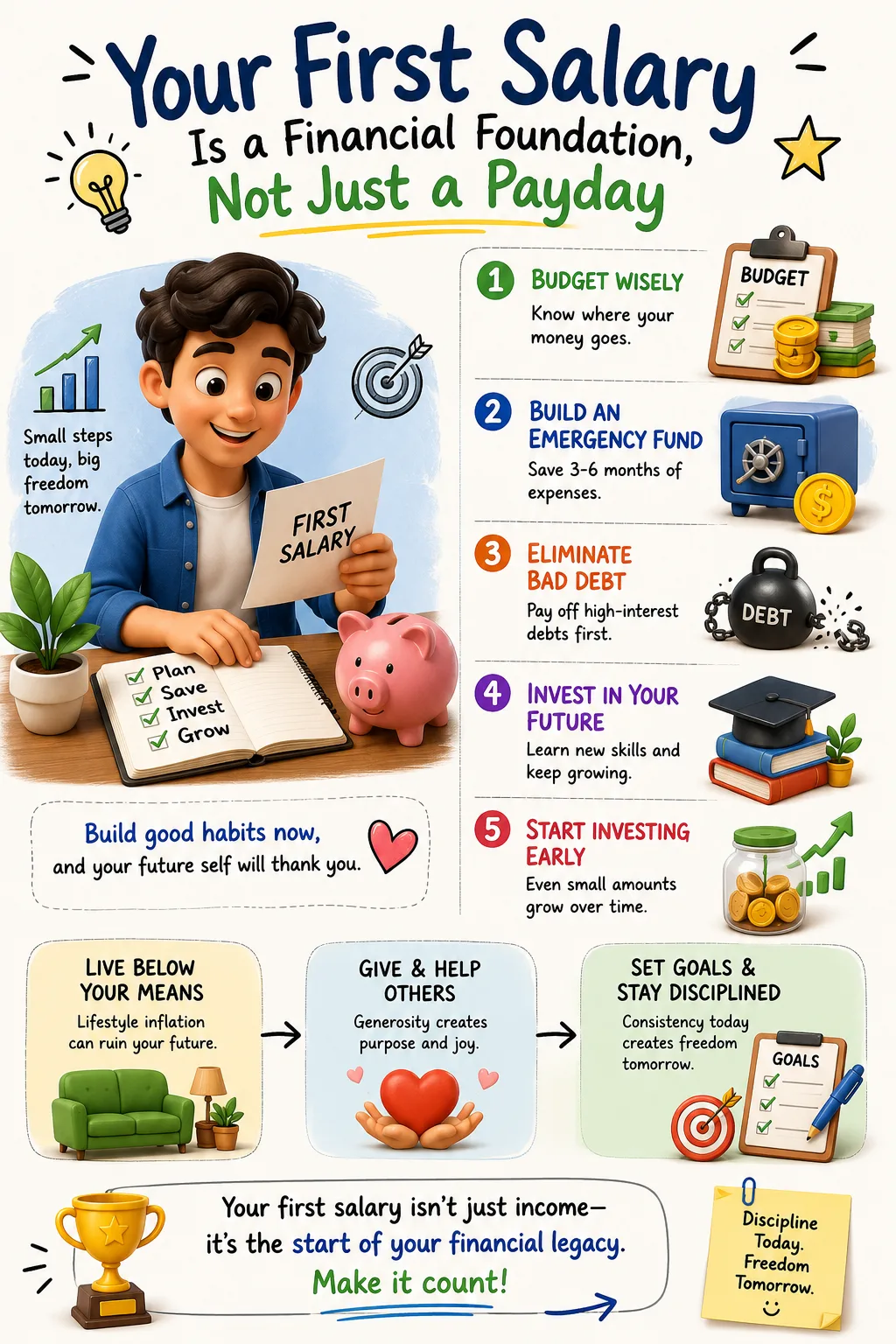
Your First Salary Is a Financial Foundation, Not Just a Payday
The first salary carries a meaning that numbers alone cannot explain. It is proof that your time, skill, discipline, and effort have entered the marketplace and produced income. For many people, it is also the first moment when money stops being an allowance, a gift, a student loan disbursement, or an occasional side payment and becomes a recurring financial responsibility.
That first paycheck can feel surprisingly large and surprisingly small at the same time. Large, because earning your own money creates a sense of independence. Small, because once rent, food, transport, bills, taxes, family obligations, debt, and personal desires enter the picture, the money begins to shrink faster than expected.
This is why the first salary matters so much. Not because it will make you wealthy immediately. It will not. Not because one paycheck can solve years of financial pressure. It usually cannot. Its real power is that it gives you the chance to build a system before lifestyle inflation, debt habits, and emotional spending become harder to reverse.
What you do with your first salary sets a pattern. That pattern can either make future income easier to manage or make every raise disappear. Many people assume the main financial challenge is earning more. Earning more helps, but income alone does not create stability. A person can earn a modest salary and build financial strength over time. Another person can earn a high salary and remain permanently under pressure because every increase in income is matched by a new expense, a larger lifestyle, or a bigger debt obligation.
The goal is not to remove joy from your first salary. You should enjoy it. You should celebrate the milestone. But the celebration should happen inside a structure that protects your future self. A healthy financial life is not built by refusing every pleasure. It is built by giving every shilling, dollar, pound, naira, rand, rupee, or euro a role before impulse gives it one on your behalf.
The First Rule: Do Not Spend Before You Understand the Paycheck
Before deciding what to buy, where to save, or how much to invest, you need to understand the paycheck itself. Many first-time earners make financial decisions based on gross salary, which is the amount quoted in the job offer. But the money you can actually use is the net salary: what reaches your bank account after taxes, pension deductions, insurance deductions, loan repayments, union fees, or other mandatory contributions.
This difference matters. A salary can sound generous before deductions and feel tight afterward. Someone offered 100,000 per month may mentally plan around 100,000, only to receive far less. If they already committed to rent, subscriptions, shopping, travel, or family support based on the gross figure, the budget starts broken before the first month ends.
Your first task is to study the payslip. Look at gross pay, statutory deductions, voluntary deductions, employer contributions, and net pay. Understand what is being removed and why. Some deductions reduce your take-home pay but increase your long-term financial position, such as pension contributions or employer retirement savings. Others are simply obligations. Either way, your spending plan must be based on net income, not imagined income.
This sounds basic, but it is one of the most important habits in personal finance. Wealth is built on reality. A budget based on optimism is not a budget; it is a wish. A budget based on actual take-home pay gives you a foundation you can trust.
Cover Necessities Before Aspirations
The most responsible thing to do with your first salary is not investing, shopping, gifting, or upgrading your lifestyle. The first responsibility is survival. Necessities come before aspirations because instability in basic needs creates financial panic.
Necessities include housing, food, utilities, transport, basic communication, medical needs, essential clothing, and any unavoidable family or household responsibilities. These are the expenses that allow you to live, work, remain healthy, and keep earning.
Many financial mistakes begin when people treat necessities casually and luxuries urgently. A person buys new electronics before confirming rent. They spend heavily on social events before planning transport for the rest of the month. They upgrade their wardrobe before setting aside money for food. This creates a cycle of anxiety: the beginning of the month feels rich, the middle feels uncertain, and the end feels desperate.
The first salary should break that cycle before it starts. Once the money arrives, separate the essentials immediately. If rent is due, protect it. If transport is required for work, allocate it. If you buy groceries weekly, set aside the month’s food budget or divide it into weekly portions. If you support dependents, decide the amount intentionally rather than responding emotionally to every request until your account is drained.
This does not mean your necessities will always be perfectly predictable. Prices change. Emergencies happen. But the act of prioritizing basic needs gives your financial life order. It also protects your dignity. Few things are more stressful than earning a salary and still being unable to meet essential obligations because the money was spent without a plan.
Build a Budget That Reflects Real Life
Budgeting is often presented as a restrictive exercise, but a good budget is not a punishment. It is a decision-making tool. It tells your money where to go before advertisements, friends, relatives, social pressure, and mood swings compete for it.
The best budget is not necessarily the most complicated one. A first salary budget should be clear enough to use consistently. If it requires a dozen spreadsheets, daily calculations, and constant guilt, it may fail. The purpose is not perfection. The purpose is awareness and control.
A simple approach is to divide income into broad categories: necessities, debt repayment, emergency savings, long-term investing, giving or family support, and personal enjoyment. The exact percentages depend on income level, cost of living, debt burden, and responsibilities. A person living at home with few expenses may be able to save and invest aggressively. A person supporting siblings, paying rent, or repaying student debt may need a more defensive plan.
The popular 50/30/20 rule can be a starting point: 50 percent for needs, 30 percent for wants, and 20 percent for savings and debt repayment. But it should not be treated as law. In high-cost cities, necessities may exceed 50 percent. For someone with high-interest debt, 20 percent toward financial progress may be too low. For someone with low expenses, saving only 20 percent may waste an early opportunity.
The better question is not whether your budget matches a famous formula. The better question is whether your budget moves you forward. Does it keep your essentials covered? Does it reduce financial fragility? Does it prevent debt from growing? Does it build assets over time? Does it allow some enjoyment without letting enjoyment consume the whole paycheck?
A budget becomes powerful when it is reviewed after real spending occurs. The first version is only a forecast. At the end of the month, compare the plan with reality. Did food cost more than expected? Did transport surprise you? Did small purchases add up? Did subscriptions quietly drain money? Did social spending exceed your comfort level? These discoveries are not failures. They are data.
Many people abandon budgeting because their first budget does not work. That is the wrong lesson. The first budget is supposed to reveal what you did not know. A budget improves through adjustment. Over time, it becomes less of a restriction and more of a financial map.
Separate Money Before It Disappears
One of the smartest habits after receiving salary is to move money into different accounts or wallets immediately. This is not just an administrative trick. It is behavioral finance in action.
Money sitting in one account feels available. Even if you mentally know that part of it is for rent, part for savings, and part for bills, the total balance can deceive you. If your account shows a large amount, you may feel richer than you are. Each purchase feels manageable because the balance remains positive. The danger appears only later, when obligations arrive and the money has already been absorbed by ordinary spending.
Separate accounts solve this problem by reducing temptation and clarifying purpose. One account can hold bills and necessities. Another can hold emergency savings. Another can hold long-term investments. Another can hold discretionary spending. Once money is assigned to a role, it becomes harder to misuse.
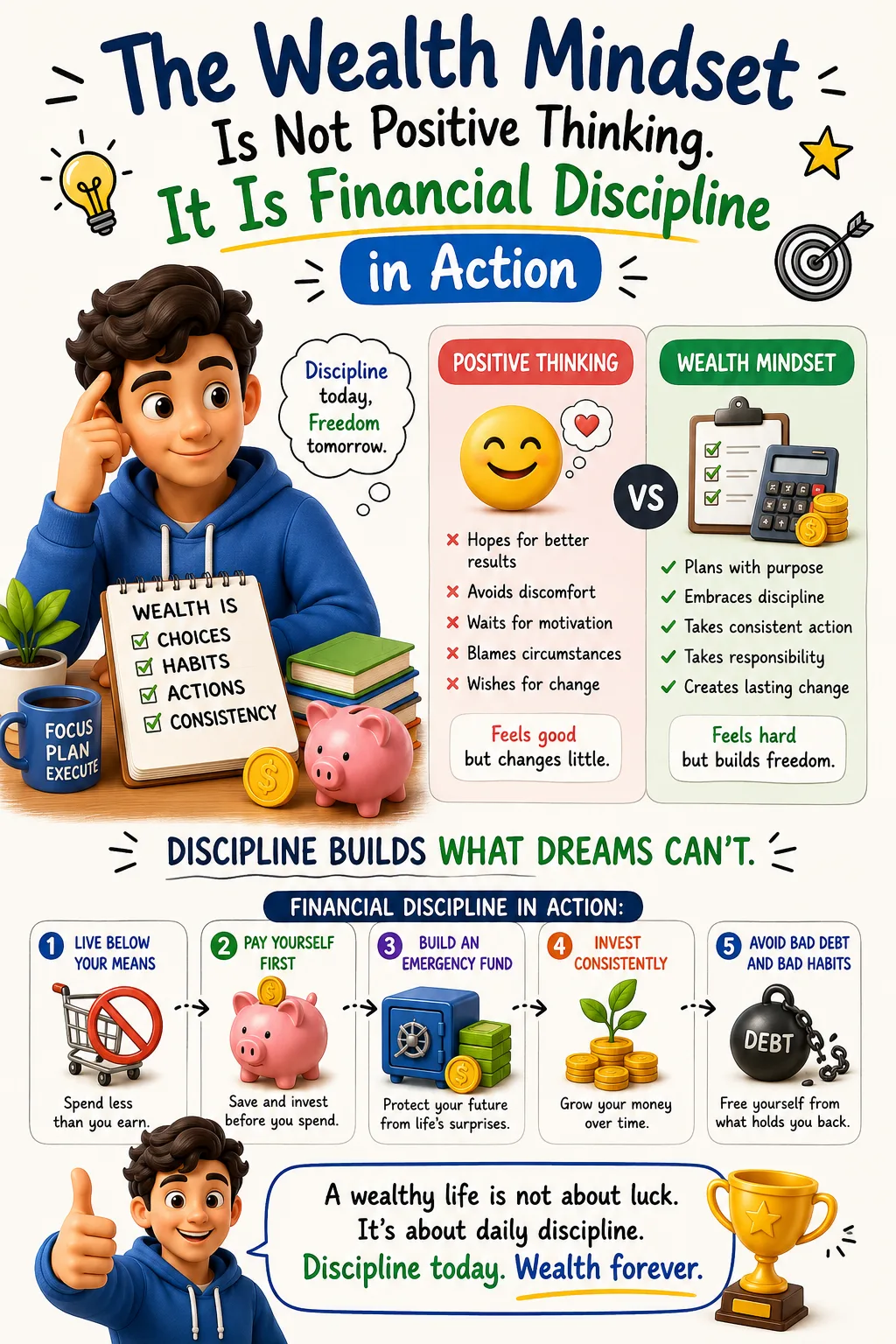
This method is sometimes called paying yourself first, but that phrase can be misunderstood. Paying yourself first does not mean spending on yourself first. It means funding your future before your present desires take over. It means treating savings, debt reduction, and investing as commitments, not leftovers.
Leftover-based saving rarely works. If you wait to save whatever remains at the end of the month, the amount may be small or nonexistent. Human behavior expands into available balance. The more accessible money feels, the more reasons appear to spend it. Automatic transfers remove the monthly negotiation. The salary arrives, and the system moves money before emotions interfere.
For a first salary, even small automatic transfers matter. A modest emergency fund contribution, a retirement deduction, or a beginner investment contribution creates identity. You stop seeing yourself only as a spender and start seeing yourself as a builder. That identity will matter far more over a working lifetime than the first amount saved.
Create an Emergency Fund Before Life Tests You
An emergency fund is not exciting. It does not promise high returns. It does not impress people. It does not create the emotional satisfaction of buying something visible. Yet it is one of the most important financial tools you will ever build.
The emergency fund exists because life does not wait for your budget to be ready. A medical bill, job delay, family emergency, broken phone, urgent travel need, car repair, rent issue, or income interruption can appear without warning. Without emergency savings, even a small crisis can become debt.
This is where many first-time earners underestimate risk. They assume stability because the first paycheck arrived. But a salary is not the same as security. A job can change. Payment can be delayed. Expenses can spike. A family need can arise. The emergency fund creates breathing room between a problem and a financial collapse.
A practical first target is a starter emergency fund. This might be one month of essential expenses or a smaller fixed amount that can handle common disruptions. After that, the long-term goal is usually three to six months of essential expenses. The right amount depends on job stability, health, dependents, industry risk, and access to family support.
The emergency fund should be accessible but not too easy to spend. It should not be invested in volatile assets where the value can fall when needed. It should not be mixed with everyday spending money. It should not be treated as a vacation fund, shopping fund, or opportunity fund. Its job is protection.
Some people resist emergency savings because inflation reduces the value of cash over time. That concern is reasonable, but it misses the purpose of the fund. Emergency money is not designed to maximize return. It is designed to prevent forced borrowing, panic selling, missed bills, and dependence on expensive credit. The return on an emergency fund is not only interest. It is resilience.
Use Retirement Accounts Early, Even If Retirement Feels Distant
Retirement planning can feel absurd when you receive your first salary. Retirement may be decades away. Current needs feel more urgent. But the distance is exactly what makes early retirement saving powerful.
Long-term investing benefits from time. Money invested early has more years to compound. Compounding is often described as earning returns on returns, but the phrase is too simple to capture its full force. Compounding turns time into a financial asset. It rewards patience, consistency, and reinvestment. It allows small amounts invested early to become more powerful than larger amounts invested late.
Consider two workers. One starts investing a modest amount in their twenties and continues steadily. The other waits until their late thirties or forties, then tries to catch up with larger contributions. The late starter may earn more, but the early starter has given their money more time to grow. Time cannot be replaced easily. Once lost, it must be compensated for with much higher savings, higher risk, or lower retirement expectations.
If your employer offers a retirement plan with matching contributions, it deserves special attention. Employer matching is one of the clearest financial opportunities available to workers. If you contribute a certain amount and the employer contributes extra money on your behalf, failing to participate can mean leaving compensation unclaimed. It is not a bonus in the casual sense. It is part of the value of your employment.
Retirement contributions also create a useful barrier. Money placed in a retirement account is less likely to be spent impulsively. It becomes future money. That separation matters because the greatest threat to early wealth building is not always lack of income; it is the constant conversion of income into consumption.
The first salary does not require a large retirement contribution if cash flow is tight. Starting small is acceptable. The key is to start. Increase the contribution when income rises, debt falls, or expenses stabilize. What matters is building the habit before lifestyle absorbs every future raise.
Attack High-Interest Debt Before It Controls Your Income
Debt is not all the same. Some debt helps acquire an asset, improve earning power, or smooth a necessary life transition. Other debt quietly transfers your future income to lenders because past spending exceeded past cash flow. The difference matters.
High-interest consumer debt is especially dangerous. Credit cards, payday loans, expensive mobile loans, overdrafts, and informal high-interest borrowing can create a financial trap. The balance may begin small, but interest and fees make repayment harder with every delay. The borrower pays for yesterday while trying to survive today.
When your first salary arrives, list every debt. Include the lender, balance, interest rate, minimum payment, due date, and consequences of late payment. This inventory may feel uncomfortable, but avoidance is more expensive than discomfort. Debt loses some of its power when it becomes visible.
There are two common repayment strategies. The debt avalanche method focuses extra payments on the highest-interest debt first while maintaining minimum payments on all others. This usually saves the most money mathematically. The debt snowball method focuses on the smallest balance first, creating quick wins that build motivation. The best method is the one you will actually follow, though high-interest debt deserves urgent attention under either approach.
Debt repayment should be balanced with emergency savings. If you put every extra coin toward debt and keep no emergency fund, the next unexpected expense may push you back into borrowing. A starter emergency fund and aggressive high-interest debt repayment often work well together. Once the most expensive debt is gone, you can strengthen emergency savings and increase investing.
The deeper lesson is that debt reduces freedom. A salary that must immediately serve lenders is not fully yours. The more of your income committed to past obligations, the less flexibility you have for investing, career moves, relocation, family support, or rest. Paying down debt is not just a financial calculation. It is the process of reclaiming future choices.
Invest So Your Money Does Not Sit Still Forever
Once essentials are covered, emergency savings have begun, and high-interest debt is under control, investing becomes the engine of long-term wealth. Saving protects you from shocks. Investing helps you participate in growth.
The difference between saving and investing is crucial. Saving is storing money for near-term safety and planned use. Investing is committing money to assets that can grow over time, with risk. Savings should be stable. Investments can fluctuate. Confusing the two can lead to bad decisions, such as investing rent money in volatile assets or keeping all long-term wealth in cash where inflation slowly erodes purchasing power.
First-time earners are often drawn to flashy investments. They hear stories about people getting rich from cryptocurrency, speculative stocks, foreign exchange trading, real estate flips, or trendy opportunities. Some of these markets can produce gains, but they can also produce serious losses. The danger is not only the asset itself. The danger is investing without understanding risk, time horizon, diversification, fees, liquidity, and personal financial capacity.
A sound beginner investment strategy is usually less dramatic. It may involve retirement funds, diversified index funds, mutual funds, exchange-traded funds, government securities, high-quality bonds, or other regulated investment vehicles depending on the country and available options. The goal is not to look clever at parties. The goal is to build ownership in assets that can compound over years.
Ownership is the heart of investing. When you buy a productive asset, you are no longer only trading time for income. You are allowing capital to work alongside you. Shares represent ownership in businesses. Bonds represent lending to institutions in exchange for interest. Real estate can produce rent and appreciation. Funds can give broad exposure to many assets at once. Over time, ownership can create income, growth, and financial options that salary alone may not provide.
The first investment does not need to be large. It needs to be thoughtful. Start with education. Understand the product. Know the fees. Know whether returns are guaranteed or variable. Know when you can withdraw. Know what could go wrong. Know whether the investment matches your time horizon. Money needed next month should not be placed into an investment that can fall sharply by next month.
Consistency matters more than excitement. Investing a fixed amount every month can build discipline and reduce the pressure of timing the market perfectly. Prices will rise and fall. Headlines will change. Economic cycles will test patience. A long-term investor learns to keep contributing through noise, provided the underlying strategy remains sound.
Give Family Support a Clear Boundary
For many first-time earners, the first salary is not only personal. It carries family expectations. Parents may have sacrificed. Siblings may need support. Relatives may see employment as a turning point for the entire household. In many cultures, the first salary is emotionally shared before it is financially received.
There is dignity in supporting family. Financial education should not pretend people live as isolated individuals with no obligations. Many workers are part of wider family systems, and their income helps pay school fees, medical bills, rent, food, or debt. Ignoring this reality makes financial advice incomplete.
But generosity without boundaries can damage both the giver and the receiver. If every request becomes an emergency and every emergency receives money, your financial foundation may never form. You can become employed and still remain unable to save, invest, or rest because your income has no protected area.
The healthiest approach is to budget for family support intentionally. Decide what amount you can give without neglecting necessities, debt repayment, emergency savings, and long-term goals. Communicate clearly where possible. A fixed monthly contribution is often better than unpredictable giving that expands with pressure.
This may require emotional strength. Saying no, not now, or not that amount can feel selfish, especially after years of family sacrifice. But financial collapse helps no one. If your support system depends on you, then protecting your own stability is part of supporting them. A person with savings, insurance, and growing assets can help more sustainably than a person who gives everything away and later needs rescue.
Treat Yourself Without Turning Reward Into a Habit of Leakage
Your first salary deserves celebration. A reward can mark the transition from effort to achievement. Buying a meal, giving a small gift, upgrading something useful, or creating a meaningful memory can be healthy. Money should not be managed with such severity that earning it brings no joy.
The problem begins when treating yourself becomes undefined. Without a limit, celebration can swallow structure. A person may justify every purchase as deserved because they worked hard. The phrase “I deserve it” can be financially dangerous when it appears before every impulse.
A better method is to create a guilt-free spending amount. Once necessities, savings, debt, and investments are handled, set aside money for enjoyment. Spend it without shame. The boundary creates freedom. You can enjoy the money because you know the important responsibilities have already been funded.
This is psychologically powerful. Many people oscillate between overspending and guilt. They spend impulsively, feel bad, promise to stop, restrict themselves harshly, then spend again when the pressure builds. A planned enjoyment category prevents this cycle. It acknowledges that pleasure is part of life while keeping pleasure from becoming financial sabotage.
The treat should also match your actual income, not the lifestyle you hope to afford later. A first salary does not need to announce itself through expensive purchases. You do not need to prove employment through luxury. Quiet financial strength is often built in the gap between what you can buy and what you choose not to buy yet.
Beware of Lifestyle Inflation From the Very Beginning
Lifestyle inflation is the gradual increase in spending as income rises. It is subtle because each upgrade feels reasonable. A better apartment. More frequent dining out. New clothes. More subscriptions. More expensive transport. Better gadgets. Larger gifts. Nicer vacations. None of these choices is automatically wrong. The problem is when every increase in income is immediately converted into a permanent increase in expenses.
The first salary is a vulnerable moment because it creates a new identity. You may no longer see yourself as a student, dependent, intern, or job seeker. You may want your lifestyle to reflect progress. Social circles may expect you to spend more. Family may expect more support. Retailers and lenders may see you as a new customer. Banks may offer credit. Friends may invite you to places you previously avoided.
If lifestyle expands faster than financial capacity, raises will not help. Every future salary increase will arrive already spoken for. This is how people become trapped in high-income stress. They earn more but cannot pause, change jobs, start a business, invest meaningfully, or handle emergencies because the lifestyle requires constant funding.
The antidote is to save part of every raise before upgrading lifestyle. If income increases, direct a portion of the increase to investments, emergency savings, debt repayment, or long-term goals automatically. Enjoy some of the raise, but do not consume all of it. This single habit can separate people who merely earn more from people who become wealthier.
Your first salary is the easiest time to set this rule because your lifestyle has not fully adjusted yet. Once expensive habits become normal, reducing them feels like loss. Before they form, restraint feels like strategy.
Insurance and Protection Should Not Be Ignored
Young earners often think of insurance as something for older people, parents, car owners, homeowners, or the wealthy. But protection is part of financial planning at every stage. The purpose of insurance is not to make you rich. It is to prevent a single event from destroying your finances.
Health coverage is especially important. Medical expenses can overwhelm savings quickly. If your employer offers health insurance, understand what it covers, which hospitals or providers are included, whether dependents can be added, and what exclusions exist. If employer coverage is unavailable or limited, explore appropriate personal options based on your country and income.
Disability protection may also matter, particularly if your income depends on your ability to work. Many people insure phones, cars, and electronics more carefully than they protect their earning power. Yet your future income is one of your largest financial assets. If illness or injury prevents you from working, the financial impact can be severe.
Life insurance is not always necessary for a first-time earner with no dependents, but it becomes important when others rely on your income or when you have debts that could burden family members. The right insurance decision depends on responsibilities, not age alone.
Protection also includes documents, passwords, emergency contacts, and financial organization. Keep records of bank accounts, insurance policies, employment benefits, debts, and investments. A disorganized financial life becomes harder to manage during stress.
Build Credit Carefully, Not Casually
As income begins, access to credit often follows. Banks, mobile lenders, retailers, and credit card companies may offer borrowing options. Credit can be useful when managed well. It can help build a credit history, smooth cash flow, or finance productive purchases. But credit can also become a silent claim on future salary.
The first rule is to avoid borrowing for lifestyle appearances. Using credit to create an image of success is one of the fastest ways to weaken real financial progress. A financed phone, wardrobe, holiday, or entertainment habit may feel manageable at first, but the payments reduce future flexibility.
If you use a credit card, treat it as a payment tool, not extra income. Pay the balance in full when due. Avoid carrying high-interest balances. Understand fees, penalties, interest rates, and billing cycles. A credit card can build credit history, but it can also become expensive debt if used without discipline.
Credit scores and credit reports vary by country, but the underlying principles are similar. Pay on time. Borrow only what you can afford. Keep debt levels reasonable. Avoid applying for unnecessary credit repeatedly. Monitor accounts for errors or fraud.
A strong credit profile can help later when renting, buying a home, financing a business, or accessing lower-cost loans. But good credit is not built by borrowing heavily. It is built by showing reliability over time.
Use Your First Salary to Buy Skills, Not Only Things
One of the highest-return uses of early income is skill development. This does not mean spending recklessly on every course, certificate, seminar, or coaching program. It means recognizing that your earning power is an asset.
A first salary can fund books, professional exams, technical training, language learning, software skills, industry certifications, communication training, or tools that improve productivity. The right skill can increase income for years. A purchase may give temporary satisfaction, but a skill can change your career path.
The best investment in skills is tied to a clear opportunity. Ask what abilities are rewarded in your field. What skills do people two or three levels above you have? What certifications matter? What technical tools are becoming standard? What communication or leadership gaps could limit your growth? What problems can you learn to solve that employers or clients value?
Early career income should not only maintain your current life. It should help expand your future capacity. A worker who spends every salary on consumption may stay dependent on annual raises. A worker who steadily improves skills may gain bargaining power, promotion potential, business opportunities, or the ability to move into higher-value work.
Create Financial Goals Before Money Becomes Aimless
Money without goals is easily captured by the nearest desire. Goals give your salary direction. They turn saving from deprivation into progress.
Your first financial goals should include short-term, medium-term, and long-term priorities. Short-term goals may include building a starter emergency fund, buying essential work tools, clearing a small debt, or moving into stable housing. Medium-term goals may include further education, relocation, starting a business, buying a car, supporting family milestones, or building a larger emergency fund. Long-term goals may include retirement, home ownership, financial independence, or an investment portfolio.
Each goal should have a target amount, timeline, and monthly contribution. “I want to save more” is too vague. “I want to save 60,000 for an emergency fund over the next six months by setting aside 10,000 per month” is actionable. Specificity turns intention into a system.
Goals also help you evaluate trade-offs. If you want to build an emergency fund by a certain date, every discretionary purchase has context. You are not simply deciding whether to buy something. You are deciding whether that purchase is worth delaying financial security. Sometimes it will be. Often it will not.
A Practical First Salary Allocation
No allocation fits everyone, but a structured example can help. Imagine a first-time earner dividing net salary into six categories: essentials, emergency fund, debt repayment, retirement or long-term investing, family or giving, and personal enjoyment.
Essentials might take 50 to 60 percent if rent and transport are significant. Emergency savings might take 10 percent until the starter fund is complete. Debt repayment might take 10 to 20 percent if high-interest debt exists. Retirement or investing might begin at 5 to 15 percent depending on employer matching and cash flow. Family support might be set at a fixed amount or percentage. Personal enjoyment might take 5 to 10 percent.
For someone with no debt and low living costs, the allocation can be more ambitious: perhaps 40 percent essentials, 20 percent investing, 20 percent emergency savings or future goals, 10 percent family or giving, and 10 percent enjoyment. For someone with high debt and dependents, the plan may be more defensive: 60 percent essentials, 15 percent debt repayment, 10 percent emergency savings, 5 percent retirement, 5 percent family support beyond essentials, and 5 percent enjoyment.
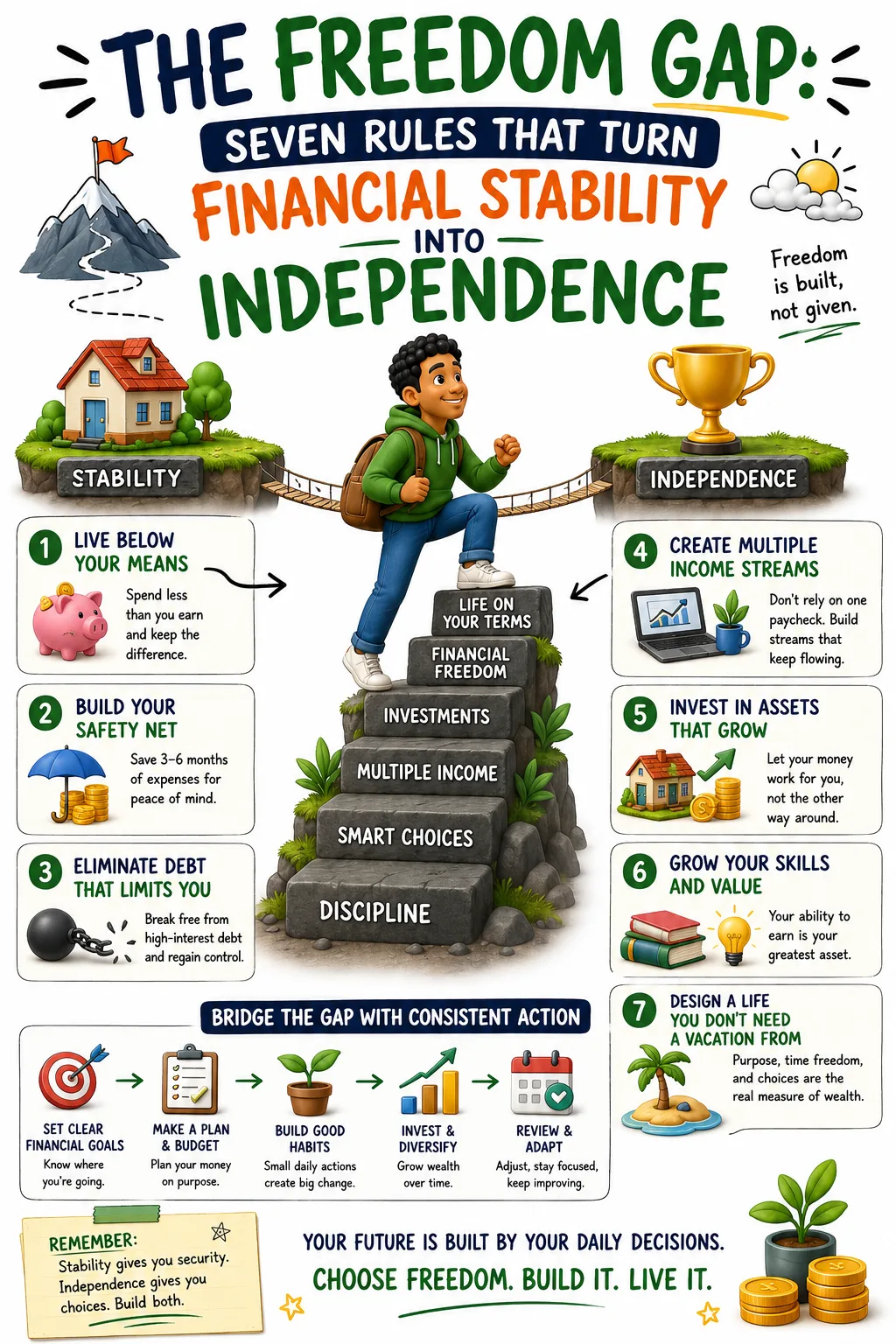
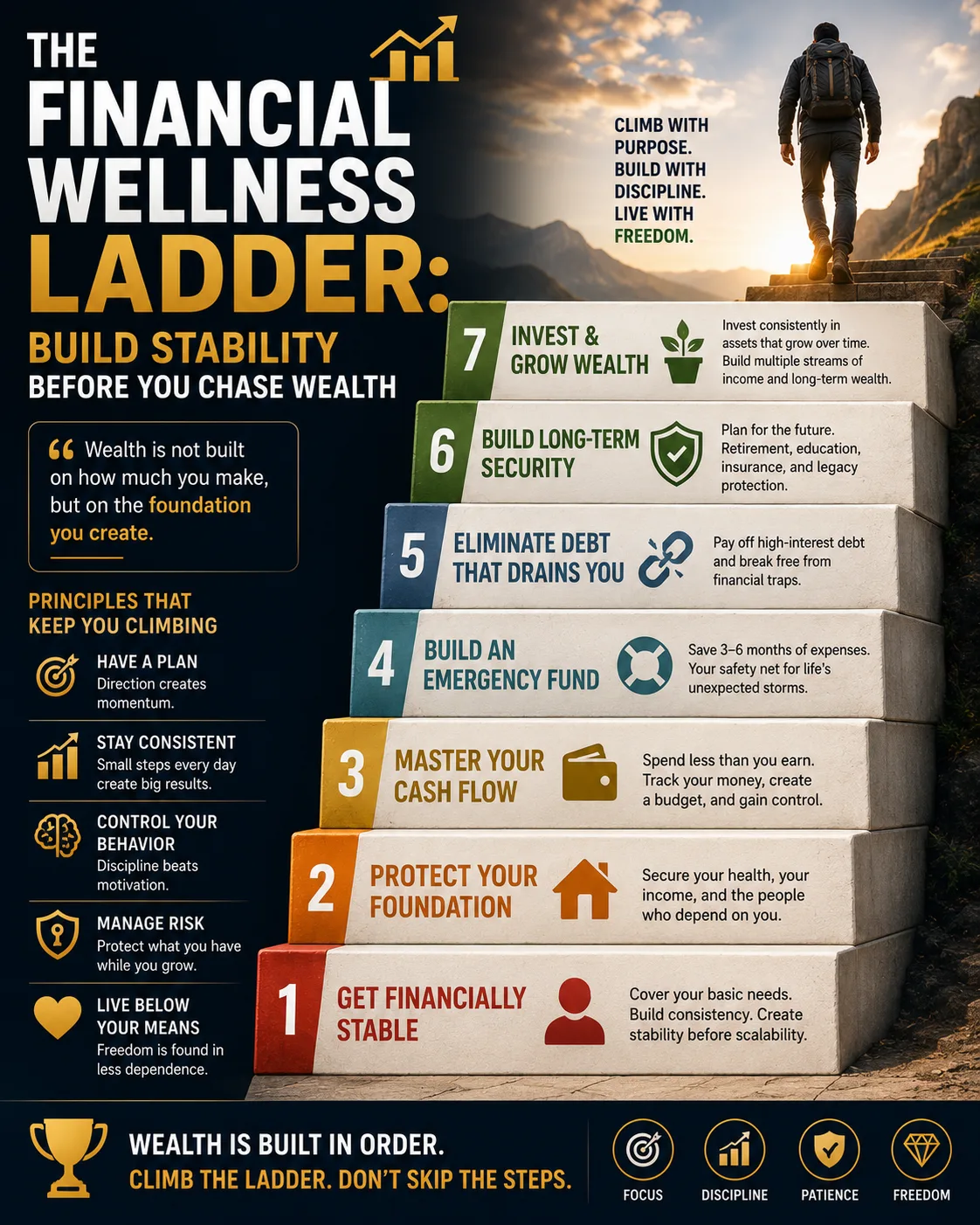
The percentages matter less than the order. First, protect survival. Second, protect against emergencies. Third, capture retirement benefits if available. Fourth, eliminate expensive debt. Fifth, invest for long-term growth. Sixth, enjoy money within limits.
This order is not rigid in every circumstance. Real life requires judgment. If employer retirement matching is generous, it may be worth contributing enough to receive the match even while building emergency savings. If debt is extremely expensive, repayment may need urgency. If family survival depends on immediate support, that reality must be included. A financial plan should be principled but humane.
Do Not Let Friends, Social Media, or Family Define Success for You
The first salary often arrives with social pressure. Friends may expect celebrations. Social media may display lifestyles that make your own progress feel small. Family may compare you with others. Colleagues may normalize spending habits that do not match your income. The danger is that you begin managing money for appearance rather than stability.
Financial success is often quiet at first. It may look like living in a modest place while building savings. It may look like using public transport while paying off debt. It may look like saying no to trips while investing. It may look like keeping an older phone while funding a retirement account. These choices may not attract admiration, but they build options.
Comparison is expensive because there is always someone earning more, spending more, traveling more, dressing better, or appearing happier. But you rarely see the full balance sheet behind the image. You do not know who is in debt, who has family wealth, who is supported by someone else, who is financially anxious, or who is performing success for an audience.
Your salary should serve your life, not your image. The earlier you learn this, the more financial peace you will preserve.
Track Net Worth, Not Just Account Balance
Many first-time earners focus only on the bank balance. That is understandable because the bank balance is visible and immediate. But long-term financial progress is better measured through net worth.
Net worth is what you own minus what you owe. Assets include cash, emergency savings, investments, retirement accounts, business interests, property, and other valuable holdings. Liabilities include loans, credit card balances, overdrafts, and other debts. If your assets rise and your debts fall, your net worth improves.
Tracking net worth changes your mindset. You begin to see that spending reduces available capital, debt reduces future freedom, and investing increases ownership. You stop asking only, “Can I afford the monthly payment?” and start asking, “Does this improve or weaken my financial position?”
At the beginning, net worth may be small or even negative. That is not a reason for shame. Student loans, family obligations, or early career expenses can create a difficult starting point. The purpose of tracking is not to judge yourself. It is to measure direction. A person moving from negative 100,000 to negative 50,000 is making progress. A person moving from 20,000 to 80,000 in savings and investments is building strength.
Review net worth monthly or quarterly. Too frequent tracking can create anxiety, especially when investments fluctuate. But periodic review keeps you honest. It shows whether your salary is becoming wealth or simply passing through your hands.
The First Year Matters More Than the First Month
Your first salary is important, but one paycheck is only the beginning. The real test is the first year. A single disciplined month can be undone by eleven careless ones. A difficult first month can be repaired by consistent improvement.
Use the first year to build financial systems. Automate transfers. Learn your spending patterns. Build the emergency fund. Understand your benefits. Pay down expensive debt. Start investing. Improve skills. Track net worth. Adjust your budget as reality becomes clearer.
The first year is also when you learn your emotional relationship with money. Do you spend when stressed? Do you lend money because you fear disappointing people? Do you avoid looking at your balance? Do you buy things to signal success? Do you feel guilty spending even when you have planned for it? Do you become overly risky when you want faster progress?
These patterns matter. Personal finance is not only mathematics. It is behavior under pressure. The earlier you understand your tendencies, the easier it becomes to design systems that protect you from them.
A Better Order for Your First Salary
A strong first salary plan follows a sequence. Start by reading the payslip and understanding net income. Then cover essential expenses. Build a realistic budget. Separate money into accounts or categories. Create a starter emergency fund. Capture employer retirement contributions if available. Pay down high-interest debt. Increase emergency savings toward several months of expenses. Begin or grow long-term investments. Set aside money for family support or giving if that is part of your life. Then enjoy a defined portion guilt-free.
This order creates balance. It recognizes that life requires both protection and progress. It does not tell you to invest while ignoring rent. It does not tell you to save cash forever while inflation erodes your future. It does not tell you to deny every pleasure. It gives each priority a place.
The exact numbers can change, but the principle remains: your salary should not arrive as one undivided pool of money waiting to be spent. It should arrive into a system that reflects your values, obligations, risks, and ambitions.
The Deeper Lesson: Salary Is a Tool, Not the Destination
A salary is powerful because it creates regular income. But salary alone is not wealth. Wealth begins when part of that income is converted into assets, skills, resilience, and freedom.
If every paycheck is consumed, the salary becomes a treadmill. You must keep working at the same pace because nothing from past income remains to support you. If part of every paycheck is saved, invested, and used to increase earning power, the salary becomes a foundation. It funds a future that is less dependent on the next payday.
This is the ownership shift. The worker who only consumes remains dependent on income. The worker who builds assets gradually creates a second engine. At first, the engine is small. A little interest. A small dividend. A modest investment balance. A growing retirement account. But over time, assets can begin producing more assets. The financial life becomes less fragile.
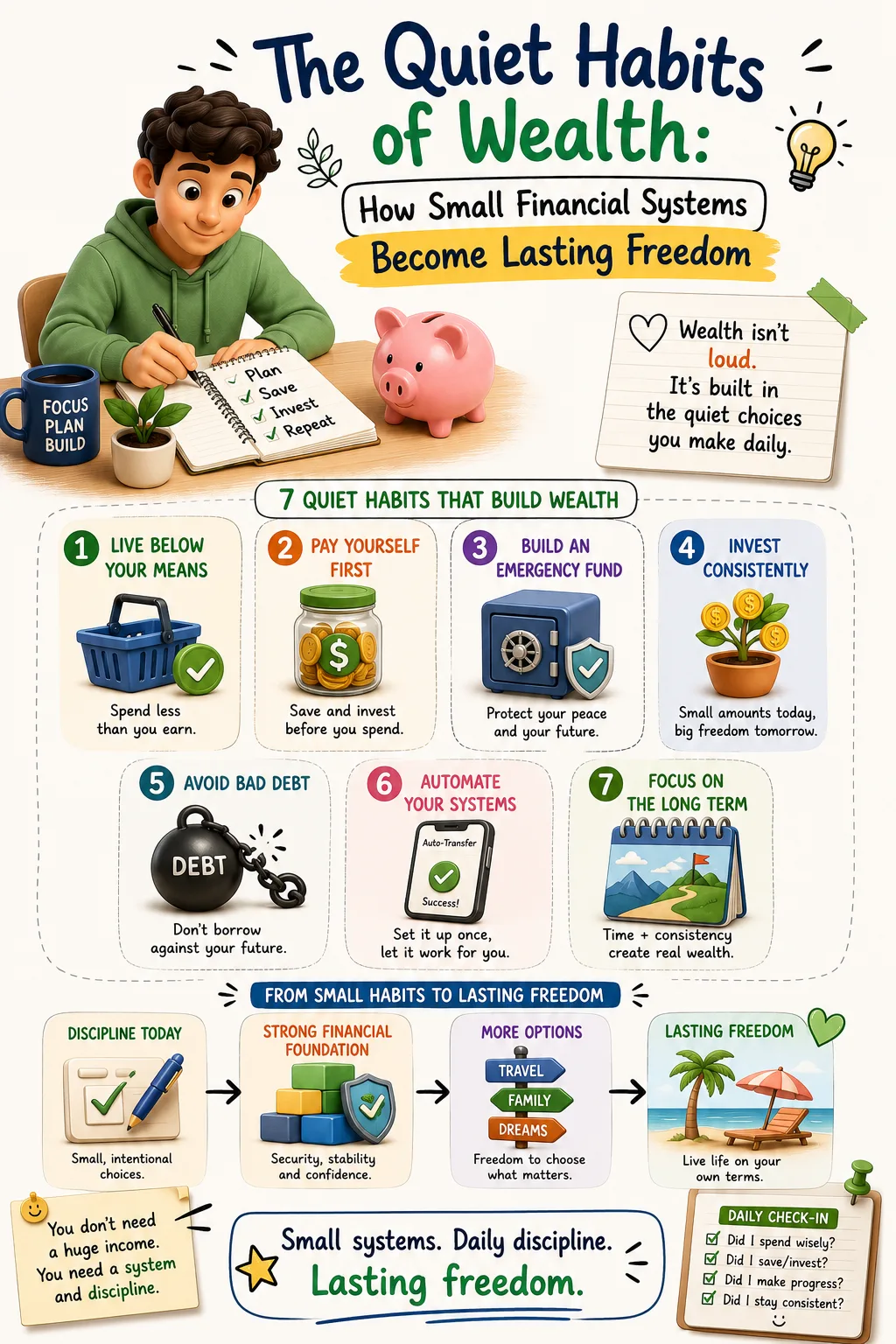
Your first salary will not make you wealthy. But it can start the process. That process is built through repeated decisions that seem small in isolation: saving before spending, avoiding bad debt, investing consistently, learning valuable skills, protecting against emergencies, and refusing to let lifestyle inflation consume every raise.
The reward is not only a larger account balance. It is confidence. It is the ability to handle a surprise expense without panic. It is the ability to leave a bad job with some savings. It is the ability to help family without destroying your own stability. It is the ability to invest when opportunities appear. It is the ability to enjoy money without fear because the essentials are already handled.
What to Do When the Salary Is Very Small
Some first salaries are modest. In many cases, they are barely enough to cover transport, food, rent, and basic obligations. Advice about saving and investing can feel unrealistic when income is low.
When salary is small, the goal is not to pretend the pressure does not exist. The goal is to preserve the habit of financial direction at whatever scale is possible. If you cannot save 20 percent, save 2 percent. If you cannot invest meaningfully yet, learn about investing while building a small emergency buffer. If debt repayment is slow, avoid adding new expensive debt. If rent is overwhelming, consider whether housing arrangements can be adjusted over time. If transport consumes too much, explore alternatives when realistic.
Small amounts still matter because they train behavior. Saving a tiny amount may not change your life immediately, but it proves that not every coin must be spent. Paying a little extra toward debt proves that balances can move downward. Investing a modest amount proves that you can become an owner, even before you feel wealthy.
At the same time, low income requires an income-growth strategy. Budgeting cannot solve every problem. There is a point where the issue is not discipline but earning power. Use part of your early career energy to increase the value of your skills, seek better opportunities, build professional relationships, and understand the market for your work. Frugality can protect you, but income growth expands what is possible.
What to Do When the Salary Is Larger Than Expected
A larger first salary creates a different risk. The danger is not immediate scarcity but overconfidence. A high income can hide weak habits for a long time. The account balance may remain healthy even with wasteful spending, so the problem goes unnoticed. But when lifestyle rises to meet income, the high earner can become just as trapped as the low earner.
If your first salary is strong, use the advantage carefully. Build a full emergency fund quickly. Maximize retirement opportunities where appropriate. Avoid unnecessary debt. Invest a meaningful percentage from the beginning. Upgrade lifestyle slowly. Give generously but intentionally. Build skills and networks that protect your earning power.
High income should shorten the path to financial strength, not merely increase the cost of your habits. The earlier you invest a significant share of a strong salary, the more powerful compounding becomes. A high first salary is not permission to waste. It is an opportunity to build a foundation many people wish they had.
The First Salary Checklist
When your first salary arrives, pause before spending. Confirm the net amount. Read the payslip. Write down essential expenses. Set aside rent, food, transport, utilities, and medical needs. Create a simple budget. Move savings and investment money out of the spending account. Start an emergency fund. Review employer retirement benefits. List all debts and prioritize high-interest balances. Decide how much you can give or send to family without damaging your own stability. Choose a modest amount for enjoyment. Track what happens during the month.
At the end of the month, review. Which estimates were wrong? Which expenses surprised you? Which purchases were worth it? Which were emotional? Did you save before spending or only after? Did you borrow? Did you feel in control? Use those answers to improve the next month.
This review process turns salary management into a skill. Like any skill, it improves with practice. The goal is not to become perfect with money. The goal is to become conscious, consistent, and resilient.
The Paycheck That Teaches You Who You Are
Your first salary reveals more than your earning power. It reveals your habits, pressures, priorities, fears, and ambitions. It shows whether you are willing to plan before spending. It shows how you respond to social expectations. It shows whether you can reward yourself without losing control. It shows whether you think only about this month or also about the person you are becoming.
There is no shame in making mistakes. Many people mishandle their first salary. They overspend, forget bills, lend too much, save nothing, or buy things they later regret. The danger is not the mistake itself. The danger is repeating it until it becomes normal.
A better path is available from the first paycheck onward. Cover what keeps you alive. Protect yourself from emergencies. Respect the future through retirement savings and investing. Escape expensive debt. Support others with boundaries. Enjoy money in a planned way. Build skills that increase your earning power. Track whether your income is becoming wealth.
Your first salary is not just money received. It is a chance to choose a financial identity. You can become someone who waits for payday with anxiety because the last salary disappeared. Or you can become someone who uses each paycheck to buy stability, ownership, and freedom.
The amount matters, but the system matters more. Start with the salary you have. Give it structure. Give it purpose. Give your future self a claim on it before the world spends it for you.
 Article
 Article
 Article
 Article
 Article
 Article
 Article
 Article