
Optimization means making your investments work together toward defined financial goals.
Start with the job your portfolio must do
A portfolio is a collection of investments held for financial purposes.
Its value depends on how its parts relate to your needs.
Optimization is not simply pursuing the highest possible return.
It means choosing a structure that fits your goals, constraints, and willingness to accept uncertainty.
Begin by naming each purpose for invested money.
Retirement, education, and a future business purchase may require different approaches.
A goal without a time frame is difficult to connect to an investment choice.
Describe when you expect to use the money and what flexibility you have.
Separate essential future needs from optional ambitions.
That distinction helps clarify how much fluctuation you might reasonably accept.
Consider your wider financial position, not just investment holdings.
Income stability, debt obligations, savings, and upcoming expenses can affect portfolio decisions.
Portfolio optimization is personal because circumstances differ.
A strategy suitable for one household may be unsuitable for another.
Write down the purpose of each account or investment group.
Clear purpose makes later reviews more focused and less emotional.
Distinguish goals, capacity, and comfort
Risk capacity describes your financial ability to withstand a loss or delay.
It depends partly on when the money is needed and what alternatives exist.
Risk tolerance describes your emotional response to uncertainty.
Someone may have financial capacity for fluctuations yet feel uncomfortable experiencing them.
Both dimensions matter.
A portfolio that ignores either can become difficult to maintain when conditions change.
Ask what you would do if an investment temporarily lost value.
Your honest answer can reveal whether the plan feels sustainable.
Also ask whether a goal could be postponed, reduced, or funded differently.
Flexibility may change the role an investment needs to play.
Do not mistake confidence for capacity.
Feeling optimistic does not replace an assessment of obligations, available cash, or timing.
Likewise, discomfort does not automatically mean an investment is wrong.
It can signal that the portfolio or expectations need closer examination.
Record the reasons behind your choices.
A written rationale helps distinguish a meaningful change in circumstances from a passing reaction.
Give every holding a clear role
Each investment should have a reason for inclusion.
Ask what purpose it serves and how it interacts with the rest.
Some holdings may be intended for growth, while others may support income or stability.
These labels describe purposes, not guaranteed outcomes.
Cash can provide access and flexibility, but its role differs from long-term investments.
Decide whether it supports planned spending or reflects uncertainty about investing.
Shares represent ownership interests, while bonds generally involve lending to an issuer.
Their characteristics and risks vary across individual investments.
Funds can hold many underlying assets. But a fund label alone does not explain its role.
Review what it owns and how it behaves.
Look through overlapping holdings.
Separate funds can own similar companies or sectors, leaving less diversification than their number suggests.
Concentrated positions can make portfolio results depend heavily on a narrow source.
Identify any single company, industry, or region with an outsized influence.
Remove holdings that no longer serve a defined purpose only after considering costs, taxes, and consequences.
An investment may have several connected effects.
Use diversification deliberately
Diversification spreads exposure across investments that do not all depend on the same factors.
It can reduce reliance on any single holding.
Owning many securities does not necessarily create meaningful diversification.
Their underlying exposures may still overlap substantially.
Consider different asset types, industries, company sizes, and geographic markets.
Each dimension can reveal a different concentration in the portfolio.
Geographic exposure deserves attention because a portfolio may reflect the investor’s home market heavily.
International holdings can introduce different economic and currency exposures.
Broader exposure also brings tradeoffs.
Investments across markets can behave differently, and diversification does not remove the possibility of losses.
Choose diversification that you understand and can maintain.
Complexity can make it harder to see what you own or why.
Check whether a fund already supplies broad exposure before adding similar investments.
This prevents accidental duplication and helps clarify the overall mix.
Diversification is a design choice, not a promise of protection.
Its purpose is to avoid making every outcome depend on one narrow bet.
Match the investment mix to your time horizon
Your time horizon is the period before you expect to use the invested money.
Different goals can therefore call for different portfolio arrangements.
Money needed soon has less time to recover from an unfavorable market movement.
Liquidity and the possibility of a forced sale deserve attention.
Longer horizons may allow greater capacity to tolerate fluctuations. But time alone does not determine suitability.
Your obligations and comfort remain relevant.
Separate goals with different expected spending dates rather than treating all assets as one undifferentiated pool.
This makes tradeoffs easier to see.
A near-term home expense and long-term retirement saving serve different purposes.
Combining them mentally can lead to mismatched expectations.
Review the date when a goal may become a real spending need.
A change in plans can alter the role of related investments.
Do not assume that a long horizon makes losses harmless.
The effect depends on the investment, circumstances, and ability to remain invested.
Plan how access will work before money is needed.
A clear withdrawal approach can reduce pressure to sell holdings impulsively.
Understand costs and account rules
Investment costs reduce the portion of returns that remains with you.
Compare fees across funds, accounts, advice, and trading arrangements.
Look beyond a headline fee.
Other charges, transaction costs, and restrictions may affect the total cost of holding an investment.
Ask what service a fee pays for.
A cost is easier to evaluate when its purpose and value are clear.
Tax treatment can influence the amount you keep. But rules depend on the country and account.
Check applicable requirements before acting.
Accounts such as an IRA, RRSP, TFSA, ISA, or superannuation arrangement have country-specific rules.
Their names do not make their tax treatment interchangeable.
Understand contribution, withdrawal, and eligibility conditions for the account you use.
A portfolio decision can have account consequences beyond investment performance.
Tax considerations should inform decisions without becoming the only consideration.
Liquidity, risk, goals, and costs still matter.
When rules are unclear, consult qualified guidance relevant to your jurisdiction.
Avoid assuming that information for another country applies to you.
Build a review process, not a prediction habit
Reviewing a portfolio means checking whether it still fits its purpose.
It does not require predicting what markets will do next.
Set review occasions around meaningful financial changes or a chosen routine.
Frequent checking can encourage decisions without useful new information.
At a review, compare the current holdings with your intended structure.
Note changes in concentration, liquidity, costs, and goal timing.
Ask whether your income, obligations, or priorities have changed.
A personal change may matter more than short-term investment movements.
Separate facts from interpretations.
A holding’s current value is different from a belief about its future direction.
Use a written review record to capture what changed and why.
This creates continuity and discourages repeated reconsideration of settled choices.
Do not treat every fluctuation as a signal to act.
A move matters when it affects your plan or reveals a relevant risk.
Keep the review focused on decisions within your control.
You can assess costs, allocation, and behavior without forecasting outcomes.
Rebalance with a reason
Rebalancing means bringing a portfolio closer to its intended allocation.
It can address drift caused by different movements among holdings.
First establish why the target allocation exists.
Rebalancing without a suitable target merely changes holdings without clarifying purpose.
Consider whether additions or withdrawals can restore the intended mix.
This may avoid selling assets, though account and tax rules still apply.
Selling can create costs or tax consequences, depending on the investment and jurisdiction.
Assess those effects before making a change.
Rebalancing can also reduce a concentration that has grown beyond your comfort.
It should not be treated as a judgment about future performance.
When circumstances change, reconsider the target itself rather than mechanically restoring an outdated plan.
The right response depends on the reason for drift.
Keep the process understandable.
A straightforward approach is easier to explain, review, and follow consistently.
Document the decision and its tradeoffs.
The record can help you evaluate whether the change remained aligned with your goals.
Watch for behavioral traps
Recent performance can dominate attention, even when it says little about an investment’s fit.
Examine purpose and exposure before reacting to a memorable change.
Familiar companies or local markets can feel easier to trust.
Familiarity, however, is not the same as diversification or suitability.
Fear of missing out can encourage purchases without a clear portfolio role.
Ask what existing holding the new investment complements or replaces.
Attachment to a past decision can make it harder to reconsider.
Assess an investment using present facts and current goals, not pride or regret.
Repeated checking may heighten concern without improving your decision.
Give reviews a defined purpose instead of monitoring for reassurance.
Complexity can create the impression of sophistication while obscuring risk.
Favor holdings you can explain in plain language.
Comparisons with another investor can overlook different income, obligations, tax rules, and goals.
Evaluate your own circumstances rather than copying another portfolio.
When emotions are strong, pause and identify the decision’s practical consequences.
A delay for reflection can prevent an impulsive change.
What to do now
Write the purpose and expected timing of each major investment goal.
List your holdings and describe the role each one serves.
Check for repeated exposure across funds, sectors, companies, and geographic markets.
Review costs, account conditions, and relevant tax rules for your country.
Compare your present portfolio with the allocation you believe suits your goals.
Record changes in obligations, income, access needs, or personal priorities.
Decide whether a proposed adjustment solves a defined problem or responds to emotion.
Seek qualified local guidance when tax, legal, or investment questions exceed your understanding.
Conclusion
A well-considered portfolio is not a collection of perfect predictions.
It is a set of connected choices whose purpose you can explain.
The clearest test is whether each holding still earns its place in the plan.
That question can remain useful as your circumstances evolve.
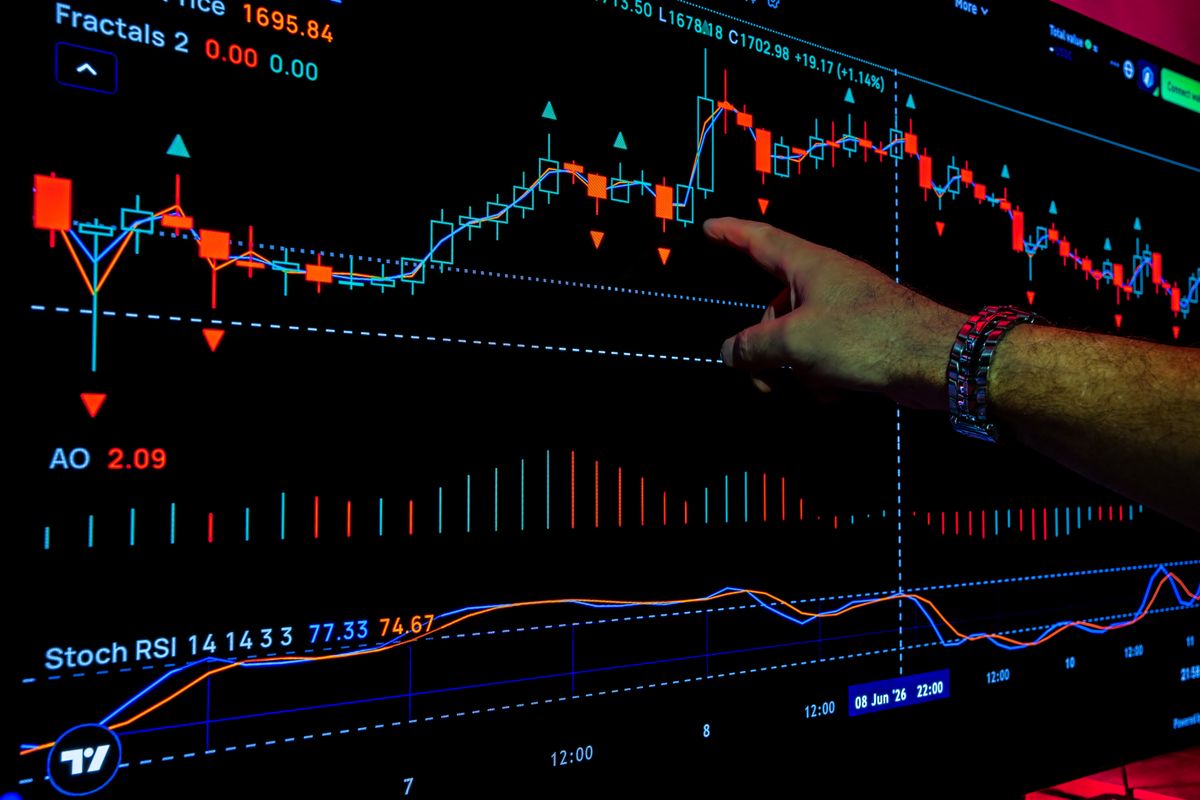
Featured photo by DΛVΞ GΛRCIΛ on Pexels.

Photo by Markus Winkler on Pexels.
 Article
 Article
 Article
 Article
 Article
 Article
 Article
 Article