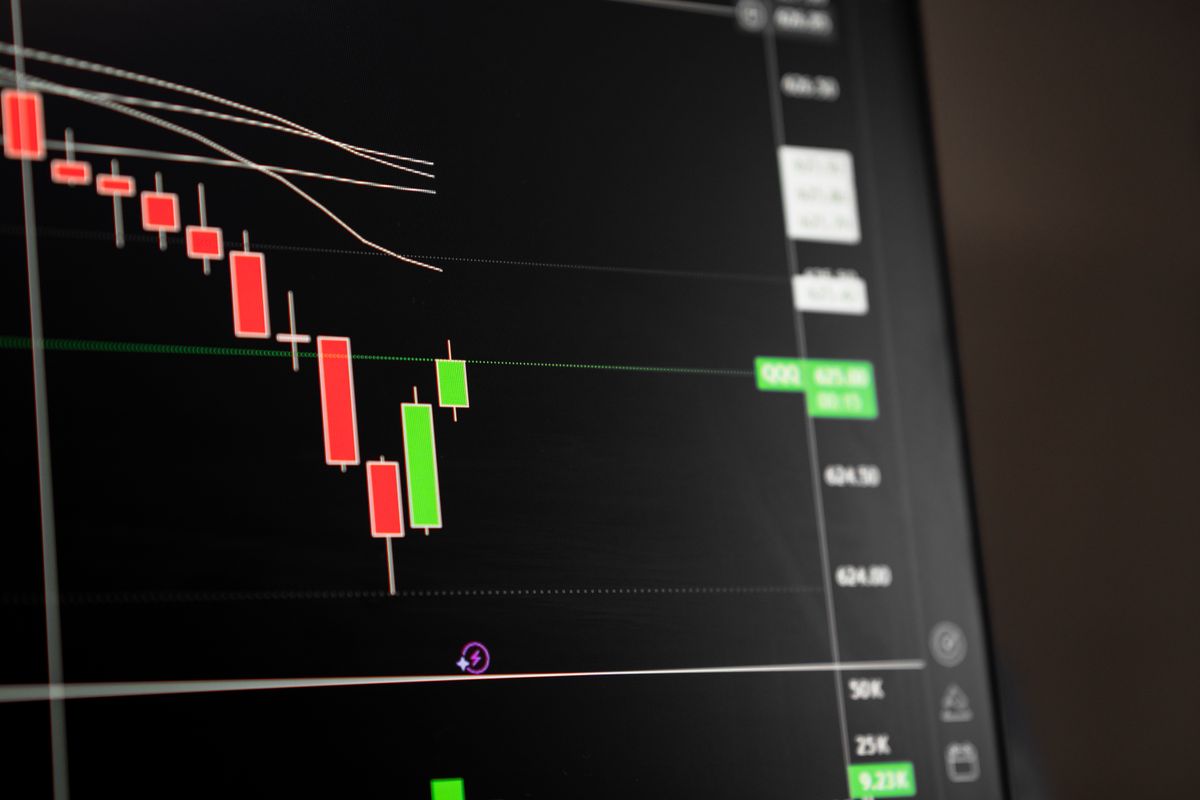
Bond prices move as expectations change.
Understanding the forces behind those changes can make your decisions more deliberate.
What a bond represents
A bond is a loan made by an investor to an issuer.
The issuer may be a government, a municipality, or a company.
In exchange, the bond generally promises interest payments and repayment of principal.
The exact terms depend on the bond’s contract.
The coupon is the stated interest payment, while the principal is the amount due at maturity.
These terms describe promised cash flows, not guaranteed market value.
A bond can be bought or sold before maturity.
Its resale price may differ from the amount originally paid.
This distinction matters for savers using bond funds or individual bonds.
A familiar payment schedule does not prevent changing prices.
Why interest rates affect prices
New bonds reflect prevailing interest rates and issuer conditions when they are issued.
Existing bonds keep their original coupon terms.
If new bonds offer higher rates, an older bond with a lower coupon may seem less attractive.
Buyers may therefore require a lower price.
When newly available rates fall, an older bond with a higher coupon may become more appealing.
Its market price may rise.
This relationship is often described as an inverse relationship between rates and bond prices.
It is a useful principle, not a precise forecast.
Market rates can change for several reasons, including monetary policy and changing expectations.
Bond prices may respond before any policy decision occurs.
Investors should distinguish an announced rate change from expectations about future rates.
Prices can reflect expectations that later prove wrong.
Yield is not the same as coupon
The coupon measures the bond’s stated payment relative to its contractual terms.
Yield relates expected income to the price paid.
When a bond sells below its face value, its yield may exceed its coupon rate.
When it sells above face value, yield may be lower.
Yield to maturity estimates the annualized return if the bond is held until maturity.
It relies on assumptions about payments and reinvestment.
Those assumptions matter because future interest payments may be reinvested at different rates.
Yield to maturity does not guarantee an investor’s realized result.
A bond fund has no single maturity date in the same way an individual bond does.
Its yield and holdings can change over time.
Comparing yields alone can obscure differences in credit risk, maturity, fees, and tax treatment.
Consider what each measure includes before comparing investments.
Inflation expectations and purchasing power
Inflation reduces the amount of goods and services a fixed payment can buy.
Bond investors therefore consider both nominal payments and purchasing power.
If investors expect inflation to rise, they may seek higher yields to compensate for reduced purchasing power.
That pressure can affect bond prices.
Inflation expectations are not the same as actual inflation.
They can shift as economic information and policy expectations change.
Some bonds are designed to adjust payments or principal according to inflation measures.
Their terms and protections vary by country and issue.
Such bonds can address a particular risk, but they still carry price and issuer risks.
Their value can move for reasons beyond inflation.
For a household, the relevant question is whether bond income supports a spending plan.
A nominal payment alone does not answer that question.
Credit quality and issuer risk
Credit risk is the possibility that an issuer will fail to make promised payments.
Investors assess this risk when pricing a bond.
When perceived credit risk rises, buyers may demand a higher yield.
The bond’s market price may fall as a result.
Credit ratings can help organize information about an issuer’s ability to pay.
A rating is an opinion, not a guarantee against loss.
Investors can also review the issuer’s financial position, obligations, and bond terms.
The available details differ among governments and companies.
Corporate bonds may offer different yields from government bonds, partly reflecting different credit and liquidity risks.
Higher yield alone does not establish suitability.
Concentrating in one issuer can make a portfolio more dependent on that borrower.
Diversification can reduce reliance on a single source of repayment.
Supply, demand, and liquidity
Bond prices also reflect how much investors want to buy and sell.
Issuance, portfolio choices, and changing risk preferences can affect demand.
When an issuer sells more bonds, buyers consider that supply alongside available alternatives.
The effect depends on demand and the terms offered.
Liquidity describes how easily an investment can be bought or sold without a substantial price concession.
Liquidity can differ across bonds and markets.
A less frequently traded bond may be harder to sell quickly at an expected price.
This risk matters when access to cash is important.
Bond funds offer pooled exposure, but their shares can still change in value.
Fund structure and holdings influence how investors experience market moves.
Trading costs and fund expenses also affect results.
Review the product documents rather than assuming every bond investment behaves alike.
Duration and sensitivity to rate changes
Duration estimates how sensitive a bond’s price may be to interest-rate changes.
It is useful for comparing rate exposure across bonds.
Generally, a bond with longer duration has greater price sensitivity than one with shorter duration.
The relationship is an estimate, not a promise.
Duration differs from maturity.
Maturity identifies when principal is due, while duration incorporates the timing of expected cash flows.
Coupons, yields, and payment timing can influence duration.
Two bonds with similar maturities may therefore respond differently to rate changes.
Bond funds also have duration measures, which can change as holdings change.
A fund’s stated duration offers context, not certainty about its future price.
Matching duration to the timing of planned spending may help frame exposure.
A mismatch can leave an investor more sensitive to market changes.
How individual bonds and funds differ
An individual bond has specified contractual payments and a stated maturity, subject to issuer performance.
Holding it to maturity avoids selling at a market price.
That does not remove default, inflation, or opportunity risks.
An investor may also need to sell early or reinvest payments.
A bond fund holds a changing collection of bonds and offers pooled exposure.
Its value reflects market prices and the fund’s ongoing decisions.
Because a fund continually buys and sells holdings, it generally does not repay each investor at one common maturity.
Its value may remain exposed to market movements.
Funds can simplify diversification, though holdings, fees, and risks vary.
Individual bonds can offer more visible cash-flow terms, but may require more research.
Neither structure is automatically better.
Compare the form of exposure with your cash needs, time horizon. Tolerance for price changes.
Putting bond movements in context
A falling bond price does not by itself explain what changed.
Rates, inflation expectations, issuer risk, and liquidity may all contribute.
Several forces can move at once, sometimes in opposing directions.
A simple explanation may miss the interaction among them.
Separate the bond’s contractual payments from its market price.
Then ask whether your investment purpose depends on selling before maturity.
For a long-term investor, short-term price movement may matter differently than it does for someone funding near-term expenses.
The intended use of money shapes the relevant risk.
Review a bond investment in relation to the rest of your portfolio.
Stocks, cash, and bonds can respond differently to changing conditions.
Diversification does not prevent losses.
It can, however, limit dependence on one issuer, sector, or type of exposure.
What to do now
Write down what the bond investment is meant to fund.
Distinguish future income from money needed soon.
Identify whether you own individual bonds, a fund, or both.
Their payment structures and market exposures differ.
Read the bond or fund documents for maturity, coupon, fees, holdings, and credit information.
Note what remains uncertain.
Check the duration measure when available.
Use it to understand rate sensitivity, not to predict a precise price change.
Consider who issued the bond and how repayment depends on that issuer.
Avoid treating a rating as a guarantee.
Assess whether inflation could weaken the purchasing power of expected payments.
Compare the terms of any inflation-linked holding.
Review how much exposure depends on one issuer or market segment.
Consider whether broader diversification fits your plan.
Before changing an investment, identify the risk you are trying to address.
Compare that risk with costs, taxes, and alternatives.
A useful perspective
Bond market movements are not isolated signals. They are changes in the price investors assign to future payments.
Understanding that distinction can help you judge whether a movement changes your plan or only changes today’s quoted value.
Featured photo by Alex Luna on Pexels.
Photo by Alex Luna on Pexels.
 Article
 Article
 Article
 Article
 Article
 Article
 Article
 Article