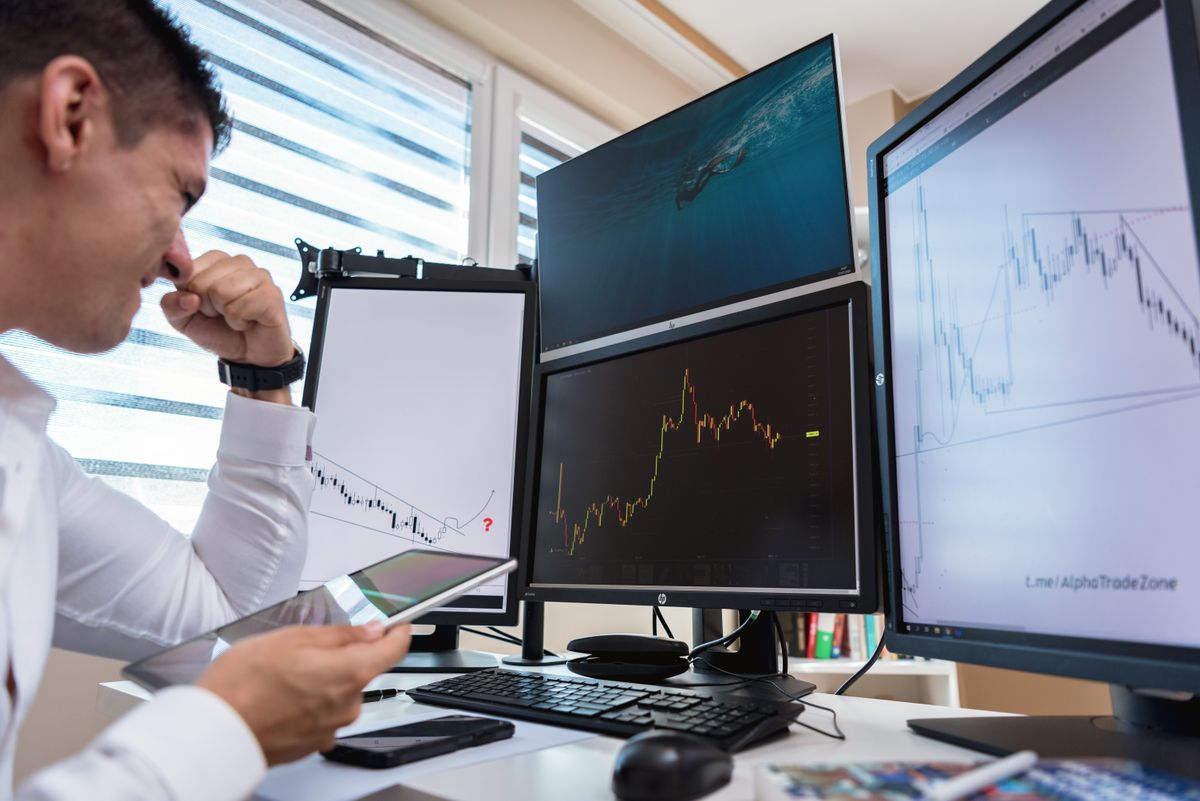
Volatility tests a plan.
But it does not decide whether the plan fits.
A clear process can help investors respond thoughtfully.
What market volatility means
Market volatility describes how much investment prices move over time.
Prices may rise, fall, or vary unevenly.
Investors often experience volatility as a changing account balance.
That movement can feel significant even when nothing is sold.
A decline in price is not automatically a realized loss.
Selling below the purchase price makes the loss concrete.
Holding an investment does not guarantee that its value will recover.
Some assets can lose value permanently.
Separate what you observe from what you infer.
A lower balance alone does not explain why prices moved.
Price changes may reflect expectations, economic conditions, company results, or investor decisions.
Different investments respond to different influences.
Volatility is one kind of investment risk.
Other risks include inflation, limited access to money, and loss of principal.
Cash may show fewer visible price changes than shares.
Inflation can still reduce what cash buys over time.
Bond prices can change as interest rates or views of borrowers change.
A bond fund is not a guaranteed deposit.
A fund holding many investments can still lose value.
Diversification spreads exposure but cannot prevent every decline.
Conservative investing does not eliminate all risk.
It means considering risks in relation to goals and circumstances.
Lower price fluctuation may involve tradeoffs.
An investor might accept less growth potential in exchange for greater stability.
That choice is personal, and no allocation can promise a particular result.
Begin by considering the money's purpose.
A market headline may describe one segment rather than every holding you own.
Check what the headline actually concerns.
Knowing what moved can help distinguish portfolio exposure from broad impressions.
Do not treat a general market label as a diagnosis.
Separate comfort from financial capacity
Risk tolerance describes how much uncertainty you can emotionally accept.
Risk capacity describes how much loss your finances could withstand.
The two measures do not always match.
Comfort with fluctuations does not provide money for an approaching expense.
A long investment horizon may allow more time to wait through declines.
It does not remove risk or guarantee recovery.
Someone with adequate financial capacity may still find price changes difficult.
That discomfort matters because it can affect decisions.
Start by listing essential expenses and financial commitments.
Housing costs, debt payments, and planned spending shape your flexibility.
Consider what could happen if an investment fell before you needed its money.
Would you need to sell or change plans?
Money for near-term spending has a different job from money for distant goals.
Keeping those purposes distinct can clarify risk choices.
Access to emergency savings may affect your ability to leave investments untouched.
The appropriate reserve depends on personal circumstances.
Income stability also matters.
Someone with uncertain income may value accessible funds differently from someone with predictable income.
Debt commitments can narrow your room to absorb setbacks.
Consider obligations alongside investment balances, not separately.
Business owners should distinguish operating cash from long-term investment capital.
Money needed for payroll or expenses serves an immediate purpose.
Ask what a decline could change about your choices.
This connects feelings about volatility with practical consequences.
Risk tolerance and capacity can change as responsibilities, income, or goals change.
Reassess them when your financial situation materially changes.
Use hypothetical scenarios without pretending to forecast prices.
Consider whether a decline could interrupt a goal or require a sale.
That reflection is more useful than labeling yourself cautious or adventurous.
Labels cannot capture every goal or obligation.
Match investments to time horizons
A time horizon is how long you expect to invest before using the money.
It helps frame your ability to wait.
Near-term goals leave less time to respond to a decline.
A planned withdrawal can make price movement more consequential.
Distant goals may allow more time for a plan to withstand fluctuations.
They still carry the possibility of loss.
Separate savings by purpose and expected use.
This helps avoid applying one investment approach to different needs.
A conservative investor might keep money for an upcoming expense separate from retirement savings.
The suitable arrangement depends on circumstances.
Do not assume a distant goal automatically justifies taking more risk.
Capacity, tolerance, and possible consequences remain relevant.
Consider the risk of holding assets that may not keep pace with rising costs.
Stability also involves tradeoffs.
Review whether the timing of a goal has changed.
A delayed or accelerated need can change suitable levels of uncertainty.
Account labels do not determine investment risk.
The holdings inside an account shape its market exposure.
In the United States, workplace retirement plans and IRAs are account arrangements.
They do not promise investment returns.
In Canada, an RRSP or TFSA is an account type.
The investments inside still carry their own risks.
In the United Kingdom, an ISA has local account rules.
Australian superannuation follows country-specific requirements.
These systems are not interchangeable.
Check official local information before relying on another country's account rules.
Within any account, connect each holding to a goal and timeline.
A tax arrangement alone cannot establish suitability.
Consider how your plan would function if the date moved.
Flexibility can matter when goals or circumstances are uncertain.
Diversification and its limits
Diversification means spreading investments across different exposures.
It reduces reliance on a narrow set of holdings.
Exposure can vary by asset type, industry, geography, or issuer.
The actual mix matters more than the number of funds.
Several funds may own many of the same securities.
Overlap can leave a portfolio dependent on similar risks.
Review fund descriptions and holdings where available.
A product name alone may not explain its exposures.
A broad index fund may hold many securities.
It still follows a particular market segment and can decline.
Adding investments with different characteristics can change portfolio behavior.
It may also add costs or complexity.
Diversification distributes exposure; it does not make losses impossible.
Do not treat it as protection against every market outcome.
Cash, bonds, and shares may respond differently to changing conditions.
No combination is immune to every risk.
Concentration can occur through employer shares, a familiar industry, or overlapping funds.
Review exposure across accounts when possible.
Consider the role of each major holding.
If two investments serve the same purpose, understand why both remain necessary.
Do not add products merely to make a portfolio look diversified.
More holdings can complicate oversight without meaningfully changing exposure.
A written explanation of each holding can reveal duplication.
It can also show when an investment no longer serves its purpose.
Geographic diversification may introduce currency and country-specific risks.
Wider reach does not remove uncertainty.
Issuer diversification matters when investments depend on the same borrower or business.
Identify dependencies that account labels may hide.
Review diversification as a relationship among holdings.
A product list alone is not a risk assessment.
Liquidity, fees, and product structure
Liquidity describes how readily an investment can become usable money.
Access matters when a goal or emergency approaches.
Some products take time to sell or include withdrawal restrictions.
Read the terms before relying on quick access.
Transaction costs can affect the amount received when investments are sold.
Product documents may describe applicable charges.
Investment funds may charge management expenses.
Other products can carry trading costs or additional fees.
Fees reduce the amount remaining invested.
Compare costs with services and risks, rather than looking at price alone.
Find out when a charge applies and what it covers.
Ask for clarification if the description is unclear.
Complex products can make possible losses difficult to understand.
Pause if you cannot explain how an investment works.
Check whether a product uses borrowing or derivatives.
These features can add risks beyond ordinary price movement.
Understand the conditions that apply to withdrawals.
A stable-looking balance is less useful if access is limited when needed.
Tax treatment and account protections depend on local rules and product details.
Verify information through official sources or a qualified professional.
United States rules differ between account types.
Canadian RRSP and TFSA rules also differ.
United Kingdom ISA requirements are not Australian superannuation rules.
Do not apply one country's treatment to another situation.
Read relevant documents before committing money.
Pay attention to risks, costs, access conditions, and the investment's stated purpose.
When comparing options, consider the whole arrangement.
A product's price stability does not tell you every important feature.
Keep records of the information used in your decision.
Clear notes can help when reviewing the investment later.
Respond without trying to predict prices
A written investment policy can record goals, time horizons, acceptable risks, and review habits.
It gives decisions a reference point.
Choose review occasions around meaningful financial changes.
Checking constantly can make ordinary movement feel like an urgent instruction.
Decide in advance what could justify a change.
A changed goal or lower capacity may matter more than a price decline alone.
Before acting, ask whether new information has changed your reasoning.
Distinguish that information from discomfort about a lower balance.
A balance movement does not show whether an investment still fits.
Revisit its purpose, exposure, and terms before deciding.
If a holding no longer suits its purpose, identify the reason.
Compare alternatives and consequences rather than acting solely to reduce unease.
Rebalancing means restoring a chosen portfolio mix after exposures drift.
It is maintenance, not a way to predict market direction.
Rebalancing can involve costs, taxes, or account restrictions.
Check those effects before changing investments.
Some investors use a set review process rather than reacting to each movement.
The process should still allow for changed circumstances.
A written decision rule can reduce improvisation.
It should explain when review is appropriate, not dictate a response to every decline.
Avoid borrowing to invest as a way to pursue a different return.
Borrowing adds repayment obligations and can increase losses.
When a product or tax question is unclear, seek qualified guidance suited to your country.
Advice should address your circumstances, not promise outcomes.
Keep predictions out of the decision process.
Assess a plan through goals, risks, costs, and your ability to wait.
Define what would make you reconsider an investment.
That is different from guessing where prices will go.
What to do now
- Write down each investment goal and when you expect to use its money.
- Identify savings that need to remain accessible for near-term spending or emergencies.
- List major holdings, their purpose, principal exposures, and known costs.
- Check whether different funds overlap or depend on similar risks.
- Consider how a hypothetical decline could affect spending, obligations, or your ability to wait.
- Review withdrawal conditions and local tax rules before changing account investments.
- Write down the circumstances that would prompt a portfolio review.
- Ask a qualified professional about risks or product terms you cannot explain.
Conclusion
Volatility can expose assumptions that are easy to overlook when balances appear steady.
It can prompt a closer look at each investment's purpose.
A durable decision process preserves room to adapt.
Its strength lies in making tradeoffs visible before circumstances force a choice.
Featured photo by AlphaTradeZone on Pexels.
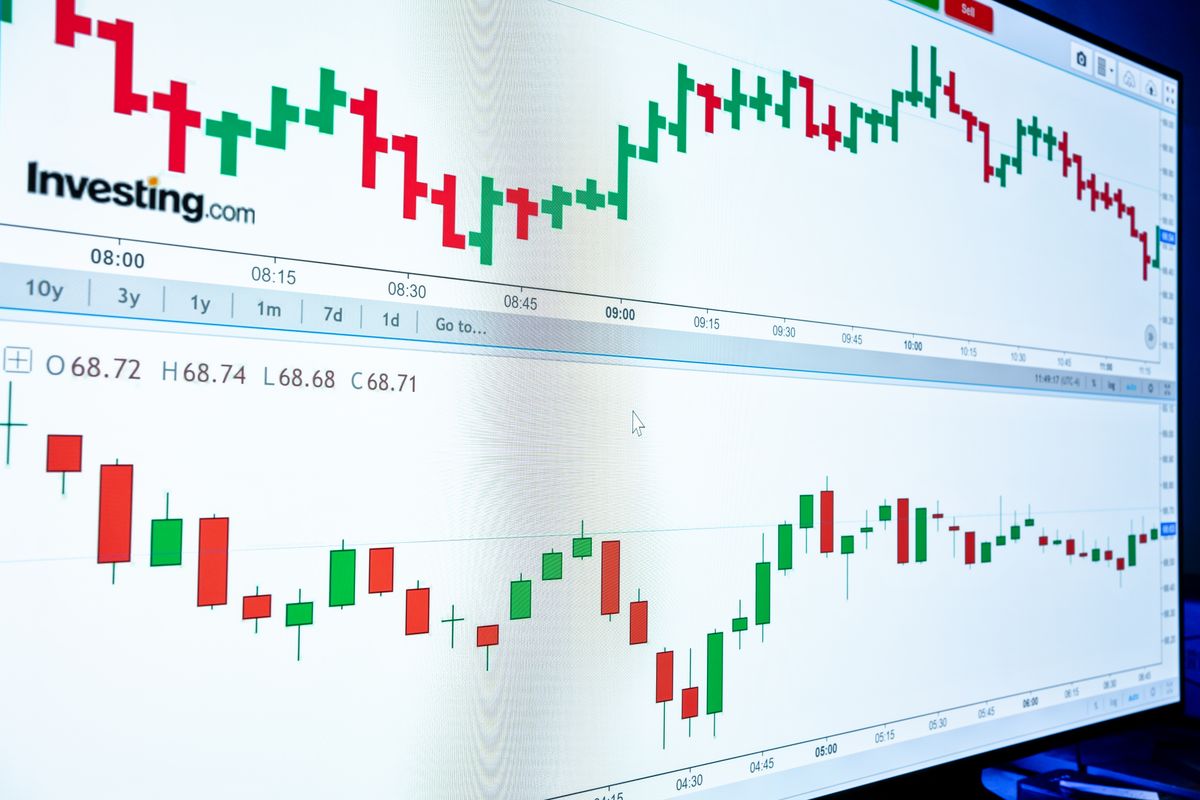
Photo by Rafael Minguet Delgado on Pexels.
 Article
 Article
 Article
 Article
 Article
 Article
 Article
 Article