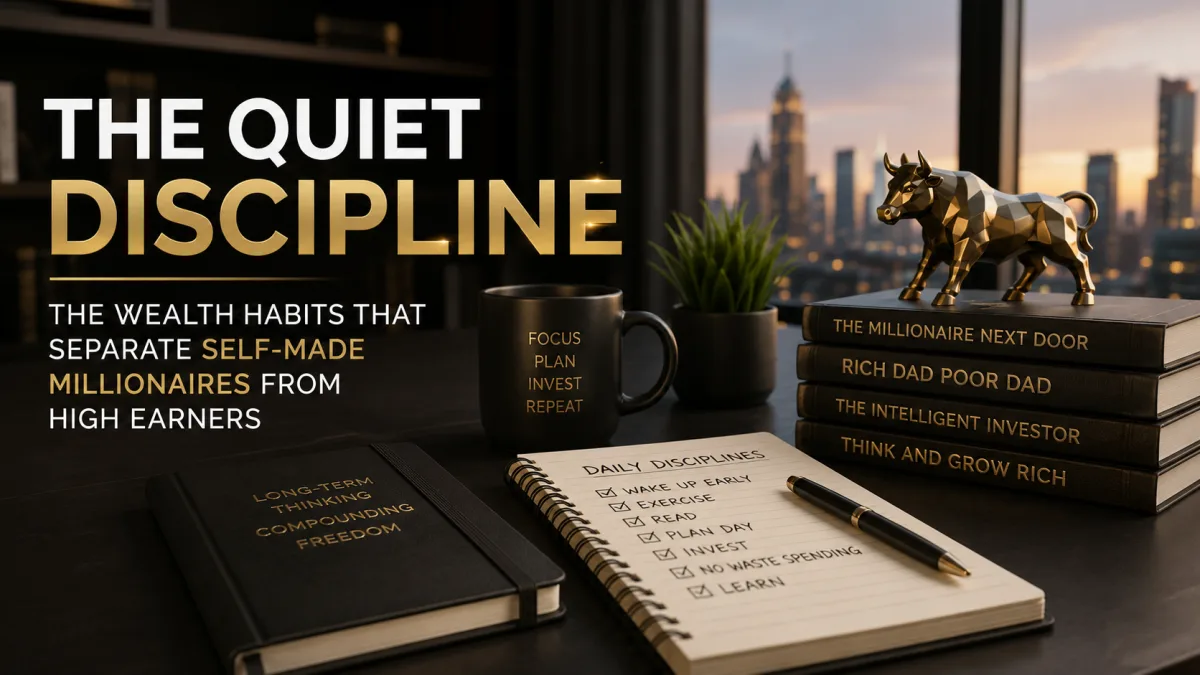
The Quiet Discipline: The Wealth Habits That Separate Self-Made Millionaires From High Earners
Most self-made millionaires do not build wealth through one lucky break.
They build it through habits.
That truth is less dramatic than the stories people prefer. A sudden business success, a perfect investment, a viral product, a major inheritance, or a fortunate career move makes for a more exciting explanation. But for many people who become wealthy over time, the real story is quieter. They made a series of disciplined decisions for years. They spent less than they earned. They invested consistently. They avoided destructive debt. They improved their skills. They protected their time. They bought assets. They reinvested profits. They thought in decades while others thought in weekends.
Wealth is rarely one big event.
It is usually the result of repeated behavior.
This is why two people can earn the same income and end up in completely different financial positions. One person upgrades lifestyle every time income rises. The other quietly expands savings, investments, business ownership, and financial options. After one year, the difference may be small. After ten years, it becomes visible. After thirty years, it can become life-changing.
The habits of self-made millionaires are not always complicated. In fact, many are simple enough to sound ordinary. Spend less than you earn. Invest regularly. Avoid bad debt. Own assets. Keep learning. Use time wisely. Reinvest gains. Think long term.
The challenge is not understanding these principles once. The challenge is living them consistently when society rewards the opposite.
Modern life makes consumption easy. Credit is available. Advertising is constant. Social comparison is everywhere. Status can be rented. A person can look wealthy while owning little. They can drive a luxury car with debt, live in an expensive home with no savings, wear designer clothing with credit card balances, and appear successful while remaining financially fragile.
Self-made millionaires often move differently. Many are less flashy than people imagine. They may own good homes, build strong careers, run businesses, and enjoy life, but their wealth is not built on appearances. It is built on margin, ownership, patience, and discipline.
Their habits create financial momentum. That momentum compounds quietly until it becomes financial freedom.
What Makes Self-Made Millionaires Different?
Self-made millionaires tend to think differently about money, time, risk, ownership, and growth.
They do not see money only as something to spend. They see it as a tool. Money can buy comfort, but it can also buy assets. It can buy status, but it can also buy freedom. It can disappear into consumption, or it can be directed toward investments that may produce more money over time.
They do not treat time as something to waste casually. They understand that time is the one asset that cannot be recovered. Lost money can sometimes be earned again. Lost time cannot. This does not mean wealthy people never rest or enjoy life. It means they are often more intentional about what receives their attention.
They do not view risk as something to avoid completely. They view it as something to understand, price, manage, and use wisely. Starting a business involves risk. Investing involves risk. Changing careers involves risk. But staying financially dependent on one paycheck, carrying high-interest debt, and failing to invest also involve risk. Self-made millionaires often learn to distinguish productive risk from reckless risk.
They do not depend only on labor. They prioritize ownership. They want to own equity, businesses, real estate, intellectual property, financial assets, systems, or other income-producing resources. They understand that labor can create income, but ownership can create scale.
Most importantly, they think long term. They know that compounding takes time. They understand that markets fluctuate, businesses mature slowly, skills improve with practice, and wealth grows through patient accumulation. Short-term thinking is expensive. Long-term thinking creates room for better decisions.
These differences are not personality traits reserved for a special group of people. They are habits of thought that can be learned and practiced.
Habit One: They Spend Less Than They Earn
The first millionaire habit is also the least glamorous: self-made millionaires usually spend less than they earn.
This sounds obvious, but it is the foundation of wealth. Without a gap between income and expenses, there is no surplus. Without surplus, there is no capital to invest. Without capital, it is difficult to acquire assets. Without assets, wealth creation remains limited.
Many people believe wealth begins with high income. High income helps, but it is not enough. A person can earn a large salary and still remain broke if expenses rise at the same speed. This is the trap of lifestyle inflation.
Lifestyle inflation happens when spending increases every time income increases. A raise becomes a larger apartment. A bonus becomes a luxury purchase. A promotion becomes a new car payment. A business success becomes expensive vacations, premium subscriptions, and higher fixed costs. The person earns more but does not keep more.
Self-made millionaires often resist this pattern, especially during the wealth-building years. They may upgrade life gradually, but they usually protect the gap between income and spending. That gap is where wealth is born.
Spending less than you earn does not mean living miserably. It means making sure your lifestyle does not consume your future. It means directing money toward assets before appearances. It means asking whether a purchase improves life enough to justify the opportunity cost.
Opportunity cost is the invisible price of every financial decision. Money spent on one thing cannot be invested in another. A car payment may cost more than the monthly payment itself. It may also cost the future investment growth that money could have produced. A larger home may bring comfort, but it may also reduce the ability to invest, start a business, or build freedom.
Self-made millionaires understand that wealth is not what you earn. Wealth is what remains and grows.
The Hidden Power of Financial Margin
Financial margin is the difference between what comes in and what goes out.
A household with strong margin has room to breathe. It can save, invest, handle emergencies, take opportunities, and make decisions without constant panic. A household with no margin may look successful from the outside but live under pressure. One unexpected bill can create debt. One job disruption can create crisis. One medical issue, repair, or family emergency can destroy stability.
Self-made millionaires tend to protect margin because margin creates options.
Margin allows a person to invest during downturns. It allows a business owner to survive slow months. It allows a family to avoid high-interest debt. It allows a worker to change jobs without desperation. It allows an investor to stay patient when markets decline. It allows a person to say no.
That last point matters. The ability to say no is one of the quiet rewards of wealth. No to bad jobs. No to predatory loans. No to unnecessary pressure. No to financial dependence. No to opportunities that look exciting but do not fit the plan.
Spending less than you earn is not only about saving money. It is about building power over your own life.
Habit Two: They Invest Consistently
Self-made millionaires invest consistently.
They do not wait for perfect timing. They do not assume they can predict every market movement. They understand that wealth building depends more on disciplined participation than flawless prediction.
Investing turns income into ownership. A paycheck is income from labor. Investments represent claims on assets. Stocks can represent ownership in businesses. Bonds can represent lending arrangements. Real estate can represent ownership of property. Retirement accounts can hold diversified assets that compound over time. Business equity can grow as the company grows.
The habit of investing matters because savings alone may not be enough. Cash is important for emergencies and short-term needs, but long-term wealth usually requires assets that can grow, produce income, or both.
Self-made millionaires often invest through ordinary methods repeated for long periods. Retirement contributions. Brokerage accounts. Index funds. Exchange-traded funds. Business ownership. Real estate. Reinvested profits. Private ventures. The specific assets vary, but the habit is consistent: money is regularly moved from consumption into ownership.
Consistency matters because compounding needs time and fuel. Time allows growth to build on itself. Contributions provide fuel. Reinvestment increases the base. Patience allows temporary volatility to pass.
A person who invests only when they feel confident may miss many opportunities because confidence often rises after prices have already increased. A person who invests consistently through a thoughtful plan avoids making every decision based on emotion.
Self-made millionaires understand that investing is not about excitement. It is about ownership accumulated over time.
Why Compounding Rewards Patience
Compounding is the process of returns generating further returns.
At first, compounding can feel slow. A small portfolio produces small gains. A small business produces modest profit. A rental property produces limited cash flow. A dividend payment may seem insignificant. This early stage discourages people who want immediate results.
But compounding becomes more powerful as the base grows.
The first dollars invested are important not because they create instant wealth, but because they begin the process. Over time, contributions, returns, reinvestment, and asset growth can create momentum. Eventually, the assets may generate more income and growth than the original contributions did.
Self-made millionaires respect this timeline. They know that wealth often looks unimpressive in the early years. The person investing steadily may not look rich. The business owner reinvesting profits may not live extravagantly. The real estate investor building reserves may not appear wealthy. But beneath the surface, assets are accumulating.
Compounding rewards people who can keep going while the results are still quiet.
Habit Three: They Build Multiple Income Streams
Self-made millionaires rarely depend on one income source forever.
They may begin with one job, one business, or one skill, but over time they often build additional streams. These may include business income, investment income, rental income, digital income, consulting income, royalties, dividends, interest, or asset sales.
The reason is simple: one income source creates concentration risk.
If a person depends entirely on one paycheck, their financial life is tied to one employer. If a business owner depends entirely on one client, their business is fragile. If a freelancer depends on one platform, one niche, or one contract, they are exposed. A single income source can feel safe until it disappears.
Multiple income streams create resilience. If one source weakens, others may continue. Investment income may continue while employment changes. A side business may provide cash flow during a career transition. Rental income may support expenses. Digital products may sell while the creator is focused elsewhere.
Multiple streams also accelerate wealth building. Extra income can fund investments, pay down debt, build emergency savings, buy tools, hire help, or support business growth. The important point is that extra income should be directed intentionally. If every additional dollar is spent, the wealth-building effect is lost.
Self-made millionaires often build income streams gradually. They strengthen primary income first. Then they create surplus. Then they invest. Then they build or acquire assets. Then they reinvest. Over time, income becomes more diversified and less dependent on one source.
The goal is not to have many jobs. The goal is to build a stronger financial system.
Habit Four: They Prioritize Ownership
Ownership is one of the defining habits of wealth builders.
Employees earn wages. Owners build equity. Employees are paid for their work. Owners may benefit from profits, appreciation, cash flow, and sale value. Employment can be a powerful foundation, but ownership is often what allows wealth to scale.
Self-made millionaires look for ways to own assets.
They may own shares of companies through the stock market. They may own businesses. They may own real estate. They may own intellectual property, patents, trademarks, books, content libraries, software, or digital products. They may own equity in private companies. They may own systems that generate income.
Ownership matters because it separates income from direct labor. A person can work only so many hours. But an asset can grow, produce income, or increase in value without requiring one hour of labor for every dollar earned.
This does not mean ownership is easy. Owners take risk. Businesses can fail. Investments can decline. Properties can require repairs. Intellectual property may not sell. Ownership requires judgment, patience, and management.
But without ownership, wealth building is limited. A person who only earns and spends must keep earning forever. A person who earns, saves, and buys assets begins to build a financial machine that can eventually work alongside them.
The ownership habit begins with a question: “How can I turn today’s income into tomorrow’s asset?”
Ownership Over Appearance
Many people use money to appear wealthy before they are wealthy.
They buy symbols of success: expensive cars, designer items, luxury experiences, large homes, premium memberships, and public displays of status. These purchases may bring enjoyment, but they can also consume the capital needed to build real wealth.
Self-made millionaires often prioritize ownership over appearance, especially early in the journey.
They may choose investments over upgrades. They may drive a reliable car rather than a luxury vehicle. They may live in a comfortable but manageable home. They may avoid unnecessary debt. They may reinvest business profits instead of displaying success.
This does not mean wealthy people never enjoy luxury. Many do. The difference is sequence. Wealth builders often buy assets first and luxuries later. Financially fragile people often buy luxuries first and hope assets come later.
The sequence matters.
Assets can eventually pay for luxuries. Luxuries rarely pay for assets.
Habit Five: They Think Long Term
Self-made millionaires tend to make decisions with a longer time horizon.
They understand that wealth building is not a weekend project. It is a multi-year and often multi-decade process. Markets fluctuate. Businesses take time to mature. Skills require practice. Real estate cycles move slowly. Reputation compounds. Networks deepen over years.
Short-term thinking leads to expensive mistakes. It encourages panic selling, impulsive spending, speculative investing, unnecessary debt, and constant strategy switching. It makes people vulnerable to hype because they want results immediately.
Long-term thinking creates better decisions.
A long-term investor can endure market volatility more calmly because they do not need every month to be positive. A business owner can reinvest profits because they care about future value, not only current lifestyle. A professional can spend years building a valuable skill because they understand the payoff may come later. A household can avoid lifestyle inflation because it values freedom more than immediate status.
Long-term thinking is not passive. It requires active patience. It requires the ability to delay gratification, ignore noise, and stay committed to a strategy long enough for it to work.
Self-made millionaires often win because they are willing to be consistent longer than others are willing to wait.
Habit Six: They Keep Learning
Financial education does not stop once income rises.
Self-made millionaires are often continuous learners. They study business, investing, economics, technology, leadership, tax strategy, negotiation, sales, marketing, personal finance, and human behavior. They read, listen, ask questions, study competitors, learn from mistakes, and seek better information.
Learning matters because money decisions become more complex as wealth grows.
A person with no savings may need basic budgeting skills. A person with a growing portfolio needs investment knowledge. A business owner needs cash flow management, hiring, pricing, and operations. A real estate investor needs market analysis, financing knowledge, and risk management. A high earner needs tax planning, insurance awareness, estate considerations, and asset protection.
Wealth creates new decisions. New decisions require better judgment.
Self-made millionaires do not assume they know enough. They keep expanding their understanding because knowledge improves decision-making. One better decision can have lasting financial impact. Avoiding one bad investment, negotiating one better deal, choosing one stronger business model, or understanding one tax mistake can save or create significant wealth.
The habit of learning also protects against change. Industries evolve. Technology advances. Markets shift. Consumer behavior changes. Skills become outdated. People who keep learning are more adaptable.
Wealth is not only built with money. It is built with judgment. Learning sharpens judgment.
Habit Seven: They Avoid Bad Debt
Self-made millionaires are careful with debt.
They understand that not all debt is the same. Debt used to acquire productive assets can sometimes support wealth building when managed properly. Debt used for consumption can quietly destroy wealth.
Bad debt often finances things that lose value or produce no income. Credit card balances used for lifestyle spending, expensive car loans, personal loans for unnecessary purchases, and high-interest consumer debt can weaken financial progress. The borrower pays interest for yesterday’s consumption instead of using cash flow to build tomorrow’s assets.
Debt is dangerous because it creates fixed obligations. Payments continue even when income falls. Interest accumulates. Flexibility disappears. A household with too much debt may earn a good income but have little control because much of the money is already promised to lenders.
Self-made millionaires often avoid debt that does not improve earning power or asset ownership. When they use debt, they tend to think carefully about cash flow, risk, return, and downside protection. They ask whether the debt is productive or merely expensive.
This distinction is vital. Borrowing to buy a rental property with strong cash flow and proper reserves is different from borrowing to fund a lifestyle image. Borrowing to expand a profitable business may be different from borrowing to cover uncontrolled spending. Borrowing for education that meaningfully increases earning power may be different from borrowing without a realistic plan.
Debt can be a tool, but it can also be a trap. Self-made millionaires respect both sides.
Habit Eight: They Focus on High-Value Skills
Income usually follows value creation.
Self-made millionaires often develop skills that increase their ability to create value. These skills may include sales, marketing, communication, leadership, investing, problem-solving, financial analysis, technology, operations, negotiation, management, or product development.
High-value skills matter because they increase earning power. A person who can solve expensive problems can command higher compensation. A person who can sell effectively can grow revenue. A person who can lead teams can scale operations. A person who understands investing can allocate capital better. A person who communicates clearly can influence, teach, negotiate, and build trust.
Skills are portable assets. They can move across jobs, industries, businesses, and opportunities. A person may lose a job, but they do not lose the skills they have built. Those skills can be used to find new work, start a business, consult, invest more intelligently, or create products.
Many people focus only on cutting expenses. Expense control matters, but income growth matters too. The most powerful financial position combines controlled spending with rising earning power. Skills create that earning power.
Self-made millionaires often invest in themselves before the returns are obvious. They read books, take courses, find mentors, practice, seek feedback, and accept difficult learning curves. They understand that a valuable skill can produce returns for decades.
Your skills are often the first asset you own. Build them carefully.
Habit Nine: They Protect Their Time
Self-made millionaires treat time like an asset.
This does not mean they work every hour. It means they understand that time has value, and they are careful about where it goes. Distraction is expensive. Poor focus is expensive. Low-value commitments are expensive. Hours spent on activities that do not support health, relationships, learning, income, or purpose can quietly delay progress.
Time compounds just like money.
An hour spent improving a skill can increase future earning power. An hour spent studying investing can improve future decisions. An hour spent building a business system can save many hours later. An hour spent exercising can protect energy and health. An hour spent with the right mentor can change the direction of a career.
The opposite is also true. Repeated wasted hours compound into lost years.
Self-made millionaires often become selective. They focus on high-impact activities. They reduce unnecessary distractions. They delegate when appropriate. They design routines that support concentration. They understand that not every opportunity deserves attention.
Protecting time also means understanding the difference between being busy and being productive. Many people fill their days with activity that does not change their financial life. Wealth builders focus on activities that create value, build assets, improve skills, strengthen relationships, or increase leverage.
Time is the raw material from which habits are built. Protecting it is a wealth strategy.
Habit Ten: They Reinvest Profits
Self-made millionaires often reinvest before they spend.
This habit is especially important for entrepreneurs, investors, creators, and anyone building extra income streams. Early profits can be exciting. A business begins making money. A portfolio produces dividends. A side project generates cash. A rental property produces net income. The temptation is to spend the profit as proof of success.
Wealth builders often do the opposite.
They use profits to strengthen the asset. Business profits may fund better equipment, marketing, hiring, technology, inventory, or systems. Investment income may be reinvested into more shares. Rental income may build reserves, improve the property, or support future acquisitions. Digital product revenue may fund better content, software, advertising, or product development.
Reinvestment creates compounding. Profit creates more capacity. More capacity creates more profit. The cycle repeats.
Spending profits too early can weaken the growth engine. The income is enjoyed, but the asset does not expand. Reinvestment delays gratification, but it accelerates long-term wealth.
This does not mean a person should never enjoy success. The point is sequence and proportion. In the early stages, the highest use of profits is often growth. Once the asset becomes strong enough, it can support both reinvestment and lifestyle.
Self-made millionaires understand that the first profits are seeds, not harvest.
Habit Eleven: They Measure What Matters
Self-made millionaires often pay attention to numbers.
They may not track every cent forever, but they usually understand the major financial indicators in their life. Income. Expenses. Savings rate. Net worth. Debt levels. Investment contributions. Business profit. Cash flow. Tax obligations. Asset values. Return on investment.
Measurement matters because vague financial awareness leads to vague results.
A person who does not know where money goes cannot easily control spending. A business owner who does not know profit margins cannot price properly. An investor who does not know asset allocation may take unintended risk. A household that does not know debt costs may underestimate how much interest is draining future wealth.
Numbers create clarity. Clarity creates better choices.
Self-made millionaires tend to review financial progress periodically. They ask whether net worth is growing, whether debt is falling, whether investments are funded, whether spending reflects priorities, and whether income streams are improving. They use information to adjust behavior.
This habit does not require obsession. It requires honesty. Money becomes easier to manage when it is measured.
Habit Twelve: They Build Strong Networks
Wealth is not built in isolation.
Self-made millionaires often develop relationships with people who expand their thinking, create opportunities, provide expertise, challenge assumptions, and open doors. Networks matter in careers, business, investing, hiring, partnerships, and learning.
A strong network can introduce a better job opportunity, a valuable client, a smart investor, a skilled accountant, a trustworthy attorney, a business partner, a mentor, or a new market insight. Information often travels through relationships before it becomes publicly obvious.
This does not mean using people transactionally. Strong networks are built on trust, value, generosity, competence, and reputation. People want to work with those who are reliable, honest, capable, and thoughtful.
Self-made millionaires often understand that reputation is a financial asset. A good reputation reduces friction. It attracts opportunities. It makes people more willing to refer, invest, partner, hire, or recommend.
Networking is not merely attending events. It is becoming the kind of person serious people want to know.
Habit Thirteen: They Manage Risk Before It Becomes Crisis
Wealth builders do not only focus on making money. They also focus on keeping it.
Risk management is one of the most overlooked millionaire habits. A person can spend years building wealth and lose much of it through poor protection, excessive leverage, lack of insurance, bad partnerships, legal mistakes, concentration risk, or emotional decisions.
Self-made millionaires often think about downside protection. They keep emergency reserves. They diversify investments. They avoid putting everything into one opportunity. They use insurance where appropriate. They review contracts. They manage debt carefully. They separate business and personal finances when needed. They seek professional advice for complex decisions.
Risk management is not fear. It is maturity.
The purpose of risk management is not to avoid every possible loss. That is impossible. The purpose is to prevent one mistake from destroying years of progress.
Wealth that cannot survive stress is fragile. Wealth protected by good systems is more durable.
Habit Fourteen: They Delay Gratification
Delayed gratification is the ability to choose a larger future benefit over a smaller immediate pleasure.
This habit appears everywhere in wealth building. Saving instead of spending. Investing instead of upgrading. Studying instead of scrolling. Reinvesting instead of withdrawing. Building a business system instead of taking all profits. Holding quality investments instead of reacting to short-term volatility.
Self-made millionaires often practice delayed gratification repeatedly. Not because they dislike enjoyment, but because they understand sequence. They know that money invested today can buy more freedom later. They know that skills developed now can raise income later. They know that assets acquired early can produce cash flow later.
Delayed gratification is difficult because the present is loud and the future is quiet. Advertising speaks now. Social pressure speaks now. Desire speaks now. The future asks for discipline without immediate applause.
Wealth builders learn to hear the future anyway.
They are willing to look less impressive today so they can become more secure tomorrow.
Habit Fifteen: They Avoid Financial Comparison
Comparison destroys wealth because it encourages people to spend money to compete with appearances.
Modern comparison is constant. People see homes, cars, vacations, clothing, restaurants, and lifestyles through carefully selected images. They rarely see the debt, stress, family support, business losses, or lack of savings behind those images.
Self-made millionaires often avoid making financial decisions based on other people’s displays. They understand that appearing wealthy and being wealthy are different outcomes.
Appearing wealthy is easy with debt. Being wealthy requires assets.
A person who buys status to impress others may sacrifice the capital needed for freedom. A person who ignores comparison can make decisions based on goals, values, and long-term security.
The quiet millionaire may not receive immediate admiration. But they receive something better: control.
Habits That Destroy Wealth
The opposite of millionaire habits often creates financial struggle.
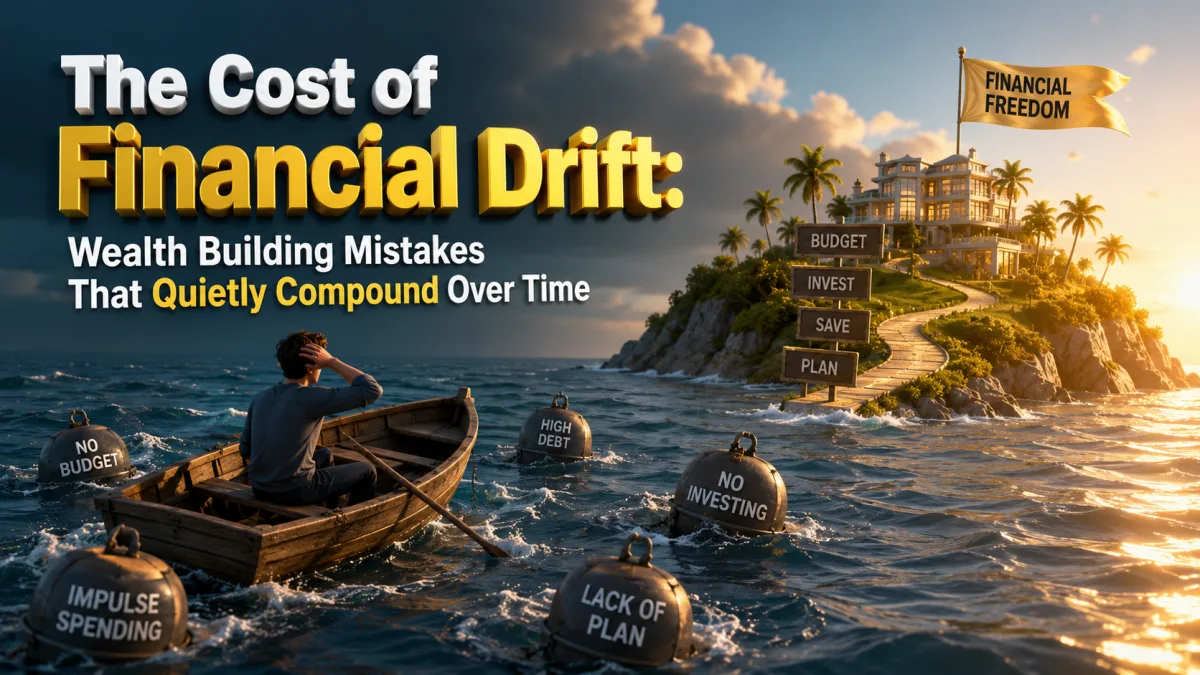
Overspending destroys margin. Lifestyle inflation consumes raises before they can become assets. Consumer debt turns past purchases into future obligations. Poor investing decisions waste capital. Lack of savings turns emergencies into crises. Short-term thinking encourages panic and speculation. Ignoring skill development limits earning power. Wasting time slows progress. Spending profits too early weakens compounding.
These habits may not ruin someone overnight. That is what makes them dangerous. They work slowly.
A little overspending becomes normal. A small credit card balance grows. A slightly larger car payment feels manageable. A missed investment contribution becomes a habit. A year passes. Then another. The person earns money but does not build wealth.
Financial outcomes are shaped by repeated behavior. Just as good habits compound, bad habits compound too.
The encouraging truth is that habits can change. A person does not need to fix everything at once. They need to begin replacing destructive patterns with constructive ones.
The Hidden Truth About Wealth
Most wealth is quieter than people think.
Many self-made millionaires do not live like celebrities. They may live in ordinary neighborhoods, drive practical cars, wear simple clothing, and avoid public displays of wealth. Their financial strength is not obvious because it is held in assets, businesses, retirement accounts, real estate, and investments rather than constant consumption.
This quiet wealth can be misunderstood. People often assume millionaires must look rich. In reality, looking rich can be one of the reasons people fail to become rich.
Wealth is not the same as luxury. Wealth is financial capacity. It is ownership. It is flexibility. It is resilience. It is the ability to make choices without being controlled by every paycheck. It is the ability to withstand emergencies, fund opportunities, support family, retire with dignity, or work on your own terms.
Self-made millionaires often prioritize freedom over status.
Status asks, “What will people think?”
Freedom asks, “What will this decision make possible?”
That difference changes everything.
How to Apply Millionaire Habits Without Being a Millionaire
You do not need to be wealthy to practice wealth-building habits.
In fact, the habits must usually come before the wealth. Waiting until you have more money to become disciplined is backward. Discipline is what helps more money stay and grow.
Start with spending less than you earn. This may require tracking expenses, reducing waste, increasing income, or making difficult choices. The goal is to create margin.
Then invest consistently. Begin with an amount that is realistic and sustainable. The habit matters. Over time, increase contributions as income grows.
Next, improve your earning power. Build skills that the market values. Study sales, communication, technology, leadership, finance, or a specialized field. Higher earning power expands your ability to save and invest.
Then build additional income streams carefully. Start with one. Choose something that fits your skills, time, capital, and risk tolerance. Avoid chasing every trend.
Prioritize ownership. Use income to buy or build assets. Think in terms of equity, cash flow, intellectual property, investments, and systems.
Protect your time. Reduce distractions. Focus on activities that improve your financial future. Give attention to health, learning, relationships, and work that creates value.
Reinvest early gains. Let small wins become fuel for larger outcomes.
Think long term. The habits may not transform your life in a month, but they can change the direction of your future.
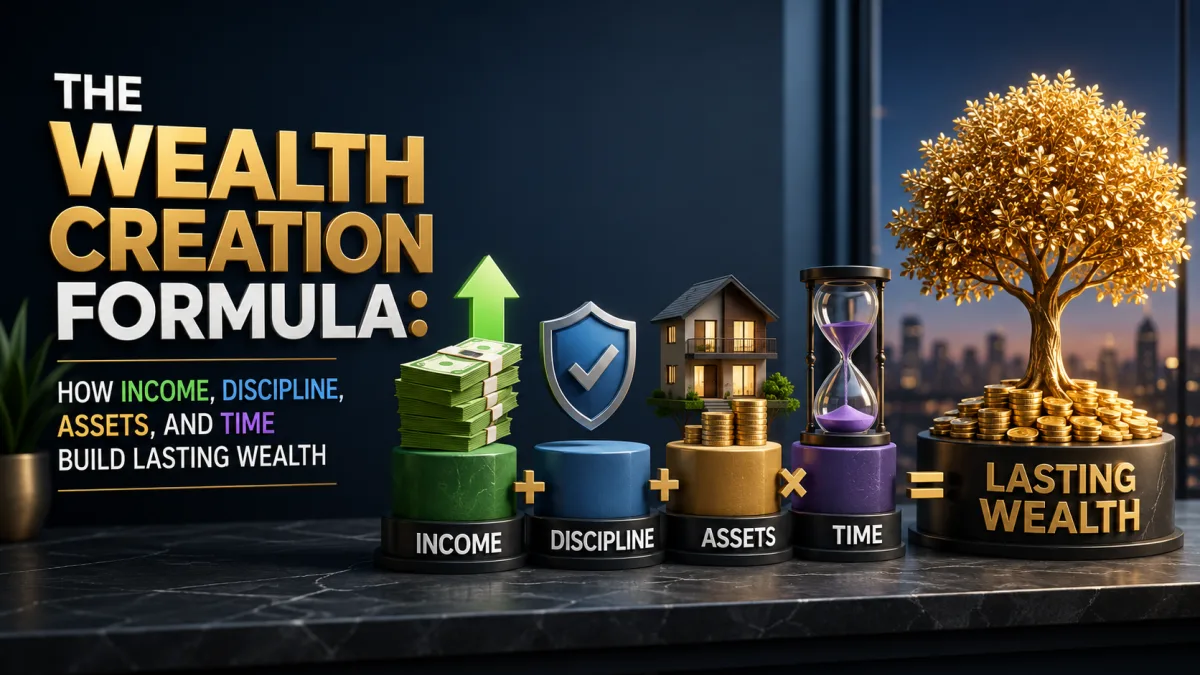
A Simple Wealth Habit Framework
A practical framework can make these habits easier to apply.
First, earn. Increase your ability to create value. Your income is the starting engine.
Second, keep. Control spending so income does not disappear. Margin is the foundation.
Third, invest. Convert surplus into assets. Ownership is the wealth builder.
Fourth, protect. Manage risk, avoid bad debt, keep reserves, and insure against major threats.
Fifth, multiply. Reinvest profits, build systems, create multiple income streams, and improve skills.
This framework is simple, but not easy. It requires repetition. The power comes from applying it year after year.
Earn. Keep. Invest. Protect. Multiply.
That sequence can turn ordinary income into extraordinary financial strength.
Why Behavior Matters More Than Luck
Luck exists. Timing exists. Opportunity exists. Some people receive advantages others do not. Pretending otherwise would be dishonest.
But behavior still matters deeply.
A lucky opportunity can be wasted by poor habits. A high income can be destroyed by overspending. A business success can disappear through bad debt. An investment gain can be lost through speculation. A strong career can produce little wealth if nothing is saved or invested.
At the same time, disciplined behavior can turn modest beginnings into meaningful wealth. Consistent saving, investing, learning, and ownership can produce results that appear surprising only to those who did not see the years of quiet effort.
Self-made millionaires are not perfect. They make mistakes. They lose money. They misjudge opportunities. They sometimes overspend, wait too long, or act too quickly. The difference is that their dominant habits usually support wealth rather than destroy it.
Financial life is shaped less by what a person does once and more by what they do repeatedly.
The Final Lesson
Self-made millionaires are not defined by luck alone, extraordinary intelligence, or one perfect decision.
They are often defined by habits.
They spend less than they earn. They invest consistently. They build multiple income streams. They prioritize ownership. They think long term. They keep learning. They avoid bad debt. They build high-value skills. They protect their time. They reinvest profits. They manage risk. They choose freedom over appearances.
These habits do not always produce quick results. At first, progress can look small. A savings transfer. A retirement contribution. A debt payment. A book read. A skill practiced. A business profit reinvested. A purchase avoided. A long-term investment held through volatility.
But small decisions repeated consistently can become powerful.
Wealth is less about looking successful and more about building systems that create freedom. It is less about one dramatic event and more about years of behavior. It is less about how much money passes through your hands and more about how much of that money becomes assets, options, and security.
The habits you build today shape the freedom you experience tomorrow.
That is the quiet discipline of self-made wealth.
 Article
 Article
 Article
 Article
 Article
 Article
 Article
 Article