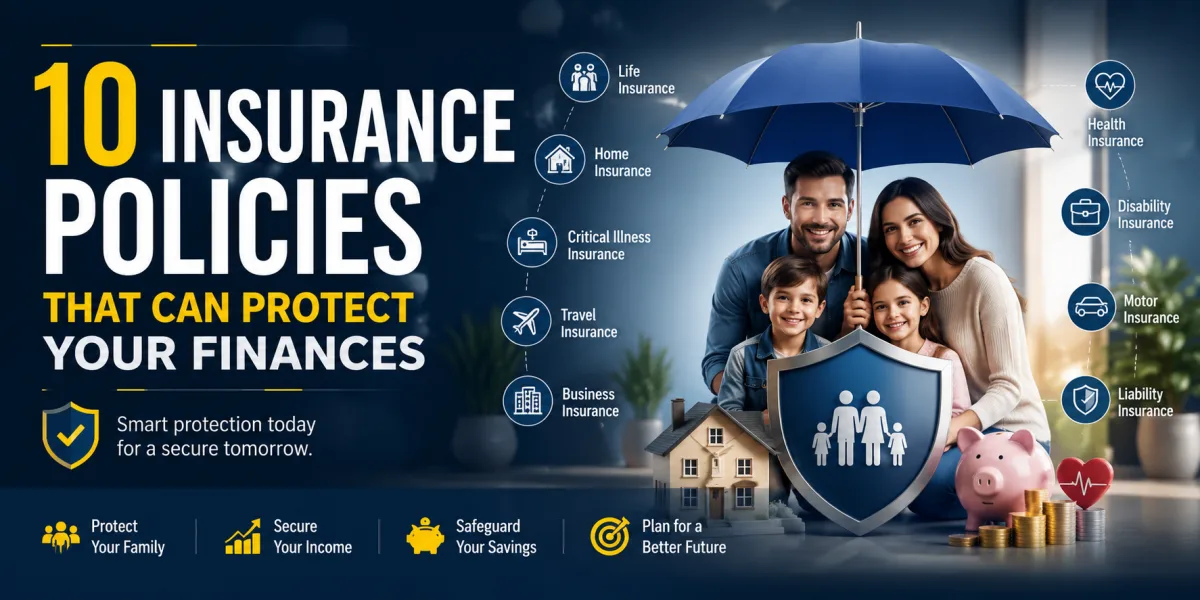
The Financial Safety Net: 10 Insurance Policies That Can Protect Your Money
Insurance is not exciting when life is calm. It is paperwork, premiums, deductibles, policy limits, exclusions, and renewal notices. It can feel like money leaving the household for something that may never happen. That is why many people underinsure, delay coverage, or buy the cheapest policy without reading what it actually protects.
Then life interrupts the plan.
A car accident creates medical bills and liability claims. A house fire destroys belongings. A storm damages a roof. A lawsuit exceeds an auto policy’s limits. A parent dies before retirement. A disability stops income for months or years. A nursing home stay drains savings. A small business faces a claim it cannot absorb. A cybercriminal steals identity information. A pet emergency becomes a four-figure bill.
Insurance exists for these moments. Its purpose is not to make life risk-free. No policy can do that. Its purpose is to transfer financial risks that could seriously damage a household’s savings, income, assets, or future plans.
The National Association of Insurance Commissioners describes insurance as a tool that consumers use across many parts of life, including health, home, auto, life, and long-term care, and its consumer resources are built around helping people understand claims, coverage, and practical insurance decisions.
The central wealth-building principle is simple: do not let one event destroy years of progress. A person can budget carefully, invest consistently, avoid high-interest debt, and build emergency savings, only to lose financial ground because a major risk was uninsured or underinsured. Insurance is the defensive wall around the financial plan.
That does not mean every person needs every policy. Insurance should match risk. A renter does not need homeowners insurance. A person with no dependents may not need a large life insurance policy. A retiree with no earned income may not need disability insurance. A household without meaningful assets may not need the same umbrella coverage as a high-net-worth household. A business owner needs policies an employee may not.
The right insurance strategy is not a pile of products. It is a risk map. What could hurt your finances most? Which risks can you absorb with savings? Which risks would be catastrophic? Which risks are legally required to insure? Which risks are emotionally painful but financially manageable? Which policies protect against losses you could not recover from alone?
These 10 insurance policies form the core menu of financial protection. Some are essential for nearly everyone. Some are situational. All should be evaluated through the same lens: what financial loss would this policy prevent, and is that protection worth the premium?
1. Health Insurance: Protection Against Medical Cost Shock
Health insurance is often the most important insurance policy a household carries because medical costs can become large quickly. A routine year may involve only preventive care and prescriptions. A difficult year may involve emergency room visits, surgery, hospital stays, specialty medication, cancer treatment, pregnancy complications, mental health care, rehabilitation, or chronic disease management.
Health insurance does not eliminate medical costs. It changes how costs are shared. HealthCare.gov explains that total health care costs include the monthly premium plus out-of-pocket costs such as deductibles, copayments, and coinsurance when care is received.
This distinction matters because many people choose health plans by monthly premium alone. A low premium can be helpful if cash flow is tight, but it may come with a high deductible, higher coinsurance, narrower provider network, or more expensive prescription coverage. A higher-premium plan may cost more each month but reduce the financial shock of expected care.
The out-of-pocket maximum is one of the most important numbers in a health plan. HealthCare.gov states that the out-of-pocket limit for 2026 Marketplace plans cannot be more than $10,600 for an individual or $21,200 for a family. That limit applies to covered in-network services and does not include premiums, noncovered services, or certain out-of-network costs.
Health insurance protects more than the body. It protects savings, credit, housing stability, and the ability to keep investing. A large medical bill can force debt, delay retirement contributions, drain emergency savings, or push a family into financial crisis. Even people who are healthy need coverage because health risk is not limited to chronic illness. Accidents, infections, injuries, and sudden diagnoses do not wait for financial readiness.
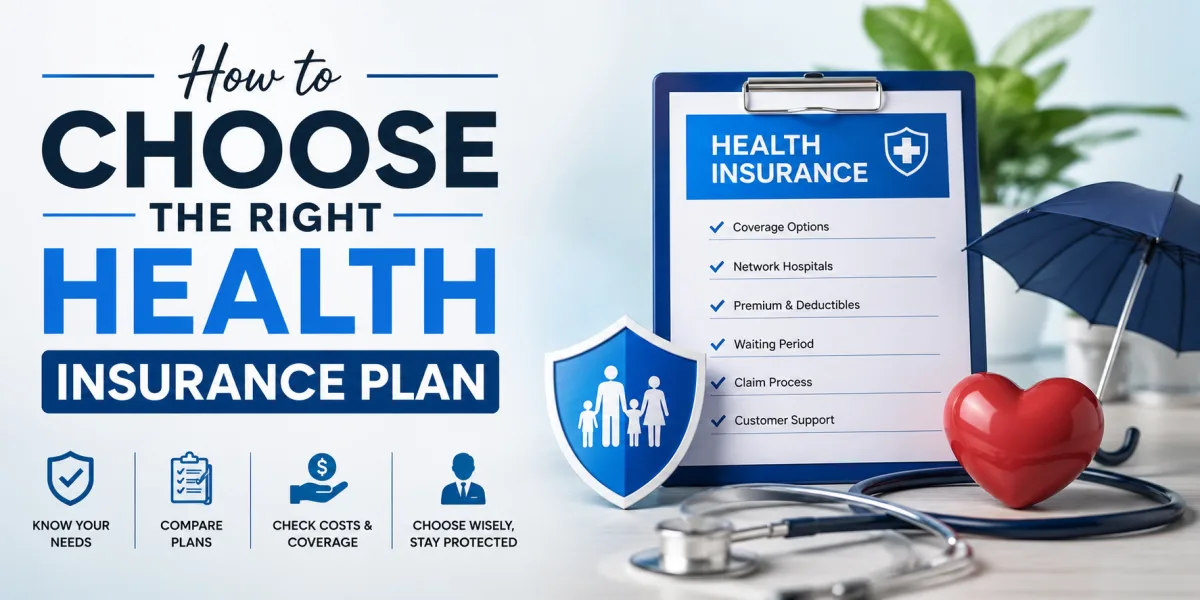
When choosing health insurance, compare total annual cost, not just premiums. Check deductibles, copays, coinsurance, out-of-pocket maximums, provider networks, prescription formularies, mental health benefits, urgent care access, and whether preferred doctors and hospitals participate. If you take medication, verify every drug by name, dosage, tier, and pharmacy network.
Health insurance is not the place to guess. The best plan is the one that matches your expected care, protects against expensive surprises, and remains affordable enough to keep in force all year.
2. Auto Insurance: Protection Against Vehicle Damage and Liability
Auto insurance is legally required in most places, but its financial value goes beyond compliance. A car accident can create several losses at once: damage to your vehicle, damage to another person’s vehicle, medical bills, lost wages, lawsuits, rental car costs, and liability claims. If your coverage is too thin, one accident can threaten savings and future income.
Auto insurance usually includes several types of coverage. Liability coverage pays for injuries or property damage you cause to others, up to policy limits. Collision coverage helps pay for damage to your own vehicle after a crash. Comprehensive coverage helps pay for non-collision damage, such as theft, vandalism, fire, hail, falling objects, or certain weather events. Uninsured and underinsured motorist coverage can protect you if the at-fault driver has no insurance or too little insurance. Personal injury protection or medical payments coverage may help with medical costs depending on state rules and policy design.
The mistake many drivers make is buying only the minimum required liability coverage. Legal minimums may be far below the cost of a serious accident. If you injure someone and damages exceed your policy limit, your assets and future earnings may be exposed.
Auto insurance should be based on what you could lose, not only what the law requires. A driver with savings, home equity, investments, or meaningful income should consider whether liability limits are high enough. If not, umbrella insurance may be needed as an additional layer.
Vehicle coverage also depends on the car’s value and your ability to replace it. If you drive an older vehicle you could replace with cash, dropping collision or comprehensive may be reasonable. If you could not afford to repair or replace the vehicle, maintaining coverage may be important. If you lease or finance a car, the lender or lessor may require certain coverage.
Review deductibles carefully. A higher deductible can lower premiums, but only if you have enough emergency savings to pay it. The deductible should not be so high that filing a claim becomes financially impossible.
Auto insurance is not only about protecting a car. It is about protecting the balance sheet from the consequences of speed, weather, human error, and liability.
3. Homeowners Insurance: Protection for Your Largest Asset
For many households, a home is the largest asset they own. Homeowners insurance protects that asset from covered losses and provides liability protection if someone is injured on the property or if the homeowner is responsible for certain damages.
A standard homeowners policy may cover the dwelling, other structures, personal property, loss of use, and liability, depending on the policy. Dwelling coverage protects the structure of the home. Personal property coverage protects belongings. Loss-of-use coverage can help pay additional living expenses if a covered loss makes the home uninhabitable. Liability coverage can help protect against lawsuits.
The key phrase is “covered loss.” Homeowners insurance does not cover everything. Flood, earthquake, routine wear and tear, neglect, sewer backup, mold, and certain high-value property may be excluded or limited unless separate coverage or endorsements are purchased. The policy must be read before disaster arrives.
NAIC consumer guidance on homeowners and renters policies notes that consumers may consider a personal umbrella policy for extra liability coverage on top of homeowners or renters insurance. That reminder is important because homeowners insurance is not only property insurance. It is also liability protection.
Homeowners should review replacement cost. If dwelling coverage is too low, rebuilding after a fire or major disaster may be difficult. Construction costs, labor shortages, local building codes, debris removal, and inflation can all affect rebuilding expenses. The market value of the home is not always the same as the cost to rebuild it.
Personal property limits also deserve attention. Jewelry, art, collectibles, musical instruments, firearms, business equipment, and high-value electronics may have sublimits. If valuable items are not scheduled or endorsed, coverage may be inadequate.
Homeowners insurance should be reviewed after renovations, additions, major purchases, local hazard changes, or significant increases in rebuilding costs. A policy purchased years ago may no longer reflect the true cost of replacing the home.
4. Renters Insurance: Protection for People Who Do Not Own the Building
Renters often underestimate what they have at risk because they do not own the building. But a landlord’s insurance generally protects the landlord’s structure, not the tenant’s belongings or liability. Renters insurance fills that gap.
A renters policy can help replace personal property after covered events such as fire, theft, vandalism, or certain water damage. It may provide loss-of-use coverage if the rental becomes temporarily unlivable because of a covered loss. It also includes liability coverage, which can protect the renter if they are responsible for injury or property damage.
Renters insurance is often inexpensive compared with the value it protects. Many renters could not easily replace furniture, clothing, laptops, phones, kitchen equipment, bedding, books, and personal items after a fire or theft. The total replacement cost of everyday possessions can be much higher than expected.
Liability coverage can be equally important. If a guest is injured in your apartment, if your dog bites someone, or if accidental damage spreads to another unit, renters insurance may provide protection subject to policy terms and exclusions.
When buying renters insurance, choose between actual cash value and replacement cost coverage. Actual cash value accounts for depreciation, meaning an older item may pay much less than the cost of a new replacement. Replacement cost coverage may cost more but can better support recovery.
Renters should also ask about flood risk, earthquake risk, valuable items, roommates, pets, and business equipment. Not every situation is automatically covered.
Renters insurance proves a broader point: financial protection is not only for homeowners. Anyone with belongings, liability exposure, and limited cash reserves has something to protect.
5. Life Insurance: Protection for People Who Depend on You
Life insurance protects people who would be financially harmed by your death. It can replace income, pay debts, fund childcare, cover education costs, support a spouse, provide for a lifelong dependent, protect a business, or create estate liquidity.
The main question is not whether every adult needs life insurance. The question is whether anyone depends on your income, labor, caregiving, debts, or financial support. If the answer is yes, coverage may be important. If the answer is no, the need may be limited.
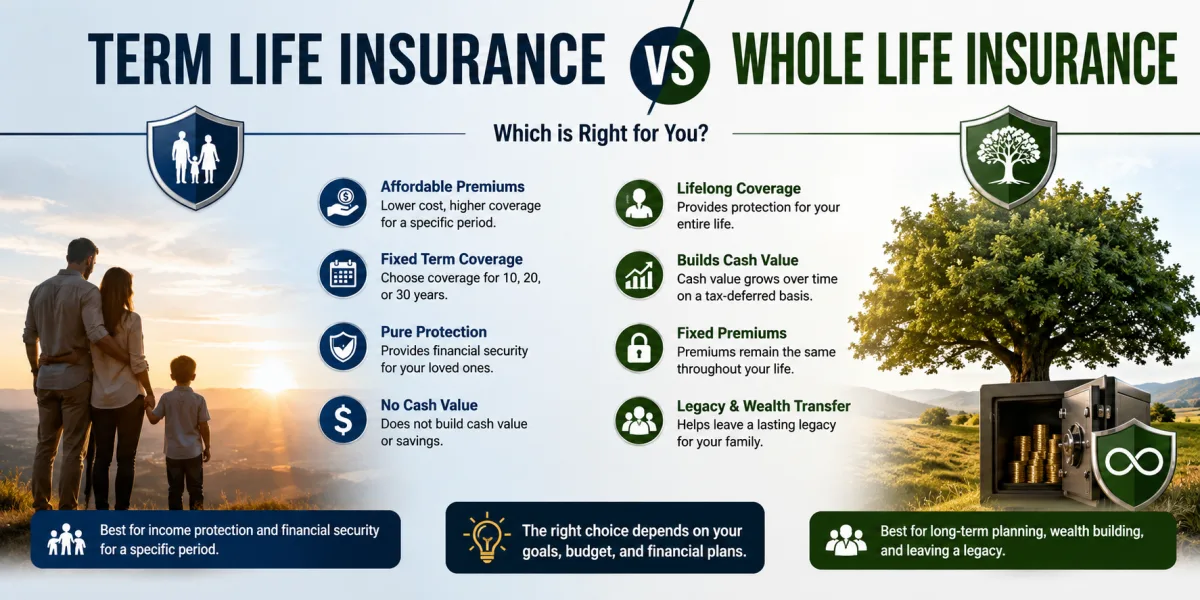
Term life insurance is often used for temporary needs, such as income replacement while children are young or a mortgage remains. It provides coverage for a set period and generally costs less than permanent insurance for the same initial death benefit because it usually has no cash value. Permanent life insurance, including whole life, can provide lifelong coverage and may build cash value, but it is more expensive and more complex.
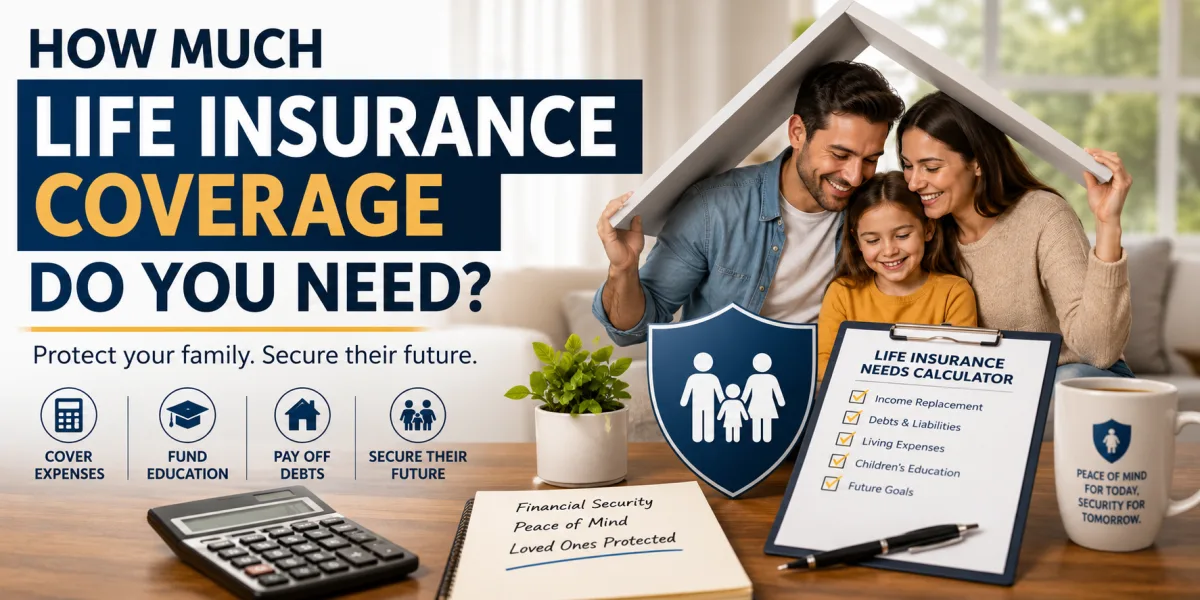
Life insurance coverage should be calculated from needs rather than slogans. Add income replacement, mortgage or rent support, debts, childcare, education goals, final expenses, and special obligations. Then subtract existing savings, investments, survivor benefits, and existing life insurance. The difference is the coverage gap.
A small policy may cover burial costs but fail to protect a family that depends on income. A large permanent policy may be impressive but unaffordable, causing the household to buy too little death benefit. The right policy type depends on the duration and size of the need.
Stay-at-home parents and caregivers should not be overlooked. Even without a paycheck, their labor has economic value. If they died, the surviving household may need childcare, household help, transportation support, and time away from work.
Life insurance is not about assigning a dollar value to a human life. It is about making sure grief is not immediately followed by financial collapse.
6. Disability Insurance: Protection for Your Earning Power
Many people insure their home, car, phone, and health but fail to insure the income that pays for all of them. Disability insurance protects earning power if illness or injury prevents a person from working.
This risk is more common than many workers assume. The Social Security Administration states that studies show a 20-year-old worker has a 1-in-4 chance of developing a disability before reaching full retirement age. Social Security Disability Insurance exists, but qualifying can be difficult, benefits may be limited, and the process may take time. Private disability insurance can provide more direct income protection.
Short-term disability insurance may replace part of income for weeks or months. Long-term disability insurance may replace income for years or until a specified age, depending on the policy. Employer plans may offer coverage, but group coverage may be limited, taxable if premiums are employer-paid, or lost when employment ends. Individual policies can be more portable and customizable.
The most important policy details include the definition of disability, benefit amount, waiting period, benefit period, exclusions, residual or partial disability benefits, cost-of-living adjustments, own-occupation versus any-occupation language, and whether benefits are taxable.
Own-occupation coverage is especially important for specialized professionals. A surgeon, dentist, pilot, executive, engineer, or skilled tradesperson may be unable to perform their own work but still technically able to do another job. Policy language determines whether benefits are paid.
Disability insurance is not only for dangerous jobs. Illnesses, mental health conditions, musculoskeletal problems, cancer, heart disease, neurological disorders, and accidents can all interrupt work. The financial damage is not limited to lost income today. A disability can stop retirement contributions, increase medical expenses, create debt, and reduce future earning power.
If your household depends on your paycheck, disability insurance may be as important as life insurance. Death is one risk. Surviving without income is another.
7. Umbrella Insurance: Protection Against Large Liability Claims
Umbrella insurance provides extra liability coverage above the limits of underlying policies, such as auto, homeowners, or renters insurance. It is designed for claims that exceed standard policy limits.
NAIC guidance notes that a personal umbrella policy can provide additional liability coverage on top of homeowners or renters insurance. This extra layer can be valuable because liability claims can be financially severe. A serious car accident, injury on your property, dog bite, defamation claim, or other covered liability event can lead to legal defense costs, settlements, or judgments.
Umbrella insurance is often associated with wealthy households, but it can be useful for anyone with assets, income, or liability exposure. Homeowners, landlords, parents of teen drivers, dog owners, pool owners, people who entertain guests, public-facing professionals, and households with meaningful savings may all have reasons to consider it.
Umbrella coverage usually requires certain minimum liability limits on auto and home policies. It typically begins after the underlying policy limits are exhausted. Policy terms vary, and exclusions matter. Umbrella insurance does not cover every type of lawsuit, business risk, intentional harm, or personal loss.
The reason umbrella insurance can be powerful is that liability risk can exceed ordinary policy limits quickly. Medical bills, lost wages, long-term care, pain and suffering, and legal costs can turn one accident into a claim larger than a standard auto or homeowners policy.
The right umbrella amount depends on net worth, income, risk exposure, and state law. A person with $500,000 of assets and strong future earnings may need a different amount than someone with little savings. High-net-worth households may need several million dollars.
Umbrella insurance is not about expecting lawsuits. It is about recognizing that one liability event can threaten wealth built over many years.
8. Long-Term Care Insurance: Protection Against Extended Care Costs
Long-term care insurance helps pay for care needed when a person cannot perform certain activities of daily living or has severe cognitive impairment, depending on policy terms. Care may be provided at home, in assisted living, adult day care, memory care, or a nursing facility.
The NAIC explains that long-term care insurance provides in-home or in-facility care for people with chronic illnesses, disabilities, or other conditions requiring ongoing care over an extended period. It also notes that long-term care can range from help bathing, dressing, and eating to skilled care provided by nurses or therapists.
This coverage matters because health insurance and Medicare do not generally cover long-term custodial care in the way many families assume. A person may have good health insurance and still face major costs for extended daily assistance. Medicaid may cover long-term care for those who qualify, but eligibility rules can require spending down assets and may limit choices.
Long-term care risk is both financial and emotional. Without coverage or assets, family members may become unpaid caregivers, reduce work hours, use retirement savings, sell property, or make rushed care decisions. A prolonged care need can affect the entire family balance sheet.
Traditional long-term care insurance has become more expensive and more selective over time. Premiums can rise, underwriting can be strict, and benefits must be understood carefully. Hybrid policies that combine life insurance or annuities with long-term care benefits may be alternatives, but they are complex and require careful review.
Key details include daily or monthly benefit amount, benefit period, elimination period, inflation protection, covered care settings, cognitive impairment rules, premium increase history, shared-care options, and whether benefits reimburse costs or pay cash.
Long-term care insurance may not be necessary for everyone. People with very limited assets may rely on Medicaid. Very wealthy households may self-insure. Middle- and upper-middle-income households with assets to protect may benefit most from planning early. The best time to evaluate coverage is often before health issues make underwriting difficult.
Long-term care planning is not only about old age. It is about protecting the dignity, choices, and assets of a future household under stress.
9. Business Insurance: Protection for Owners, Contractors, and Side Hustlers
Business insurance protects financial risks created by self-employment, business ownership, freelancing, professional services, product sales, property ownership, employees, and customer interaction. Many people need business coverage before they realize they are “real” business owners.
A side business can create liability. A consultant may give advice that leads to a client loss. A photographer may damage a venue. A seller may ship a defective product. A contractor may injure someone or damage property. A landlord may face tenant claims. A home-based business may use equipment not fully covered by homeowners insurance.
Common business policies include general liability, professional liability or errors and omissions, commercial property, business owner’s policy, workers’ compensation, commercial auto, cyber liability, product liability, directors and officers coverage, employment practices liability, and key-person life or disability insurance.
The right policy depends on the business model. A graphic designer has different risk from a restaurant. A therapist has different risk from a contractor. A software consultant has different risk from a landlord. A small online store has different risk from a medical practice.
Business insurance should be reviewed with contracts. Many clients, landlords, lenders, vendors, and platforms require specific coverage limits, certificates of insurance, additional insured endorsements, or professional liability coverage. Operating without required insurance can violate contracts and expose personal assets.
Business owners should not assume personal policies will cover commercial activity. Personal auto insurance may not cover business driving. Homeowners insurance may limit business property coverage. Personal umbrella policies may exclude business liability.
For entrepreneurs, insurance is part of the cost of staying in business. Revenue builds opportunity, but uninsured claims can erase it.
10. Specialty Coverage: Flood, Earthquake, Cyber, Pet, and Other Gaps
The tenth category is not one policy but a family of gap-covering policies. These are specialized coverages that protect risks excluded or limited by standard policies.
Flood insurance is one of the most important examples. Standard homeowners insurance typically does not cover flood damage. Homeowners in flood-prone areas may need separate flood insurance through the National Flood Insurance Program or private insurers. Even properties outside high-risk zones can flood. Heavy rain, storm surge, drainage failure, and changing weather patterns can expose homes that owners assumed were safe.
Earthquake insurance is another gap policy. Standard homeowners policies usually exclude earthquake damage. In earthquake-prone regions, separate coverage may be needed. Deductibles can be high, and policy details matter.
Cyber insurance and identity theft coverage can help with certain costs related to cyber incidents, fraud recovery, data breaches, or identity restoration. Coverage varies widely. Some homeowners policies include limited identity theft benefits; standalone or business cyber policies may be needed for more serious exposure.
Pet insurance can protect against veterinary cost shocks. It is not essential in the same way as health, auto, or liability coverage, but it can help pet owners avoid choosing between debt and treatment. Policy details matter: exclusions, waiting periods, preexisting conditions, reimbursement rates, annual limits, deductibles, and wellness coverage should be reviewed.
Travel insurance can protect certain trip cancellations, medical emergencies abroad, evacuation, lost baggage, or travel interruptions. It may be useful for expensive trips, international travel, older travelers, cruises, or trips with nonrefundable costs. But it should be compared with benefits already available through credit cards, health insurance, and airlines.
Valuable articles coverage can protect jewelry, art, collectibles, instruments, cameras, or other high-value items that exceed standard homeowners or renters limits. Sewer backup, equipment breakdown, service line, and home systems endorsements may also fill specific property gaps.
Specialty insurance should not be bought automatically. It should be purchased when the uncovered risk is real, the possible loss is meaningful, and the policy actually addresses that risk. The point is not to insure every inconvenience. The point is to close dangerous gaps.
How to Decide Which Policies You Need First
Insurance priorities should follow exposure. Start with legal requirements and catastrophic risks. Health insurance, auto insurance, homeowners or renters insurance, and required business coverage often come first. These policies protect against losses that can be immediate, expensive, or legally unavoidable.
Next, protect income and dependents. Disability insurance protects your paycheck while you are alive. Life insurance protects dependents if you die. For working households, these two policies can be more important than people realize because income is usually the engine funding every financial goal.
Then protect assets from liability. Auto and homeowners policies include liability coverage, but umbrella insurance may be necessary if standard limits are too low relative to assets and income.
Then evaluate long-term and specialized risks. Long-term care, flood, earthquake, cyber, pet, travel, and valuable items coverage depend on life stage, location, assets, and risk tolerance.
This order may change. A business owner may need liability coverage before buying a home. A person in a flood zone may need flood insurance immediately. A high-income professional may prioritize disability insurance early. A parent may need life insurance as soon as a child is born.
The correct sequence is the one that protects the biggest uninsured financial risks first.
How Much Insurance Is Enough?
Enough insurance means enough to prevent financial ruin, not enough to remove every inconvenience. Insurance is most valuable for losses you could not comfortably absorb yourself.
For health insurance, enough means coverage that keeps medical costs within survivable limits and includes necessary care. For auto insurance, enough means liability limits that protect assets and future income. For homeowners insurance, enough means the home can be rebuilt or repaired after covered losses. For renters insurance, enough means belongings and liability are protected. For life insurance, enough means dependents can continue financially. For disability insurance, enough means income can continue at a workable level. For umbrella insurance, enough means catastrophic liability claims are less likely to destroy wealth.
Deductibles should match emergency savings. A higher deductible can be smart if it lowers premiums and the household can pay it. It is dangerous if it makes the policy unusable.
Coverage limits should match exposure. A homeowner with a high rebuilding cost needs adequate dwelling coverage. A parent with young children needs enough life insurance to replace years of support. A landlord needs liability coverage that reflects tenant and property risk.
The goal is not maximum coverage in every category. The goal is deliberate coverage.
Common Insurance Mistakes
The first mistake is buying only the cheapest policy. Price matters, but a cheap policy with weak coverage can be expensive when a claim occurs.
The second mistake is ignoring exclusions. The most important part of a policy may be what it does not cover.
The third mistake is setting deductibles higher than available savings. A deductible should be painful enough to discourage small claims but not impossible to pay.
The fourth mistake is underinsuring liability. Lawsuits can exceed minimum auto and homeowners limits.
The fifth mistake is relying only on employer coverage. Employer life and disability benefits may be helpful but limited and not always portable.
The sixth mistake is failing to update coverage after life changes. Marriage, children, home purchases, renovations, income changes, business launches, new drivers, pets, and major purchases can all change insurance needs.
The seventh mistake is assuming standard policies cover flood, earthquake, business activity, valuable items, or cyber losses. Many gaps require separate coverage or endorsements.
The eighth mistake is not documenting property. Photos, receipts, serial numbers, appraisals, and home inventories can make claims easier.
The ninth mistake is choosing low liability limits while building wealth. More assets often require stronger protection.
The tenth mistake is treating insurance as separate from financial planning. Insurance is part of the financial plan because it protects the plan from disruption.
How to Review Your Insurance Once a Year
An annual insurance review can prevent outdated coverage. Start by listing every policy: health, auto, homeowners, renters, life, disability, umbrella, long-term care, business, and specialty coverage. Record premiums, deductibles, limits, renewal dates, beneficiaries, riders, and exclusions.
Then ask what changed. Did income rise? Did debts change? Did you buy a home? Renovate? Add a teen driver? Start a business? Have a child? Get married or divorced? Acquire valuable property? Move to a flood-prone area? Add a dog? Change jobs? Increase savings? Become a landlord?
Next, compare coverage to risk. Does life insurance still match dependent needs? Does disability coverage protect enough income? Does homeowners coverage reflect rebuilding cost? Are auto liability limits high enough? Does the umbrella policy still match net worth? Are health plan networks and prescriptions still suitable?
Finally, shop carefully where appropriate. Comparing premiums can save money, but make sure coverage is equivalent. A lower premium may reflect lower limits, higher deductibles, narrower coverage, or weaker endorsements.
Insurance should become more precise as your financial life grows. The larger the balance sheet, the more expensive a coverage mistake can become.
The Wealth Lesson
Wealth is built by earning, saving, investing, and owning assets. But wealth is preserved by managing risk. Insurance is one of the main tools that keeps a financial setback from becoming a financial collapse.
Health insurance protects against medical cost shock. Auto insurance protects against vehicle and liability risk. Homeowners and renters insurance protect property and personal liability. Life insurance protects dependents. Disability insurance protects income. Umbrella insurance protects against large lawsuits. Long-term care insurance protects against extended care costs. Business insurance protects income-generating activity. Specialty policies close gaps that standard coverage may leave exposed.
Not everyone needs every policy. But everyone needs a risk map. The question is not, “How many policies can I buy?” The question is, “Which risks could damage my finances so badly that I should transfer them to an insurer?”
The right insurance plan is quiet when life is normal and powerful when life breaks. It does not make you wealthy by itself. It protects the wealth you are trying to build. It gives savings time to grow, investments time to compound, and families time to recover.
A strong financial life is not only offensive. It is defensive. Build assets, but protect them. Grow income, but insure it. Buy property, but cover it. Support people, but make sure they are protected if you are no longer there.
Insurance is the financial safety net beneath ambition. You may never need every part of it. But if the day comes when you do, the right coverage can be the difference between a painful event and a permanent financial setback.
 Article
 Article
 Article
 Article
 Article
 Article
 Article
 Article