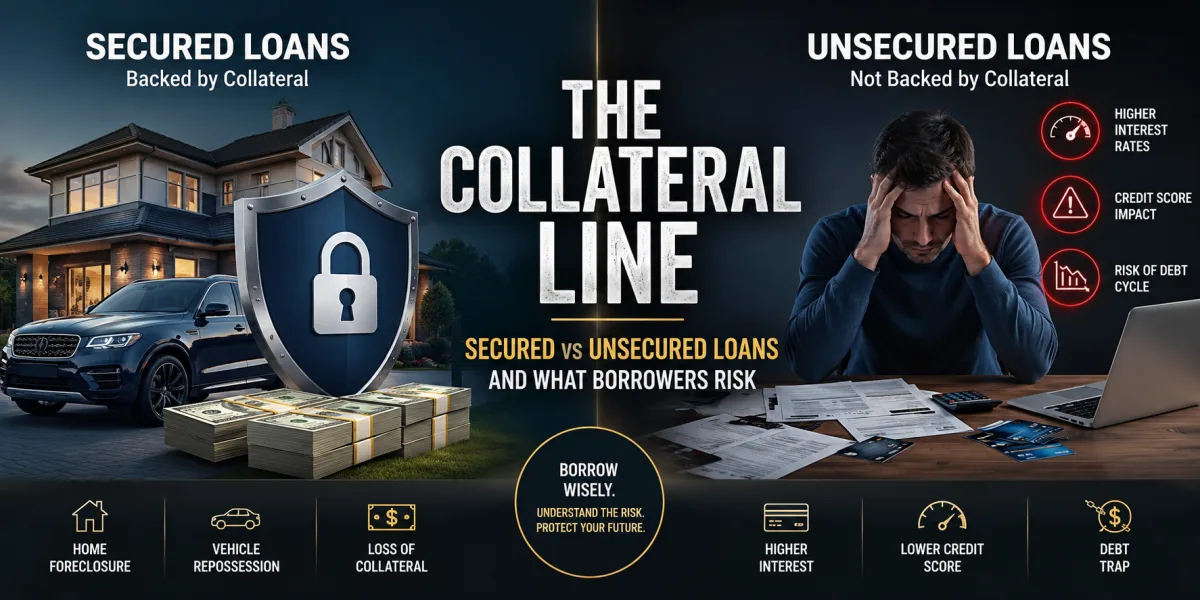
The Collateral Line: Secured vs Unsecured Loans and What Borrowers Risk
Every loan begins with a promise. The borrower promises to repay. The lender decides whether that promise is strong enough to fund. The difference between a secured loan and an unsecured loan comes down to what stands behind that promise.
With a secured loan, the borrower pledges collateral. The collateral may be a house, car, savings account, investment account, certificate of deposit, equipment, inventory, or another asset. If the borrower fails to repay, the lender may have the right to take or claim the collateral, depending on the loan contract and applicable law. The borrower’s promise is backed by property.
With an unsecured loan, there is no specific pledged asset. The lender relies more heavily on the borrower’s credit history, income, debt levels, repayment record, and legal promise to repay. If the borrower defaults, the lender may still pursue collection, report missed payments to credit bureaus, charge fees, sell the debt, sue, or seek a judgment, but it does not have the same immediate claim to a specific piece of collateral.
The Consumer Financial Protection Bureau’s educational materials describe secured loans as loans requiring collateral and unsecured loans as loans that do not require collateral. That simple distinction carries major consequences for cost, approval, risk, and default outcomes.
Borrowers often think secured loans are safer because they can come with lower rates or easier approval. That is only partly true. A secured loan may be safer for the lender because the lender has an asset to claim. It is not automatically safer for the borrower. If the borrower cannot repay, the pledged asset may be at risk. A secured auto loan can threaten transportation. A home equity loan can threaten housing. A secured loan against savings can drain the cash cushion that was supposed to protect the household.
Unsecured loans have a different danger. They do not put a specific asset on the line at the start, but they may carry higher interest rates, stricter qualification standards, lower borrowing limits, and more expensive terms for borrowers with weak credit. If unpaid, they can still damage credit and lead to aggressive collection.
The better choice is not always secured or unsecured. The better choice is the loan that matches the purpose, cost, repayment capacity, and risk the borrower can realistically carry.
What a Secured Loan Is
A secured loan is backed by collateral. The collateral gives the lender a claim against a specific asset if the borrower defaults. That claim reduces lender risk, which can make secured loans easier to qualify for or less expensive than comparable unsecured loans.
Common secured loans include mortgages, auto loans, home equity loans, home equity lines of credit, secured personal loans, secured credit cards, pawn loans, title loans, equipment loans, and certain business loans. In each case, an asset supports the debt.
A mortgage is secured by real estate. If the borrower fails to repay, the lender may eventually foreclose, following legal procedures. An auto loan is secured by the vehicle. If payments are missed, the lender may repossess the car, subject to state law and contract terms. A secured credit card may be backed by a cash deposit. A secured personal loan may be backed by a savings account, certificate of deposit, car, or other acceptable collateral.
The structure changes the lender’s risk calculation. If a borrower has poor credit but owns an asset the lender is willing to accept, the lender may approve a secured loan that it would not approve unsecured. The collateral does not erase credit risk, but it gives the lender another way to recover money.
For the borrower, the central question is not simply, “Can I get approved?” It is, “What am I willing to lose if repayment fails?”
What an Unsecured Loan Is
An unsecured loan does not require collateral. The lender approves the loan based on the borrower’s creditworthiness, income, debt-to-income ratio, repayment history, employment, cash flow, and other underwriting factors. The borrower signs a legal agreement to repay, but no specific asset is pledged as security.
Common unsecured loans include many personal loans, credit cards, student loans, medical payment plans, some debt consolidation loans, and certain business loans. These loans may be easier to use because no property appraisal, title filing, lien, or collateral review is needed. They can also fund quickly.
The absence of collateral does not mean the absence of consequences. If an unsecured loan is not repaid, the lender may charge late fees, report delinquency, send the account to collections, sell the debt, close accounts, sue for repayment, or obtain a judgment. A judgment can create additional collection tools depending on the jurisdiction, such as wage garnishment, bank levies, or liens, subject to legal limits.
Unsecured loans often cost more than secured loans because the lender has less protection. A borrower with excellent credit may still receive attractive unsecured terms. A borrower with bad credit may face high annual percentage rates, origination fees, smaller loan amounts, or denial.
The appeal of unsecured borrowing is that the borrower does not pledge a specific asset at the start. The risk is that cost may be higher and repayment pressure may still be serious.
The Core Difference Is Collateral
Collateral is the dividing line. It changes the psychology and economics of borrowing.
From the lender’s perspective, collateral reduces loss risk. If the borrower defaults, the lender may recover some value by taking and selling the asset. That is why secured loans may offer lower rates, higher limits, or longer terms. The lender is not relying only on the borrower’s future willingness and ability to repay.
From the borrower’s perspective, collateral raises the stakes. The borrower may receive better terms, but the asset is exposed. A loan secured by a car may be cheaper than an unsecured loan, but default can lead to repossession. A home equity line may offer a lower rate than a credit card, but the home is part of the bargain. A secured loan against savings may help build credit, but missed payments can affect the deposited funds.
This is why secured loans should never be judged only by interest rate. A lower rate is valuable, but the risk is different. The borrower is not merely comparing percentages. They are comparing consequences.
Why Secured Loans Often Have Lower Interest Rates
Interest rates are partly a price for risk. When a lender believes repayment is uncertain, it charges more or declines the application. Collateral can reduce that risk. If the borrower stops paying, the lender may recover value through the asset.
This is why mortgages and auto loans often have lower rates than unsecured credit cards or unsecured personal loans. The lender has a claim on property. A credit card issuer does not receive a specific asset when a borrower stops paying. It must pursue collection through other channels.
But collateral is not the only factor. Credit score, income, loan term, loan amount, debt-to-income ratio, asset value, loan-to-value ratio, market interest rates, lender policy, and borrower history all matter. A secured loan to a risky borrower may still be expensive. An unsecured loan to a strong borrower may be competitive.
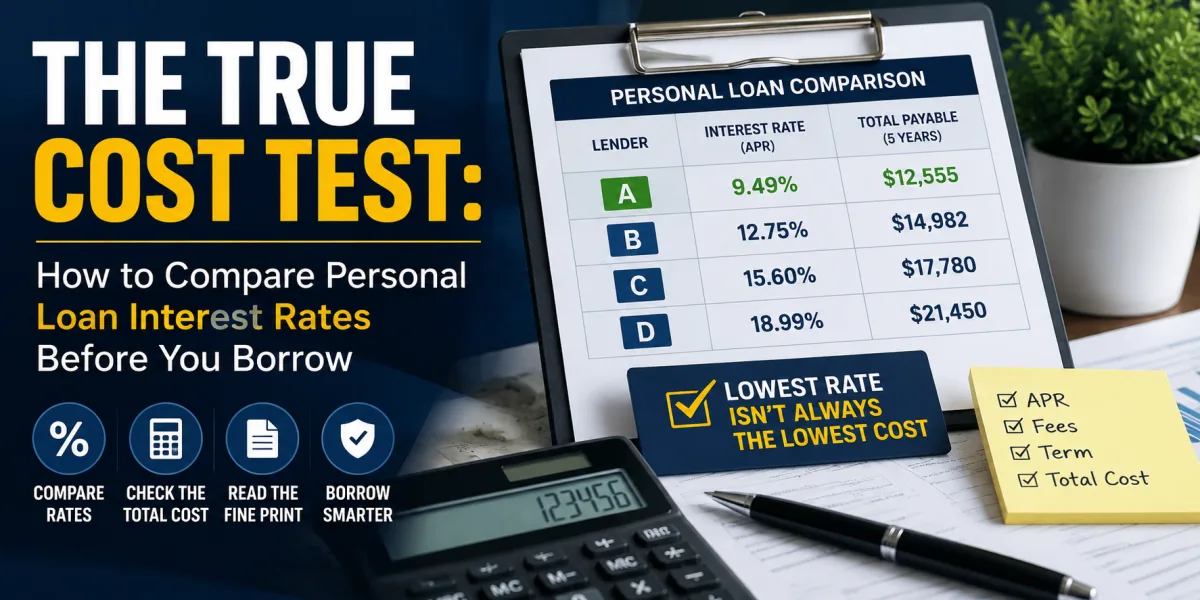
Borrowers should compare the annual percentage rate, not only the interest rate. The CFPB explains that APR reflects the interest rate plus certain additional loan fees, expressed as a percentage. This makes it useful for comparing borrowing costs across offers.
A secured loan with a low stated rate but large fees may be less attractive than it appears. An unsecured loan with no collateral but a high APR may also be too costly. The comparison must include rate, fees, repayment term, monthly payment, and total cost.
Why Unsecured Loans Can Be Harder to Qualify For
Because unsecured loans are not backed by a specific asset, lenders rely more heavily on the borrower’s financial profile. They want evidence that the borrower has both the ability and habit of repayment.
This is why credit score matters. A strong credit report shows a history of paying obligations as agreed. A weak credit report suggests greater risk. Lenders may also review income, employment, bank activity, existing debt payments, and recent applications.
A borrower with excellent credit, stable income, and low debt may qualify for a competitive unsecured personal loan. A borrower with late payments, collections, high credit card balances, unstable income, or recent defaults may be denied or offered expensive terms.
Secured loans may offer another path because collateral can offset some lender concern. But collateral does not guarantee approval. Lenders still care whether the borrower can repay. A lender does not want to repossess cars or foreclose homes as a first choice. Those processes cost time and money.
Approval is not the same as affordability. A borrower may qualify for either type of loan and still be unable to manage the payment safely.
Default Looks Different
The default consequences are one of the most important differences between secured and unsecured debt.
With a secured loan, default can put the collateral at risk. A missed auto loan can lead to repossession. A mortgage default can eventually lead to foreclosure. A home equity loan default can threaten the home. A pawn loan default can mean losing the pledged item. A secured credit card default can cause the issuer to use the deposit against the balance.
The CFPB has published auto finance materials describing repossession as a serious consumer harm and has highlighted the need for lenders and servicers to avoid illegal repossession practices. The broader lesson for borrowers is clear: a secured auto loan connects repayment failure to the risk of losing transportation.
With an unsecured loan, default usually does not allow the lender to immediately take a specific asset. But the borrower can still face late fees, credit damage, collection calls, charge-off, debt sale, lawsuit, judgment, and legal collection remedies where allowed. Unsecured does not mean harmless.
The risk difference is therefore not “dangerous versus safe.” It is “asset-at-risk immediately versus credit-and-collection risk without a specific pledged asset.” Both can harm financial life. The form of harm differs.
Examples of Secured Loans
A mortgage is one of the clearest secured loans. The home secures the debt. The loan may allow the borrower to buy property with a lower interest rate than an unsecured loan of the same size would ever offer. But the home is at risk if payments fail.
An auto loan is secured by the vehicle. This structure helps many borrowers finance transportation. But if the loan is unaffordable, the borrower may lose the car and still owe money if the vehicle is sold for less than the balance, depending on the terms and law.
A home equity loan or home equity line of credit allows homeowners to borrow against equity in their home. The FTC advises consumers to shop around for home equity loans and HELOCs because comparing lenders can help secure better terms. These products can be useful, but they are secured by the home, which makes repayment failure serious.
A secured credit card is often used to build or rebuild credit. The borrower provides a cash deposit, and the credit line is often tied to that deposit. Used responsibly, it can help establish payment history. Used poorly, it can lead to fees, credit damage, and loss of the deposit.
A title loan is secured by a vehicle title. These loans can be especially risky because they often carry high costs and can threaten transportation. Borrowers should treat them with extreme caution.
Examples of Unsecured Loans
A personal installment loan is a common unsecured product. The CFPB defines a personal installment loan as a loan where the borrower receives a sum of money and repays it in fixed amounts called installments. Many personal loans are unsecured, though secured versions exist.
Credit cards are unsecured revolving credit in most cases. The borrower can charge purchases up to a limit and repay over time, but balances can become expensive if not paid in full. Credit cards do not usually pledge a specific asset, but nonpayment can still damage credit and lead to collections.
Medical payment plans may be unsecured. They can help spread costs, but terms vary. Some are interest-free if paid on schedule. Others can become expensive if promotional terms expire.
Student loans are generally unsecured because no specific property backs them, though they can have strong collection powers and unique legal treatment depending on whether they are federal or private.
Unsecured loans can be useful when the borrower has a clear purpose, reasonable APR, and affordable payment. They become dangerous when they fund recurring overspending or carry high fees that make repayment unrealistic.
The Cost Trade-Off
Secured loans often have lower rates because collateral reduces lender risk. Unsecured loans often have higher rates because the lender relies more on the borrower’s promise and credit profile. But cost is not only rate.
Secured loans can include appraisal fees, title fees, recording fees, lien fees, insurance requirements, closing costs, or other charges. Mortgages and home equity loans can involve significant upfront costs. Auto loans may include add-ons that increase the amount financed. Title loans may carry extremely high fees.
Unsecured loans can include origination fees, late fees, returned-payment fees, prepayment penalties, or higher APRs. Credit cards can charge annual fees, balance transfer fees, cash advance fees, penalty APRs, and interest that compounds if balances are carried.
The true comparison is total cost. How much cash do you receive? What is the APR? What is the monthly payment? How long will repayment last? What fees are charged? What happens if you pay early? What happens if you pay late? What asset is at risk? What credit damage could occur?
A secured loan is not automatically cheaper in a meaningful way if the fees are high or the repayment term is long. An unsecured loan is not automatically worse if the APR is reasonable and no essential asset is exposed.
The Approval Trade-Off
Collateral can improve approval odds, especially for borrowers with limited or damaged credit. A lender may approve a secured loan because the asset offers a recovery path. This can help borrowers finance necessary purchases or rebuild credit.
But easier approval can be dangerous if it leads borrowers to pledge assets for debts they cannot afford. A person with weak credit may be tempted to use a car title loan, pawn loan, or home equity product because approval is faster. The immediate approval can hide long-term danger.
Unsecured loans may require stronger credit and income, but they do not put a specific asset on the line at the beginning. For borrowers who qualify at a reasonable cost, unsecured loans can provide flexibility without risking collateral.
The approval question should come after the affordability question. If a loan cannot be repaid comfortably, approval is not help. It is exposure.
When a Secured Loan May Make Sense
A secured loan may make sense when the asset being financed is necessary, the payment is affordable, the interest rate is reasonable, and the borrower understands the collateral risk.
A mortgage can make sense when buying a home that fits the household budget and the borrower has stable income, savings, and a long-term housing plan. An auto loan can make sense when the vehicle is necessary for work and the payment does not strain the budget. A secured credit card can make sense when rebuilding credit and paying in full every month.
A home equity loan can make sense for certain major expenses, especially if the borrower has strong equity, stable income, a clear use for the funds, and a repayment plan. But using home equity to consolidate unsecured credit card debt can be risky. The borrower may convert unsecured debt into debt secured by the home. If spending habits do not change, the household may end up with both new credit card balances and home-secured debt.
A secured loan is strongest when the collateral risk is proportional to the benefit. It is weakest when a borrower pledges an essential asset to cover a short-term cash shortage without solving the underlying problem.
When an Unsecured Loan May Make Sense
An unsecured loan may make sense when the borrower qualifies for a reasonable APR, the purpose is clear, the payment fits the budget, and the borrower does not want to pledge collateral.
Debt consolidation is a common use. If an unsecured personal loan replaces high-interest credit card balances with a lower fixed rate and a clear payoff date, it may improve the household’s debt structure. The benefit disappears if the credit cards are used again and total debt rises.
An unsecured personal loan may also help with medical bills, emergency repairs, moving costs, or one-time expenses when the borrower can repay steadily. The fixed payment can make budgeting easier than revolving credit.
Unsecured borrowing is less attractive when the APR is very high, fees are large, or the loan funds recurring shortfalls. If the household is short every month, an unsecured loan may simply add another payment to an already broken budget.
The best unsecured loan is one that solves a defined problem and ends on schedule.
Bad Credit Changes the Decision
Borrowers with strong credit may have good options in both categories. Borrowers with bad credit face harder trade-offs.
A secured loan may be easier to obtain because the lender has collateral. But bad-credit secured loans can still be expensive and risky. Title loans, pawn loans, and some high-cost secured installment loans can trap borrowers in fees while putting assets at risk.
An unsecured loan may be harder to obtain and may carry a high APR. Some bad-credit personal loans include large origination fees. Some lenders advertise fast approval but offer terms that make repayment difficult.
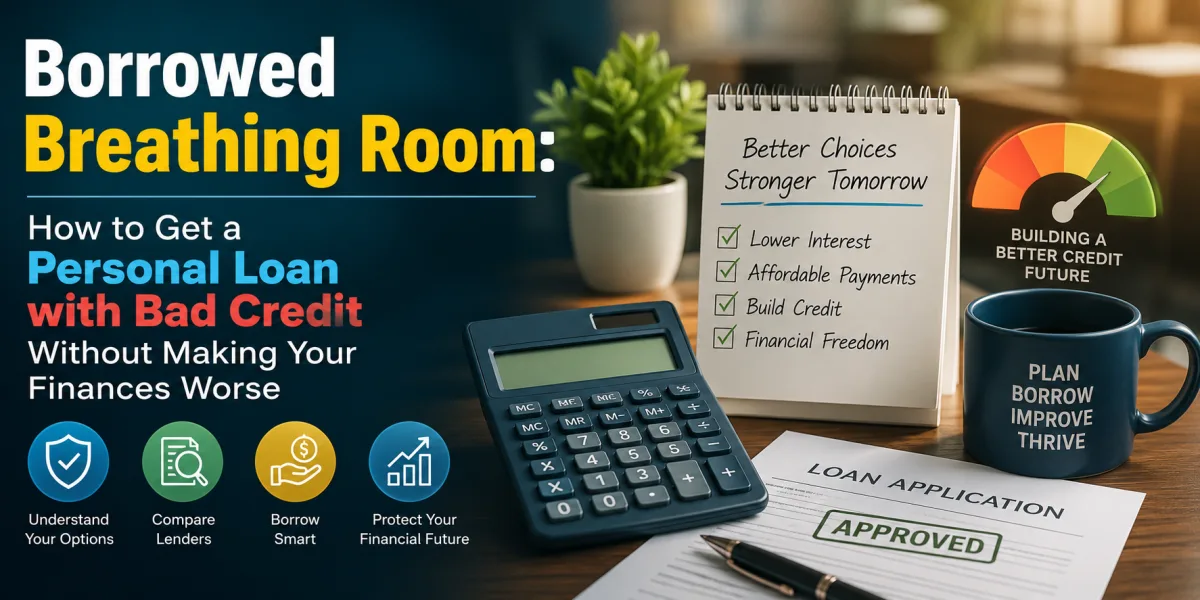
Borrowers with bad credit should compare offers carefully, use prequalification where possible, check credit reports for errors, consider credit unions, and avoid lenders demanding upfront fees. The FTC warns that advance-fee loan scams often target people with bad credit or difficulty getting loans, promising approval in exchange for upfront payment.
Bad credit does not mean any loan is acceptable. It means the borrower must be even more careful.
Secured Debt Can Turn Unsecured Problems into Asset Problems
One of the biggest mistakes borrowers make is using secured debt to pay unsecured debt without changing the underlying financial behavior.
For example, a homeowner may use a home equity loan to pay off credit cards. The interest rate may be lower, and the monthly payment may fall. That can be helpful if the borrower stops using the cards and repays the home equity loan responsibly. But if the borrower runs the cards back up, the situation becomes worse. Now the household has credit card debt again and a debt secured by the home.
This is the danger of converting unsecured debt into secured debt. The original credit card lender could damage credit and pursue collection, but it did not have a direct claim on the home. The home equity lender does.
This does not mean secured consolidation is always wrong. It means the borrower must treat it as a serious restructuring, not a quick cleanup. The budget must change. Spending must change. Emergency savings must be built. Otherwise, collateral turns a debt problem into a housing risk.
Collateral Value Can Change
Collateral is not always stable. Cars depreciate. Homes can fall in market value. Equipment can become obsolete. Investment accounts can decline. Business inventory can lose demand. This matters because the asset may be worth less than the loan balance.
Negative equity occurs when the borrower owes more than the collateral is worth. This is common with cars that depreciate quickly or loans with long terms. If the car is totaled or repossessed, the borrower may still owe a deficiency balance after the lender applies the sale or insurance proceeds.
Home equity can also shrink if property values fall or if the borrower borrows too much against the home. A household that uses home equity heavily may have less flexibility to sell, refinance, or handle emergencies.
Collateral reduces lender risk, but it does not eliminate borrower risk. The borrower may lose the asset and still owe money depending on the loan and circumstances.
Secured Credit Cards and Credit Building
Secured credit cards deserve separate attention because they are often used by people rebuilding credit. The borrower deposits money with the card issuer, and that deposit usually determines the credit limit. The card can then be used like a regular credit card.
Used wisely, a secured card can help build positive payment history. The borrower should keep balances low, pay on time, avoid unnecessary fees, and confirm the issuer reports to the major credit bureaus.
Used poorly, a secured card can still cause harm. Late payments can damage credit. Fees can reduce value. Carrying balances can create interest charges. The deposit may be applied if the borrower defaults.
A secured card is not a license to spend. It is a training tool for credit discipline. The best use is small recurring purchases paid in full every month.
Unsecured Credit Cards and Revolving Debt
Credit cards are one of the most common unsecured debts. They are convenient, flexible, and sometimes useful for rewards or short-term cash-flow timing. But they can become expensive when balances revolve month after month.
The danger of unsecured revolving debt is that the minimum payment can make the balance feel manageable while interest continues. A borrower may carry a balance for years, paying far more than the original purchases cost.
Credit cards also make it easy to borrow repeatedly without making a new loan decision. A personal loan is usually a lump sum with a fixed payment. A credit card is a reusable borrowing line. That flexibility can become a trap if spending is not controlled.
Unsecured does not mean painless. Credit card debt can damage cash flow, credit scores, and future borrowing options. The absence of collateral does not make the debt harmless.
How to Compare Secured and Unsecured Offers
Start with purpose. What problem is the loan solving? If the loan does not have a defined purpose, do not borrow yet.
Next, compare APR. The APR helps compare interest and certain fees across loans. Then compare monthly payment and total repayment cost. A lower payment may come from a longer term that increases total interest.
Then identify collateral. What asset is pledged? Could you afford to lose it? Is the asset essential for housing, income, transportation, or family stability?
Review fees. Look for origination fees, closing costs, appraisal fees, title fees, lien fees, late fees, returned-payment fees, prepayment penalties, insurance add-ons, and optional products.
Check repayment flexibility. Can you pay early without penalty? Can the due date be changed? Are there hardship options? What happens after one missed payment? What happens after several?
Finally, compare the loan to alternatives. Could you save for the expense? Negotiate a payment plan? Use a lower-cost credit union product? Sell an unused asset? Reduce spending? Increase income? Use emergency savings? Seek nonprofit credit counseling?
A loan should win against alternatives, not merely appear available.
Questions to Ask Before Taking a Secured Loan
What asset secures the loan?
What is the asset worth today?
Could the asset lose value?
What happens if I miss one payment?
When can the lender repossess, foreclose, freeze, or claim the collateral?
Could I still owe money after the collateral is taken and sold?
Are there fees, liens, title requirements, or insurance requirements?
Is the interest rate fixed or variable?
Can I repay early without penalty?
Would losing this asset threaten my job, housing, or family stability?
If the answer to the last question is yes, the loan deserves extra caution.
Questions to Ask Before Taking an Unsecured Loan
What is the APR?
What fees are included?
How much money will I actually receive after fees?
What is the monthly payment?
What is the total repayment cost?
Is the rate fixed or variable?
Is there a prepayment penalty?
Does the lender report to credit bureaus?
What happens if I am late?
Could a lower-cost secured loan be safer, or would collateral risk be too high?
An unsecured loan should be evaluated with the same seriousness as secured debt. The consequences may be different, but they are real.
Variable Rates Add Another Layer
Some secured and unsecured loans have variable interest rates. A variable rate can change over time based on a benchmark or index. This can make payments unpredictable.
Home equity lines of credit often have variable rates. Some private student loans and personal lines of credit may also use variable rates. Credit cards commonly have variable APRs. A lower starting rate can become more expensive if rates rise.
Before accepting a variable-rate loan, ask how often the rate can change, what index it follows, whether there is a cap, what the maximum payment could be, and whether the budget can handle higher payments.
Variable-rate debt can be manageable when the balance is low, repayment is fast, or income is strong. It can be dangerous when the borrower is already stretched.
The Role of Loan Term
The loan term affects both monthly payment and total interest. A longer term usually lowers the monthly payment but increases the time interest accrues. A shorter term usually raises the monthly payment but reduces total cost.
Secured loans often have longer terms because large assets are involved. Mortgages may last 15 to 30 years. Auto loans may last several years. Home equity loans may stretch over long periods. Longer terms can make expensive purchases feel affordable, but they can also keep borrowers in debt longer.
Unsecured personal loans often have shorter terms, but high-cost lenders may stretch repayment to make monthly payments look manageable. The borrower may pay far more in total.
Do not choose a term only by monthly payment. Choose the shortest term that fits the budget safely. A low payment can be expensive if it keeps debt alive for too long.
When Not to Use a Secured Loan
A secured loan may be a poor choice when the collateral is essential and the repayment plan is uncertain. Do not risk a car needed for work unless the loan is necessary and affordable. Do not risk a home to consolidate credit card debt unless the budget has been repaired. Do not pledge savings if that savings is the only emergency cushion.
A secured loan may also be dangerous when the lender is high-cost or aggressive. Some products use collateral to trap borrowers in cycles of refinancing, fees, and asset risk. Title loans are a major example. A borrower may receive quick cash but risk losing transportation and still struggle with repayment.
Secured loans are best used for productive or necessary purposes with clear repayment capacity. They are weakest when used to fund consumption, recurring shortages, or debt shuffling without behavior change.
When Not to Use an Unsecured Loan
An unsecured loan may be a poor choice when the APR is extremely high, fees are large, the payment is unaffordable, or the loan does not solve the root problem. Borrowing to cover ordinary expenses every month usually means the household has a cash-flow deficit. A loan adds another payment and can worsen the deficit.
Unsecured loans may also be risky for borrowers who have not controlled credit card spending. A consolidation loan can pay off cards, but if the cards are used again, total debt rises.
Do not use unsecured loans for speculative investing, gambling, luxury spending, or helping someone else when your own finances are unstable. The lack of collateral does not make the debt consequence-free.
Unsecured borrowing should create a path to lower cost, simpler repayment, or necessary stability. If it does not, the loan may be unnecessary.
How Credit Scores Are Affected
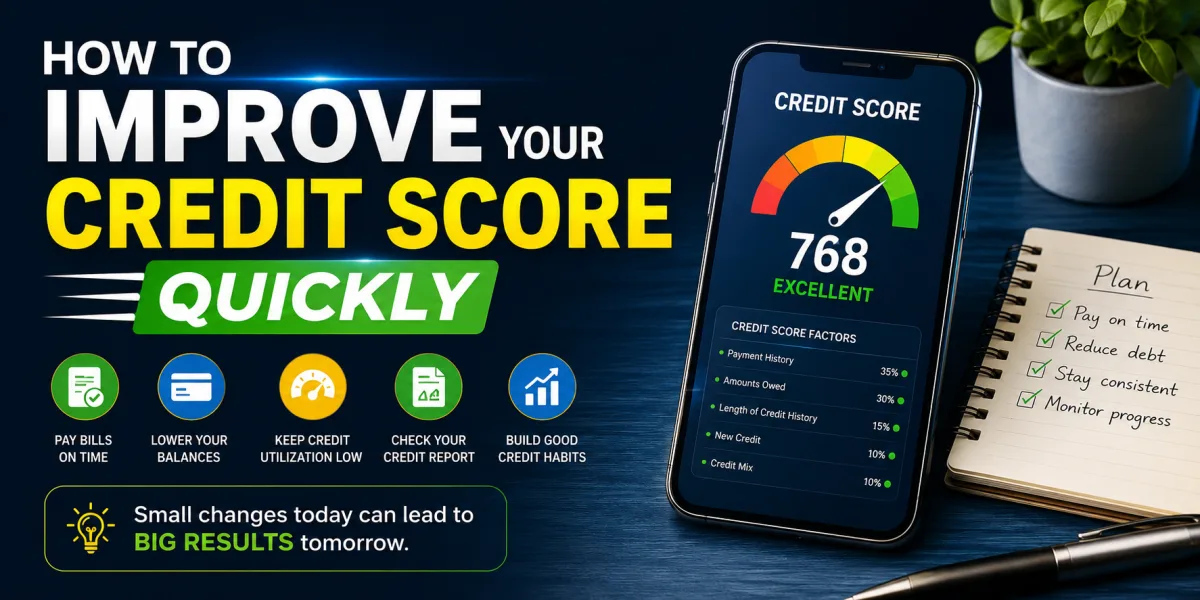
Both secured and unsecured loans can affect credit scores. Applying may create a hard inquiry. Opening a new loan can affect average account age and credit mix. Payment history can help or hurt depending on whether payments are made on time. Debt balances and utilization can influence scores.
A secured loan is not automatically better for credit than an unsecured loan. What matters most is how the account is managed and whether the lender reports to credit bureaus. On-time payments can support credit rebuilding. Late payments can damage credit severely.
Credit cards affect utilization because they are revolving credit. Personal installment loans affect credit differently. Paying down credit card balances with a personal loan may improve revolving utilization, but the borrower still owes debt.
Do not borrow solely to “build credit” unless the cost is low and the repayment plan is strong. Credit building should not require expensive debt.
How to Borrow Safely
Borrowing safely begins with the budget. Before accepting any loan, confirm that the payment fits after essential expenses, savings needs, and irregular costs. Do not rely on optimism. Use actual numbers.
Then compare multiple lenders. Use prequalification when available. Include credit unions, community banks, reputable online lenders, and existing financial institutions. Avoid lenders demanding upfront fees before funding, guaranteed approval offers, and products that seem designed for desperation.
Read the contract. Understand the APR, fees, payment schedule, collateral rights, default terms, prepayment rules, and late-payment consequences. Ask questions before signing.
Build a repayment system. Align due dates with paydays. Set reminders. Use automatic payments only if the account will have funds. Keep a small payment buffer.
Finally, fix the underlying issue. If the loan consolidates debt, stop adding new balances. If it covers an emergency, rebuild savings. If it finances a car, maintain the vehicle and avoid rolling old debt into new loans. If it uses home equity, protect the home by keeping payments conservative.
A loan should be part of a financial repair plan, not a substitute for one.
The Wealth Lesson
Secured and unsecured loans differ because secured loans are backed by collateral and unsecured loans are not. That single difference shapes almost everything else: interest rates, approval odds, borrowing limits, default consequences, and borrower risk.
A secured loan may offer lower rates or easier approval, but the borrower puts an asset on the line. That can be reasonable when the loan funds something necessary and the repayment plan is strong. It can be dangerous when the asset is essential and the loan merely delays a deeper cash-flow problem.
An unsecured loan may be simpler and avoids pledging specific property, but it often costs more and depends heavily on creditworthiness. It can still damage credit, lead to collections, and create legal consequences if unpaid. The absence of collateral does not make the debt harmless.
The best loan is not defined only by whether it is secured or unsecured. It is defined by purpose, affordability, total cost, risk, and fit. What are you borrowing for? What will it cost? What happens if something goes wrong? What asset is at risk? What alternative exists? Will the loan leave you stronger or simply more indebted?
Borrowers build financial strength by understanding the trade before signing it. Collateral can reduce interest, but it raises the stakes. No collateral can preserve assets, but it may increase cost. Debt can solve problems, but it can also magnify them.
The line between secured and unsecured borrowing is really a line between different kinds of risk. Cross it carefully.
 Article
 Article
 Article
 Article
 Article
 Article
 Article
 Article