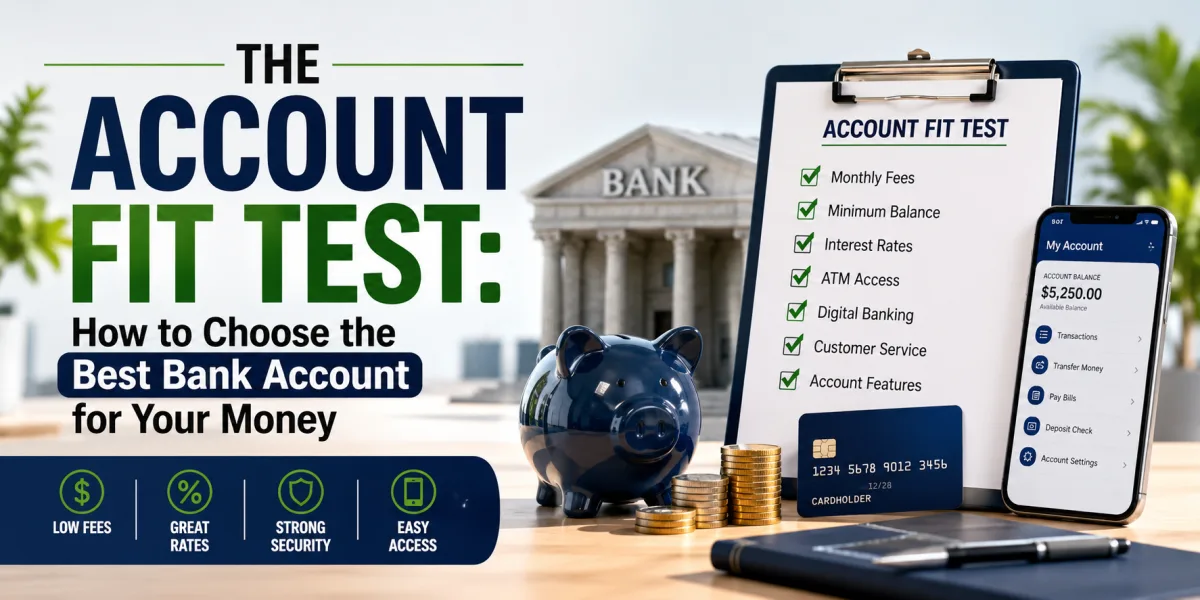
The Account Fit Test: How to Choose the Best Bank Account for Your Money
A bank account is one of the most ordinary financial tools a person uses, which is exactly why it deserves more attention. It receives paychecks, pays bills, stores emergency savings, funds debit card purchases, supports automatic transfers, connects to payment apps, and quietly shapes how money moves through a household. When the account is well chosen, it makes financial life smoother. When it is poorly chosen, it leaks money through fees, creates friction, pays little interest, limits access, or exposes the account holder to avoidable stress.
Many people choose a bank account by habit. They use the bank their parents used, the branch closest to home, the account opened in college, the institution attached to their first job, or the brand they recognize from advertising. Familiarity can be useful, but it is not the same as fit. The best bank account is not always the biggest bank, the newest app, the highest advertised rate, or the account with the longest list of features. The best account is the one that matches how you actually earn, spend, save, withdraw, transfer, and protect money.
Choosing a bank account is a personal finance decision, not a branding decision. A high-yield savings account may be excellent for emergency savings but poor for daily bill payments. A checking account with strong branch access may be useful for a cash-heavy household but unnecessary for someone who banks entirely online. A credit union may offer strong service and lower fees, while an online bank may offer a better savings yield. A premium account may be worthwhile for someone with large balances and bundled benefits, but wasteful for someone who cannot meet balance requirements.
The Consumer Financial Protection Bureau says that when choosing and using a bank or credit union account, consumers should understand their options and use a checklist to gather the information needed to open an account. That advice is simple, but important. A bank account is not just a place to hold money. It is an operating system for daily financial life.
The right account should do six things well. It should keep money safe. It should minimize unnecessary fees. It should provide convenient access. It should match spending and saving habits. It should offer useful digital and customer-service tools. It should support financial goals rather than quietly working against them.
Start with the Job the Account Must Do
The first mistake people make is trying to find one perfect bank account. There is rarely one account that is best for every purpose. A household may need a checking account for daily transactions, a savings account for emergency reserves, a high-yield savings account for short-term goals, a certificate of deposit for money that can be locked away, and possibly a separate business account for self-employment income.
Checking accounts are designed for movement. They receive direct deposits, pay bills, support debit cards, connect to payment apps, and allow frequent transactions. Savings accounts are designed for storage. They separate money from daily spending and may pay interest. Money market accounts may combine features of savings and checking, often with higher balance requirements. Certificates of deposit usually offer a fixed rate for a fixed term but limit access until maturity.
Begin by naming the account’s job. Is this account for everyday spending? Emergency savings? Rent and bills? A down payment? Taxes? Business income? A child’s savings? Travel funds? Cash reserves for a retiree? Money that must remain safe for the next six months? Money that can sit untouched for two years?
The job determines the features. A daily spending account needs low fees, bill pay, debit access, ATM availability, direct deposit, and fraud alerts. An emergency fund needs safety, liquidity, and a competitive interest rate. A long-term savings bucket may prioritize yield. A business account may need invoicing integrations, separate tax records, deposit limits, and merchant services.
A bank account should be chosen from the life it will support, not from the advertisement that found you first.
Make Safety Non-Negotiable
The first requirement of a bank account is safety. Before comparing interest rates or features, confirm that the institution is properly insured. In the United States, deposits at FDIC-insured banks are automatically insured to at least $250,000 per depositor, per FDIC-insured bank, per ownership category. Credit union members receive similar protection through the National Credit Union Share Insurance Fund at federally insured credit unions, with individual accounts insured up to $250,000 and separate protection for certain account categories.
This protection matters because bank safety should not depend on rumor, confidence, or brand size alone. Deposit insurance is one of the main reasons ordinary households can use banking institutions without evaluating every detail of a bank’s balance sheet. It does not mean every financial product sold by a bank is insured. Stocks, bonds, mutual funds, crypto assets, annuities, and other investment products are not the same as insured deposits.
When opening an account, verify insurance status through official FDIC or NCUA resources, not just marketing language. Make sure the account is held at the insured institution, especially when using fintech apps, cash management platforms, or partner-bank arrangements. Some financial technology companies are not banks themselves; they may place funds at partner banks. The details matter.
Also understand coverage limits. A person with balances below the insurance limit may have little to worry about. A household with large cash balances, business reserves, trust accounts, or proceeds from a home sale may need to structure deposits carefully across ownership categories or institutions.
Safety is the foundation. A slightly higher yield is not worth confusion over whether your money is protected.
Compare Fees Before Comparing Features
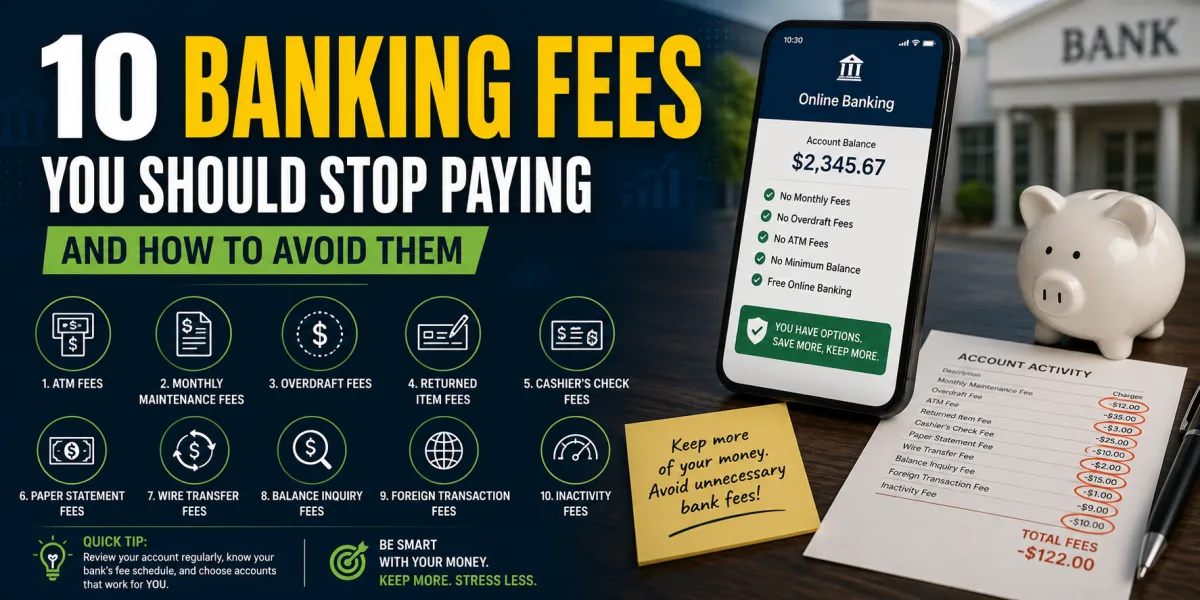
Bank fees are quiet wealth leaks. A monthly maintenance fee of $12 may not look dramatic, but it is $144 per year. Add overdraft fees, out-of-network ATM fees, paper statement fees, wire fees, minimum balance fees, stop-payment fees, cashier’s check fees, and account inactivity fees, and a basic account can become expensive.
Overdraft fees deserve special attention. The CFPB’s 2025 research on overdraft programs reported that many consumers viewed the typical overdraft fee of roughly $35 as excessive and raised concerns about fee size, transaction timing, and notification practices. For households living close to the edge, overdraft fees can create a chain reaction: one small shortage creates a fee, the fee creates a deeper shortage, and the next transaction triggers another fee.
Before choosing an account, read the fee schedule. Do not rely only on phrases such as “free checking.” Free may mean no monthly maintenance fee but still include overdraft fees, ATM fees, wire fees, or conditions that must be met. Ask what triggers the monthly fee and how to waive it. Common waivers include direct deposit, minimum balance, age, student status, combined relationship balances, or debit card activity.
The best account for many people is not the one with the most rewards. It is the one that removes unnecessary friction. A no-monthly-fee account with no overdraft fees, broad ATM access, direct deposit, mobile deposit, and strong alerts may beat a feature-heavy account with conditions that are hard to maintain.
Fees should be predictable, understandable, and avoidable. If an account makes you work too hard to avoid penalties, it may not be the right account.
Understand Overdraft Policies
Overdraft rules can make two accounts that look similar behave very differently. Some banks charge overdraft fees when they cover transactions that exceed the available balance. Some decline the transaction instead. Some offer overdraft lines of credit. Some allow transfers from savings. Some have grace periods or small-dollar cushions. Some have eliminated overdraft fees on certain accounts.
The Federal Reserve’s joint guidance on overdraft programs explains that institutions have historically imposed fees when overdrafts occur, including nonsufficient-funds or NSF fees, and that some consumers use overdraft lines of credit subject to lending disclosures. The practical point is that overdraft protection is not one thing. It can be a fee-based service, a linked transfer, a credit product, or a declined transaction.
For many consumers, the best overdraft policy is one that prevents expensive mistakes. If you sometimes run balances low, look for accounts with no overdraft fees, real-time low-balance alerts, automatic transfers from savings, grace periods, and the ability to opt out of debit-card overdraft coverage. If you prefer transactions to be declined rather than covered with a fee, confirm that setting.
Avoid thinking of overdraft as extra money. It is not income. It is either a fee event or a short-term credit arrangement. A good bank account should help you avoid overdrafts, not profit from them.
Choose the Right Checking Account
A checking account is the household’s transaction hub. It should be reliable, low-cost, easy to access, and compatible with how you pay for things. The best checking account is not always the one that pays the highest interest. Many checking accounts pay little or no interest because their main value is transaction access.
Start with the monthly fee. Can it be avoided without strain? If the account requires a $1,500 minimum balance to waive the fee, ask whether keeping that much idle in checking is worth it. If the account requires direct deposit, make sure your income pattern qualifies. Gig workers, freelancers, and self-employed people may need accounts with flexible fee waivers.
Then check ATM access. Are there fee-free ATMs near work, home, school, or regular travel routes? Does the bank reimburse out-of-network ATM fees? Are cash deposits easy? Online banks may offer excellent checking features but can be inconvenient for frequent cash deposits.
Review bill pay, debit card controls, mobile check deposit, Zelle or transfer tools, account alerts, check availability, wire transfer options, and customer service hours. A good checking account should make ordinary money movement simple.
Also consider whether joint access is needed. Couples, roommates, caregivers, and family members may need joint accounts or authorized access, but shared accounts require trust and clear agreements. Every joint owner may have access to the funds. A joint checking account can simplify shared bills, but it can also create conflict if spending expectations differ.
Choose the Right Savings Account
A savings account should help money stay available but separate from daily spending. Emergency funds, short-term goals, tax reserves, insurance deductibles, and upcoming large purchases often belong in savings rather than checking.
Interest matters more in savings than checking because savings balances are meant to sit. Traditional bank savings accounts may pay very little. Online high-yield savings accounts may pay more because online banks often have lower branch costs and compete aggressively for deposits. Recent market coverage in July 2026 noted that high-yield savings accounts were offering rates far above the national average savings yield, though rates and terms vary by institution and can change.
Do not chase yield blindly. A high advertised APY may apply only up to a certain balance, require direct deposits, require debit card activity, be promotional, or change quickly. Compare the ongoing rate, balance limits, transfer speed, fees, minimums, and account access.
A savings account should not make emergency money hard to reach. If funds take several days to transfer, keep enough cash in checking to handle immediate needs. If an online savings account pays more but creates delays, use it for the bulk of savings while maintaining a small local buffer.
The right savings account protects two things: principal and discipline. It keeps money safe and slightly out of spending range.
Consider a Credit Union
Credit unions are member-owned financial cooperatives. They may offer competitive rates, lower fees, strong service, and community-based relationships. Some people prefer credit unions because they feel less transactional than large banks. Others choose them for auto loans, personal loans, or local service.
Federally insured credit unions are protected through NCUA share insurance, which automatically covers eligible accounts up to applicable limits. This means a credit union can provide safety comparable to an insured bank, as long as it is federally insured and balances remain within coverage limits.
Credit unions may have membership requirements based on employer, location, school, association, military affiliation, family relationship, or other eligibility. Many are easier to join than people assume. Before choosing one, compare digital tools, branch network, ATM network, fees, account minimums, loan products, and customer service.
A credit union may be excellent for someone who values personal service, lower-cost borrowing, or local ties. It may be less ideal for someone who needs a large national branch network or advanced digital tools. The best choice depends on use, not institutional label.
Consider an Online Bank
Online banks can be attractive because they often offer low fees, higher savings yields, strong mobile tools, and easy account opening. For people who rarely use branches, an online bank may be more efficient than a traditional bank.
The trade-off is physical access. Cash deposits may be difficult. Cashier’s checks or notary services may require workarounds. Customer service may be phone, chat, or email rather than in-person. If there is a fraud issue, account lock, or urgent transaction problem, some people prefer branch access.
Online banks can work well for savings, emergency funds, and direct-deposit checking. They may be less convenient for cash-heavy workers, small-business owners who deposit cash, or people who need frequent branch services.
Before opening an online account, verify FDIC insurance, transfer limits, external account linking rules, mobile deposit limits, customer service availability, ATM access, and whether the bank allows joint accounts, beneficiaries, or trust titling if needed.
An online bank can be excellent, but convenience should be tested against your actual banking habits.
Know When a Big Bank Still Makes Sense
Large national banks are sometimes criticized for low savings rates or fees, but they can still make sense for certain households. They may offer broad branch and ATM networks, international services, business banking, wire support, cashier’s checks, fraud departments, mortgage relationships, credit cards, investment services, and in-person help.
If you travel often, move frequently, need cash access across many cities, deposit cash, manage business payments, or value branch service, a large bank may be useful. The key is to avoid paying unnecessary fees for features you do not use.
A common strategy is to use a large bank checking account for transactions and an online high-yield savings account for savings. This separates daily access from higher-yield storage. Another strategy is to use a credit union for loans and a national bank for travel convenience. Banking does not have to be all-or-nothing.
The best banking setup may involve more than one institution, as long as the system remains simple enough to manage.
Compare APY Correctly
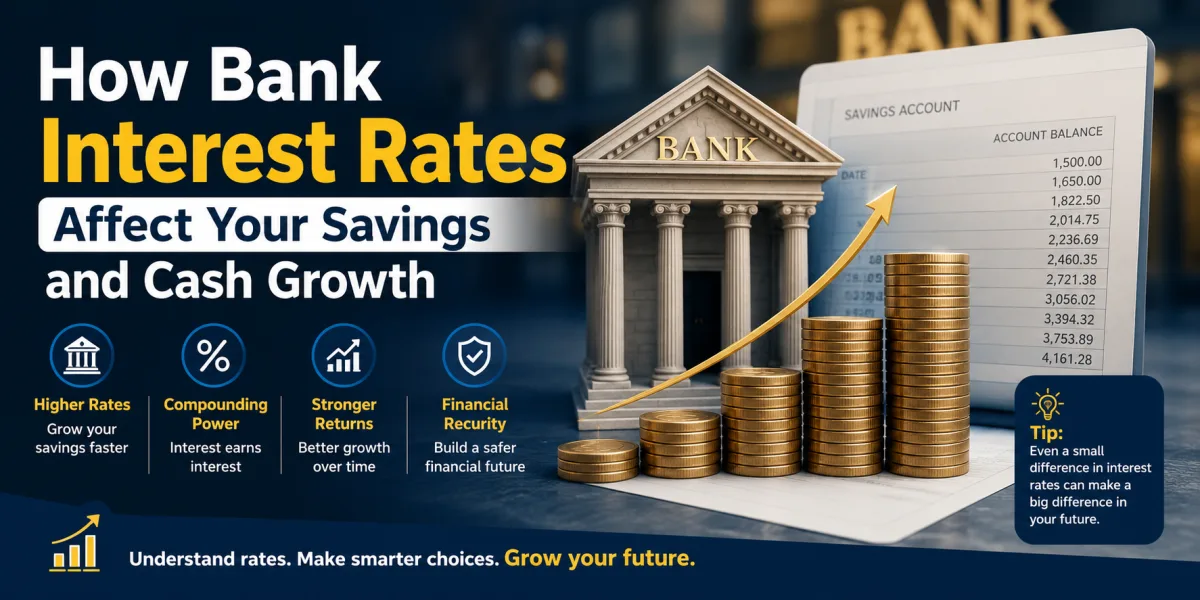
APY, or annual percentage yield, reflects the effect of compounding interest over a year. It is the standard number used to compare deposit account yields. A higher APY helps savings grow faster, but the difference matters most when balances are meaningful and money will remain in the account long enough.
For example, a $500 balance does not produce a life-changing difference between 1 percent and 4 percent. A $50,000 emergency fund does. Rate comparison matters most for large savings balances, home down-payment funds, tax reserves, or cash that must remain safe.
Also ask whether the APY is variable or fixed. Savings and money market account rates usually can change. Certificates of deposit usually lock a rate for a term. Promotional rates may expire. Tiered rates may apply only to part of the balance or require conditions.
Do not sacrifice safety, liquidity, or fee simplicity for a tiny yield difference. But do not leave large savings in a near-zero account out of inertia. Cash should be safe and productive enough for its purpose.
Use Certificates of Deposit Carefully
Certificates of deposit can be useful when you know you will not need the money until a specific future date. A CD usually pays a fixed rate for a fixed term. In exchange, early withdrawal may trigger a penalty.
CDs can work for planned expenses such as tuition due next year, a car purchase fund, a tax reserve, or part of an emergency fund ladder. They are less suitable for money that may be needed immediately. If the account holder breaks the CD early, penalties can reduce the benefit.
Compare CD rates, terms, early withdrawal penalties, minimum deposits, renewal rules, and whether the CD automatically renews. Automatic renewal can be convenient, but it can also trap money into a new term if you miss the maturity window.
CDs are not investments in the stock-market sense. They are cash-management tools. Their job is predictability.
Evaluate Digital Tools
Digital tools are no longer extras. For many households, they are the main banking experience. A good bank account should offer a clear mobile app, account alerts, mobile check deposit, card lock and unlock, external transfers, bill pay, recurring transfers, transaction search, spending categories, and fraud notifications.
Alerts are especially valuable. Low-balance alerts can prevent overdrafts. Large-transaction alerts can identify fraud. Direct-deposit alerts confirm income. Bill-pay reminders protect due dates. Savings goal tools can separate emergency money from vacation money or tax money.
But digital convenience should not come at the expense of customer support. When something goes wrong, can you reach a human? Are support hours reasonable? Is there secure messaging? Does the bank have a fraud hotline? Can urgent debit card issues be handled quickly?
A beautiful app is not enough. The bank must work when the account holder is stressed, traveling, defrauded, locked out, or facing a deadline.
Check Transfer Rules and Limits
Transfer rules matter more than many people expect. Some accounts limit external transfers, mobile deposits, wire amounts, ATM withdrawals, debit card transactions, or same-day transfers. These limits may be fine for ordinary use but frustrating during emergencies.
If you hold emergency savings at one institution and checking at another, test how long transfers take. Is same-day transfer available? Are there fees? Are there daily or monthly limits? Can you initiate transfers from both sides? Does the bank hold deposits for several business days?
Mobile check deposit limits matter for freelancers, landlords, small-business owners, and people receiving occasional large checks. Cash deposit rules matter for tipped workers, service workers, and cash-based businesses.
A bank account should not surprise you when you need money quickly. Read the limits before they matter.
Review Customer Service and Problem Resolution
Banking problems are not theoretical. Debit cards get compromised. Accounts get locked. Transfers fail. Checks are held. Deposits are delayed. Wires need tracing. Fraud claims require documentation. A good bank should resolve issues clearly and fairly.
Before choosing an account, research customer service channels. Does the institution offer branch support, phone support, chat, secure messaging, or all of them? Are support hours limited? Are disputes handled in-app? Does the bank provide provisional credits for eligible fraud claims? How are debit card replacements handled?
Customer reviews can be useful, but read them carefully. Every large institution has complaints. Look for patterns: frozen accounts, slow fraud resolution, surprise closures, poor support access, repeated app failures, or unclear fee practices.
A bank account is not only a product. It is a relationship with a problem-resolution system. Choose one you trust under stress.
Think About Branch Access Honestly
Some people need branches. Others only think they do. Branch access matters if you deposit cash, need cashier’s checks, handle estate matters, want in-person help, use safe deposit boxes, require notary services, or feel more secure with face-to-face support.
But branch access has a cost if it leads you to accept lower savings rates or higher fees unnecessarily. A person who has not visited a branch in three years may not need branch-based banking for every account.
Be honest about your behavior. If you bank digitally, an online bank or credit union with strong shared-branch access may work. If you use cash weekly, branch and ATM access matter. If you run a local business, physical banking may be essential. If you manage finances for an elderly parent, in-person support may be valuable.
The best account matches reality, not nostalgia.
Separate Personal and Business Banking
If you earn self-employment income, freelance income, rental income, or business revenue, consider a separate business account. Mixing personal and business funds can create tax confusion, weak records, legal risk, and budgeting problems.
A business account should be evaluated differently from a personal account. Look at transaction limits, monthly fees, cash deposit limits, invoicing tools, payment processing, wire needs, employee access, accounting software integration, merchant services, debit cards, check writing, and tax reporting support.
A low-fee personal account may be excellent for daily life but inadequate for business operations. A business account may cost more but save time and create cleaner records.
Financial clarity is worth paying attention to. A separate account can help business owners see profit, taxes, owner pay, and operating cash more clearly.
Choose Accounts for Children and Teens Carefully
Student, teen, and child accounts can teach financial responsibility, but account structure matters. A teen checking account may include parental controls, spending limits, alerts, debit card restrictions, and no monthly fees. A child savings account may help build savings habits. A student account may waive fees while the account holder is enrolled.
Watch what happens after the student period ends. Some accounts convert to fee-bearing accounts after graduation or a certain age. Review the future terms. Also teach account holders how overdrafts, debit cards, ATM fees, scams, and peer-to-peer payments work.
A first bank account is not just a place for money. It is financial education. Choose one that teaches safe habits rather than punishing early mistakes with heavy fees.
Consider Accessibility and Inclusion
The best bank account should be usable by the person who owns it. Accessibility matters for older adults, people with disabilities, people with limited English proficiency, people without stable internet, people who rely on cash, and people who need caregiver assistance.
Look for readable statements, branch accessibility, language support, phone access, trusted contact options, power-of-attorney handling, large-print materials, app usability, and clear fraud protections. A high-yield account is not helpful if the account holder cannot comfortably use it.
Banking should reduce stress. If an account’s technology, language, rules, or access model creates confusion, it may not be the best account no matter how attractive the rate appears.
Beware of Account Opening Bonuses
Bank bonuses can be worthwhile, but they should not drive the entire decision. Many bonuses require direct deposit, minimum balances, debit transactions, account maintenance for a set period, or other conditions. Some bonuses are taxable. Some accounts charge fees if conditions are not met.
Calculate the real value. If a $300 bonus requires holding $15,000 in a low-yield account for several months, compare the lost interest against the bonus. If a bonus requires switching direct deposit and bill payments, consider the time cost. If the account is not one you would keep after the bonus, ask whether the effort is worth it.
A bonus can sweeten a good account. It should not make a bad account look good.
Use More Than One Account, but Keep the System Simple
Many households benefit from a small account system. One checking account for bills. One checking account for spending. One savings account for emergency funds. Separate savings buckets for taxes, travel, insurance deductibles, or annual expenses. A business account if needed.
This structure can create clarity. Rent money does not mix with grocery spending. Tax money does not mix with vacation savings. Emergency savings does not sit in the same account as debit card spending.
But too many accounts can create confusion. Forgotten balances, missed transfers, dormant account fees, scattered statements, and login fatigue can reduce control. The right number of accounts is the smallest number that gives useful separation.
Simplicity is a financial feature. A banking setup should be easy enough to maintain when life is busy.
A Practical Bank Account Comparison Checklist
First, confirm deposit insurance through the FDIC for banks or NCUA for federally insured credit unions.
Second, identify the account’s job: daily spending, emergency savings, short-term goals, business income, or long-term cash storage.
Third, compare monthly fees and waiver requirements.
Fourth, review overdraft, NSF, and low-balance policies.
Fifth, compare APY for savings accounts, money market accounts, and CDs.
Sixth, check ATM access, branch access, cash deposit rules, and debit card features.
Seventh, review transfer limits, mobile deposit limits, external transfer speed, and wire fees.
Eighth, test digital tools, alerts, bill pay, and customer service access.
Ninth, read the account agreement and fee schedule before opening.
Tenth, review the account annually to make sure it still fits.
When to Switch Bank Accounts
Switching bank accounts can be annoying, which is why many people stay with accounts that no longer serve them. But switching may be worthwhile if fees are recurring, savings rates are uncompetitive, overdraft policies are costly, customer service is poor, branch access no longer matters, digital tools are weak, or the account no longer matches your life.
Switch carefully. Open the new account first. Move direct deposit. Update automatic bill payments. Transfer subscriptions. Leave enough money in the old account to cover pending transactions. Watch both accounts for at least one full billing cycle. Download statements. Then close the old account only after all transactions have cleared.
Do not close an account in anger before confirming that payroll, rent, utilities, insurance, loans, and subscriptions are connected to the new account. A messy switch can create late fees and payment problems.
A better bank account can save money and reduce stress, but the transition should be organized.
The Wealth Lesson
The best bank account is not the one with the loudest advertisement, the biggest branch sign, or the highest promotional rate. It is the account that fits the way money moves through your life.
For daily spending, the best account is usually low-fee, easy to access, digitally reliable, and protected from costly overdraft mistakes. For savings, the best account is safe, liquid, and competitive enough that idle cash is not neglected. For business, the best account separates records and supports operations. For children and students, the best account teaches good habits. For large balances, the best account respects deposit insurance limits and cash-management needs.
A strong banking setup helps money behave. It separates spending from saving. It reduces fees. It protects emergency funds. It pays reasonable interest where appropriate. It makes fraud easier to detect. It supports bills, goals, and transfers without constant friction.
Choosing a bank account is not a one-time decision. As income changes, technology changes, rates change, fees change, and life changes, the account should be reviewed. The account that worked at 22 may not fit at 35. The account that worked as an employee may not fit as a business owner. The account that worked with low balances may not fit after a home sale, inheritance, or growing emergency fund.
Banking is the plumbing of personal finance. When it works well, you barely notice it. When it works poorly, everything else becomes harder. Choose accounts that keep money safe, reduce waste, pay fairly, and support the financial life you are trying to build.
 Article
 Article
 Article
 Article
 Article
 Article
 Article
 Article