
The Money Operating System: How to Manage Your Financial Life with Clarity and Control
Managing money is not one skill. It is a system of skills. It includes earning, spending, saving, borrowing, investing, protecting, planning, and reviewing. When those pieces work together, money becomes less chaotic. When they are disconnected, even a decent income can feel fragile.
Most people do not struggle with money because they are incapable of understanding numbers. They struggle because money arrives and leaves through too many channels. Paychecks, bills, subscriptions, debt payments, groceries, insurance, taxes, transfers, credit cards, emergencies, savings goals, and impulse purchases all compete at once. Without a system, the month becomes a series of reactions.
A strong money system changes the order. Income arrives with a plan. Bills are expected. Savings happens before money disappears. Debt is managed deliberately. Emergencies have a cash cushion. Investments build future assets. Insurance protects against disaster. Credit is maintained before it is needed. The household reviews progress often enough to correct course.
This is the heart of money management: assigning purpose before pressure takes over.
The Federal Reserve’s 2026 report on U.S. household economic well-being found that 63 percent of adults said they could cover a hypothetical $400 emergency expense using cash, savings, or a credit card paid off at the next statement. That also means a large share of households would need to borrow, sell something, delay payment, or use another method for a relatively modest shock.
That statistic shows why money management matters. Financial stability is not created only by earning more. It is created by building margin, protecting that margin, and turning part of it into assets. A household with no margin is always one surprise away from stress. A household with margin has options.
The goal is not to become obsessed with money. The goal is to build enough structure that money stops controlling the day.
Start with the Financial Map
Before you can manage money well, you need a map. The map has four parts: income, expenses, assets, and debts.
Income is every reliable source of money coming in. This includes wages, salary, business income, freelance work, benefits, child support, rental income, investment income, or side income. Use net income for everyday planning, not gross income. Gross income is what you earn before deductions. Net income is what actually reaches your bank account.
Expenses are every place money goes. Some are fixed, such as rent, mortgage, insurance, loan payments, internet, phone plans, subscriptions, and childcare. Some are variable, such as groceries, fuel, utilities, household supplies, restaurants, clothing, entertainment, personal care, and gifts. Some are irregular, such as car repairs, medical bills, annual memberships, holiday costs, school expenses, tax preparation, home maintenance, and travel.
Assets are what you own that has financial value. Cash, savings accounts, retirement accounts, brokerage accounts, business equity, home equity, vehicles, and investment properties all belong here. Not every asset is equally useful. Cash is liquid. A retirement account may be long-term. Home equity may be valuable but hard to access.
Debts are what you owe. Credit cards, student loans, auto loans, personal loans, mortgages, medical debts, tax debts, buy-now-pay-later balances, and money owed to family or friends should all be included.
The first act of money management is honesty. Write the numbers down. Many people avoid this step because they fear what they will see. But not knowing does not make the problem smaller. It only makes it harder to manage.
Know the Difference Between Cash Flow and Net Worth
Cash flow and net worth are related, but they are not the same.
Cash flow is the movement of money in and out each month. If income exceeds expenses, cash flow is positive. If expenses exceed income, cash flow is negative. Cash flow determines whether the household can pay bills, save, reduce debt, and avoid borrowing.
Net worth is assets minus liabilities. If you own $100,000 in assets and owe $40,000, your net worth is $60,000. Net worth shows the larger financial picture. It can rise because assets grow, debts shrink, or both.
A person can have strong cash flow and low net worth, especially early in life. That is an opportunity. A person can also have high net worth and poor cash flow, such as a homeowner with equity but little income. That can create stress. A person can have high income and low net worth if spending and debt absorb everything.
Good money management tracks both. Cash flow tells you whether the current system works. Net worth tells you whether the system is building wealth over time.
Create a Monthly Budget That Reflects Real Life
A budget is not a punishment. It is a spending plan. It tells money where to go before the month decides for you.
The simplest budget begins with net income. Then subtract essential fixed expenses, essential variable expenses, savings, debt payments, irregular expense funds, and discretionary spending. If the result is negative, the plan must change before the month begins. If the result is positive, the surplus should be assigned to a goal. Unassigned money tends to disappear.
The Consumer Financial Protection Bureau’s budgeting resources emphasize the basic structure of listing income, listing expenses, and comparing the two. This simple framework remains the foundation because financial control begins with knowing whether money coming in is enough to cover money going out.
A working budget should include irregular expenses. If car insurance comes due every six months, divide the bill by six and save monthly. If holiday spending happens every year, save monthly. If home repairs are likely, save monthly. Predictable expenses should not be allowed to masquerade as emergencies.
Budgeting should also include a flex category. Every month has small surprises: medicine, a school payment, extra fuel, a birthday lunch, a replacement charger, or a higher utility bill. A budget with no flex is fragile.
The goal of a budget is not to guess perfectly. The goal is to adjust quickly. The first month teaches you. The second month improves. The third month begins to create rhythm.
Budget by Paycheck, Not Only by Month
Monthly totals can hide timing problems. A household may earn enough for the month but still overdraft because rent is due before the second paycheck arrives. This is why paycheck-based budgeting is useful.
List each paycheck date. Then list the bills and expenses that must be covered before the next paycheck arrives. This shows whether one paycheck is overloaded. If it is, contact billers and ask about changing due dates. Moving an insurance payment, credit card due date, or utility bill can reduce stress without changing total income.
Timing is a real financial force. Money due on the first cannot be paid with money arriving on the fifteenth unless there is a buffer. A cash-flow calendar helps prevent the illusion that the month is balanced when the bank account is not.
The long-term goal is to get one month ahead. That means this month’s income pays next month’s expenses. Once that happens, paychecks stop being rescue events and become replenishment. This is one of the most powerful shifts in personal finance.
Build an Emergency Fund
An emergency fund is a cash reserve for unplanned expenses or income disruption. It is the money that prevents a problem from becoming a debt spiral.
The CFPB defines an emergency fund as money set aside for unplanned expenses or financial emergencies such as car repairs, home repairs, medical bills, or loss of income.
Start with a small target if savings are currently zero. A starter emergency fund of $500 to $1,000 can protect against many minor disruptions. Then build toward one month of essential expenses. After that, aim for three to six months, depending on risk.
Three months may be enough for someone with stable income, low fixed expenses, strong insurance, and no dependents. Six months may be better for families, single-income households, homeowners, people with health risks, or workers in uncertain industries. Nine to twelve months may be reasonable for freelancers, business owners, single parents, or people preparing for major transitions.
Emergency money should be safe, liquid, and separate from daily spending. A high-yield savings account or insured savings account is often appropriate. The FDIC states that deposits are insured up to at least $250,000 per depositor, per FDIC-insured bank, per ownership category.
Do not invest the core emergency fund in volatile assets. Emergency money has one job: be there when needed.
Use Sinking Funds for Predictable Costs
A sinking fund is money saved gradually for a known future expense. It is one of the most underrated tools in money management.
Annual insurance premiums, car repairs, medical costs, gifts, holidays, school expenses, home maintenance, pet care, travel, tax preparation, professional licenses, and technology replacement are all candidates for sinking funds.
The math is simple. Estimate the cost, divide by the number of months until it is due, and save that amount monthly. A $1,200 holiday budget requires $100 per month. A $600 annual car maintenance estimate requires $50 per month. A $900 six-month insurance bill requires $150 per month.
Sinking funds reduce the emotional volatility of money. Without them, predictable bills feel like emergencies. With them, the bill arrives and the money is waiting.
The emergency fund protects against the unknown. Sinking funds prepare for the known. Both are necessary.
Control High-Interest Debt
Debt management is a central part of money management because debt payments control future cash flow. Some debt can be strategic. A reasonable mortgage, education debt tied to higher earning power, or business loan backed by cash-flow potential may support long-term goals. High-interest consumer debt is different.
Credit card debt, payday loans, high-cost personal loans, and certain buy-now-pay-later balances can trap households because interest and fees absorb money that could have built stability. High-interest debt turns past spending into present pressure.
Start by listing every debt: balance, interest rate, minimum payment, due date, and lender. Then choose a repayment strategy. The avalanche method pays extra toward the highest interest rate first, reducing total interest. The snowball method pays extra toward the smallest balance first, creating momentum. Both require making minimum payments on all debts.
While paying debt, stop adding new high-interest balances if possible. This may mean using debit for certain categories, removing saved cards from shopping sites, pausing credit card use, or building a starter emergency fund to avoid borrowing for small surprises.
Debt payoff is not only about becoming debt-free. It is about reclaiming monthly cash flow. Every paid-off balance creates money that can be redirected to savings, investing, or life goals.
Protect Your Credit
Credit is not wealth, but it affects financial access. A strong credit profile can help with lower borrowing costs, rental applications, insurance pricing in some places, utility deposits, and financial flexibility. Poor credit can make life more expensive.
The basic credit rules are simple. Pay on time. Keep credit card balances low relative to limits. Avoid unnecessary applications. Keep old positive accounts open when appropriate. Review credit reports. Dispute errors quickly.
Credit should be managed before it is needed. Trying to repair credit during a mortgage application, apartment search, or car emergency is stressful and often costly.
Check your credit reports regularly. Look for unfamiliar accounts, incorrect late payments, collections you do not recognize, wrong addresses, or hard inquiries you did not authorize. Credit report review also helps detect identity theft early.
A credit score is not a measure of character. It is a risk signal used by lenders. Treat it as a tool. Maintain it, but do not borrow unnecessarily just to feel financially successful.
Bank with Purpose
Your bank accounts should support your system. A single checking account can work for a very simple life, but many households benefit from separating money by purpose.
At minimum, consider one checking account for bills and spending, one savings account for emergencies, and separate savings buckets or accounts for sinking funds. Some people also use a tax account, travel fund, car fund, home maintenance fund, or business reserve.
Separation matters because one large balance can be misleading. A checking account with $5,000 may feel comfortable until you remember that $1,500 belongs to rent, $800 to insurance, $500 to groceries, $400 to debt, and $600 to upcoming repairs. Money without labels gets spent twice.
Review bank fees. Monthly maintenance fees, overdraft fees, ATM fees, wire fees, and transfer fees can quietly drain cash. A better account structure may save money and reduce stress.
Banking should make money clearer, not more confusing.
Automate What Matters
Automation helps because willpower is inconsistent. A person may intend to save, invest, and pay bills on time, but life gets busy. Automation turns priorities into defaults.
Automate minimum debt payments to avoid late fees. Automate savings transfers on payday. Automate retirement contributions. Automate sinking fund deposits. Automate bill reminders for payments that cannot be fully automated.
Automation should be monitored. Do not set and forget everything blindly. Review accounts weekly or monthly to make sure payments cleared, balances are accurate, and subscriptions remain useful.
The best system combines automation with awareness. Automation handles repetition. Review handles judgment.
Invest for Long-Term Wealth
Saving protects the present. Investing builds the future. Cash is necessary for emergencies and short-term goals, but long-term wealth usually requires ownership of assets that can grow over time.
Investing may include employer retirement plans, IRAs, Roth IRAs, brokerage accounts, index funds, ETFs, bonds, real estate, business ownership, or other assets. The right mix depends on goals, risk tolerance, time horizon, income, taxes, and knowledge.
Start with retirement accounts if available, especially if an employer match exists. For 2026, the IRS announced that the employee contribution limit for 401(k), 403(b), most 457 plans, and the federal Thrift Savings Plan increased to $24,500, while the IRA contribution limit increased to $7,500.
Not everyone can contribute the maximum. That is not the point. The point is to begin and increase contributions over time. Even small contributions create the habit of asset building.
Investing should be diversified and low cost where possible. Broad index funds and ETFs are often useful because they spread risk across many companies or bonds. Avoid chasing hot trends, market predictions, or investments you do not understand.
The purpose of investing is not excitement. It is ownership, compounding, and future income.
Understand Risk Before Chasing Return
Every investment has risk. Stocks can fall sharply. Bonds can decline when interest rates rise or credit conditions worsen. Real estate can lose value or require expensive repairs. Businesses can fail. Cash can lose purchasing power to inflation. Even doing nothing has risk.
The right question is not, “How do I avoid all risk?” It is, “Which risks am I being paid to take, and which risks could ruin my plan?”
Money needed soon should usually be kept safer. A house down payment needed next year should not be heavily exposed to stock market volatility. Retirement money needed decades from now may need growth assets to keep up with inflation. Emergency money should be liquid and stable.
Risk tolerance is partly emotional and partly financial. Emotional risk tolerance is how much volatility you can handle without panic. Financial risk capacity is how much loss your plan can survive. A young investor with stable income may have high risk capacity. A retiree relying on portfolio withdrawals may not.
Good money management matches risk to time horizon.
Protect Against Catastrophe with Insurance
Insurance is a financial defense system. It transfers certain risks you cannot afford to absorb alone.
Health insurance protects against medical costs. Auto insurance protects against vehicle and liability risks. Homeowners or renters insurance protects property and liability. Disability insurance protects income if illness or injury prevents work. Life insurance protects dependents if an income earner dies. Umbrella liability insurance may protect households with meaningful assets. Business owners may need professional, property, liability, cyber, or key-person coverage.
The purpose of insurance is not to cover every inconvenience. It is to protect against events that could seriously damage the household balance sheet.
Review insurance when life changes: marriage, children, home purchase, divorce, business ownership, higher income, new debt, caregiving responsibilities, or retirement. Coverage that fit one stage of life may be inadequate or excessive at another.
A strong financial plan is not only about growing money. It is about protecting the money and people already at risk.
Plan for Taxes Before They Surprise You
Taxes affect cash flow, investing, self-employment, retirement, homeownership, business income, capital gains, and estate planning. Ignoring taxes can create unpleasant surprises.
Employees should review withholding when income changes, marriage status changes, children are born, side income begins, or deductions change. Self-employed people should set aside money for estimated taxes because no employer may be withholding income and payroll taxes. Investors should understand that dividends, interest, and realized gains in taxable accounts may create tax obligations.
Tax planning is not tax evasion. It is arranging financial life legally and thoughtfully. Retirement account contributions, health savings accounts, charitable giving, business deductions, capital gains timing, and account location can all affect after-tax outcomes.
If your financial life is simple, basic tax software may be enough. If you own a business, receive equity compensation, have rental property, trade frequently, inherit assets, or face major life changes, professional tax advice may be worthwhile.
The money you keep after taxes is what funds the plan. Manage taxes as part of the system.
Increase Income Deliberately
Expense control is important, but income growth expands possibility. There is a floor under how much you can cut. There is more upside in earning power.
Increasing income may mean negotiating a raise, changing employers, earning credentials, learning a higher-value skill, freelancing, starting a business, improving sales ability, building a professional network, or moving into a stronger industry. The right path depends on personality, family responsibilities, market demand, and current skills.
The key is to assign new income before lifestyle absorbs it. A raise should not disappear automatically into larger payments and more consumption. Decide in advance how much of every raise goes to savings, debt payoff, investing, giving, and improved lifestyle.
Income growth without discipline becomes lifestyle inflation. Income growth with a plan becomes wealth acceleration.
Separate Wants, Needs, and Values
Money management is not only about cutting wants. It is about clarifying values.
Needs are expenses required for basic stability: housing, food, utilities, transportation, insurance, medicine, childcare, and essential communication. Wants are optional improvements: restaurants, travel, entertainment, upgrades, hobbies, convenience, and luxury purchases. Values are the priorities that make life meaningful: family, health, education, freedom, generosity, creativity, security, faith, travel, community, or independence.
A spending plan should protect needs, make room for values, and limit wants that do not matter. The problem is not wanting things. The problem is spending heavily on things that do not improve life while underfunding things that do.
This distinction helps avoid both chaos and unnecessary austerity. A budget that removes all joy may fail. A budget that funds every impulse may also fail. The goal is intentionality.
Spend proudly on what truly matters. Cut ruthlessly from what does not.
Build a System for Major Goals
Large goals need separate plans. Buying a home, starting a business, paying for education, retiring early, relocating, having children, caring for parents, or taking a sabbatical cannot be handled with leftover money.
Define the goal. Estimate the cost. Set a deadline. Divide the cost by the number of months until the deadline. Decide where the money will be kept. Automate contributions if possible.
Short-term goals should usually be held in safe, liquid accounts. Medium-term goals may use conservative investments depending on time horizon and risk tolerance. Long-term goals may use diversified investments.
A goal without a monthly funding plan is only a wish. A goal with automatic contributions becomes part of the financial system.
Protect Your Identity and Accounts
Modern money management includes digital security. A stolen identity or hacked account can damage credit, drain cash, delay tax refunds, and consume months of recovery work.
Use strong unique passwords. Use a password manager. Enable multi-factor authentication on email, banking, brokerage, tax, payroll, and payment accounts. Freeze credit if appropriate. Monitor accounts and credit reports. Do not click financial links in unexpected messages. Contact institutions through official apps or websites.
Your email account deserves special protection because it often controls password resets for other accounts. If a criminal controls your email, they may be able to reach your financial life.
Identity protection is not separate from financial planning. It protects the access layer of your money.
Manage Money as a Couple or Household
Household money management requires communication. A budget controlled by one person and hidden from the other can create resentment, confusion, or dependence. Both partners should understand income, bills, debt, savings, insurance, and goals.
There is no single correct account structure. Some couples combine everything. Some keep separate accounts. Some use a hybrid system with joint accounts for shared expenses and individual accounts for personal spending. The best structure is transparent, fair, and repeatable.
Schedule a regular money meeting. Review bills, upcoming expenses, savings goals, debt progress, and decisions. Keep the meeting practical. The goal is coordination, not blame.
Personal spending money can reduce conflict. If each partner has an agreed amount they can spend without interrogation, the budget becomes less controlling and more sustainable.
Money is not only math in a household. It is trust.
Review Your Financial Life Regularly
A money system must be reviewed because life changes. Income changes. Expenses change. Goals change. Markets change. Tax rules change. Insurance needs change. Family responsibilities change.
Create a monthly review for budget, bills, savings, debt, subscriptions, and cash flow. Create a quarterly review for net worth, investment contributions, insurance, and progress toward goals. Create an annual review for taxes, retirement accounts, beneficiaries, estate documents, credit reports, and major financial decisions.
Review prevents drift. Without review, subscriptions multiply, insurance becomes outdated, debt creeps up, savings stalls, investments become unbalanced, and goals lose funding.
Money management is not about building one perfect plan. It is about building a plan that can adapt.
The Order of Operations
When everything feels urgent, use an order of operations.
First, stabilize cash flow. Know income, bills, due dates, and essential spending.
Second, build a starter emergency fund. Even $500 to $1,000 can reduce dependence on debt.
Third, capture any employer retirement match if available and affordable.
Fourth, attack high-interest debt while avoiding new balances.
Fifth, build one month of essential expenses in cash.
Sixth, create sinking funds for predictable irregular expenses.
Seventh, grow the emergency fund toward three to six months or more depending on risk.
Eighth, increase retirement and long-term investment contributions.
Ninth, fund major goals deliberately.
Tenth, optimize taxes, insurance, estate planning, and investment strategy as the household becomes more stable.
This order can be adjusted. A person with unstable income may need more cash earlier. A person with crushing high-interest debt may prioritize debt after a small starter fund. A person with dependents may need insurance sooner. The sequence is a guide, not a law.
Common Money Management Mistakes
The first mistake is managing money by account balance alone. Seeing money in checking does not mean it is available. Some of it may already belong to rent, taxes, insurance, or debt.
The second mistake is ignoring irregular expenses. Predictable bills become emergencies when they are not funded.
The third mistake is investing before building basic stability. Investing is important, but emergency cash prevents forced selling.
The fourth mistake is carrying high-interest debt while making only minimum payments.
The fifth mistake is allowing lifestyle inflation to absorb every raise.
The sixth mistake is underinsuring against catastrophic risks while overspending on minor protections.
The seventh mistake is confusing income with wealth. Wealth is what remains and grows.
The eighth mistake is avoiding financial review because of shame. Avoidance allows small problems to become large ones.
The Wealth Lesson
Managing money well is not about mastering every financial product. It is about building a system that makes good decisions easier and bad decisions harder.
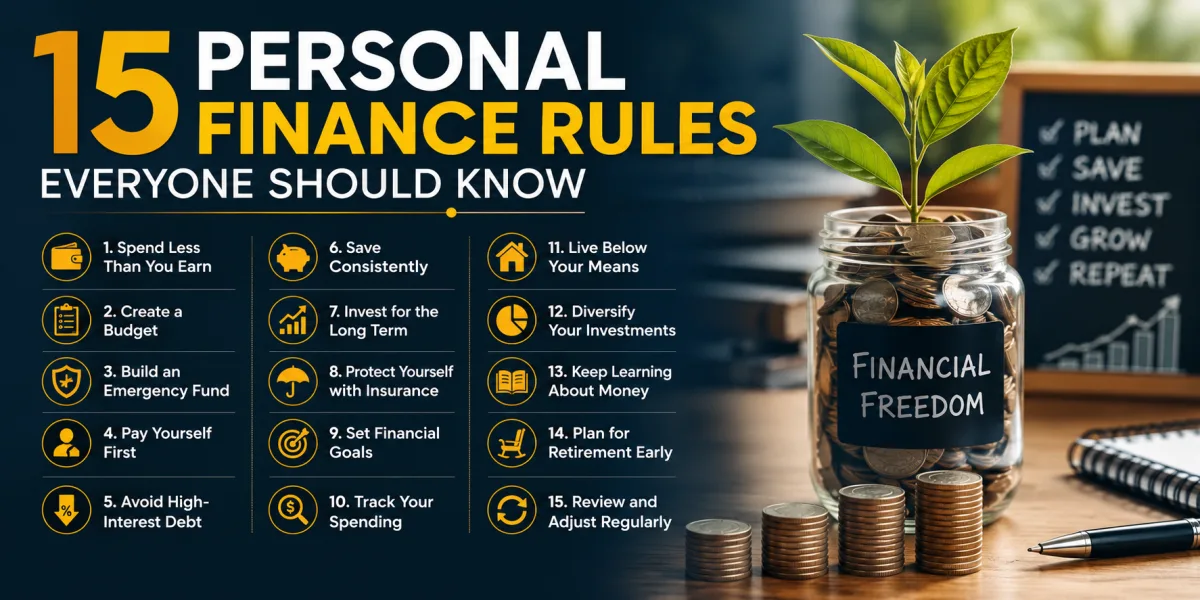
Income must be directed. Spending must be visible. Savings must be automatic. Debt must be controlled. Emergency money must be separate. Investments must be long-term. Insurance must protect against disaster. Credit must be maintained. Taxes must be anticipated. Goals must be funded. The system must be reviewed.
At first, money management may feel restrictive because it reveals limits. Over time, it becomes freeing because it creates choices. The person with a working money system can handle emergencies, leave bad jobs more easily, invest with patience, avoid predatory debt, support family more sustainably, and make decisions without constant panic.
Money does not need to dominate life. But it does need structure. Without structure, money follows pressure. With structure, money follows priorities.
The goal is not perfection. The goal is control, resilience, and progress. A well-managed financial life is built one decision at a time, then protected by habits strong enough to survive ordinary chaos.
 Article
 Article
 Article
 Article
 Article
 Article
 Article
 Article