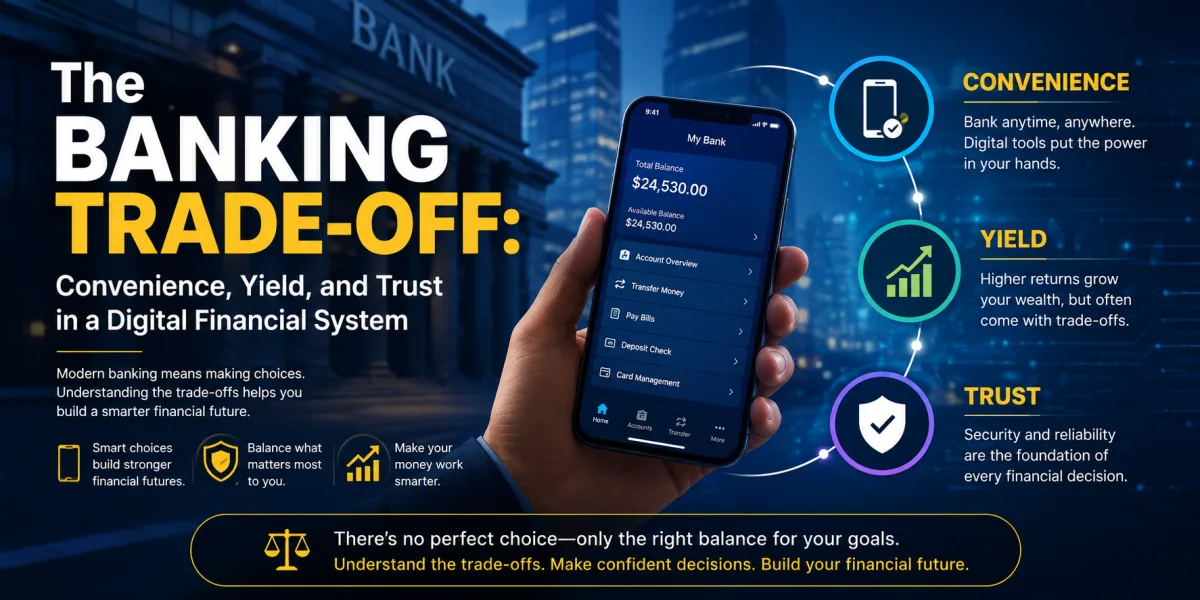
The Banking Trade-Off: Convenience, Yield, and Trust in a Digital Financial System
For most people, a bank account is not a luxury. It is the operating system of daily financial life. Paychecks arrive there. Bills leave from there. Emergency savings sit there. Debit cards, credit card payments, mortgage drafts, rent transfers, business deposits, tax refunds, subscription charges, investment transfers, and family payments all move through the banking system in one form or another.
Because banking feels so ordinary, many people choose a bank casually. They use the institution their parents used, the bank closest to their first job, the bank with a branch near their apartment, or the online bank with the highest advertised savings rate. Yet the choice between an online bank and a traditional bank can quietly influence how much interest you earn, how much friction you face, how fast you can solve problems, how easily you access cash, and how confidently you manage your financial life.
The question is often framed too simply: are online banks better than traditional banks? The more useful question is different: better for what?
An online bank may be better for earning a higher yield on savings, avoiding monthly fees, opening accounts quickly, and managing money from a phone. A traditional bank may be better for cash deposits, complex customer service needs, in-person support, business banking, cashier’s checks, notary services, lending relationships, and customers who value a physical branch. The best answer often is not one or the other. It is a deliberate combination.
The modern banking decision is not only about technology. It is about financial behavior. A bank can either support good habits or quietly work against them. A low-yield savings account can make emergency cash lose purchasing power faster than necessary. A fee-heavy checking account can penalize people who are already close to the edge. A purely digital bank can create stress when an urgent issue requires human judgment. A traditional bank can offer comfort while paying almost nothing on idle cash.
Choosing well means understanding the trade-offs behind the polished apps, branch signs, debit card designs, and promotional rates. Banking is not wealth building by itself, but it is the foundation beneath wealth building. The better your banking structure, the easier it becomes to save consistently, pay bills reliably, avoid unnecessary fees, separate goals, protect liquidity, and move surplus money into productive assets.
What Is an Online Bank?
An online bank is a financial institution that primarily operates through digital channels rather than a large physical branch network. Customers usually open accounts through a website or mobile app, deposit checks through mobile capture, transfer money electronically, use debit cards for spending, and contact support by chat, phone, secure message, or email.
Some online banks are fully chartered banks. Others are financial technology companies that partner with chartered banks to offer deposit accounts. This distinction matters. A real bank holds a banking charter and is directly regulated as a bank. A fintech platform may provide the interface while customer deposits are held at one or more partner banks. In either case, customers should confirm whether deposits are held at an FDIC-insured bank or, in the case of credit unions, an NCUA-insured credit union.
Online banks became popular because they attacked two long-standing frustrations in consumer banking: low interest and high fees. Without thousands of branches to maintain, many online banks operate with lower overhead. Some pass a portion of those savings to customers in the form of higher savings rates, lower account minimums, fewer monthly maintenance fees, and no-fee digital tools.
The clearest example is the high-yield savings account. Traditional savings accounts at major branch banks have often paid extremely low rates, while competitive online savings accounts may pay significantly more. As of July 2026, many of the most competitive high-yield savings accounts were still offered by online banks or digital-first institutions, while the national average savings rate remained much lower.
The appeal is obvious. If two banks both protect insured deposits, but one pays a meaningfully higher yield with no monthly fee, the saver has a rational reason to consider the online bank. For a household holding $20,000, $50,000, or $100,000 in emergency savings, the difference between a near-zero rate and a competitive rate can become hundreds or thousands of dollars over time.
But an online bank is not simply a traditional bank without branches. Its strengths and weaknesses flow from the same design. It is built for scale, automation, and digital access. That can be excellent when everything works. It can be frustrating when a customer needs exceptions, explanations, urgent human intervention, or physical services.
What Is a Traditional Bank?
A traditional bank is a branch-based financial institution that offers banking services through physical locations as well as digital channels. These banks may include national banks, regional banks, community banks, and local institutions. Many traditional banks now have sophisticated mobile apps and online banking platforms, but their defining feature is the branch network.
Traditional banks historically served as the center of local financial life. Customers opened accounts in person, deposited paychecks with tellers, applied for mortgages with loan officers, obtained cashier’s checks, rented safe deposit boxes, discussed business financing, and built relationships with bankers who understood the local economy. The bank was not just software. It was an institution with people, buildings, vaults, and community presence.
That model still matters for many customers. A restaurant owner who deposits cash daily may need a local branch. A family buying a home may value sitting across from a mortgage officer. An elderly customer may prefer face-to-face help. A small business may need treasury services, merchant services, wire support, and lending relationships. A person dealing with fraud, estate issues, power of attorney documents, or account freezes may want a human being who can review documents and escalate problems.
Traditional banks also offer psychological comfort. Seeing a branch in the neighborhood gives some customers confidence that the institution is real, stable, and reachable. This matters because banking is based on trust. Customers hand over their income, savings, and financial identity to an institution they expect to operate reliably.
The trade-off is cost. Branch networks are expensive. Buildings, staff, security, local compliance, ATMs, systems, and operations require money. Many traditional banks recover these costs through lower deposit rates, monthly maintenance fees, overdraft fees, wire fees, minimum balance requirements, and cross-selling higher-margin products.
That does not make traditional banks bad. It means customers should understand what they are paying for. If you use branch services often, maintain relationships, deposit cash, need complex support, or value in-person access, a traditional bank may provide real utility. If you never visit a branch and keep large savings balances earning minimal interest, the traditional model may be quietly expensive.
The Real Difference: Infrastructure Versus Interface
Many consumers think the difference between online and traditional banks is simply app versus branch. That is partly true, but incomplete. The deeper difference is infrastructure versus interface.
A traditional bank usually owns the full customer relationship: branches, account systems, compliance teams, lending departments, customer support, ATMs, and deposits. An online bank may also own the full relationship, but some digital banking platforms are built around partnerships. The customer sees a sleek app, while deposits may be swept to partner banks behind the scenes.
This is not automatically risky, but it requires attention. A customer should know who actually holds the money, whether the deposits are insured, how account records are maintained, and what happens if the fintech platform fails, changes partners, or experiences operational problems. The brand on the app is not always the legal institution holding the deposit.
Deposit insurance is one of the most important safety features in banking. The FDIC states that deposits are automatically insured to at least $250,000 at each FDIC-insured bank, and its standard coverage limit is $250,000 per depositor, per insured bank, per ownership category.
That protection is powerful, but it is not a substitute for understanding account structure. A saver with multiple accounts at the same bank may not have separate coverage for each account if they fall under the same ownership category. A married couple with joint accounts, individual accounts, retirement accounts, or trust accounts may have different coverage depending on titles and categories. A customer using a fintech platform should confirm the partner bank and whether funds have actually reached the insured deposit account.
This is where the online-versus-traditional debate becomes more sophisticated. Safety is not about whether a bank has a branch. It is about charter status, deposit insurance, account titling, operational controls, cybersecurity, customer support, and transparency.
Interest Rates: The Online Bank Advantage
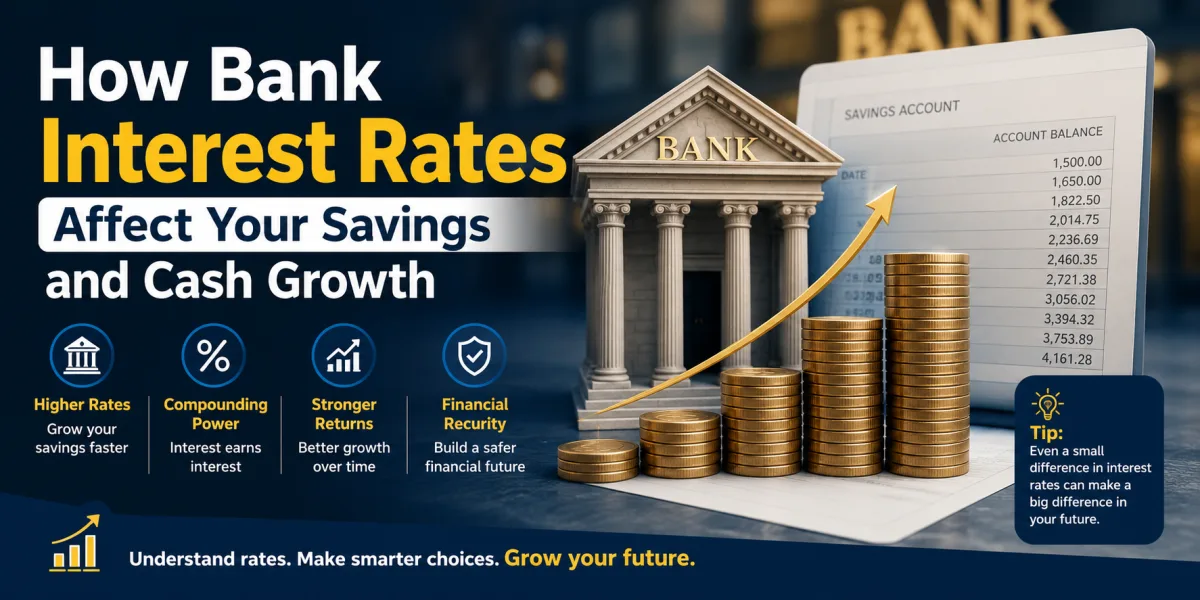
The most obvious advantage of online banks is often yield. Online savings accounts, money market accounts, and certificates of deposit frequently offer higher rates than savings accounts at large branch-based banks.
The reason is economic. Banks earn money in several ways, including lending deposits at higher rates than they pay depositors, charging fees, and offering other financial products. A bank with a large branch network has higher fixed costs. It may also have a large base of customers who keep money in low-yield accounts out of habit. If customers are not rate-sensitive, the bank has little pressure to pay more.
Online banks compete differently. Many do not have the same branch expenses, and many attract customers specifically by offering higher deposit yields. Their customers are often more willing to move money for a better return. That creates pressure to remain competitive.
For savers, the difference matters. Imagine two households each holding $30,000 in emergency savings. One earns 0.10% annually. The other earns 4.00%. The first earns about $30 in a year before tax. The second earns about $1,200 before tax. The underlying money is still cash. The risk profile may be similar if both accounts are properly insured. The behavioral difference is enormous: one household is allowing the bank to capture most of the value of its deposits, while the other is being paid more fairly for liquidity.
This does not mean savers should chase every promotional rate. High-yield savings rates change. Banks can raise rates to attract deposits and lower them when market conditions shift. The Federal Reserve’s policy rate, competition for deposits, bank funding needs, and broader credit conditions all influence savings yields. The right question is not simply who pays the highest rate today. It is whether the account consistently offers a competitive rate, avoids hidden fees, provides reliable access, and fits your cash strategy.
Online banks are especially useful for emergency funds, sinking funds, tax reserves, travel savings, home down payment funds, and other money that should not be invested but should still earn a reasonable return. For cash that may sit for months or years, yield is not a small detail. It is part of capital preservation.
Fees: The Silent Wealth Leak
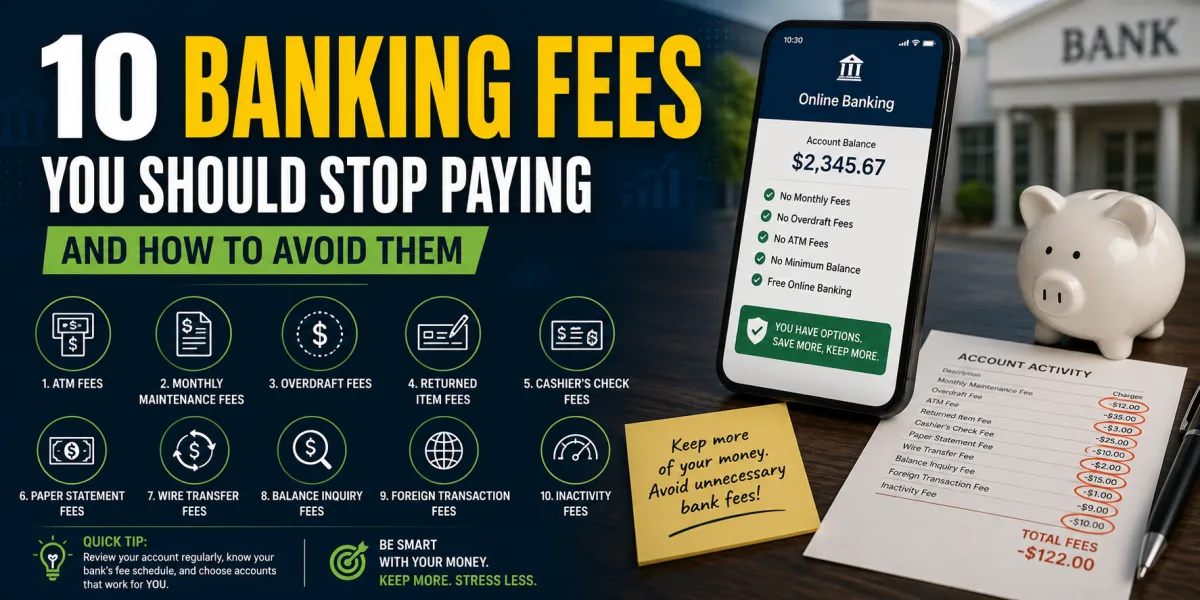
Fees are one of the most underestimated factors in banking. A $12 monthly maintenance fee does not sound dramatic, but it is $144 per year. Add overdraft fees, out-of-network ATM fees, wire fees, paper statement fees, account minimum penalties, and stop-payment fees, and a checking account can quietly become expensive.
Online banks often have an advantage here. Many offer checking accounts with no monthly maintenance fee, no minimum balance requirement, free standard transfers, and broad ATM reimbursement policies. Because digital banks compete for customers who are willing to switch, they often use low fees as a selling point.
Traditional banks vary widely. Some charge monthly fees but waive them if customers maintain a minimum balance, receive direct deposit, hold multiple accounts, or meet transaction requirements. Others offer free checking, especially community banks and credit unions. Large banks may charge more but provide broad branch and ATM access.
The problem is not that fees exist. A bank must make money. The problem is paying fees for services you do not use. A customer who pays a monthly fee for a branch-based checking account but never visits the branch is subsidizing a service that provides little personal value. A customer who frequently needs cash deposits, certified checks, branch support, and same-day problem resolution may find that the fee is worth paying.
The most damaging fees are often paid by people with the least margin for error. Overdraft fees historically punished customers who ran short before payday. Minimum balance fees punished people who did not have enough money to avoid them. That turns banking into a regressive system: the less cushion a person has, the more expensive the account becomes.
A good banking setup should reduce financial friction, not create it. For many households, that means choosing a no-fee checking account, turning off optional overdraft coverage where appropriate, keeping a small buffer, setting up alerts, and using a separate high-yield savings account for reserves.
Convenience: Digital Speed Versus Physical Access
Online banks win on many forms of convenience. Accounts can often be opened in minutes. Checks can be deposited by phone. Transfers can be scheduled automatically. Savings buckets can be created for different goals. Debit cards can be frozen instantly. Spending alerts can arrive in real time. Statements, tax forms, and transaction histories are searchable.
For people who are comfortable with technology, this is not merely convenient. It changes behavior. A saver can create separate accounts for emergency savings, car repairs, annual insurance premiums, holiday spending, and taxes. A worker can split direct deposit between checking, savings, and investment accounts. A couple can automate shared bills while keeping personal spending separate. A freelancer can separate tax money the moment income arrives.
Traditional banks have improved dramatically in digital convenience. Many now offer strong mobile apps, Zelle integration, mobile check deposit, card controls, alerts, budgeting tools, and online applications. The difference is that digital tools are often layered onto a branch-based model rather than being the entire model.
Physical convenience still matters. If you need to deposit cash, an online bank may be inconvenient or impossible. If you need a cashier’s check today, a branch can solve the problem quickly. If you need a large cash withdrawal, a traditional bank may be easier. If your account is locked and you need to show identification, in-person support may be valuable. If a family member dies and estate documents must be reviewed, branch access can reduce stress.
Convenience is therefore personal. For a salaried professional paid by direct deposit who rarely uses cash, an online bank may be easier than a branch. For a landlord collecting cash rent, a retailer handling daily cash receipts, or a retiree who prefers in-person service, a traditional bank may be more practical.
Customer Service: Automation Has Limits
Customer service is where the online-versus-traditional comparison becomes more nuanced. Online banks can provide excellent service through phone, chat, and secure messaging. Some offer extended hours, fast response times, and well-trained specialists. Others rely too heavily on scripts, chatbots, and slow email queues.
Traditional banks can also vary. A local branch may provide exceptional support, especially when staff know customers personally. A large bank may have long call center wait times, rigid policies, and fragmented departments. The presence of a branch does not guarantee good service. It simply creates another channel for resolution.
The key issue is complexity. Simple problems are often easier online: replacing a debit card, downloading a statement, setting up autopay, transferring money, or changing alerts. Complex problems may be easier in person: suspected fraud, account freezes, identity verification failures, estate claims, business account documentation, wire recalls, power of attorney issues, and lending exceptions.
Automation works best when the customer’s situation fits the system’s assumptions. When it does not, human judgment matters. A bank’s true quality often appears during stress, not during normal use.
Before choosing an online bank, customers should check support hours, phone availability, dispute processes, complaint history, and account access policies. Before choosing a traditional bank, customers should not assume a branch will solve everything. They should ask whether local staff can actually resolve issues or merely direct customers to centralized departments.
Cash Access: The Traditional Bank Advantage
Cash is less central than it once was, but it has not disappeared. Many households still use cash for tips, small purchases, gifts, informal labor, local markets, emergencies, and budgeting. Many small businesses still receive cash. Some landlords, contractors, restaurants, service workers, and community organizations operate partly in cash.
Traditional banks usually handle cash better. Customers can deposit cash at branches, withdraw larger amounts, access teller services, and use bank-owned ATMs. If a debit card is lost, a branch may issue a temporary card or provide cash with identification. If a customer needs specific denominations, a teller can help.
Online banks often rely on ATM networks, debit card withdrawals, transfers to external banks, or retail cash deposit partners. These solutions can work, but they may involve limits, fees, delays, or inconvenience. Depositing cash into an online account can be especially awkward.
For customers who rarely touch cash, this may not matter. For cash-heavy lives or businesses, it matters a lot. A bank that pays a high savings rate but makes cash deposits difficult may not be the right primary operating bank.
A practical solution is to use a traditional bank or credit union for cash handling and an online bank for savings. This hybrid structure gives customers local access without sacrificing yield on larger cash reserves.
Safety: Online Does Not Automatically Mean Risky
Some people assume traditional banks are safer because they have buildings. That belief is understandable but incomplete. A physical branch is not what protects deposits. Regulation, capital requirements, liquidity management, cybersecurity, internal controls, deposit insurance, and institutional soundness matter far more.
Online banks can be safe when they are properly chartered, insured, transparent, and well managed. Traditional banks can fail if they take excessive risks, suffer deposit runs, mismanage interest rate exposure, or experience severe credit losses. Bank safety is about the balance sheet and regulatory structure, not the architecture.
The FDIC’s role is central to public confidence in the U.S. banking system. The agency insures deposits, supervises financial institutions, and manages receiverships when insured banks fail. The FDIC’s Quarterly Banking Profile tracks the aggregate condition of insured institutions, including earnings, loan and deposit activity, asset quality, and other indicators.
Customers should apply the same safety checklist to online and traditional banks. Confirm deposit insurance. Understand coverage limits. Keep balances within insured limits unless you have a deliberate cash management structure. Use strong passwords and multi-factor authentication. Monitor alerts. Avoid public Wi-Fi for banking. Keep devices updated. Beware of phishing messages. Review statements regularly. Know how to contact support quickly.
Cybersecurity deserves special attention. Online banking increases convenience, but it also shifts more responsibility to the customer. A branch teller can verify a face and identification. A digital bank verifies credentials, device behavior, security codes, and account data. If a criminal gains access to email, phone numbers, passwords, or authentication codes, the customer may face serious disruption.
Good digital hygiene is now part of personal finance. Use unique passwords. Store them in a reputable password manager. Enable multi-factor authentication. Do not share verification codes. Keep your phone number secure. Avoid clicking banking links from emails or text messages. Go directly to the bank’s app or website. These habits matter regardless of which bank you choose.
Borrowing: Where Relationships Still Matter
Online banks can be efficient lenders. Many offer personal loans, mortgages, credit cards, and refinancing options with fast applications and competitive terms. Automated underwriting can make borrowing faster and more transparent. For borrowers with strong credit, stable income, and straightforward applications, digital lenders can work very well.
Traditional banks may have an advantage when borrowing requires context. A small business owner may need a banker who understands seasonal cash flow. A real estate investor may need a lender familiar with local property values. A self-employed borrower may need someone who can interpret irregular income. A long-time customer may benefit from a relationship when applying for a line of credit, construction loan, or business expansion loan.
Relationship banking does not guarantee approval. Banks still follow underwriting standards. But relationships can help when the borrower’s story is more complex than a credit score. A community bank may know the local market. A regional bank may understand local employers. A branch manager may help escalate documentation issues.
For consumers, this matters most with mortgages, home equity lines of credit, small business loans, and specialized financing. For routine banking, the relationship may be less important. For major borrowing, it can be valuable.
A strategic household may keep savings at an online bank, checking at a low-fee institution, and a relationship with a local bank or credit union for future borrowing. The goal is not loyalty for its own sake. The goal is access, flexibility, and optionality.
Budgeting and Behavior: The Bank as a Habit System
The best bank is not always the one with the highest rate or the nearest branch. It is the one that helps you behave better with money.
Personal finance is often presented as math, but behavior drives outcomes. A person who sees all cash in one checking account may overspend because money for taxes, insurance, repairs, and emergencies appears available. A person who separates money into named accounts may make better decisions because each dollar has a purpose.
Online banks often excel at behavioral design. Many allow multiple savings buckets, automatic transfers, roundups, goal labels, spending notifications, and simple account opening. This can make saving more visible and satisfying. Seeing a “home repair fund” or “emergency reserve” grow can reinforce discipline.
Traditional banks may offer budgeting tools too, but branch-based institutions often focus more on product breadth than behavioral design. Still, a traditional bank can support good habits if the customer sets up automatic transfers, alerts, separate accounts, and bill pay.
The most powerful banking habit is automation. Pay yourself first. Move money to savings as soon as income arrives. Separate fixed bills from variable spending. Keep emergency reserves out of daily checking. Use alerts to catch fraud and overspending. Review accounts weekly. Sweep excess cash into investments once emergency reserves and short-term goals are funded.
A bank should make these habits easy. If your bank makes saving difficult, charges unnecessary fees, hides information, or creates friction around basic money movement, it may be working against your financial goals.
Who Should Choose an Online Bank?
An online bank may be the better primary choice for people who are comfortable with digital tools, receive income electronically, rarely deposit cash, want higher savings yields, dislike monthly fees, and prefer managing money through an app.
Online banks are especially attractive for emergency funds. Emergency money should be safe, liquid, and separate from daily spending. It should not be exposed to stock market volatility. But it also should not sit in an account paying almost nothing if better insured options are available. A high-yield online savings account can be an excellent home for this money.
Online banks also suit people who value simplicity. A no-fee checking account, competitive savings account, automated transfers, and clean mobile interface can reduce financial clutter. Younger professionals, remote workers, digital entrepreneurs, frequent travelers, and people who have moved away from cash often find online banking natural.
They may also suit rate-sensitive savers. Someone holding a large down payment fund, tax reserve, or business cash cushion may earn meaningfully more at a competitive online bank than at a branch-based savings account. That difference is not speculation. It is cash yield.
But online banks are less ideal for customers who need frequent cash deposits, prefer face-to-face support, require complex services, lack reliable internet access, or feel uncomfortable resolving financial problems remotely. A person who panics when locked out of an app may not want an online-only bank as the only financial lifeline.
Who Should Choose a Traditional Bank?
A traditional bank may be the better choice for people who need branch access, deposit cash, want in-person customer service, run cash-heavy businesses, use cashier’s checks, need notary services, value local relationships, or expect to borrow from a banker who understands their situation.
Traditional banks are often useful for families managing complex financial events. Estate administration, trust accounts, power of attorney documents, guardianship issues, wire transfers for home purchases, and business documentation can be easier with branch support. Even if the branch cannot solve every issue, it can provide a place to present documents and speak with someone directly.
Traditional banks may also serve customers who are less comfortable with technology. Financial confidence matters. If a customer avoids using an account because the app feels confusing, the theoretical benefits of online banking are not useful. A local branch can provide education and reassurance.
Small businesses should be especially careful. A freelancer who receives electronic payments may thrive with an online bank. A restaurant, salon, shop, contractor, nonprofit, or property manager may need physical deposit services, merchant support, payroll integration, wires, lending, and treasury tools. In those cases, a traditional bank or credit union may be more practical.
The weakness of traditional banks is that many customers overpay for them. If you keep your savings at a major branch bank earning a minimal rate while never visiting a branch, you may be accepting a poor trade. The branch is valuable only if you use the branch or the broader services attached to it.
The Case for Using Both
The smartest banking setup for many households is not online or traditional. It is both.
A hybrid structure might look like this: a traditional bank or credit union for local checking, cash deposits, ATM access, and occasional branch services; an online bank for high-yield savings; a brokerage account for long-term investing; and a separate credit card strategy for rewards and purchase protection.
This structure separates roles. The checking account becomes the operating account. The online savings account becomes the liquidity reserve. The investment account becomes the wealth-building engine. The local bank remains available for physical services. No single institution has to do everything.
Separation can also improve discipline. Daily spending money stays in checking. Emergency money sits elsewhere, visible but not too easy to spend. Future investment money can be swept from savings into a brokerage account. Annual expenses can be held in separate buckets. This turns banking from a storage system into a decision system.
The risk of using multiple institutions is complexity. Too many accounts can create confusion, missed transfers, forgotten passwords, tax form clutter, and scattered balances. The goal is not to collect accounts. The goal is to assign each account a job.
A simple hybrid model may be enough: one checking account, one high-yield savings account, one credit card paid in full monthly, and one investment account. More accounts should be added only when they solve a real problem.
How to Compare Banks Properly
Choosing a bank should involve more than looking at a headline rate or branch location. A high savings rate can be offset by poor service, transfer delays, balance caps, or confusing terms. A convenient branch can be offset by low yields and unnecessary fees.
Start with safety. Is the institution FDIC-insured or NCUA-insured? If it is a fintech platform, which bank holds the deposits? How is insurance structured? Are your balances within limits?
Then compare costs. Are there monthly fees? Minimum balance requirements? Overdraft fees? ATM fees? Wire fees? Cash deposit fees? Paper statement fees? Inactivity fees? What actions waive fees?
Next, compare yield. What is the savings APY? Is it promotional? Is there a balance cap? Does the rate require direct deposit, debit card usage, or other conditions? How often has the bank remained competitive over time?
Then examine access. How do you deposit cash? How do you withdraw large amounts? What are transfer limits? How long do external transfers take? Are mobile check deposit limits sufficient? Is the ATM network convenient?
Customer service deserves its own review. Are phone support hours adequate? Is live chat available? Can you reach a person quickly? Are complaints common? Does the bank handle fraud disputes clearly? Are branch employees empowered to solve problems?
Finally, consider fit. Does the bank support the way you live? A great bank for a remote software engineer may be a poor bank for a cash-based small business. A great bank for a retiree who values branch service may be a poor bank for a rate-sensitive saver with a six-figure cash reserve.
Common Mistakes People Make When Choosing a Bank
The first mistake is confusing familiarity with quality. Many people stay with a bank because they have always used it. Familiarity reduces anxiety, but it can also hide costs. A long-standing account may have outdated terms, low interest, and unnecessary fees.
The second mistake is chasing the highest rate without reading conditions. Some banks advertise attractive rates that apply only up to a small balance, require specific activities, or change after a promotional period. A slightly lower rate at a reliable institution may be better than a headline rate with complications.
The third mistake is ignoring cash logistics. Customers often open online accounts for yield and then discover that depositing cash, getting cashier’s checks, or accessing large withdrawals is difficult. This does not make online banking bad. It means the account was assigned the wrong job.
The fourth mistake is keeping too much money in checking. Checking accounts are for transactions, not wealth storage. Excess cash should usually move to high-yield savings, money market accounts, certificates of deposit, Treasury bills, or investment accounts depending on time horizon and risk tolerance.
The fifth mistake is using one bank for everything without comparison. Banks rely on inertia. They know customers dislike switching. A customer may have a checking account, savings account, credit card, mortgage, auto loan, and investment product at the same institution without knowing whether each product is competitive. Convenience has value, but bundled mediocrity can be expensive.
The sixth mistake is neglecting security. People compare rates to the second decimal place while reusing weak passwords across accounts. A strong banking setup includes both good economics and good security habits.
The Historical Shift: From Branch Banking to Digital Banking
For much of modern banking history, geography shaped financial access. People banked where they lived. Branch density mattered because paper checks, cash wages, in-person applications, and local relationships dominated financial life. A bank’s physical presence was a competitive advantage.
Technology changed that. Direct deposit reduced the need to visit branches on payday. Debit cards reduced the need to carry cash. ATMs extended access beyond banking hours. Online bill pay reduced check writing. Mobile check deposit turned phones into deposit tools. Peer-to-peer transfers changed how friends and families exchange money. Remote work and e-commerce made location less important.
The data reflect this shift. The FDIC reported that in 2023, nearly half of banked U.S. households used mobile banking as their primary method of account access, while teller use declined substantially over the prior decade.
This shift does not eliminate traditional banks. It forces them to justify their branch networks. Branches are no longer necessary for every transaction. They are valuable for certain transactions, certain customers, and certain moments of financial complexity.
Online banks, meanwhile, must prove that convenience does not come at the expense of trust. A clean app is not enough. Customers need reliability, transparent insurance, fast support, strong security, fair policies, and consistent access to funds.
The future of banking is likely not purely digital or purely physical. It is layered. Routine transactions will keep moving to digital channels. Human service will remain important for high-stakes, emotional, complex, or document-heavy financial events. The winners will be institutions that combine efficiency with trust.
Online Banks vs Traditional Banks: Which Is Better?
Online banks are generally better for earning higher interest on savings, reducing fees, automating goals, and managing money digitally. Traditional banks are generally better for cash access, in-person support, complex services, local relationships, and certain borrowing needs.
For a simple salaried household with direct deposit, low cash usage, strong digital comfort, and a desire to earn more on savings, an online bank may be the better everyday choice. For a cash-heavy household, small business owner, technology-averse customer, or borrower who values local relationships, a traditional bank may be better.
For many people, the best answer is a hybrid system: traditional checking for local access and online savings for yield. This approach avoids the false choice. It recognizes that different dollars have different jobs.
Your rent money needs reliability. Your emergency fund needs safety and yield. Your spending money needs easy access. Your tax reserve needs separation. Your long-term wealth needs investment, not just banking. A single account cannot optimize all of these jobs equally.
The better question is not “Which bank is better?” The better question is “Which banking structure helps me keep more of my money, reduce friction, protect liquidity, and make better financial decisions?”
A Practical Banking Framework
Think of your banking life in layers.
The first layer is operating cash. This is your checking account. It receives income and pays bills. It should be reliable, low-fee, easy to monitor, and connected to your payment life. It does not need to pay a high yield because money should not sit there for long.
The second layer is short-term reserves. This is your emergency fund and near-term savings. It should be safe, liquid, insured, and competitive in yield. Online banks often shine here.
The third layer is planned expenses. This includes annual insurance premiums, taxes, vacations, tuition, car repairs, holiday spending, home maintenance, and medical deductibles. Separate savings buckets or accounts can help prevent accidental spending.
The fourth layer is opportunity capital. This is cash waiting for investment, business use, real estate, or major purchases. It may belong in high-yield savings, money market accounts, Treasury bills, or short-term CDs depending on timing and risk needs.
The fifth layer is wealth-building capital. This money should usually move beyond bank accounts into productive assets such as diversified investments, retirement accounts, businesses, or real estate. Banks preserve liquidity. They do not usually create long-term wealth at the same rate as ownership assets.
Once you see these layers, the online-versus-traditional debate becomes clearer. You may not need one perfect bank. You need a system that assigns each dollar to the right place.
Final Verdict
Online banks are better when the priority is yield, low fees, digital convenience, and simple account management. Traditional banks are better when the priority is physical access, cash handling, in-person service, complex financial needs, and relationship-based banking.
The strongest financial choice is often not loyalty to a bank, but loyalty to your own financial goals. A bank should serve your money strategy. It should not quietly drain it through low interest, unnecessary fees, poor service, or outdated habits.
For most modern households, the winning approach is selective. Keep an efficient checking account for daily life. Hold emergency savings in a competitive, insured account. Maintain branch access if you need it. Avoid paying for services you do not use. Keep balances within insurance limits. Build automation around your goals. Move long-term surplus into assets that can compound.
Banking is not the destination of wealth. It is the infrastructure beneath it. Choose that infrastructure carefully, and your financial life becomes easier to manage, less expensive to operate, and better positioned for the decisions that truly build wealth.
 Article
 Article
 Article
 Article
 Article
 Article
 Article
 Article