The Index Fund Advantage: How New Investors Can Build Wealth Without Picking Stocks
Index funds changed investing by making a radical idea ordinary: most people do not need to pick winning stocks to build wealth. They can own the market instead.
For decades, investing was often presented as a search for superior insight. Find the next great company. Hire the right fund manager. Time the market. Discover the hidden opportunity before everyone else. That story is exciting, but it is not how most households build durable wealth. Most investors do not need a constant stream of predictions. They need broad ownership, low costs, consistent contributions, reasonable risk, and time.
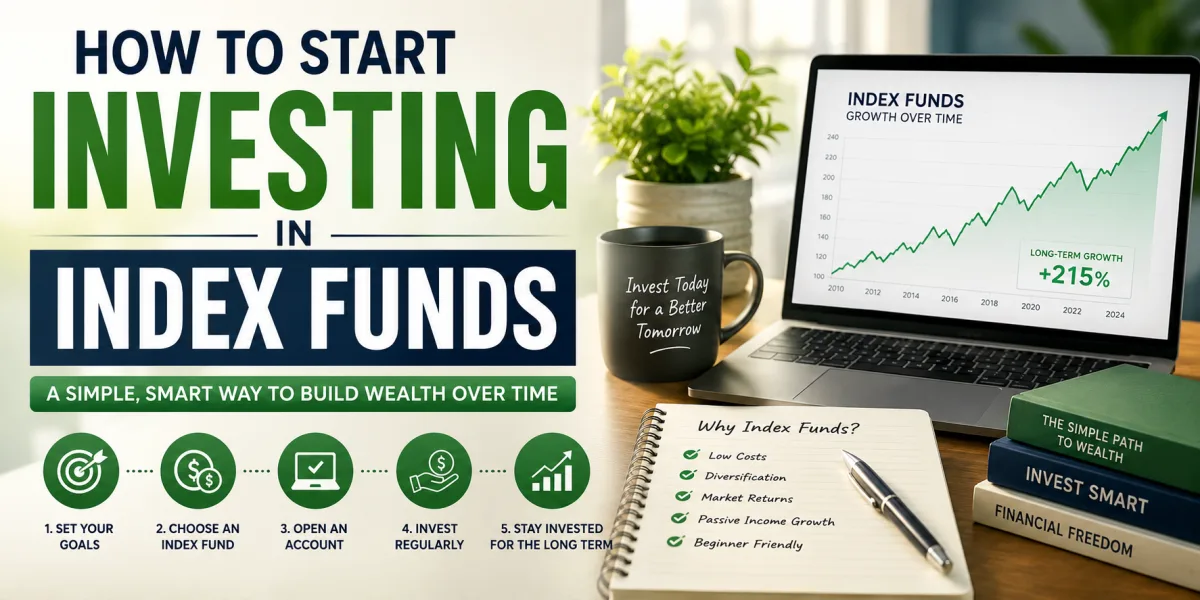
An index fund is built around that philosophy. Instead of trying to beat a market index, it attempts to track one. The fund may follow the S&P 500, the total U.S. stock market, the total international stock market, the total bond market, or another benchmark. When investors buy the fund, they buy exposure to the basket of securities represented by that index.
The Securities and Exchange Commission explains that an index fund is a type of mutual fund or exchange-traded fund that seeks to track the returns of a market index, such as the S&P 500, Russell 2000, or Wilshire 5000 Total Market Index.
That definition sounds technical, but the practical meaning is simple. A new investor can buy one fund and own hundreds or thousands of companies. They do not need to decide whether one bank is better than another, whether one technology firm will dominate the next decade, or whether one retailer will survive competition. They can accept that predicting winners is difficult and instead own a diversified slice of the market.
Index funds are not magic. They can lose money. They do not prevent bear markets. They do not guarantee retirement security. They do not remove the need to save. But they solve several problems that hurt ordinary investors: high fees, poor diversification, emotional trading, manager risk, overconfidence, and the temptation to chase performance.
The scale of index investing shows how powerful the idea has become. The Investment Company Institute reported that the combined assets of the nation’s indexed mutual funds and ETFs reached $21.82 trillion in May 2026, while active mutual funds and ETFs held $18.75 trillion.
For beginners, the lesson is not that every index fund is perfect. The lesson is that index funds offer a practical starting point for building wealth because they make the most important parts of investing easier: diversification, cost control, and discipline.
What an Index Fund Really Owns
An index fund owns securities that correspond to an index. If the fund tracks the S&P 500, it owns shares of large publicly traded U.S. companies represented in that index. If it tracks a total U.S. stock market index, it may own large, mid-sized, and small U.S. companies. If it tracks a bond index, it owns bonds. If it tracks an international index, it owns companies outside the investor’s home country.
The index is the recipe. The fund is the vehicle. The investor owns shares of the fund, and the fund owns the underlying securities.
This structure matters because the name “index fund” does not tell you everything. A broad total-market index fund is very different from a narrow sector index fund. A total bond market index fund is different from a high-yield bond index fund. A global stock index fund is different from an index fund tracking only semiconductor companies.
Beginners should look under the hood. What index does the fund track? How many holdings does it have? Which companies or bonds are largest? Which sectors dominate? Does it hold U.S. stocks, international stocks, bonds, or something else? Is it broad enough to serve as a core holding, or narrow enough to behave like a side bet?
The strongest first index funds are usually broad, low-cost, and easy to understand. A fund that tracks the total U.S. stock market, the S&P 500, a global stock index, or a broad bond market index can be a foundation. A fund tracking a fashionable theme may be interesting, but it should not be mistaken for the whole market.
Why Index Funds Became So Important
Index funds became popular because they answered a difficult question: if most investors struggle to beat the market after costs, why not own the market at a low cost?
That idea is not glamorous, but it is powerful. Active managers try to outperform a benchmark by selecting securities, timing decisions, or using research. Some succeed for periods. Some fail. Some outperform before fees but underperform after fees. Investors trying to choose the winning active manager face another challenge: identifying skill in advance is difficult.
Index funds avoid that game. They do not need to find the next winner. They do not need to predict which fund manager will be brilliant over the next 20 years. They simply try to track the chosen index.
This does not mean index funds always beat active funds in every category or every period. It means they offer a reliable structural advantage: low costs and broad exposure. The investor keeps more of the market return because less is lost to fees, trading, and manager decisions.
Indexing also reduces ego. It tells investors they do not have to prove they are smarter than the market. They can focus on what they control: saving rate, allocation, fees, taxes, time horizon, and behavior.
That shift is one of the most important developments in personal finance. Index funds turned investing from a prediction contest into a participation strategy.
Index Mutual Funds Versus Index ETFs
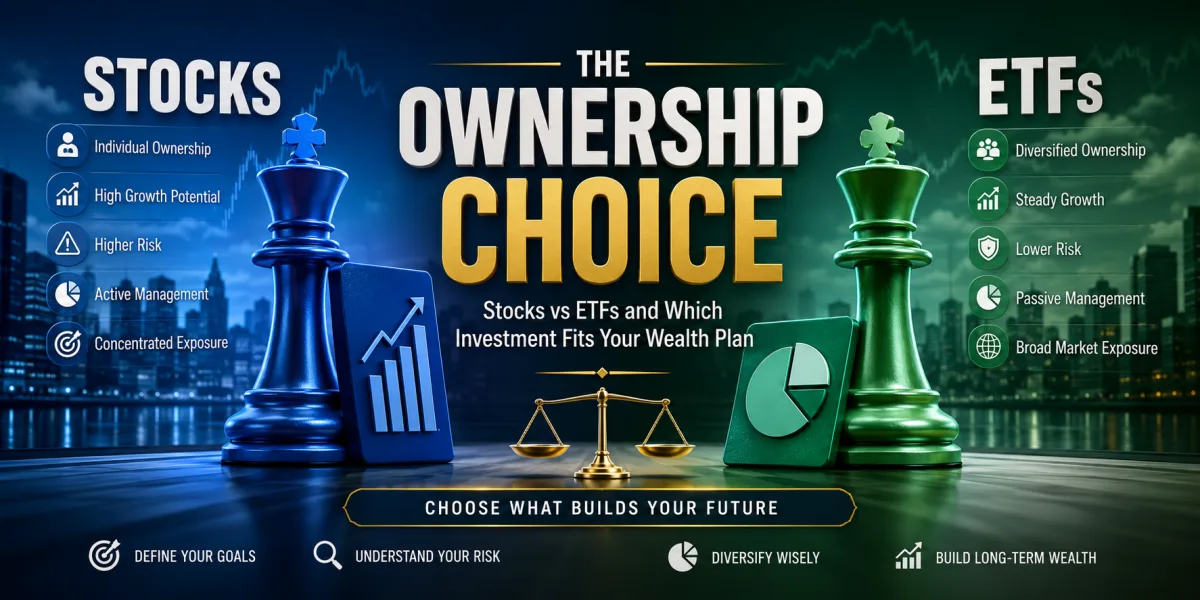
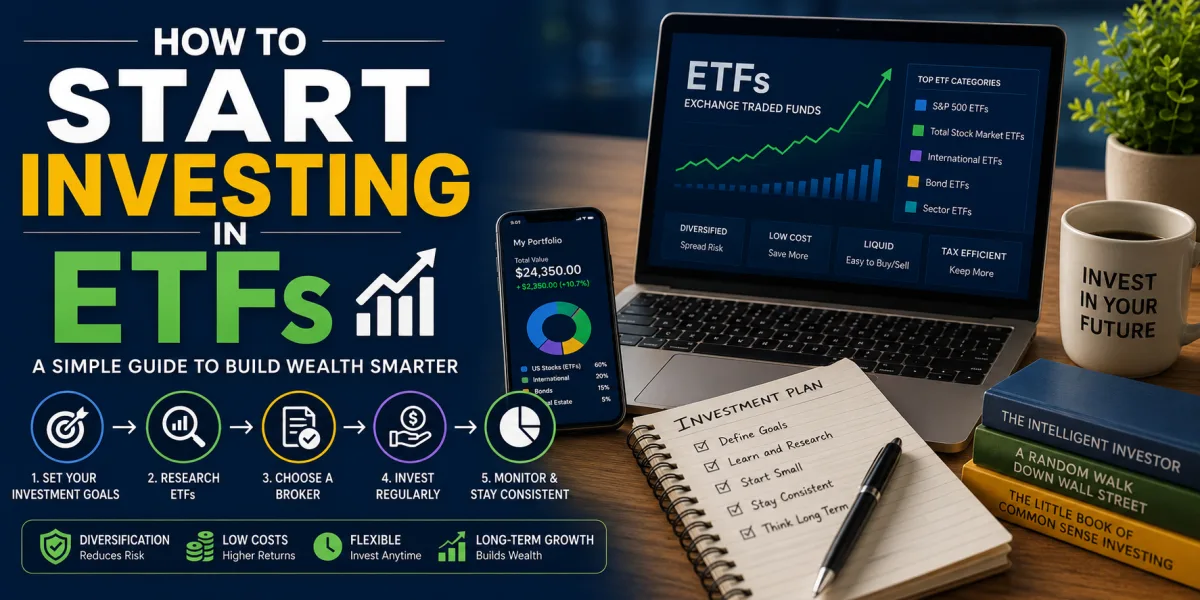
Index funds can come in two main wrappers: mutual funds and exchange-traded funds. Both can track indexes. Both can be low cost. Both can be diversified. The differences are mostly in how they trade and how investors use them.
An index mutual fund is bought or sold through the fund company or brokerage, usually once per day at the fund’s net asset value after the market closes. It is often convenient for automatic investing because many platforms allow recurring dollar contributions into mutual funds.
An index ETF trades on an exchange like a stock. Its price changes throughout the day. Investors can buy or sell ETF shares during market hours. FINRA explains that ETFs generally focus their investments in stocks or bonds and have diversification requirements, while some exchange-traded products tied to commodities or currencies may have different regulatory protections.
ETFs can be very flexible and tax-efficient in taxable accounts, but they also make trading easy. That ease is a benefit for disciplined investors and a temptation for impatient ones. A long-term investor does not need to trade an ETF throughout the day. The fact that it can be traded does not mean it should be.
For a beginner, the choice between index mutual fund and index ETF often comes down to account platform, minimum investment, automatic investing, taxes, and behavior. If an employer retirement plan offers index mutual funds, they may be the natural choice. If a brokerage offers fractional ETF purchases with no commissions, an ETF can work well. If a person wants automatic weekly contributions, a mutual fund may be easier depending on the broker.
The wrapper matters less than the essentials: broad exposure, low cost, appropriate risk, and consistent investing.
The Core Benefit: Diversification
Diversification means spreading risk. If you own one company, your money depends heavily on that company’s future. If the company loses customers, takes on too much debt, faces lawsuits, misses technology shifts, or suffers management failure, your investment can be damaged severely.
An index fund can reduce that company-specific risk by owning many securities. A total stock market fund may hold thousands of companies. If one company fails, the entire portfolio is not destroyed. The investor is exposed to the market’s broad performance rather than one company’s fate.
Diversification does not eliminate market risk. A broad stock index fund can still fall sharply during a bear market. In a crisis, many stocks may decline together. A bond index fund can lose value when interest rates rise or credit conditions deteriorate. International index funds can be affected by currency movements, political risk, and foreign market weakness.
But diversification helps reduce unnecessary concentration. It is one of the few investing principles that is both simple and deeply important.
The mistake beginners make is thinking that owning several funds automatically means being diversified. If five funds all hold similar large U.S. technology companies, the portfolio may be less diversified than it appears. True diversification depends on underlying holdings, not the number of tickers.
The Cost Advantage
Costs matter because they compound too. Every dollar paid in fees is a dollar that cannot remain invested. Over one month, the difference may look tiny. Over decades, it can be meaningful.
Index funds often have lower expense ratios than actively managed funds because they do not need large research teams or frequent trading to pursue outperformance. They are built to track, not predict.
The expense ratio is the annual cost of owning a fund, expressed as a percentage of assets. A fund with a 0.05 percent expense ratio costs 50 cents per year for every $1,000 invested. A fund with a 1.00 percent expense ratio costs $10 per year for every $1,000 invested. That difference grows as the portfolio grows.
The SEC warns that investment fees and expenses affect portfolio value over time and encourages investors to understand fees before investing.
Costs are not the only factor, but they are one of the few factors investors can know in advance. Future returns are uncertain. Fees are visible. A beginner should learn to compare expense ratios early.
Low cost does not mean no risk. A cheap fund can still lose money if its market falls. But low costs give the investor a better chance of keeping the return the market provides.
The Behavior Advantage
Index funds also help with investor behavior. They reduce the number of decisions that can go wrong.
A stock picker must decide which companies to buy, when to buy, when to sell, how much to allocate, whether news changes the thesis, and whether underperformance is temporary or permanent. A fund picker chasing active managers must decide which manager has skill, whether past performance will continue, and when to replace underperformers.
An index investor makes fewer decisions. Choose the right index exposure. Keep costs low. Contribute regularly. Rebalance when needed. Stay invested. That simplicity can be a major advantage because many investing mistakes come from activity, not inactivity.
Investors often buy after strong performance and sell after declines. They chase hot sectors, abandon plans during downturns, and confuse recent returns with permanent superiority. Index funds cannot force discipline, but they make discipline easier by reducing the illusion that constant action is required.
A good index-fund portfolio should be boring enough to hold. Boring is not a weakness. In long-term investing, boring often protects behavior.
The Main Types of Index Funds
New investors should understand the main categories before buying.
An S&P 500 index fund tracks 500 large U.S. companies. It is one of the most common index-fund choices and has historically represented a major portion of the U.S. stock market. It is diversified across many companies, but it is still concentrated in large U.S. companies and weighted heavily toward the largest firms.
A total U.S. stock market index fund usually owns large, mid-sized, and small U.S. companies. It provides broader domestic exposure than an S&P 500 fund.
A total international stock index fund owns companies outside the United States. It may include developed markets, emerging markets, or both. This helps reduce reliance on one country’s market.
A total world stock index fund may include both U.S. and international companies in one fund. This can be useful for investors who want global stock exposure without deciding the U.S. versus international split themselves.
A total bond market index fund owns a diversified mix of bonds, often including government and investment-grade corporate bonds. Bond funds can provide income and reduce volatility, though they still carry risk.
Target-date index funds combine multiple index funds into one retirement-oriented fund. They gradually shift the asset mix as the target retirement year approaches. They are common in workplace retirement plans.
Sector index funds track one industry or sector, such as technology, healthcare, utilities, energy, financials, or real estate. These are narrower and should usually be treated as satellite holdings, not the foundation of a beginner portfolio.
S&P 500 Fund or Total Market Fund?
Many beginners ask whether they should buy an S&P 500 index fund or a total U.S. stock market index fund. Both can be reasonable. The difference is scope.
The S&P 500 focuses on large U.S. companies. Because large companies make up most of the value of the U.S. stock market, S&P 500 funds often behave similarly to total U.S. market funds. But they do not include the full range of mid-sized and small companies.
A total U.S. stock market fund usually includes large, mid-sized, small, and sometimes micro-cap companies. It is more complete domestic exposure. If the goal is to own the U.S. market broadly, a total market fund is often more comprehensive.
Neither choice is automatically wrong. An S&P 500 fund is simple, widely available, and low cost. A total market fund is broader. The bigger mistake is often not choosing between them, but owning both without realizing they overlap heavily.
A beginner should avoid accidental duplication. If one fund already owns most of the large U.S. market, adding several similar funds may not improve diversification.
Do You Need International Index Funds?
International investing is debated. Some investors prefer mostly domestic stocks, especially in countries with large, diversified markets. Others believe global diversification is essential because no country leads forever.
International index funds provide exposure to companies outside the investor’s home market. This can include European, Japanese, Canadian, Australian, emerging-market, and other foreign companies. The benefit is broader opportunity and reduced dependence on one national economy. The risk includes currency changes, foreign regulation, geopolitical issues, different accounting practices, and periods of underperformance.
A U.S. investor who owns only U.S. funds is making a country bet, even if it does not feel like one. That bet may work for long periods, but it is still a bet. A global allocation acknowledges uncertainty.
The right international allocation depends on belief, risk tolerance, costs, taxes, and simplicity. Some investors hold 20 percent international stocks. Some hold market-cap-weight global funds. Some hold less. The key is to make the choice deliberately rather than by default.
International index funds are not required for every investor, but they are worth understanding because diversification should include geography as well as companies.
The Role of Bond Index Funds
Bond index funds can provide stability, income, and diversification. They are especially useful for investors who need lower volatility or are closer to using the money.
A stock-heavy portfolio may deliver higher long-term growth potential, but it can decline sharply. Bonds can reduce the severity of swings, though they are not risk-free. Bond prices can fall when interest rates rise. Corporate bonds can suffer when credit risk increases. Long-term bonds can be more volatile than short-term bonds.
A total bond market index fund is often used as a broad fixed-income holding. It may include government bonds, mortgage-backed securities, and investment-grade corporate bonds. Short-term bond index funds may be less volatile but often offer lower long-term return potential. Inflation-protected bond funds can help address inflation risk, though they have their own price fluctuations.
Younger investors sometimes avoid bonds entirely. That may be reasonable for long-term retirement money if they can tolerate volatility. But many investors discover their true risk tolerance only during a major decline. Bonds can help investors stay invested by making the ride less severe.
The best portfolio is not the one that looks most aggressive on paper. It is the one the investor can hold through stress.
Asset Allocation Comes Before Fund Selection
Asset allocation is the mix of stocks, bonds, and cash in a portfolio. It is often more important than the specific fund chosen. A portfolio that is 90 percent stocks will behave very differently from one that is 50 percent stocks, even if both use excellent low-cost index funds.
Stocks provide growth potential and ownership in businesses. Bonds provide income and relative stability. Cash provides liquidity and safety for short-term needs. The right mix depends on time horizon, risk tolerance, income stability, goals, and emotional capacity.
A 25-year-old investing for retirement may choose a high stock allocation because the money has decades to recover from downturns. A 60-year-old preparing for retirement may need more bonds and cash. A person saving for a home in two years should not rely heavily on stock index funds for that goal.
The SEC’s investor education materials on asset allocation and diversification explain that different asset categories can behave differently over time and that diversification can help manage risk.
Beginners often ask, “Which index fund should I buy?” The better first question is, “What is the right mix for my goal?” Fund selection follows allocation.
Index Funds in Retirement Accounts
Retirement accounts are often the best place to begin index-fund investing because they combine long time horizons with tax advantages.
A workplace retirement plan, such as a 401(k), may offer index funds as investment options. If an employer match is available, contributing enough to receive the match is often a high priority because the match is part of compensation.
IRAs and Roth IRAs can also hold index funds, depending on the brokerage. For 2026, the IRS announced that the employee contribution limit for 401(k), 403(b), most 457 plans, and the federal Thrift Savings Plan increased to $24,500, while the IRA contribution limit increased to $7,500.
Traditional retirement accounts may reduce taxable income now, with withdrawals generally taxed later. Roth accounts use after-tax contributions, with qualified withdrawals potentially tax-free. The better choice depends on tax rate now, expected tax rate later, eligibility, employer plan, and long-term goals.
A beginner does not need to maximize every retirement account immediately. The first step may be contributing 3 percent of income, then 5 percent, then 10 percent, then more as income rises and debt falls. Index funds make the investment choice simpler once the contribution habit begins.
Index Funds in Taxable Brokerage Accounts
Taxable brokerage accounts are useful for goals outside retirement. They have no annual contribution limit and generally allow access before retirement age. They can support early retirement, long-term wealth building, future home goals, education planning, or investing beyond retirement-account limits.
Index funds can be tax-efficient in taxable accounts, especially broad stock index ETFs or mutual funds with low turnover. But taxable accounts still have tax consequences. Dividends, interest, capital gains distributions, and sales can create taxable income.
Tax efficiency should not override the investment plan, but it should be considered. Bond funds and high-income funds may generate more taxable income. Broad stock index funds may be more efficient. Tax-loss harvesting may be possible when investments decline, but investors must follow tax rules carefully.
A taxable brokerage account should not hold money needed soon unless the investment risk fits the timeline. If the goal is less than three years away, cash or short-term conservative options may be more appropriate than stock index funds.
Target-Date Index Funds
Target-date index funds are designed to simplify retirement investing. The investor chooses a fund with a year close to the expected retirement date. The fund holds a mix of underlying stock and bond funds and gradually becomes more conservative as the target date approaches.
For example, a young worker expecting to retire around 2065 may choose a 2065 target-date index fund. Early on, the fund may hold mostly stocks. Over time, it gradually increases bond exposure.
The advantage is simplicity. One fund provides diversification, allocation, and automatic rebalancing. This can be excellent for beginners who want a hands-off retirement option.
The limitation is that the fund’s glide path may not match every investor. Two people retiring in the same year may have different pensions, risk tolerance, health, family responsibilities, and other assets. Still, for many workplace retirement savers, a low-cost target-date index fund is better than paralysis or random fund selection.
If using a target-date fund, check whether it is index-based or actively managed, what it costs, and how it allocates between stocks and bonds.
How to Choose an Index Fund
Choosing an index fund begins with the index. What market does it track? Is it broad or narrow? Does it fit your asset allocation?
Next, check the expense ratio. Lower is generally better among similar funds. A total market fund charging 0.03 percent and another charging 0.75 percent may provide similar exposure with very different costs.
Then check tracking quality. A good index fund should closely follow its benchmark, allowing for fees and normal differences. Large, established index funds often track well.
Review fund size and liquidity. Very small funds may face closure risk or wider trading spreads if they are ETFs. Large funds are not automatically better, but they often have operational advantages.
Look at holdings. Does the fund own what you expect? Are the top holdings too concentrated? Does it overlap with funds you already own?
Consider tax efficiency if investing in a taxable account. ETFs may offer advantages, but the structure and asset class matter.
Finally, choose a fund you understand well enough to hold. If the fund’s strategy requires a long explanation, it may not be the best first index fund.
The Three-Fund Portfolio
One classic index-fund structure is the three-fund portfolio: a U.S. stock index fund, an international stock index fund, and a bond index fund.
The U.S. stock fund provides domestic equity exposure. The international stock fund provides global diversification. The bond fund provides stability and income. The investor chooses the percentage of each based on goals and risk tolerance.
A young investor might choose a higher stock allocation. A conservative investor might hold more bonds. A retiree might include more cash and short-term bonds. The same three building blocks can support many different risk levels.
The three-fund portfolio is popular because it is simple, diversified, low cost, and easy to rebalance. It avoids the clutter of owning many overlapping funds. It also discourages performance chasing because the structure is based on asset classes rather than trends.
It is not the only good portfolio. A one-fund target-date index fund can be simpler. A total world stock fund plus a bond fund can also work. The point is that a strong portfolio does not need complexity.
Dollar-Cost Averaging
Dollar-cost averaging means investing a set amount at regular intervals, such as every paycheck or every month. The investor buys more shares when prices are lower and fewer shares when prices are higher.
For most workers, dollar-cost averaging happens naturally through retirement contributions. Money is invested each pay period regardless of market headlines.
The main benefit is behavioral. Dollar-cost averaging removes the pressure of finding the perfect time to invest. Many beginners wait for a market decline, then become too afraid to invest when it arrives. Others invest after markets rise because they feel safer. A regular contribution schedule reduces these emotional swings.
This does not mean dollar-cost averaging always beats lump-sum investing. If markets rise over time, investing earlier often has mathematical advantages. But for people investing from income, regular contributions are practical and powerful.
The habit matters more than the timing prediction.
Rebalancing
Rebalancing means returning a portfolio to its target allocation. Suppose an investor chooses 80 percent stocks and 20 percent bonds. After a strong stock market, the portfolio may become 88 percent stocks and 12 percent bonds. Rebalancing would bring it back toward the original target.
Rebalancing manages risk. Without it, a portfolio may become more aggressive or more conservative than intended. It also encourages disciplined behavior: trimming what has grown and adding to what has lagged.
Rebalancing can be done annually, semiannually, or when allocations drift beyond a chosen threshold. Beginners should avoid rebalancing too often. Constant tinkering can create unnecessary stress and, in taxable accounts, potential taxes.
Inside retirement accounts, rebalancing is usually simpler because trades generally do not create current taxable events. In taxable accounts, new contributions can often be directed toward underweight assets to reduce the need to sell appreciated holdings.
A portfolio without rebalancing can slowly become a different portfolio than the one the investor intended.
Dividends and Reinvestment
Many index funds distribute dividends from stocks or interest from bonds. Investors can usually take these distributions in cash or reinvest them.
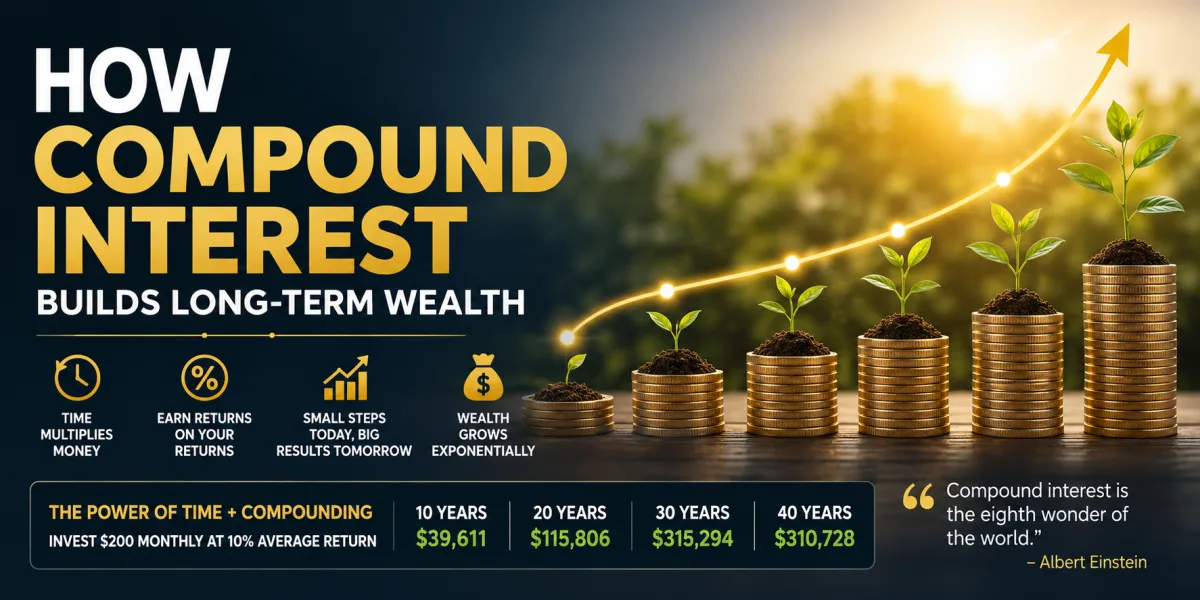
For long-term investors, reinvestment is often powerful. Dividends buy more shares. Those shares may produce more dividends. Over time, this creates a compounding effect. Early on, the payments may look small. Later, they can become more meaningful.
In taxable accounts, dividends may create tax obligations even if reinvested. In retirement accounts, current taxation may be deferred or avoided depending on the account type. Investors should understand the tax treatment of distributions.
Dividend reinvestment is not required for every investor. Retirees may use distributions for income. But beginners building wealth usually benefit from letting the fund compound.
Index Funds and Market Crashes
Index funds do not protect investors from market crashes. A stock index fund can decline sharply. During severe bear markets, broad markets may fall 20 percent, 30 percent, 40 percent, or more. That is part of owning equities.
The advantage of index funds is not that they avoid declines. The advantage is that they provide diversified exposure through declines. Instead of wondering whether one company will survive, the investor owns many companies. Instead of guessing which manager will respond best, the investor stays aligned with the market.
The hardest part is emotional. When markets fall, headlines become frightening. Account balances shrink. People who were confident during rising markets may suddenly question the plan. This is when asset allocation matters. A portfolio should be built before the crash to survive the crash.
If you cannot tolerate a 40 percent stock decline, do not hold a portfolio that is nearly all stocks. If you need money within a few years, do not rely on stock index funds for that money. If you are investing for decades, declines may be painful but not necessarily destructive.
The mistake is not owning index funds during a downturn. The mistake is owning the wrong allocation and selling in panic.
Why Index Funds Are Not “Average” in a Bad Way
Critics sometimes say index funds only deliver average returns. That sounds disappointing until costs and behavior are considered. Many investors underperform even average market returns because they pay high fees, trade poorly, chase performance, panic sell, or concentrate in losing investments.
An index fund does not promise to beat the market. It aims to capture the market return before costs, minus a small fee. For many investors, capturing the market return consistently is better than chasing outperformance unsuccessfully.
Average can be excellent when the alternative is expensive underperformance. The goal of personal investing is not to win a trophy against strangers. It is to meet life goals: retirement, security, education, independence, generosity, flexibility, and peace of mind.
Index investing is humble. It admits that the future is uncertain and that broad ownership may be wiser than constant prediction.
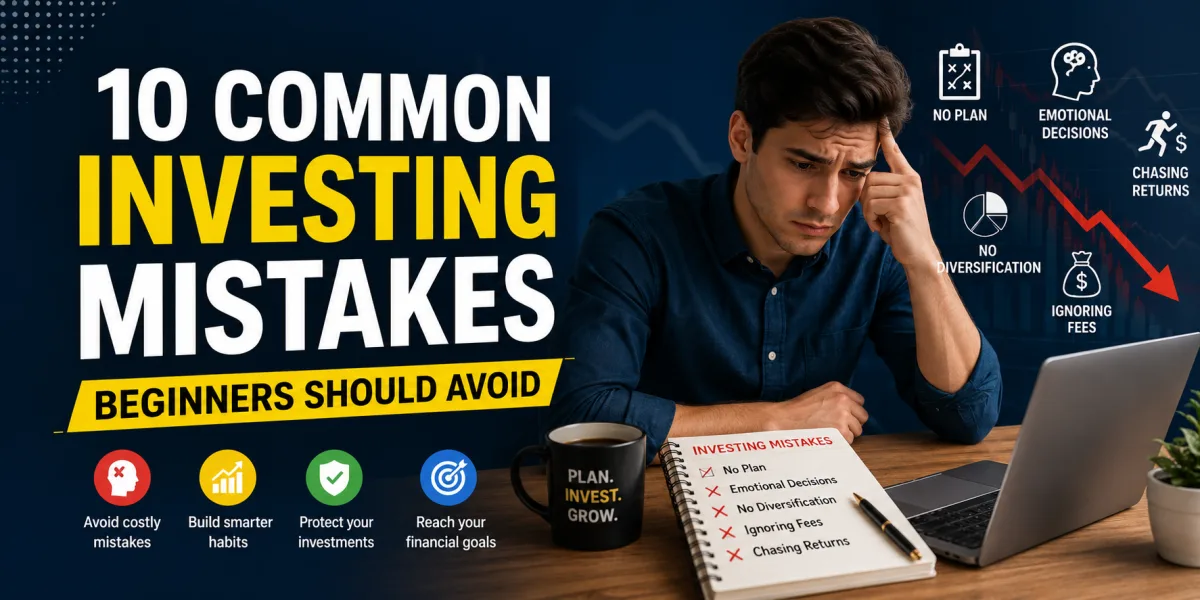
Common Beginner Mistakes
The first mistake is choosing funds based only on recent performance. A fund that performed well last year may have benefited from a temporary trend. Buying after strong performance can lead to disappointment.
The second mistake is owning too many overlapping funds. An S&P 500 fund, total market fund, large-cap growth fund, technology fund, and Nasdaq fund may all hold many of the same large companies. This can create hidden concentration.
The third mistake is ignoring fees. High expense ratios reduce long-term returns.
The fourth mistake is using narrow index funds as core holdings. Sector and thematic index funds may be useful in small doses, but they are not the same as broad market exposure.
The fifth mistake is investing short-term money. Stock index funds are not appropriate for rent, emergency savings, or a down payment needed soon.
The sixth mistake is stopping contributions during market declines. Downturns can be opportunities for long-term investors who continue buying, but only if the portfolio fits the investor’s risk tolerance.
The seventh mistake is checking balances too often. Daily movement can create anxiety and unnecessary action.
The eighth mistake is assuming all index funds are low risk. An index fund tracking a narrow or volatile market can be risky even though it is passive.
How to Start with Your First Index Fund
Begin with the goal. Is the money for retirement, a long-term taxable portfolio, education, a house, or general wealth building? The goal determines the account and time horizon.
Choose the account. If your employer offers a retirement plan with a match, consider starting there. If you are investing for retirement outside work, consider an IRA or Roth IRA if eligible. If you need flexibility for long-term non-retirement goals, consider a taxable brokerage account.
Choose the allocation. Decide how much should be in stocks, bonds, and cash. Do not choose a fund before knowing the risk level you need.
Select a broad, low-cost index fund. For many beginners, this may be a target-date index fund, total U.S. stock market index fund, S&P 500 index fund, total world stock index fund, or a three-fund portfolio.
Set up recurring contributions. Even a small monthly amount builds the habit. Increase contributions as income rises or debt falls.
Reinvest dividends if the goal is long-term growth. Review the portfolio periodically, not obsessively. Rebalance when needed. Avoid changing the plan because of headlines.
The first index fund should not be a gamble. It should be the beginning of a repeatable system.
How Much Money Do You Need to Start?
Many investors can start with very little. Some retirement plans allow contributions as a percentage of each paycheck. Some mutual funds have low or no minimums. Many brokerages allow fractional ETF purchases. The old idea that investing requires thousands of dollars is less true than it once was.
Starting small is not a disadvantage if it leads to consistency. A person investing $50 per month is building the habit. A person waiting for a perfect lump sum may never begin.
That said, the first dollars may have more urgent jobs. If you have no cash cushion, build a small emergency fund. If you have high-interest debt, attack it. If your employer offers a retirement match, use it if possible. Index investing should be integrated into the whole financial plan.
The amount needed to start may be small. The discipline needed to continue is the real requirement.
Index Funds and Taxes
Taxes depend on the account. In retirement accounts, taxes may be deferred or avoided depending on whether the account is traditional or Roth. In taxable brokerage accounts, dividends, interest, capital gains distributions, and sales may create taxable events.
Broad index funds are often tax-efficient because they tend to have low turnover. But tax-efficient does not mean tax-free. Bond index funds may generate taxable interest. Stock index funds may distribute dividends. Selling fund shares for a gain may create capital gains tax.
Tax efficiency should be considered after the main plan is sound. A beginner should not let tax complexity prevent them from investing. But as balances grow, asset location matters. Some investors hold bond funds in retirement accounts and broad stock index funds in taxable accounts, depending on circumstances.
Personal tax situations vary. Investors with significant taxable assets, high income, business income, or complex accounts should consider professional tax advice.
Index Funds for Different Life Stages
A young investor may use index funds for aggressive growth. With decades until retirement, a high stock allocation may be reasonable if the investor can tolerate volatility. The focus should be contributions, low costs, and staying invested.
A mid-career investor may use index funds to balance growth and stability. Retirement savings may become larger, family obligations may increase, and risk management may matter more. A mix of stock and bond index funds may be appropriate.
A pre-retiree may gradually reduce portfolio risk. This does not mean abandoning stocks, but it may mean increasing bonds and cash so that a market downturn does not derail near-term retirement plans.
A retiree may use index funds for income, growth, and diversification. Withdrawal strategy becomes important. A retiree may hold stock index funds for long-term growth, bond index funds for stability, and cash for near-term spending.
The same index funds can serve different purposes depending on allocation and life stage.
When Index Funds May Not Be Enough
Index funds are powerful, but they are not the whole financial plan. A person still needs emergency savings, insurance, tax planning, estate documents, debt management, and income strategy. Index funds help build wealth, but they do not solve every financial problem.
Some investors may also need advice. If you have complex taxes, inherited assets, concentrated stock, business ownership, rental property, retirement withdrawal decisions, or estate planning needs, a fiduciary financial advisor may be useful.
Index funds simplify investing. They do not eliminate life complexity.
Even within investing, index funds require judgment. Which index? Which account? Which allocation? Which tax treatment? Which time horizon? The answers depend on the investor.
A Simple First-Year Index Fund Plan
In the first month, build the financial foundation. Make sure bills are current, high-interest debt has a plan, and a starter emergency fund is underway.
In the second month, choose the account. If an employer match exists, investigate the workplace plan. If investing independently, compare reputable brokerages and account types.
In the third month, choose an allocation based on goal and time horizon. Do not skip this step.
In the fourth month, choose the first broad, low-cost index fund or target-date index fund.
In the fifth month, set up recurring contributions. The amount can be small. The habit matters.
In the sixth month, learn to read the fund page: expense ratio, index tracked, holdings, performance, risk, and distributions.
In the seventh month, review debt and emergency savings. Investing should not weaken the foundation.
In the eighth month, increase contributions if possible. Even a 1 percent increase can matter over time.
In the ninth month, learn about taxes and account location.
In the tenth month, check for overlap if you own more than one fund.
In the eleventh month, avoid performance chasing. Do not replace a sound fund because another fund had a better recent year.
In the twelfth month, review the plan. Did you contribute consistently? Did costs stay low? Did the allocation still fit? Did you avoid panic? Then set the next year’s contribution target.
The Wealth Lesson
Index funds are not exciting because they promise instant riches. They are powerful because they make disciplined investing easier. They allow ordinary investors to own broad markets, reduce costs, diversify risk, and focus on behavior rather than prediction.
The beginner does not need to know which stock will win the next decade. The beginner needs to save consistently, choose broad low-cost funds, use the right accounts, maintain a sensible allocation, and stay invested through market cycles.
Index funds work best when they are part of a larger money system. Emergency cash protects the portfolio. Debt control protects cash flow. Retirement accounts improve tax efficiency. Insurance protects against catastrophe. Regular contributions turn income into assets. Rebalancing keeps risk aligned. Patience gives compounding time to matter.
The most important decision is not whether to buy the perfect index fund today. It is whether to become the kind of investor who keeps buying productive assets for years.
An index fund is a simple tool. In the hands of a patient investor, that simplicity becomes an advantage. It removes the noise, lowers the cost, widens the ownership base, and lets time do what time does best: turn repeated discipline into wealth.
 Article
 Article
 Article
 Article
 Article
 Article
 Article
 Article