
The Debt-Free Study Abroad Plan: How to Earn an International Degree Without Student Loans
Studying abroad can be one of the most valuable investments a student ever makes. It can open access to world-class universities, global networks, advanced research, language skills, internships, international careers, and a broader view of life. For many families, it also represents pride, sacrifice, and hope.
But international education can become financially dangerous when the dream is funded by debt the student does not fully understand.
A student loan may seem like the bridge between ambition and opportunity. In some cases, carefully managed borrowing can support a valuable degree. But for many international students, loans carry risks that are easy to underestimate: currency fluctuations, uncertain job markets, visa restrictions, interest accumulation, family guarantees, limited bankruptcy protections, and pressure to earn in one currency while repaying in another. A degree that looks affordable on paper can become a burden if the student graduates without a strong income path.
The better goal is not simply to study abroad. The better goal is to study abroad without damaging your financial future.
Debt-free international education is possible, but it requires strategy. It usually does not happen by accident. Students must compare countries, understand tuition systems, apply for scholarships early, target universities with strong financial aid, calculate living costs honestly, consider work rights carefully, and avoid accepting admission offers that leave impossible funding gaps.
The global education market is not one price. Germany, France, Turkey, Japan, South Korea, the United States, Canada, the United Kingdom, the Netherlands, Sweden, Australia, and other destinations have very different tuition models, scholarship systems, visa costs, and living expenses. A student who chooses the wrong destination without funding may need large loans. A student who chooses strategically may earn an international degree with little or no debt.
The first principle is simple: admission is not affordability. A university can accept you and still be financially wrong for you.
Start with the True Cost, Not the Tuition Figure
The biggest financial mistake students make is focusing only on tuition. Tuition is important, but it is only one part of the cost of studying abroad. The real number is total cost of attendance.
Total cost includes tuition, mandatory fees, housing, meals, transportation, health insurance, books, technology, visa fees, passport costs, medical exams, document translations, language tests, application fees, flights, winter clothing, emergency funds, residence permits, and personal expenses. In some countries, students also need proof of funds before receiving a visa. That money may need to be shown before any part-time job exists.
A student should build a full-year budget before applying seriously. The budget should include the first year and the full degree. A program that is affordable for one semester may not be affordable for four years. A scholarship that covers first-year tuition may not solve second-year costs. A country with low tuition may still have high rent.
France provides a useful example. Campus France states that for the 2026–2027 academic year, tuition fees for non-European students in French public higher education are €2,902 per year for bachelor’s programs, €3,950 for master’s programs, and €398 for doctoral programs. Those tuition figures may be lower than many English-speaking destinations, but students still need to budget for housing, insurance, food, transport, visa costs, and daily life.
The financial lesson is clear: low tuition is helpful, but it is not the same as full funding. Debt-free study abroad requires the full cost to be covered through scholarships, savings, family support, legal work income, grants, or lower-cost choices.
Choose Countries Where the Price Structure Works
Students often begin with countries they dream about. A better debt-free strategy begins with countries where the economics can work.
Some countries have high international tuition but generous scholarships. Some have low tuition but limited living support. Some have affordable public universities but require local language skills. Some have strong work rights but expensive cities. Some have excellent universities but strict visa rules. The best choice depends on the student’s academic field, language ability, budget, and scholarship eligibility.
Germany is often attractive because many public universities charge low or no tuition compared with other major destinations, though some universities and states do charge fees. DAAD warns scholarship applicants that some German universities charge tuition fees and that DAAD generally does not pay tuition fees for scholarship holders, so students must confirm costs with the chosen host university. This detail matters. A student should not assume every German program is free simply because Germany is known for affordable higher education.
France can be attractive because public tuition is subsidized, though non-European students may pay differentiated fees. Campus France explains that the French state covers a large share of the real cost of public higher education, which is why public tuition remains below the true cost of training.
Sweden is a different model. Non-EU students usually pay tuition, but scholarships can be generous. The Swedish Institute Scholarship for Global Professionals, for example, lists full tuition fee coverage, a monthly allowance of SEK 12,000, and a travel grant for eligible scholars. That kind of scholarship can make an otherwise expensive destination financially possible.
The key is not to chase one country blindly. Build a country comparison table. Include tuition, living costs, scholarships, language requirements, work rights, visa proof-of-funds rules, post-study work options, and degree length. A shorter degree in a higher-cost country may cost less than a longer degree in a cheaper one. A low-tuition country with no scholarship may still be unaffordable if living costs are high. A prestigious country with full aid may be better than a cheaper country with no living support.
Target Universities That Meet Full Demonstrated Need
One of the strongest debt-free routes, especially for undergraduates, is need-based financial aid. Some universities, particularly in the United States, provide aid packages that meet the full demonstrated financial need of admitted students, including international students. This is different from a merit scholarship.
Need-based aid means the university reviews family income, assets, household circumstances, and financial documents, then calculates how much the family can reasonably contribute. If the student is admitted and the university meets full need, the aid package may cover the remaining cost through grants, campus employment, and sometimes other institutional support.
This route can function like a full scholarship for students from low-income families. But there are two challenges. First, admission is extremely competitive. Second, aid policies vary by university. Some institutions are need-blind for international students, meaning financial need does not affect admission. Others are need-aware, meaning need may be considered. Some meet full need for admitted international students; others do not.
Students should research universities with strong international financial aid before applying. Look for phrases such as “meets 100% of demonstrated need,” “international students eligible for need-based aid,” “no loans,” “full need,” and “financial aid for non-U.S. citizens.” Then verify the policy directly on the university’s official website.
The danger is applying only to universities that are famous but unaffordable. A student may receive admission and then discover that the aid package leaves a large gap. Debt-free study abroad requires building an application list around affordability from the beginning.
Apply for Fully Funded Government Scholarships
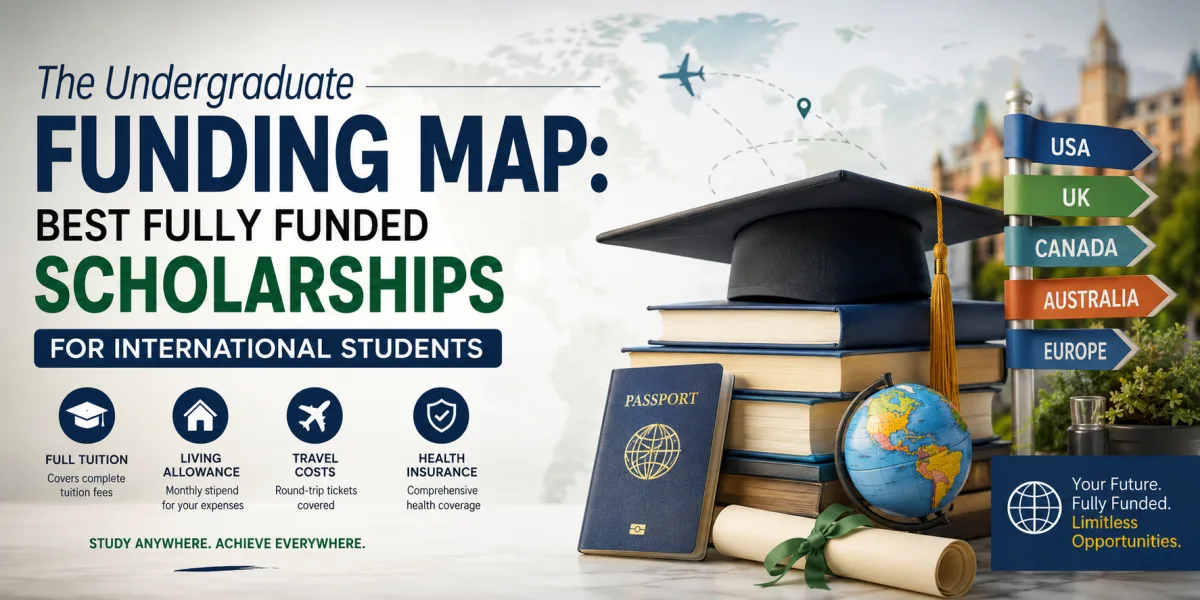
Government scholarships can be among the best ways to study abroad without loans because many cover more than tuition. Depending on the program, they may include living allowance, airfare, health insurance, language training, accommodation, and settlement support.
Examples include Japan’s MEXT Scholarship, Türkiye Scholarships, Global Korea Scholarship, Chinese Government Scholarship, Australia Awards, New Zealand Manaaki Scholarships, DAAD programs, Erasmus Mundus Joint Masters, Chevening, Fulbright, and country-specific bilateral awards.
Japan’s MEXT scholarship information lists support that can include tuition exemption, monthly scholarship amounts, and round-trip airfare for covered categories. Türkiye Scholarships states that it provides university and department placement, covers tuition, offers accommodation, includes a one-year Turkish language course, and provides a one-time flight ticket. These types of benefits can reduce the need for borrowing because they address several cost categories at once.
The challenge is competition. Fully funded government scholarships usually require strong academics, clear goals, leadership potential, and careful documentation. Some require embassy interviews, exams, research proposals, work experience, return commitments, or specific priority fields.
Students should create a government scholarship calendar at least one year before the intended start date. Many programs close applications long before university classes begin. Waiting until admission season may be too late.
A government scholarship application should not be generic. It should explain why the destination country is academically relevant, how the degree fits the student’s future work, and why the student is a good investment for the program’s mission.
Use University Scholarships as a Portfolio, Not a Backup
Many students apply for famous international scholarships but ignore university-specific funding. That is a mistake. Universities often offer merit scholarships, need-based grants, departmental awards, honors college scholarships, country-specific scholarships, and tuition waivers.
University scholarships may not be as famous as Chevening, Fulbright, MEXT, or Erasmus Mundus, but they can be more realistic for some students. A university may want to attract talented students in a particular field, diversify its student body, support students from specific countries, or fund high-achieving applicants.
The correct strategy is to research funding at three levels: university-wide scholarships, department-level scholarships, and program-specific scholarships. A student applying for engineering should check the university scholarship page, the engineering faculty page, and the specific department page. Funding can be hidden in places students do not expect.
Many scholarships require early deadlines. A student may need to apply for admission by a priority date, submit a separate scholarship essay, complete an honors application, or attend an interview. Students who apply late may miss funding even if they are admitted.
Debt-free study abroad often comes from stacking opportunities. A partial tuition scholarship plus a departmental grant plus family savings plus legal part-time work may remove the need for loans. The student who searches only for one perfect full scholarship may miss several smaller awards that together solve the problem.
Consider Lower-Cost Degree Structures
Debt-free study abroad is not only about finding money. It is also about reducing the amount of money needed.
Students should compare degree length. In some countries, a bachelor’s degree takes three years. In others, it takes four. Some master’s degrees take one year; others take two. A shorter degree can reduce living costs, tuition, and opportunity cost.
Students should also compare pathways. Starting at a lower-cost institution and transferring may reduce total cost in some countries. Completing an undergraduate degree at home and applying abroad for a fully funded master’s may be cheaper than paying for an international bachelor’s degree. Studying in a lower-cost European or Asian destination may produce a better financial outcome than borrowing heavily for a higher-cost country.
Community college transfer routes can be useful in some systems, but international students must calculate carefully. A lower first-year tuition does not guarantee affordable completion if transfer scholarships are limited. Students should confirm credit transfer policies, visa rules, housing costs, and final-degree funding before choosing this route.
Online and hybrid international programs may also reduce costs, but they must be evaluated for quality, recognition, career outcomes, and visa implications. A cheap degree that is not respected by employers or graduate schools may not be a good investment.
The best financial decision is not always the cheapest program. It is the program with the best relationship between cost, quality, funding, and future income potential.
Use Legal Part-Time Work Carefully
Many international students hope to fund study abroad through part-time work. This can help, but it is dangerous to rely on work income as the main funding source before understanding the rules.
Student work rights vary widely by country. Some countries allow limited hours during term and more hours during breaks. Others restrict work by visa type, program type, or employer. Some cities have abundant part-time jobs; others do not. Some jobs require local language skills. Some pay too little to cover meaningful costs after transport and taxes.
A part-time job can help with food, transport, personal expenses, books, or small savings. It usually should not be the foundation for tuition unless the student has a guaranteed legal work arrangement and a realistic budget. Overworking can harm academic performance, scholarship renewal, health, and immigration status.
Students should also consider timing. Many costs arrive before work income begins: application fees, visa fees, flights, housing deposits, first month’s rent, insurance, and settlement costs. A student cannot usually arrive with no funds and expect a job to solve the problem immediately.
Use part-time work as support, not as a fantasy budget. A responsible plan assumes conservative income, legal compliance, and academic priority.
Look for Assistantships and Paid Academic Roles
For graduate students, assistantships can be one of the most powerful ways to study abroad without loans. Teaching assistantships, research assistantships, graduate assistantships, and lab roles can provide tuition waivers, stipends, or both.
Assistantships are common in research-heavy universities, especially in the United States and Canada, but they vary by field. STEM doctoral programs may offer full funding more often than professional master’s programs. Humanities and social sciences may have funding, but competition can be intense. Professional degrees such as MBA, law, medicine, public policy, and some taught master’s programs may offer less guaranteed funding.
Students should contact departments, review funding pages, and look for phrases such as “fully funded PhD,” “graduate assistantship,” “tuition waiver,” “stipend,” “research assistant,” and “teaching assistant.” For doctoral programs, the funding package matters as much as admission.
Master’s students should be especially careful. Many international students borrow heavily for master’s degrees because they assume all graduate programs are funded. They are not. A one-year master’s can be financially worthwhile if it is funded or leads clearly to strong earnings, but an unfunded master’s can create serious debt risk.
Assistantships are not free money. They require work. Students may teach, grade, conduct research, manage labs, support faculty, or perform administrative tasks. But when structured well, they can provide both funding and professional experience.
Use Exchange Programs to Lower the Cost
Studying abroad does not always require completing a full degree abroad. Exchange programs can allow students to spend one semester or one year overseas while paying tuition to their home university or receiving support through institutional partnerships.
This route can be much cheaper than enrolling independently as an international student. A student may keep home-country scholarships, avoid high international tuition, and still gain overseas academic experience. Exchange programs can also reduce visa and housing complexity because universities often provide structured support.
Students should ask their home university about bilateral exchange agreements, Erasmus-style mobility programs, regional exchange schemes, short-term research placements, summer schools, and internship-abroad funding.
The exchange route is especially useful for students who want international exposure but cannot fund a full degree abroad. It may not provide the same credential as a foreign degree, but it can still build global experience, language skills, confidence, and networks without large debt.
For financially cautious students, one funded exchange semester may be wiser than an unaffordable full degree.
Search for Country-Specific and Identity-Based Scholarships
Many scholarships are not global. They are designed for students from specific countries, regions, backgrounds, or fields. These awards may be easier to miss because they do not appear on broad scholarship lists.
Students should search by nationality, field, gender, community background, religion, disability status, refugee status, first-generation status, academic discipline, and intended country. Examples include scholarships for African students, women in STEM, students from small island states, refugees, low-income students, Indigenous students, students from specific provinces, and students pursuing development-related fields.
Official government education pages can be useful. Many countries publish foreign scholarship announcements through ministries of education or scholarship boards. These can include bilateral scholarships with countries such as China, Japan, Hungary, Turkey, Romania, Morocco, Russia, India, or others depending on diplomatic agreements.
The advantage of country-specific scholarships is that competition may be narrower. The disadvantage is that rules can be strict. Students must verify eligibility, covered costs, fields of study, nomination procedures, and return obligations.
Do not assume that famous scholarships are the only scholarships. Sometimes the best funding is local, quiet, and underpublicized.
Build a Funding Stack
Debt-free study abroad often requires a funding stack. This means combining several sources instead of relying on one.
A funding stack might include a partial university scholarship, a departmental award, family savings, a small grant from a local foundation, legal part-time work, and a low-cost country. Another stack might include full tuition aid, a living stipend from a government scholarship, and travel support from a community organization. Another might combine tuition-free public university study with savings for living costs and a part-time job.
The stack should be written down clearly. List every cost and every funding source. Mark each source as guaranteed, likely, uncertain, or unavailable. Never treat an uncertain scholarship as confirmed money. Never build a budget that depends on winning a scholarship after enrollment unless there is a backup plan.
A strong funding stack has margin. It includes emergency money for delayed stipend payments, higher rent, medical costs, exchange rate changes, or travel problems. International students are vulnerable when every dollar is already assigned before arrival.
Debt-free does not mean cost-free. It means the costs are covered without loans.
Avoid Unaffordable Admission Offers
One of the hardest decisions is declining an admission offer because the funding is insufficient. Students and families may feel emotionally attached to the opportunity, especially if the university is prestigious. But accepting an unaffordable offer can create years of stress.
An unaffordable offer has one or more warning signs. The scholarship covers only a small portion of tuition. The family must borrow in local currency to pay fees in dollars, pounds, or euros. The student plans to cover tuition through part-time work without guaranteed income. The remaining gap exceeds family savings. The visa proof-of-funds requirement cannot be met honestly. The student does not know how they will pay for the second year. The degree has uncertain career returns.
Students should remember that declining one offer does not mean giving up on study abroad forever. It may mean applying again next year with stronger funding, choosing a lower-cost country, pursuing undergraduate study at home and graduate study abroad later, or building savings first.
The most expensive word in international education can be “somehow.” “We will somehow find the money” is not a plan. It is a risk.
Understand Currency Risk
International students often think in the destination country’s currency, but their families may earn in another currency. This creates exchange rate risk.
If the family earns in Kenyan shillings, Indian rupees, Nigerian naira, Pakistani rupees, Ghanaian cedis, Brazilian reais, or another local currency while tuition is charged in U.S. dollars, pounds, euros, Canadian dollars, or Australian dollars, depreciation can make the degree more expensive over time. A budget that works in January may fail by September if the exchange rate moves sharply.
Currency risk is one reason loans can be dangerous. Borrowing in one currency to pay costs in another can magnify repayment pressure. Even without loans, families should build a buffer for exchange movement.
Students should calculate costs using conservative exchange rates. They should avoid budgets that only work under the most favorable conversion. If a scholarship provides a stipend in the destination currency, that can reduce risk because living costs and income are matched.
International education is not only an academic decision. It is a currency decision.
Apply Earlier Than You Think
Debt-free study abroad requires time. Scholarships often close before university admission deadlines. Financial aid documents take time. Passports, transcripts, translations, recommendation letters, test scores, portfolios, and research proposals cannot be prepared at the last minute.
A student should ideally begin 12 to 18 months before the intended start date. For highly competitive scholarships, preparation may begin even earlier. Leadership projects, research experience, volunteer work, language tests, and academic excellence cannot be manufactured in the final week.
Create a timeline with four tracks: admission, scholarships, documents, and visa planning. Each track has its own deadlines. A student may need to apply for admission by October, scholarship by November, financial aid by January, housing by May, visa by June, and travel by August. Missing one deadline can break the whole plan.
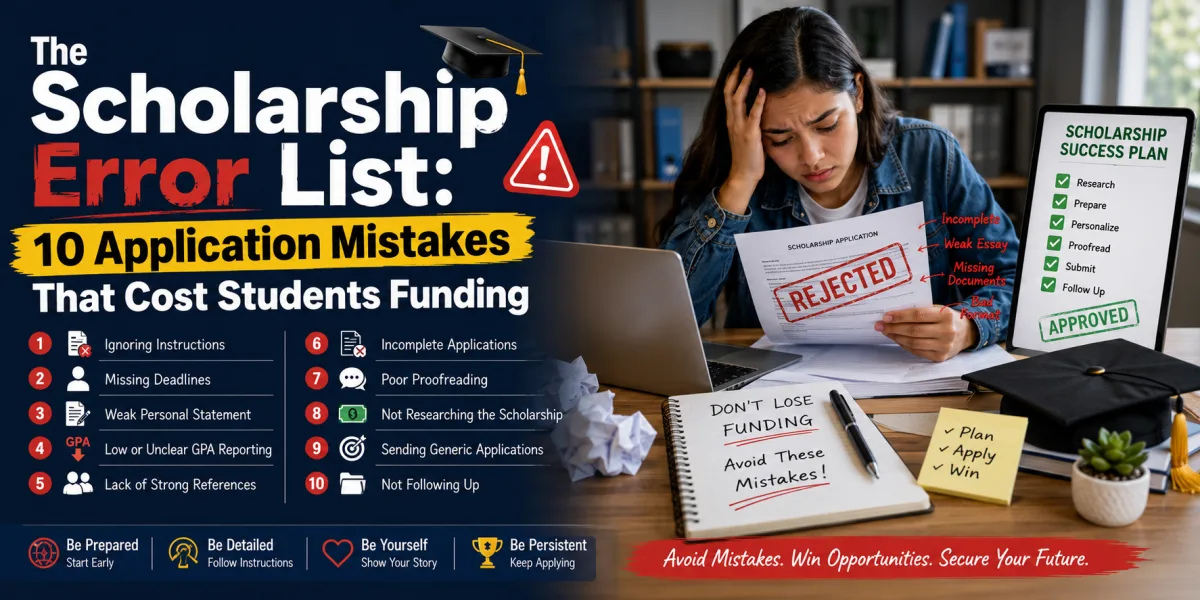
Early preparation also improves essay quality. Scholarship essays need reflection, specificity, and revision. A rushed essay often sounds generic. A prepared essay explains fit, purpose, and funding need clearly.
Use Community and Employer Sponsorships
Not all funding comes from universities or governments. Local organizations, employers, religious institutions, community foundations, alumni groups, professional associations, nonprofits, and philanthropists may offer small grants or sponsorships.
These sources rarely cover the full cost alone, but they can help close gaps. A $1,000 travel grant may cover flights. A community award may pay for visa fees and winter clothing. An employer sponsorship may support a professional master’s if the student returns to work. A professional association may fund exam fees, conference travel, or research supplies.
Students should prepare a simple funding proposal for local sponsors. It should explain the program, total cost, confirmed scholarships, remaining gap, career goals, and how the sponsor’s contribution will be used. Transparency builds trust.
Local sponsors are more likely to help when the student has already done the hard work: secured admission, earned partial funding, built a strong academic record, and created a realistic budget.
Small grants can make a debt-free plan possible when combined with larger funding.
Reduce Application Costs
Applying abroad can become expensive before admission even arrives. Application fees, standardized tests, score reports, transcript evaluations, courier services, translations, passport renewals, and language exams can strain families.
Students should reduce these costs where possible. Apply to universities that offer fee waivers. Use test-optional policies if appropriate and if they do not weaken the application. Send official test scores only when necessary. Prioritize universities that are both academically suitable and financially realistic. Avoid paying agents who provide little value.
A student applying to 20 unaffordable universities may spend more money and still have no usable offer. A student applying to eight carefully selected universities with strong aid policies may have a better chance and lower application cost.
Application strategy is part of financial strategy.
Protect Yourself from Scholarship and Housing Scams
International students are vulnerable to scams because they often manage money, documents, housing, visa rules, and travel from another country. Scammers know this.
Be cautious of scholarship agents who guarantee funding for a fee, fake university representatives, unofficial visa “fixers,” fake landlords, fake acceptance letters, and people who ask for deposits through informal payment channels. Research published in 2025 found that international students face scams involving housing, finances, government impersonation, and fear of legal consequences, with many lacking access to reliable prevention resources.
Use official university websites, government scholarship portals, embassy pages, and verified education advising centers. Never send money to a person or organization without verifying legitimacy. Be cautious with social media scholarship posts that do not link to official sources. Do not share passport scans, financial documents, or personal data casually.
A debt-free plan can be destroyed by fraud. Verification is part of funding discipline.
Choose the Degree with Career Return in Mind
A debt-free strategy is not only about avoiding loans. It is also about choosing a degree that has value after graduation.
Students should research employment outcomes, professional licensing, post-study work rules, industry demand, language requirements, internship access, alumni networks, and whether the degree is recognized in the student’s home country or intended work country.
Some degrees travel easily across borders. Others are country-specific. Law, medicine, nursing, education, accounting, architecture, and regulated professions may require local licensing. A student who studies one of these fields abroad must understand whether they can practice after graduation.
Students should also consider whether the destination country offers post-study work options. A scholarship may require return home, which can be valuable if aligned with the student’s goals. But if the student expects to gain work experience abroad, visa rules matter.
Debt-free study abroad is strongest when the degree improves long-term earning power without creating financial fragility.
A Practical Debt-Free Study Abroad Plan
First, define your academic goal. Decide whether you need an undergraduate degree, master’s degree, exchange semester, research placement, or professional certificate. Do not assume a full foreign degree is the only route.
Second, calculate your maximum family contribution without loans. Be honest. Include savings, expected support, and emergency limits. This number becomes your affordability boundary.
Third, identify countries where your contribution plus realistic scholarships can cover costs. Compare tuition, living costs, language, work rights, visa proof-of-funds rules, and degree length.
Fourth, build a scholarship list. Include government scholarships, university need-based aid, merit scholarships, departmental funding, assistantships, exchange programs, country-specific awards, and local sponsorships.
Fifth, create a deadline calendar. Start at least one year early. Track every document, essay, recommendation, test, and financial aid form.
Sixth, apply only where a debt-free or low-gap outcome is possible. Do not waste money applying to universities that cannot fund you.
Seventh, compare offers using total cost. Do not accept based on prestige alone. Choose the offer that fits academically and financially.
Eighth, create a first-year cash flow plan. Know when payments are due, when stipends arrive, how deposits will be paid, and what emergency money is available.
This plan turns study abroad from a dream into a financial project.
When Loans Should Be a Last Resort
The purpose of this article is to help students avoid loans, but it is worth explaining when borrowing becomes dangerous.
A student loan is risky when the degree has uncertain career returns, the loan is in a stronger foreign currency, the interest rate is high, the repayment grace period is short, the family must pledge assets, the student does not have work rights after graduation, or the field requires licensing that may be difficult to obtain.
Loans are also risky when they fill a large funding gap rather than a small temporary gap. Borrowing a modest amount to cover a timing issue is different from borrowing the entire cost of an unfunded international degree.
Students should avoid private loans they do not fully understand. They should compare interest rates, currency, repayment start date, co-signer obligations, penalties, deferment options, and what happens if income is delayed.
The best loan is the one you do not need. The second-best loan is small, affordable, and tied to a degree with strong earning power. The worst loan is large, vague, and justified only by hope.
The Bigger Lesson
Studying abroad without student loans is possible, but it requires a different mindset from the one many students use. The goal is not to collect admission letters. The goal is to secure an education you can afford to finish.
Debt-free study abroad begins with the total cost, not the dream destination. It requires comparing countries, choosing lower-cost systems, applying for fully funded scholarships, targeting universities with strong aid, building a funding stack, using legal work carefully, considering assistantships, reducing application costs, and declining unaffordable offers.
The most financially successful students are often not the ones who apply to the most famous universities. They are the ones who understand fit, funding, timing, and risk. They know the difference between admission and affordability. They read official scholarship rules. They calculate hidden costs. They prepare early. They avoid scams. They treat every offer as a financial decision.
An international degree can be a powerful asset. But it should not begin with financial desperation.
Study abroad should expand your future, not mortgage it. The smartest path is to make the numbers work before you leave home.
When the funding is real, the budget is honest, and the degree has purpose, studying abroad can become one of the best investments you ever make without requiring student debt to get there.
 Article
 Article
 Article
 Article
 Article
 Article
 Article
 Article