
The Global Funding Ladder: Top Scholarships for International Students
For many international students, a scholarship is not simply a financial award. It is the difference between possibility and impossibility.
Studying abroad can open doors to advanced research, global networks, stronger career opportunities, professional credibility, and personal transformation. It can also be financially intimidating. Tuition, living costs, visa fees, flights, health insurance, books, housing deposits, and currency exchange risk can turn even an admission offer into a difficult financial decision.
This is why major international scholarships matter. They do more than reduce tuition. The best awards can fund the full cost of study, connect students to influential alumni networks, support leadership development, and create a pathway into global careers. A strong scholarship can convert academic potential into real access.
But scholarships are not lottery tickets. The most competitive awards are strategic investments. They look for students who combine academic strength with leadership, service, professional promise, research ability, public purpose, or clear career direction. A student who applies casually to famous scholarships without understanding fit, timing, and selection criteria will usually struggle.
The best approach is not to ask, “Which scholarship is the most prestigious?” The better question is, “Which scholarship fits my country, degree level, field, leadership record, financial need, career goals, and return plan?”
International scholarship funding is also highly time-sensitive. Deadlines change, eligibility rules vary by country, and immigration policies can affect students after selection. In July 2026, Reuters reported that the United States announced new visa regulations that would impose fixed durations on F student visas and J exchange visitor visas, with students and exchange visitors capped at four years under the rule once implemented. This kind of policy shift is a reminder that students should verify current visa and scholarship rules directly with official sources before making decisions.
This article examines top scholarships for international students from a practical financial perspective. It explains what each award is best known for, who should consider it, how funding works in broad terms, and what applicants should understand before investing time in the application.
How to Think About Scholarship Value
A scholarship’s value is not only the amount of money advertised. A partial tuition discount at an expensive university may still leave a student with unaffordable living costs. A fully funded scholarship with a modest stipend may be more valuable than a larger tuition award that leaves housing unfunded. A scholarship attached to a strong alumni network may provide long-term career value that is hard to measure immediately.
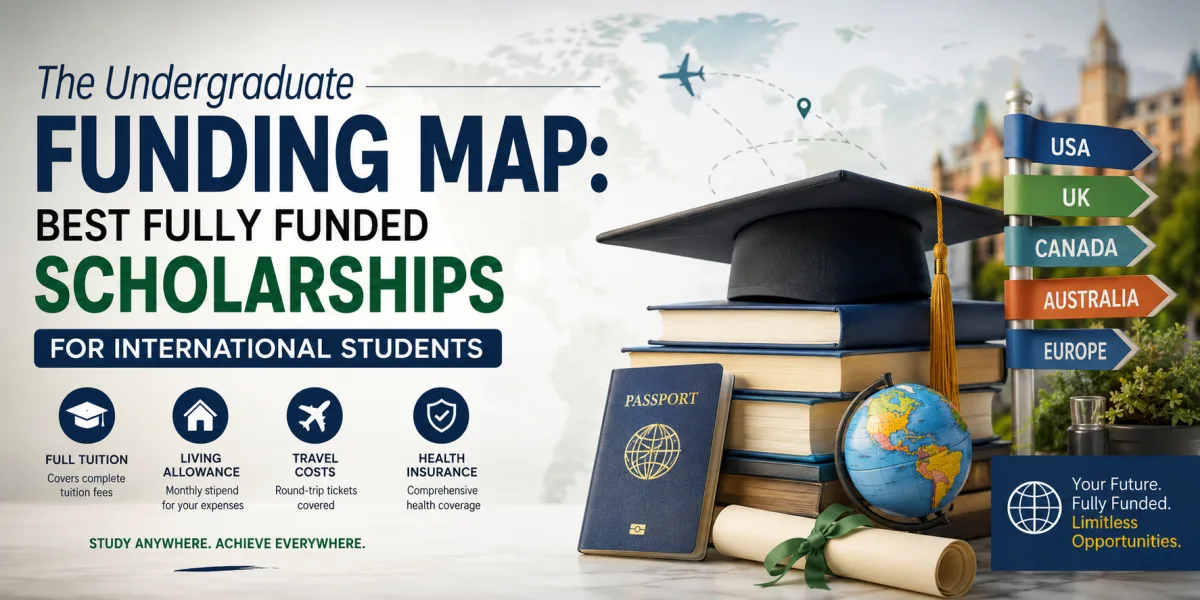
Students should compare scholarships across six dimensions: tuition coverage, living allowance, travel support, health insurance, visa or settlement support, and network value.
Tuition coverage matters first because international tuition can be significantly higher than domestic tuition. Living allowance matters because rent, food, transport, books, winter clothing, and personal expenses are unavoidable. Travel support matters because flights and relocation costs can be high. Health insurance matters because medical systems vary widely. Visa support matters because immigration requirements may include proof of funds. Network value matters because alumni communities can influence internships, mentorship, jobs, policy networks, and research opportunities.
Students should also consider opportunity cost. A scholarship that requires returning home for a fixed period may be excellent for public leadership but may not fit someone whose career requires international work immediately after graduation. A research scholarship may be ideal for a future academic but less suitable for someone seeking a taught professional master’s. A country-specific scholarship may be prestigious but limited to certain fields.
The right scholarship is not always the biggest. It is the one that funds the right education at the right institution for the right career path.
1. Chevening Scholarships
Chevening is one of the best-known scholarships for international students who want to study a one-year master’s degree in the United Kingdom. It is funded by the UK Foreign, Commonwealth and Development Office and partner organizations. The program is designed for future leaders, decision-makers, and influencers who are expected to use their UK education to create impact in their home countries.
Chevening is especially attractive because it is broad by field and country. It supports students from many eligible countries and allows applicants to choose from thousands of eligible master’s programs in the UK. The official Chevening guidance states that applicants must have at least two years of eligible work experience, equivalent to 2,800 hours, and must hold an undergraduate degree that qualifies them for a UK master’s program.
Chevening is not only an academic scholarship. It is a leadership scholarship. Successful applicants usually show a clear record of leadership, networking ability, career direction, and commitment to returning home after study. The essays matter because they reveal how the applicant thinks about influence, collaboration, public purpose, and future impact.
Applicants should understand the course-selection requirement carefully. Chevening guidance explains that applicants must choose three UK master’s degree courses and must obtain an unconditional offer from one of those courses before the required deadline. This means a strong Chevening strategy requires researching universities early, not after submitting the scholarship application.
Chevening is best suited for applicants who have professional experience, leadership evidence, strong communication skills, and a clear plan to use a UK master’s degree in their home country. It may be less suitable for students applying immediately after undergraduate study with little work experience.
2. Fulbright Foreign Student Program
The Fulbright Foreign Student Program is one of the most respected international exchange programs for graduate students, young professionals, and artists who want to study or conduct research in the United States. The official Fulbright Foreign Student Program says it enables graduate students, young professionals, and artists from abroad to study and conduct research in the United States.
Fulbright is administered differently by country, which is one of the most important facts applicants must understand. Eligibility, deadlines, fields of study, application processes, testing requirements, and benefits can vary depending on the applicant’s country. Students should not rely only on general Fulbright information; they should check the Fulbright commission, U.S. embassy, or official country page for their home country.
Fulbright is highly valuable because it combines academic funding with cultural exchange and diplomatic purpose. It is not simply a scholarship to pay for a degree. It is designed to build mutual understanding between the United States and other countries. Selection committees often look for academic ability, leadership potential, adaptability, community engagement, and a clear reason for studying in the U.S.
The award can be especially strong for students pursuing master’s study, doctoral research, artistic development, public policy, education, science, social sciences, and professional fields. Some countries may prioritize specific areas aligned with national development needs or bilateral priorities.
Applicants should prepare early because Fulbright applications can require essays, recommendations, transcripts, standardized tests, research proposals, university placement processes, and interviews. For research-focused applicants, a clear proposal and potential U.S. institutional fit are important.
Fulbright is best for students who can explain not only what they want to study, but why the United States is the right place to study it and how the experience will serve a broader public or professional purpose.
3. Erasmus Mundus Joint Masters Scholarships
Erasmus Mundus Joint Masters scholarships are among the most attractive options for international students who want a multi-country European master’s experience. The official Erasmus+ page says students from all over the world are welcome, that they study at several universities in Europe and beyond, and that full scholarships are available for the best students.
The defining feature of Erasmus Mundus is mobility. Students usually study in at least two countries through a joint master’s program run by a consortium of universities. This creates academic breadth, cultural exposure, and a strong international network. For students seeking global careers, research pathways, international development, policy, technology, sustainability, or cross-border industries, this structure can be powerful.
Applications are made directly to the institution or consortium running the chosen program, not through one single universal application. The Erasmus+ guidance says students apply directly to the institution running their chosen program and can search the course catalogue for available programs.
This means students must choose the program carefully. Erasmus Mundus is not one scholarship application; it is a portfolio of joint master’s programs, each with its own focus, requirements, documents, and deadlines. A student applying to a data science program will face different expectations from a student applying to a public health, environmental policy, migration studies, or cultural heritage program.
Erasmus Mundus is best for students who are academically strong, internationally adaptable, and interested in a structured European master’s program across multiple institutions. It can be especially attractive for students who want exposure to different education systems and professional networks in Europe.
4. DAAD Scholarships
DAAD, the German Academic Exchange Service, is one of the most important scholarship organizations for international students interested in studying or researching in Germany. Germany is already attractive because many public universities charge low or no tuition compared with other major study destinations, and DAAD scholarships can help cover living costs and other expenses.
DAAD offers different programs for master’s students, doctoral candidates, researchers, artists, development-related postgraduate applicants, and country-specific groups. The range is broad, so applicants must search the DAAD database carefully rather than assume one general scholarship applies to everyone.
DAAD is especially strong for students interested in research, engineering, public policy, development, sustainability, sciences, social sciences, arts, and German-linked academic pathways. The development-related postgraduate courses program is well known among students from developing and emerging countries, though eligibility depends on professional experience and program fit.
Applicants should pay attention to language requirements. Some programs are taught in English, while others require German. Even for English-taught programs, basic German can improve integration and daily life. Students should also understand the difference between admission to a German university and selection for DAAD funding. These may be related but separate processes.
DAAD is best suited for students who want a rigorous academic environment, can identify a program that matches their field, and are willing to prepare a focused application rather than a generic one.
5. Commonwealth Scholarships
Commonwealth Scholarships support students from eligible Commonwealth countries, especially for study in the United Kingdom. These awards are often focused on development impact, leadership, and academic excellence. They can support master’s and doctoral study, depending on the specific scheme and country eligibility.
Commonwealth Scholarships are especially important for students from low- and middle-income Commonwealth countries who want postgraduate study aligned with development priorities. Fields may include public health, education, engineering, climate, governance, agriculture, technology, and social development, though available categories vary.
Applicants should understand that Commonwealth awards are usually highly competitive and often require a clear development rationale. It is not enough to say that studying in the UK would benefit the applicant personally. The stronger application explains how the degree will help address needs in the applicant’s country or sector.
Students should also pay close attention to nomination processes. In some countries, applicants may need to apply through national nominating agencies, universities, or specific channels. Missing the correct route can disqualify an otherwise strong candidate.
This scholarship is best for students who combine academic ability with a serious public-interest or development-focused career plan.
6. Rhodes Scholarship
The Rhodes Scholarship is one of the world’s most famous scholarships, funding postgraduate study at the University of Oxford. It is known for academic excellence, leadership, character, service, and ambition to make a positive difference in the world.
Rhodes is not a general scholarship for all international students. Eligibility depends on constituency, citizenship, age, academic standing, and other criteria. Applicants must check the rules for their country or region. The scholarship is highly competitive and attracts candidates with exceptional academic records, leadership achievements, service commitments, and strong personal qualities.
Students considering Rhodes should understand that the selection process is deeply holistic. Academic excellence is necessary but not sufficient. Committees often look for leadership energy, moral seriousness, courage, commitment to others, and evidence that the applicant can contribute to a lifelong community of public-minded leaders.
A strong Rhodes application usually requires years of preparation, not weeks. Leadership, service, intellectual curiosity, and impact must be real. Essays and interviews can reveal whether the applicant’s ambitions are grounded or simply performative.
Rhodes is best suited for exceptionally strong students who have already demonstrated leadership and service and who have a clear reason for pursuing postgraduate study at Oxford.
7. Gates Cambridge Scholarship
The Gates Cambridge Scholarship funds outstanding students from outside the United Kingdom to pursue postgraduate study at the University of Cambridge. It is one of the most prestigious international scholarships for students interested in research, public leadership, and academic excellence.
The program is known for selecting students with outstanding intellectual ability, leadership potential, commitment to improving the lives of others, and a strong fit between applicant and Cambridge program. It supports a wide range of postgraduate degrees, though applicants must secure admission to Cambridge through the university’s process.
Gates Cambridge is particularly strong for students pursuing research-intensive master’s degrees, PhDs, and advanced academic pathways. It can be an excellent fit for applicants whose long-term work connects scholarship with public benefit.
The application should not merely praise Cambridge. It should explain why a specific department, supervisor, research environment, or program is essential to the applicant’s goals. Cambridge fit matters. A generic application to a prestigious university is weaker than a precise argument for a particular academic path.
Gates Cambridge is best suited for students with excellent academic records, a strong service orientation, and a well-developed postgraduate plan.
8. Knight-Hennessy Scholars
Knight-Hennessy Scholars supports graduate study at Stanford University across a wide range of disciplines. It is designed for students who demonstrate independence of thought, purposeful leadership, and civic mindset. The program can support students pursuing graduate degrees at Stanford, including professional degrees, master’s programs, and doctoral programs.
This scholarship is especially attractive because it is interdisciplinary. Scholars join a leadership development community while pursuing their chosen Stanford graduate program. That makes it suitable for students interested not only in academic training but also in broader leadership formation.
Applicants must usually apply both to Knight-Hennessy Scholars and to the Stanford graduate degree program they want to pursue. This means scholarship strategy and graduate admission strategy must align. A student cannot treat the scholarship as separate from academic fit.
Knight-Hennessy is best for applicants with strong leadership evidence, intellectual range, personal initiative, and a compelling reason for graduate study at Stanford. Because Stanford admission itself is highly competitive, applicants must be strong both academically and personally.
9. Schwarzman Scholars
Schwarzman Scholars funds a one-year master’s program in global affairs at Tsinghua University in Beijing. It is designed to prepare future leaders to understand China’s role in the world and to build cross-cultural leadership capacity.
The program is especially relevant for students interested in international relations, public policy, business, China studies, diplomacy, global economics, technology governance, and leadership. It is not a traditional subject-specific master’s in the way many university programs are; it is a leadership-oriented global affairs program.
Applicants should understand why China matters to their field. A generic interest in leadership is usually not enough. Strong candidates can explain how studying in Beijing, engaging with China, and joining a global cohort fits their long-term impact.
Schwarzman is best suited for high-potential young leaders with strong academic records, leadership experience, cross-cultural maturity, and a clear reason for studying global affairs in China.
10. Mastercard Foundation Scholars Program
The Mastercard Foundation Scholars Program is one of the most important scholarship initiatives for talented young people from Africa and other eligible regions, depending on partner institutions. The program emphasizes education, leadership, and social impact, with many scholars expected to contribute to transformation in their communities and countries.
The program works through partner universities and institutions. That means eligibility, degree levels, fields, and application processes vary by partner. Students must identify the specific partner institution and scholarship route that fits their profile.
Mastercard Foundation scholarships are often especially valuable because they may combine financial support with leadership development, mentoring, transition support, and career preparation. For students from financially constrained backgrounds, this holistic support can be as important as tuition funding.
The strongest applicants usually show academic promise, financial need, leadership potential, and commitment to community impact. The program is not simply about leaving one’s country to study abroad; it is about developing talent that can contribute to broader social and economic progress.
This scholarship is best for students who meet partner-specific eligibility criteria and can demonstrate both need and potential for impact.
11. MEXT Scholarship
The Japanese Government MEXT Scholarship supports international students who want to study in Japan. It can cover undergraduate, master’s, doctoral, research, teacher training, and specialized programs depending on the category and country process.
MEXT is attractive because Japan offers strong universities, advanced research environments, technology leadership, and rich cultural experience. The scholarship can be especially relevant for students interested in engineering, sciences, technology, public policy, Japanese studies, education, and research.
Applicants often apply through an embassy recommendation route or university recommendation route, depending on the program. Requirements can include academic records, research plans, language ability, interviews, exams, and placement processes. Because procedures vary by country and category, official embassy and university instructions matter.
Language is an important consideration. Some programs are available in English, especially at the graduate level, but Japanese language preparation can improve daily life, academic integration, and career possibilities in Japan.
MEXT is best for students who are serious about studying in Japan and can prepare early for a structured, document-heavy application process.
12. Australia Awards Scholarships
Australia Awards Scholarships are long-term development awards funded by the Australian government for students from eligible developing countries, particularly in the Indo-Pacific region and selected other regions. They support study at Australian universities and are designed to help recipients contribute to development in their home countries.
The award is especially relevant for applicants whose study plans align with national development priorities. Fields can include governance, health, education, agriculture, climate, infrastructure, gender equality, economic development, and public administration, depending on country priorities.
Applicants should understand that Australia Awards are not simply merit scholarships. They are development investments. A strong application connects the applicant’s academic program to a realistic plan for contribution after returning home.
Students should review country-specific profiles carefully because priority fields, eligibility rules, work experience expectations, and application timelines vary.
Australia Awards are best for applicants from eligible countries who have leadership potential, development-focused goals, and a clear plan to apply their education at home.
13. New Zealand Manaaki Scholarships
New Zealand’s Manaaki Scholarships support students from eligible countries, especially in the Pacific and selected developing regions, to study in New Zealand or the Pacific. These scholarships are development-oriented and often focus on fields that support sustainable development, governance, climate resilience, agriculture, education, health, and economic growth.
New Zealand can be attractive for students who want high-quality education in a smaller, globally connected system with strong attention to sustainability and public-sector development. The scholarship’s value depends on the level and type of study, country eligibility, and priority sectors.
As with other government development scholarships, applicants should pay close attention to country rules. The same scholarship brand can mean different priorities for different countries. A student’s field must usually fit the development objectives of their home country and the scholarship program.
Manaaki Scholarships are best for applicants from eligible countries who can clearly explain how their study will support development impact after graduation.
14. Chinese Government Scholarship
The Chinese Government Scholarship supports international students studying in China at undergraduate, master’s, doctoral, and research levels. China has invested heavily in higher education, research capacity, and international student recruitment, making this scholarship an important option for students seeking funding outside traditional Western destinations.
China can be especially attractive for students interested in engineering, technology, medicine, international trade, public policy, language, agriculture, infrastructure, and China-related studies. Many universities offer English-taught programs, especially at the graduate level, though language requirements vary.
Students should carefully research university quality, program language, city cost of living, supervision arrangements, degree recognition, and post-study goals. China is a large and diverse higher education market; experience can vary significantly by institution and program.
Application routes may include Chinese embassies, universities, or other official channels. As always, students should use official sources and avoid agents who promise guaranteed scholarships for payment.
This scholarship is best for students who have a strong academic reason to study in China and are willing to navigate a different education and cultural environment.
15. University-Specific International Scholarships
Some of the best scholarships for international students are not government programs. They are university-funded awards. These include full scholarships, partial tuition awards, merit scholarships, need-based grants, research assistantships, teaching assistantships, and named fellowships.
University-specific scholarships matter because they can be more realistic than famous global awards. A student may not win Chevening, Fulbright, Rhodes, or Erasmus Mundus, but may receive strong funding directly from a university where their profile fits well.
Examples include major awards at universities in the United States, Canada, the United Kingdom, Europe, Asia, and Australia. Some institutions automatically consider applicants for merit funding. Others require separate scholarship essays or earlier deadlines. Graduate students may receive funding through departments, supervisors, research grants, assistantships, or fellowships.
Students should search at three levels: university-wide scholarships, department-level funding, and program-specific awards. Many applicants miss funding because they only look at central scholarship pages and ignore department pages.
University scholarships are best for students who are willing to build a balanced list of institutions rather than applying only to the most famous names. Fit can produce funding.
How to Build a Scholarship Application Strategy
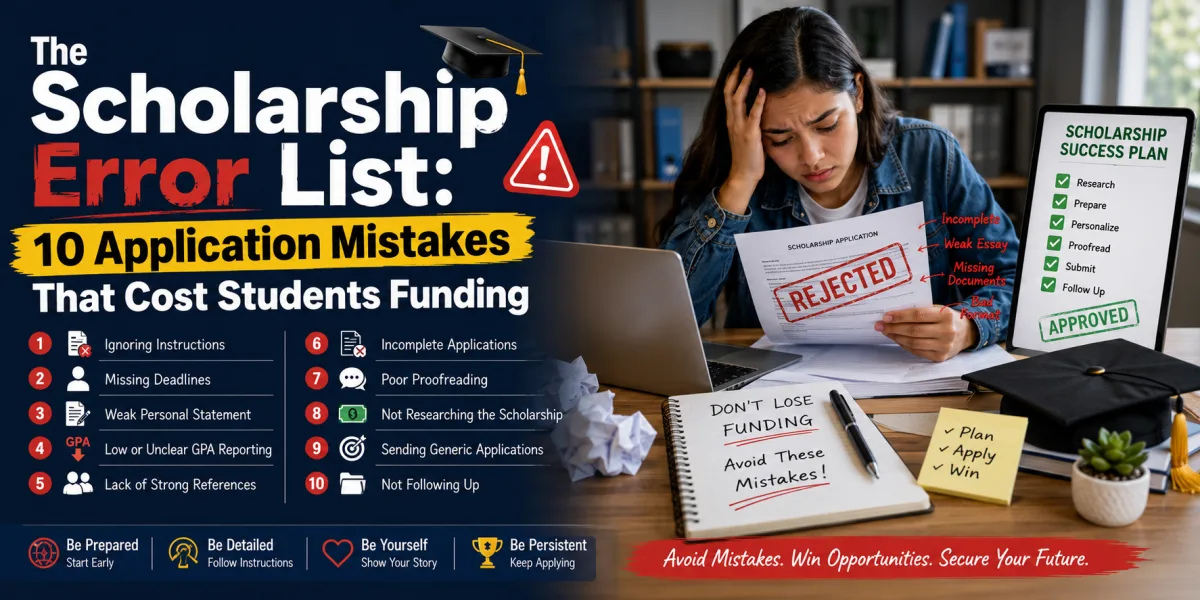
A strong scholarship strategy begins at least one year before enrollment. Some scholarships close applications nearly a year before the program starts. Students who wait until after admission decisions may miss funding deadlines entirely.
Start with eligibility. Confirm nationality, age, degree level, work experience, field, academic requirements, English language requirements, return obligations, and country-specific rules. Do not waste time on awards for which you are clearly ineligible.
Next, create a scholarship calendar. Include application opening dates, university admission deadlines, test dates, recommendation deadlines, transcript processing time, passport needs, visa timelines, and interview periods. Scholarship applications fail when documents arrive late.
Then build a balanced list. Include reach scholarships, realistic scholarships, university-specific awards, assistantships, and smaller grants. Famous scholarships are valuable, but they are not the only route.
Finally, align the story. A scholarship application should not feel like separate pieces pasted together. The personal statement, study plan, recommendations, CV, leadership examples, and future goals should reinforce one coherent case: this applicant has prepared seriously, fits the program, and will use the opportunity well.
What Selection Committees Usually Look For
Different scholarships have different criteria, but strong applicants often show several common qualities.
Academic readiness comes first. Scholarship committees need confidence that the student can succeed in a demanding program. This does not always mean perfect grades, but it does require evidence of ability.
Purpose matters. The applicant should know why they are applying for a specific degree, university, country, and scholarship. Vague ambition weakens the application.
Leadership matters for many major awards. Leadership does not always mean holding a title. It can include starting initiatives, solving community problems, mentoring others, improving systems, conducting research, organizing teams, or influencing change.
Impact matters. Committees often ask what the student will do after graduation. A strong answer is realistic, grounded, and connected to the applicant’s past work.
Fit matters. The student should explain why the chosen program is the right next step. Prestige alone is not a convincing argument.
Character matters. Recommendations, interviews, and essays often reveal maturity, resilience, humility, responsibility, and judgment.
How to Avoid Scholarship Scams
International students are financially vulnerable because scholarships, visas, housing, and admissions involve high stakes. Scammers exploit urgency and hope.
Be skeptical of anyone who guarantees a scholarship for a fee. Real competitive scholarships do not sell guaranteed awards. Be cautious with agents who ask for large upfront payments, request sensitive documents without clear purpose, use unofficial email addresses, or pressure students to act quickly.
Use official scholarship websites, university pages, embassy pages, and recognized education offices. Never rely only on social media posts, forwarded PDFs, or unofficial scholarship lists. If a scholarship is real, it should have an official page with eligibility rules, deadlines, application instructions, and contact details.
Research published in 2025 found that international students in the United States face scam risks connected to housing, finances, government impersonation, and fear of legal consequences, highlighting the need for reliable prevention resources. The lesson applies broadly: international students should slow down, verify sources, and seek advice from official channels before sending money or documents.
A scholarship should reduce financial risk, not create it.
The Bigger Lesson
Top scholarships for international students can transform a life, but they reward preparation more than hope. Chevening, Fulbright, Erasmus Mundus, DAAD, Commonwealth, Rhodes, Gates Cambridge, Knight-Hennessy, Schwarzman, Mastercard Foundation, MEXT, Australia Awards, Manaaki, Chinese Government Scholarships, and university-specific awards each serve different students and different goals.
The strongest applicants do not simply apply to famous names. They understand fit. They know their field. They research programs. They prepare documents early. They choose recommenders carefully. They write essays with evidence, not slogans. They connect study plans to future impact. They verify rules from official sources.
A scholarship application is a financial strategy, an academic strategy, and a career strategy at the same time.
The student who wins is not always the one with the most dramatic story. Often, it is the one who makes the clearest case: I am prepared for this program, I understand why this scholarship exists, I have already begun doing meaningful work, and this opportunity will help me do that work at a higher level.
International education is expensive. Scholarships are competitive. Rules change. Deadlines move. Visas matter. But for students who plan early and apply strategically, global funding can turn ambition into access.
The opportunity is real. The discipline must be real too.
 Article
 Article
 Article
 Article
 Article
 Article
 Article
 Article