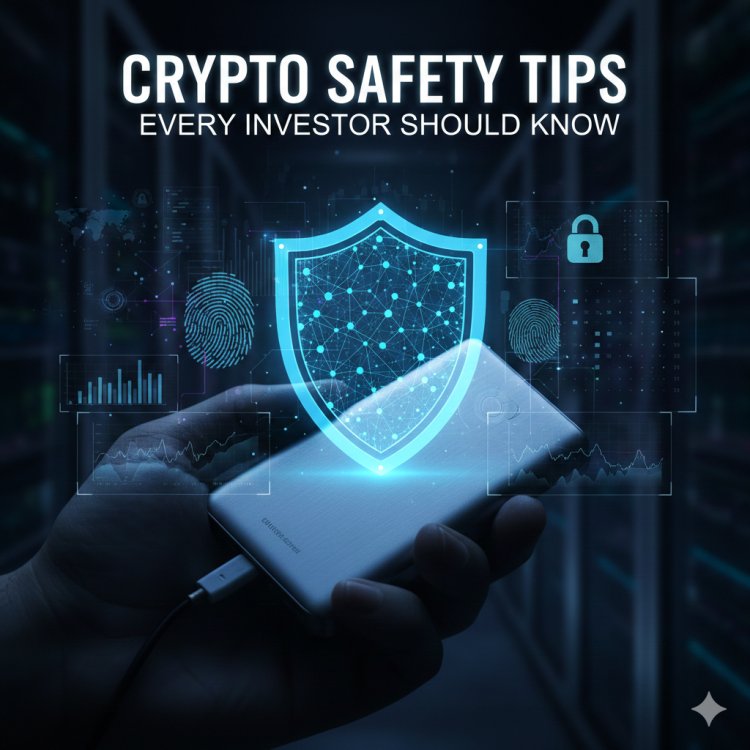
Crypto Safety Tips Every Investor Should Know: The Ultimate Guide to Protecting Your Digital Assets
Learn essential crypto safety tips to protect your wallet from hacks and scams. From cold storage to 2FA, this comprehensive guide covers everything every investor needs to know.
The world of cryptocurrency offers unparalleled financial freedom, innovation, and the potential for significant wealth creation. However, the decentralized nature of blockchain—the very thing that makes it revolutionary—also means that you are your own bank. In the traditional banking system, if you lose your credit card or notice a fraudulent transaction, you can call a customer service representative to reverse the charges. In the world of crypto, there is no "undo" button. Once a transaction is confirmed on the blockchain, it is permanent.
As the adoption of digital assets grows globally across all age groups and professions, so does the sophistication of cybercriminals. Whether you are a casual hobbyist, a professional trader, or a long-term hodler, understanding the pillars of crypto security is not optional—it is a necessity.
1. Understanding the Core Principle: Not Your Keys, Not Your Coins
The most fundamental concept in crypto safety is the ownership of private keys. A private key is essentially a digital signature that proves you own a specific amount of cryptocurrency and allows you to spend it.
Many investors keep their assets on centralized exchanges (CEXs). While convenient, this means the exchange holds the private keys on your behalf. If the exchange is hacked, goes bankrupt, or freezes your account, you lose access to your funds. To truly secure your investment, you must move your assets to a non-custodial wallet where you alone control the keys.
2. The Power of Cold Storage
For any significant amount of cryptocurrency, "cold storage" is the gold standard of security. A cold wallet is a device that is not connected to the internet, making it virtually immune to online hacking attempts.
-
Hardware Wallets: These are physical devices (like Ledger or Trezor) that store your keys offline. Even when plugged into a computer, the keys never leave the device.
-
Paper Wallets: While less common now, these involve printing your public and private keys on a physical piece of paper and storing it in a fireproof safe.
For daily trading, a "hot wallet" (connected to the internet) is fine for small amounts, but your life savings should always reside in the "cold" zone.
3. Protecting Your Seed Phrase
When you set up a non-custodial wallet, you are given a 12 to 24-word recovery phrase, known as a seed phrase. This phrase is the master key to your funds. If your hardware wallet breaks or you lose your phone, this phrase is the only way to recover your money.
-
Never store it digitally: Do not take a photo of it, do not save it in a notes app, and do not email it to yourself. Hackers use scripts to search for strings of 12 or 24 words in leaked databases and cloud storage.
-
Physical Redundancy: Write it down on paper or etch it into a metal backup tool designed to survive fire and floods. Store it in a secure, private location.
4. Implementing Robust Two-Factor Authentication (2FA)
If you must use an exchange, 2FA is your second line of defense. However, not all 2FA is created equal.
-
Avoid SMS 2FA: "SIM swapping" is a common attack where hackers trick your mobile provider into transferring your phone number to their SIM card, allowing them to intercept your login codes.
-
Use Authenticator Apps: Google Authenticator or Authy generate time-sensitive codes locally on your device.
-
Hardware Security Keys: Tools like YubiKey provide the highest level of 2FA by requiring a physical device to be plugged in or tapped against your phone to authorize a login.
5. Identifying and Avoiding Phishing Scams
Phishing remains the most successful method for stealing crypto. Attackers create fake websites, emails, or social media profiles that look identical to legitimate services.
-
Check the URL: Scammers often use "typosquatting" (e.g., myethervvallet.com instead of myetherwallet.com). Always bookmark your frequent crypto sites.
-
Trust No One in DMs: On platforms like Discord, Telegram, or X (formerly Twitter), "support agents" will never message you first. If someone asks for your seed phrase or asks you to "synchronize" your wallet, they are a scammer.
6. Digital Hygiene and Network Security
Your security is only as strong as the device you use to access your funds.
-
Dedicated Devices: If possible, use a dedicated laptop or tablet for crypto transactions that isn't used for general web surfing or downloading untrusted software.
-
Avoid Public Wi-Fi: Never access your crypto exchange or wallet on public Wi-Fi at airports or coffee shops. If you must, use a reputable Virtual Private Network (VPN) to encrypt your traffic.
-
Keep Software Updated: Operating system updates often include critical security patches. Ensure your wallet software and browser extensions are always on the latest version.
7. The Dangers of "Free" Crypto and Giveaways
The lure of "get rich quick" is a powerful tool for scammers. You will often see "Double your Bitcoin" giveaways on YouTube or social media, featuring deep-fake videos of famous tech leaders.
The rule is simple: If it sounds too good to be true, it is. No legitimate entity will ever ask you to send them crypto with the promise of sending more back. Similarly, be wary of "dusting attacks," where small amounts of unknown tokens appear in your wallet. Interacting with these tokens through a decentralized exchange can sometimes trigger a malicious smart contract that drains your wallet.
8. Multi-Signature (Multi-Sig) Wallets
For high-net-worth individuals or organizations, a multi-sig wallet offers an extra layer of protection. This setup requires multiple private keys to authorize a single transaction. For example, you might require two out of three keys to move funds—one key on your laptop, one on your phone, and one held by a trusted partner or stored in a safety deposit box. Even if one device is compromised, your funds remain safe.
9. Whitelisting Withdrawal Addresses
Most reputable exchanges allow you to "whitelist" specific wallet addresses. This means that even if a hacker gains access to your account, they cannot withdraw funds to an unknown address without a cooling-off period (usually 24-48 hours) and further identity verification. This delay gives you time to notice the breach and freeze your account.
10. Planning for the Unexpected: Crypto Inheritance
Safety isn't just about preventing theft; it's about ensuring your loved ones can access your assets if something happens to you. Because crypto is so secure, it can be "lost" forever if you pass away without leaving a clear plan.
Create a "dead man's switch" or a secure physical document (kept in a safe) that explains how to find your seed phrases and hardware wallets. Do not include the actual keys in your will, as wills can become public records. Instead, provide instructions on how to access a hidden safe or a managed digital inheritance service.
Conclusion
Crypto security is a continuous process of education and vigilance. By taking control of your private keys, using hardware wallets, and maintaining a healthy level of skepticism toward online offers, you can navigate the digital asset space with confidence. The responsibility of being your own bank is significant, but the peace of mind that comes from knowing your assets are unhackable is well worth the effort.
What's Your Reaction?