Saving Methods That Help You Build Wealth, Not Just Survive
Discover proven saving methods that help you build real wealth—not just survive. Learn modern savings strategies, emergency funds, goal-based saving, SACCOs, money market funds, digital apps, and long-term wealth-building habits for all income levels worldwide.
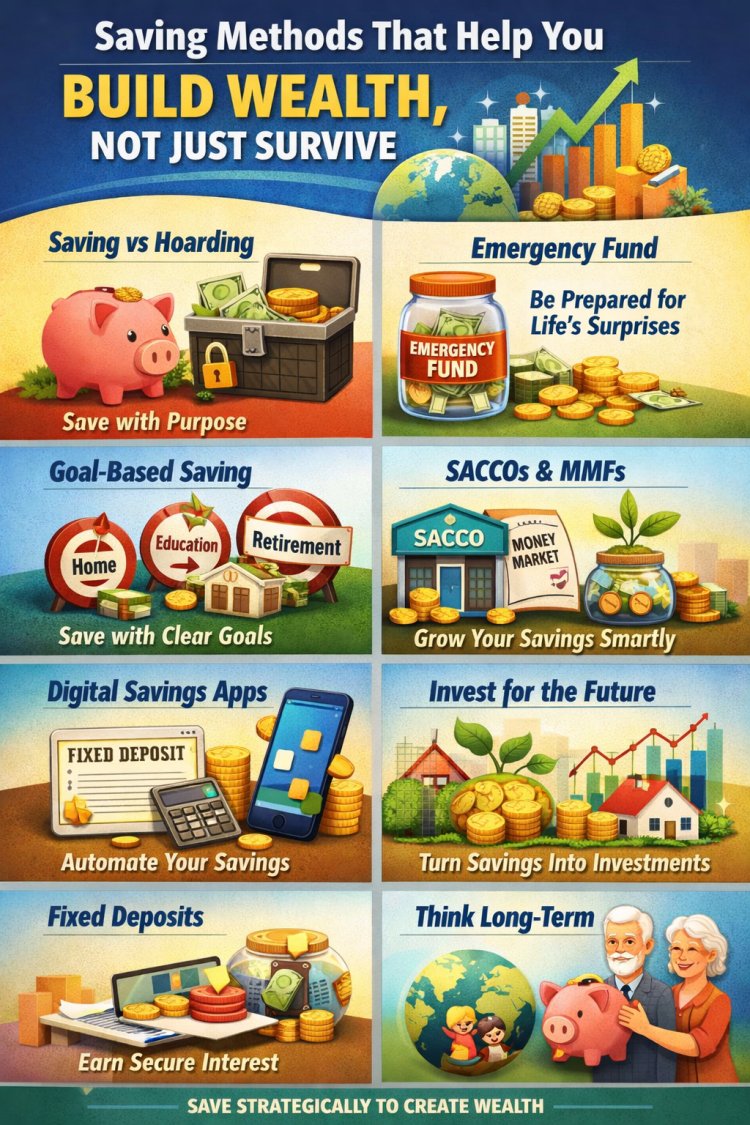
Saving money is one of the most talked-about financial habits in the world—yet also one of the most misunderstood. For many people, saving feels like a constant struggle, an act of deprivation, or something only possible for those with high incomes. Others save diligently for years but still find themselves financially insecure, stressed, or unprepared for opportunities.
The truth is simple but uncomfortable: not all saving methods build wealth.
Some methods only help you survive. Others quietly erode your money through inflation, poor planning, or lack of purpose. Only a few saving strategies are designed to create leverage, stability, and long-term financial freedom.
This article explores saving the right way—saving methods that move you from financial survival to wealth creation, regardless of where you live, how much you earn, or what stage of life you are in.
Saving vs Hoarding: Understanding the Critical Difference
Many people believe they are saving when, in reality, they are hoarding.
What Is Hoarding?
Hoarding money means:
-
Keeping cash idle with no purpose
-
Saving out of fear rather than strategy
-
Avoiding all spending, including productive spending
-
Letting money lose value over time
Hoarding feels safe, but it is often financially dangerous. Inflation silently eats away at idle cash, reducing its purchasing power year after year.
What Is Strategic Saving?
Strategic saving means:
-
Saving with clear objectives
-
Placing money where it can grow or protect value
-
Aligning savings with future investments
-
Using money as a tool, not a trophy
Wealthy individuals do not save because they fear the future—they save because they plan for it.
Why Saving Alone Does Not Make You Wealthy
Saving is only the first step in wealth creation. On its own, it does not produce wealth.
Think of saving as:
-
Fuel, not the engine
-
A foundation, not the building
-
Protection, not growth
Wealth is created when saved money is:
-
Invested wisely
-
Compounded over time
-
Aligned with long-term goals
The role of saving is to prepare your money for growth, not to trap it.
Traditional vs Modern Saving Methods
Traditional Saving Methods
Traditional methods include:
-
Cash savings at home
-
Basic bank savings accounts
-
Informal community savings
Pros
-
Simple
-
Accessible
-
Low risk
Cons
-
Low or zero returns
-
Vulnerable to inflation
-
Limited growth potential
Traditional saving methods are useful for short-term security, but insufficient for wealth building.
Modern Saving Methods
Modern saving focuses on:
-
Purpose-driven accounts
-
Interest-bearing instruments
-
Digitally automated systems
-
Integration with investments
These methods are designed to:
-
Preserve value
-
Earn returns
-
Enable scaling
Modern saving bridges the gap between discipline and opportunity.
Emergency Funds: The First Wealth Tool
An emergency fund is not optional—it is the cornerstone of financial stability.
What Is an Emergency Fund?
An emergency fund is money set aside exclusively for:
-
Medical emergencies
-
Job loss
-
Business downturns
-
Unexpected repairs
Why Emergency Funds Build Wealth
Without an emergency fund:
-
You sell investments at the worst time
-
You accumulate high-interest debt
-
You delay long-term goals
With an emergency fund:
-
Your investments stay untouched
-
Your stress reduces dramatically
-
Your decision-making improves
How Much Should You Save?
-
3–6 months of essential expenses
-
Business owners: 6–12 months
This fund should be liquid, accessible, and low risk.
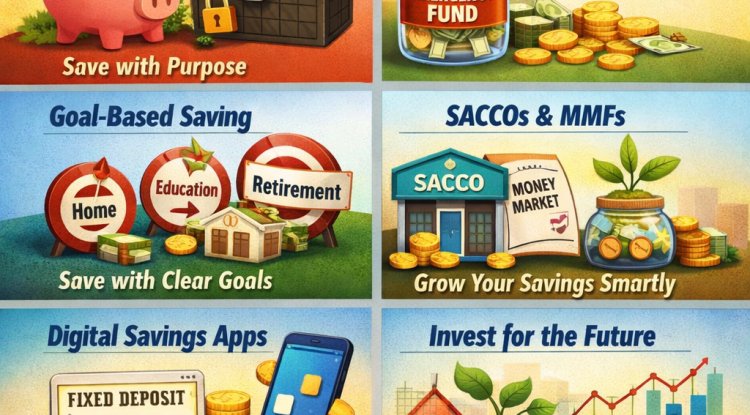
Goal-Based Saving: Giving Your Money Direction
Saving without goals is like driving without a destination.
Common Goal-Based Savings Categories
-
Education
-
Home ownership
-
Business capital
-
Retirement
-
Travel
-
Children’s future
-
Investments
Each goal should have:
-
A clear amount
-
A timeline
-
A dedicated saving vehicle
Why Goal-Based Saving Works
-
Increases motivation
-
Prevents misuse of funds
-
Improves financial discipline
-
Aligns savings with life priorities
When money has a job, it works harder.
SACCOs, Credit Unions, and Cooperative Savings
Savings cooperatives exist worldwide under different names:
-
SACCOs
-
Credit unions
-
Mutual aid societies
Why Cooperative Savings Are Powerful
-
Encourage consistent saving
-
Offer better returns than banks
-
Provide affordable credit
-
Promote financial discipline
For many middle- and low-income earners, cooperatives serve as:
-
The first investment platform
-
A stepping stone to asset ownership
-
A community-based wealth tool
However, they should complement—not replace—diversified savings and investments.
Money Market Funds (MMFs): Smart Cash Management
Money market funds are one of the most effective modern saving tools.
What Are MMFs?
MMFs pool money to invest in:
-
Short-term government securities
-
Treasury bills
-
High-quality debt instruments
Why MMFs Matter
-
Higher returns than savings accounts
-
High liquidity
-
Low risk
-
Ideal for emergency funds and short-term goals
MMFs protect money from inflation while keeping it accessible.
Fixed Deposits: Structured Saving with Predictability
Fixed deposits (term deposits) involve locking money for a set period in exchange for higher interest.
Best Use Cases
-
Medium-term goals
-
Capital preservation
-
Risk-averse savers
Limitations
-
Limited liquidity
-
Returns may lag inflation in some economies
Fixed deposits are best used strategically, not as your only saving method.
Digital Savings Apps and Fintech Platforms
Technology has transformed saving globally.
Features of Digital Saving Platforms
-
Automated contributions
-
Goal tracking
-
Low entry barriers
-
Transparency
-
Accessibility
Why Digital Saving Works
-
Removes human error
-
Builds consistency
-
Encourages micro-saving
-
Integrates easily with investments
Automation is one of the strongest wealth-building tools available today.
Saving as a Bridge to Investing
The ultimate purpose of saving is investment readiness.
Saving prepares you to:
-
Buy assets during downturns
-
Invest without debt
-
Act quickly on opportunities
-
Think long-term
Common Assets People Save For
-
Stocks
-
Bonds
-
Real estate
-
Businesses
-
Education and skills
You do not save forever. You save until money can work for you.
The Long-Term Mindset: Saving Across Decades
Wealth is built over time, not overnight.
Short-Term (0–2 Years)
-
Emergency fund
-
Skill development
-
Debt management
Medium-Term (3–7 Years)
-
Investments
-
Business expansion
-
Property planning
Long-Term (10+ Years)
-
Retirement
-
Generational wealth
-
Passive income systems
Saving must evolve as your life evolves.
Common Saving Mistakes That Block Wealth
-
Saving without purpose
-
Keeping all money in cash
-
Ignoring inflation
-
Failing to automate
-
Saving instead of investing
-
Mixing emergency and investment funds
-
Chasing returns without understanding risk
Avoiding these mistakes is as important as saving itself.
Saving Methods for All Income Levels
Low Income
-
Micro-saving
-
Digital wallets
-
Cooperative savings
-
Automation of small amounts
Middle Income
-
Goal-based saving
-
MMFs
-
Fixed deposits
-
Investment-linked saving
High Income
-
Strategic cash management
-
Asset-backed saving
-
Tax-efficient instruments
-
Global diversification
Wealth building is not about income—it is about systems.
Final Thoughts: Saving Is Strategy, Not Sacrifice
Saving is not punishment.
Saving is not fear.
Saving is not hoarding.
Saving is a strategic decision to control your future.
When done correctly, saving:
-
Reduces stress
-
Creates opportunity
-
Enables investment
-
Builds generational wealth
The goal is not to save forever—but to save intelligently, so your money eventually works harder than you ever could.
What's Your Reaction?