THE 2025 PERSONAL FINANCE BLUEPRINT: HOW AFRICANS CAN BUILD WEALTH IN A VOLATILE MARKET
Discover how Africans can build resilient wealth in 2025 using inflation-proof savings, SACCOs, T-Bills, offshore ETFs, and modern asset allocation strategies.

INTRODUCTION: THE NEW REALITY OF WEALTH IN AFRICA
The year 2025 marks a structural turning point for the African financial landscape. For more than a decade, African households have battled recurring cycles of inflation, currency depreciation, shifting commodity prices, political instability, and evolving regulatory environments. Across Kenya, Nigeria, Ghana, South Africa, Tanzania, and other emerging markets, the average consumer is confronted with a paradox:
Economic growth across the continent is rising, yet household financial security continues to weaken.
The implications are profound. Traditional budgeting models no longer work. Savings frameworks designed in the early 2000s collapse under inflationary pressure. Asset allocation principles taught in Western-dominated financial textbooks fail in markets where currencies can depreciate 20–40 percent in a year. The volatility is structural, not temporary. And many Africans are forced to rebuild their financial strategy from the ground up.
Against this backdrop, 2025 demands a new kind of personal finance playbook—one that moves beyond generic advice and confronts the real macroeconomic conditions shaping wealth creation in Africa. This blueprint integrates global market trends, local investment vehicles, inflation mechanics, behavioral finance, digital transformation, and risk-hedging models designed for African households, entrepreneurs, and emerging professionals. It provides a full-spectrum, end-to-end framework for navigating and ultimately capitalizing on volatility rather than reacting to it.
This is not motivational financial content. This is a strategic, data-driven, operations-grade model for building, protecting, and compounding wealth in one of the world’s most dynamic markets.
SECTION 1: THE MACROECONOMIC CONTEXT — WHY AFRICANS NEED A NEW PLAYBOOK
1.1 Understanding the Structural Inflation Problem
Inflation across Africa is not simply a function of rising prices. It is a complex, multi-layered problem driven by:
-
Exchange-rate volatility
• Many African currencies are exposed to USD-based global markets.
• Import-heavy nations (Kenya, Ghana, Ethiopia) are vulnerable to USD appreciation. -
Commodity price sensitivity
• Oil-dependent states (Nigeria, Angola) experience inflation when oil prices fall.
• Food-importing countries face significant pass-through inflation. -
Fiscal pressures and public debt cycles
• Rising sovereign debt increases pressure on local currencies.
• Government borrowing crowds out private-sector lending, raising interest rates. -
Weak domestic manufacturing
• Local economies are heavily import reliant.
• Every global supply chain shock becomes a domestic inflation catalyst. -
Demographic expansion
• Rapid population growth increases consumption faster than production capacity.
For African households, the direct outcome is crystal clear:
Your money loses value faster than your ability to earn it.
In many countries, consumer inflation ranges from 6–40 percent annually, while salary increments remain stagnant at 3–7 percent. The gap is mathematically unsustainable.
Therefore, personal finance in Africa must begin with inflation defense, not wealth creation.
1.2 Currency Depreciation: The Silent Wealth Killer
Currency depreciation impacts African households more aggressively than inflation for three reasons:
-
It destroys savings denominated in local currency.
-
It erodes the purchasing power of future income.
-
It penalizes investors who fail to diversify offshore.
For instance:
• The Ghanaian cedi lost over 50 percent of its value in a single year.
• The Nigerian naira has experienced repeated devaluations.
• The Kenyan shilling weakened by over 20 percent within one year.
These trends constrain household financial planning because long-term goals—education, home ownership, retirement—are denominated in a currency whose future value is uncertain.
Wealth creation in Africa must therefore incorporate foreign-denominated assets.
Offshore ETFs, USD money-market positions, Eurobonds, and global market exposure are not optional luxuries. They are structural pillars of long-term financial resilience.
1.3 The Rise of Technology and Digital Finance in Africa
Digital transformation is rewriting Africa’s financial ecosystem:
• Mobile money dominates East Africa.
• Digital banks are emerging in Nigeria and South Africa.
• Pan-African fintechs offer cross-border savings, micro-investments, fractional assets, and wealth management.
• Blockchain solutions are emerging for remittances and cross-border transactions.
• E-commerce has enabled individual entrepreneurship at scale.
Technology is dismantling traditional barriers—bank queues, paperwork, opaque financial products, and high entry thresholds. The democratization of personal finance is underway, and 2025 represents a pivotal year.
The opportunity lies in leveraging tech platforms not as consumers, but as wealth builders.
SECTION 2: THE SAVINGS FOUNDATION — BEYOND TRADITIONAL BUDGETING
2.1 The Old Budgeting Models Are Obsolete
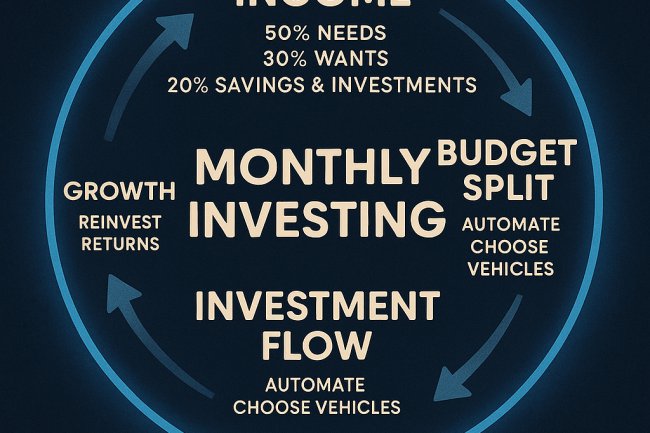
Conventional frameworks like the 50/30/20 rule collapse under inflationary pressure. For Africans, rent, food, and transport alone often consume 60–70 percent of income. The remaining 30 percent must accommodate savings, investing, emergencies, debt repayment, school fees, and extended family responsibilities.
A more realistic model is required.
2.2 The 2025 African Household Savings Framework
Bucket 1: Liquidity Reserve (Short-term survival capital)
• 3–6 months of expenses
• Stored in Money Market Funds (MMFs) or SACCO deposits
• Must remain accessible, low risk, and stable
• Objective: Replace borrowing for emergencies
Bucket 2: Local Growth Instruments
• SACCO dividends
• Treasury Bills (91–364 day tenors)
• Retail government bonds
• Conservative local equity index funds
• Objective: Beat inflation at the domestic level
Bucket 3: Offshore and Dollar-Denominated Assets
• Global ETFs (S&P 500, MSCI World, Nasdaq 100)
• Dollar MMFs
• Eurobonds and USD savings accounts
• Objective: Hedge currency depreciation
Bucket 4: Strategic, Higher-Yield Assets
• Real estate (fractional or full)
• REITs
• Private equity and VC micro-allocations
• Income-generating digital assets
• Entrepreneurship ventures
• Objective: Wealth acceleration
Bucket 5: Protection Capital
• Insurance—health, life, income protection
• Retirement savings via pension schemes
• Objective: De-risking the household balance sheet
This five-bucket architecture acknowledges Africa’s unique economic dynamics while aligning with globally recognized wealth-building principles.
SECTION 3: INVESTMENT VEHICLES FOR AFRICANS IN 2025
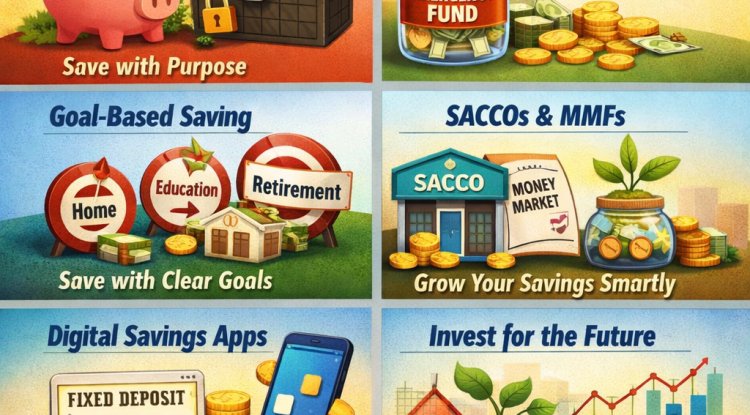
3.1 SACCOs: A Legacy Asset Modernizing for the Future
Savings and Credit Cooperative Organizations (SACCOs) remain one of the most stable wealth-building platforms across East Africa.
Why they matter:
• Higher dividends than commercial banks
• Access to low-interest loans
• Strong governance frameworks
• Community trust and local understanding
• Ideal for structured savings
Optimal strategies:
-
Automate monthly deposits
-
Reinvest dividends
-
Use SACCO loans for asset acquisition, not consumption
-
Avoid over-exposure to a single SACCO
3.2 Money Market Funds (MMFs): The New Liquidity Engine
MMFs have become the default option for short-term capital allocation due to:
• Daily liquidity
• High yields compared to bank savings accounts
• Low risk (government securities-backed)
Use MMFs for:
• Emergency funds
• Short-term goals
• Float for business owners
• Temporary asset parking
3.3 Treasury Bills and Bonds: Inflation Defense Instruments
Government securities remain essential in an African wealth strategy.
Treasury Bills (T-Bills)
• Short-term (91–364 days)
• High effective annual yields
• Excellent for capital preservation
Treasury Bonds (T-Bonds)
• Medium to long-term (2–30 years)
• Ideal for retirement planning
• Provide predictable cashflows
• Inflation-indexed options available in some countries
3.4 African Equities: Selective, Not Speculative
African stock markets offer opportunities, but require caution due to:
• Low liquidity
• Political risk
• Currency volatility
• Corporate governance variability
Focus on:
• Blue-chip companies
• Banks with strong balance sheets
• Telecoms (e.g., Safaricom, MTN)
• Consumer goods giants
• Export-oriented enterprises
Diversification is non-negotiable.
3.5 Offshore ETFs: The Ultimate Currency Hedge
Africans must integrate foreign-denominated assets into their portfolios.
Recommended ETF categories:
-
Broad Market ETFs
• S&P 500
• MSCI World
• FTSE All-World -
Technology ETFs
• Nasdaq 100
• Global Innovation ETFs -
Emerging Markets ETFs
• China, India, Brazil exposure -
Dividend ETFs
• For stable cashflows
Execution platforms may vary by region—some markets offer direct access, others require brokerage intermediaries.
SECTION 4: THE NEW WEALTH ARCHITECTURE FOR AFRICANS
4.1 The 2025 Asset Allocation Model
A resilient allocation for African earners might resemble:
• 10–20% Liquidity (MMF + Emergency Fund)
• 20–30% Local Growth Instruments (SACCO + T-Bills)
• 20–40% Offshore ETFs (USD-based)
• 10–20% Strategic Growth (Tech, Entrepreneurship, Real Estate)
• 5–10% Protection Capital
This model is adaptive by income level.
4.2 High-Earners vs. Mid-Earners vs. Low-Earners
Low Earners (Under $600/month)
• Prioritize emergency fund and SACCO savings
• Zero high-risk assets
• Build a strong financial cushion
Mid Earners ($600–$3,000/month)
• Integrate T-Bills, offshore ETFs
• Begin real estate positioning
• Build long-term retirement structure
High Earners ($3,000+/month)
• Optimize tax-efficient vehicles
• Allocate more to offshore ETFs
• Diversify into alternative assets
• Estate planning becomes critical
SECTION 5: ENTREPRENEURSHIP AS A CORE ASSET CLASS
In Africa, entrepreneurship is more than an income source—it is an investment class. High unemployment, structural rigidity, and youthful demographics create ecosystems where:
• Small businesses scale rapidly
• Digital commerce produces exponential returns
• Service-based entrepreneurship has low barriers
• Export-oriented agriculture is booming
• Content creation is monetizing at global levels
Entrepreneurship offers returns unavailable in traditional markets.
SECTION 6: RISK MANAGEMENT FOR AFRICAN HOUSEHOLDS
6.1 Insurance: The Wealth Protector
Many African families skip insurance due to cost, yet lack of coverage becomes the single biggest reason for wealth erosion.
Prioritize:
• Health insurance
• Life insurance
• Income protection insurance
• Funeral cover (market-specific)
6.2 Retirement Planning: Start Early, Compound Aggressively
Tools include:
• NSSF/NHIF equivalents
• Private pensions
• Retirement annuities
• Long-term bonds
Compound interest is most effective when currency depreciation is neutralized by offshore positioning.
SECTION 7: COUNTRY-SPECIFIC OPPORTUNITIES
Kenya
• Strong MMF ecosystem
• Mature SACCO sector
• Reliable T-Bill/T-Bond environment
• Rise of digital micro-investing
• Strong telecoms and banking equities
Nigeria
• High-yield fixed income due to inflation
• Forex liberalization opportunities
• Burgeoning tech and fintech sectors
• Real estate growth in key cities
Ghana
• Attractive Eurobond positioning
• Strong gold-backed economic dynamics
• Reform-driven financial sector
South Africa
• Advanced capital markets
• Globally integrated equities
• REITs, ETFs, and pension vehicles
SECTION 8: THE 2025 ACTION PLAYBOOK
Step 1: Audit your financial position
• Income
• Expenses
• Debts
• Assets
• Insurance coverage
Step 2: Establish a liquidity foundation
• Build 3–6 months emergency capital
• Use MMFs and SACCOs
Step 3: Deploy domestic inflation-defense instruments
• T-Bills
• T-Bonds
• Index funds
Step 4: Hedge currency risk through offshore assets
• USD-denominated ETFs
• Dollar MMFs
• Gilt or Treasury exposure
Step 5: Build diversified long-term wealth engines
• Entrepreneurship
• Real estate
• REITs
• Digital investments
Step 6: Protect the household balance sheet
• Insurance
• Retirement
• Estate planning
CONCLUSION: THE NEW AFRICAN WEALTH PARADIGM
2025 is not a year for reactive financial planning. It is a year for strategic, data-driven wealth architecture. African households face unique volatility—but they also enjoy unprecedented access to global investment platforms, technology-driven financial tools, and rising economic opportunities.
The African wealth story of the next decade will not be written by governments, corporations, or institutions. It will be written by individuals who understand:
• Inflation is predictable.
• Currency depreciation is avoidable.
• Opportunity is decentralized.
• Technology is a wealth multiplier.
• Personal finance is a system, not a budget.
This blueprint provides the structural scaffolding. The execution belongs to you.
What's Your Reaction?