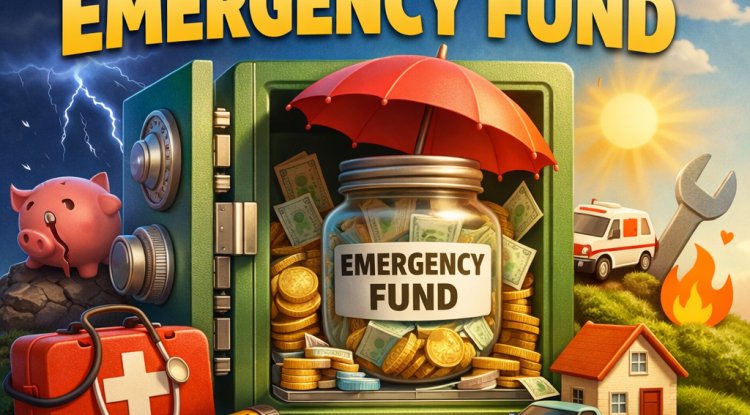
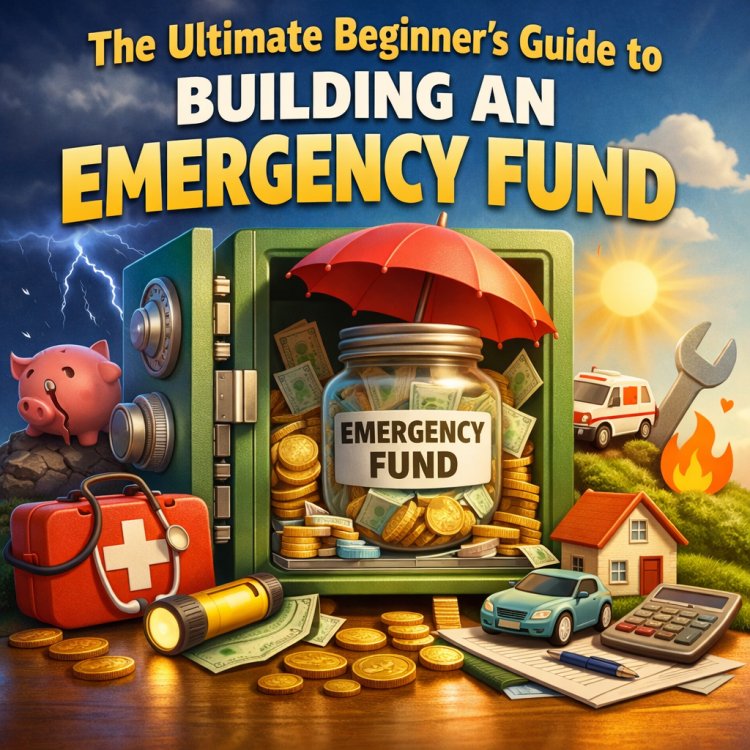
The Ultimate Beginner’s Guide to Building an Emergency Fund — COMPLETE EDITION
This in-depth guide explains what an emergency fund is, why it matters, and how anyone can build one step by step — even on a tight budget. It covers saving strategies, budgeting frameworks, real-life case studies, common mistakes, and practical action plans so readers can protect their families, avoid debt, and create a foundation for long-term wealth.
A comprehensive roadmap for families, professionals, students, and entrepreneurs who want stability first, wealth second.
Chapter 13: Budgeting Frameworks That Make Emergency Saving Easier
Most people fail to save not because they lack discipline — but because they lack structure. When your money does not have a plan, it disappears quietly.
Here are three proven budgeting models that make emergency saving automatic.
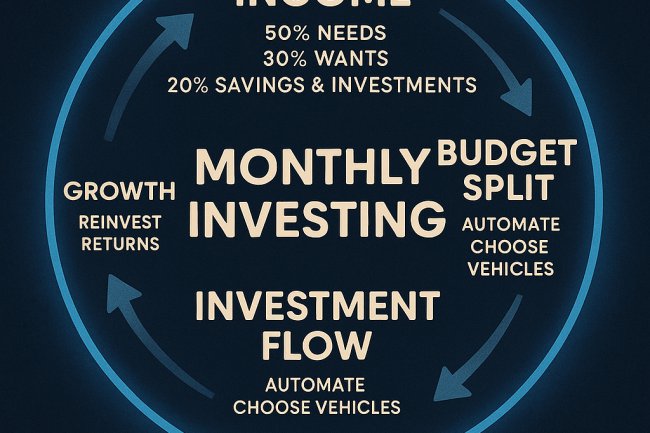
Model 1: The 50–30–20 Rule
-
50% — needs (rent, food, utilities)
-
30% — wants (entertainment, lifestyle)
-
20% — saving & investing
From that 20%:
-
first build your emergency fund
-
then invest after your buffer is stable
This model is simple, realistic, and easy for beginners.
Model 2: The 70–10–10–10 Method
-
70% — living expenses
-
10% — emergency fund
-
10% — investments
-
10% — generosity / giving / family commitments
It works well in communities where supporting extended family is common. You protect yourself without abandoning responsibility.
Model 3: The Zero-Based Budget
Every currency unit is assigned a job.
Income — Expenses — Savings — Investments = 0
You deliberately plan where every amount goes, including:
-
emergency savings
-
goal-based savings
-
sinking funds (for things like school fees, insurance renewals, etc.)
This model requires more tracking — but gives maximum control.
Chapter 14: Case Studies — Realistic Scenarios and Lessons
Case Study 1: The Family with No Safety Net
A couple with two children earns steady income. They invest everything aggressively in stocks and a small business. When the business equipment fails, they sell stocks at a loss and borrow at high interest.
Lesson:
A strong investment plan without an emergency fund is fragile.
Case Study 2: The Young Professional Who Prepared Early
A 26-year-old sets aside a small monthly amount for emergencies. Two years later, she loses her job. Instead of panicking, she calmly survives six months while upskilling — and later finds a better-paying opportunity.
Lesson:
Preparation buys time, confidence, and better decision-making.
Case Study 3: The Entrepreneur with a Business Buffer
A shop owner experiences a slow season. Because he had a 3-month business emergency reserve, he keeps employees paid, renegotiates supplier terms, and avoids closing. When demand returns, his competitors are gone — but he is still standing.
Lesson:
Emergency funds protect not just survival — but opportunity.
Chapter 15: Step-By-Step Savings Schedules (Examples by Income Range)
Below are simple illustration plans. Adjust to your reality.
If you can save KES 2,000 per month:
-
12 months → KES 24,000
-
24 months → KES 48,000
Slow — yes. Impossible — no. Consistency wins.
If you can save KES 5,000 per month:
-
12 months → KES 60,000
-
24 months → KES 120,000
That’s already three months of living expenses for many households.
If you can save KES 10,000 per month:
-
12 months → KES 120,000
-
18 months → KES 180,000
Within two years, your financial stress almost disappears.
Chapter 16: What Counts as a Real Emergency?
Before touching your fund, ask:
-
Is it unexpected?
-
Is it urgent?
-
Is it essential to health, safety, or income?
If the answer is no to any point — pause. You may be dealing with a desire disguised as urgency.
Examples that do qualify:
-
surgery, medication, or critical care
-
job loss or salary freeze
-
major repairs necessary for safety
-
replacing essential work tools
-
sudden relocation for safety reasons
Examples that do not qualify:
-
latest phone upgrade
-
concert tickets
-
vacations
-
dining experiences
-
non-essential shopping
Your discipline in defining emergencies determines the success of the fund.
Chapter 17: Building Separate Mini-Funds
A powerful advanced strategy is creating sinking funds so your emergency fund remains untouched.
Examples:
-
annual school fees
-
car maintenance
-
insurance premiums
-
holiday gifts
-
medical checkups
By planning these predictable costs, you reduce the number of “fake emergencies” dramatically.
Chapter 18: Couples and Money — How to Build Together
Money stress is one of the top causes of relationship conflict.
Healthy couples:
-
disclose income honestly
-
agree on priorities
-
name the emergency fund together
-
commit to contribution rules
-
review progress monthly
Joint emergency funds foster unity — but each partner may also keep a small personal buffer for independence and dignity.
Chapter 19: Parents, Children, and Financial Education
Your emergency fund is also a teaching tool. Show children:
-
why saving matters
-
why we delay gratification
-
how we prepare for storms before they arrive
When kids grow up watching responsible financial behavior, they naturally inherit financial wisdom — not just assets.
Chapter 20: Myths That Keep People Broke
❌ “I’ll start saving when I earn more.”
Most people increase expenses as income rises. Saving must begin now — at any level.
❌ “Emergency funds are useless. I can always borrow.”
Borrowing costs money — interest, stress, dependence, and sometimes humiliation.
❌ “Investing is better than saving.”
Investment works best after protection is in place. Risk without a safety net multiplies losses.
Chapter 21: Inflation, Risk, and Smart Placement
Yes, inflation erodes cash slightly — but losing some value is better than losing:
-
your house
-
your business
-
your peace
-
your dignity
Keep the fund where it earns modest interest but remains accessible. Review once per year and adjust the amount to match rising expenses.
Chapter 22: When Life Hits Multiple Times in a Row
Sometimes crises stack:
-
job loss
-
illness
-
car failure
-
family emergency
If your fund empties completely, you may feel discouraged. Do not.
Re-enter rebuilding mode calmly:
-
stabilize income
-
cut unnecessary expenses
-
restart contributions
-
rebuild milestones gradually
The goal is direction — not perfection.
Chapter 23: Tools and Habits That Make Consistency Easier
-
automatic transfers
-
budgeting apps
-
visual progress charts
-
accountability partners
-
weekly money check-ins
-
written financial goals
Small systems outperform motivation alone.
Chapter 24: Emergency Fund vs Insurance — How They Work Together
Insurance handles large, rare events (hospitalization, major accidents, property damage).
Your emergency fund handles smaller, frequent disruptions.
They are partners — not competitors.
Chapter 25: The Confidence Dividend
As your emergency fund grows, something subtle happens:
-
you negotiate better
-
you say “no” to toxic opportunities
-
you walk away from bad employers
-
you think long-term
Security reduces desperation. Reduced desperation increases wisdom.
Chapter 26: A 90-Day Starter Challenge
Month 1: Track expenses + save your first week of living costs
Month 2: Build to two weeks
Month 3: Reach one full month
Celebrate — that first month changes everything.
Chapter 27: Troubleshooting — When Saving Feels Impossible
If every coin disappears:
-
review subscriptions
-
renegotiate bills
-
cook more, order less
-
consider part-time or freelance work
-
avoid lifestyle comparison
-
avoid impulsive spending triggers
Sometimes income truly isn’t enough. In such cases, skill-building and income growth become part of the emergency plan.
Chapter 28: A Checklist You Can Print
Emergency Fund Readiness Checklist
-
I know my true monthly essentials
-
I chose a safe storage account
-
My contributions are automated
-
I defined what counts as an emergency
-
I have sinking funds for predictable costs
-
I review my fund quarterly
-
I refill it after withdrawals
If most boxes are checked — you’re on the right path.
Chapter 29: Frequently Asked “Edge-Case” Questions
What if I live paycheck-to-paycheck?
Start tiny — even KES 500 weekly trains the muscle.
Should students build emergency funds?
Yes — even a modest buffer prevents debt cycles.
Can I mix my emergency fund with investment returns?
Best practice: separate them. Clarity prevents mistakes.
Chapter 30: Your Future Self Will Thank You
One day, years from now, life will test you. Something unexpected will happen.
And instead of panic, you will simply say:
“I prepared for this.”
That single sentence represents wisdom, maturity, and leadership.
Final Conclusion: Build It. Protect It. Grow Beyond It.
An emergency fund is not exciting. It does not shine like luxury. It does not create bragging rights.
But it creates freedom.
It safeguards dignity.
It supports every dream that comes after.
Start where you are. Grow steadily. Protect your progress.
Once the foundation is strong, wealth building becomes clearer, calmer, and faster.
The journey to financial independence does not begin with risk.
It begins with stability.
What's Your Reaction?