How to Choose a Brokerage Account: The Ultimate Global Guide to Wealth Building
Selecting the right brokerage is the most critical step in your investing journey. Learn how to compare fees, platforms, and security to find your perfect match.
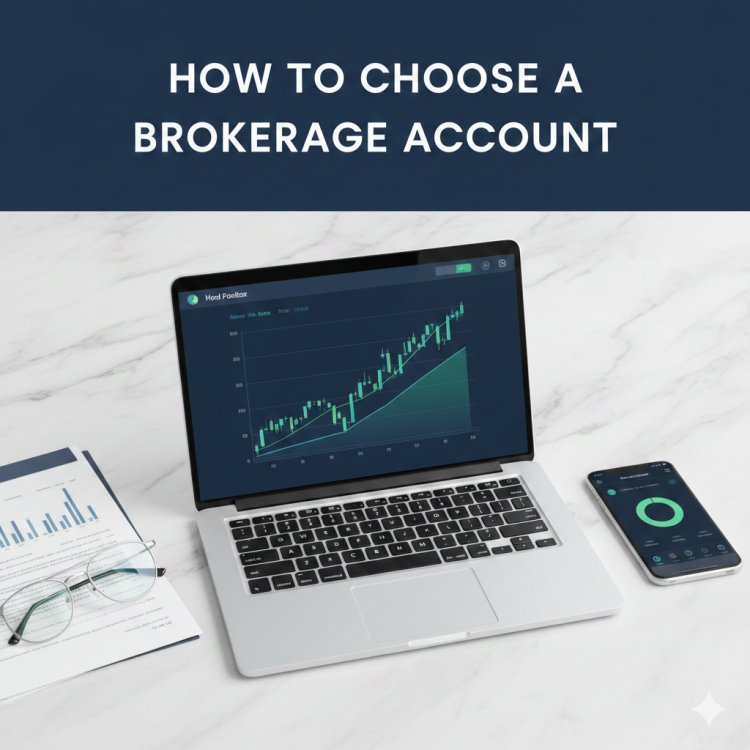
Choosing a brokerage account is often the "gatekeeper" moment for your financial future. Whether you are a student in Mumbai, a professional in London, or a retiree in New York, the platform you choose determines your costs, your access to products, and ultimately, your peace of mind.
1. Understanding the Different Types of Brokers
Before you look at flashy apps, you must understand what kind of service you actually need. Generally, brokers fall into three categories:
-
Discount/Online Brokers: These are the most common today. They offer low or zero commissions and are designed for self-directed investors who want to make their own decisions.
-
Full-Service Brokers: These come with a dedicated human advisor. You pay higher fees (often a percentage of your assets) in exchange for personalized financial planning and tax advice.
-
Robo-Advisors: These are automated platforms that use algorithms to manage your money based on your risk tolerance. They are excellent for those who want a "set it and forget it" approach.
2. Fee Structures: The Silent Profit Killers
In the world of investing, what you don't pay is just as important as what you earn. Even a 1% fee can compound into hundreds of thousands of dollars in lost gains over thirty years. Keep an eye on:
-
Commissions: Many modern brokers offer $0 trades for stocks and ETFs, but may still charge for options or mutual funds.
-
Expense Ratios: If you buy a fund through a broker, ensure you aren't being funneled into high-cost internal products.
-
Inactivity Fees: Some platforms charge you simply for not trading. If you are a long-term investor, avoid these at all costs.
3. Investment Products and Global Access
A great broker should grow with you. Initially, you might only want to buy local stocks. However, as your portfolio matures, you may want access to:
-
International Markets: Can you trade on the NYSE, LSE, and Tokyo Stock Exchange from one account?
-
Fractional Shares: Crucial for beginners, this allows you to buy $5 worth of a stock that trades at $3,000 per share.
-
Fixed Income: Access to government and corporate bonds.
4. Technology and User Experience
Your interface should match your skill level. A day trader needs "Level 2" market data, complex charting tools, and hotkeys. A long-term investor needs a clean mobile app, easy automated deposits, and clear tax reporting.
5. Security and Regulation
This is the non-negotiable section. Depending on your country, ensure your broker is regulated by the appropriate body (such as the SEC and FINRA in the US, the FCA in the UK, or ASIC in Australia). Verify if there is "insolvency protection"—insurance that protects your cash and securities if the brokerage firm itself goes bankrupt.
6. The Decision Matrix
To choose your account, ask yourself these three questions:
-
What is my goal? (Retirement, buying a house, or hobby trading?)
-
How much help do I need? (Do I want to pick stocks or have a computer do it?)
-
What is my starting capital? (Check for "minimum balance" requirements.)
Summary Table: Comparison Overview
| Feature | Discount Broker | Full-Service Broker | Robo-Advisor |
| Cost | Low / Zero | High | Moderate |
| Control | High (You decide) | Collaborative | Low (Automated) |
| Best For | Active Traders / DIY | High Net Worth | Hands-off Investors |
What's Your Reaction?