Make, Manage & Multiply Money: The Modern Wealth Blueprint for Financial Freedom
Learn how to make money ethically, manage it with smart budgeting, and multiply it through investing—plus the new rules of money in today’s economy.
Make, Manage & Multiply Money: The Modern Wealth Blueprint for Financial Freedom
Money is not just something you “find.” Money is something you create, control, and compound.
Most people are stuck because they only focus on one part of the money journey:
-
They try to make money, but can’t manage it.
-
Or they learn to save, but never learn to invest.
-
Or they work hard, but their lifestyle grows faster than their income.
Real wealth is built with a simple—but powerful—sequence:
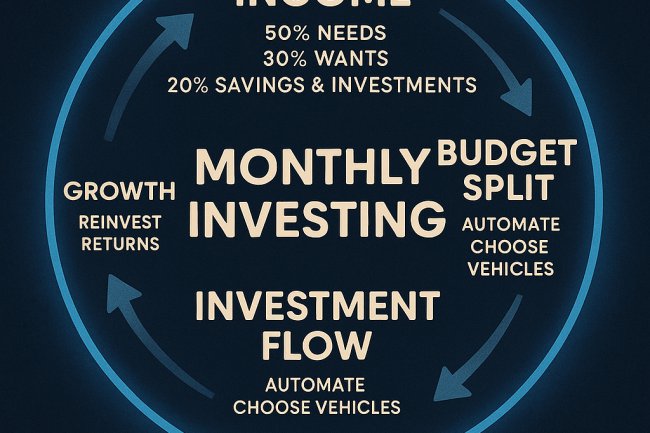
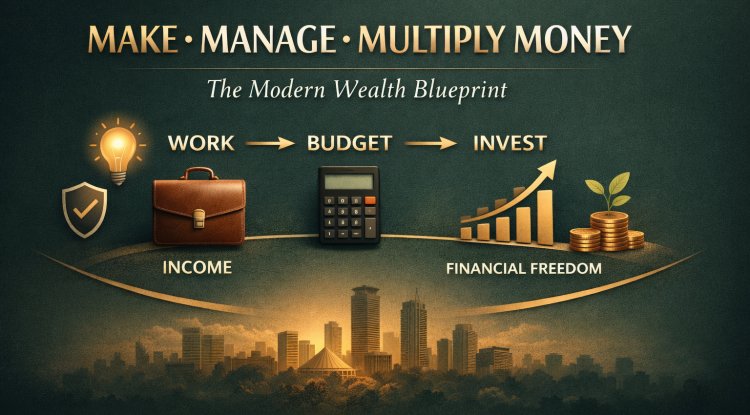
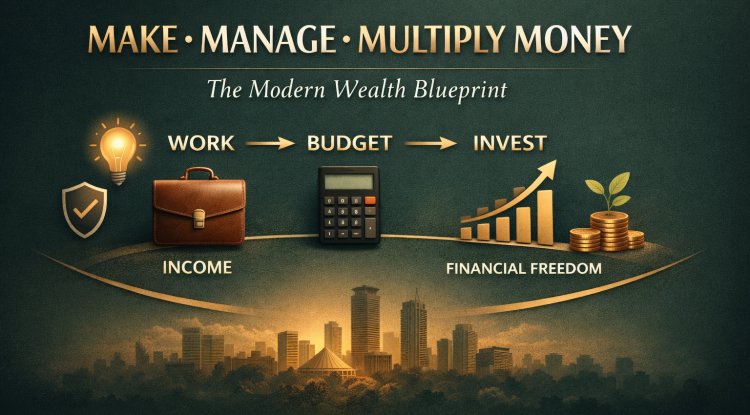
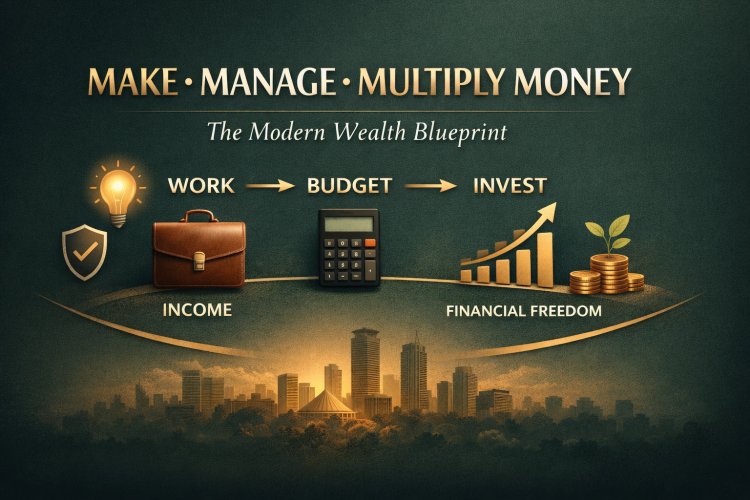
WORK → BUDGET → INVEST
This article is a complete blueprint you can follow whether you’re starting from zero, rebuilding after losses, or trying to scale your income to the next level.
We’ll cover:
-
How money is actually created (and where most people go wrong)
-
Ethical ways to make money (that don’t destroy your future)
-
How to manage money with budgeting systems that work in real life
-
How to multiply money through investing (without confusion)
-
The “new rules of money” in today’s economy (knowledge, speed, teams, and more)
Let’s build your wealth the right way.
1) The Wealth Journey Has 3 Levels
There are three major stages in the money journey:
Level 1: Making Money
This is income creation—how money enters your hands.
Level 2: Managing Money
This is control—how money behaves once it enters your hands.
Level 3: Multiplying Money
This is compounding—how money grows without your daily labor.
Many people never become wealthy because they keep repeating Level 1 forever.
They hustle, grind, work, and stress… but they never build a system that multiplies the results.
True wealth is built when you progress through all three levels—intentionally.
2) How NOT to Make Money (And Why These Paths Collapse)
Before we talk about how to make money, we must remove the traps that destroy financial destinies.
1) Stealing, Cheating, Fraud
This is not income—it’s future debt.
Even if it produces money temporarily, it creates:
-
Legal risk
-
Shame and fear
-
Unstable cash flow
-
Reputation damage
-
Cycles of loss
Wealth that is built without integrity rarely lasts.
2) Borrowing and Begging as a Lifestyle
Borrowing can be useful (we’ll discuss good debt later), but many people use borrowing like oxygen.
If every financial need pushes you into borrowing, you’re not solving the real issue—you’re postponing it.
Begging may attract sympathy, but it trains your mind to depend, not to build.
3) Lottery, Betting, Gambling
The system is designed so that owners win, players lose.
Gambling sells hope, but the math is built for profit extraction.
If your plan to escape poverty is luck, then you have no plan.
4) Marriage as a Money Strategy
Marriage is not a financial shortcut.
If you marry rich without building yourself:
-
You may still feel insecure
-
You may become dependent
-
You may lose dignity and purpose
-
You may be controlled by money you didn’t create
A strong partnership is powerful—but your personal wealth-building skill must still exist.
5) Inheritance as a Life Plan
Depending on inheritance is a form of entitlement that weakens ambition.
Even when inheritance comes, people without discipline often lose it quickly because:
-
they lack budgeting skills
-
they lack investment knowledge
-
they lack emotional control
Wealth that enters a mind without structure usually leaks out.
3) How to Make Money (The Only Reliable Way)
Money is made through work.
Not just a job—work.
Work means:
-
solving problems
-
creating value
-
serving needs
-
improving systems
-
producing outcomes that people will pay for
Two ways to work:
-
Work for yourself (business, freelance, entrepreneurship)
-
Work for others (employment, contracts, consulting)
Both are valid—what matters is that your work creates value.
The Big Shift: Stop Thinking “Job”, Start Thinking “Value”
Many people say “there are no jobs.”
Sometimes that’s true.
But the deeper truth is:
Opportunities belong to people who can solve problems.
The marketplace doesn’t pay you because you need money.
The marketplace pays you because you are useful.
4) The Personal Income Audit (Powerful Exercise)
If you want to grow your income, you must first understand your income pattern.
Exercise A: List 10 ways you’ve made money in the last 5 years
Even small things count:
-
salary
-
side jobs
-
commissions
-
reselling
-
a one-time project
-
a gift that came from work you did
The point is to reveal the truth:
-
What has worked before?
-
What skill produced it?
-
What environment triggered it?
Exercise B: List as many ways to make money as you can think of
This expands your mind and trains you to see options.
When your mind is locked into “salary only,” you become blind to possibilities.
5) How to Manage Money (Budgeting Is the Control Center)
You don’t manage money with motivation.
You manage money with a system.
The definition of budgeting
Budgeting is a financial planning system that helps you:
-
estimate income
-
track spending
-
assign money to priorities
-
stay aligned with goals
Budgeting is how you control money instead of money controlling you.
Why most people stay broke—even with income
Because:
-
income rises
-
spending rises
-
nothing remains
-
debt grows
-
stress increases
This is the lifestyle trap.
The most important rule of money management
If your expenses are greater than your income, your upkeep becomes your downfall.
Budgeting prevents that.
6) What Budgeting Helps You Do
A good budget gives you clarity and direction.
1) Know if you live within your means
You can’t fix what you refuse to measure.
2) Build savings and investment consistency
Budgeting turns “I will save” into “I saved.”
3) Stay on track with financial goals
Goals without budgeting are wishes.
4) Prepare for emergencies
Emergencies don’t destroy people—lack of preparation does.
5) Reduce debt
Budgeting helps you:
-
stop new debt
-
pay down existing debt strategically
6) Identify spending leaks
Your money leaks through small, repeated, emotional spending.
Budgeting exposes the leaks.
7) The Two Ways to Have More Money
If you want more money available to you, there are only two options:
-
Increase income
-
Reduce expenses
Most people ignore #2 because it feels small.
But removing waste creates breathing room immediately.
A powerful monthly habit:
-
review subscriptions
-
review bank charges
-
review unnecessary repeat spending
-
renegotiate bills
-
compare alternatives
Technology changes fast—something you paid for last year may have a cheaper alternative today.
8) How to Multiply Money (Saving Is Not Multiplying)
Here’s the part most people misunderstand:
Saving is not multiplying
Saving is money preservation.
Investing is money multiplication.
The difference:
-
Saving = setting money aside for a purpose
-
Investing = sending money on assignment for a return
Saving is necessary because it builds discipline and stability.
But investing is what builds wealth.
A practical foundation:
-
build a basic emergency fund
-
then begin investing consistently
9) Where You Can Invest to Multiply Money
1) Stocks and Shares
You buy ownership in a company and earn through:
-
capital appreciation (share price growth)
-
dividends (profit sharing)
-
bonus shares (extra allocations)
Key decision:
-
Are you an investor (long-term) or trader (short-term)?
If you’re new, focus on education, diversification, and professional guidance.
2) Real Estate (Property)
Property is powerful because:
-
it can appreciate over time
-
it can generate rental income
-
it can serve as business infrastructure
A simple real estate rule:
Don’t wait to buy land. Buy land and wait.
Even in Kenya, growth corridors show this clearly:
areas that were “far” become prime as infrastructure expands.
3) Businesses
Businesses can multiply money faster than many assets, but require:
-
management skill
-
market understanding
-
consistent execution
You can invest in:
-
your own business
-
other people’s businesses (equity, partnerships)
-
scalable value chains (distribution, logistics, services)
4) Intellectual Property
Knowledge packaged into assets can pay you repeatedly:
-
books
-
courses
-
templates
-
workshops
-
licensing
-
coaching programs
This is one of the strongest wealth tools today because:
Knowledge can be duplicated without losing it.
5) Internet Businesses (Legitimate Online Income)
Online business is not “magic money.”
It’s simply business using digital distribution.
Examples:
-
affiliate marketing
-
digital services (design, writing, editing)
-
content monetization
-
ecommerce
-
online consulting
-
paid communities
If you build skills and systems, the internet becomes a global marketplace.
10) The New Rules of Money (Modern Wealth Is Different)
The game is still wealth-building—but the rules have upgraded.
Rule 1: Knowledge is the new money
In today’s economy, people don’t just get paid for labor.
They get paid for:
-
expertise
-
insight
-
strategy
-
problem-solving ability
Money flows toward people who know what others don’t know.
That’s why the best investment is often:
Invest in yourself first.
Practical ways:
-
read consistently
-
take courses
-
learn high-income skills
-
attend workshops
-
build financial literacy
The day you stop learning, you stop upgrading.
Rule 2: Learn to use debt wisely (Good Debt vs Bad Debt)
Debt is dangerous when used wrongly and powerful when used wisely.
Bad debt:
-
borrowing to consume
-
borrowing for lifestyle
-
borrowing for things that don’t produce returns
Good debt:
-
borrowing to invest in an asset that produces returns greater than the cost of the loan
Debt is not automatically evil—ignorance is the danger.
The principle is simple:
If it produces income or appreciation, it can be leverage.
If it only increases lifestyle, it becomes bondage.
Rule 3: Speed is a wealth advantage
Modern wealth rewards speed:
-
faster service
-
faster delivery
-
faster learning
-
faster execution
Technology is turning slow systems into fast systems.
Example of speed layering (same product, higher speed):
-
selling a book physically in stores (slow)
-
selling it online and delivering (faster)
-
selling it as an ebook download (instant)
Speed increases reach and revenue.
Rule 4: Learn the language of money
Money has a language:
-
cash flow
-
assets vs liabilities
-
ROI
-
inflation
-
interest rates
-
profit margin
-
net worth
-
budgeting
-
diversification
If you don’t understand the language, you become vulnerable:
-
in business deals
-
in contracts
-
in investments
-
in financial decisions
Financial literacy is protection.
Rule 5: Life is a team sport
Big results require collaboration.
Over time, you need:
-
legal guidance
-
accounting support
-
tax support
-
marketing strategy
-
brand support
-
mentorship
-
a strong network
You don’t need everyone at once.
But you must stop thinking you can build everything alone.
Rule 6: Learn to “print” your own money ethically
This means creating value systems that generate income repeatedly.
Examples:
-
turning knowledge into products
-
turning a service into a scalable offer
-
building multiple income streams from one expertise
When you can create value on demand, you’re no longer waiting for money.
You’re generating it.
11) The Wealth Discipline Most People Avoid
Here’s what separates wealthy people from struggling people:
Consistency
Not motivation.
Not luck.
Not hype.
Consistency in:
-
work
-
budgeting
-
saving
-
investing
-
learning
-
execution
The future belongs to those who can repeat good decisions even when emotions fluctuate.
12) A Simple 30-Day Action Plan (Start Now)
If you want to apply this blueprint immediately, follow this:
Week 1: Income + Spending Clarity
-
list your income sources
-
track every expense for 7 days
-
identify leaks
Week 2: Build a Working Budget
-
set fixed essentials
-
set savings target
-
set investment target
-
cut waste
Week 3: Increase Income
Choose one:
-
sell a service
-
learn a high-income skill
-
add a weekend side hustle
-
offer a consulting package
-
monetize a talent
Week 4: Start Investing (Small, Consistent)
Choose one:
-
a long-term investment account
-
a business reinvestment plan
-
a structured savings-to-invest system
The goal isn’t to start big.
The goal is to start right and stay consistent.
Final Words: Wealth Is Built—Not Wished
If you want to be financially free, remember this:
-
You make money by working
-
You manage money by budgeting
-
You multiply money by investing
And in today’s world:
-
knowledge pays
-
speed wins
-
teams scale
-
systems beat motivation
Your financial life won’t change because you read one article.
It changes when you build a repeatable structure and stick to i
What's Your Reaction?