
Insurance protects financial plans from losses that would be difficult to absorb alone.
It does not prevent illness, death, accidents, property damage, disability, lawsuits, or business interruption. It transfers part of the financial cost of those risks to an insurer in exchange for premiums.
A strong insurance plan protects income, dependants, property, health, business assets, and long-term wealth without paying for unnecessary coverage.
What Insurance Really Is
Insurance is a risk-sharing arrangement.
Many policyholders pay premiums into a common pool. The insurer uses that pool to pay valid claims according to the terms of each policy.
The policy is a legal contract. It defines:
- Who or what is insured
- Which events are covered
- How much the insurer may pay
- What the policyholder must pay
- Which losses are excluded
- When coverage begins and ends
- How claims must be submitted
Insurance should be evaluated through the contract, not advertising language alone.
Why Insurance Matters in Financial Planning
Saving and investing build financial progress. Insurance protects that progress from severe losses.
Without adequate protection, one major event may:
- Destroy emergency savings
- Force the sale of investments
- Create expensive debt
- Interrupt retirement contributions
- Reduce family income
- Threaten business continuity
- Transfer financial hardship to dependants
Insurance is therefore part of risk management, not a replacement for saving or investing.
Risk Transfer and Risk Retention
Not every financial risk should be insured.
Small, affordable losses can often be retained through savings. Large or unpredictable losses may need to be transferred through insurance.
A practical approach is:
- Use emergency savings for manageable short-term losses.
- Use sinking funds for predictable expenses.
- Use insurance for potentially severe losses.
- Avoid paying premiums for minor risks you could comfortably absorb.
Important Insurance Terms
Premium
The premium is the amount paid to maintain coverage. It may be charged monthly, quarterly, annually, or according to another schedule.
Deductible or Excess
The deductible is the amount the policyholder pays before the insurer contributes to a covered claim.
A higher deductible may reduce premiums, but it increases the cash required during a claim.
Coverage Limit
The coverage limit is the maximum amount the insurer may pay for a covered loss.
Some policies have separate limits for individual events, categories of property, medical services, or the entire policy period.
Exclusion
An exclusion identifies an event, condition, activity, person, or type of loss the policy does not cover.
Waiting Period
A waiting period is the time that must pass before certain benefits become available.
Copayment
A copayment is a fixed amount the insured person pays for a covered service.
Coinsurance
Coinsurance requires the policyholder and insurer to share covered costs according to stated percentages.
Policy Term
The policy term is the period during which coverage remains active.
Grace Period
A grace period provides limited additional time to pay a premium before coverage ends.
Beneficiary
A beneficiary is the person, trust, organization, or estate designated to receive policy proceeds.
How Insurers Set Premiums
Insurers estimate the likelihood and potential cost of claims.
Premiums may be influenced by:
- Age
- Health
- Occupation
- Location
- Claims history
- Coverage amount
- Deductible
- Property value
- Vehicle type
- Business activity
- Policy term
- Market repair and healthcare costs
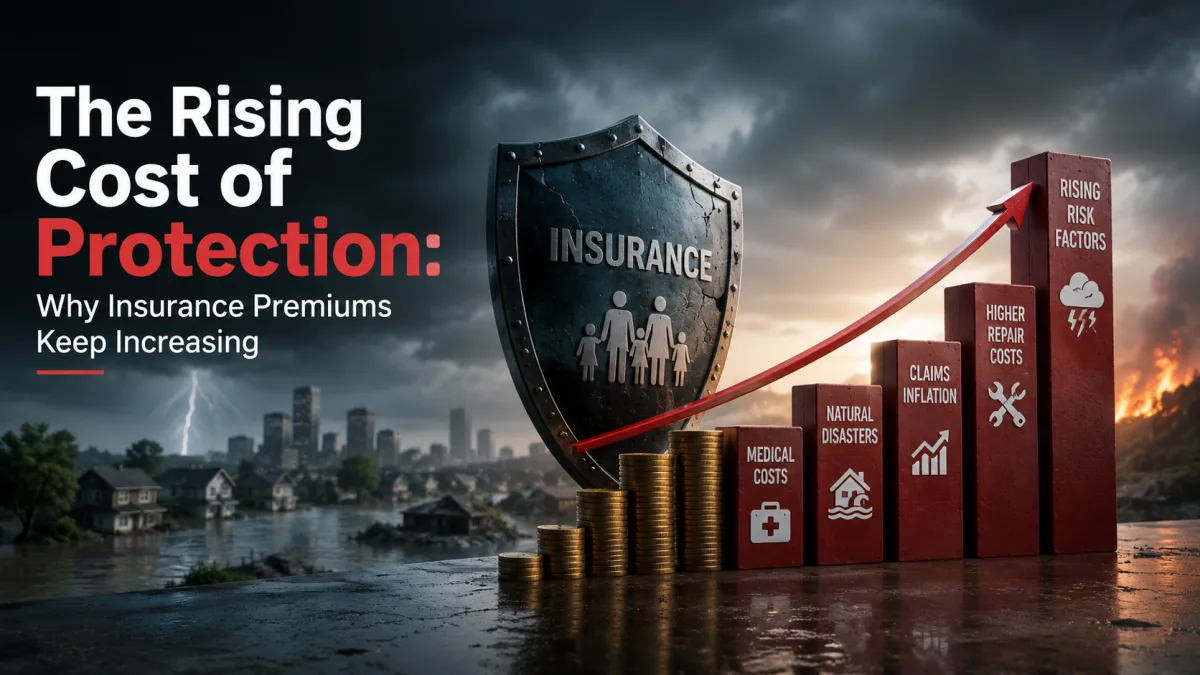
The Rising Cost of Protection explains why premiums may increase.
Underwriting
Underwriting is the process insurers use to evaluate risk before issuing or pricing a policy.
The insurer may request:
- Application information
- Medical records or examinations
- Financial details
- Property inspections
- Driving history
- Business information
- Existing coverage
Incorrect or incomplete information can affect pricing, claims, or policy validity.
Life Insurance
Life insurance pays a benefit after the insured person dies, subject to policy terms.
Its primary purpose is to protect people or obligations that depend on the insured person’s income, care, or financial contribution.
Life insurance may help cover:
- Income replacement
- Mortgage or rent obligations
- Education costs
- Outstanding debts
- Funeral expenses
- Caregiving costs
- Business succession needs
- Estate liquidity
The Family Safety Net explains the role of life insurance in financial planning.
Term Life Insurance
Term life insurance provides coverage for a defined period.
It is generally designed for temporary needs such as:
- Income replacement during working years
- A mortgage repayment period
- Children’s dependency years
- Business loans
- Education obligations
If the insured person survives the term, the policy may end without a payout unless renewal or conversion provisions apply.
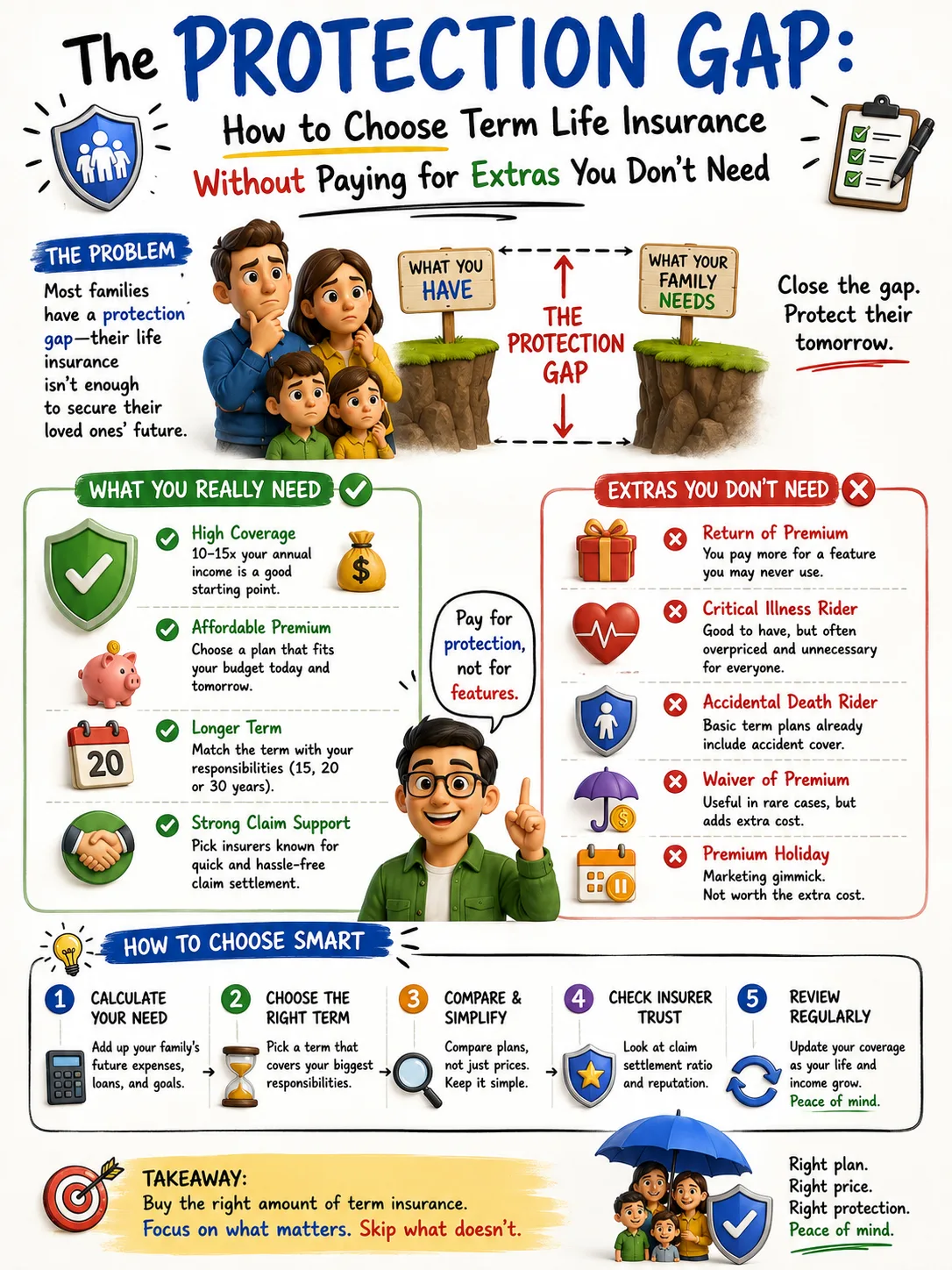
The Protection Gap explains how to choose term coverage without unnecessary extras.
Whole Life and Permanent Insurance
Permanent life insurance may provide lifelong coverage if premiums and policy conditions are maintained.
Some policies also include a cash-value component.
Permanent insurance may be relevant for certain estate, tax, business, inheritance, or lifelong dependency needs. It may also cost significantly more than term insurance.
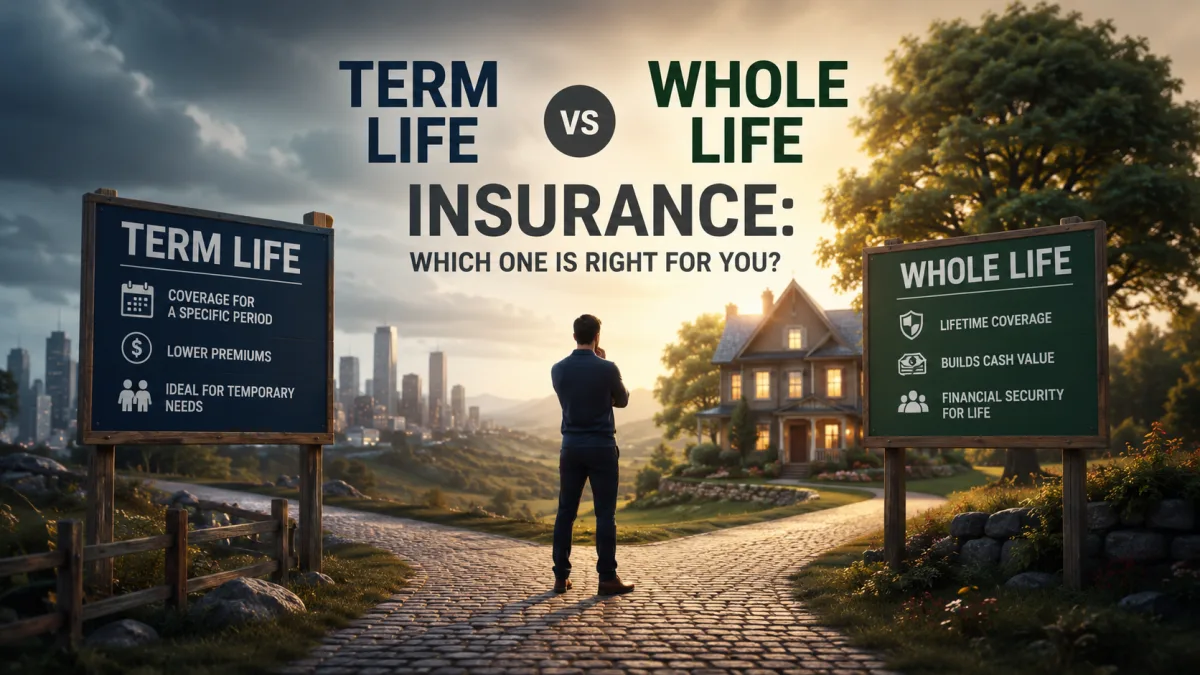
Term Life vs Whole Life Insurance compares the two broad structures.
The Protection Trade-Off provides another detailed comparison.
How Much Life Insurance Is Needed?
Coverage should reflect actual financial obligations rather than a generic multiple alone.
Consider:
- Income replacement years
- Household expenses
- Debt and mortgage balances
- Education costs
- Childcare or caregiving
- Funeral expenses
- Existing assets
- Existing policies
- Survivor income
- Inflation
The Coverage Number explains how to estimate the required benefit.
Choosing Beneficiaries
Beneficiary designations should be accurate and reviewed regularly.
Review beneficiaries after:
- Marriage
- Divorce
- Birth or adoption
- Death
- Major estate changes
- Business ownership changes
Special planning may be required for minors, dependants with disabilities, trusts, businesses, or complex estates.
Health Insurance
Health insurance helps manage medical costs.
Coverage may include:
- Hospital treatment
- Doctor visits
- Emergency care
- Prescription medicine
- Preventive services
- Maternity care
- Mental healthcare
- Specialist treatment
- Rehabilitation
Review provider networks, exclusions, limits, waiting periods, deductibles, copayments, coinsurance, and preauthorization rules.
The Coverage Decision explains how to compare health plans.
The Family Coverage Decision focuses on household health coverage.
Disability and Income Protection Insurance
Income protection covers the financial risk of being unable to work because of illness or injury, subject to policy definitions.
Important terms include:
- Definition of disability
- Benefit percentage
- Maximum benefit
- Waiting period
- Benefit duration
- Occupation restrictions
- Exclusions
- Inflation adjustments
The Paycheck Shield explains why future earnings are a major financial asset.
Property Insurance
Property insurance may protect buildings, contents, equipment, or other assets from covered events.
Possible covered risks may include fire, theft, storms, water damage, vandalism, or other named events.
Review:
- Replacement cost versus current value
- Coverage limits
- Excluded events
- Security requirements
- Vacancy rules
- High-value item limits
- Business-use exclusions
Homeowners and Renters Insurance
Homeowners insurance may protect the structure, contents, liability, and temporary accommodation after a covered loss.
Renters insurance generally protects personal belongings and personal liability, not the building itself.
Landlord insurance and tenant insurance serve different interests and should not be confused.
Vehicle Insurance
Vehicle insurance may include:
- Third-party liability
- Collision damage
- Theft
- Fire
- Comprehensive cover
- Medical expenses
- Uninsured motorist protection
- Roadside assistance
Confirm who is permitted to drive, where the vehicle may be used, and whether business use is covered.
Liability Insurance
Liability insurance helps protect against claims that the insured caused injury, property damage, financial loss, or professional harm.
Examples include:
- Personal liability
- Public liability
- Employer liability
- Product liability
- Professional liability
- Directors and officers liability
Business Insurance
Businesses may need protection for:
- Buildings and equipment
- Inventory
- Employee injuries
- Customer claims
- Professional errors
- Cyber incidents
- Business interruption
- Commercial vehicles
- Key employees
The correct coverage depends on industry, contracts, employees, assets, customers, regulation, and operating risks.
Business Interruption Insurance
Business interruption coverage may replace income or help pay continuing expenses when operations stop because of a covered event.
Review:
- Covered causes
- Waiting periods
- Benefit duration
- Revenue calculations
- Payroll treatment
- Extra-expense coverage
Professional Liability Insurance
Professional liability insurance may cover claims arising from errors, omissions, negligence, or failure to deliver professional services as required.
It may be relevant for consultants, advisers, healthcare professionals, accountants, technology providers, designers, and other service businesses.
Cyber Insurance
Cyber insurance may help businesses manage costs associated with data breaches, ransomware, system interruption, privacy claims, and incident response.
Coverage may require specific security controls such as backups, multifactor authentication, access management, and employee training.
Travel Insurance
Travel insurance may cover medical emergencies, cancellation, interruption, lost baggage, delays, evacuation, and other travel risks.
Review destination restrictions, pre-existing condition rules, activity exclusions, trip duration, and claim documentation requirements.
Insurance Claims
A claim is a request for payment or service under a policy.
When a covered event occurs:
- Protect people from immediate danger.
- Prevent additional damage where safely possible.
- Notify the insurer promptly.
- Follow reporting requirements.
- Keep receipts, photographs, reports, and correspondence.
- Do not dispose of damaged property before approval when inspection is required.
- Review the settlement carefully.
Why Claims May Be Rejected
Claims may be rejected because:
- The event is excluded
- The policy was inactive
- The claim exceeded limits
- Required information was inaccurate
- The loss occurred outside the policy period
- Policy conditions were not followed
- The damage resulted from poor maintenance
- The claim lacked sufficient documentation
A rejection should be compared with the policy wording and appeal process.
Underinsurance
Underinsurance occurs when coverage is insufficient for the actual financial loss.
This may happen when:
- Property values rise
- Construction costs increase
- Income grows
- New dependants are added
- Debt increases
- Business assets expand
- Coverage is never reviewed
Overinsurance
Overinsurance means paying for coverage that exceeds the realistic financial need or duplicates other protection.
Examples include overlapping policies, unnecessary riders, or insuring manageable losses that could be covered from savings.
How to Lower Insurance Costs Carefully
Possible strategies include:
- Comparing equivalent policies
- Increasing deductibles when affordable
- Removing duplicate coverage
- Improving security and risk controls
- Combining policies where beneficial
- Reviewing optional riders
- Maintaining accurate information
- Reassessing coverage after debts decline
Lower premiums are not useful when essential protection disappears.
The Premium Reset explains how to reduce costs without weakening protection.
Common Insurance Mistakes
- Choosing only by price
- Ignoring exclusions
- Buying insufficient coverage
- Failing to disclose relevant information
- Allowing policies to lapse
- Using outdated beneficiaries
- Not keeping claim documentation
- Insuring minor risks while ignoring catastrophic ones
- Failing to review coverage after life changes
- Assuming employer coverage is always sufficient
How Insurance Fits With Emergency Savings
Insurance and emergency funds solve different problems.
Emergency savings provide immediate liquidity for deductibles, waiting periods, exclusions, and small losses.
Insurance provides protection against severe covered losses.
A household with insurance but no cash may struggle to pay a deductible. A household with cash but no insurance may be exposed to losses far larger than its savings.
How Insurance Fits With Wealth Building
Insurance does not create investment returns in the same way productive assets can.
Its financial value is protection.
A strong plan generally combines:
- Positive cash flow
- Emergency savings
- Debt control
- Appropriate insurance
- Diversified investing
- Retirement planning
- Estate planning
The Money Operating System explains how protection fits into a complete financial plan.
A Practical Insurance Roadmap
Step 1: Identify Major Financial Risks
List the losses that could seriously harm your household or business.
Step 2: Review Existing Protection
Include personal policies, employer benefits, government programs, business policies, and family resources.
Step 3: Estimate Coverage Needs
Use actual obligations, replacement costs, income needs, debt, and dependants.
Step 4: Compare Equivalent Policies
Compare limits, deductibles, exclusions, waiting periods, and insurer service, not premiums alone.
Step 5: Check Affordability
Coverage must remain affordable enough to prevent lapse.
Step 6: Document the Policy
Store policy numbers, contacts, beneficiaries, renewal dates, and claim requirements securely.
Step 7: Review Annually
Update coverage after major financial or personal changes.
Continue Building Your Insurance Knowledge
- Understand why insurance premiums rise
- Compare term and whole life insurance
- Choose term life coverage carefully
- Protect future earnings through income insurance
- Calculate life insurance requirements
- Compare family health coverage
- Reduce premiums without weakening protection
- Understand life insurance in financial planning
- Choose suitable health insurance
- Review major types of insurance protection
- Evaluate life insurance policies
- Connect insurance with financial literacy
- Connect protection with long-term wealth building
Frequently Asked Questions About Insurance
What is the main purpose of insurance?
The main purpose is to transfer part of the financial cost of defined risks to an insurer.
How much insurance do I need?
The amount depends on the potential loss, existing assets, dependants, income, debts, legal obligations, and other available protection.
Should I choose the cheapest policy?
Not automatically. Compare coverage, limits, deductibles, exclusions, service, and financial strength as well as price.
What is a deductible?
It is the amount the policyholder must pay before the insurer contributes to a covered claim.
What is an exclusion?
An exclusion is a loss, event, person, activity, or condition the policy does not cover.
What happens if I miss a premium?
The policy may enter a grace period or lapse. The exact consequence depends on the contract.
Do I need life insurance if I have no dependants?
Possibly not for income replacement, although debts, business obligations, final expenses, estate needs, or future dependants may still matter.
Is employer insurance enough?
It may not be. Employer coverage can be limited, may end when employment ends, and may not reflect full household needs.
How often should policies be reviewed?
Review them at least annually and after major changes involving income, family, debt, property, health, or business activity.
Can an insurer reject a claim?
Yes, when the claim falls outside the contract, coverage was inactive, information was inaccurate, or policy conditions were not followed.
Is insurance an investment?
Insurance is primarily risk protection. Some policies include savings or cash-value features, but they should be evaluated against their costs, guarantees, and alternatives.
What documents should I keep?
Keep the policy, schedules, receipts, application details, beneficiary records, premium confirmations, inventories, photographs, and claim correspondence.
Final Perspective
Insurance protects the financial foundation that saving, work, business, and investing create.
The goal is not to insure every inconvenience. It is to protect against losses that could permanently weaken income, family security, property, or long-term wealth.
Retain manageable risks. Transfer severe risks. Review protection as life changes.
A strong insurance plan creates resilience before the unexpected happens.
 Article
 Article
 Article
 Article
 Article
 Article
 Article
 Article